-
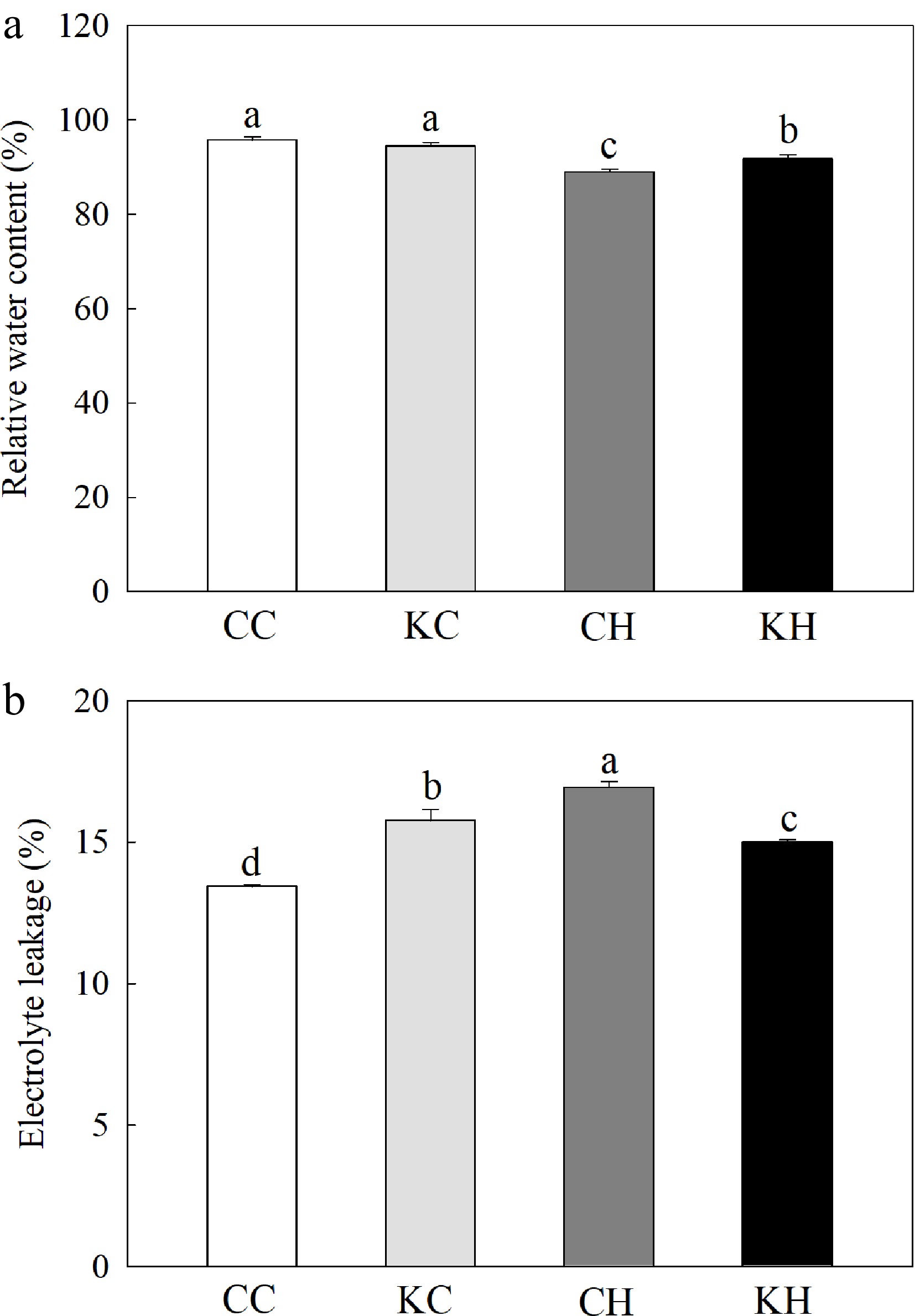
Figure 1.
Effects of KAR1 on (a) RWC, and (b) EL in leaves of creeping bentgrass exposed to optimal temperature and heat stress. CC, foliar application of water + optimal temperature; KC, foliar application of 100 nM KAR1 + optimal temperature; CH, foliar application of water + heat stress; KH, foliar application of 100 nM KAR1 + heat stress. Data shown are the mean ± SE of four biological replicates. Bars not sharing a common letter indicate significant differences at p < 0.05 level.
-
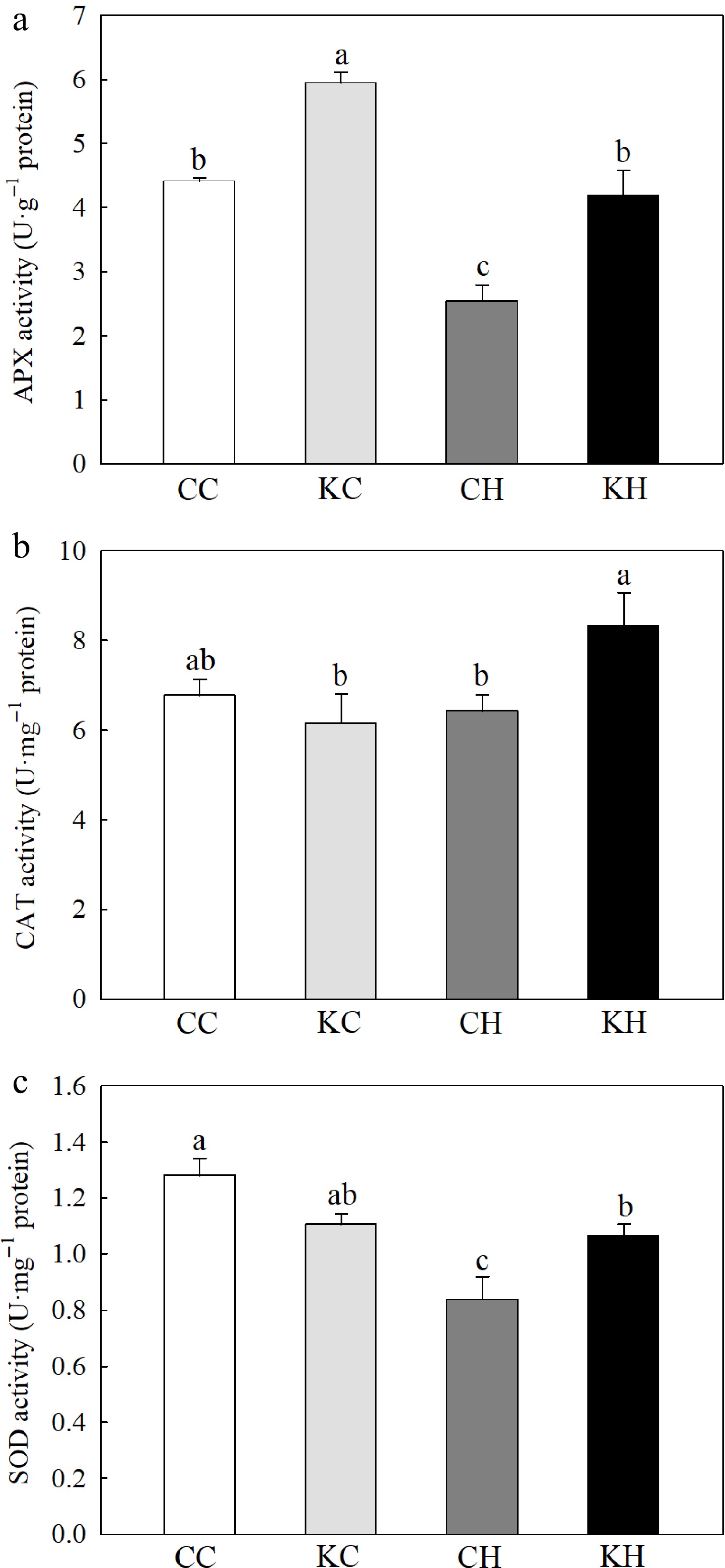
Figure 2.
Effects of KAR1 on (a) APX activity, (b) CAT activity, and (c) SOD activity in leaves of creeping bentgrass exposed to optimal temperature and heat stress. CC, foliar application of water + optimal temperature; KC, foliar application of 100 nM KAR1 + optimal temperature; CH, foliar application of water + heat stress; KH, foliar application of 100 nM KAR1 + heat stress. Data shown are the mean ± SE of four biological replicates. Bars not sharing a common letter indicate significant differences at p < 0.05 level.
-
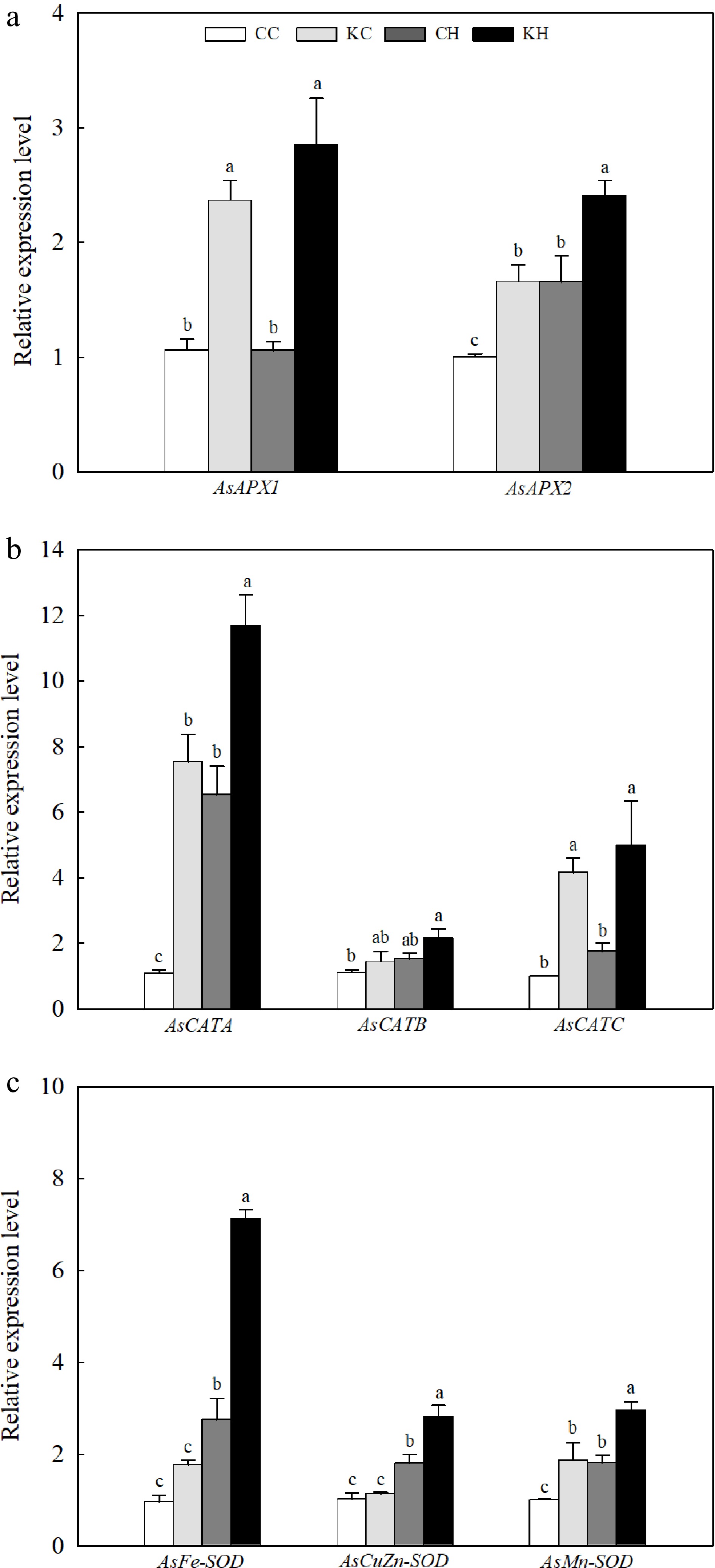
Figure 3.
Effects of KAR1 on expression of (a) APXs, (b) CATs, and (c) SODs in leaves of creeping bentgrass exposed to optimal temperature and heat stress. CC, foliar application of water + optimal temperature; KC, foliar application of 100 nM KAR1 + optimal temperature; CH, foliar application of water + heat stress; KH, foliar application of 100 nM KAR1 + heat stress. Data shown are the mean ± SE of four biological replicates. Bars not sharing a common letter indicate significant differences at p < 0.05 level.
-
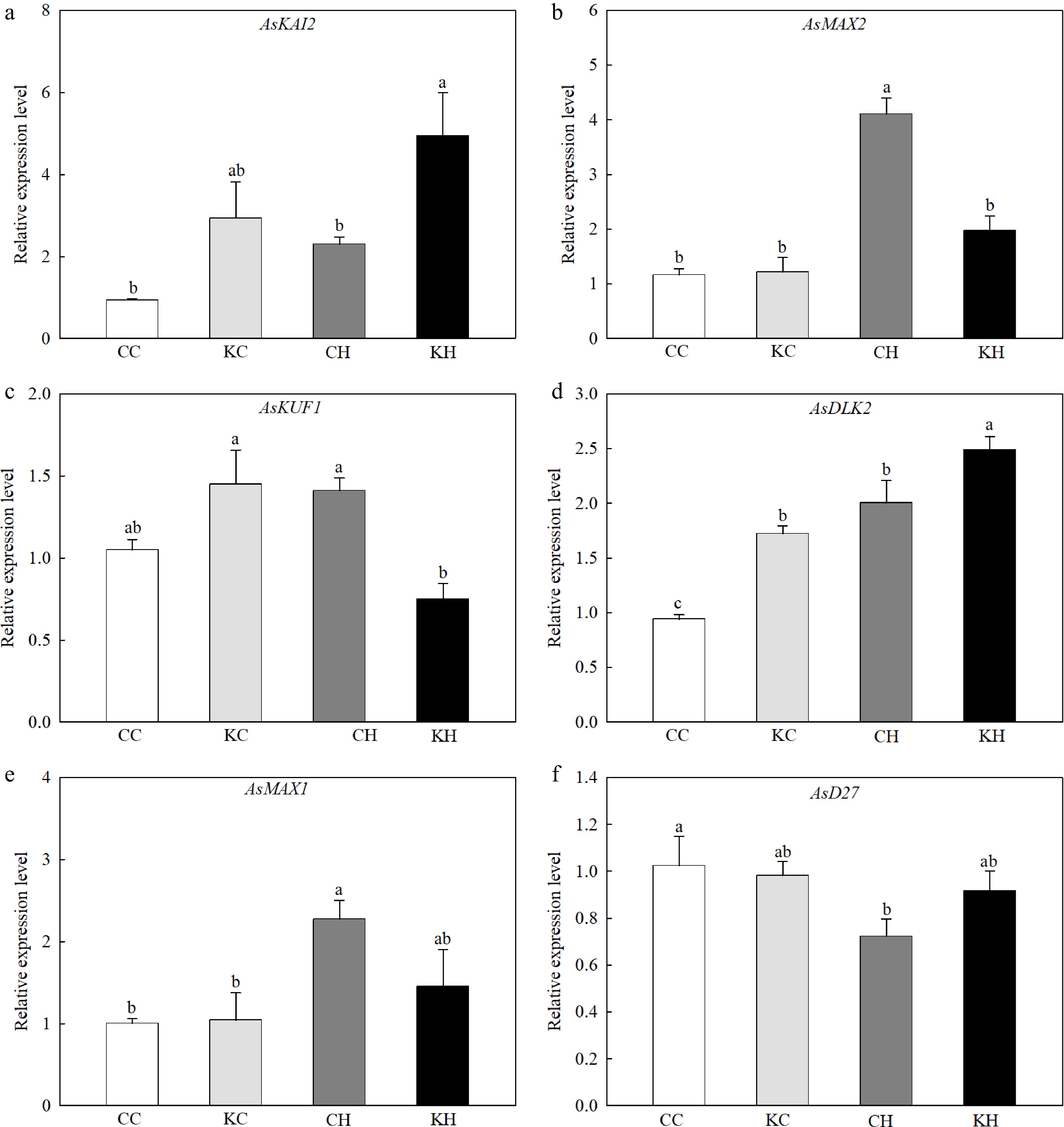
Figure 4.
Effects of KAR1 on expression of (a) AsKAI2, (b) AsMAX2, (c) AsKUF1, (d) AsDLK2, (e) AsMAX1, and (f) AsD27 in leaves of creeping bentgrass exposed to optimal temperature and heat stress. CC, foliar application of water + optimal temperature; KC, foliar application of 100 nM KAR1 + optimal temperature; CH, foliar application of water + heat stress; KH, foliar application of 100 nM KAR1 + heat stress. Data shown are the mean ± SE of four biological replicates. Bars not sharing a common letter indicate significant differences at p < 0.05 level.
-
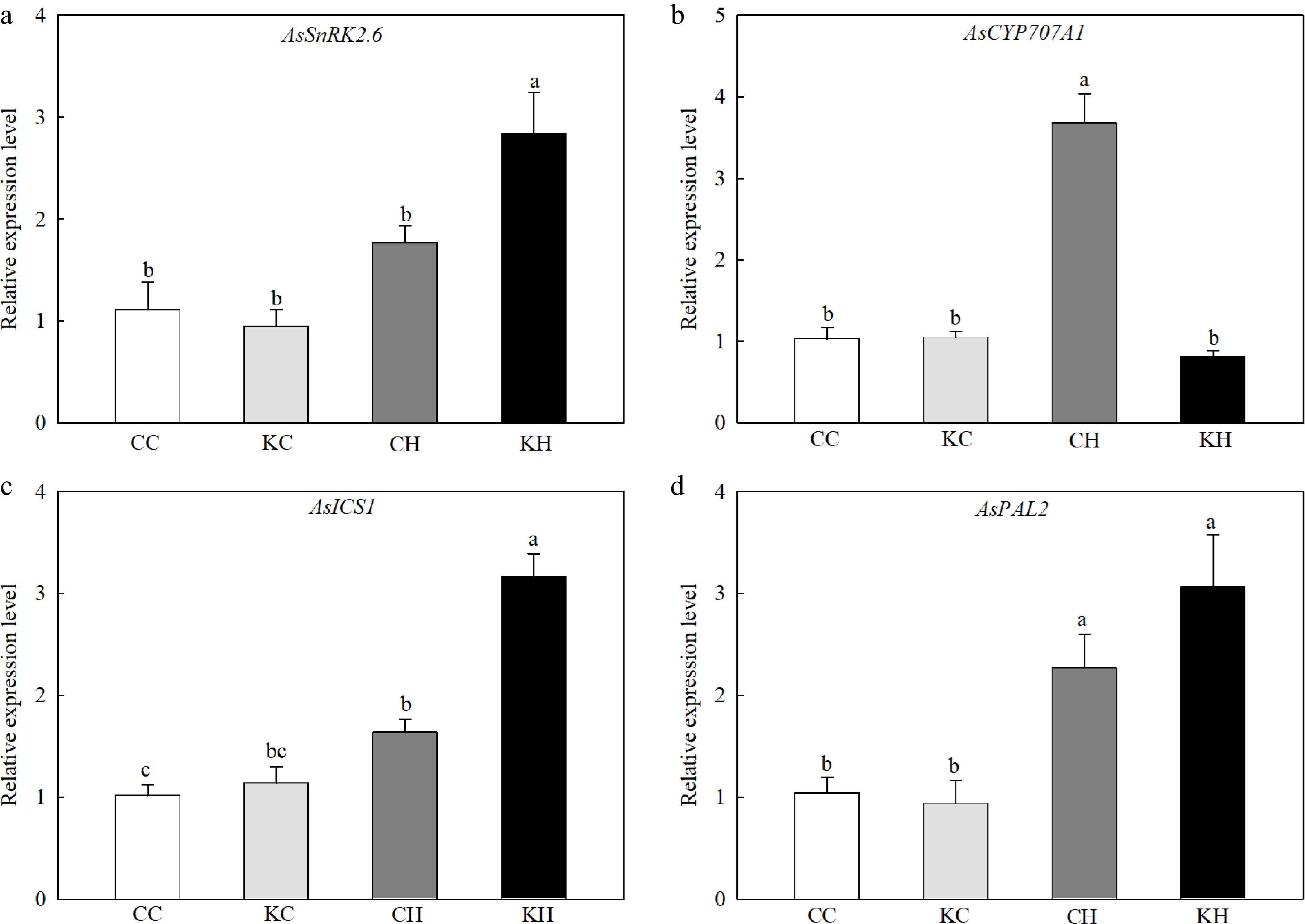
Figure 5.
Effects of KAR1 on expression of (a) AsSnRK2.6, (b) AsCYP707A1, (c) AsICS1, and (d) AsPAL2 in leaves of creeping bentgrass exposed to optimal temperature and heat stress. CC, foliar application of water + optimal temperature; KC, foliar application of 100 nM KAR1 + optimal temperature; CH, foliar application of water + heat stress; KH, foliar application of 100 nM KAR1 + heat stress. Data shown are the mean ± SE of four biological replicates. Bars not sharing a common letter indicate significant differences at p < 0.05 level.
-
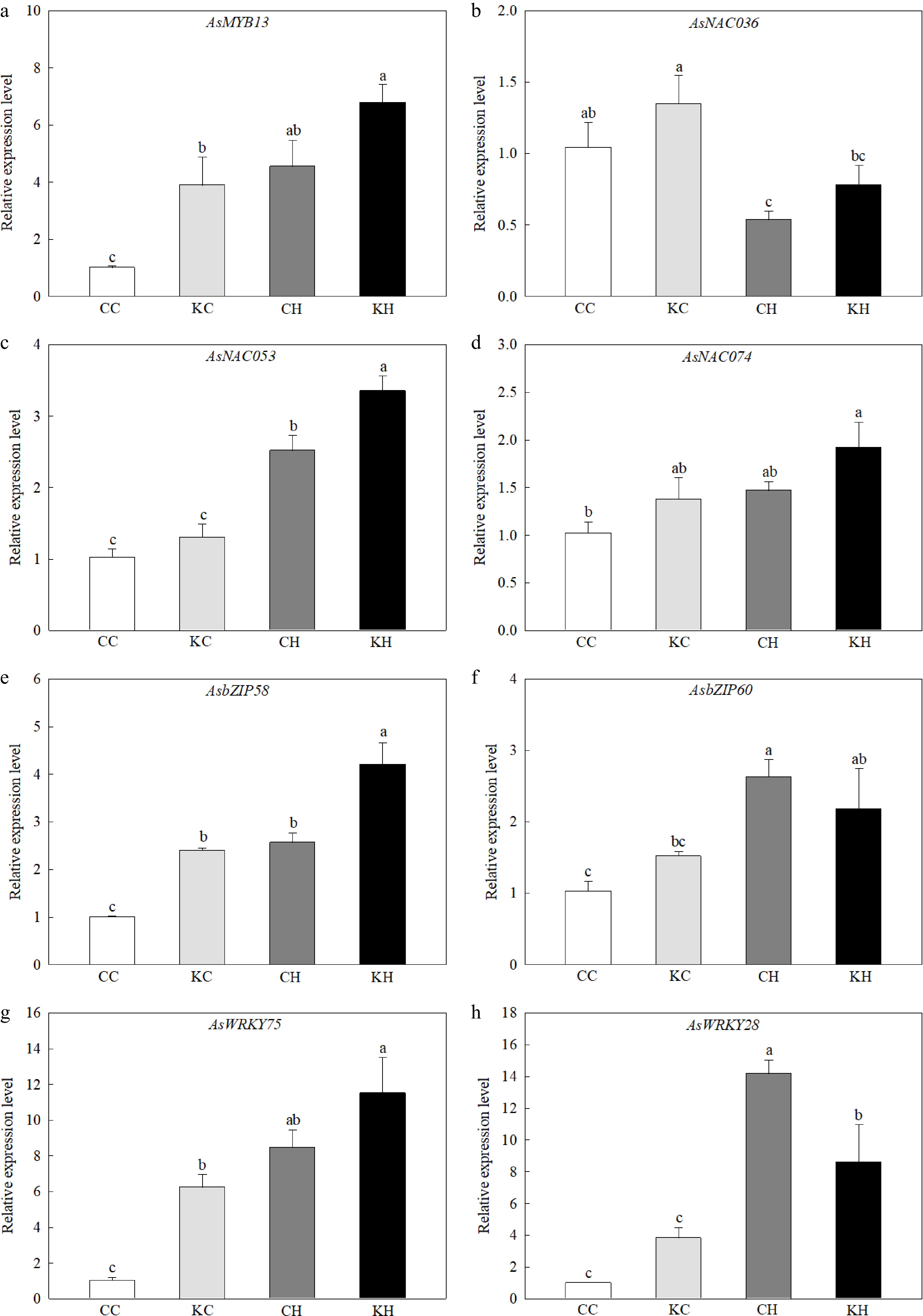
Figure 6.
Effects of KAR1 on expression of (a) AsMYB13, (b) AsNAC036, (c) AsNAC053, (d) AsNAC074, (e) AsbZIP58, (f) AsbZIP60, (g) AsWRKY75, and (h) AsWRKY28 in leaves of creeping bentgrass exposed to optimal temperature and heat stress. CC, foliar application of water + optimal temperature; KC, foliar application of 100 nM KAR1 + optimal temperature; CH, foliar application of water + heat stress; KH, foliar application of 100 nM KAR1 + heat stress. Data shown are the mean ± SE of four biological replicates. Bars not sharing a common letter indicate significant differences at p < 0.05.
-
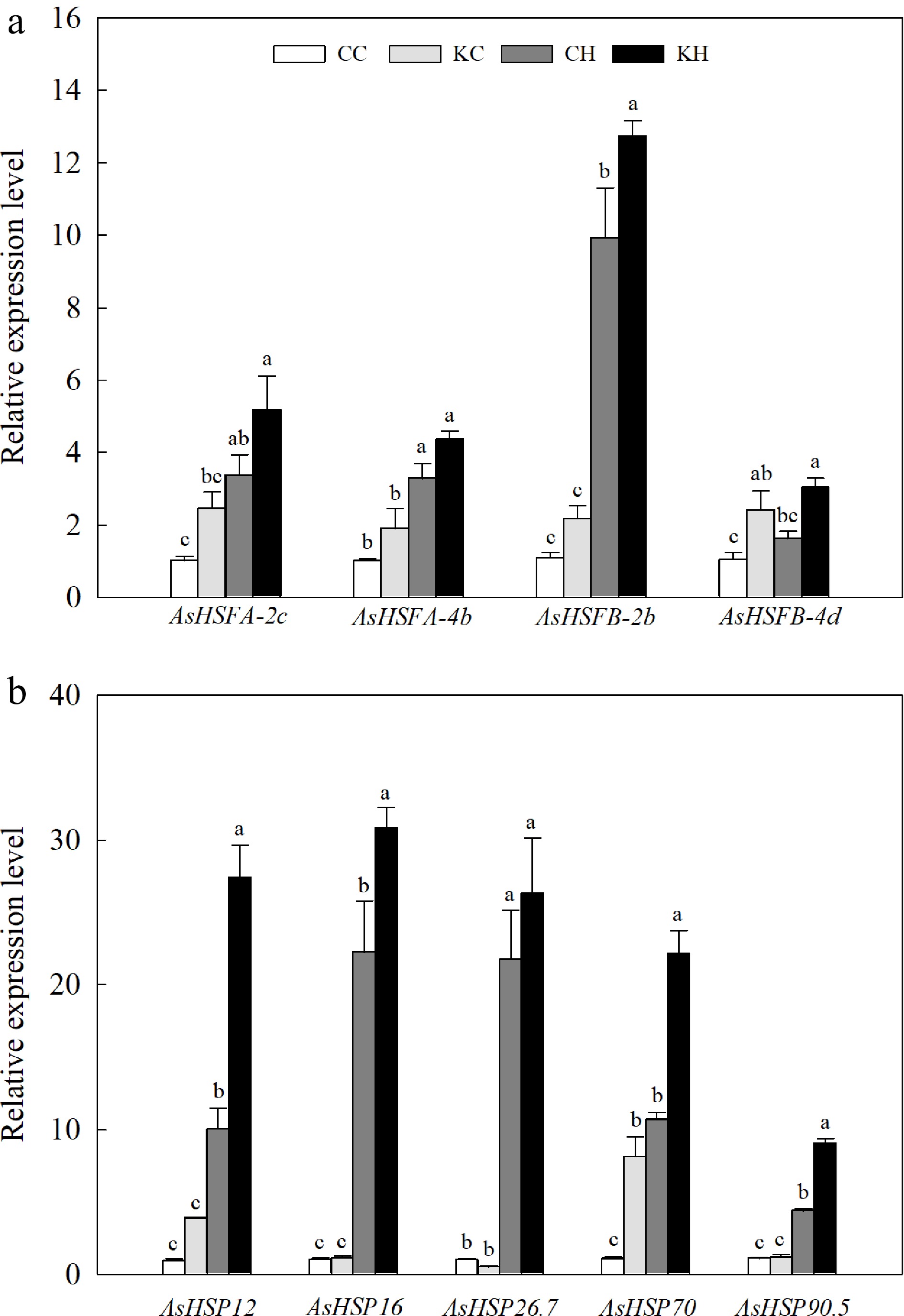
Figure 7.
Effects of KAR1 on expression levels of (a) HSFs and (b) HSPs in leaves of creeping bentgrass exposed to optimal temperature and heat stress. CC, foliar application of water + optimal temperature; KC, foliar application of 100 nM KAR1 + optimal temperature; CH, foliar application of water + heat stress; KH, foliar application of 100 nM KAR1 + heat stress. Data shown are the mean ± SE of four biological replicates. Bars not sharing a common letter indicate significant differences at p < 0.05.
-
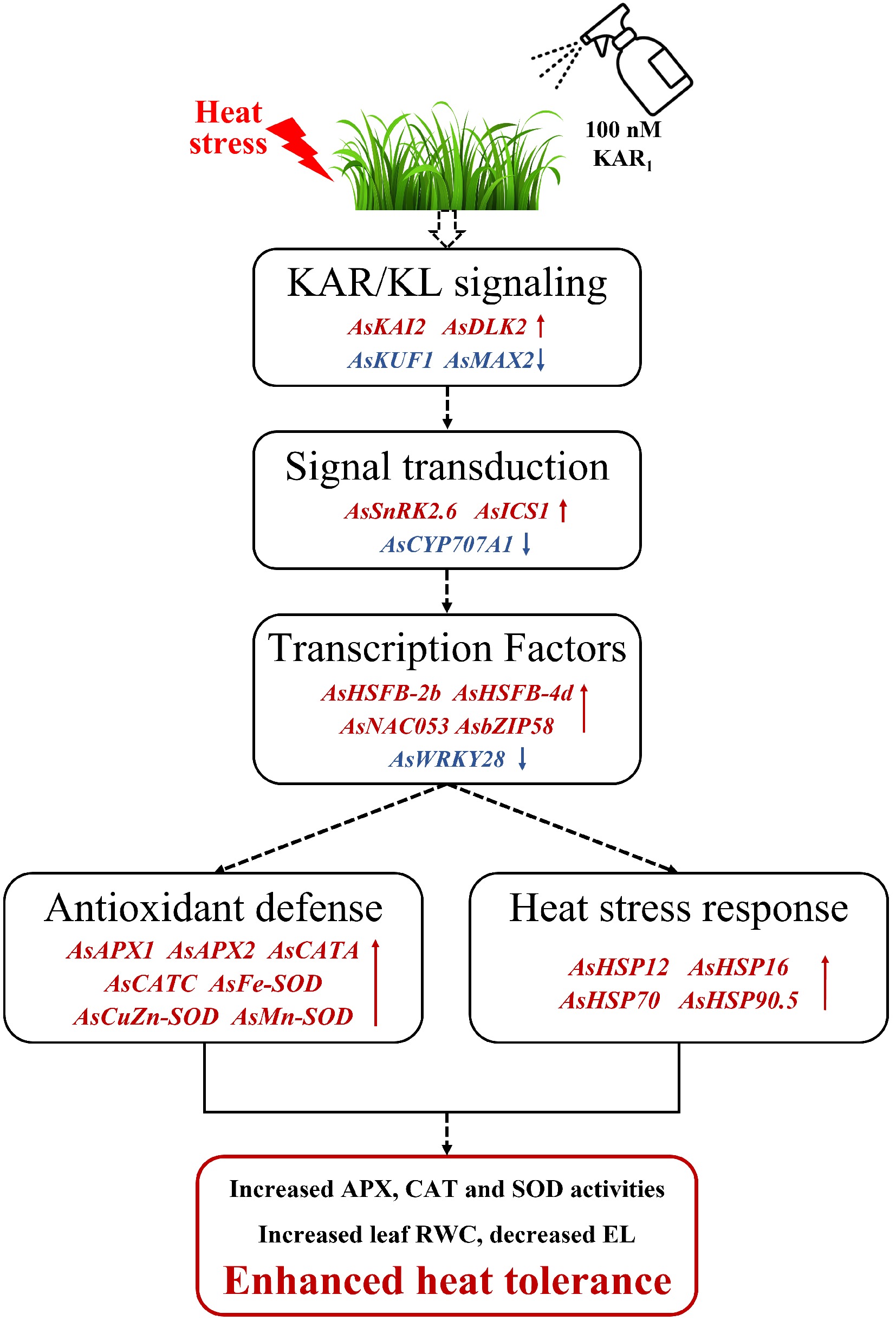
Figure 8.
Schematic diagram illustrating the mechanism of KAR1 enhances the heat tolerance of creeping bentgrass. Under heat stress, foliar application of KAR1 up-regulated the expression of KAR/KL signal transduction genes (AsKAI2, AsDLK2), hormone biosynthesis and signaling genes (AsSnRK2.6, AsICS1), transcription factors (AsHSFB-2b, AsHSFB-4d, AsNAC053, AsbZIP58), antioxidant defense genes (AsAPX1, AsAPX2, AsCATA, AsCATC, AsFe-SOD, AsCuZn-SOD, AsMn-SOD), and heat shock proteins (AsHSP12, AsHSP16, AsHSP70, AsHSP90.5), while down-regulated the expression of KAR/KL signal transduction genes (AsMAX2, AsKUF1), phytohormone catabolism gene (AsCYP707A1), and transcription factor (AsWRKY28), resulting in enhanced heat tolerance (increased leaf RWC, decreased EL, and increased activities of APX, CAT and SOD) of creeping bentgrass.
Figures
(8)
Tables
(0)