-
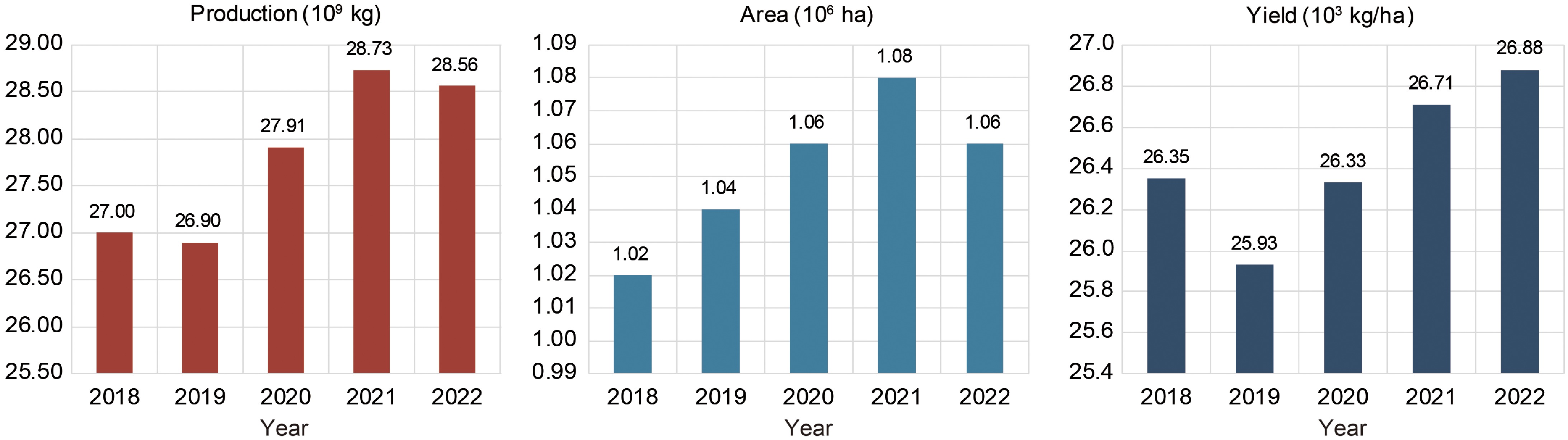
Figure 1.
Global production, cultivated area, and yield of cantaloupes and other melons from 2018 to 2022. Data was collected from the Food and Agriculture Organization of the United Nations (FAO)
(www.fao.org/faostat/zh/#data/QCL/visualize ). -
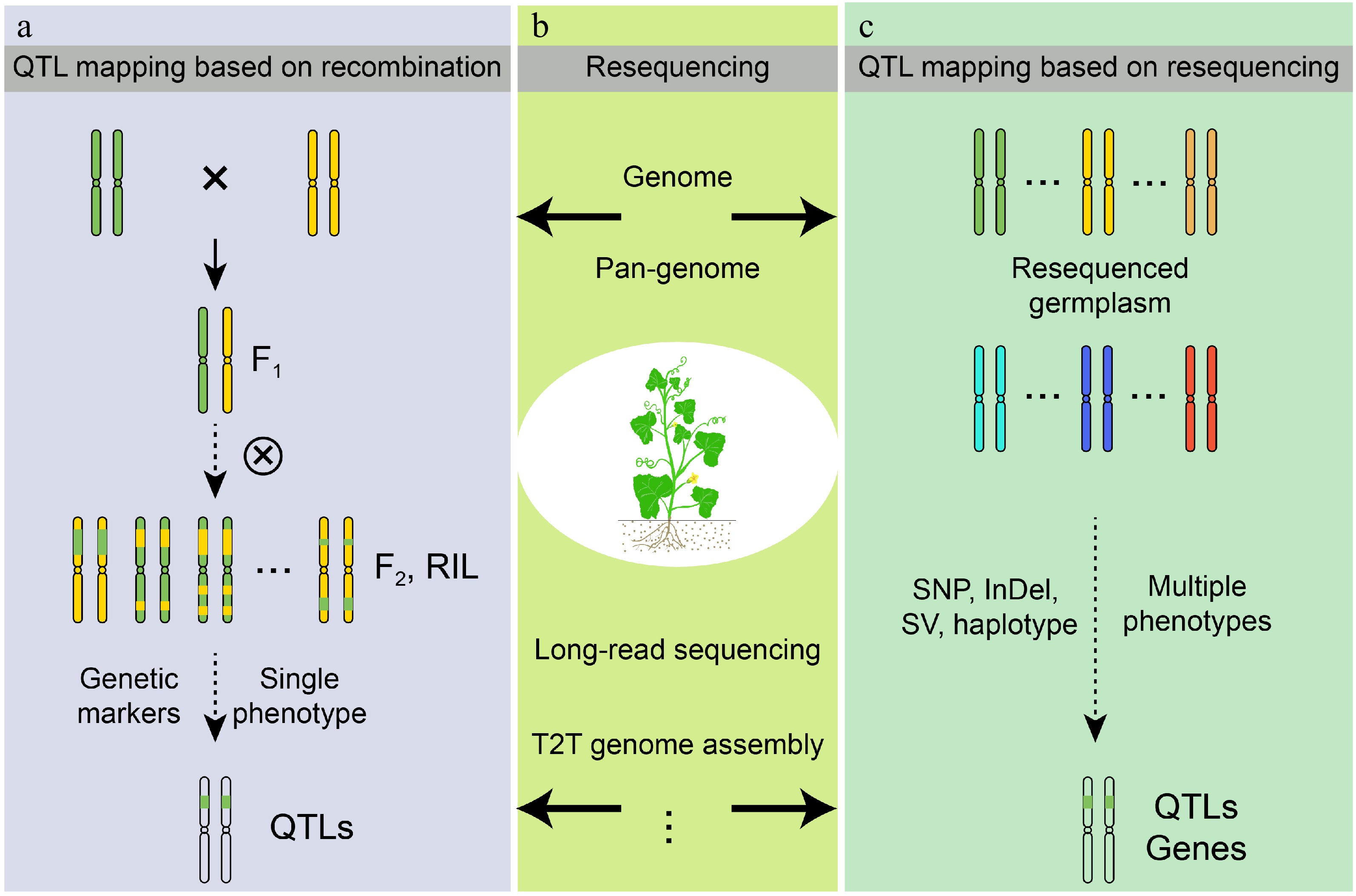
Figure 2.
Development of QTL mapping methods. (a) QTL mapping based on genetic recombination. The progeny population was generated through hybridization and self-fertilization, while QTL mapping was conducted by integrating genetic markers with the phenotypic data of the progeny. (b) Advancements in genome sequencing and assembly technologies serve as formidable instruments for enhancing crop research and development. (c) QTL mapping utilizing resequencing techniques facilitates the swift identification of QTL through the diverse variations and phenotypes present.
-
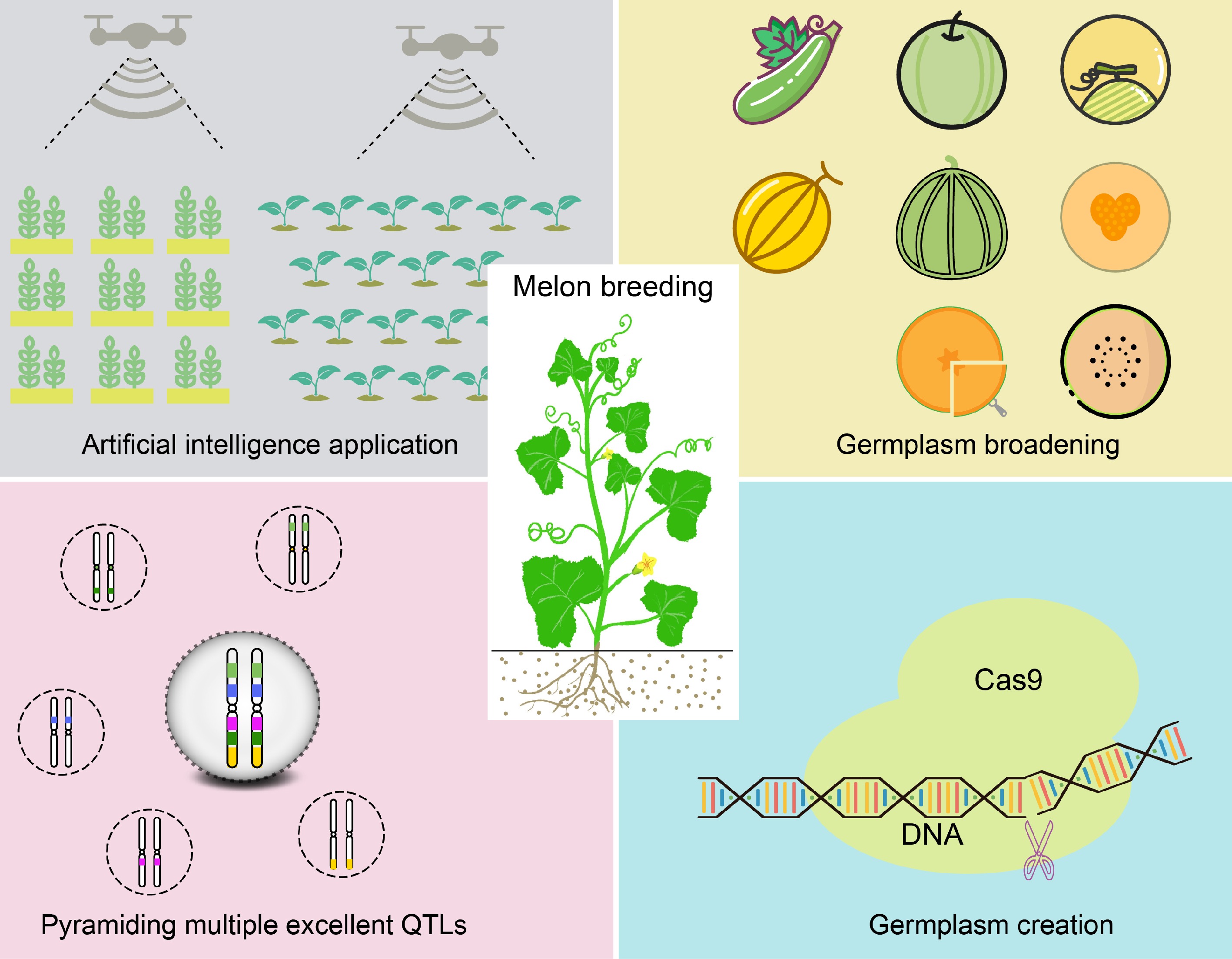
Figure 3.
Integrated strategies for melon breeding. Develop a high-throughput phenotypic identification system utilizing AI technology to expedite melon breeding. Broadening melon germplasm facilitates the identification of novel superior genes. The pyramiding of multiple excellent QTLs aids in enhancing desirable characteristics in melons. Gene editing technologies can be employed to develop new germplasm.
Figures
(3)
Tables
(0)