-
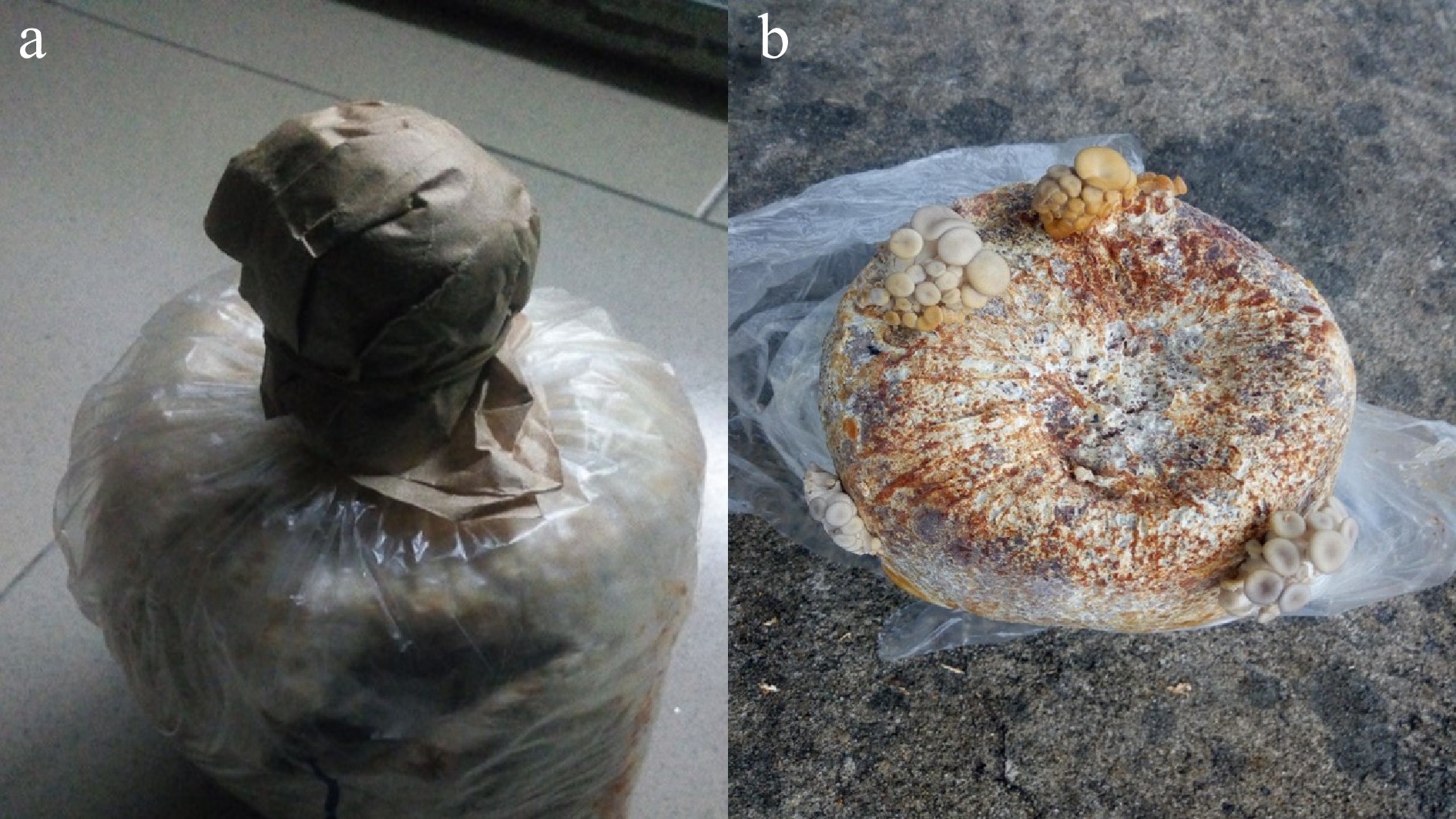
Figure 1.
(a) Pre-exposure sample in original packaging. (b) Experimental sample following exposure within the generator house. Observable changes include the onset of sprouting, discoloration, and the development of potential fungal growth, indicating a response to the environmental conditions. A transparent nylon barrier was employed to capture any potential liquid or particulate matter released during the exposure period.
-
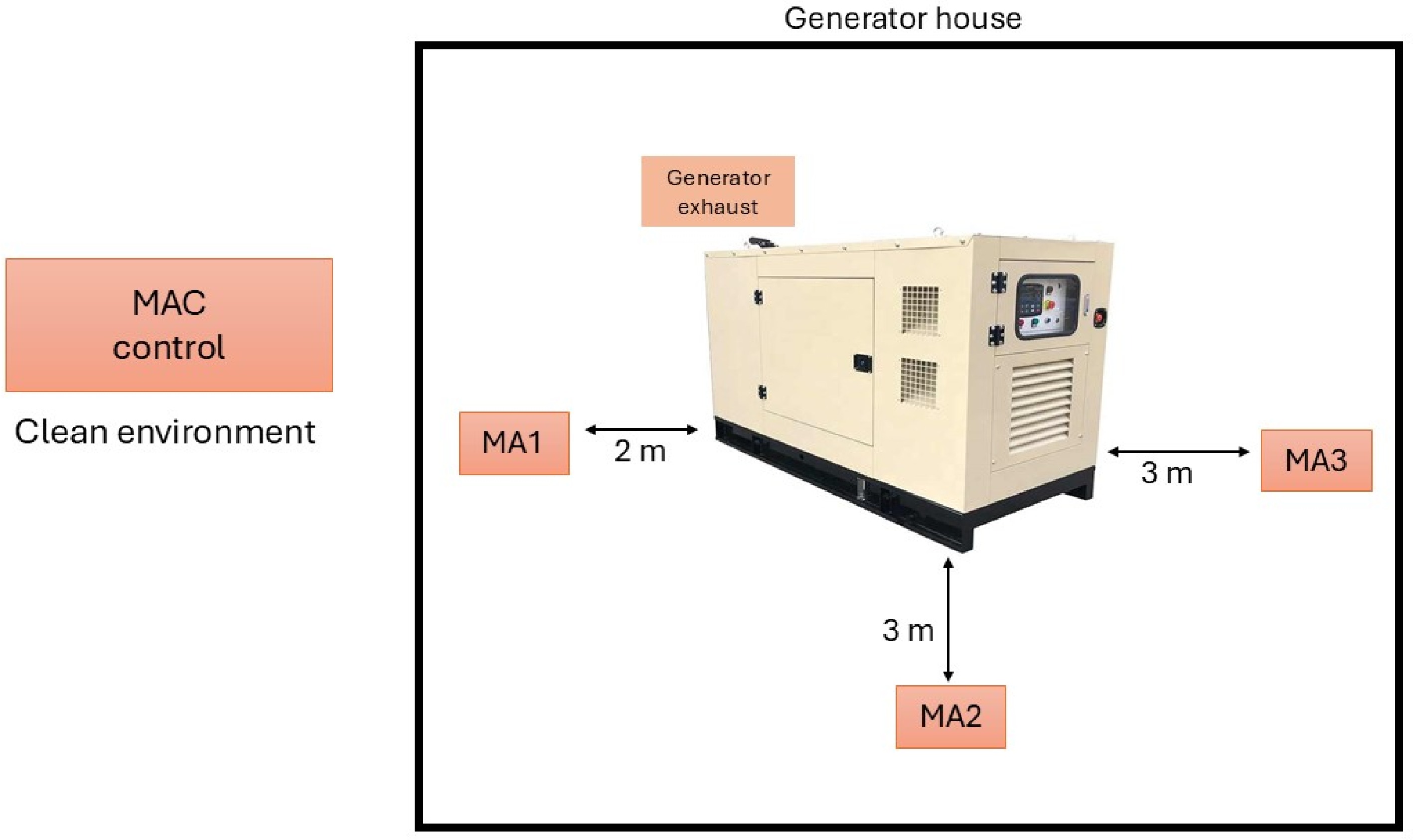
Figure 2.
Experimental setup for pollutant exposure monitoring using oyster mushrooms (Pleurotus ostreatus). Three mushroom bags (MA 1 = 2 m; MA 2 and MA 3 = 3 m from the generator) were placed at different corners inside a roofed but open generator house near an operating diesel generator. A fourth bag (MAC) served as a control and was placed in a clean, well-ventilated indoor environment away from generator emissions.
-
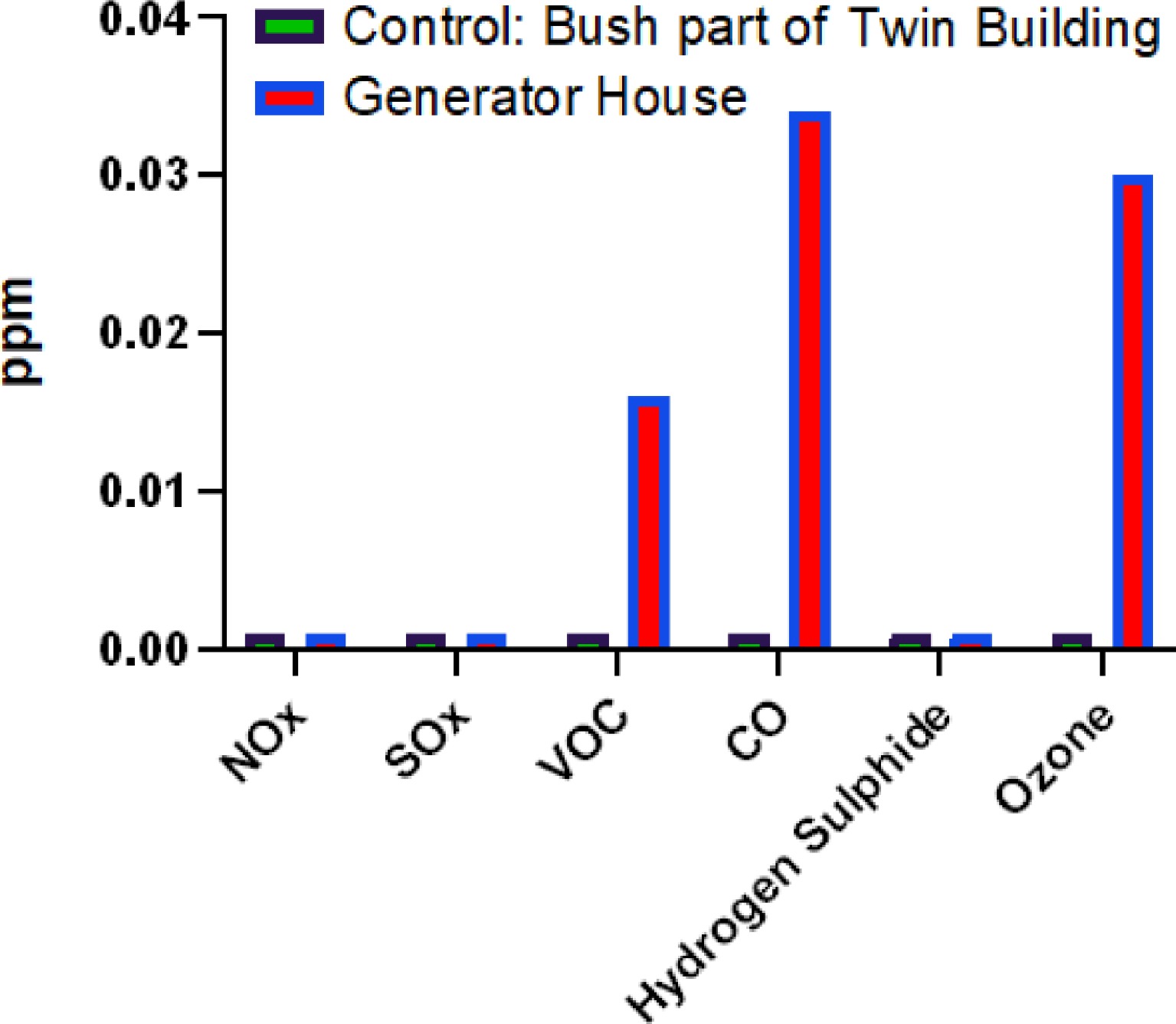
Figure 3.
Air quality parameters measured at the generator house and control site (the control site was a 400-capacity building surrounded by natural vegetation, chosen to contrast with the generator house's pollutant exposure). The values represent pollutant concentrations and environmental conditions to assess the potential exposure of mushrooms to airborne contaminants.
-
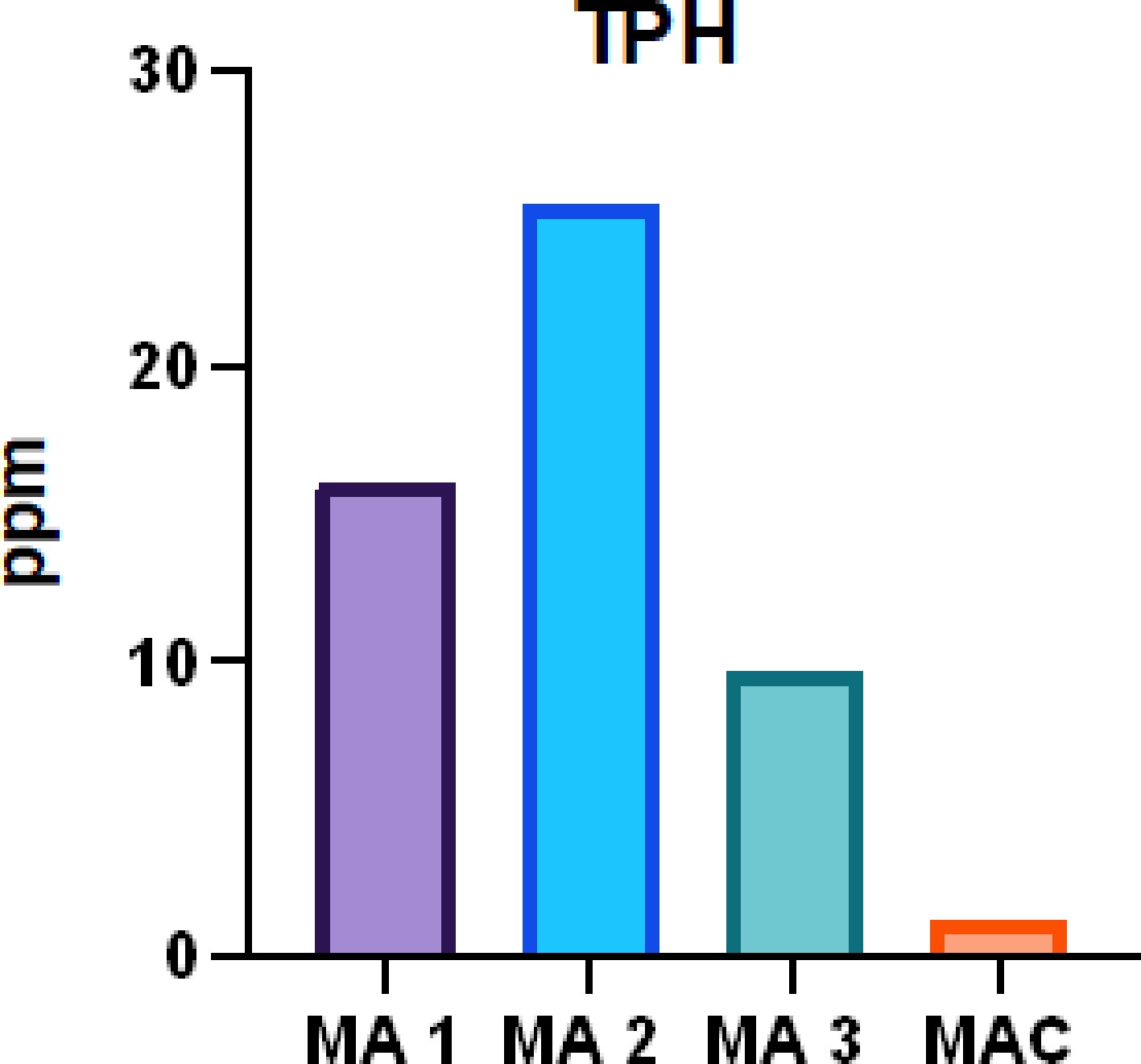
Figure 4.
Concentrations of TPH in mushrooms placed at different distances (MA 1: 2 m; MA 2 and MA 3: both 3 m) within the generator house and the control mushroom (MAC). The values indicate the extent of hydrocarbon absorption, highlighting the influence of pollutant dispersion and airflow patterns.
-
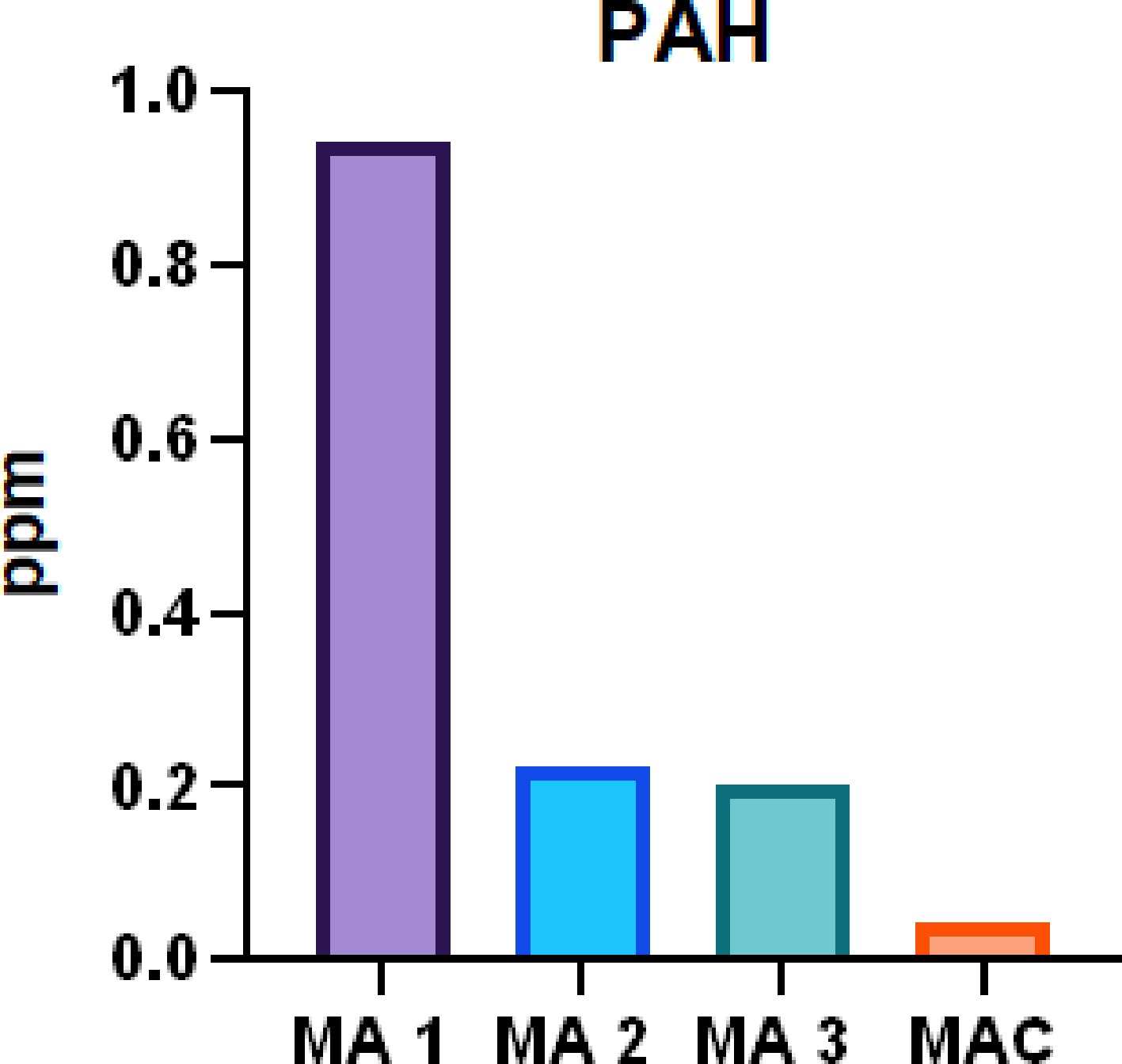
Figure 5.
PAH in mushrooms placed at different distances within the generator house and a control site.
-
Control point Generator house SPM (µg/m3) 22 37.5 Noise (dB) 50.3 97.8 Wind speed (m/s) 2.2 0.6 Temperature (°C) 29.4 29.4 Relative humidity (%) 74.1 73.3 Table 1.
Comparative air quality parameters at the generator house and control site.
Figures
(5)
Tables
(1)