-
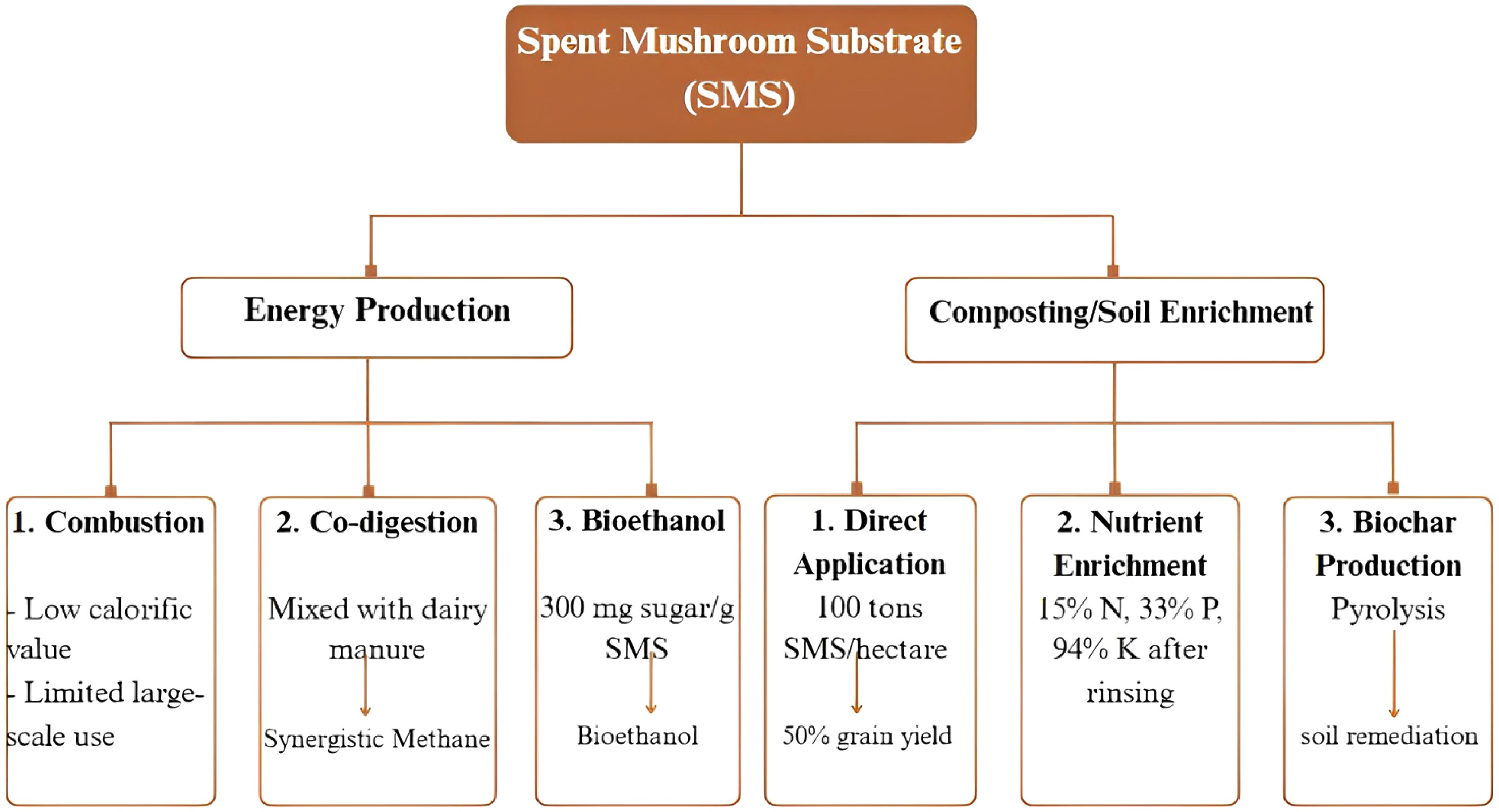
Figure 1.
Key applications of spent mushroom substrate (SMS). Created with Biorender.
-
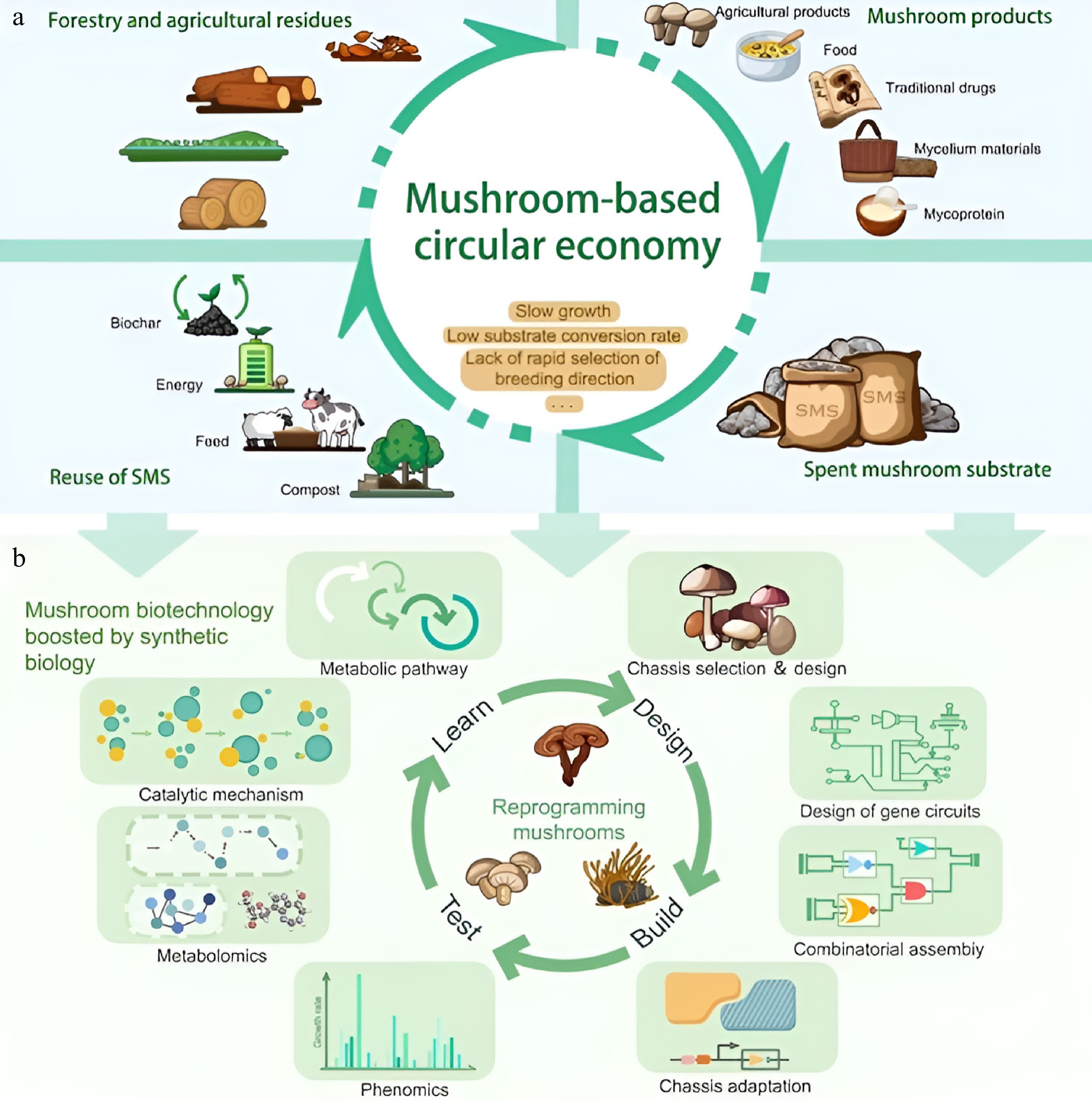
Figure 2.
The evolution of design science has altered mushroom growth from a focus on regular improvements to extensive applications based on advanced biotechnology. (a) Inefficiencies in traditional agriculture include restricted SMS reuse, sluggish growth, and poor substrate usage. Value creation possibilities are lost, and waste is produced by the linear approach. (b) To rewire mushrooms for better qualities, the synthetic biology toolkit employs metabolic engineering, gene circuits, and chassis design. Precision breeding allows for faster development of strains with optimized growth, substrate digestion, and metabolite profiles. Engineered strains convert SMS into advanced materials and energy[14].
-
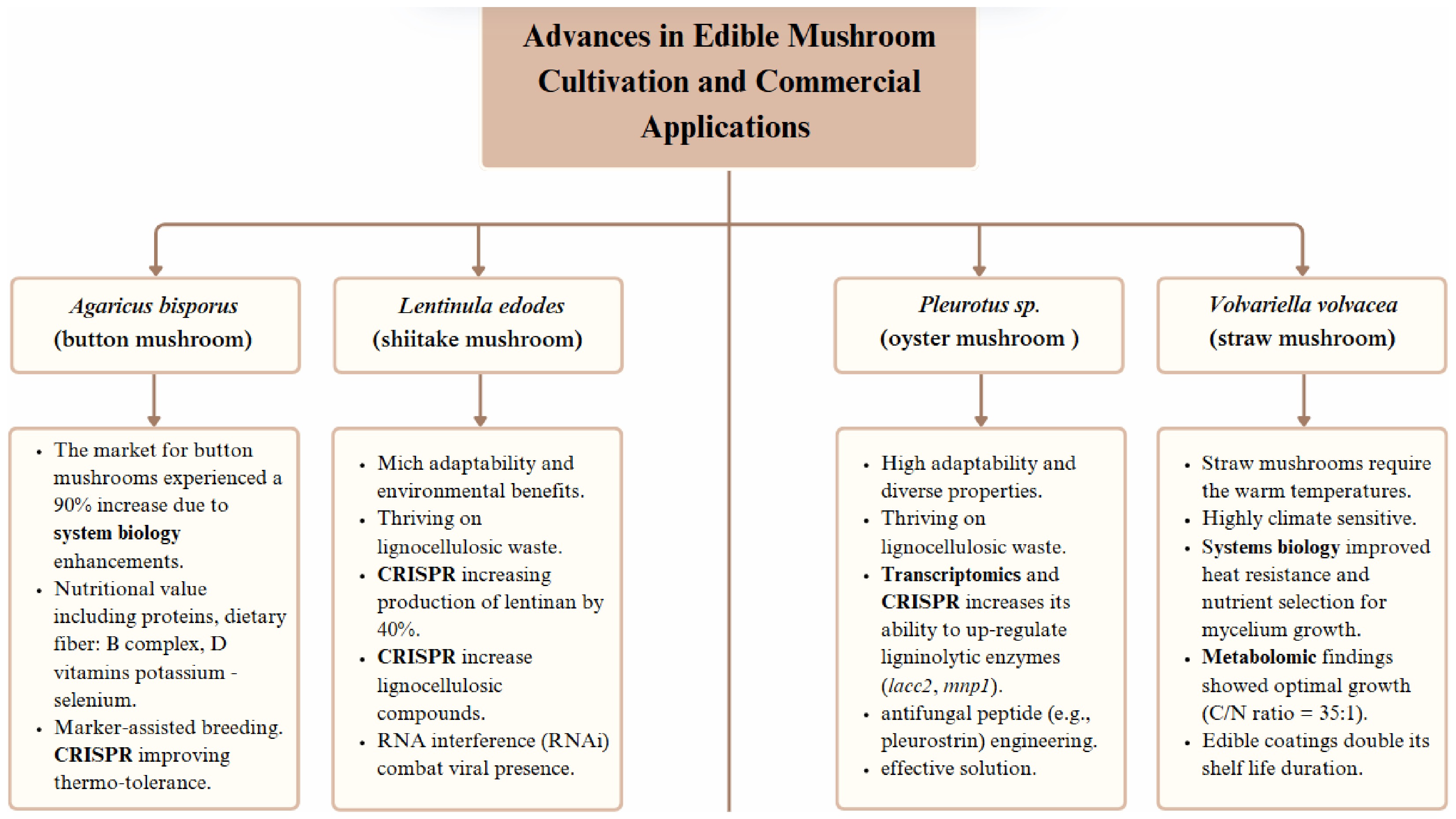
Figure 3.
Overview of major edible mushroom species and the related systems biology advancements in yield, disease resistance, and commercial applications. Created with Biorender.
-
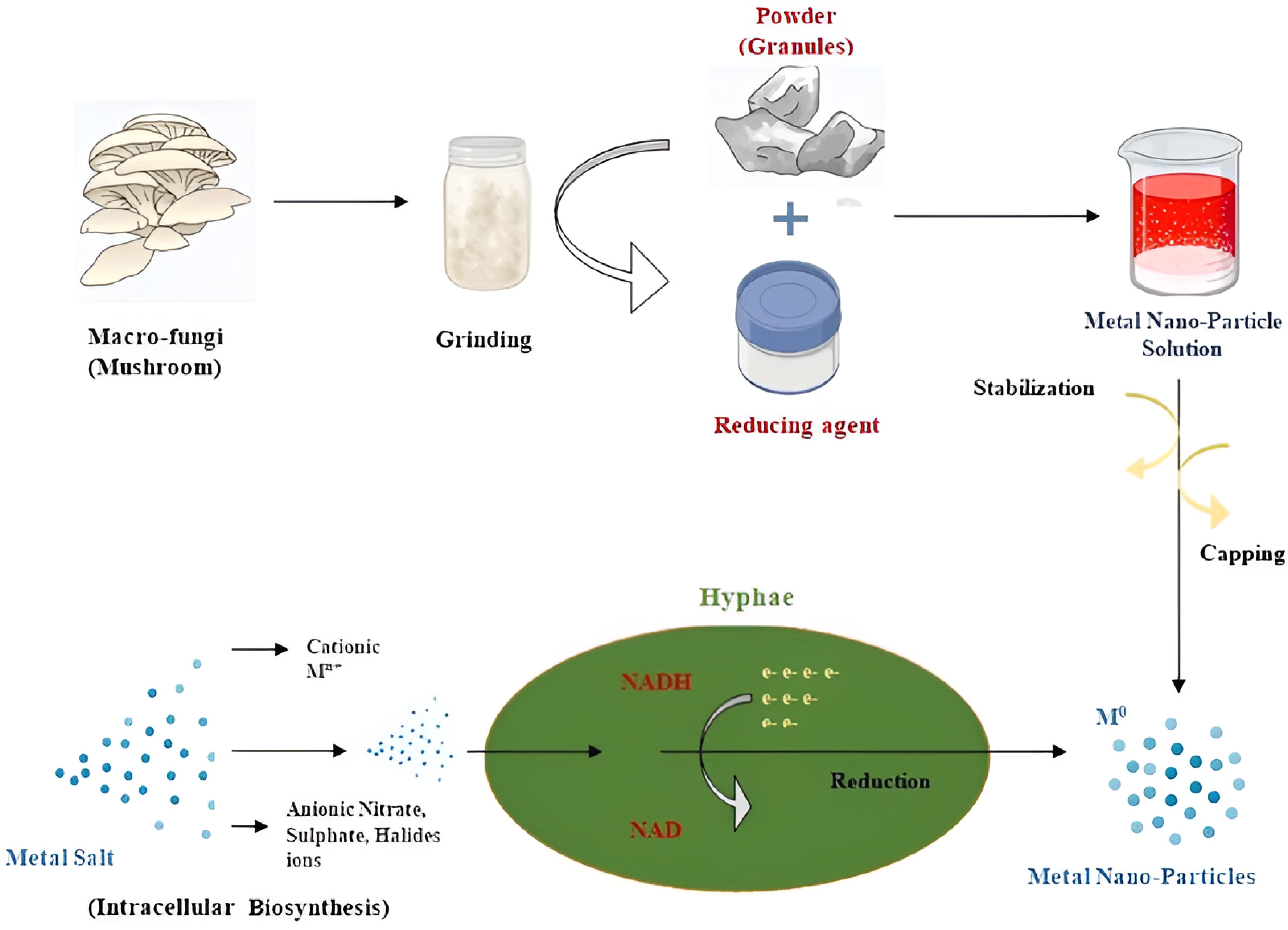
Figure 4.
The (green) synthesis of metal nanoparticles from mushrooms is illustrated. Mushrooms are ground into powder for extracellular synthesis by adding metal salt solutions and reducing agents to the suspension solution being reduced, e.g., NADH and intracellular biosynthesis (bio-reduction and capping of metal cations such as Mn+ using fungal metabolism) are also types of this process. Created by biorender.com.
-
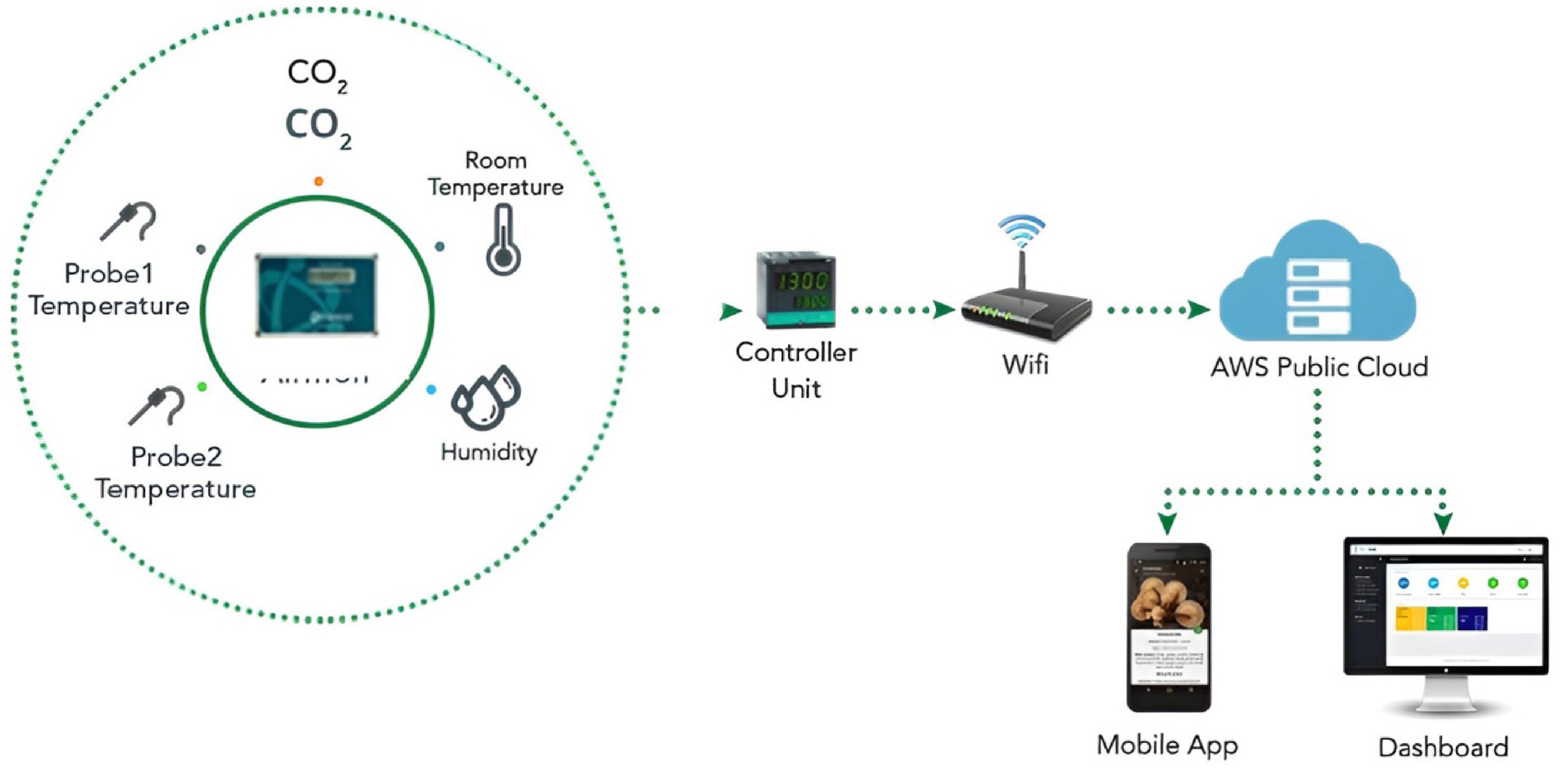
Figure 5.
The mushroom monitoring solution is carried out through passive monitoring of mushroom farm, including seven stages that impact on the yield and quality of production[122].
-
S. no. Bioactive compound Mushroom species Health benefit Mechanism Source 1. β-Glucans Pleurotus spp. Anticancer, antiviral Immune receptor activation Medihi et al.[55] 2. Lentinan Lentinula edodes Immune modulation, Antitumor Apoptosis induction Yadav & Negi[36] 3. Vanillic acid Armillaria mellea Anti-inflammatory, Antioxidant Free radical scavenging Erbiai et al.[53] 4. Protocatechuic acid Macrolepiota procera Antioxidant, cardio-protective Metal ion chelation Erbiai et al.[53] 5. Terpenoids Ganoderma lucidum Antibacterial, anticancer Membrane disruption Câmara et al.[47] Table 1.
Key bioactive compounds and associated health benefits
-
S. no. Mushroom species Key transcriptomic findings Application in commercial settings Market value Source 1. Button mushroom
(Agaricus bisporus)Upregulation of temperature-sensitive heat shock protein genes (HSP70/90). Developing disease-resistant hybrids for the global food market. Dominates the global market, value (over
USD${\$} $ Feng et al.[70] 2. Shiitake mushroom (Lentinula edodes) Increase in LELent1 and LEGlu1 gene expression boosts lentinan synthesis. Production of nutraceuticals for immune support Premium segment valued at USD ${\$} $ Konno et al., [60] 3. Oyster mushroom
(Pleurotus spp.)lacc2/mnp1 enhances lignin degradation Waste-to-food project ~USD ${\$} $ Salami et al.[64] 4. Straw mushroom (Volvariella volvacea) Evaluation of VvHSP60 found to increase mushroom production by 15%. Enhancing the sustainability of tropical agriculture ~USD ${\$} $ Bao et al.[65] Table 2.
Insights into market value and commercial uses from transcriptomic research
-
Parameter Intervention Outcome Source Lentinan production CRISPR-enhanced L. edodes Increased by 40% Sakamoto et al.[61] IoT-driven yield optimization ML algorithms (CO2 control) 25% yield increase Choi et al.[128] Substrate colonization time CRISPR-edited P. sajor-caju Reduced by 30% Barh et al.[86] Heat tolerance 18% yield increase at 35 °C Bao et al.[65] Federated learning (IoT + ML) 42% fewer bacterial blotch cases Kathiria et al.[118] Table 3.
Synopsis of empirical findings.
Figures
(5)
Tables
(3)