-
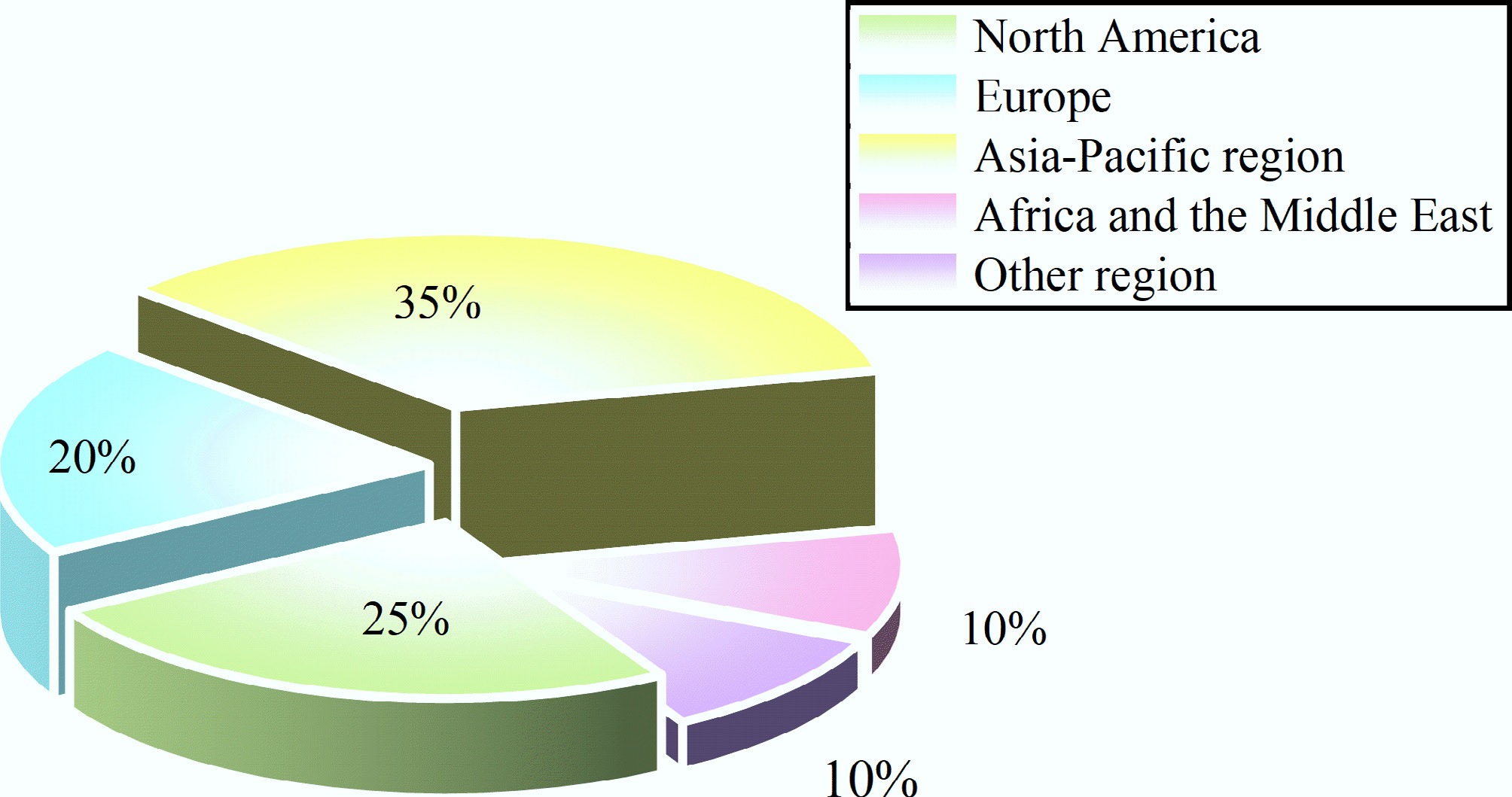
Figure 1.
The regional contributions of the global insect repellent market in 2023.
-
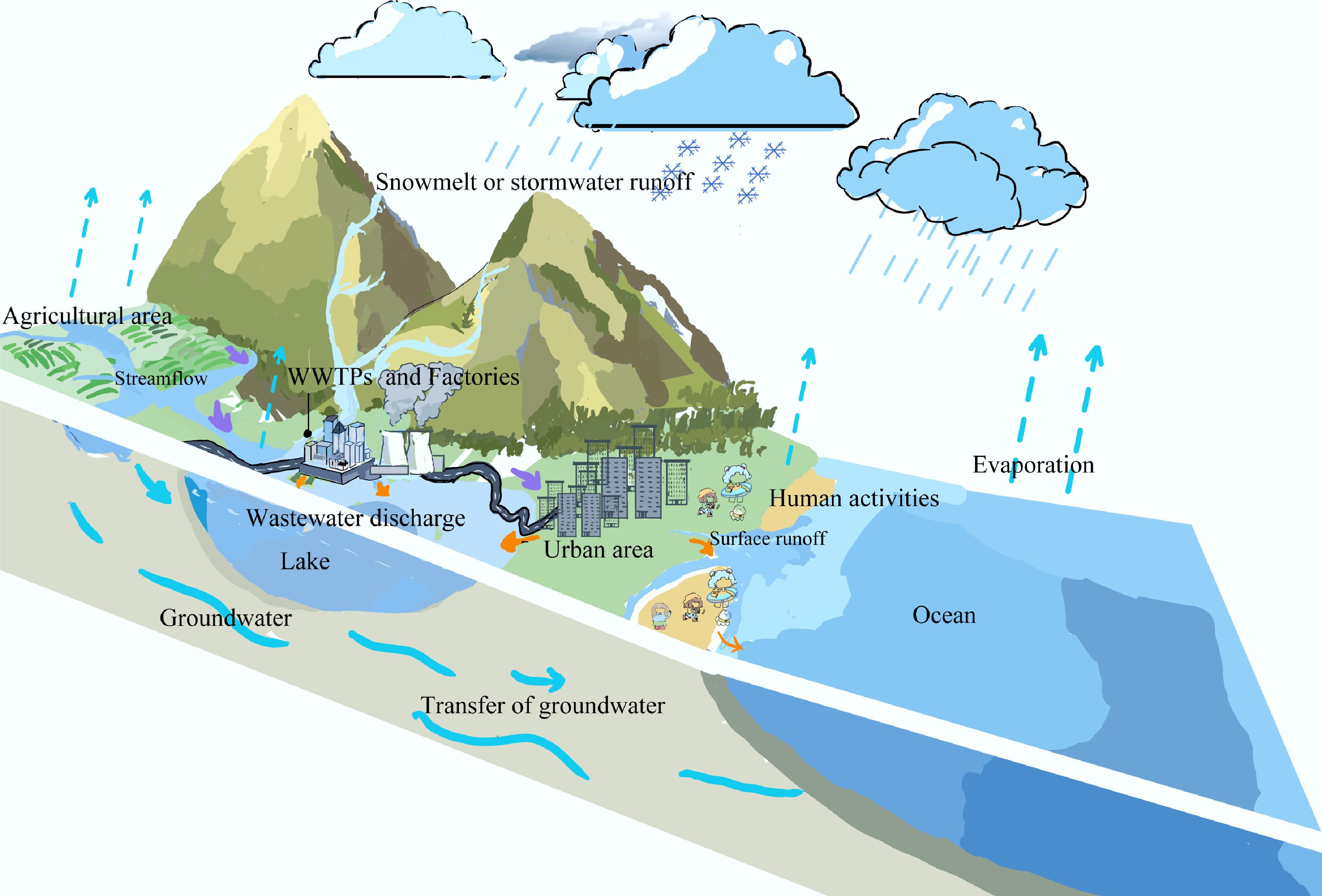
Figure 2.
Sources of DEET in the water environment.
-
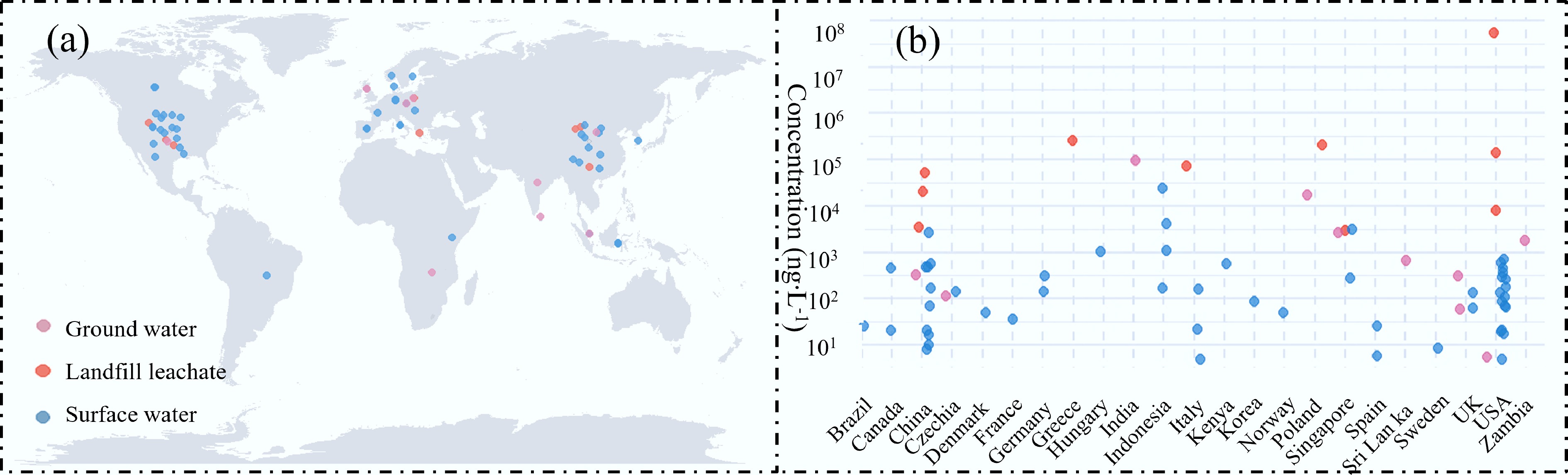
Figure 3.
Overview of DEET (a) reported globally, and (b) maximum concentrations of DEET in different counties.
-
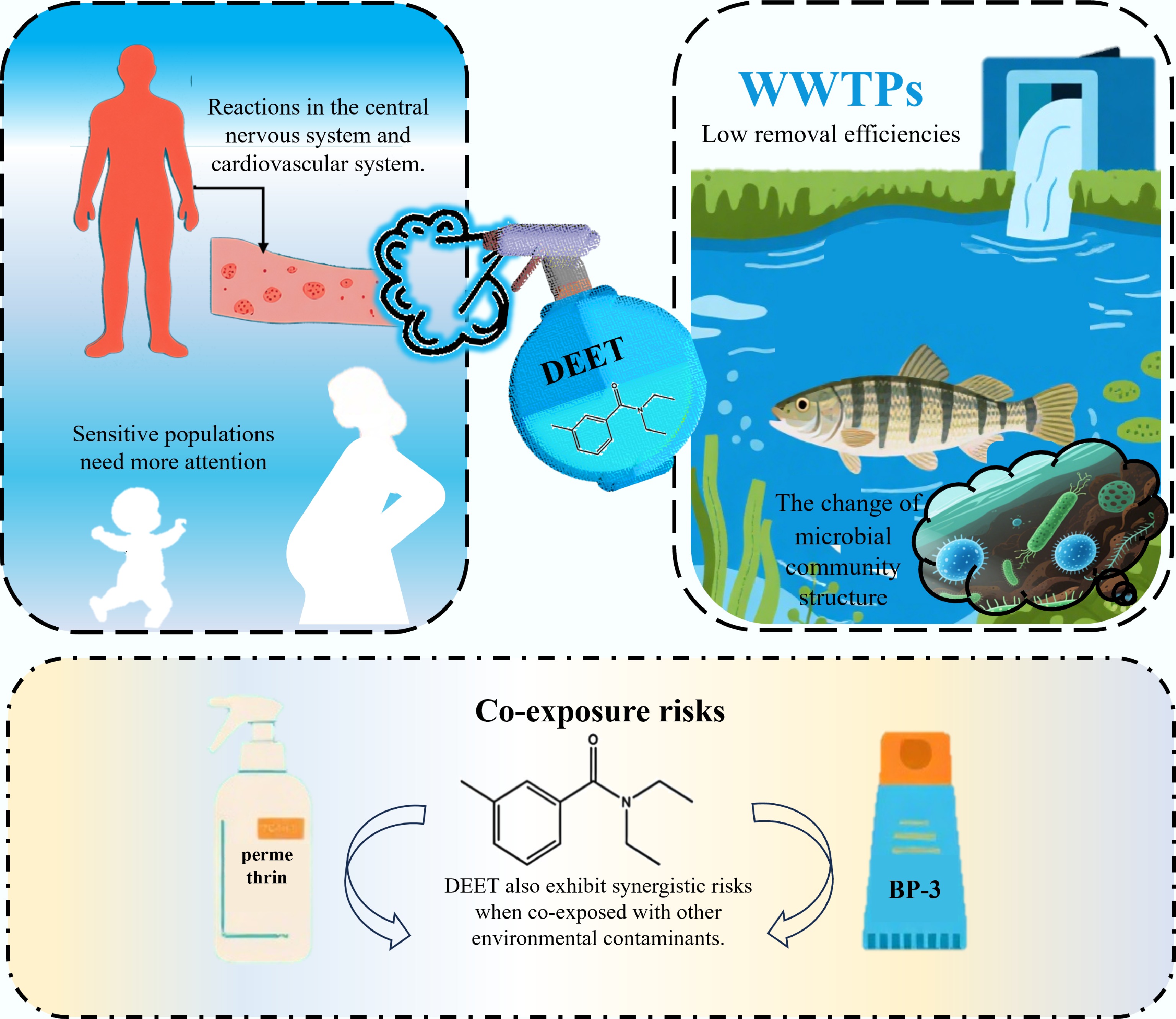
Figure 4.
The risks of DEET on human health and the environment.
-
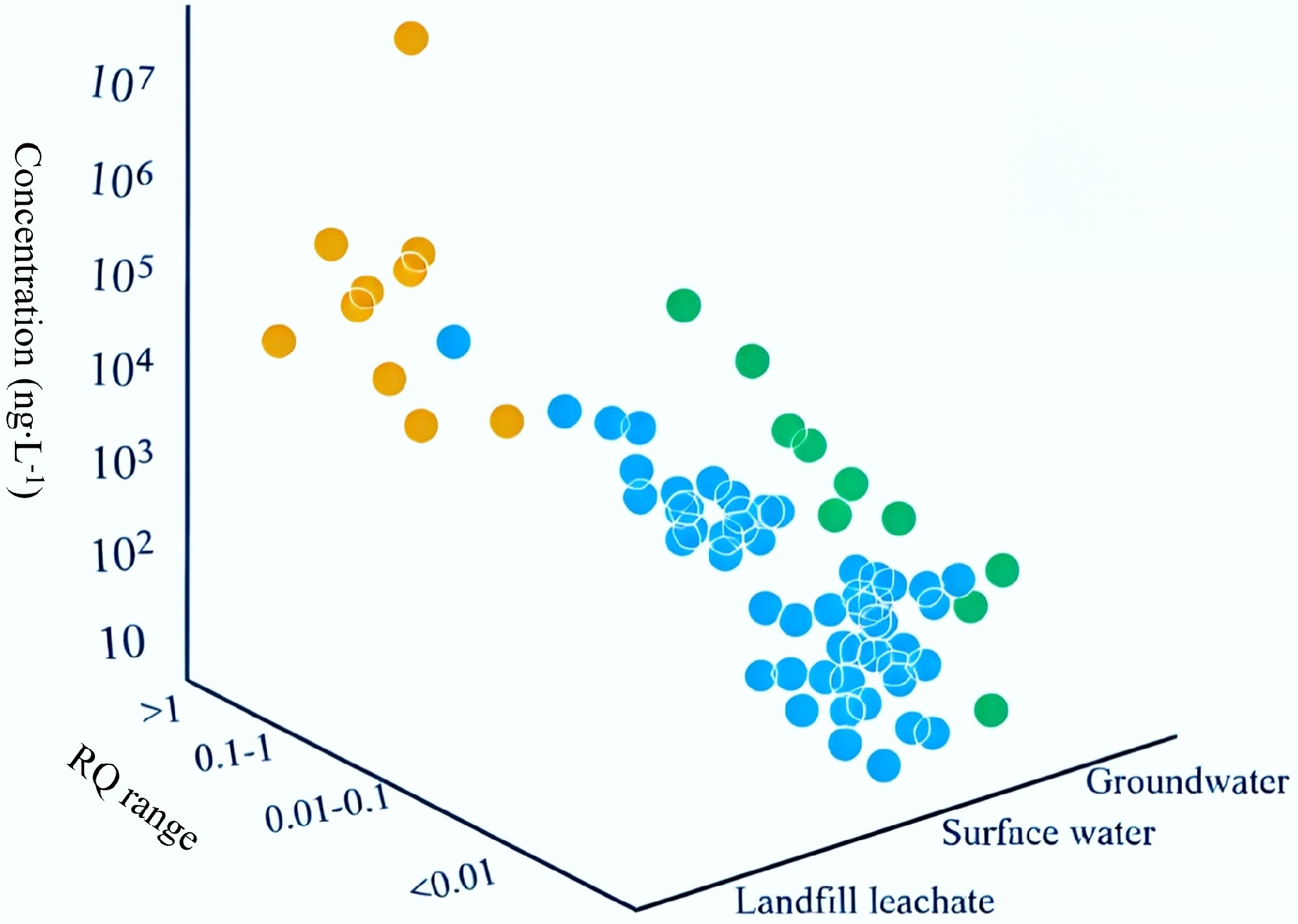
Figure 5.
The concentration and RQ of DEET in water environments.
-
Rank class (x) RQ range Weight index (Wx) 1 > 1 1 2 0.1–1 0.5 3 0.01–0.1 0.25 4 < 0.01 0 Table 1.
Definition of the four rank classes, their corresponding RQ ranges, and assigned weighting indexes
-
Name Type Mechanism Intermediate product Ref. Cunninghamella elegans ATCC 9245 Fungus Cytochrome P450 monooxygenase N-deethylation (DEET → N-ethyl-m-toluidine); N-oxidation (DEET and N-ethyl-m-toluidine are oxidized to their respective nitrogen oxides) [165] Mucor ramannianus
R-56Cytochrome P450 monooxygenase N-deethylation (DEET → N-ethyl-m-toluidine);
Partial N-oxidation (only DEET oxidized to N,N-diethyl-m-toluidine-N-oxide)Pseudomonas putida
DTBBacterium DEET hydrolase
(encoded by the gene dthA)Catalyzing the hydrolysis of the amide bond in DEET into
3-methylbenzoate and diethylamine.[166,167] Table 2.
Microbial resources for DEET degradation
Figures
(5)
Tables
(2)