-
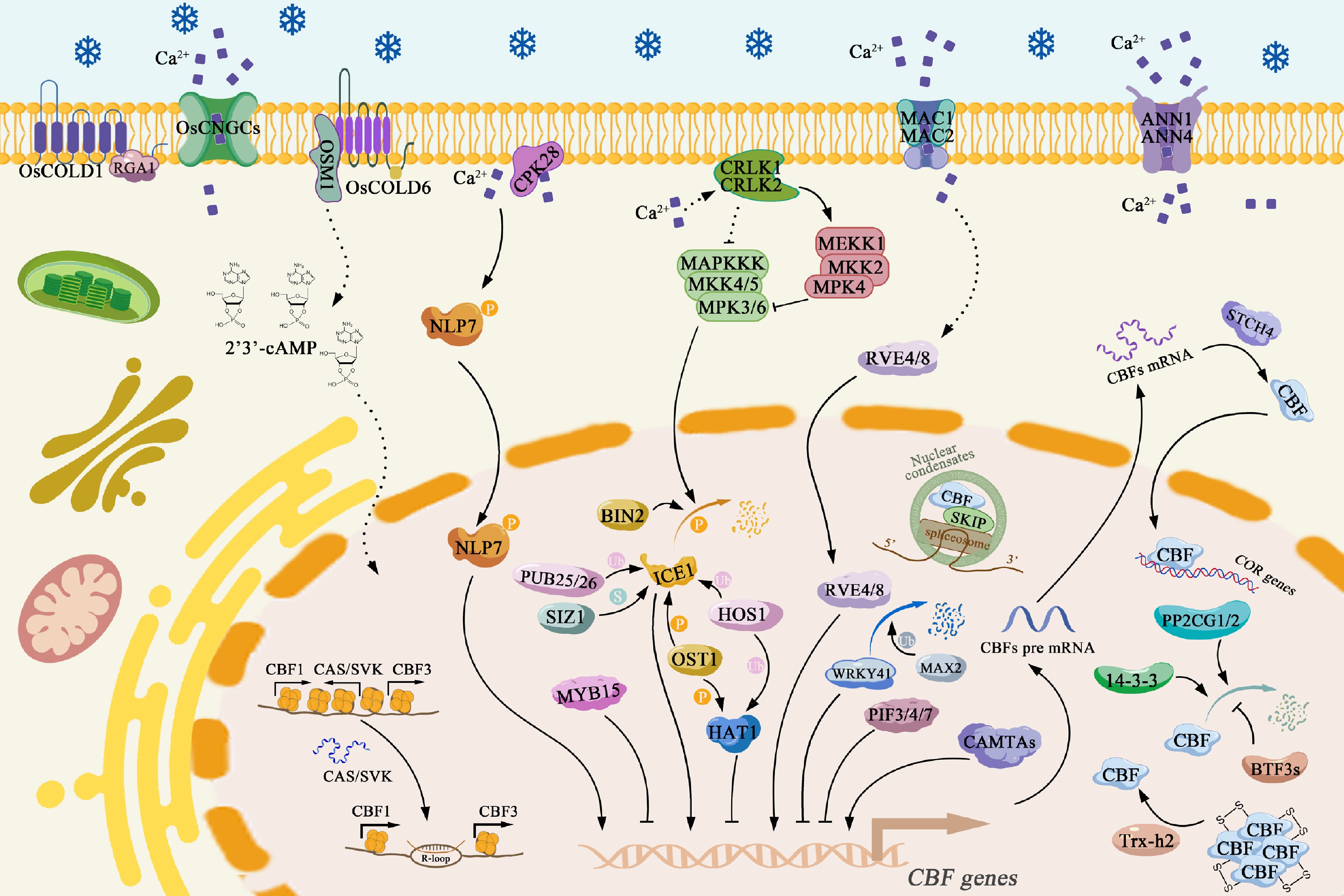
Figure 1.
Model of LT perception and signaling transduction in plants. Proteins such as MCA1/2, ANN1/4, CPK28, CRLK1/2, MKK4/MKK5-MPK3/MPK6, and MEKK1-MKK2–MPK4 in Arabidopsis, as well as OsCNGC9, COLD1, and COLD6-OSM1 in rice, perceive LT stress and regulate Ca2+ influx, thereby transmitting the cold signal into the nucleus. ICE1 protein activity is post-translationally modulated by BIN2, MPK3/6, HOS1, SIZ1, OST1, and PUB25/26, which in turn affects its regulatory function in cold signaling. Transcription of CBF genes is controlled by NLP7, HAT1, ICE1, MYB15, WRKY41, RVE4/8, PIF3/4/7, CAMTAs, and CAS/SVK. CBF proteins' stability, translation, and functional activity are influenced by STCH4, PP2CG1/2, 14-3-3 proteins, BTF3s, and Trx-h2, which affect their DNA binding to COR genes or splicing regulators, such as SKIP. Arrows indicate positive regulation, bar-headed lines represent negative regulation; solid lines denote direct interactions, and dashed lines represent indirect regulation. Abbreviations: MCA, Mid1-COMPLEMENTING ACTIVITY; ANN1/4, ANNEXIN1/4; CPK28, CALCIUM-DEPENDENT PROTEIN KINASE 28; CRLK1/2, Ca2+/CaM-REGULATED RECEPTOR-LIKE KINASE 1/2; MEKK1, MPK KINASE KINASE 1; MKK, MPK KINASE; MPK, MITOGEN-ACTIVATED PROTEIN KINASE; OsCNGC9, CYCLIC NUCLEOTIDE-GATED CHANNEL 9; COLD1/6, CHILLING TOLERANCE DIVERGENCE 1/6; OSM1, OSMOTIN-LIKE 1; ICE1, INDUCER OF CBF EXPRESSION 1; BIN2, BRASSINOSTEROID INSENSITIVE 2; HOS1, HIGH EXPRESSION OF OSMOTICALLY RESPONSIVE GENE 1; SIZ1, SAP AND MIZ1 DOMAIN-CONTAINING LIGASE 1; OST1, OPEN STOMATA 1; PUB25/26, PLANT U-BOX 25/26; CBF, C-REPEAT BINDING FACTOR; NLP7, NIN-LIKE PROTEIN 7; HAT1, HOMEODOMAIN-ASSOCIATED TRANSCRIPTION FACTOR 1; MYB15, MYB DOMAIN PROTEIN 15; WRKY41, WRKY DNA-BINDING PROTEIN 41; RVE4/8, REVEILLE 4/8; PIF3/4/7, PHYTOCHROME-INTERACTING FACTOR 3/4/7; CAMTAs, CALMODULIN-BINDING TRANSCRIPTION ACTIVATORs; CAS, CBF ANTISENSE TRANSCRIPT; SVK, SVALKA; STCH4, SENSITIVE TO CHILLING 4; PP2CG1/2, PROTEIN PHOSPHATASE 2C G 1/2; BTF3s, BASIC TRANSCRIPTION FACTOR 3s; trx-h2, thioredoxin h2; COR, COLD-REGULATED; SKIP, SnRNA KINASE INTERACTING PROTEIN; P, phosphorylation; Ub, ubiquitination; S, SUMOylation. This figure was created with templates from
https://BioGDP.com . -
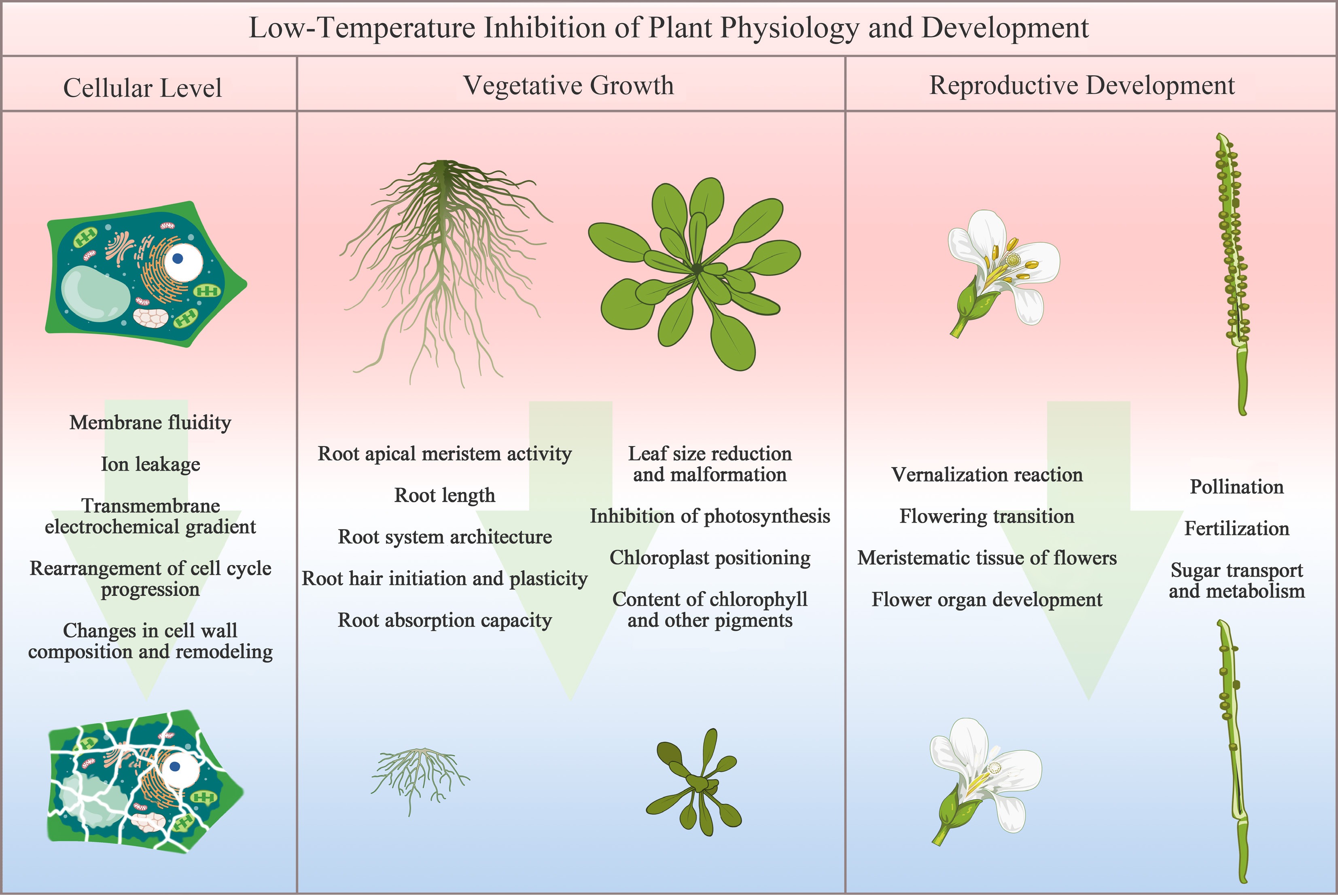
Figure 2.
Schematic representation of LT-induced inhibition at the cellular, vegetative, and reproductive levels in plants. At the cellular level, LT causes structural damage, including membrane dysfunction, cytoskeletal disorganization, and disruption of ion and water transport. Vegetative growth is suppressed through impaired leaf morphogenesis and photosynthetic performance, as well as restricted root system development and nutrient uptake capacity. Reproductive development is affected by altered flowering time, aberrant floral organ formation, compromised pollination and fertilization, and disrupted carbohydrate translocation, leading to a reduced fruit set. This figure was created with templates from
https://BioGDP.com . -
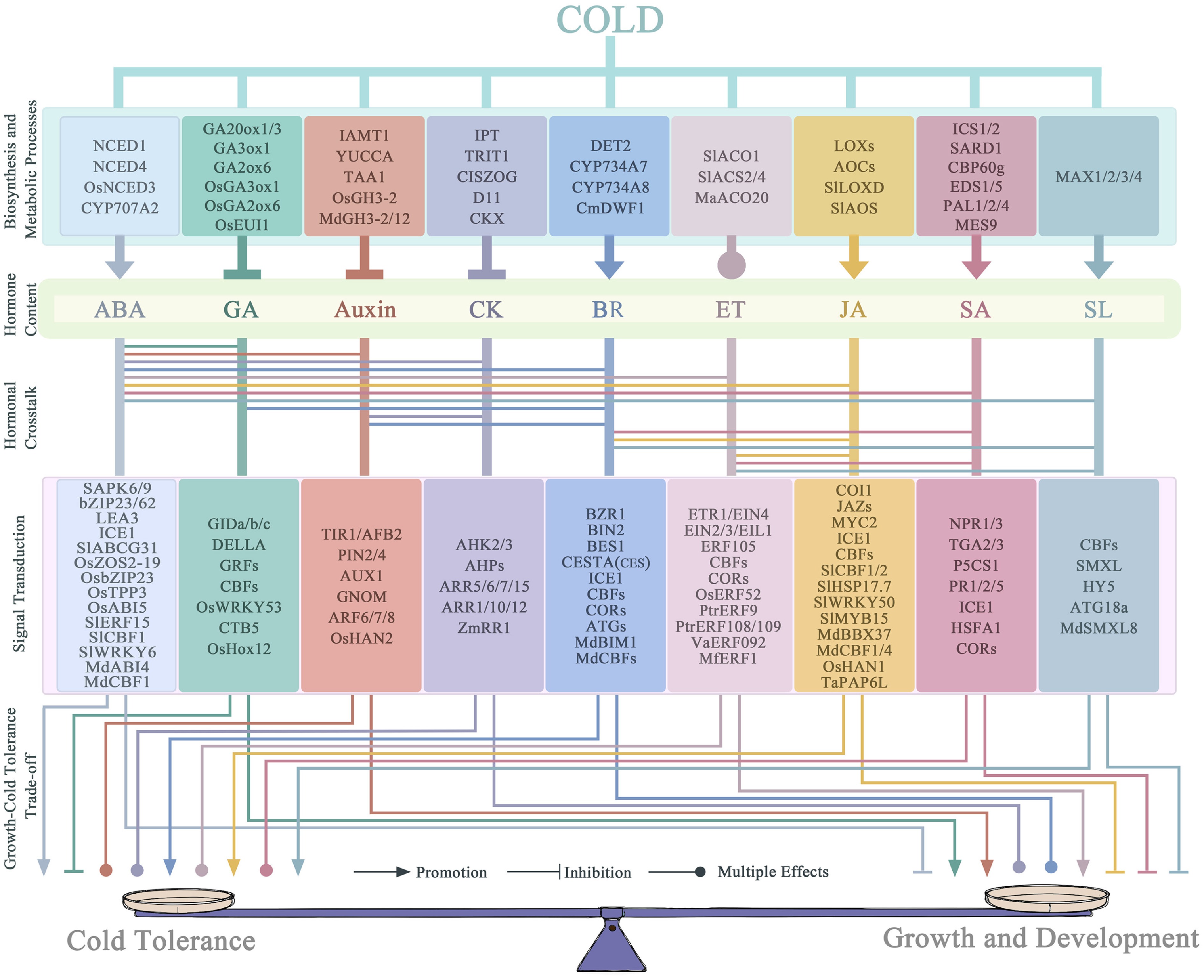
Figure 3.
A model of hormone-mediated trade-offs between growth and cold tolerance in plants under LT stress. LT stress triggers the reconstruction of hormonal homeostasis in plants and activates a multi-layered signaling interaction network. This regulatory process initiates with the perception and transduction of cold signals through plasma membrane-associated receptors and downstream signaling components, thereby modulating the expression and activity of key enzymes involved in the biosynthesis and metabolism of several essential hormones, such as ABA, GA, Auxin, CK, BR, ET, JA, SA, and SL, leading to dynamic shifts in endogenous hormone levels. Subsequently, these hormones engage in cross-talk between pathways, involving both synergistic and antagonistic interactions, to relay signals downstream. The hormonal signals are further integrated with transcriptional regulators and post-translational modification systems, collectively coordinating resource allocation and physiological balance between cold acclimation responses and normal growth and development. Ultimately, this hormone-regulated network precisely reprograms developmental progression and carbon-nitrogen metabolic partitioning, enabling the maintenance of physiological homeostasis and plant adaptation under LT stress.
Figures
(3)
Tables
(0)