











-
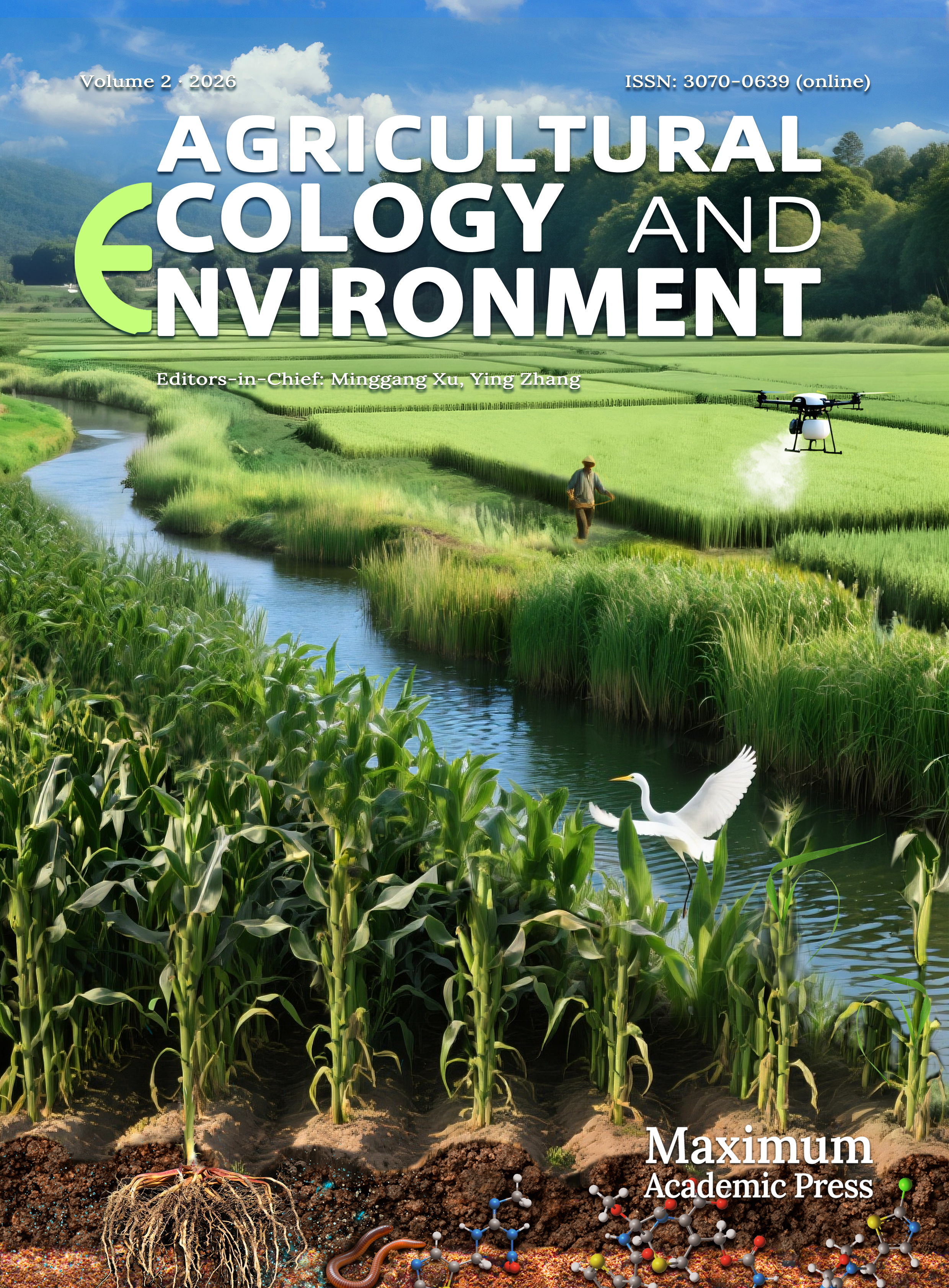
In the unfolding era of the Anthropocene, the global agricultural ecosystem is undergoing a profound and unprecedented transformation. Agriculture, once viewed primarily as a means of food production, is now recognized as a complex, dynamic system intricately woven into the fabric of planetary health. The intensification of climate change, biodiversity loss, soil degradation, water scarcity, environmental pollution, and food insecurity are no longer isolated issues. They are deeply interconnected, forming a multifaceted global crisis that demands urgent, interdisciplinary solutions. This convergence of challenges compels us to re-examine the intricate relationship between agriculture and the ecological environment with fresh perspective and innovative thinking. It is within this context that Agricultural Ecology and Environment (AEE) was founded. With a broad interdisciplinary vision, AEE defines its academic mission with precision and purpose, embarking on a knowledge-driven journey that bridges fundamental research and applied innovation. Dedicated to illuminating the dynamic interactions between agricultural practices and responses of ecological and environmental processes, AEE seeks to lay the scientific groundwork for global sustainability. The journal aspires to become a leading platform for advancing both theoretical insights and practical solutions that support the resilient and sustainable development of agricultural ecosystems worldwide.
Agriculture is far more than a production activity; it is a living system embedded within the broader ecological network. Grounded in the integrative framework of Earth system science, AEE serves as a multidisciplinary platform for publishing research that investigates how agricultural practices interact with the atmosphere, pedosphere, hydrosphere, and biosphere. These interactions span multiple spatial and temporal scales, ranging from molecular processes in soils to planetary-scale climate dynamics. At the micro level, research published in AEE investigates how the carbon and nutrient cycles in farmland soils interact with microbial communities and contribute to soil health. At the meso level, the journal features studies on the migration and transformation of agricultural non-point source pollution within watershed systems, uncovering the complex pathways through which farming practices impact water quality and aquatic ecosystems. At the macro scale, AEE presents analyses of the cumulative environmental effects of integrated farmland–livestock systems, particularly their contributions to greenhouse gas emissions and broader climate change dynamics. Through this multi-scale lens, AEE seeks to advance our understanding of the bidirectional relationships between agriculture and the ecological environment, generating insights that support sustainable land stewardship and long-term environmental resilience.
Recognizing the complexity and urgency of these challenges, AEE fosters a collaborative and inclusive academic environment that transcends traditional disciplinary boundaries. The journal welcomes contributions from a wide array of fields, including agronomy, ecology, environmental science, soil science, water management, and sustainability studies, to cultivate a holistic understanding of agroecological systems. By integrating insights from the physical, chemical, and biological dimensions of agricultural environments, AEE supports the development of innovative strategies that harmonize agricultural productivity with ecological integrity. Its broad scope encompasses topics such as soil fertility and restoration, water quality and aquatic ecosystems, sustainable resource utilization, pollution control, livestock–environment interactions, and climate-smart agricultural practices. Through this interdisciplinary lens, AEE not only advances scientific knowledge but also informs policy, guides technological innovation, and empowers stakeholders to co-create resilient agricultural systems that promote both human well-being and planetary health.
As the global community grapples with the dual imperatives of feeding a growing population and preserving the integrity of our natural systems, the role of agricultural ecology becomes increasingly central. AEE recognizes that the solutions to these intertwined challenges lie not in isolated interventions, but in systems thinking—approaches that account for feedback loops, trade-offs, and synergies across ecological, economic, and social domains. The journal is committed to fostering this paradigm shift by promoting research that is not only scientifically rigorous but also socially relevant and policy-responsive. In this spirit, AEE encourages the exploration of emerging frontiers in agroecological science, i.e., innovative areas poised to reshape the future of sustainable agriculture. These include the use of artificial intelligence and remote sensing for precision farming, enabling smarter resource management and reduced environmental impact; the development of circular bioeconomy models that recycle agricultural by-products to minimize waste and enhance resource efficiency; and the ecological redesign of farming landscapes to promote biodiversity and strengthen ecosystem services. AEE also welcomes studies on indigenous and traditional agricultural knowledge systems, recognizing their invaluable contributions to sustainable land stewardship and climate resilience.
Looking ahead, AEE remains steadfast in its commitment to advancing a forward-looking and transformative research agenda. In response to accelerating global environmental change, the journal embraces technological innovation and interdisciplinary exploration as essential pathways toward sustainable agricultural futures. AEE places particular emphasis on pioneering studies that challenge conventional paradigms and propose bold, original hypotheses. Whether re-evaluating ecological thresholds linked to chemical inputs, designing novel frameworks for resilient agroecosystems, developing advanced functional materials for environmental remediation, or analyzing the service functions and security dynamics of agricultural landscapes, the journal seeks to establish robust theoretical foundations and deliver practical solutions. Through this integrative and visionary approach, AEE aims to empower researchers, practitioners, and policymakers to co-create agricultural systems that are ecologically sound, socially equitable, and capable of sustaining both human and planetary health for generations to come.
By championing high-impact and cutting-edge research, AEE is committed to shaping the future direction of agricultural ecology and environmental science. The journal serves not only as an authoritative archive of advances in agroecological research but also as a dynamic catalyst for promoting sustainable development. Grounded in a rigorous scientific spirit and guided by a broad interdisciplinary vision, AEE strives to be a collaborative platform where global scholars, practitioners, and policymakers converge to address the pressing challenges of our time. In the shared pursuit of harmony between humanity and nature, AEE warmly invites contributions that offer innovative insights and transformative solutions. We envision each published paper as a foundational step toward building resilient agricultural ecosystems, and each scholarly dialogue as a meaningful stride toward a more sustainable future. Together, we will draw a grand scientific blueprint for the sustainable development of agriculture—one that nourishes both people and the planet.
HTML
-
The authors declare that they have no conflict of interest.
-
Full list of author information is available at the end of the article.
- Copyright: © 2025 by the author(s). Published by Maximum Academic Press, Fayetteville, GA. This article is an open access article distributed under Creative Commons Attribution License (CC BY 4.0), visit https://creativecommons.org/licenses/by/4.0/.
Xu M, Zhang Y, Cui S, Ding Y, Wang X. 2025. Towards a new era of global agricultural ecology and environmental science. Agricultural Ecology and Environment 1: e001 doi: 10.48130/aee-0025-0001


|