











-
Climate change is accelerating at an unprecedented pace, threatening human well-being and planetary health[1]. This includes elevated carbon dioxide concentrations (eCO2)[2], warming[3], and altered precipitation regimes[4]. In 2024, the atmospheric CO2 concentration reached a record high of 423.9 ± 0.2 parts per million (ppm), 152% of the pre-industrial level of 278.3 ppm[5], while the year also became the warmest on record in the past 175 years, with the temperature nearly 1.55 ± 0.13 °C above the 1850–1990 average[2]. Additionally, precipitation patterns showed significant regional variability, with changes in both rainfall frequency and intensity[6] (Fig. 1a–c). Terrestrial ecosystems, including croplands, forests, and grasslands, are vital for providing essential resources that sustain human well-being (Fig. 1d). However, climate change can alter nitrogen (N) cycling as well as other biogeochemical processes, thereby negatively impacting these ecosystems and threatening their ability to sustain vital services[1]. Cropland, vital for food security, is under threat from climate change[7,8]. Extreme rainfall can limit N availability during rice tillering, leading to yield losses[9]. Forests and grasslands, which play crucial roles in biodiversity maintenance, water regulation, soil retention, and carbon (C) sequestration, are increasingly exposed to extreme weather events such as droughts and wildfires[10−15]. In particular, increased fire frequency can lead to significant losses of soil N and C in broadleaf forests and savanna grasslands, thereby reducing ecosystem C storage[16].
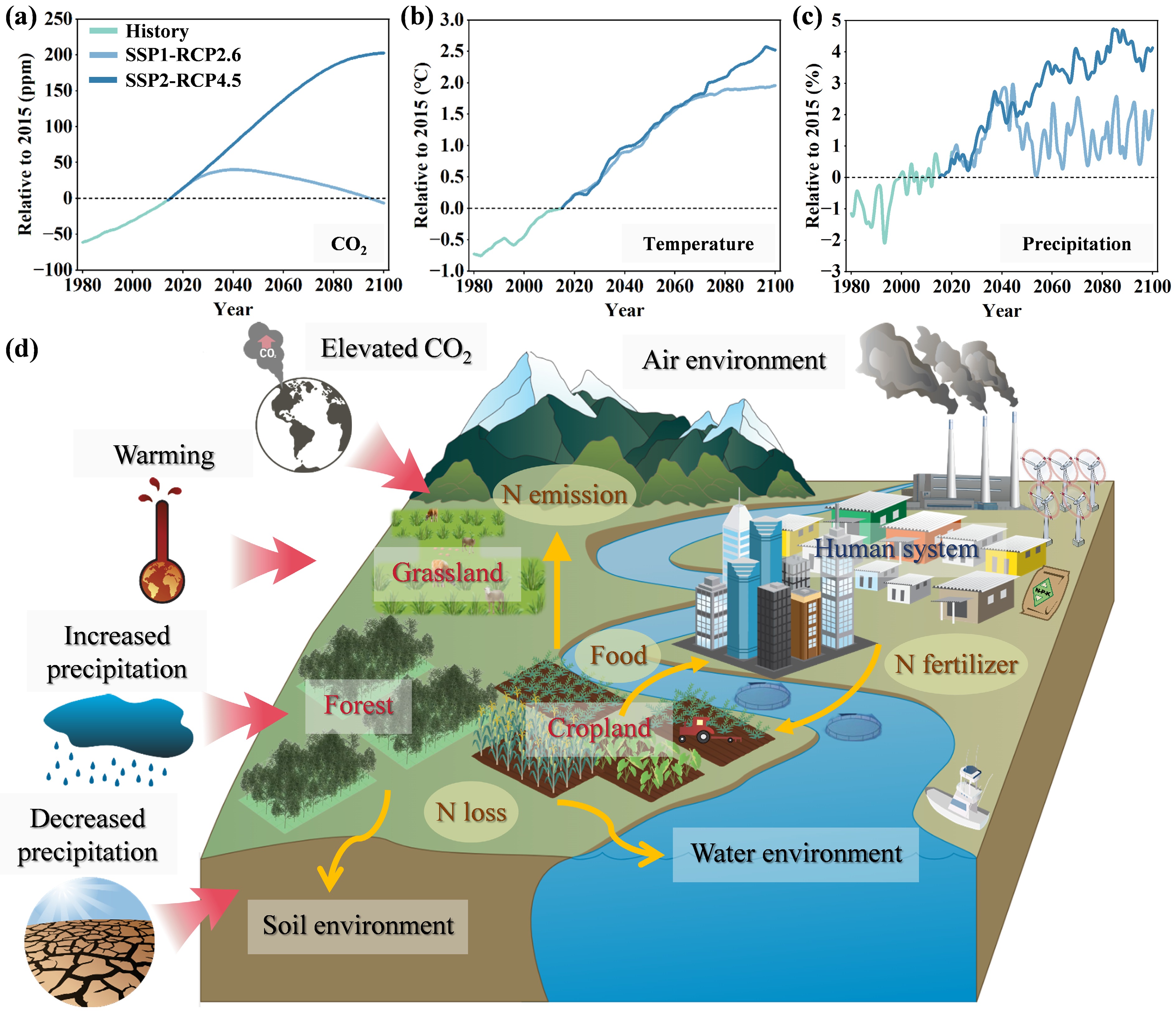
Figure 1.
Global climate change and terrestrial ecosystems. (a) Changes in global atmospheric CO2 from 1980 to 2100 under different Shared Socioeconomic Pathways-Representative Concentration Pathways (SSP-RCP) scenarios. (b) Changes in global air temperature from 1980 to 2100 under different SSP-RCP scenarios. (c) Changes in global land precipitation from 1980 to 2100 under different SSP-RCP scenarios. (d) Effects of different climate change factors on the nitrogen cycle in global terrestrial ecosystems. Yellow arrows denote interactions between systems; Red arrows indicate the impacts of climate change on terrestrial ecosystems. N, nitrogen. The symbols are from Integration and Application Network (
https://ian.umces.edu/media-library/ ).Terrestrial N cycling plays a key role in sustaining ecosystem productivity and ensuring food security[17−19]. The main terrestrial N transformation processes include ammonification, assimilation, biological N fixation (BNF), nitrification, denitrification, and anaerobic ammonium oxidation (anammox)[20−22] (Table 1). Based on N mass balance principles, this study investigates changes in N inputs (including N deposition, BNF, fertilizer, and manure) and N outputs (including N harvest and N surplus) in terrestrial ecosystems under climate change, as well as variations in N accumulation within forests. Nitrogen surplus encompasses the losses of reactive N (Nr) compounds and dinitrogen gas (N2) emissions (Fig. 2, Tables 1 and 2). Nr emissions increased from 164 Tg in 1997 to 210 Tg in 2017[23], primarily from industrial sources like fossil fuel combustion, and agricultural sources such as fertilizer application[24,25]. Nr pollution is a significant challenge of the 21st century, causing a cascade of negative impacts across environmental systems[18,26−31]. Its interactions with climate change make effective N management even more difficult[24,32]. Therefore, balancing N levels to maximize benefits while minimizing harmful effects is critical[33].
Table 1. Terminologies included in this paper
Variable Description Yield Crop yield is a metric of the quantity of harvested crop production per land area. Net primary productivity NPP includes both aboveground net primary productivity (ANPP) and belowground net primary productivity (BNPP). Ammonia emission NH3 is emitted into the atmosphere from soil or water bodies of terrestrial ecosystems. Nitrous oxide emission N2O emission is released into the atmosphere during nitrification and denitrification. Nitrogen oxide emission NOx emission refers to a collection of N and oxygen compounds including NO, NO2, and N2O3. Nitrate leaching NO3− leaching is the movement of inorganic N from soil, fertilizer, and residues into groundwater or deep soil through rainfall or drip irrigation. Nitrate runoff NO3− runoff refers to the loss of inorganic N to surface water. Nitrogen use efficiency NUE is defined as the N harvest divided by the N input in the terrestrial ecosystems. Biological nitrogen fixation BNF is the conversion of N2 to NH4+ by N-fixing microorganisms, including symbiotic and non-symbiotic ones. Accumulation Accumulation is the process by which N is gradually retained and concentrated in soil, litter, and vegetation, mainly in forests, while N accumulation in croplands and grasslands is assumed stable and therefore not considered here. Denitrification Denitrification is the process by which denitrifying microorganisms convert NO3− to gaseous N (N2O, NO, and N2). Nitrification Nitrification is the process by which nitrifying microorganisms convert NH4+ to NO3− under aerobic conditions. Ammonification Ammonification refers to the conversion of organic N to NH4+ by microorganisms. Assimilation Assimilation is the process by which plants and microorganisms incorporate inorganic N (NH4+, NO3−) into organic compounds for growth and metabolism. Anammox Anammox is the process by which ammonium (NH4+) is oxidized with nitrite (NO2−) under anaerobic conditions to produce N2. Leaf nitrogen content Leaf [N] denotes the N content in the leaf of a plant. Grain nitrogen content Grain [N] denotes the N content in the grain of a plant. Stem nitrogen content Stem [N] denotes the N content in the stem of a plant. 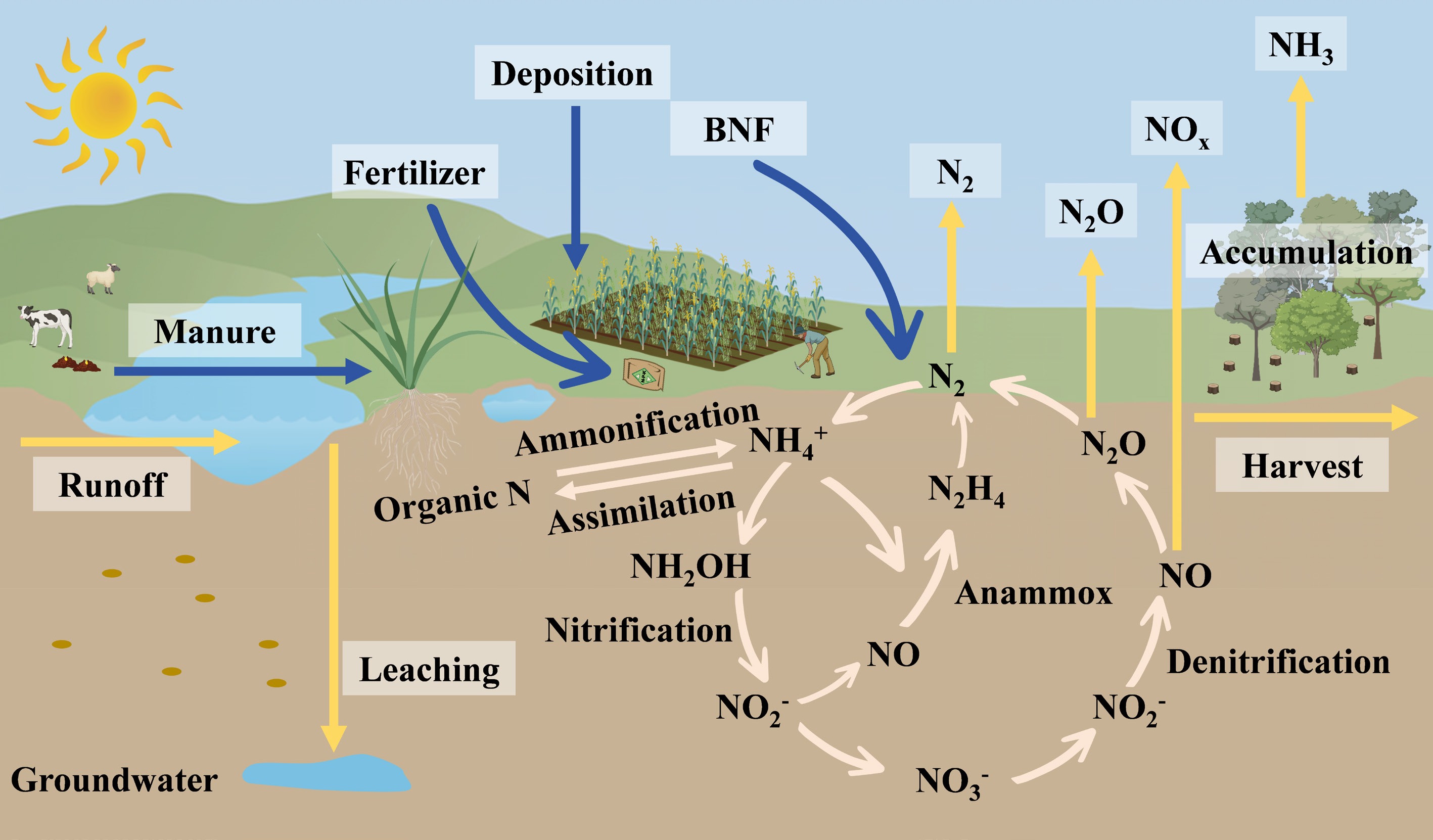
Figure 2.
Nitrogen flows in terrestrial ecosystems. Nitrogen inputs and outputs are differentiated by blue and yellow arrows, respectively. Nitrogen inputs include biological nitrogen fixation (BNF), deposition, fertilizer, and manure. Nitrogen outputs include harvest, reactive nitrogen losses, and non-reactive nitrogen emissions. Simplified soil nitrogen cycle, such as ammonification, ammonium assimilation, BNF, nitrification, denitrification, and anaerobic ammonium oxidation (anammox) are shown in light pink arrows. The symbols are from the Integration and Application Network (
https://ian.umces.edu/media-library/ ).Table 2. Nitrogen fluxes in croplands, grasslands, and forests derived from models in 2020
Variable Ecosystem value Component Ecosystem value N input (Tg) Cropland: 253
Grassland: 138
Forest: 91BNF (Tg) Cropland: 40
Grassland: 16
Forest: 66Deposition (Tg) Cropland: 21
Grassland: 15
Forest: 21Fertilizer (Tg) Cropland: 141
Grassland: 27
Forest: 4Manure (Tg) Cropland: 51
Grassland: 80
Forest: /N harvest (Tg) Cropland: 118
Grassland: 95
Forest: 22N surplus (Tg) Cropland: 135
Grassland: 43
Forest: 32NH3 (Tg) Cropland: 29
Grassland: 9
Forest: 2N2O (Tg) Cropland: 5
Grassland: 1
Forest: 3NOx (Tg) Cropland: 2
Grassland: 0.4
Forest: 3NO3− (Tg)
(Including leaching and runoff)Cropland: 54
Grassland: 11
Forest: 11N2 (Tg) Cropland: 45
Grassland: 22
Forest: 13N accumulation (Tg) Forest: 37 NUE (%) Cropland: 47 Grassland: 69 Forest: 65 All nitrogen budgets refer to the year 2020. The cropland data are derived from the Integrated Model to Assess the Global Environment (IMAGE), the grassland data from the Model of Agricultural Production and its Impact on the Environment (MAgPIE), and the forest data from the Dynamic Land Ecosystem Model (DLEM). This review summarizes the impacts of climate change on terrestrial ecosystem N cycling, focusing on the mechanisms by which elevated CO2 concentrations, global warming, and altered precipitation regimes influence N cycling, and explores the potential impacts of climate change on N budgets in global croplands, forests, and grasslands, highlighting the existing challenges and future research directions. Through these discussions, this review aims to provide a critical foundation for understanding the mechanisms underlying terrestrial ecosystem N cycling in response to climate change, and to offer theoretical support for developing strategies to optimize N use efficiency (NUE) while reducing Nr emissions in this context (Table 1).
-
Elevated atmospheric CO2 levels (eCO2) generally promote crop yield by 21% (95% confidence interval [CI], 18% to 25%) relative to the ambient CO2 level, with positive effects observed for major crops such as wheat, rice, maize, and soybeans[34]. Elevated CO2 also increases net primary productivity (NPP) in grasslands (10%; 8% to 12%) and forests (27%; 23% to 31%) (Table 1), although the extent of these effects varies depending on the vegetation type[34,35] (Fig. 3). In C3 grasslands, NPP increases by 10% (8% to 13%) under eCO2, primarily due to enhanced photosynthesis[36]. Elevated CO2 increases intercellular and chloroplastic CO2 concentrations, thereby raising the ratio of Rubisco carboxylation to oxygenation, which reduces photorespiration and enhances net C assimilation[36,37]. In contrast, C4 grasslands show no significant response (10%; −9% to 15%) because their CO2 concentrating mechanism already maintains high local CO2 around Rubisco, making carboxylation relatively insensitive to additional CO2[38,39]. However, under drought stress, eCO2 improves water-use efficiency by reducing stomatal conductance and increasing intercellular CO2 concentrations, thereby alleviating water limitation and indirectly promoting NPP[40,41]. Notably, the predicted CO2 increase by 2050 is +109 ppm under the SSP2-4.5 middle-of-the-road scenario and +39 ppm under the SSP1-1.9 sustainability scenario, both of which are lower than the CO2 increase in the current eCO2 experiments. This suggests that adaptive responses are unlikely to occur before 2050[35].
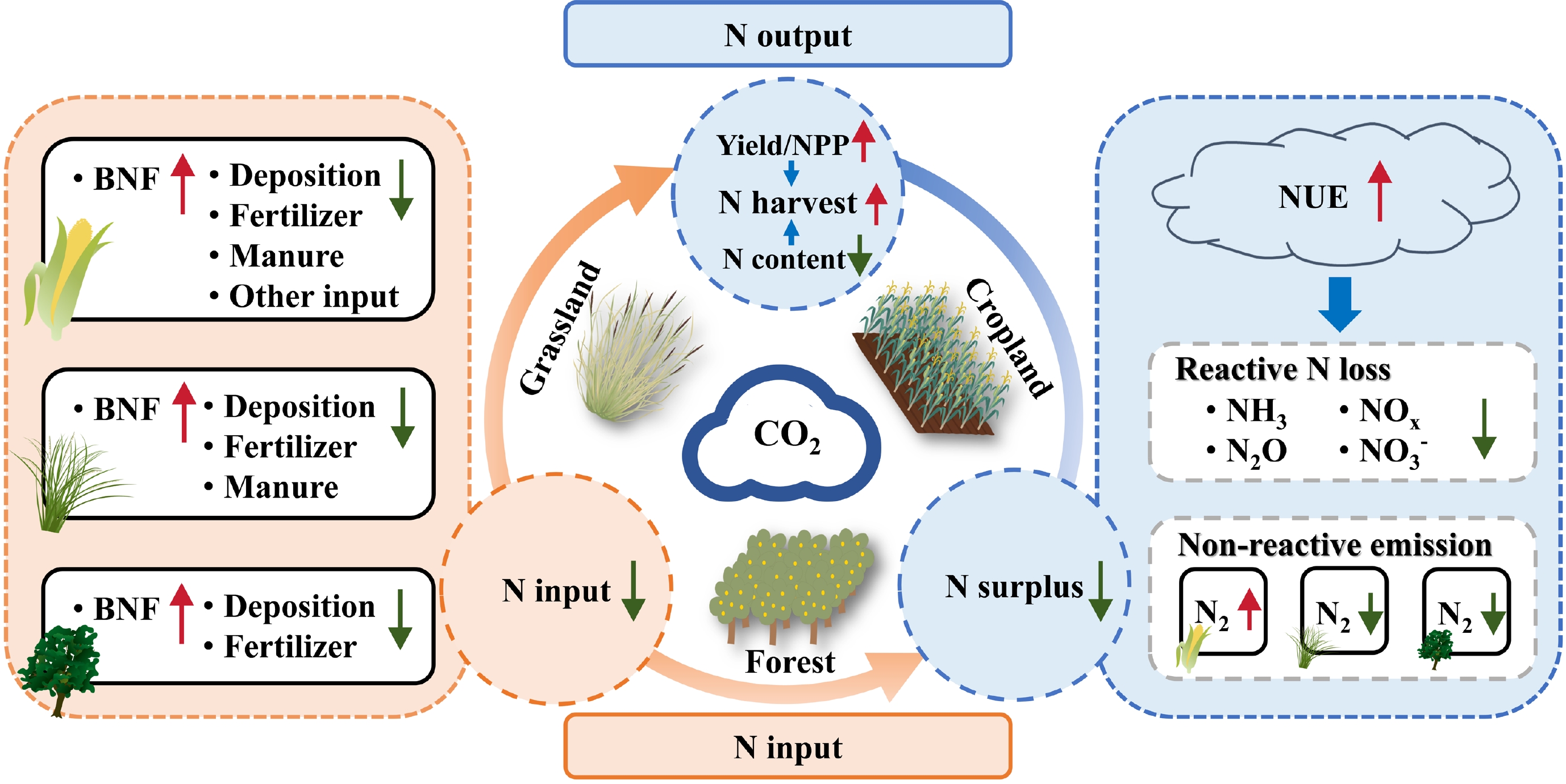
Figure 3.
The impacts of elevated CO2 levels on terrestrial nitrogen cycles. The orange box represents changes in nitrogen input. The blue box represents changes in nitrogen output. Red arrows indicate positive effects, green arrows represent suppressive effects, and blue arrows indicate their interrelations. BNF, biological nitrogen fixation; NPP, net primary productivity; NUE, nitrogen use efficiency; NH3, ammonia; N2O, nitrous oxide; NOx, nitrogen oxides; NO3−, nitrate leaching and runoff; N, nitrogen. Specific ecological processes corresponding to each arrow: Red arrow → increased BNF → increased nitrogen input; Green arrow → decreased deposition/fertilizer/manure/other input → decreased nitrogen input; Red arrow → increased yield/NPP → increased nitrogen harvest; Green arrow → decreased nitrogen content → decreased nitrogen harvest; Red arrow → increased NUE → decreased nitrogen surplus; Green arrow → decreased ammonia/nitrous oxide/nitrogen oxides/nitrate leaching and runoff → decreased nitrogen surplus. The symbols are from the Integration and Application Network (
https://ian.umces.edu/media-library/ ).Additionally, elevated CO2 reduces plant N content, including grains, leaves, and stems, likely due to N dilution resulting from increased C assimilation and decreased investment in Rubisco for photosynthesis[42,43]. Leaf N content in woody plants decreases under eCO2[44] (Table 1), with non-leguminous trees showing approximately twice the reduction compared to legumes, and evergreen species exhibiting more substantial declines than deciduous ones. Needle-like leaves experience a two- to four-fold greater decrease in leaf N compared to other leaf types. Meanwhile, woody plants tend to exhibit greater N reductions than herbaceous plants[45]. In crops, eCO2 typically induces a N dilution effect, although its magnitude varies among species. Potato and major cereal crops such as barley, rice, and wheat generally show notable reductions in N content, whereas soybean exhibits only a minimal decrease[46]. Long-term trends also indicate a decline in N availability in forests and natural grasslands under eCO2[47]. Decreased N content may progressively diminish the productivity gains typically associated with eCO2 and constrain ecosystem C sequestration[47,48]. In agricultural systems, although mineral fertilization can compensate for N deficits, plants under eCO2 tend to allocate more N to roots rather than leaves, leading to lower leaf N content[49]. Overall, despite the reduction in plant N content, the rise in NPP and crop yields under eCO2 ultimately leads to an increase in total N harvest in terrestrial ecosystems[34,35] (Fig. 3).
Elevated CO2 also enhances BNF rates, boosting microbial capacity to convert inert N2 into plant-available N and reducing nitrates to N2[50−52]. Concurrently, eCO2 stimulates N uptake by plants, improving NUE by 19%–32% in terrestrial ecosystems[34,35]. This increase in NUE reduces Nr losses, including the emissions of ammonia (NH3), nitrous oxide (N2O), and nitrogen oxides (NOx) to the atmosphere, as well as decreases in nitrate leaching and runoff (NO3−) into water bodies[34,35] (Table 1). Nitrogen deposition, influenced by ammonia and nitrogen oxide emissions, generally declines under eCO2, and anthropogenic N inputs, such as fertilizers and manure, are also expected to decrease[34,35] (Fig. 3). In summary, eCO2 has a positive impact on N cycling in terrestrial ecosystems. It reduces the need for external N inputs, mitigates N surplus, and promotes greater NUE.
Overall, elevated CO2 levels not only have the potential to increase food production but also offer an opportunity to reduce environmental pollution. This highlights a significant opportunity to accelerate progress toward several Sustainable Development Goals[53,54]. Specifically, improving NUE by 19%–32% can reduce nitrate leaching and mitigate water eutrophication[34,35], directly supporting SDG 6 ('clean water and sanitation'). Elevated CO2 can also increase productivity by 10%–27%[34,35], contributing to SDG 2 ('zero hunger'). In addition, enhancing NUE and reducing excess Nr losses can lower environmental pollution[34,35], supporting SDG 13 ('climate action'), and improving health and well-being. However, the anticipated rise in BNF under eCO2 needs careful monitoring to avoid excessive N inputs and losses in terrestrial ecosystems. Excessive N input can be reduced by decreasing reliance on mineral fertilizers and promoting the reuse of organic N sources, such as organic fertilizers and straw[55]. Meanwhile, the reduction in N concentrations could impact protein supply in human diets[56], suggesting the need to adjust dietary recommendations to balance human nutritional requirements with protein content[57].
-
Climate warming is expected to have both positive and negative impacts on N cycles. In croplands, warming generally reduces crop yields, with maize experiencing the most significant decline[58], especially in tropical and arid regions due to heat stress and water limitations[59,60]. While wheat yields show no significant response in high-latitude regions[58], warming in general has a negative impact on wheat yields in low-latitude regions[61,62]. In grasslands and forests, warming increases NPP, primarily through prolonged growing seasons and enhanced photosynthetic activity[63−65]. Since most vegetation has not yet reached its optimal temperature for photosynthesis under current climate conditions, moderate warming typically promotes overall vegetation growth[66]. C3 grasslands, which thrive in temperate and cold climates, benefit from effective photosynthesis under moist, cool conditions[67]. As a result, NPP increases by about 10% (5% to 15%)[63]. In contrast, C4 grasslands, which dominate subtropical and tropical climates, are more efficient in water use under warm, drought-prone conditions[67]. However, their NPP response to warming remains statistically elusive[63]. Although C4 grasslands tend to be heat-tolerant[68], the combined effects of erratic precipitation and increased evaporation due to climate warming may still limit plant growth[69]. Additionally, warming increases N concentrations in grains, leaves, and stems, likely due to elevated N uptake and improved soil N availability[70]. Consequently, warming tends to decrease N harvest in croplands, while increasing it in forests and grasslands. However, forest N accumulation is projected to decrease globally, with the most pronounced reductions in regions such as the Amazon, Congo basins, and Southeast Asia. In contrast, slight increases are expected in parts of North America, northern Eurasia, and high-elevation regions such as mountains and plateaus. These patterns indicate that temperature, elevation, latitude, and precipitation jointly shape regional N accumulation, driving spatial heterogeneity[64] (Fig. 4).
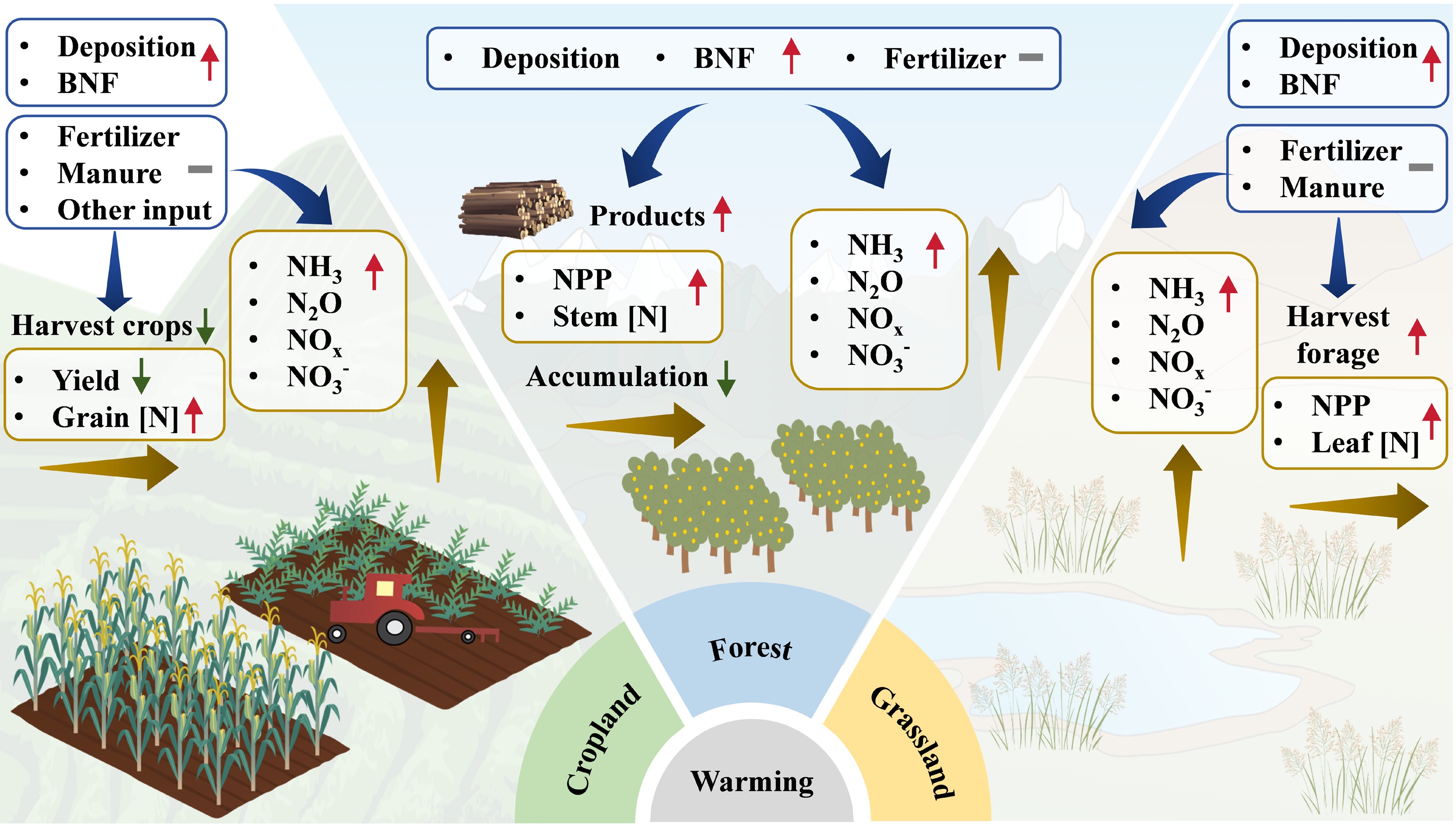
Figure 4.
The impacts of global warming on terrestrial nitrogen cycles. The left box represents the impacts of warming on the cropland nitrogen cycles. The middle box represents the impacts of warming on the forest nitrogen cycles. The right box shows the impacts of warming on the nitrogen cycle in grasslands. The nitrogen fluxes, including nitrogen input and output, are shown by blue and yellow arrows, respectively. Red arrows indicate positive effects, while green arrows represent suppressive effects. The gray solid lines indicate nonsignificant effects. Feedback mechanisms differ across various ecosystems. BNF, biological nitrogen fixation; NPP, net primary productivity; NUE, nitrogen use efficiency; NH3, ammonia; N2O, nitrous oxide; NOx, nitrogen oxides; NO3−, nitrate leaching and runoff; [N], nitrogen content. Specific ecological processes corresponding to each arrow: Red arrow → increased BNF/deposition → increased nitrogen input; Gray solid line → unchanged fertilizer/manure/other input → unchanged nitrogen input; Green arrow → decreased yield → decreased nitrogen harvest; Red arrow → increased NPP → increased nitrogen harvest; Red arrow → increased nitrogen content → increased nitrogen harvest; Red arrow → increased ammonia/nitrous oxide/nitrogen oxides/nitrate leaching and runoff → increased nitrogen surplus; Green arrow → decreased nitrogen accumulation. The symbols are from the Integration and Application Network (
https://ian.umces.edu/media-library/ ).Warming also stimulates microbial activity, accelerating C decomposition and microbial respiration, which in turn provides more substrates for microbial processes and enhances BNF[71,72]. BNF, which is likely influenced by changes in root exudates and microbial activity, becomes a key contributor to increased N input in croplands and grasslands[58,63]. The primary focus of this review is on the individual effects of warming on BNF. Although it is recognized that soil moisture and temperature are key drivers[73], the complex interactive effects of CO2, temperature, and drought are complex and will be explored in future studies. Meanwhile, N deposition, influenced by ammonia and nitrogen oxides emissions, generally increases under warming, and anthropogenic N inputs (e.g., fertilizers and manure) are expected to remain stable. However, warming also leads to substantial increases in Nr losses, ranging from 22% to 169%[58,63,64]. Enhanced microbial processes and thermodynamic reactions result in higher emissions of ammonia, nitrous oxide, and nitrogen oxides, as well as increased nitrate leaching and runoff into aquatic systems[58,63,64] (Fig. 4). These increased N losses highlight the potential for significant environmental pollution.
Overall, climate warming is projected to lead to crop yield losses in croplands and increased Nr losses in global terrestrial ecosystems, posing potential risks and challenges for both human society and the environment[27]. Reduced food production may have particularly severe consequences for developing economies in Africa, Latin America, and Asia, where crop losses could exacerbate hunger and malnutrition[8]. On the other hand, increased feed production in grasslands may bolster global livestock production[74], prompting policymakers to prioritize livestock production to meet the growing demand for food and protein from an expanding global population[75]. While current projections suggest an increase in NPP in grasslands and forests, sustained global warming could push more ecosystems beyond their optimal temperatures for photosynthesis, potentially reducing productivity and exacerbating negative impacts[76,77]. Additionally, the accelerating rates of N losses, already a concerning trend, could significantly affect soil and water quality, thereby hindering food production[78,79]. Extreme heat further reduces soil C pools and ecosystem productivity while increasing Nr losses[80−82]. The uneven effects of climate warming could exacerbate spatial inequalities[64], underscoring the need for timely and robust adaptive strategies to mitigate the diverse impacts of global warming[83,84].
-
Decreased precipitation reduces crop yields and NPP by imposing water stress, whereas moderate increases alleviate drought and enhance photosynthesis and microbial activity that support N cycling[85,86] (Fig. 5). However, responses to precipitation variability are region-specific. In arid regions, reductions in precipitation cause relatively smaller declines in plant growth, reflecting adaptations to chronic water limitation, such as deep rooting and enhanced stomatal regulation[87,88]. In contrast, plants in more humid regions, which are adapted to more stable water availability, exhibit greater growth reductions under drought conditions[89,90]. Under decreased precipitation, NPP declines by 15% (−24% to −3%) in arid grasslands, compared to a greater decrease of 29% (−39% to −19%) in humid grasslands[91]. Increased precipitation boosts NPP by 30% (22% to 44%) in arid grasslands, but only 8% (2% to 15%) in humid grasslands[91]. In arid grasslands, increased precipitation provides additional moisture, alleviating the primary constraint on plant growth and significantly enhancing NPP[86]. In humid grasslands, where water is less limiting, growth is more influenced by temperature, leading to a smaller increase in NPP[89]. Overall, increased precipitation tends to enhance terrestrial N harvest, while reduced precipitation exerts the opposite effect.
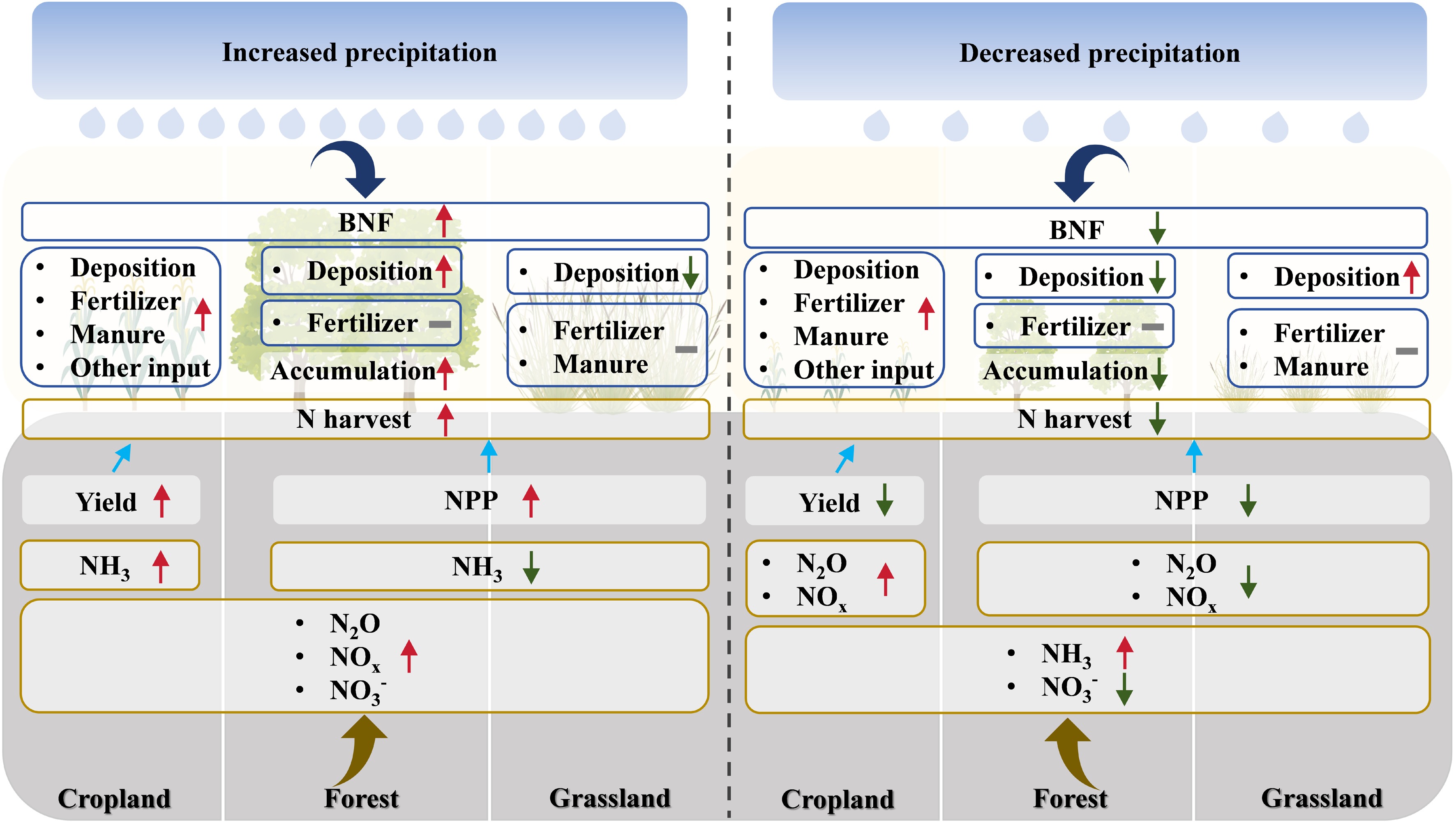
Figure 5.
The impacts of altered precipitation regimes on terrestrial nitrogen cycles. The left box represents the impacts of increased precipitation on the terrestrial nitrogen cycles. The right box represents the impacts of decreased precipitation on the terrestrial nitrogen cycles. The nitrogen fluxes, including nitrogen input and output, are shown by dark blue and yellow arrows and boxes, respectively. Red arrows indicate positive effects, green arrows represent suppressive effects, and light blue arrows indicate their interrelations. The gray solid lines indicate nonsignificant effects. Nitrogen deposition, based on combined ammonia and nitrogen oxides, varies across ecosystems due to differing feedback mechanisms. BNF, biological nitrogen fixation; NPP, net primary productivity; NH3, ammonia; N2O, nitrous oxide; NOx, nitrogen oxides; NO3−, nitrate leaching and runoff; N, nitrogen. Specific ecological processes corresponding to each arrow: Red or green arrow → increased or decreased BNF/deposition/fertilizer/manure/other input → increased or decreased nitrogen input; Gray solid line → unchanged fertilizer/manure → unchanged nitrogen input; Red or green arrow → increased or decreased yield/NPP → increased or decreased nitrogen harvest; Red or green arrow → increased or decreased ammonia/nitrous oxide/nitrogen oxides/nitrate leaching and runoff → increased or decreased nitrogen surplus; Red or green arrow → increased or decreased nitrogen accumulation. The symbols are from the Integration and Application Network (
https://ian.umces.edu/media-library/ ).Water scarcity also restricts microbial activity, including that of N-fixing bacteria[92], leading to a 23%–57% reduction in BNF[91]. Conversely, increased precipitation promotes microbial activity and C availability, thereby stimulating BNF by 36%–129%[91]. These effects may be further mediated by changes in the quantity and composition of root exudates, such as rhizoctonia, which influence the colonization and activity of N-fixing microorganisms[93−95]. Meanwhile, N deposition, inferred from the combined inputs of ammonia and nitrogen oxides, exhibits different responses across ecosystems. Anthropogenic N inputs also vary by ecosystem. In forests and grasslands, these inputs remain relatively stable under changing precipitation[91], whereas in croplands, human-driven N inputs generally increase (Fig. 5).
Precipitation changes strongly regulate Nr dynamics by controlling soil moisture and microbial activity[96−98]. Increased precipitation enhances soil water content and hydraulic conductivity, thereby accelerating N cycling and stimulating microbial processes, including the activation of nitrifying and denitrifying bacteria[99−101]. This leads to higher nitrate losses via leaching and increased gaseous N emissions, including nitrous oxide and nitrogen oxides[91]. Excessive precipitation may also impair root functions under waterlogged conditions, promoting ammonia volatilization from croplands[102,103], whereas generally reducing ammonia emissions from forests and grasslands, as more ammonia remains dissolved in the soil solution[104] (Fig. 5). In contrast, decreased precipitation imposes water stress, limiting plant growth, microbial N transformations, and NUE[105,106]. This suppresses the activity of nitrifying and denitrifying microorganisms[107], which reduces Nr losses, including nitrate losses and emissions of nitrous oxide and nitrogen oxides[91]. Meanwhile, ammonia emissions may rise due to inhibited nitrification, leading to ammonium accumulation and volatilization[99,100].
These findings highlight the contrasting effects of precipitation variability on N cycling: drought tends to enhance N retention by limiting losses, whereas wetter conditions promote hydrologically mediated microbial processes[101,104,108]. These findings suggest that both the magnitude and spatial heterogeneity of future precipitation changes are likely to increase, amplifying hydrological and climatic pressures on global food production and N cycling, and intensifying disparities in the global N budget[91]. Such imbalances call for the urgent development and implementation of timely, region-specific adaptation strategies to safeguard food security and environmental sustainability[109,110]. In regions experiencing decreased precipitation and reduced yields, these measures alone may not fully mitigate the associated N pollution. To maintain food production, N inputs are likely to increase; however, with limited potential for further improvements in NUE, reactive N losses are expected to persist. As a result, N pollution will remain a long-term and significant challenge, especially under increasingly variable precipitation patterns. Extreme heavy rainfall events further negatively affect soil C pools and N fluxes, enhancing nitrate losses and exacerbating water eutrophication[80,111,112]. These findings highlight the need for integrated policy frameworks that address climate, ecology, and pollution management simultaneously to enhance system resilience and support a sustainable future[113,114].
-
This paper focuses on the impacts of individual climate change factors on terrestrial N cycling. Climate change encompasses various factors, such as rising atmospheric CO2 concentrations, global warming, altered precipitation regimes, and extreme weather events[115]. These factors interact through multiple mechanisms to affect terrestrial ecosystems, and the complexity of these interactions makes it challenging to comprehensively address them within a single study. In particular, the frequency and intensity of extreme climate events should be incorporated into Earth system models to more accurately assess N cycling responses of terrestrial ecosystems under climate change[80,116]. Consequently, a comprehensive assessment of the combined effects of multiple climate drivers on N cycling remains an ambitious but necessary research goal. Future studies should employ machine learning and other approaches to explore the interactions among multiple factors[117,118] (Fig. 6). Specific applications include using random forest models for Nr loss prediction and deep learning to integrate remote sensing, field experiments, and model outputs to predict long-term N dynamics.
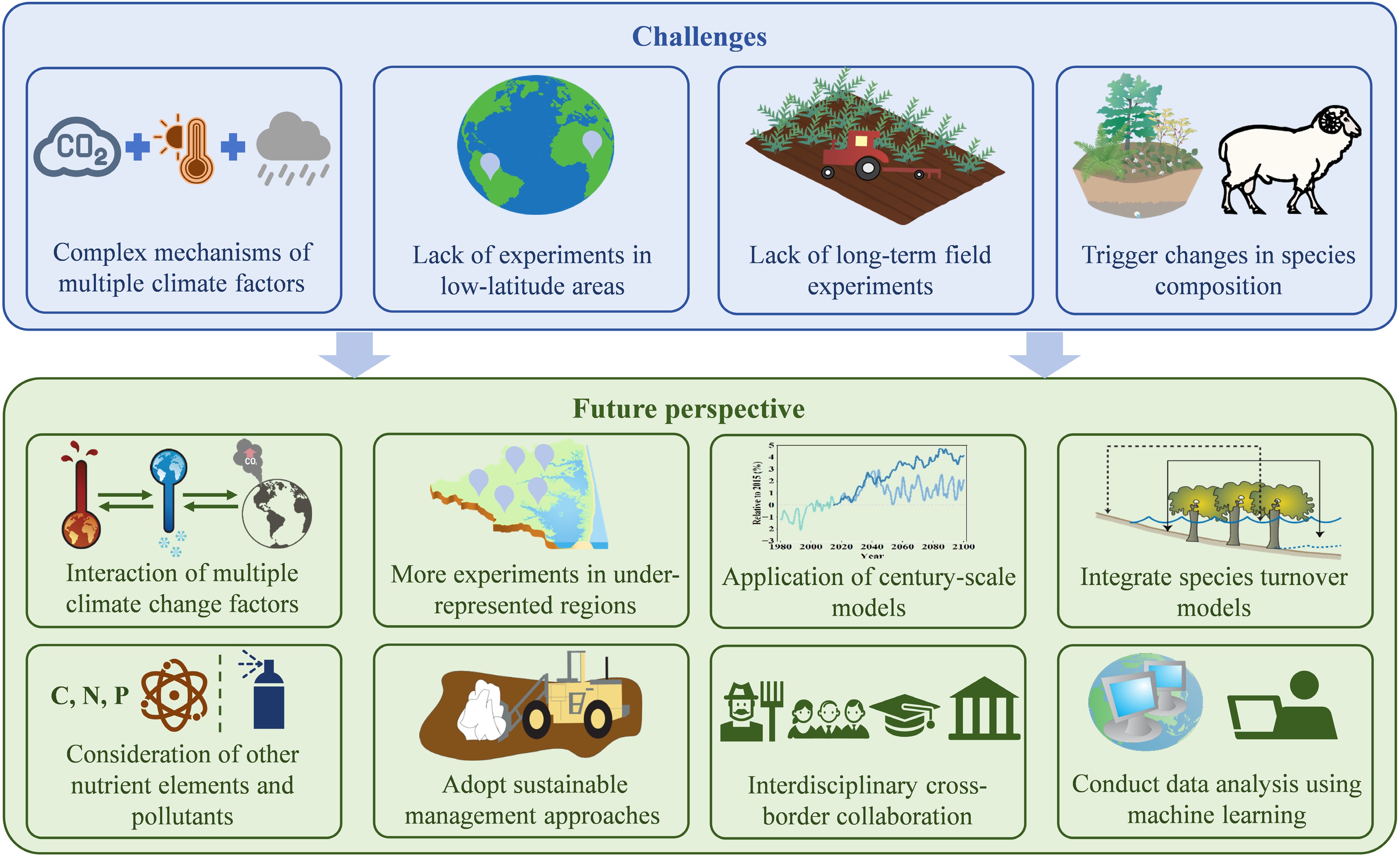
Figure 6.
Challenges and future perspective on terrestrial nitrogen cycles under global climate change. The symbols are from the Integration and Application Network (
https://ian.umces.edu/media-library/ ).The data include experimental manipulations of both managed and natural ecosystems. While the distribution of study sites is uneven due to data availability, the current dataset spans all continents and climate zones globally[34,35,58,63,64,91]. However, integrated global datasets with uniform distributions that simultaneously capture CO2, temperature, and precipitation are lacking, which limits the feasibility of combining these variables in a single unified analysis. In addition, high experimental costs and limited resources in low-latitude developing countries hinder the widespread implementation of climate manipulation experiments, thereby reducing the global applicability of research findings[119]. As more comprehensive datasets and advanced methodologies become available, large-scale synthesis of multi-factor climate impacts will be increasingly feasible. Alternative solutions, such as incorporating satellite inversion data, establishing international cooperation networks, and promoting low-cost observation technologies, should be explored to make climate experiments more feasible and accessible in these regions. Overcoming these challenges will require policy interventions, including financial support and capacity-building projects[120]. Given the accelerating pace of climate change, only through sustained, coordinated global action can we effectively address the interconnected challenges of food security and environmental sustainability (Fig. 6).
The long-term responses of terrestrial ecosystems to climate change are further influenced by factors such as physiological thresholds, species interactions, domestication, and adaptation, all of which may introduce non-linear dynamics[121−123]. These effects are context-dependent and vary over time and across environmental conditions, making it challenging to extrapolate short-term results to long-term predictions, especially those extending to 2100[124,125]. Therefore, the application of century-scale models is essential for capturing the long-term dynamics of terrestrial N cycling and informing adaptation and mitigation strategies under ongoing climate change. Additionally, climate-induced shifts in species composition may indirectly affect productivity, potentially amplifying or mitigating the direct effects of climate change[126]. Future research should integrate species turnover models with climate projections to better understand the feedback mechanisms of N cycling under different climate scenarios (Fig. 6).
Although this study emphasizes the impacts of climate change on N cycling, it is acknowledged that other nutrients, such as phosphorus, potassium, and antibiotics, also play crucial roles in ecosystem responses to climate change[76]. For instance, warming has been shown to exacerbate the release of phosphorus from soils and water bodies[127,128]. Further research is needed to assess the interactive effects of N and other nutrients, expanding from a 'single N cycle' to a 'multi-nutrient synergistic cycle', and to develop strategies for maintaining nutrient stoichiometric balance, which is essential for ecosystem health and service provision[129]. Nitrous acid is also a significant N loss pathway[130], and the effects of climate change on nitrous acid can be a key focus in future research[131]. Given the transboundary nature of Nr loss, it necessitates solid international cooperation to manage the global N cycle[24]. Integrating N-related policies into frameworks such as the Paris Agreement can enhance synergies and guide national actions through nationally determined contributions, promoting efficient NUE and reducing environmental threats to support sustainable development goals[132,133].
Policymakers, scientists, and the public must continue to collaborate. Decision-makers should implement strategies to improve productivity and reduce Nr losses in parallel with measures to manage climate impacts[8] (Fig. 6). For example, in rainfed and mixed farming systems of sub-Saharan Africa, combining rainwater harvesting with organic amendments can effectively enhance soil fertility and improve both water- and N-use efficiency[134]. In Panama forests, introducing N2-fixing tree species helps sustain natural N inputs and reduces dependence on external fertilizers[135]. A comprehensive understanding of the mechanisms controlling terrestrial N cycling is essential for developing effective management strategies[136−138].
-
This review quantifies the impacts of elevated CO2, global warming, and altered precipitation regimes on N cycling across croplands, forests, and grasslands, and further identifies the key drivers of regional heterogeneity, highlighting how climate change may exacerbate spatial disparities in N dynamics. Based on these insights, this study outlines several priority future research directions: (1) investigating multi-factor interactions among climate change drivers; (2) integrating comprehensive datasets and refining model structures; (3) exploring cross-nutrient interactions beyond the N cycle; (4) assessing long-term and non-linear ecosystem responses; and (5) developing region-specific adaptation strategies. A comprehensive understanding of these processes is essential for promoting sustainable development under a changing climate.
-
Not applicable.
-
The authors confirm their contributions to the paper as follows: Miao Zheng: study design, manuscript preparation, and revision; Qin Huang: figure enhancement; Jinglan Cui: language editing; Baojing Gu: study design, funding acquisition, supervision, writing review, and editing. All authors reviewed and approved the final manuscript.
-
The datasets generated or analyzed during the current study were compiled from site-based manipulation experiments. The data cover global locations and span 30 years of field-controlled experiments. Metadata are currently under restricted access due to ongoing analyses, but access can be obtained from the authors upon reasonable request.
-
The research presented in this paper was funded by the National Natural Science Foundation of China (Grant Nos 42261144001 and 42325707), and Postdoctoral Fellowship Program of China Postdoctoral Science Foundation (Grant No. GZC20232311).
-
The authors declare that they have no conflict of interest.
-
Full list of author information is available at the end of the article.
- Copyright: © 2025 by the author(s). Published by Maximum Academic Press, Fayetteville, GA. This article is an open access article distributed under Creative Commons Attribution License (CC BY 4.0), visit https://creativecommons.org/licenses/by/4.0/.
-
About this article
Cite this article
Zheng M, Huang Q, Cui J, Gu B. 2025. Impacts of climate change on global terrestrial nitrogen cycles. Nitrogen Cycling 1: e012 doi: 10.48130/nc-0025-0012 

Impacts of climate change on global terrestrial nitrogen cycles
- Received: 07 November 2025
- Revised: 01 December 2025
- Accepted: 10 December 2025
- Published online: 31 December 2025
Abstract: Terrestrial ecosystems are fundamental to human well-being, providing essential services such as food production, biodiversity maintenance, water regulation, carbon sequestration, and soil conservation. However, the accelerating pace of climate change is profoundly reshaping these ecosystems, heightening the urgency and complexity of their sustainable management. Although considerable advances have been made in understanding how climate change affects terrestrial ecosystems, global assessments of its impacts on nitrogen cycles remain fragmented, lacking systematic feedback analyses at the global scale and robust quantification of regional heterogeneity. This fragmentation constrains the incorporation of nitrogen feedback into Earth system models, thereby reducing the precision and reliability of future climate projections. This review synthesizes current knowledge on how key climate change drivers, including elevated atmospheric CO2 concentrations, rising temperatures, and altered precipitation regimes, individually influence nitrogen dynamics across terrestrial ecosystems. This review further assesses the potential impacts of climate change on nitrogen budgets in global croplands, forests, and grasslands. The review also identifies critical challenges and emerging research priorities, emphasizing the need for integrated nitrogen cycle management under a changing climate. By advancing a unified understanding of climate–nitrogen interactions, this work provides a scientific basis for designing adaptation strategies that promote both ecological resilience and progress toward the Sustainable Development Goals (SDG).
-
Key words:
- Elevated CO2 concentration /
- Warming /
- Altered precipitation regimes /
- Cropland /
- Grassland /
- Forest /
- Nitrogen cycle