-
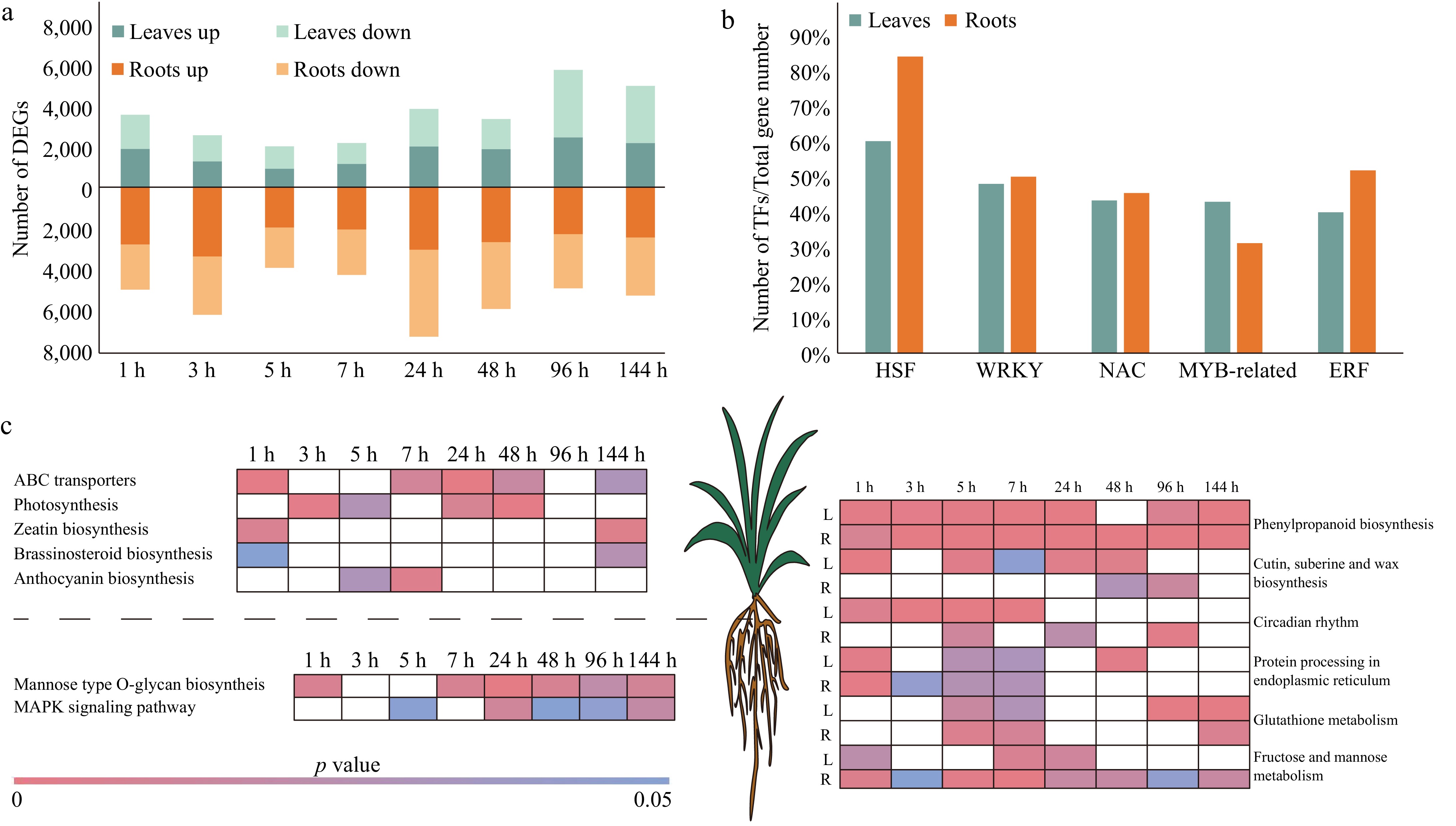
Figure 1.
DEGs in leaf and root of pearl millet at eight time points under high-temperature stress. (a) Number of DEGs in the leaves and roots of pearl millet under high temperature stress. Green and yellow represent leaves and roots respectively, and light and dark colors are used to distinguish up-regulated and down-regulated DEGs. (b) The percentage of differentially expressed HSFs, WRKYs, NACs, MYB-relatives, and ERFs. Green and yellow represent leaves and roots respectively. (c) KEGG enrichment analysis of DEGs. White indicates p value > 0.05.
-
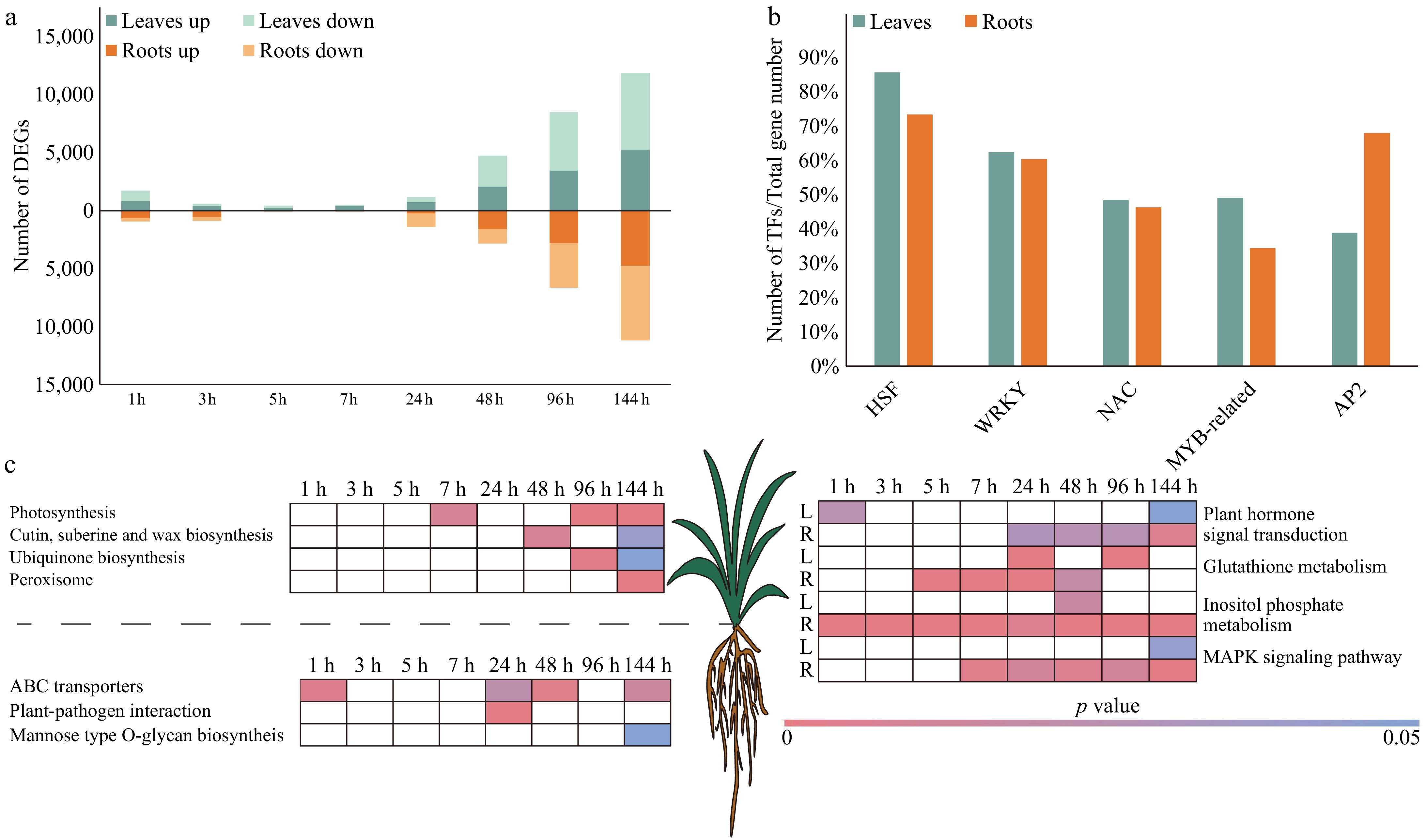
Figure 2.
DEGs in leaf and root of pearl millet at eight time points under drought stress. (a) Number of DEGs in the leaves and roots of pearl millet under drought stress. Green and yellow represent leaves and roots respectively, and light and dark colors are used to distinguish up-regulated and down-regulated DEGs. (b) The percentage of differentially expressed HSFs, WRKYs, NACs, MYB-relatives, and AP2s. Green and yellow represent leaves and roots respectively. (c) KEGG enrichment analysis of DEGs. White indicates p value > 0.05.
-
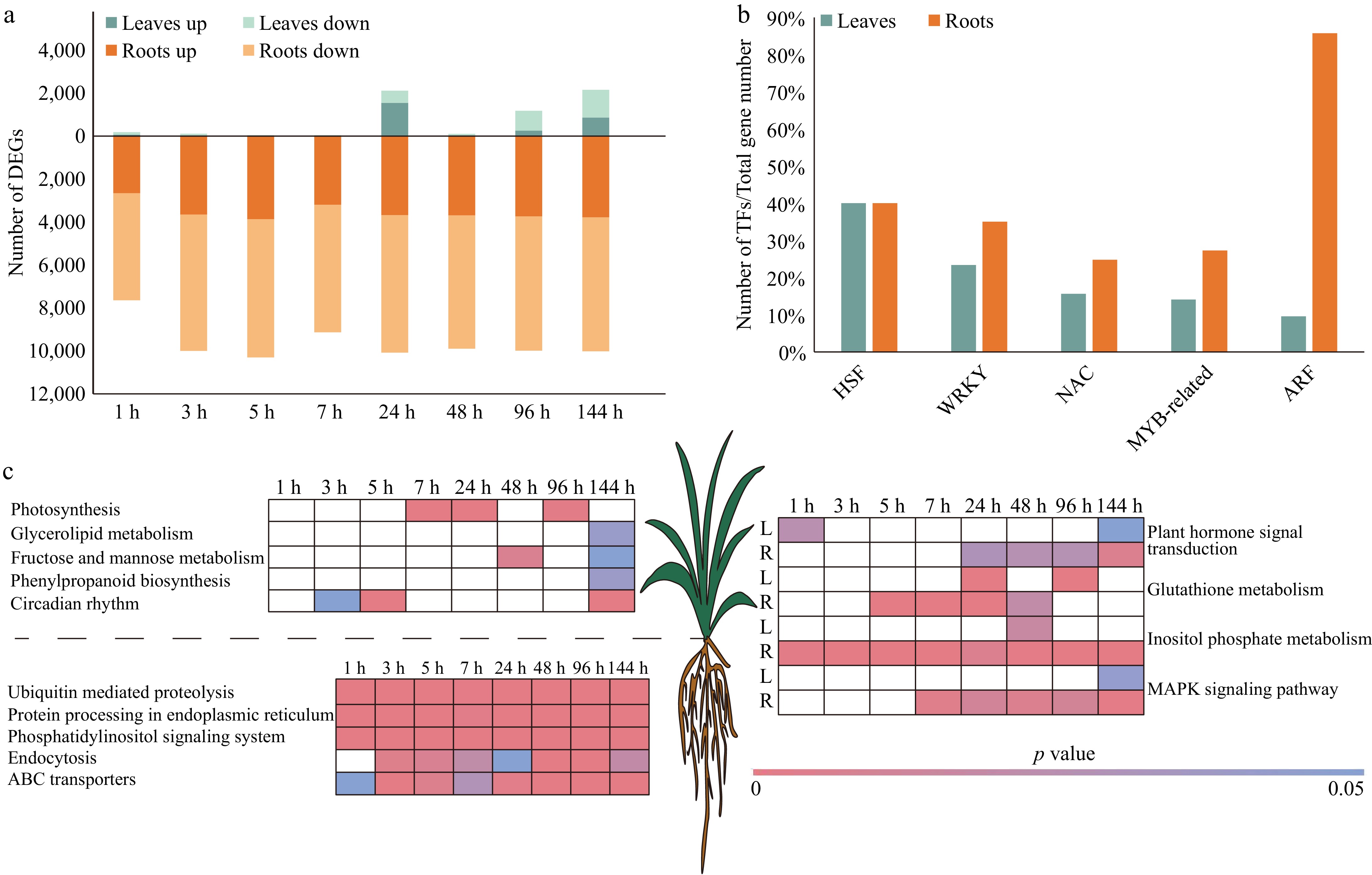
Figure 3.
DEGs in leaf and root of pearl millet at eight time points under salt stress. (a) Number of DEGs in the leaves and roots of pearl millet under salt stress. Green and yellow represent leaves and roots respectively, and light and dark colors are used to distinguish up-regulated and down-regulated DEGs. (b) The percentage of differentially expressed HSFs, WRKYs, NACs, ARFs, MYB-relatives, and ARFs. Green and yellow represent leaves and roots respectively. (c) KEGG enrichment analysis of DEGs. White indicates p value > 0.05.
-
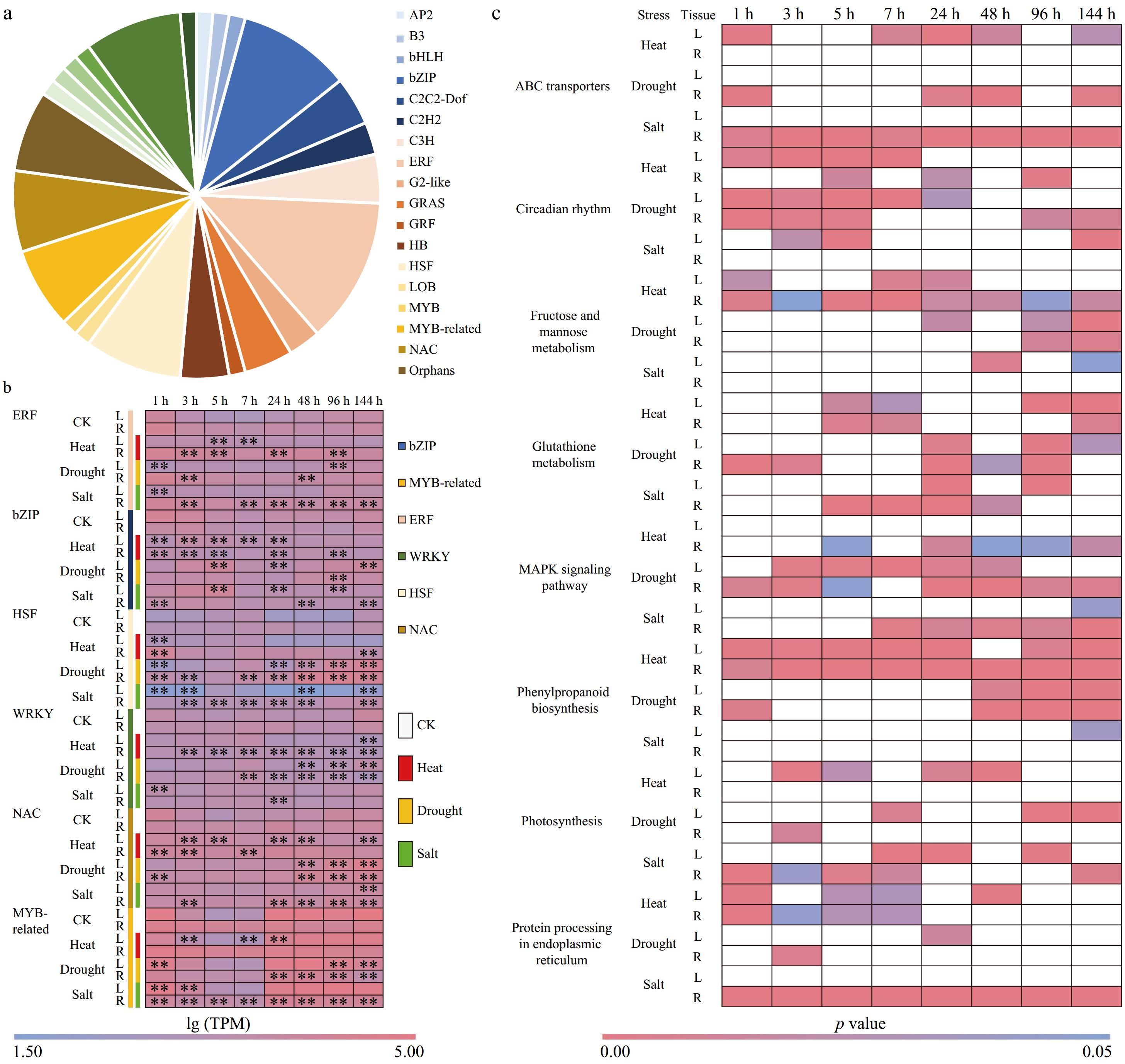
Figure 4.
TFs and KEGG pathways identified both under high temperature, drought and salt stress. (a) The ratio of specific TFs to differentially expressed TFs (70 TFs) in response to the three stresses showed that the proportion of ERFs, bZIPs, HSFs, and WRKYs gene families was 2.87% (9/70), 10% (7/70), 8.57% (6/70), and 8.57% (6/70), respectively. (b) Expression patterns of TFs in leaves and roots of Pearl millet responding to three stresses at eight time points. (c) The KEGG pathway was identified in all three types of stress (high temperature, drought and salt stress). The white square represents p value > 0.05.
-
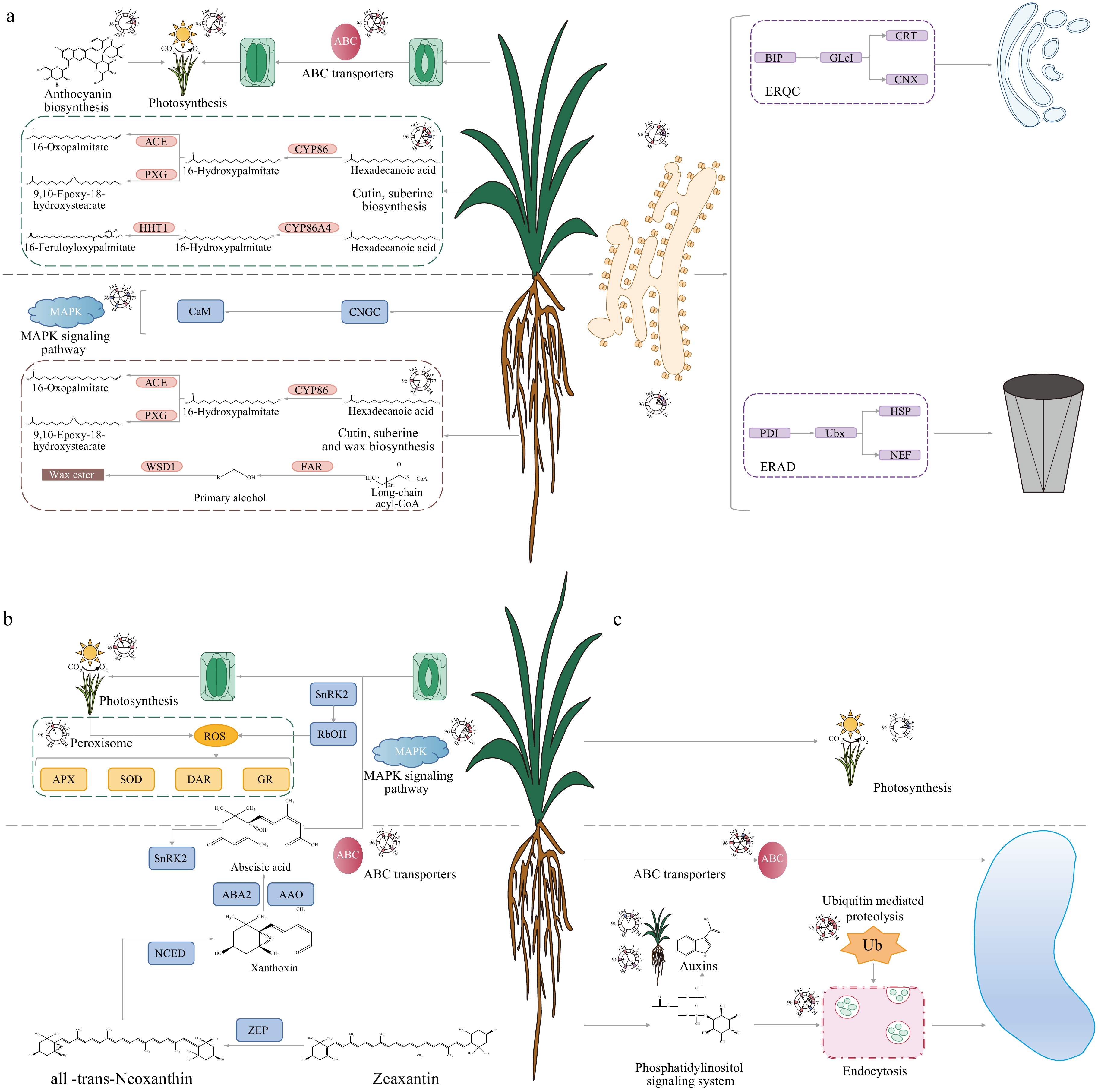
Figure 5.
Mechanism model diagram of pearl millet response to high temperature, drought, and salt stress. (a) Mechanism model of pearl millet response to high temperature stress. Cutin and suberine were synthesized by unsaturated fatty acids in the leaves of pearl millet under the action of CYP86s, HTH, and PXG. Besides Cutin and suberine, wax was synthesized by FAR, CYP94, and WSD in pearl millet root. The stomata of pearl millet leaves were closed by ABCG under high temperature stress. (b) Mechanism model of pearl millet response to drought stress. Epoxycarpenoids in the roots of pearl millet produce xanthoxin under the action of ZEP and NCED, and export it to the cytoplasm. Then, xanthoxin synthesized ABA through ABA2, and AAO. The synthesized ABA is transported by ABCG to the aboveground tissue of pearl millet, and SnRK2 is activated, leading to stomatal closure. In addition, ABA induces a large amount of ROS synthesis through RBOH, leading to the expression of peroxidase scavenging enzymes. (c) Mechanism model of pearl millet response to salt stress. Ins6P (Glucose 6-phosphate) synthesizes Ins (myo-inositol) under the action of INO1 and IMPA. The hydroxyl of Ins are sequentially phosphorylated by a series of PIK3, PIK4, and PIKFYVE kinases to generate three PtdIns monophosphates: PtdIns3P, PtdIns4P, and PtdIns5P. PtdIns4P further generates PtdIns(4,5)P2 under the action of PIP5K. PtdIns(4,5)P2 binds to AP2 protein to form CCPs (clathrin-coated pits). Subsequently, AP2 recruits clathrin and forms a clathrin shell. As the CCVs (clathrin-coated vesicles) mature, the DRP is responsible for separating the vesicles from the PM (plasma membrane). The isolated vesicles form ILVs (intraluminal vesicles) mediated by VPS and are transported to the vacuoles for degradation after ubiquitination.
-
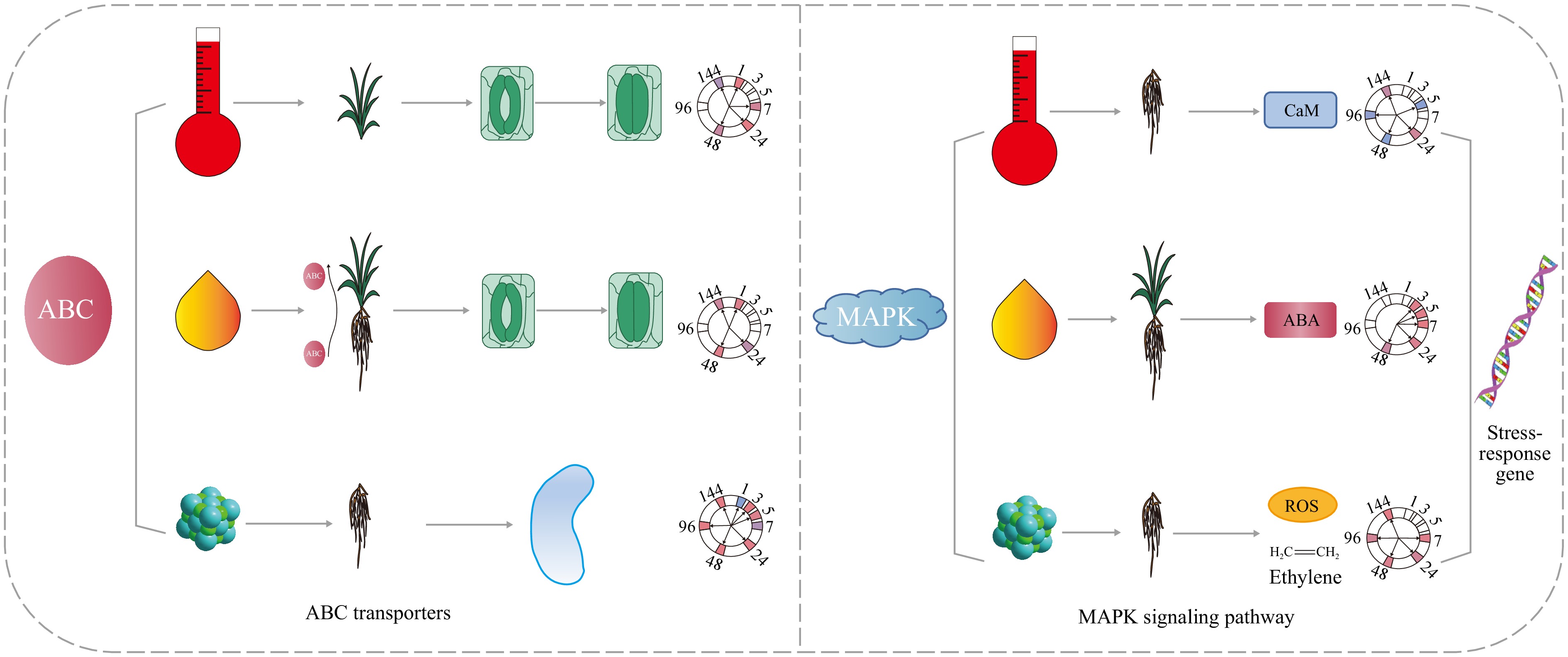
Figure 6.
The same pathway has different mechanisms in response to high temperature, drought and salt stress. ABC in the leaves of pearl millet responds to high temperature by mediating stomatal movement. ABC transporters in the roots of pearl millet play roles in transporting ABA and ions under drought and salt stress, respectively. The MAPK pathway is activated by Ca2+, ABA, and ROS signals under high-temperature, drought, and salt stress, respectively.
Figures
(6)
Tables
(0)