-
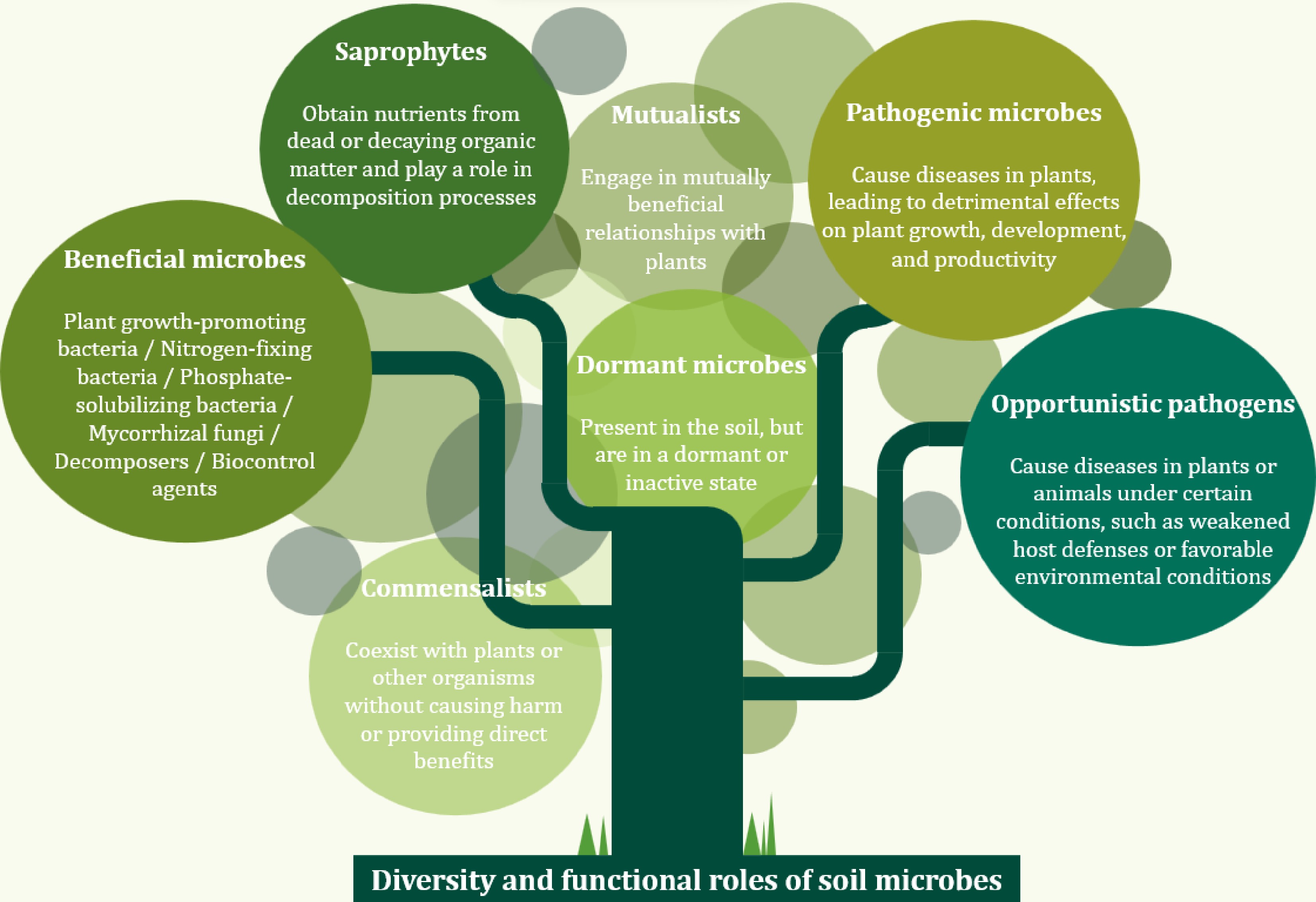
Figure 1.
Diversity and functional roles of natural soil microbial community.
-
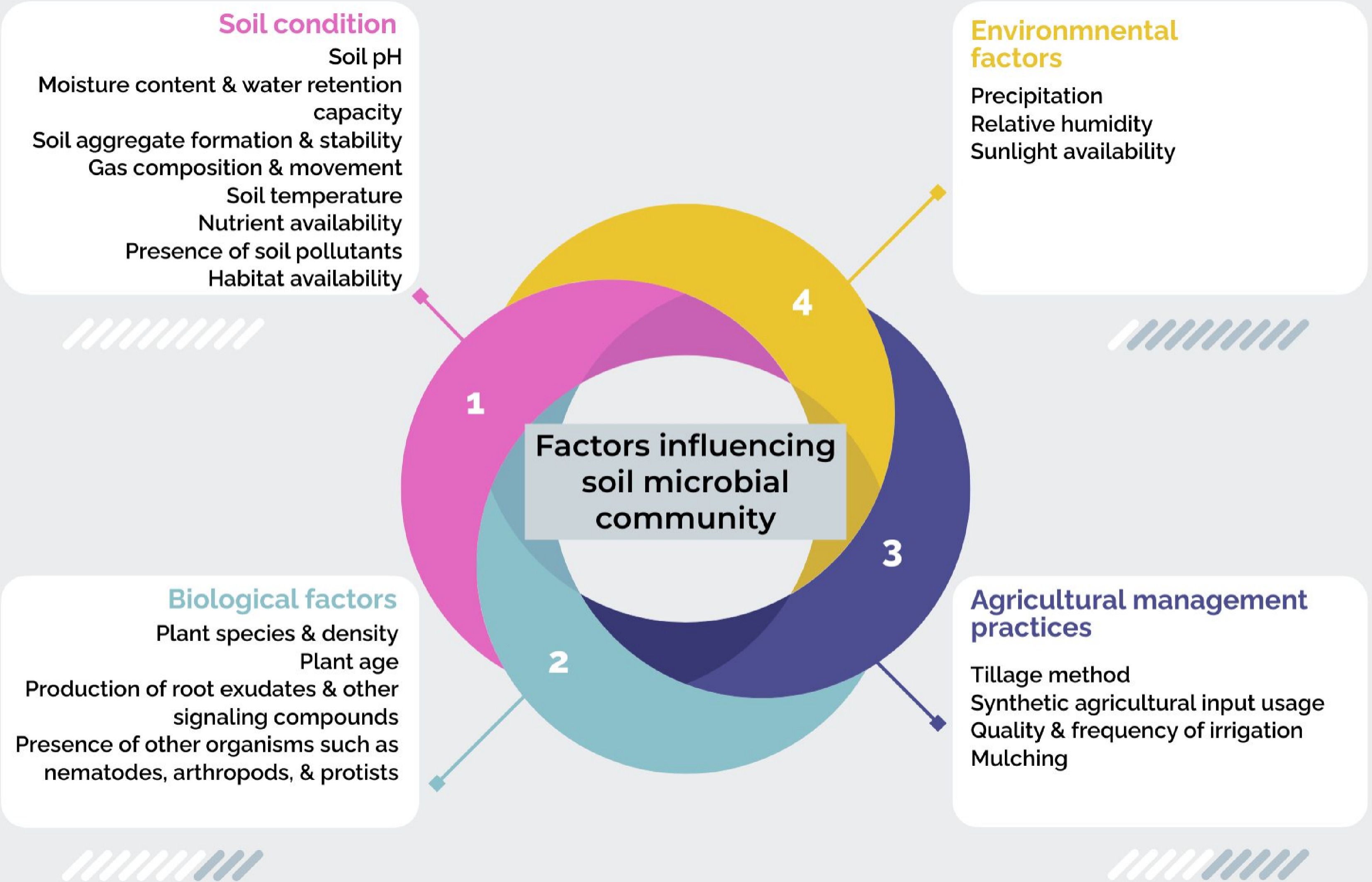
Figure 2.
Factors influencing the natural soil microbial community.
-
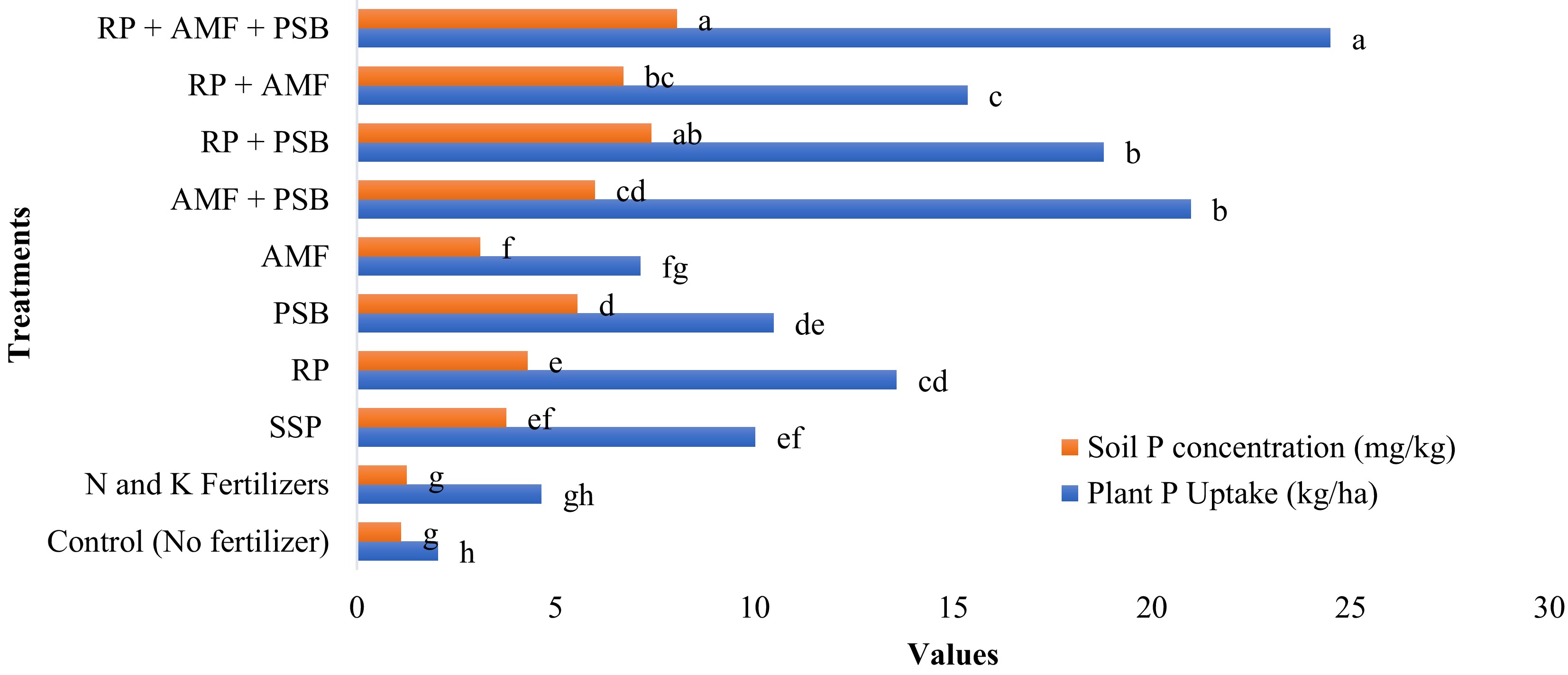
Figure 3.
Effect of combined application of rock phosphate (RP), arbuscular mycorrhizal fungi (AMF), and phosphate-solubilizing bacteria (PSB) on soil phosphorus concentration and plant phosphorus uptake in wheat. Bars represent mean values of soil P concentration (mg/kg) and plant P uptake (kg/ha) under different nutrient management treatments. Treatments with shared letters are not significantly different at p ≤ 0.05. (RP: Rock Phosphate; AMF: Arbuscular Mycorrhizal Fungi; PSB: Phosphate-Solubilizing Bacteria; SSP: Single Super Phosphate).
-
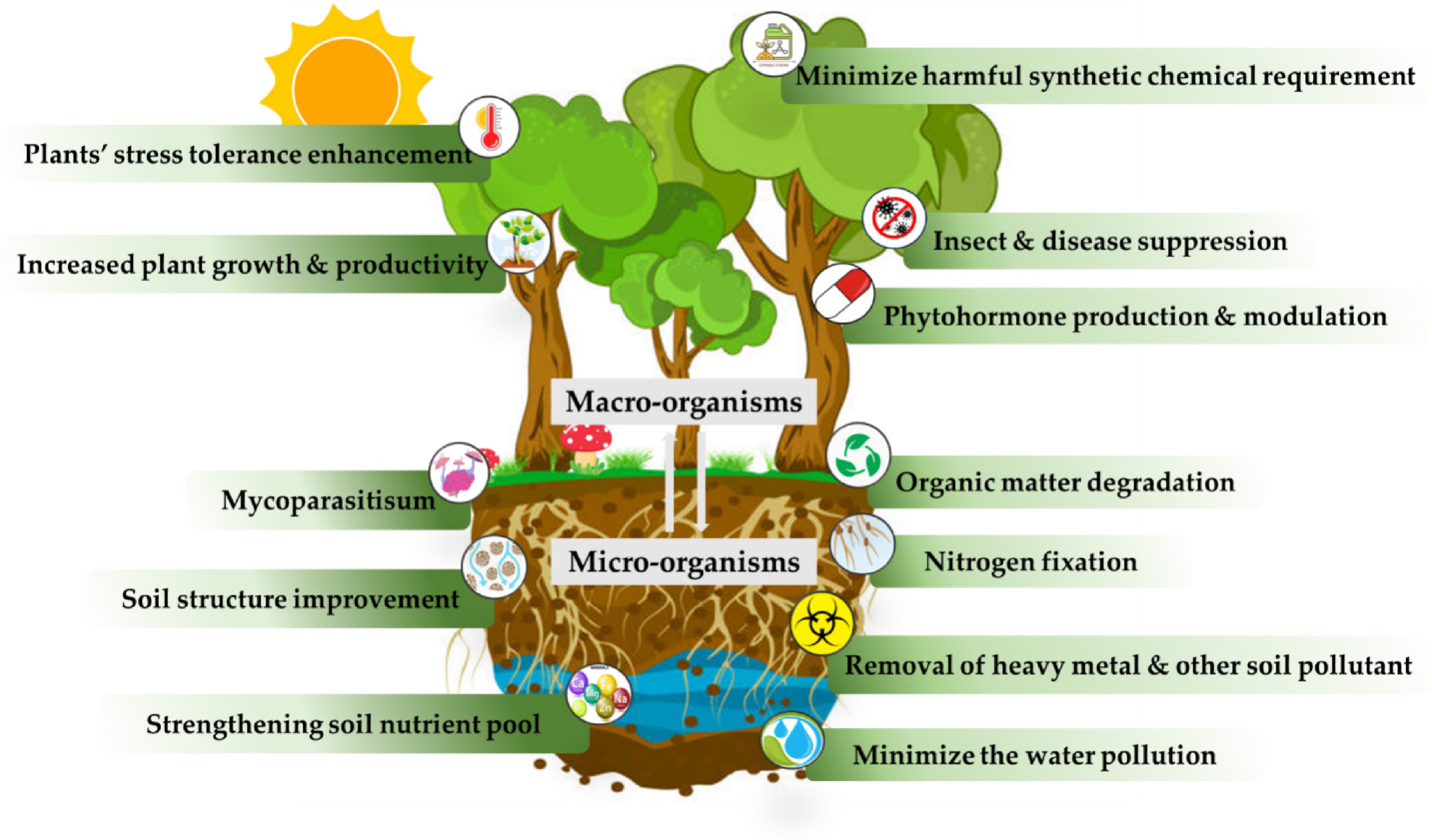
Figure 4.
Benefits of soil natural microbial community on sustainable agriculture.
-
Major soil microbe group Examples Ref. Bacteria Common phyla: Actinobacteria, Bacteroidetes, Firmicutes, and Proteobacteria [19] Common genus: Agrobacterium, Alcaligenes, Arthrobacter, Bacillus, Flavobacterium, Micromonospora, Nocardia, Pseudomonas, and Streptomyces [20,21] Fungi Common phyla: Ascomycota, Basidiomycota, Glomeromycota, and Zygomycota [22] Common genus: Aspergillus, Cryptococcus, Neurospora, Penicillium, Rhizopus, and Saccharomyces [17] Archaea Common superphyla: Euryarchaeota, TACK, DPANN, and Asgard [23] Common genus: Halovivax, Methanobrevibacter, Methanococcus, Pyrobaculum, Staphylothermus, Thermococcus, and Thermofilum [24,25] Protozoa Common species: Balantidium coli, Entamoeba histolytica, Giardia duodenalis, Plasmodium falciparum, Toxoplasma gondii, Trichomonas vaginalis, and Trypanosoma brucei gambiense [25] Table 1.
Examples for major soil microbial groups.
-
Symbiotic nitrogen fixation A-symbiotic (free-living) nitrogen fixation Represented by only a few specialized bacterial types Represented by a diverse community of different nitrogen-fixing bacteria Need to receive a steady, direct supply of simple carbon compounds like succinate from their host plants Need to rely on variable and complex dissolved organic carbon from soil, which can be unpredictable in availability Benefited from carefully regulated, low-oxygen environments maintained by their host plants Experienced highly variable oxygen levels in the rhizosphere, influenced by soil properties and microbial/root respiration Need to get critical nutrients delivered directly by their host plants Must independently acquire essential nutrients from the soil environment Focus exclusively on nitrogen fixation, with all their fixed nitrogen being transferred to the host plant Able to access nitrogen from multiple sources (soil nitrogen plus their fixation), giving them flexibility Table 2.
Key contrasts between symbiotic nitrogen fixation (SNF) and a-symbiotic (free-living) nitrogen fixation (ASNF)[54].
-
Group of microbes Species Example Mechanism Ref. Bacterial biocontrol agents Bacillus species B. subtilis;
B. amyloliquefaciensRelease diverse antimicrobial compounds, including antibiotics, enzymes like cell wall hydrolases, and lipopeptides.
Reduce the growth of plant pathogens, promote systemic resistance in plants, and plant growth.[76,77] Pseudomonas species P. fluorescens;
P. aeruginosaProduce antibiotics like pyocyanin, pyrrolnitrin, and phenazine-1-carboxylic acid, siderophores (iron-chelating compounds), and other anti-microbial metabolites.
Induce systemic resistance and encourage plant growth.[78,79] Streptomyces species Streptomyces roseoflavus Produce a variety of antifungal, antibacterial compounds, and cell wall degrading enzymes like chitinase and β-1,3-glucanase. [80−82] Rhizobium species R. leguminosarum;
R. phaseoli;
R. trifolii; R. lentisProduce a variety of antifungal compounds such as hydrogen cyanide and antibacterial compounds like bacteriocins and trifolitoxin, lytic enzymes, and siderophores substances. [83] Fungal biocontrol agents Trichoderma species T. harzianum; T. viride Inhibit plant pathogens through mycoparasitism (directly parasitizing and feeding on other fungi), antibiosis (production of antimicrobial compounds.
Being an active competitor for resources like nutrients and space.[84] Gliocladium species G. catenulatum;
G. roseumParasitize and inhibit the spread of plant pathogens, particularly fungi and nematodes, through the production of enzymes and other metabolites. [83] Ampelomyces species Ampelomyces quisqualis Parasitize and feed on the mycelium of the powdery mildew pathogens. [85] Yeast Aureobasidium pullulans Create competition for nutrients and space, as well as the releasing enzymes and antimicrobial compounds. [86] Viral biocontrol agents Baculoviruses Used as biocontrol agents against insect pests.
Can cause lethal infections.[87] Table 3.
Pathogen suppression mechanisms in soil microbes.
-
Heavy metal Micro-organism Average sorption efficiency (%) Chromium (Cr) Bacteria Acinetobacter sp. 87 Sporosarcina saromensis 82.5 Bacillus circulans 96 Bacillus cereus 78 Bacillus subtilis 99.6 Pseudomonas aeruginosa 72 Fungi Aspergillus sp. 92 Saccharomyces cerevisiae 95 Lead (Pb) Bacteria Cellulosimicrobium sp. 99.3–84.6 Methylobacterium organophilum 62.28 Bacillus firmus 98.3 Staphylococcus sp. 82.6 Cobalt (Co) Bacteria Vibrio fluvialis Mercery (Hg) Bacteria Enterobacter cloacae 28.6 Klebsiella pneumoniae 29.8 Pseudomonas aeruginosa 90 Bacillus licheniformis 70 Fungi Candida parapsilosis 80 Nikel (Ni) Bacteria Desulfovibrio desulfuricans 97.4–78.2 Flavobacterium sp. 25 Pseudomonas sp. 53 Fungi Aspergillus versicolor 30.5 Aspergillus niger 58 Copper (Cu) Bacteria Micrococcus sp. 55 Desulfovibrio desulfuricans 90.3–90.1 Bacillus firmus 74.9 Table 4.
Microbes involved in bioremediation[105].
Figures
(4)
Tables
(4)