-
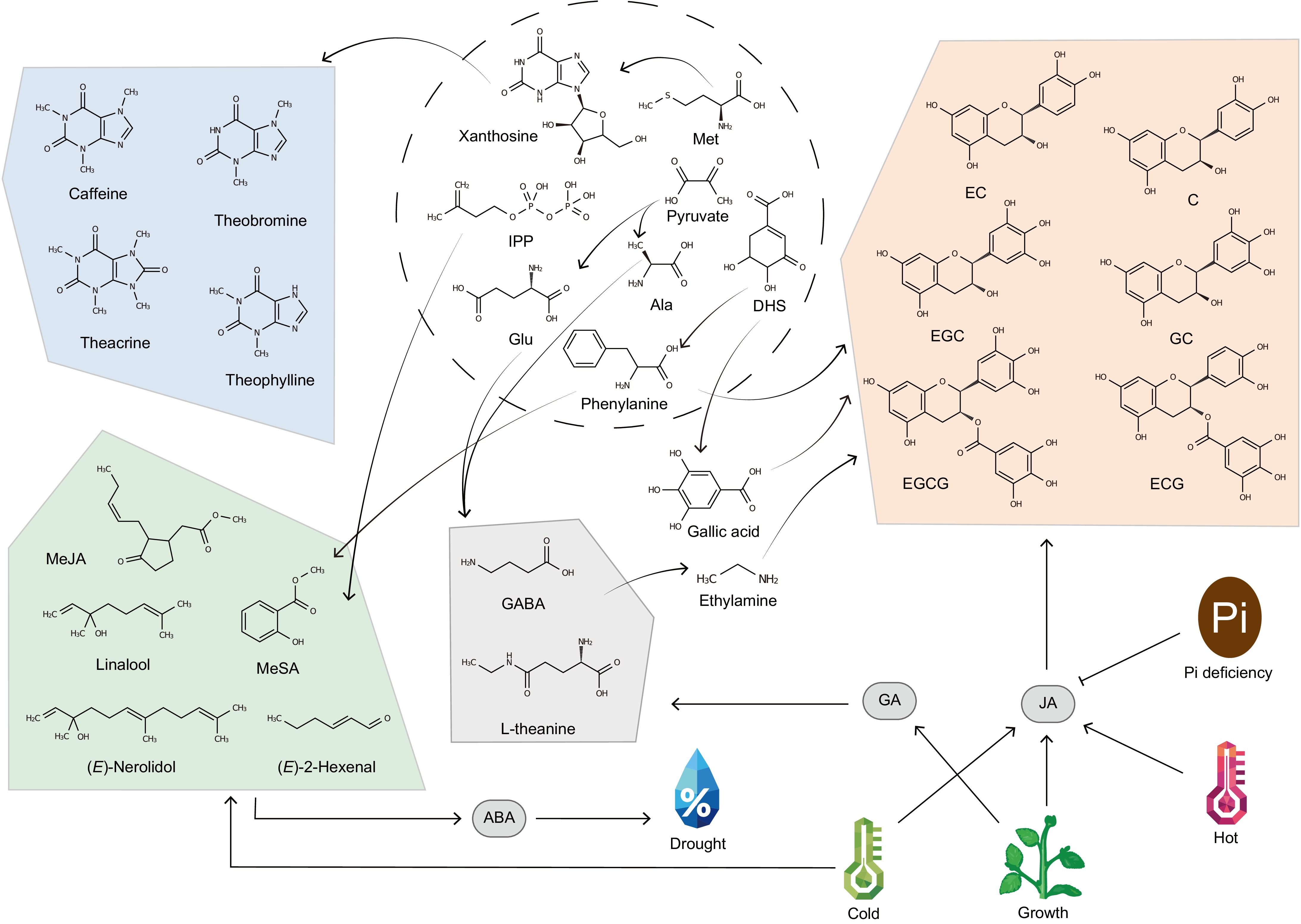
Figure 1.
Landscape of bioactive metabolites of tea plant and environmental response. MeJA, Methyl Jasmonate; MeSA, Methylsalicylate; GABA, γ-aminobutyricacid; Met, Methionine; IPP, Isopentenyl pyrophosphate; Ala, Alanine; Glu, Glutamic acid; DHS, 3-Dehydroshikimic acid; GA, Gibberellin; JA, Jasmonic acid; ABA, Abscisic acid, Pi, phosphate. Arrows link precursors from primary metabolism (dotted line circle) to the end products. ABA, GA, and JA represent phytohormone metabolism or signaling genes.
-
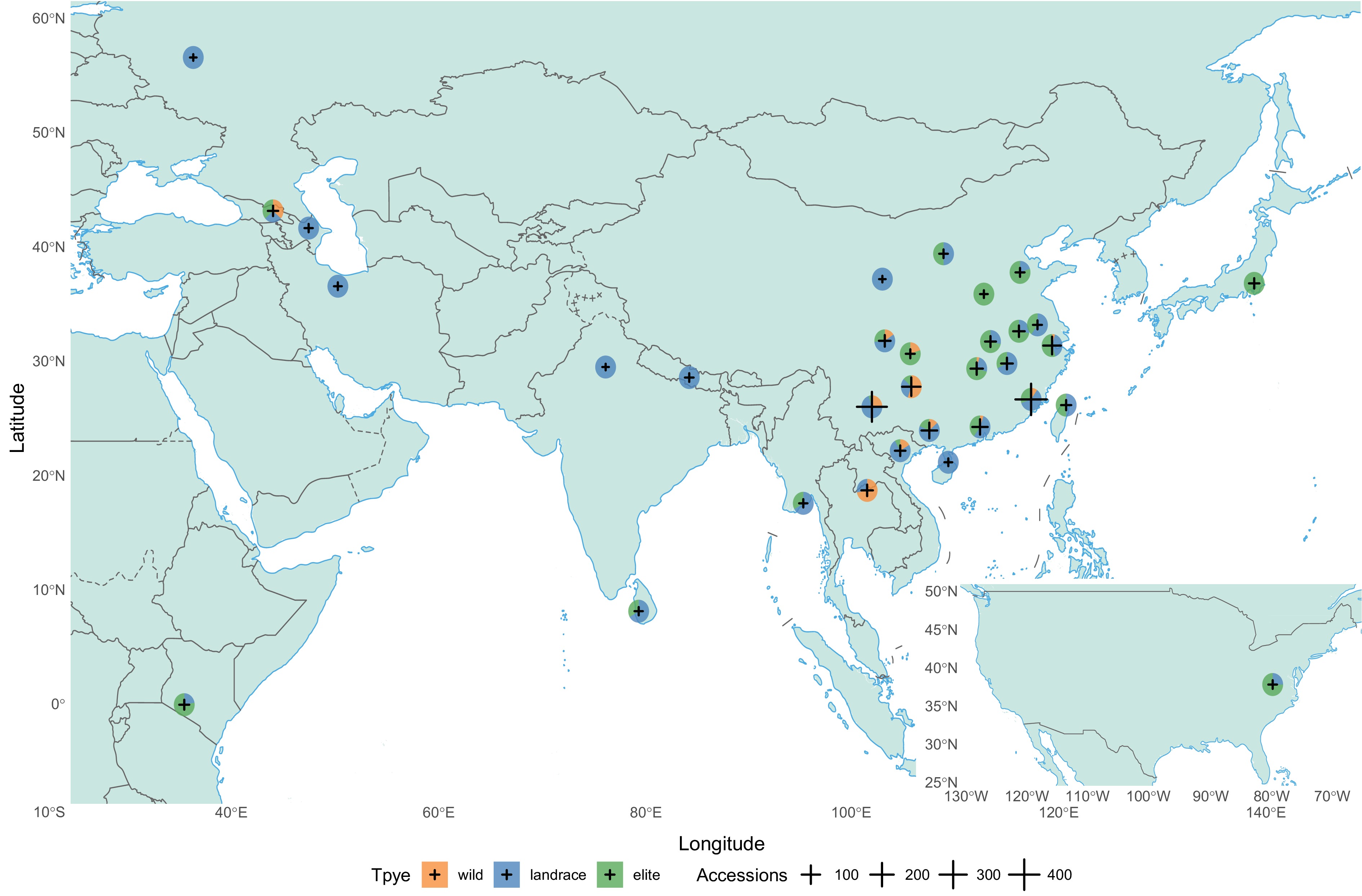
Figure 2.
Profiling of the worldwide distribution of Camellia accessions in a previous resequencing study[45]. The orange, blue, and green components of the figure represent wild, landrace, and elite Camellia accessions. Size of the cross logo represents the total accessions number of the country or province (source of map: GS (2016)1666).
-
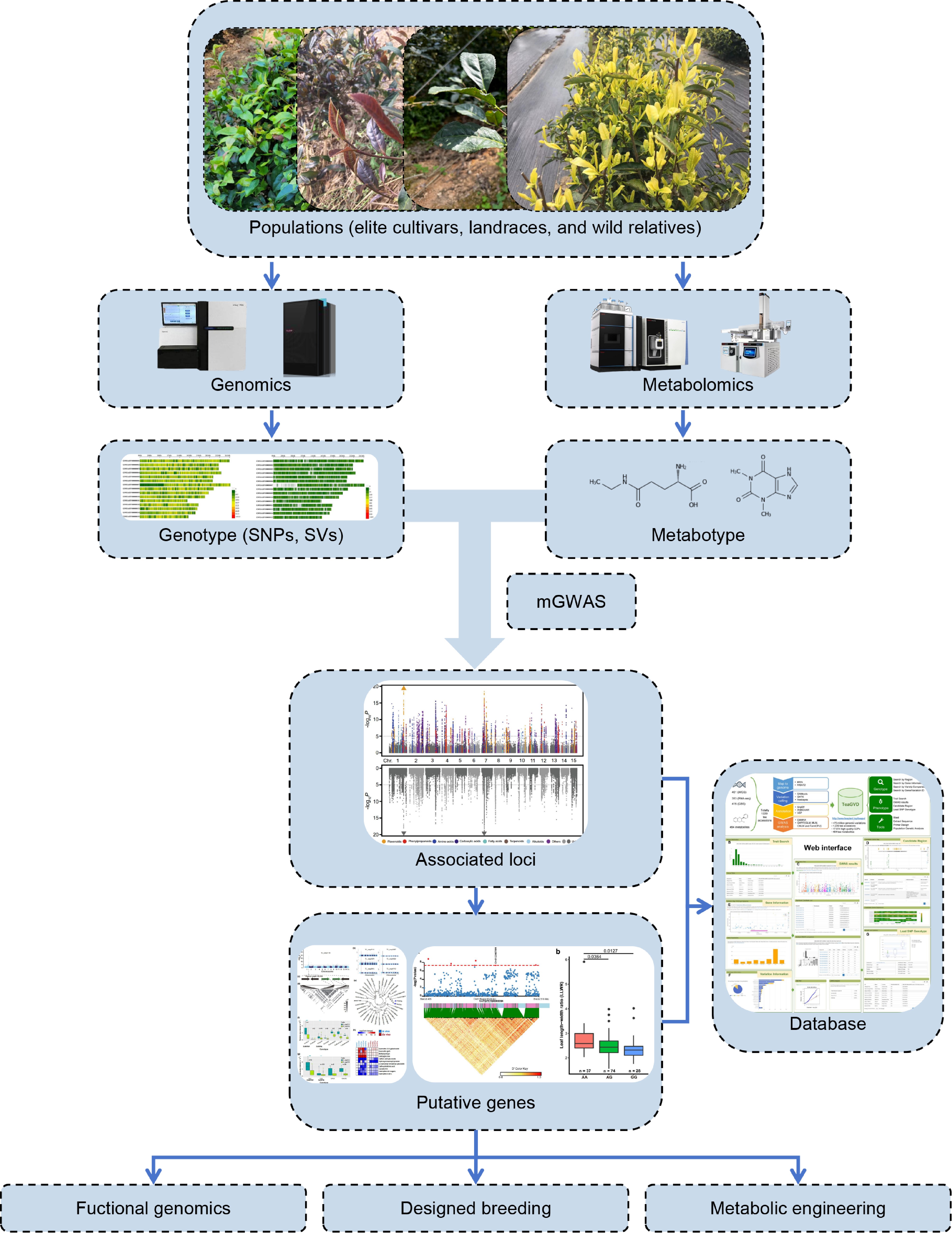
Figure 3.
Metabolomics of germplasm resources for precision breeding of tea plants.
-
YK10 SCZ V1.0 SCZ V1.1 SCZ V1.2 BY DASZ LJ43 HD TGY DY MJ TV 1 Seimei Chun gui ZJ Sequencing technology 2rd-NGS 2rd-NGS + SMRT SMRT + Hi-C Hi-C SMRT + Hi-C SMRT + Hi-C SMRT + Hi-C HiFi + Hi-C HiFi + Hi-C ONT + Hi-C HiFi + Hi-C HiFi + Hi-C HiFi + Hi-C HiFi + Hi-C Contig assembly size (Gb) 2.57 2.89 2.94 2.98 2.92 3.11 3.26 2.94 3.06 2.97 2.93 3.16 3.11 3.06 Contig N50 (kb) 19.96 67.07 600.46 − 625.11 2,589.80 271.33 2,610 1,940 723.70 − − 160,000.09 2,286.92 Scaffold N50 (Mb) 0.45 1.39 − 218.10 195.68 204.21 143.85 − − 207.72 199.23 214.86 − − Number of genes 36,951 33,932 50,525 32,331 40,812 33,021 33,556 43,779 42,825 34,896 30,069 55,235 54,797 39,673 Average full length of genes (bp) 6,174 6,821 5,237 7,127 6,263 7,927 10,815 5,452 5,651 6,961 − − − 7,493 Repeat sequence
(% of genome)80.89 − 86.78 − 74.13 87.41 80.06 70.75 78.15 86.77 70.61 79.4 73.97 84.17 Complete genome BUSCOs (%) 94 90 90.6 − 88.13 93.2 88.36 95 93.7 87.78 90.7 94.8 91.9 94.12 Ref. [51] [58] [64] [61] [60] [6] [54] [62] [63] [53] [55] [56] [57] [65] Table 1.
Progress in tea plant genome research.
Figures
(3)
Tables
(1)