-
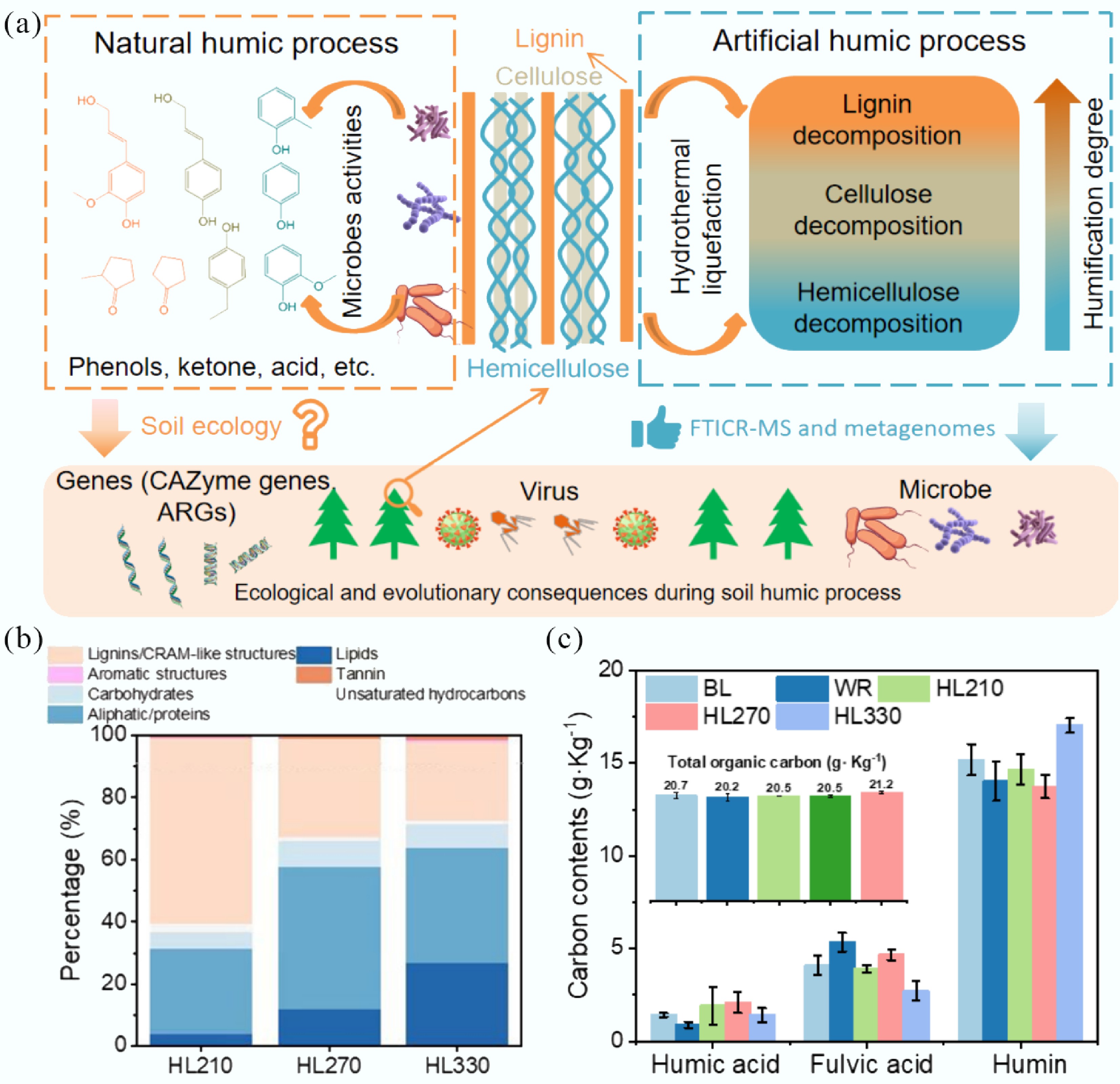
Figure 1.
Summary of artificial humic substances from rice straw by hydrothermal liquefaction. Three main components of biomass, including hemicellulose, cellulose, and lignin, were decomposed at low, moderate, and high hydrothermal temperature. BL: Blank; WR: Water treatment; HLX represents the artificial humic substances prepared by hydrothermal liquefaction at different temperatures, and X represents the temperature. (a) Proposed strategy of hydrothermal liquefaction for simulating the natural humic process in soil. (b) Different component content of artificial humic substances by FTICR-MS analysis. (c) The humic substance content of treated soil amended with artificial humic substances.
-
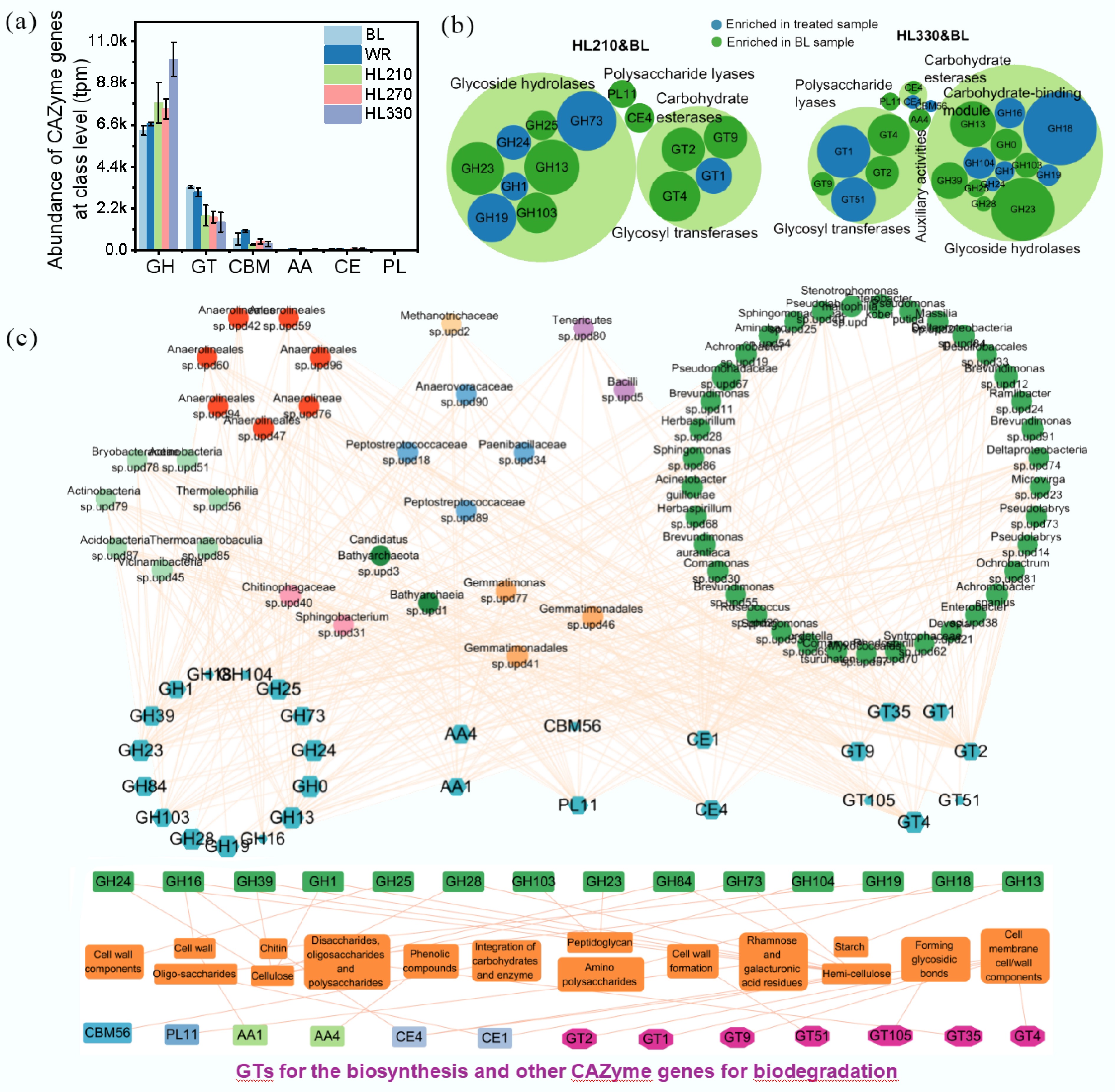
Figure 2.
Summary of putative CAZyme genes in soils treated with artificial humic substances from rice straw by hydrothermal liquefaction. Three main components of biomass, including hemicellulose, cellulose, and lignin, were decomposed at low, moderate, and high hydrothermal temperature. BL: Blank; WR: Water treatment; HLX represents the artificial humic substances prepared by hydrothermal liquefaction at different temperatures, and X represents the temperature. (a) Abundance of CAZyme genes at the class level. GT: glycosyl transferase; GH: glycoside hydrolase; CE: carbohydrate esterase; CBM, carbohydrate-binding module; PL: polysaccharide lyase; AA, auxiliary activities. The annotation of CAZyme genes was based on the Carbohydrate-Active enZYmes database using open reading frames (ORFs) from metagenomics. (b) Enriched CAZyme genes in treated soils amended with artificial humic substances. The response ratio was determined by calculating the natural logarithm of the ratio of the mean gene abundances between treated and untreated soil. (c) The relations of microbes contributing to the enriched CAZyme genes. The size of the circles and octagons indicate the contribution of microbes and gene abundance, respectively. (d) Potential substrates of enriched CAZyme genes. The related processes included biodegradation, biosynthesis and auxiliary activities. This information was sourced from the Carbohydrate-Active enZYmes database.
-
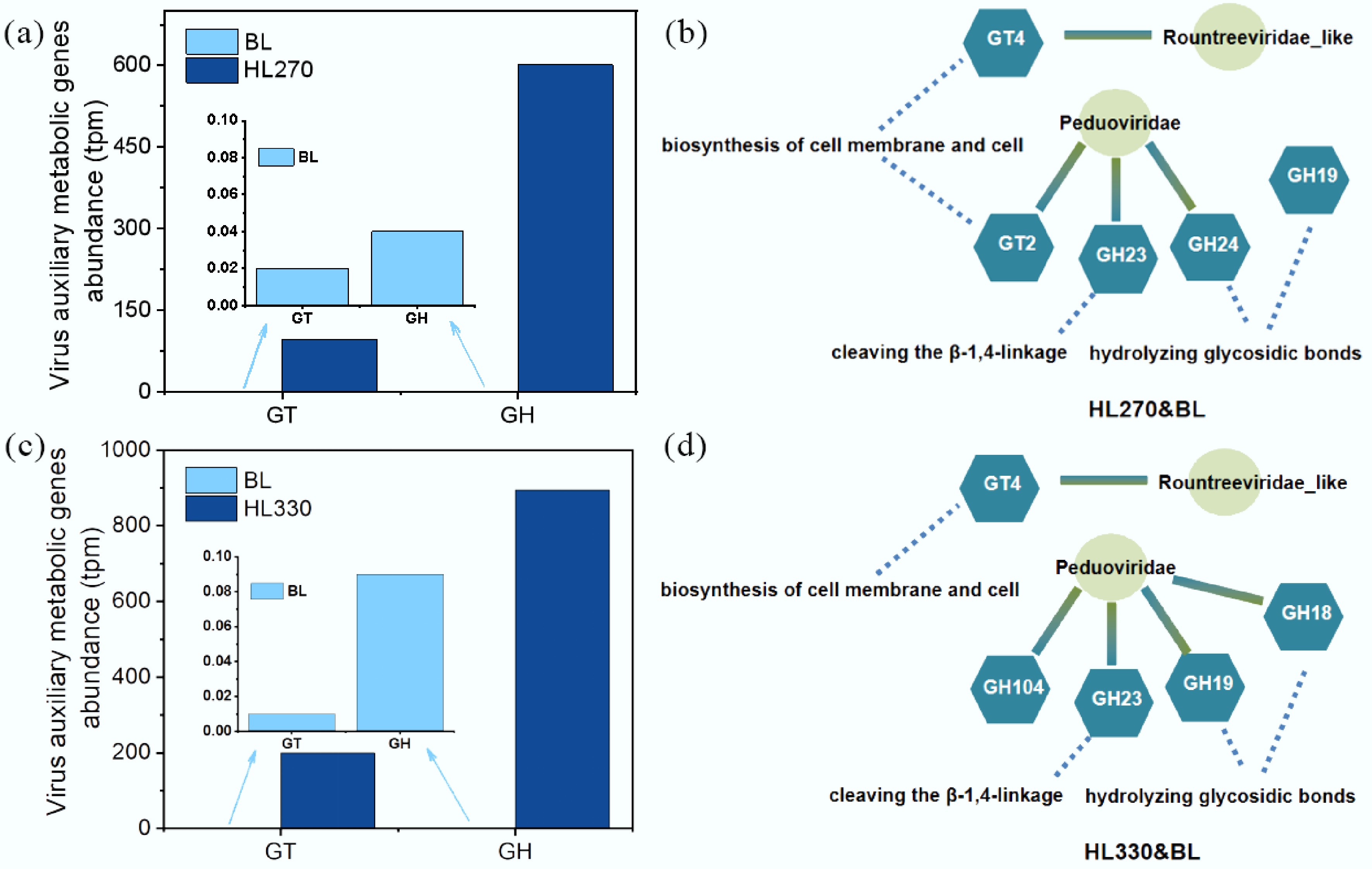
Figure 3.
Summary of viral AMGs in soils treated with artificial humic substances from rice straw by hydrothermal liquefaction. Three main components of biomass, including hemicellulose, cellulose, and lignin, were decomposed at low, moderate, and high hydrothermal temperature. BL: Blank; WR: Water treatment; HLX represents the artificial humic substances prepared by hydrothermal liquefaction at different temperatures, and X represents the temperature. (a), (b) Abundance of viral AMGs annotated as CAZyme genes at the class level. The annotation of CAZyme genes was based on the Carbohydrate-Active enZYmes database using AMGs identified from viral sequences. (c), (d) Viruses contributing to the enriched AMGs annotated as CAZyme genes.
-
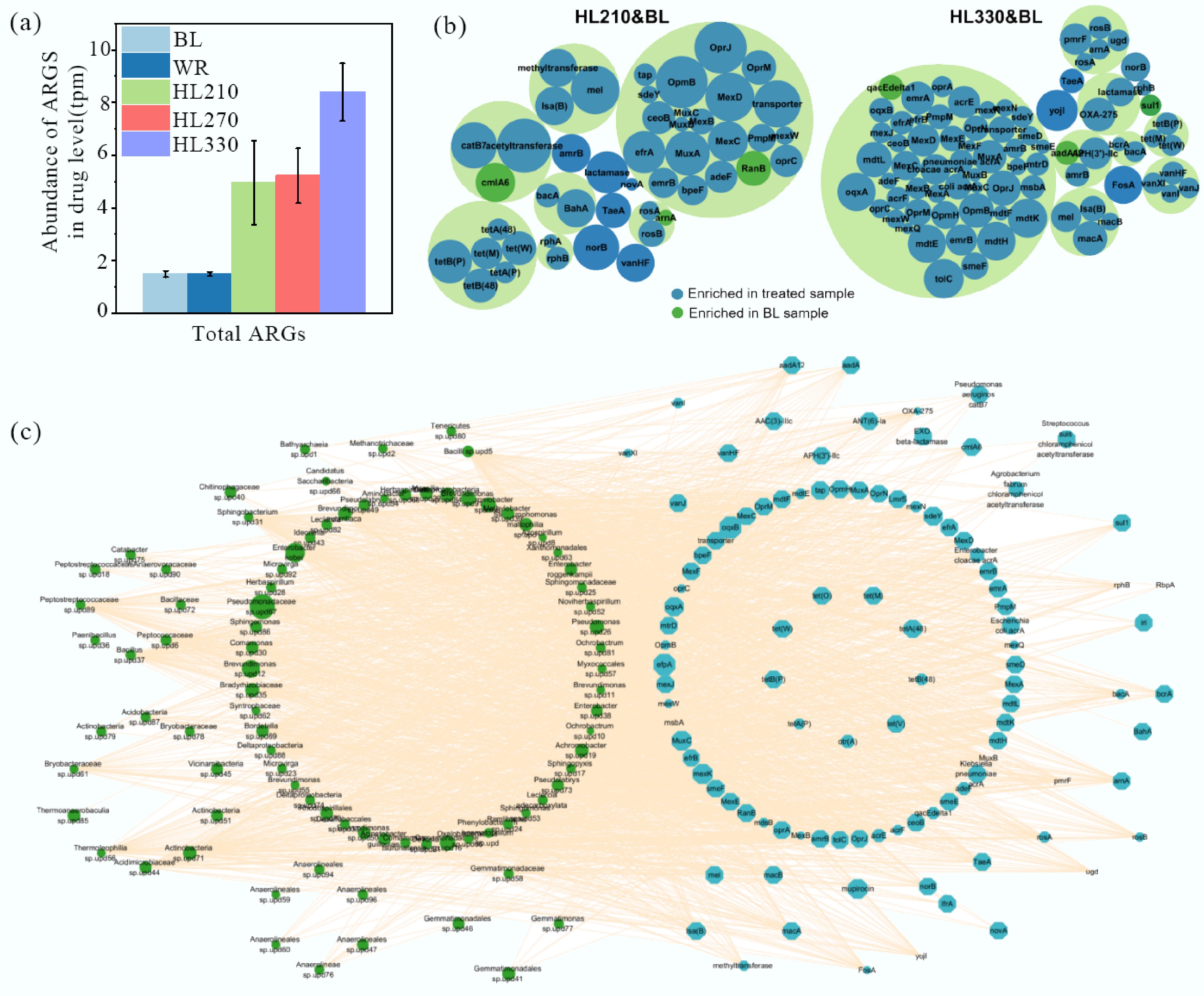
Figure 4.
Summary of putative ARGs in soils treated with artificial humic substances from rice straw by hydrothermal liquefaction. Three main components of biomass, including hemicellulose, cellulose, and lignin, were decomposed at low, moderate, and high hydrothermal temperature. BL: Blank; WR: Water treatment; HLX represents the artificial humic substances prepared by hydrothermal liquefaction at different temperatures, and X represents the temperature. (a) Abundance of ARGs at the drug level. The annotation of ARGs was based on the Comprehensive Antibiotic Resistance Database using open reading frames (ORFs) from metagenomics. (b) Enriched ARGs in treated soils amended with artificial humic substances. The response ratio was determined by calculating the natural logarithm of the ratio of the mean gene abundances between treated and untreated soil. (c) The relations of microbes contributing to the enriched ARGs. The size of the circles and octagons indicate the contribution of microbes and gene abundance, respectively.
-
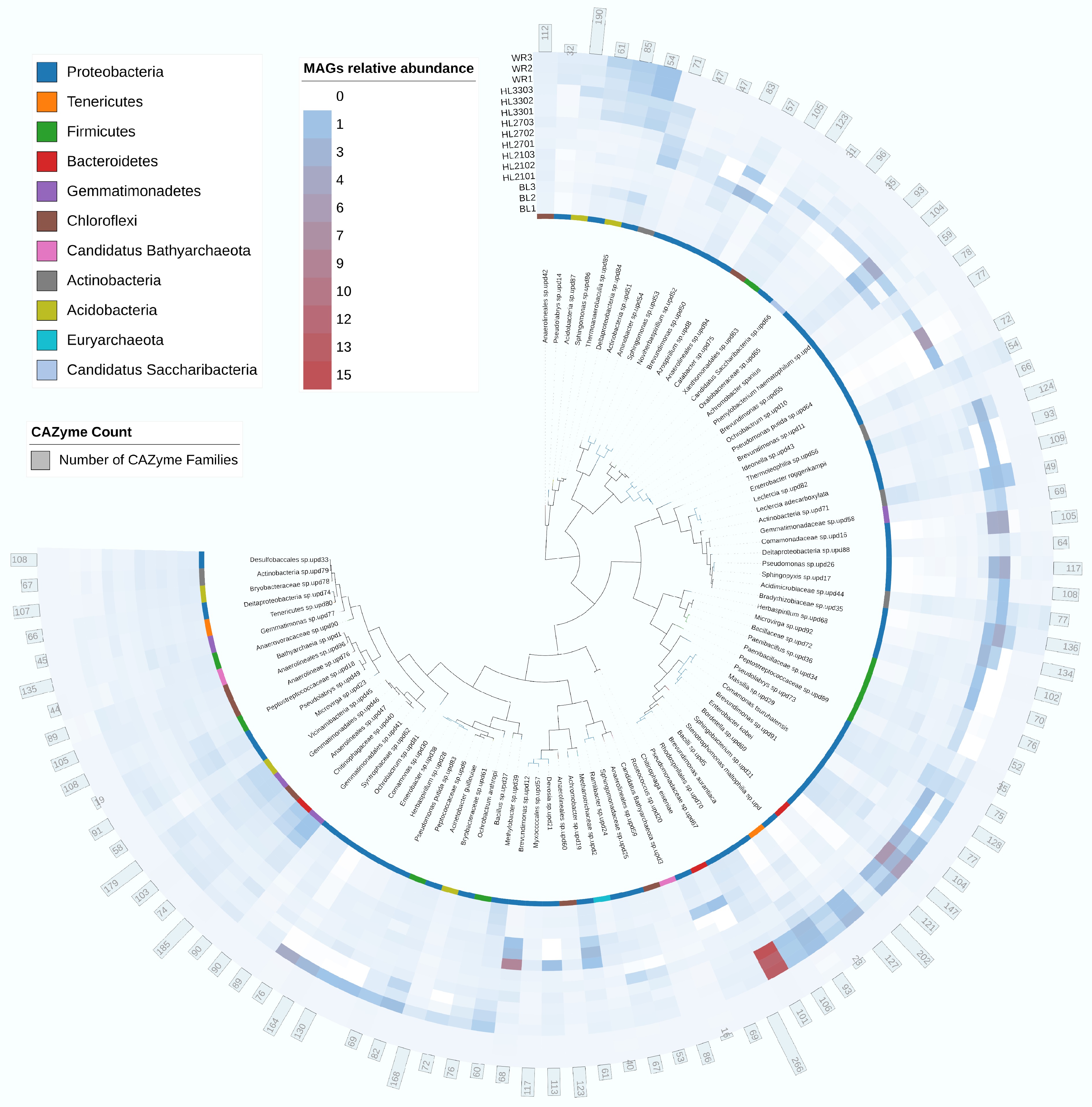
Figure 5.
Summary of metagenome-assembled genomes (MAGs) in soils treated with artificial humic substances from rice straw by hydrothermal liquefaction. Three main components of biomass, including hemicellulose, cellulose, and lignin, were decomposed at low, moderate, and high hydrothermal temperature. BL: Blank; WR: Water treatment; HLX represents the artificial humic substances prepared by hydrothermal liquefaction at different temperatures, and X represents the temperature. Each sample was analyzed with three replicates.
Figures
(5)
Tables
(0)