-
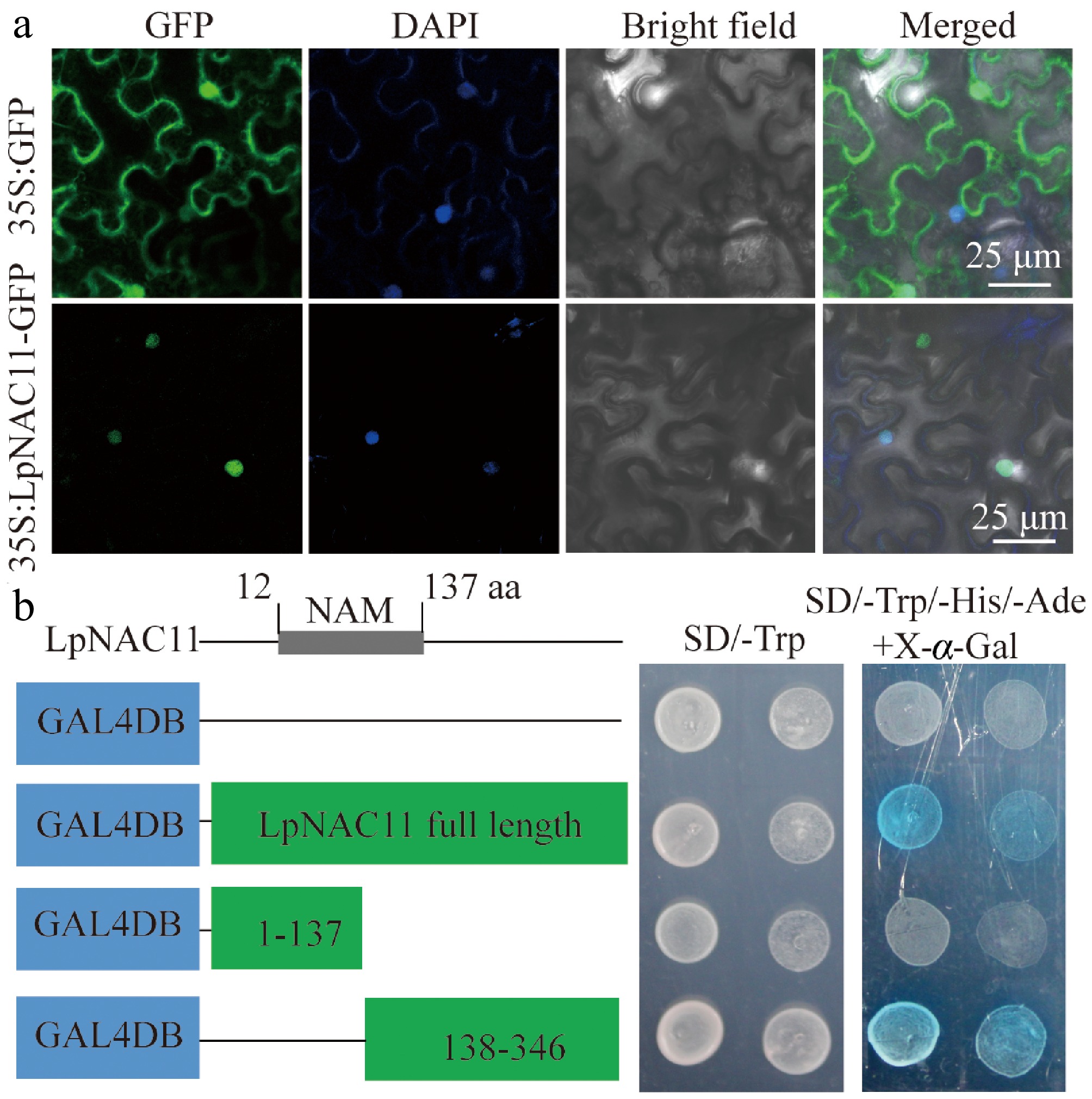
Figure 1.
Subcellular localization and transcriptional activity assay of LpNAC11. (a) Subcellular localization of LpNAC11 in tobacco epidermal cells. DAPI was used as a nucleus-specific marker. (b) Yeast transactivation assay shows the transcription activation domain of LpNAC11. NAM is a conserved domain of NAC family transcription factors.
-
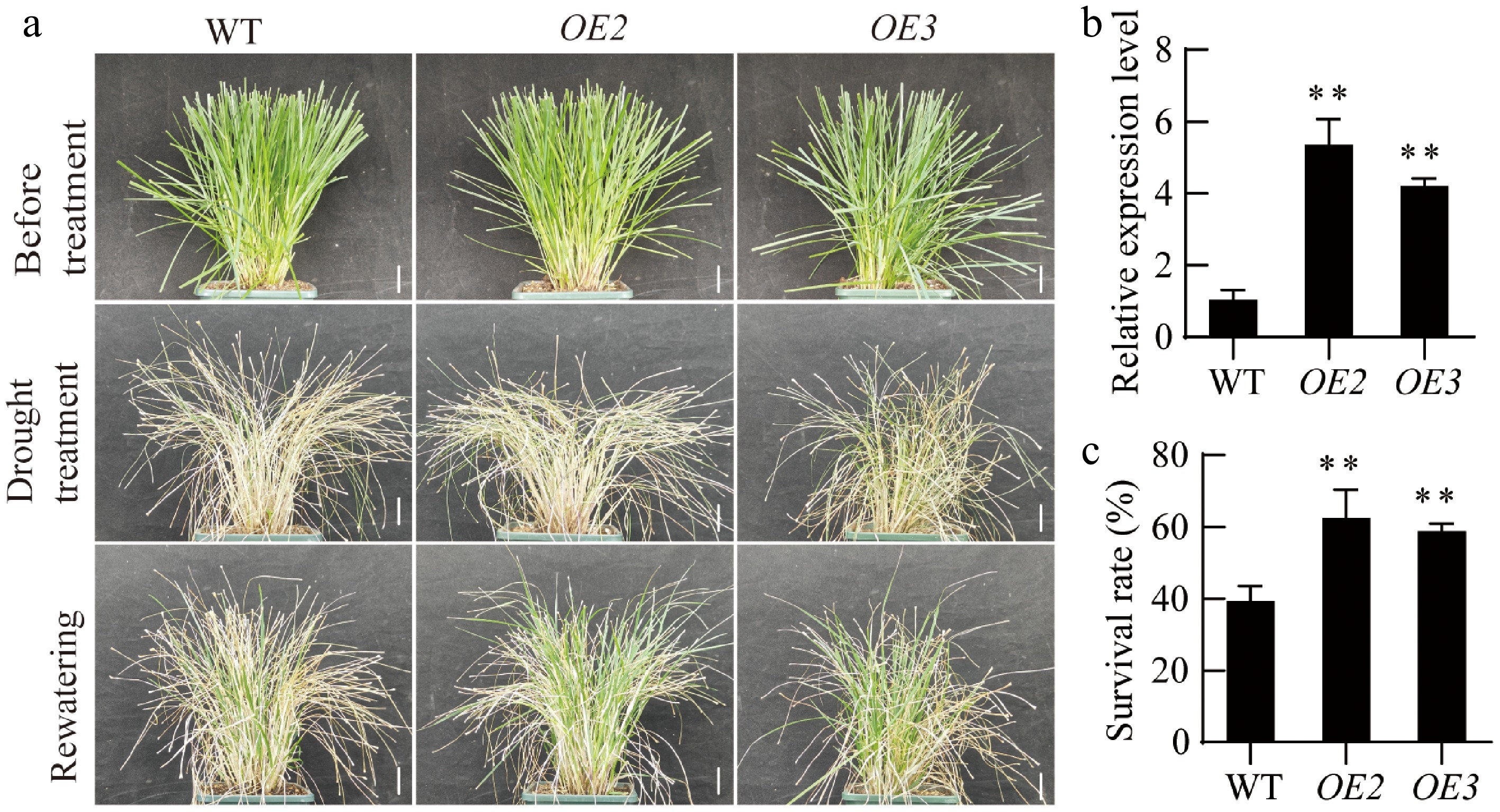
Figure 2.
Overexpression of LpNAC11 improves survival rates in transgenic perennial ryegrass under drought conditions. (a) Growth phenotypes of wild-type (WT) and LpNAC11-overexpressing plants (OE2 and OE3). Bars = 2 cm. (b) qPCR analysis of LpNAC11 expression in the overexpression lines. LpActin1 was used as an internal reference gene. (c) Survival rates of WT and LpNAC11-overexpressing plants after rewatering. Data presented in (b), (c) are shown as the mean ± SD from three biological replicates. Statistical significance was determined by Student's t-test (** p < 0.01).
-
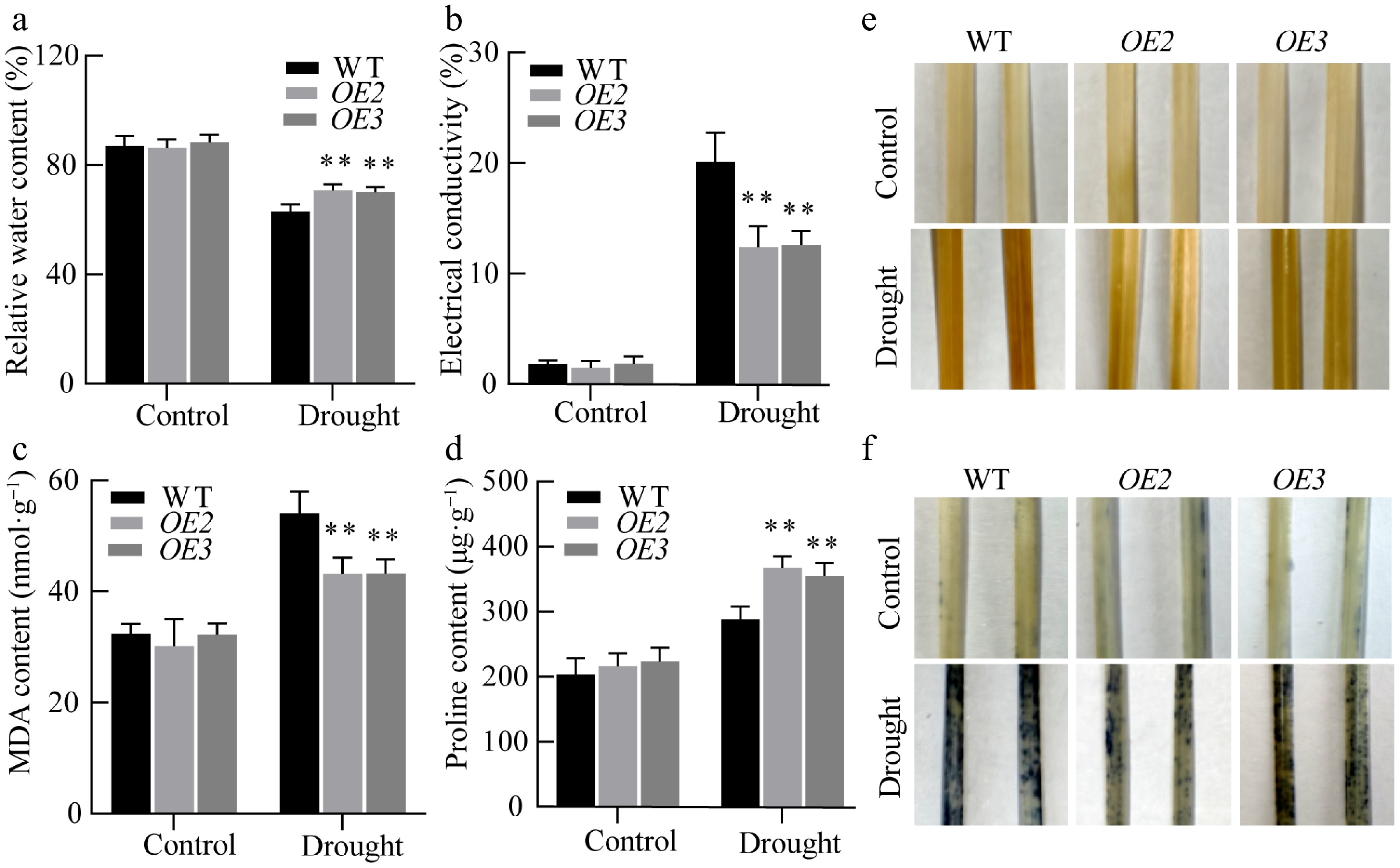
Figure 3.
Overexpression of LpNAC11 improves drought tolerance in transgenic perennial ryegrass; (a) relative water content, (b) electrical conductivity, (c) malondialdehyde (MDA) content, and (d) proline content of WT and LpNAC11-overexpressing plants under normal and drought conditions. (e) DAB and (f) NBT staining of leaves for ROS from WT and LpNAC11-overexpressing plants under normal and drought conditions. Data presented in (a)–(d) are shown as the mean ± SD from three biological replicates. Statistical significance was determined by Student's t-test (** p < 0.01).
-
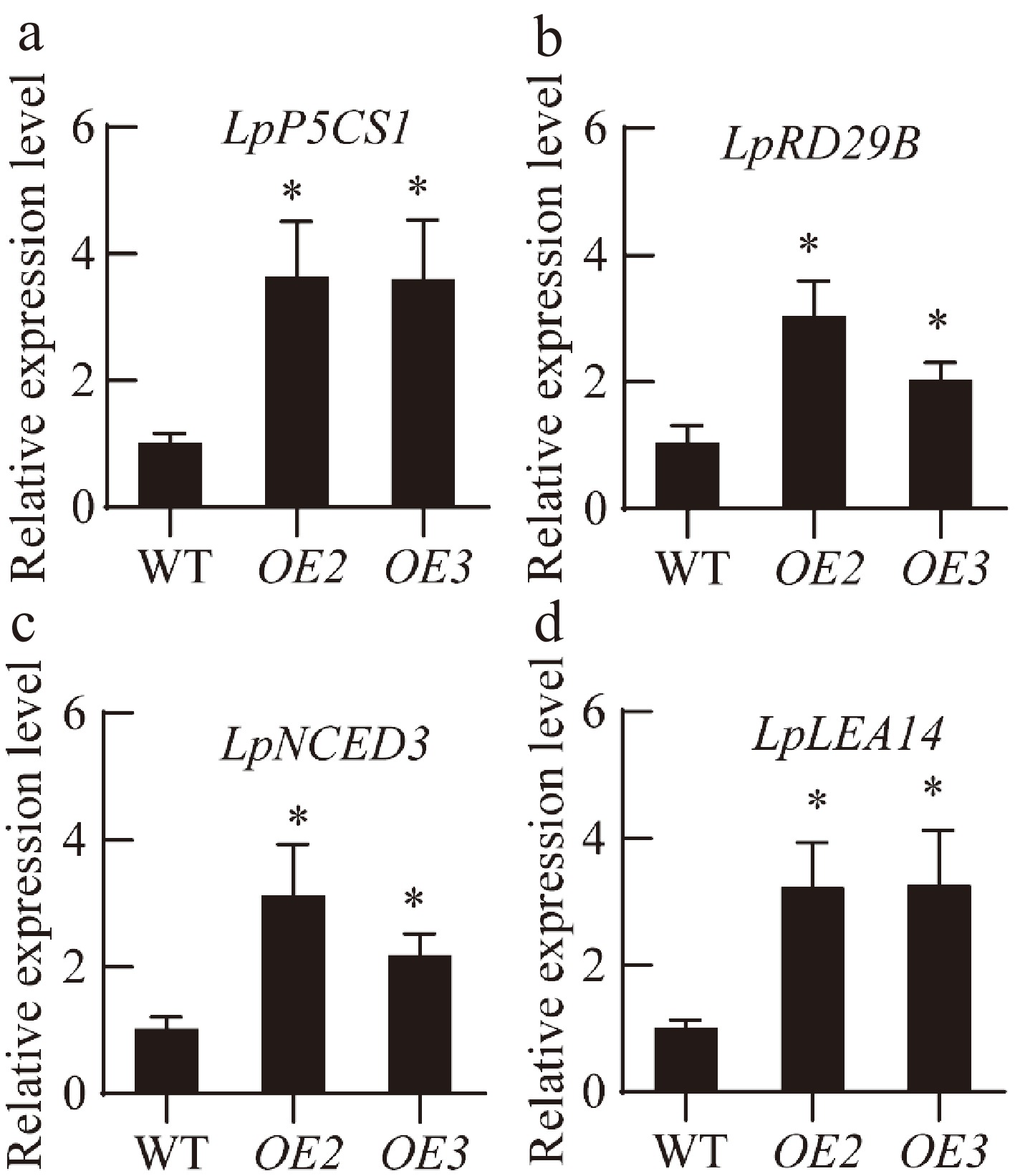
Figure 4.
LpNAC11 regulates the expression of drought resistance genes. qPCR analysis of (a) LpP5CS1, (b) LpRD29B, (c) LpNCED3, and (d) LpLEA14 expression in WT and LpNAC11-overexpressing plants. LpActin1 was used as an internal reference gene. Data presented in (a)–(d) are shown as the mean ± SD from three biological replicates. Statistical significance was determined by Student's t-test (* p < 0.05).
-
Gene NAC-binding sites (−1,000 to −1 bp) LpP5CS1 −41 to −38 bp, −193 to −190 bp, −228 to −225 bp, −304 to −301 bp, −316 to −313 bp, −331 to −328 bp, −342 to −339 bp, −344 to −341 bp,
−383 to −380 bp, −387 to −384 bp, −495 to −492 bp, −697 to −694 bp, −830 to −827 bpLpRD29B −187 to −184 bp, −189 to −186 bp, −221 to −218 bp, −237 to −234 bp, −242 to −239 bp, −360 to −357 bp, −451 to −448 bp, −514 to −511 bp,
−598 to −595 bp, −811 to −808 bp, −888 to −885 bpLpNCED3 −25 to −22 bp, −39 to −36 bp, −233 to −230 bp, −261 to −258 bp, −317 to −314 bp, −340 bp to −337 bp, −342 to −339 bp, −387 to −384 bp,
−451 to −448 bp, −569 to −566 bp, −593 to −590 bp, −693 to −690 bp, −704 to −701 bp, −917 to −914 bp, −988 to −985 bp, −1,000 to −997 bpLpLEA14 −164 to −161 bp, −182 to −179 bp, −183 to −180 bp, −197 to −194 bp, −216 to −213 bp, −235 to −222 bp, −254 to −251 bp, −272 to −269 bp,
−598 to −595 bp, −680 to −677 bp, −685 to −682 bp, −764 to −761 bp, −805 to −802 bp, −827 to −824 bp, −829 to −826 bp, −983 to −980 bp,
−985 to −982 bp, −999 to −996 bpTable 1.
NAC binding sites located on the promoters (from −1,000 to −1 bp) of LpP5CS1, LpRD29B, LpNCED3, LpLEA14.
Figures
(4)
Tables
(1)