-
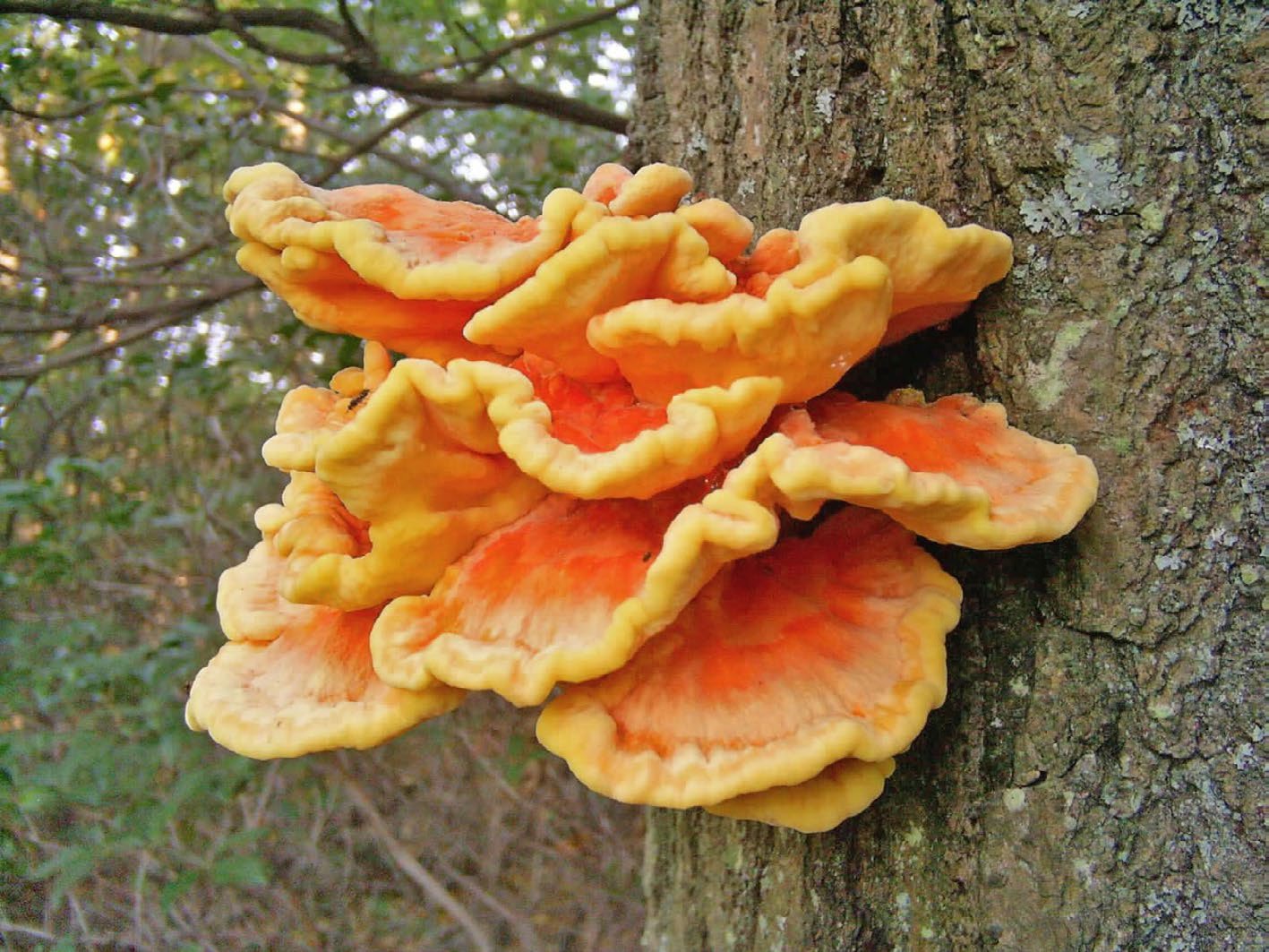
Figure 1.
L. sulphureus on an oak tree. Photograph by Gargoyle888, 2007. Licensed under GFDL 1.2 and CC BY 3.0. Available from Wikimedia Commons[6].
-
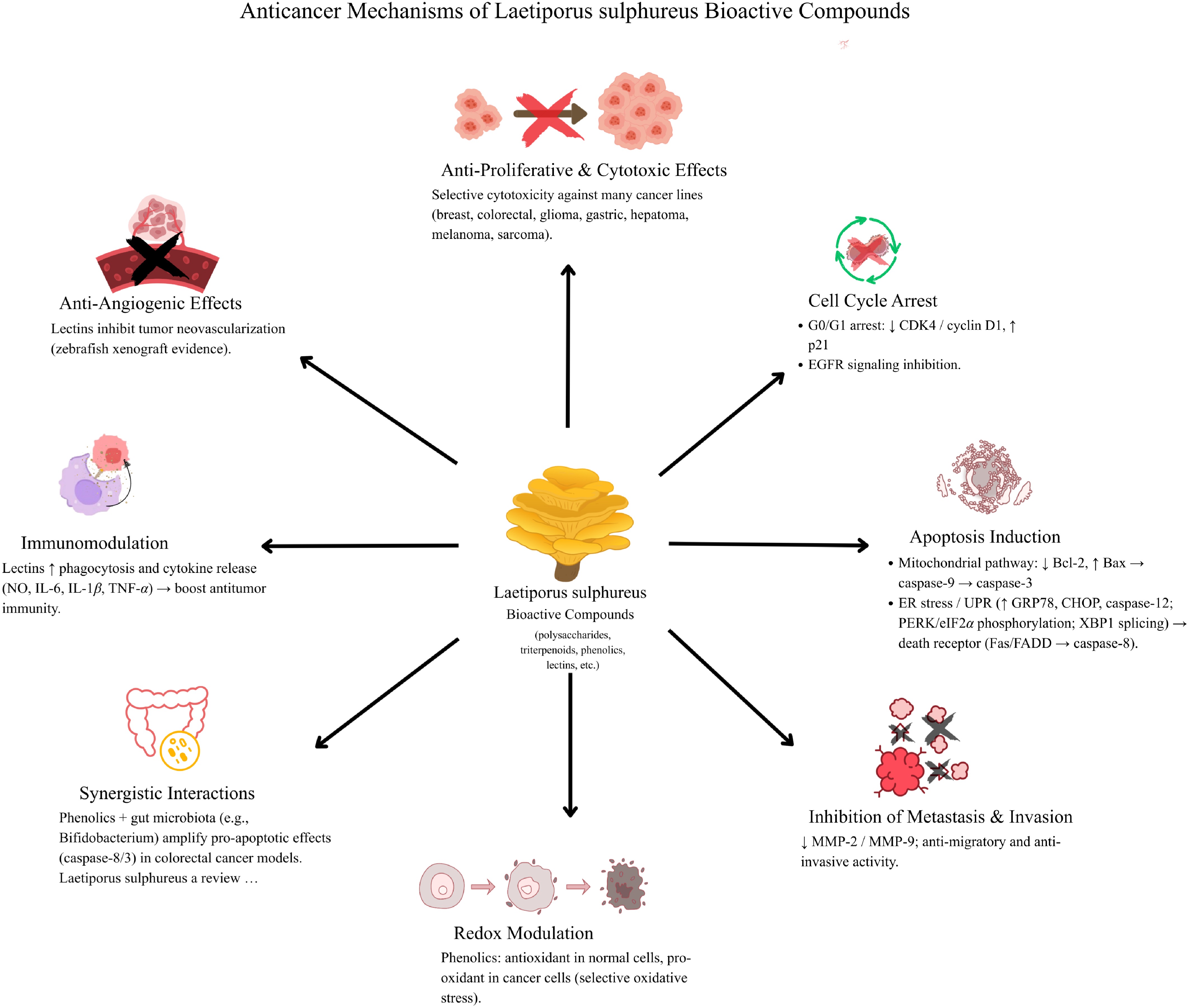
Figure 2.
Anticancer mechanisms of the bioactive compounds of L. sulphureus, such as polysaccharides, triterpenoids, phenolics, and lectins.
-
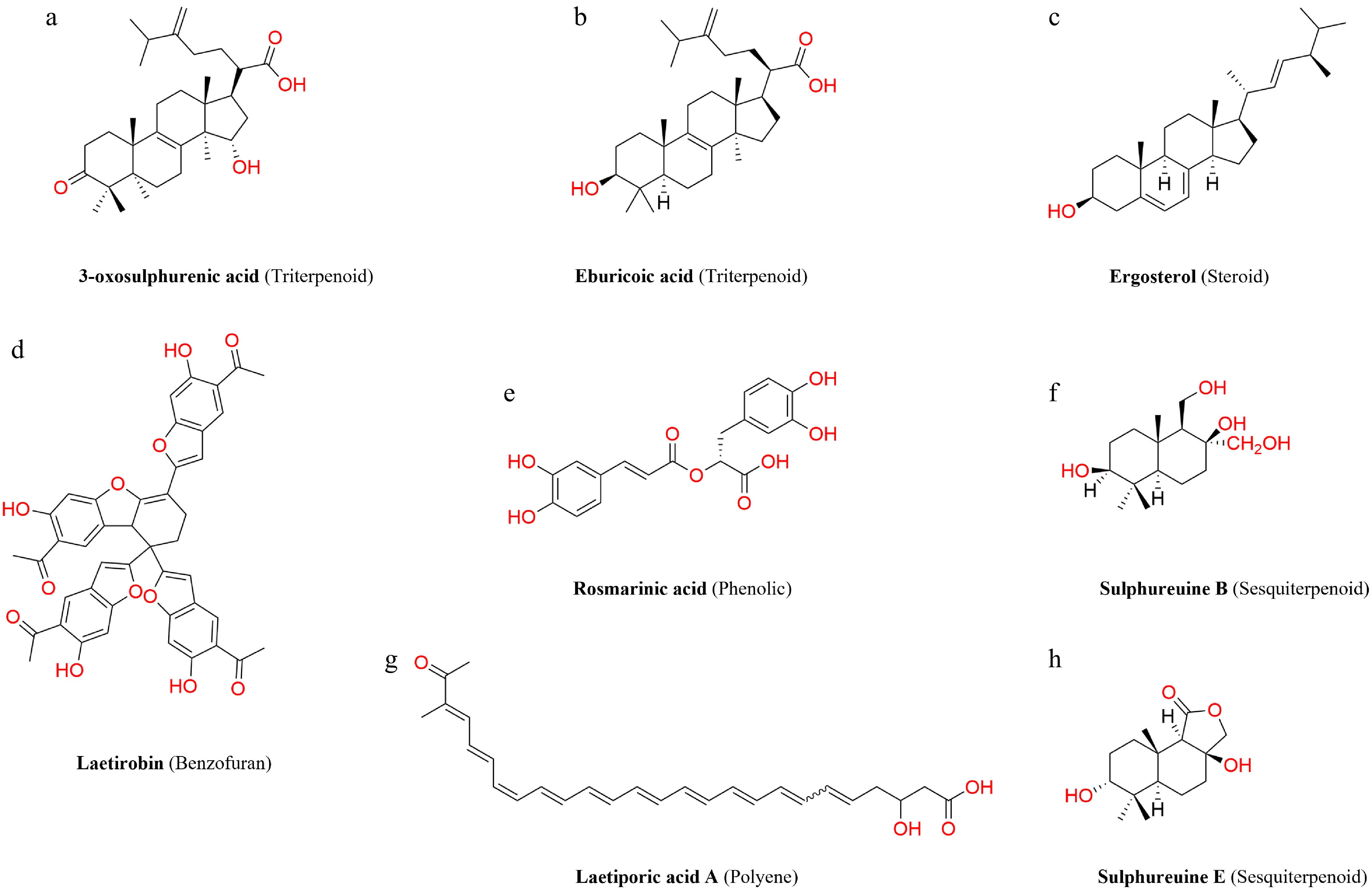
Figure 3.
Chemical structures of representative bioactive compounds isolated from L. sulphureus. (a) 3-Oxosulphurenic acid (triterpenoid)[14]; (b) eburicoic acid (triterpenoid)[14]; (c) ergosterol (steroid)[63]; (d) laetirobin (benzofuran)[82]; (e) rosmarinic acid (phenolic)[68]; (f) sulphureuine B (sesquiterpenoid)[56]; (g) laetiporic acid A (polyene)[3]; (h) sulphureuine E (sesquiterpenoid)[56].
-
Country/region Uses/applications Used as Ref. General food Traditional medicine North America Foraged and consumed as food; part of broader indigenous mycological traditions (e.g., Iroquois people). Nonetheless, the medicinal use of wild mushrooms remained virtually neglected by mainstream culture. √ √ [10,11] Great Britain and Germany Young fruiting bodies are edible; described as tasting like crab or lobster √ [12] Central and Eastern Europe Treatment of bronchitis, gastrointestinal disorders, pyrexia, gastric carcinoma, rheumatism; burned fruiting bodies are used to repel mosquitoes and midges √ [13,14] Georgia Used to treat "dasunt̕k̕uli" (a dermal eruption attributed to contaminated food); integrated with spiritual and ritual healing practices √ [15] China Used in traditional Chinese medicine for neoplasms, gastrointestinal ailments, cough, and rheumatism; pain relief; treatment of heart, spleen, and stomach disorders; and promoting longevity √ [16,17] Japan Considered a delicacy; traditionally used against cancers (especially breast and prostate); incorporated into conventional healthcare practices √ √ [17] Western Himalayas (Jammu and Kashmir, India) Consumed with milk as a healthy food; used for treating seminal weakness, wound healing, treating the common cold, expulsion of retained placenta, and relief of post-delivery abdominal pain √ √ [18,19] Central Nepal (Dolakha District) Treatment of diarrhea, hematochezia, stomach pain, common cold, high blood sugar, high blood pressure, and weakness and fatigue; immune support √ [20] South America (Colombia, Brazil, Uruguay) Limited documented traditional medicinal use: Specimens have been used in scientific studies investigating therapeutic effects √ [2,21,22] Colombia Traditional consumption of edible mushrooms among ethnic and peasant communities (general fungal use) √ [23] Costa Rica Limited fungal consumption among native populations; decline in traditional knowledge among younger generations √ [24] Eastern Africa (Ethiopia) Abdominal discomfort; childbirth pain relief; expulsion of retained placenta; treatment of common cold √ [25−27] Central Africa (Cameroon) Utilised for both nourishment and general therapeutic purposes by indigenous populations (e.g., the Awing people) √ √ [28−30] Table 1.
Global ethnopharmacological and traditional uses of L. sulphureus.
-
Bioactive compound Key pharmacological activities Evidence type Material tested Ref. Polysaccharides (glucans, chitin, sulfated polysaccharides) Antiproliferative
Antimetastatic
Cell cycle arrest (G0/G1)
Apoptosis induction
Migration inhibition
Immunomodulatory
AntioxidantIn vitro Purified polysaccharide fractions
Fruiting body extract[17,43,45,47] Lanostane triterpenoids (eburicoic acid, sulphurenic acid, acetyl eburicoic acid, laetiporins C/D) Anti-inflammatory
Neurotrophic (nerve growth factor/brain-derived neruotrophic factor upregulation)
Antiproliferative/apoptotic
Hepatoprotective
Weak antifungalIn vitro
In vivo (rat hepatic fibrosis model)Pure compounds (isolated lanostanes).
Semipurified extract fraction[5,48−53,56] Drimane-type sesquiterpenoids (sulphureuines B–H) Antiproliferative/cytotoxic (selective for glioma U-87MG cells)
Apoptosis induction via endoplasmic reticulum (ER) stress, mitochondrial, and death receptor pathwaysIn vitro Pure compounds (isolated from mycelial culture) [57] Phenolics (polyphenols, flavonoids, phenolic acids) Antioxidant
Antimicrobial
Anti-inflammatory
AnticancerIn vitro Crude extracts (ethanolic, methanolic, ethyl acetate fractions) [31,35,38,59,61−69] Steroids and steroid-containing extracts (ergosterol, ergosterol peroxide, cerevisterol, and lanostane derivatives) Antitumour/cytotoxic
Antifungal
Anti-melanogenic (tyrosinase inhibition)In vitro
In vivo (zebrafish)Fruiting body extracts (chloroform, ethanol)
Mycelial culture extracts
Isolated steroids (gas chromatography–mass spectroscopy [GC-MS], high-performance liquid chromatography [HPLC])[63,70,72−74] Polyenes (laetiporic acids A–D) Natural pigment/colorant
Antifungal activityIn vitro (antifungal assays) Fruiting body extracts
Liquid culture mycelium
Heterologous expression products (laetiporic acid mixture)[75−77] Lectins (LSL/LSL4, ~76 kDa glycoprotein) Immunomodulatory (macrophage activation, NO/cytokine release via TLR4)
Anti-angiogenic
Antitumor (inhibits colorectal carcinoma and melanoma in zebrafish)In vitro
In vivo (zebrafish)Purified lectin fraction [78,79] Benzofurans (e.g., laetirobin, egonol derivatives) Cytotoxic/anticancer
Cytostatic at nanomolar concentrations (half-maximal inhibitory concentration: 0.1–0.5 nM against HCT116, Neuro-2a, HeLa)In vitro Pure compound (host-dependent; isolated from L. sulphureus parasitic on Robinia pseudoacacia) [82] Organic acids (malic, citric, succinic, kojic acid) Tyrosinase inhibition (antimelanogenic) In vitro Fruiting body extracts
Mycelial culture extracts[39,73] Fatty acids (and lipophilic constituents) Antibacterial
Antioxidant
Anti-invasive (MMP-2/9 inhibition)In vitro Lipophilic solvent fractions (hexane, chloroform, petroleum ether, ethyl acetate) [64,80,81] Proteins, vitamins, and trace metals/minerals Nutritional value Nutritional analysis Fruiting body extracts/powder [38,66] Table 2.
Bioactive compounds and key pharmacological activities in L. sulphureus.
Figures
(3)
Tables
(2)