









-
The wood-decaying mushroom species known as Laetiporus sulphureus, commonly called "crab of the woods", "sulphur polypore", "sulphur shelf", or "chicken of the woods", possesses distinctive traits that render it easily identifiable, as seen in Fig. 1[1]. The name Laetiporus, is derived from its vibrant pores, whereas sulphureus describes its sulphur-like colour[2]. This species can be found in different parts of the world, inhabiting a range of climates from tropical to subtropical regions[1].
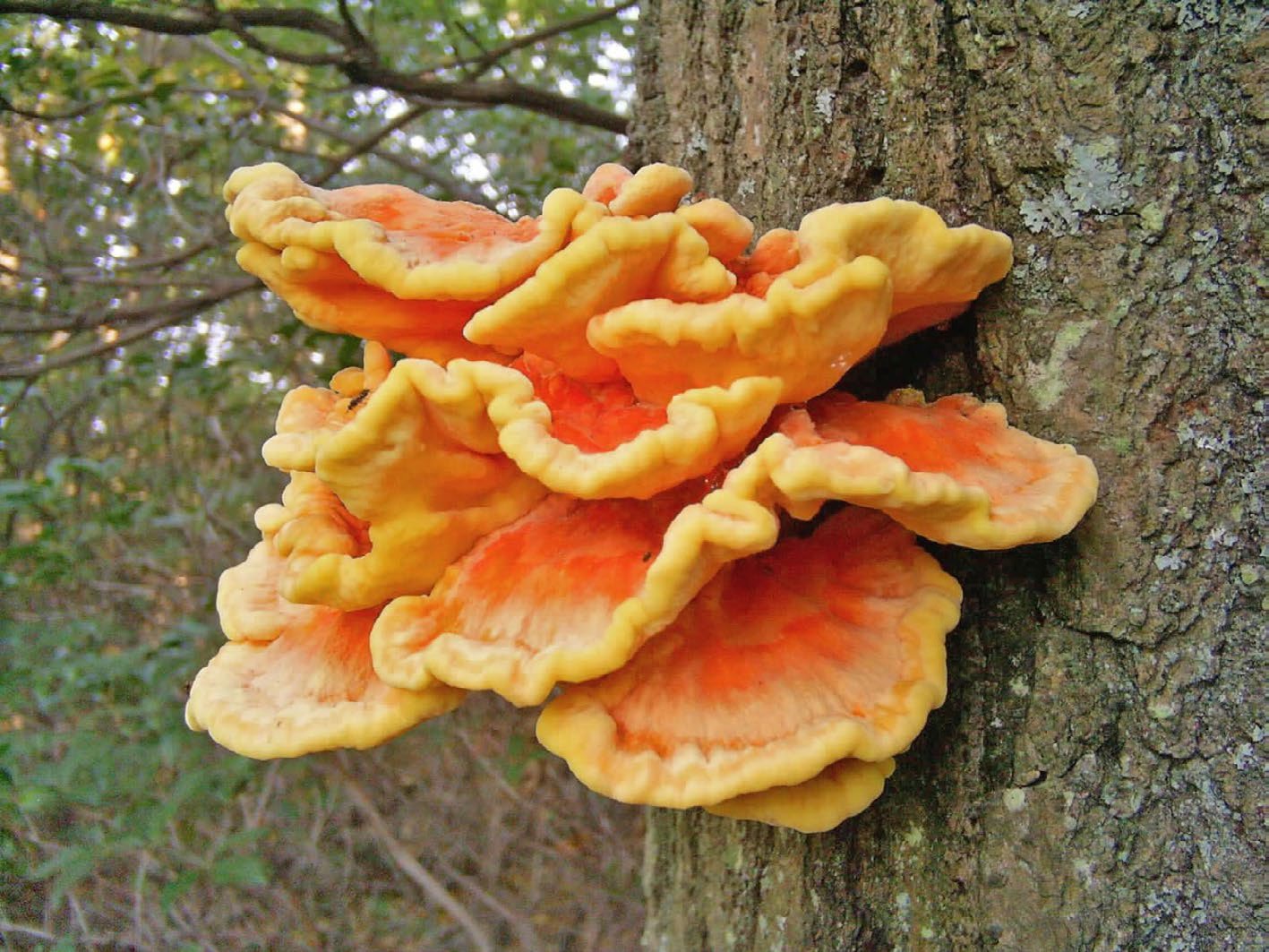
Figure 1.
L. sulphureus on an oak tree. Photograph by Gargoyle888, 2007. Licensed under GFDL 1.2 and CC BY 3.0. Available from Wikimedia Commons[6].
The mushroom was initially classified as Boletus sulphureus by the French mycologist Jean Baptiste Francois Bulliard in 1789. However, in 1904, the American mycologist William Alphonso Murrill introduced the genus Laetiporus and designated the mushroom species sulphureus as its type species. In 1920, Murrill further solidified its precise classification by transferring another fungal species, previously characterised by Bulliard[2] and denominated by Elias Fries as Polyporus sulphureus, into the genus Laetiporus[3]. This succession of actions by Murrill[2,3] established the correct classification of the mushroom species under the genus Laetiporus.
Its fruiting bodies encompass a diverse array of bioactive compounds, including polysaccharides, steroids, triterpenoids, phenolics, organic acids, lectins, pigments, benzofurans, and other bioactive entities[4]. In traditional medicine, it has been utilised for ailments, gastrointestinal disorders, respiratory diseases, neoplasms, rheumatism, and metabolic disorders. Current research supports the antioxidant, antimicrobial, anticancer, anti-inflammatory, immunomodulatory, and other reported bioactivities of L. sulphureus[4,5]. This review highlights the bioactive components in L. sulphureus (Fig. 1) and focusses on the biological implications and molecular pathways related to the accumulated wisdom and traditional applications of the mushroom from diverse cultures across the globe.
-
Ethnomycological investigations acknowledge this ubiquitous macrofungus for its dual relevance as both a highly regarded edible species and a resource for traditional medicine[2,7,8]. Ethnomycology, defined as the examination of the cultural importance and historical context of utilising fungi, traces the consumption of wild macrofungi back to approximately 13,000 years ago[9]. Societies often did not make a strict distinction between fungi utilised for culinary purposes and those used for medicinal remedies[9]. Table 1 shows the global presence and varied applications of L. sulphureus.
Table 1. Global ethnopharmacological and traditional uses of L. sulphureus.
Country/region Uses/applications Used as Ref. General food Traditional medicine North America Foraged and consumed as food; part of broader indigenous mycological traditions (e.g., Iroquois people). Nonetheless, the medicinal use of wild mushrooms remained virtually neglected by mainstream culture. √ √ [10,11] Great Britain and Germany Young fruiting bodies are edible; described as tasting like crab or lobster √ [12] Central and Eastern Europe Treatment of bronchitis, gastrointestinal disorders, pyrexia, gastric carcinoma, rheumatism; burned fruiting bodies are used to repel mosquitoes and midges √ [13,14] Georgia Used to treat "dasunt̕k̕uli" (a dermal eruption attributed to contaminated food); integrated with spiritual and ritual healing practices √ [15] China Used in traditional Chinese medicine for neoplasms, gastrointestinal ailments, cough, and rheumatism; pain relief; treatment of heart, spleen, and stomach disorders; and promoting longevity √ [16,17] Japan Considered a delicacy; traditionally used against cancers (especially breast and prostate); incorporated into conventional healthcare practices √ √ [17] Western Himalayas (Jammu and Kashmir, India) Consumed with milk as a healthy food; used for treating seminal weakness, wound healing, treating the common cold, expulsion of retained placenta, and relief of post-delivery abdominal pain √ √ [18,19] Central Nepal (Dolakha District) Treatment of diarrhea, hematochezia, stomach pain, common cold, high blood sugar, high blood pressure, and weakness and fatigue; immune support √ [20] South America (Colombia, Brazil, Uruguay) Limited documented traditional medicinal use: Specimens have been used in scientific studies investigating therapeutic effects √ [2,21,22] Colombia Traditional consumption of edible mushrooms among ethnic and peasant communities (general fungal use) √ [23] Costa Rica Limited fungal consumption among native populations; decline in traditional knowledge among younger generations √ [24] Eastern Africa (Ethiopia) Abdominal discomfort; childbirth pain relief; expulsion of retained placenta; treatment of common cold √ [25−27] Central Africa (Cameroon) Utilised for both nourishment and general therapeutic purposes by indigenous populations (e.g., the Awing people) √ √ [28−30] -
L. sulphureus is a rich source of a variety of polysaccharides, which are medically important primary metabolites[31]. These complex carbohydrates offer a wide range of therapeutic functions, such as antioxidant, antidiabetic, immunomodulatory, and antitumour activities, along with hepatoprotective effects[31]. Table 2 summarises the key pharmacological activities of L. sulphureus.
Table 2. Bioactive compounds and key pharmacological activities in L. sulphureus.
Bioactive compound Key pharmacological activities Evidence type Material tested Ref. Polysaccharides (glucans, chitin, sulfated polysaccharides) Antiproliferative
Antimetastatic
Cell cycle arrest (G0/G1)
Apoptosis induction
Migration inhibition
Immunomodulatory
AntioxidantIn vitro Purified polysaccharide fractions
Fruiting body extract[17,43,45,47] Lanostane triterpenoids (eburicoic acid, sulphurenic acid, acetyl eburicoic acid, laetiporins C/D) Anti-inflammatory
Neurotrophic (nerve growth factor/brain-derived neruotrophic factor upregulation)
Antiproliferative/apoptotic
Hepatoprotective
Weak antifungalIn vitro
In vivo (rat hepatic fibrosis model)Pure compounds (isolated lanostanes).
Semipurified extract fraction[5,48−53,56] Drimane-type sesquiterpenoids (sulphureuines B–H) Antiproliferative/cytotoxic (selective for glioma U-87MG cells)
Apoptosis induction via endoplasmic reticulum (ER) stress, mitochondrial, and death receptor pathwaysIn vitro Pure compounds (isolated from mycelial culture) [57] Phenolics (polyphenols, flavonoids, phenolic acids) Antioxidant
Antimicrobial
Anti-inflammatory
AnticancerIn vitro Crude extracts (ethanolic, methanolic, ethyl acetate fractions) [31,35,38,59,61−69] Steroids and steroid-containing extracts (ergosterol, ergosterol peroxide, cerevisterol, and lanostane derivatives) Antitumour/cytotoxic
Antifungal
Anti-melanogenic (tyrosinase inhibition)In vitro
In vivo (zebrafish)Fruiting body extracts (chloroform, ethanol)
Mycelial culture extracts
Isolated steroids (gas chromatography–mass spectroscopy [GC-MS], high-performance liquid chromatography [HPLC])[63,70,72−74] Polyenes (laetiporic acids A–D) Natural pigment/colorant
Antifungal activityIn vitro (antifungal assays) Fruiting body extracts
Liquid culture mycelium
Heterologous expression products (laetiporic acid mixture)[75−77] Lectins (LSL/LSL4, ~76 kDa glycoprotein) Immunomodulatory (macrophage activation, NO/cytokine release via TLR4)
Anti-angiogenic
Antitumor (inhibits colorectal carcinoma and melanoma in zebrafish)In vitro
In vivo (zebrafish)Purified lectin fraction [78,79] Benzofurans (e.g., laetirobin, egonol derivatives) Cytotoxic/anticancer
Cytostatic at nanomolar concentrations (half-maximal inhibitory concentration: 0.1–0.5 nM against HCT116, Neuro-2a, HeLa)In vitro Pure compound (host-dependent; isolated from L. sulphureus parasitic on Robinia pseudoacacia) [82] Organic acids (malic, citric, succinic, kojic acid) Tyrosinase inhibition (antimelanogenic) In vitro Fruiting body extracts
Mycelial culture extracts[39,73] Fatty acids (and lipophilic constituents) Antibacterial
Antioxidant
Anti-invasive (MMP-2/9 inhibition)In vitro Lipophilic solvent fractions (hexane, chloroform, petroleum ether, ethyl acetate) [64,80,81] Proteins, vitamins, and trace metals/minerals Nutritional value Nutritional analysis Fruiting body extracts/powder [38,66] Polysaccharides are mainly obtained from the fruiting bodies and submerged mycelial cultures[32]. They are also extracted from spent mushroom substrates (SMS), which constitute the residual cultivation matrix following mushroom production, offering the possibility of reusing the wastes[33]. Optimal culture conditions, namely an initial acidic pH (2.0–4.0), specific carbon and nitrogen sources (e.g., maltose and soy peptone, respectively), are critical for maximising mycelial growth and exopolysaccharide production in submerged cultures[34]. The prevalent technique of hot water extraction facilitates the isolation of various polysaccharide fractions[14,32]. Alkaline extraction is effective for obtaining alkali-soluble polysaccharides such as latiglucan I[14]. On the other hand, enzymatic extraction from SMS can better preserve its hepatoprotective properties[33]. L. sulphureus synthesises several kinds of polysaccharides, as described below.
Glucans
-
Glucans are the most abundant carbohydrates in the cell walls of L. sulphureus[32].
α-Glucans
-
α-Glucans, such as glycogen, are considered important storage carbohydrates in mushrooms and are easily extracted[35]. The hollow helical structures of these polysaccharides with their (1→4)-α-glycosidic linkages and the clathrates they form are also beneficial for metal ion chelation[35]. The cell wall composition in this species is characterised by a notably high proportion of (1→3)-α-glucan, which constitutes up to 78%[32] (or 88% of the dry mass [DM] in another report[7]); a concentration significantly exceeding that typically observed in other fungi[7,13]. The (1→3)-α-glucan content increases as the fruiting body matures, with higher concentrations typically observed in older specimens[36]. In general, α-glucans have either minimal or negligible direct bioactivity; nevertheless, their immunomodulatory potential can be amplified through chemical functionalisation[13,37]. For instance, carboxymethyl derivatives of (1→3)-α-D-glucans isolated from fruiting bodies display notable inhibitory effects on tumour cells' metabolism[14].
β-Glucans
-
Linear (1→3)-β-glucans are common mycogenous polysaccharides[32]. L. sulphureus often produces them with attached side-chain glucose residues joined by (1→6)-β-glucosidic linkages[32]. Laetiporan A, a notable 56-kDa polysaccharide, has been identified as a (1→3)-β-glucan comprising mannose, galactose, fucose, xylose, and rhamnose functional groups at the C-6 position[14]. Latiglucan I, an alkali-soluble polysaccharide, is characterised as a linear (1→3)-β-D-glucan having a molecular weight of 180 kDa[14,38]. Additionally, latiglucans II and III have been reported in L. sulphureus[14]. β-glucans were also recognized for their immune-regulatory, antineoplastic, antiviral, anti-inflammatory, antioxidant, and hypoglycemic properties[13,37]. Typically, they show enhanced immunomodulatory functions relative to α-glucans[37].
Other polysaccharides
Chitin
-
In addition to α- and β-glucans, chitin is also a component of the cell wall and fruiting bodies of L. sulphureus[13]. It is present in limited quantities in the reproductive structures, with its concentration fluctuating according to the developmental stage, increasing from 2.0% in ripe reproductive structures to 4.9% in aged ones[39]. The hydrolysis process of chitin results in the production of glucosamine alongside minimal concentrations of glucose[39]. Chitin in fungi is usually found to be covalently linked to β-glucans, and thus a native nanocomposite is formed, which gives support to the structural stability of the cellular membrane[40,41]. This chitin–β-glucan complex has captured a lot of interest as a plant-based, eco-friendly, and readily available substitute for crustacean chitin, along with potential usage in material science on account of its physical properties and hydrophobic nature. It may also be explored as a biocompatible drug delivery polymer that can be modified into nanoparticles or microspheres[42].
Sulphated polysaccharides
-
The sulphated polysaccharides (SPS) found in L. sulphureus embody a recent and unusual revelation of its secondary metabolite, as these compounds have been typically associated with marine origins, including macroalgae and invertebrates[43]. SPSs exhibited better pharmacological efficacy, especially in terms of antiproliferative activities against cancer cells, compared with their nonsulphated counterparts[44]. The main components of these heteropolysaccharides are sulphated galactoglucans[17,45,46]. Extraction via papain-assisted hydrolysis yields approximately 3.19%–5.82% from dried fruiting bodies[17]. The glycoprotein's nature may enhance receptor interactions and bioactivity, alongside a notable sulphate concentration and their random coil conformation in solution rather than a triple helix[43,45]. Its monosaccharide profile includes glucose, galactose, mannose, and fucose, along with supplementary components such as arabinose, ribose, xylose, glucosamine, and galactosamine[43,46]. Three distinct molecular weight fractions were identified (F1, F2, F3), with the medium-sized fraction (F2) constituting about 66% of the total[43,46]. F2 is noted for its anticancer properties, containing moderate sulphate (2.1%) and with the highest protein content (15.6%)[43]. Its efficacy is linked to the optimal molecular weight, protein, and the monosaccharide composition. This activity encompasses G0/G1 cell cycle arrest through CDK4/cyclin D1 downregulation and p21 upregulation, epidermal growth factor receptor (EGFR) signaling inhibition, and suppressing metastasis by downregulation of matrix metalloproteinases (MMP-9/MMP-2)[43,47]. This compositional variability is fundamentally associated with the diverse pharmacological properties of L. sulphureus SPSs.
Triterpenoids
-
Triterpenoids, characterised by a tetracyclic core structure, represent a significant category of secondary metabolites and are predominantly isolated from fruiting bodies, mycelial structures, and various fermentation processes. Genomic studies have mapped biosynthetic gene clusters for tetracyclic triterpenoids, providing insights into their production pathways[16]. They are found in the fruiting bodies of L. sulphureus as lanostane derivatives, such as 3-oxo-sulfurenic acid and eburicoic acid[14]. Triterpenoids are among the main contributors to the mushroom's pharmacological profile, with the recognition of more than a dozen specific compounds spanning different subclasses in the scientific literature.
Lanostane triterpenoids represent a distinct category of triterpenoids that originate from lanosterol, functioning as the primary precursor for all naturally occurring steroids[5]. They are widely found in L. sulphureus, displaying a typical steroid-like structure with various modifications in their side chain. Not long ago, 4 novel lanostane triterpenoids and 12 known analogues were isolated from the fruiting bodies and identified by nuclear magnetic resonance (NMR) and high-resolution electrospray ionization mass spectrometry (HR-ESI-MS), along with infrared spectroscopy (IR)[5].
These triterpenoids demonstrate a broad spectrum of pharmacological activities, including anti-inflammatory[5,48,49], neurotrophic[50], antifungal[51], antiproliferative[51], hepatoprotective[52], and cytotoxic effects[53] which could have anticancer effects[5,14,48−51]. These activities are mediated through several molecular mechanisms, such as the induction of apoptosis via mitochondrial and death receptor pathways[53,54], enhancement of neurotrophic factors[50], and suppression of inflammatory signaling cascades like phosphatidylinositol 3-kinase/protein kinase B/mammalian target of rapamycin/nuclear factor kappa-B (PI3K/Akt/mTOR/NF-κB)[48].
Hassan et al.[50] reported that lanostane triterpenoids isolated from L. sulphureus' fruiting bodies could enhance the expression of neurotrophins, specifically nerve growth factor (NGF) and brain-derived neurotrophic factor (BDNF), and the growth of neurites induced by NGF. This in vitro study emphasised that these substances possessed no significant cytotoxic effects, allowing them to be considered as promising nontoxic neurotherapeutic agents[50]. Triterpenoids from L. sulphureus have great potential in therapy because of their various pharmacological properties, inviting further studies to eliminate translational gaps leading to clinical use.
Sesquiterpenoids
-
Sesquiterpenoids, another natural terpenoid compound, are of a smaller size than triterpenoids and are built up of three isoprene units, usually shown as C15H24 or its derivatives[55]. They are extracted predominantly from mycelial cultures and largely constitute the drimane-type classification[56]. This encompasses compounds such as sulphureuines B–H, agripilol A, and 3β-hydroxy-11,12-O-isopropyldrimene, which are distinguished by a decahydronaphthalene core with varying functional groups, including hydroxymethyl and chromanone moieties[56]. Various pharmacological activities can be associated with them, especially antiproliferative and cytotoxic effects on various cancer cell lines[56,57]. Moreover, antifungal, neuroprotective, antioxidant, and immunomodulatory properties have also been noted in fungal drimane sesquiterpenoids[58].
To understand the molecular mechanisms underlying these antiproliferative effects, a study using glioma cells found that sulphureuine B, a drimane-type sesquiterpenoid, involves the induction of apoptosis by inducing stress in the endoplasmic reticulum (ER)[57]. The process mediated by the ER, which is involved in the activation of the intrinsic mitochondrial pathway, is characterised by the downregulation of antiapoptotic proteins B-cell lymphoma 2 (Bcl-2) and Bcl-2-like 1 (Bcl-XL), upregulation of the proapoptotic Bcl-2-associated X protein (Bax), loss of mitochondrial membrane potential, and subsequent caspase-9 activation[57]. These varied pathways hint that sulphureuine B might be a new antiglioma drug that works by taking advantage of the different cellular stress pathways to selectively kill cancer cells.
Phenolics
-
Phenolic compounds were found to be the most abundant class of bioactive compounds in L. sulphureus, as a result of exhaustive chemical profiling of its fruiting bodies and mycelia, with various solvents used for polyphenol extractions. The phenolic content was reported to be highest in methanolic extracts, corresponding proportionally with bioactivity[35,59−61]. The flavonoids quercetin, kaempferol, and catechin, as well as phenolic acids such as gallic acid, caffeic acid, chlorogenic acid, and p-coumaric acid, are the specific bioactive phenolic compounds detected in L. sulphureus extracts[14,31,38,62]. Further compounds were found in different extracts and studies, such as protocatechuic acid[2,31,63], vanillic acid, p-hydroxybenzoic acid[31,64,65], isorhamnetin, naringin, apigenin, rutin, myricetin, luteolin, and salicylic acid[63,64]. The methanolic extracts showed a total phenolic content (TPC) of 272.70 ± 2.26 mg/g GAE (gallic acid equivalents) and a total flavonoid content (TFC) of 44.29 ± 0.54 quercetin equivalents (QE)/mg. However, these values are not consistent and vary from one study to another[66]. The reported activity may depend strongly on the extraction method, compound purity, and experimental model.
The main phenolic pharmacological actions are based on their antioxidant potential, showing a strong positive correlation between total phenolic content and both radical scavenging activity and reducing power[7,31,32,35,64,66]. Efficiency in this process depends on the ability of phenolic compounds to donate hydrogen atoms or electrons, which results in an efficient elimination of free radicals and the prevention of oxidative damage[67]. Phenolic compounds contribute to the antimicrobial activity of mushrooms[2,63] through structural features including carboxylic acid groups, para- and ortho-hydroxyl groups, and meta-methoxyl (-OCH3) substituents[61].
Jovanović et al.[68] characterised the ethanolic extract phenolic profile of L. sulphureus, identifying rosmarinic acid as the main component (0.41 ± 0.003 mg/1 g dry weight [DW]), with reported anti-inflammatory, radical scavenging, and antiproliferative activities, alongside vanillic acid (0.37 ± 0.002 mg/1 g DW) and p-hydroxybenzoic acid (0.34 ± 0.002 mg/1 g DW)[68]. Notably, this composition correlated with antimigratory activity against cancer cells in vitro and a selective dual redox mechanism, functioning as an antioxidant in healthy cells but switching to a pro-oxidative state in cancer cells[68].
Arsenijević et al. reported that an ethyl acetate extract (EALS), which was composed mainly of vanillic acid (1.45 mg/g DW), naringenin (0.42 mg/g), protocatechuic acid (0.33 mg/g), epicatechin, and caffeic acid, exhibited very low cytotoxicity against HCT-116 colorectal cancer cells[69]. It could also promote the pro-apoptotic effect of Bifidobacterium animalis subsp. lactis up to 402% via the upregulation of caspase-8/3 in the extrinsic pathway, although the effect was less for normal MRC-5 cells[69]. This synergic activity suggests that probiotics biotransform phenolics into a form that enhances colorectal cancer therapeutics[69]. Because of their potential as antioxidants, antimicrobials, anti-inflammatory agents, and anticancer agents, L. sulphureus phenolics hold strong promise in medical nutrition therapy. The main molecular and cellular pathways by which the bioactive components of L. sulphureus display their anticancer properties are summarized in Fig. 2.
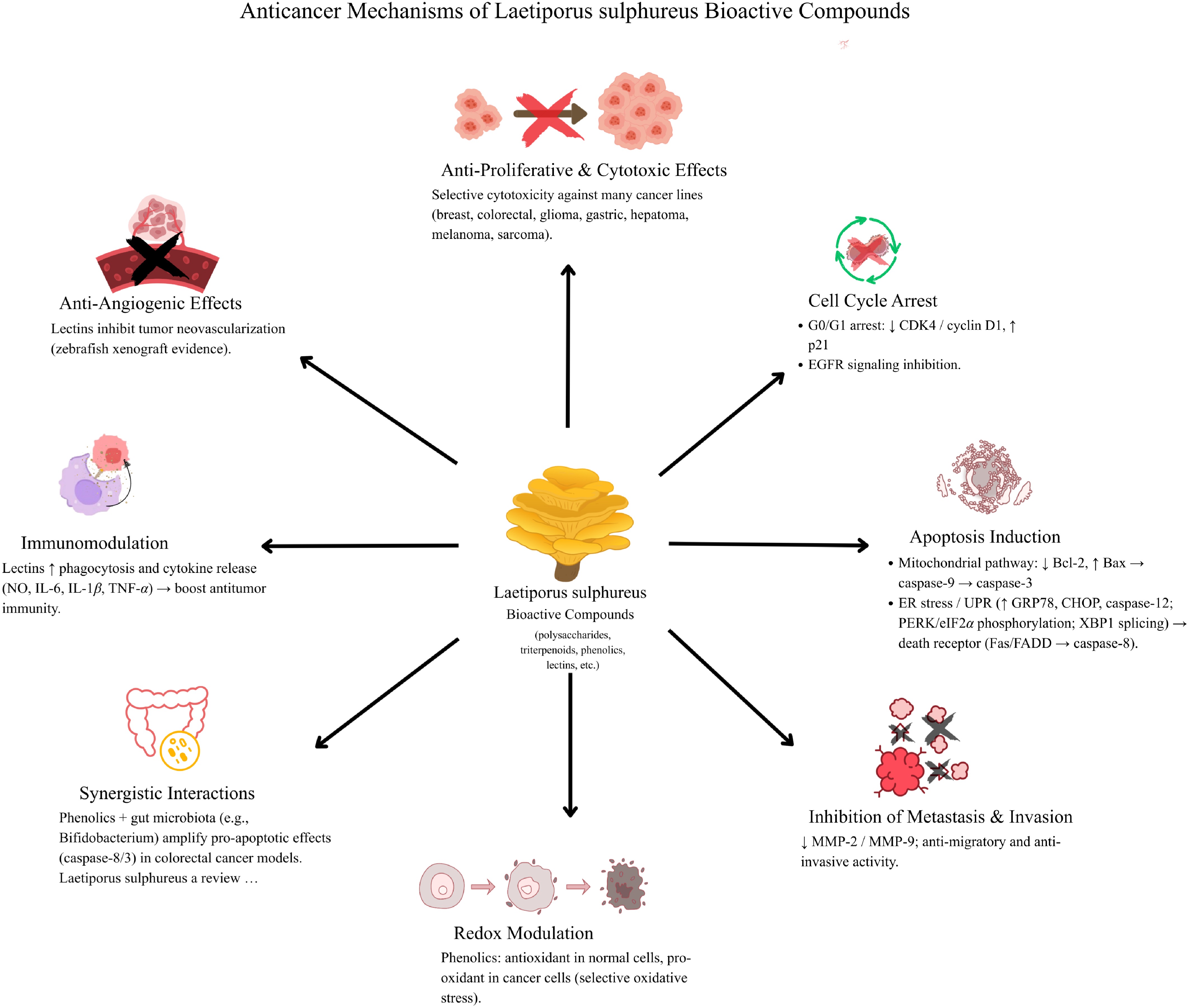
Figure 2.
Anticancer mechanisms of the bioactive compounds of L. sulphureus, such as polysaccharides, triterpenoids, phenolics, and lectins.
Steroids
-
Steroids are an important class of bioactive compounds in L. sulphureus, and are mainly present in extracts from the fruiting bodies and/or mycelium, adding to the mushroom's nutritional and pharmacological repertoire[4,14,70]. Many of these are derivatives of the fundamental lanosterol–ergosterol pathway[16]. Comprehensive profiling reveals a steroidal fraction with 18 different compounds, indicating the presence of diverse structures among the lanostane frameworks[70]. Ergosterol (ergost-5,7,22-trien-3-ol) has been isolated[4] and is recognised for its antitumour activity[32]. In fact, this is the major steroid in L. sulphureus extracts, with the amount being 13.99% in acetone extracts and 10.45% in hydro-methanol extracts[63]. Other conventional sterols identified include ergost-7-en-3-ol and ergost-7,22-dien-3-ol, which are noted for their hepatoprotective effects[32]. Other examples of sterols include cerevisterol, which shows antileukaemia activity[13], and ergosterol peroxide[16]. The latter displayed notable cytotoxicity against several cell lines, such as human gastric cancer, human hepatoma, human colorectal cancer, and murine sarcoma[13]. Steroid-containing extracts exhibit several activities, including anti-inflammatory, hepatoprotective, antitumour/cytotoxic, antifungal, and cosmetic/skin protection effects, with diverse molecular mechanisms[7,13,32,63,71−74].
The brassinosteroid derivatives sulphurenolides B and C display their anti-inflammatory effect through pronounced reduction in nitric oxide production in lipopolysaccharide-treated RAW264.7 cells, which is a case of the proinflammatory mediator[32]. Certain derivatives of sterol, such as ergosta-5,22-dien-3-ol and acetate, are present in fractions with very high cytotoxicity, implying their contribution to antitumour effects, facilitating the degradation of cancer cells or stopping proliferation[72]. In aggregate, L. sulphureus steroids herald untapped potential, and thus refined isolation, mechanistic elucidation, and preclinical validation are imperative to advance nutraceutical and pharmaceutical paradigms.
Polyenes
-
Polyenes are distinct nonisoprenoid pigments[38,75]. These compounds, such as laetiporic acids, contribute significantly to the mushroom's yellow or orange coloration[16,76]. Mycochemical studies have uncovered the presence of a family of polyene compounds in L. sulphureus, including laetiporic acids A, B, and C, as well as 2-dehydro-3-deoxylaetiporic acid A[32,76]. The main polyene pigment is laetiporic acid A, which is found in both fruiting bodies and liquid cultures, along with its trace derivative 2-dehydro-3-deoxylaetiporic acid A[38,76]. Laetiporic acid A possesses a decaene backbone containing double bonds with a stable cis-configuration[3,38,75]. These pigments are noted for their potential application as natural food colorants[3,16,76]. Importantly, laetiporic acids exhibit marked antifungal activity[16,77]. A cocktail of laetiporic acids (C26–C32 polyenes) significantly reduced the viability of Aspergillus nidulans protoplasts in vitro at concentrations of 4 mg/mL (undiluted and diluted 1:5), demonstrating their potential as natural polyene antifungals[32,77].
Lectins
-
L. sulphureus lectins (LSLs) play an important role in the overall bioactivity profile, such as anticancer and antimicrobial activities[2]. They were identified in the fruiting bodies, with molecular weights that vary from 35 to 140 kDa[32,78]. The 140-kDa form is composed of four subunits of 35 kDa, which are held together by noncovalent bonds[32]. Importantly, the 35-kDa LSL subunit displays a β-trefoil scaffold structure and contains two distinct modules, namely an N-terminal lectin module and a pore-forming module, giving it a resemblance to certain bacterial toxins[32]. The presence of high-molecular-weight compounds like lectins is a distinguishing factor in the composition of L. sulphureus extracts, contributing to its noted immunopotentiation potential in functional foods and pharmacology[32].
Using zebrafish xenograft models, Petrović et al. showed that LSLs significantly inhibited the proliferation, neovascularization, and metastasis of human colorectal carcinoma (HCT-116) and mouse melanoma (B16-F10) cells, exhibiting significant antiangiogenic and antitumour effects[78]. LSLs' structure suggests a possible mechanism involving the disruption of cell membrane integrity or targeted cell signaling within tumour and endothelial cells[32,78]. Nevertheless, the precise molecular pathways of their antiangiogenic and antitumoural effects are still not clear and should be investigated thoroughly.
LSLs inherently possess immunomodulation potential[32,71,78], as they are specialized proteins that can recognise and bind selectively to specific carbohydrate ligands on immune cell receptors[2,3]. Wang et al. distinguished five LSL components, with LSL4 being found to be the one with the highest immune-modulating activity, enhancing macrophage cells' viability, phagocytosis, and release of immune-modulating mediators, such as nitric oxide (NO), interleukin (IL)-6, IL-1β, and tumour necrosis factor alpha (TNF-α)[79].
Other bioactive compounds
-
The L. sulphureus mushroom is a source of numerous other bioactive compounds, including benzofurans, peptides, organic acids, and volatile constituents, which all play a major part in the pharmacological profile of the mushroom. Gas chromatography–mass spectrometry (GC-MS) and solvent-fraction studies have identified a range of volatile and lipophilic small molecules, including fatty acid derivatives, that coassociate with the antibacterial and antioxidant activity of nonpolar fractions[64,80]. The fractions obtained from the hexane and the chloroform extractions have reduced the expression of matrix-metalloproteinases (MMP-2/9) and exerted anti-invasive effects in cancer cell assays, indicating the involvement of these small constituents in the modulation of the proteolytic and migratory pathways that are relevant to tumour progression[81].
Eleven structurally different benzofuran derivatives have been isolated and characterized, such as masutakeside I and the acetylenic acid masutakic acid A[32]. Furthermore, egonol, demethoxyegonol, egonol glucoside, and egonol gentiobioside have been isolated from L. sulphureus, with the latter three compounds exhibiting cytotoxic activity against Kato III cells[2]. One of the most potent compounds identified in this group is laetirobin[82]. It exhibits notable cytostatic activity, rapidly enters tumour cells, and inhibits mitosis and causes the apoptosis of HCT116, Neuro-2a, and HeLa cell lines at nanomolar concentrations (half-maximal inhibitory concentration [IC50] values of 0.1–0.5 nM)[82]. However, only extracts from L. sulphureus parasitic on Robinia pseudoacacia (the black locust tree) showed these cytostatic effects, suggesting a specific parasitic response between the fungus and the plant[82].
Another isolated class encompasses cyclodepsipeptides, such as beauvericin, which is noted for its insecticidal and nematocidal attributes[3]. Beauvericin is also known for its antibacterial, antiviral, antifungal, antiparasitic, and anticarcinogenic effects[83]. Conversely, it was recognised as a natural contaminant in food and feed products and has been recognised as an emerging mycotoxin[83]. Furthermore, the mushroom produces other important components, such as the cholesterol-lowering agent lovastatin (Monakolin K), derived from the polyketide pathway, which has shown in vitro antioxidant activity[84]. Organic acids, including oxalic acid and citric acid, have been reported as the most abundant forms[32]. Moreover, elemental and targeted assays further document measurable trace metal and mineral content in fruiting body extracts[66], all of which potentially contribute to the overall biological activity.
Besides that, comparative extraction as well as metabolomic studies underline that the nature and proportion of these minor nonpolar and low-molecular-weight constituents are very much dependent on the solvent used and the strain, and remain incompletely characterised[61]. Accordingly, mechanistic attribution to individual small molecules is tentative and requires focused isolation, structural elucidation, and mechanism-of-action studies to move beyond the correlations observed for crude and fractionated extracts. The specific pharmacological activities of bioactive compounds in L. sulphureus are depicted in Table 2.
The diverse array of bioactive compounds in L. sulphureus, as detailed in Table 2, works synergistically to exert potent pharmacological effects. Figure 2 illustrates the primary molecular mechanisms of these metabolites, particularly their anticancer pathways, highlighting how they interact with cellular targets to induce apoptosis and cell cycle arrest. Furthermore, the chemical structures of some representative secondary metabolites driving these activities are depicted in Fig. 3.
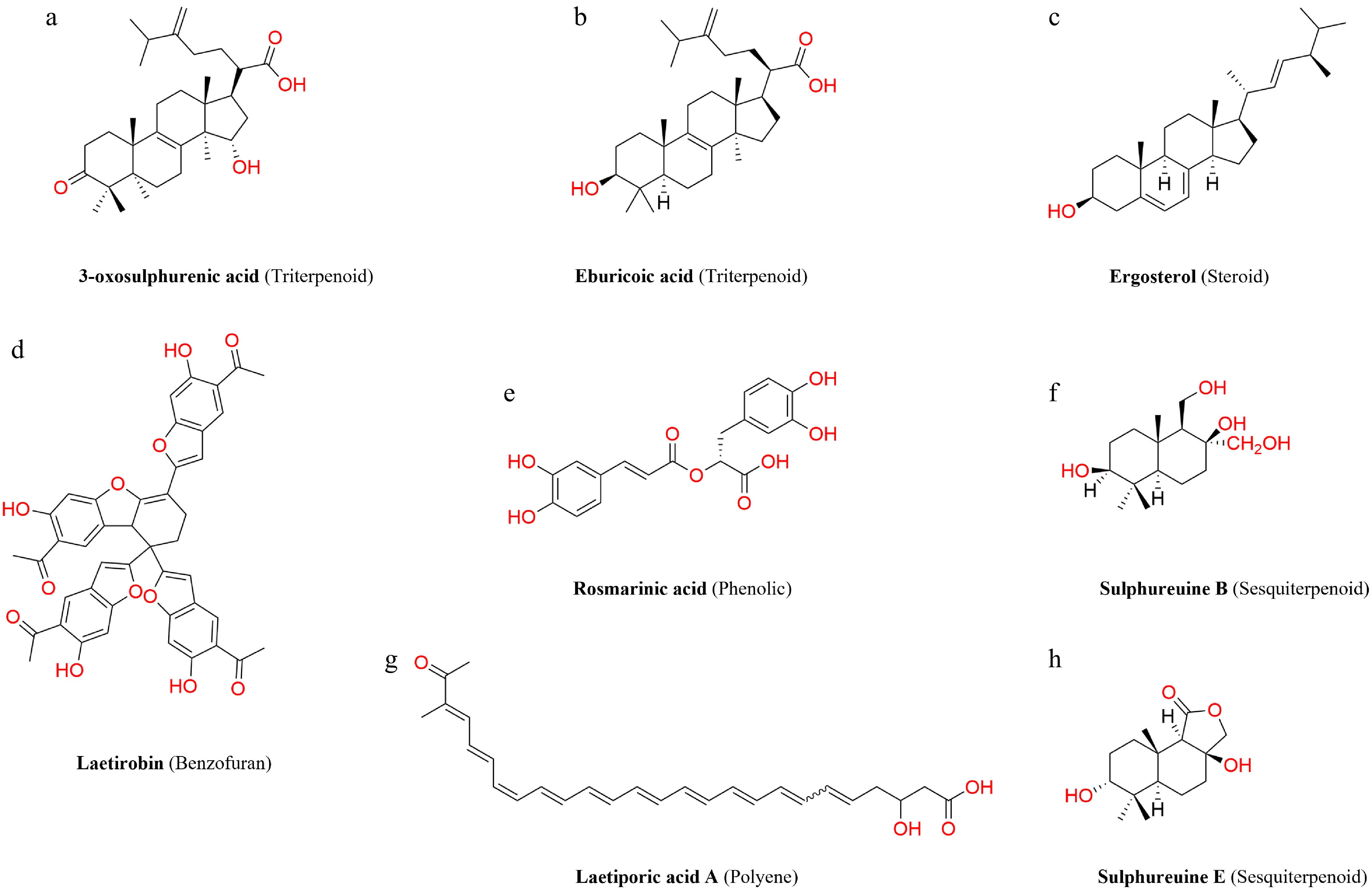
Figure 3.
Chemical structures of representative bioactive compounds isolated from L. sulphureus. (a) 3-Oxosulphurenic acid (triterpenoid)[14]; (b) eburicoic acid (triterpenoid)[14]; (c) ergosterol (steroid)[63]; (d) laetirobin (benzofuran)[82]; (e) rosmarinic acid (phenolic)[68]; (f) sulphureuine B (sesquiterpenoid)[56]; (g) laetiporic acid A (polyene)[3]; (h) sulphureuine E (sesquiterpenoid)[56].
-
The consumption of L. sulphureus is widely recognised, particularly when the fruiting bodies are young and fleshy, but certain cautions related to safety and toxicology exist[14,38,71,85]. Adverse effects have been reported, including gastrointestinal problems, allergic reactions, vomiting, and fever[7,13]. L. sulphureus, when analysed in previous in vitro studies, shows a highly favourable profile in general, and its extracts and compounds have been shown to have selective cytotoxicity that is mainly directed towards cancer cells and to be practically nontoxic in the normal cellular models that are used[45,47,53,57,68,69,86]. However, most of these findings are based on in vitro assays and require further validation in animal models before moving to clinical settings. Noncytotoxicity at therapeutically effective concentrations has been constantly reported for triterpenoids, polysaccharides, and other metabolites, which supports the mushroom's traditional use as a functional food[5,7,35,48,49,51,61,65]. Moderate cytotoxicity, when observed, is dose- and time-dependent and is typically confined to malignant cells, with IC50 values in the μg/mL range suggesting controlled bioactivity without broad toxic implications[60].
A significant safety incident was documented in the late 1980s, involving a child who was presented with ataxia and visual hallucinations after the ingestion of a small quantity of the raw mushroom, indicating that toxic effects are highly associated with consuming the fungus in an unprepared state[38]. Therefore, it is advisable to take the mushroom only after applying heat treatments, such as blanching and then cooking it properly, as this not only aids in digestion but also lowers the risk of poisoning[71,85]. The mushroom's source is also a key factor determining its safety, as only fruiting bodies collected from deciduous trees should be used, whereas collecting from conifers (evergreen trees), especially yew (Taxus), should be avoided because they might have been poisoned with toxins from these host trees[71].
Nonetheless, toxicological evaluations are still very limited, since just a handful of studies have evaluated the long-term safety and pharmacokinetics of these compounds[65,69]. By far, the majority of the existing safety data comes from in vitro assays, which do not always accurately predict in vivo effects. Therefore, there is a need for more extensive toxicity evaluations, including in vivo models, clinical data, and long-term consumption studies.
-
The present review analysed the literature on Laetiporus sulphureus and confirmed its double historical and modern-day importance as an appreciated edible macrofungus and a folk medicine resource all over the world. Traditional applications of L. sulphureus include treatment of conditions such as respiratory illnesses, gastric disorders, rheumatism, cancer, and metabolic diseases.
Current scientific evidence supports this traditional knowledge, revealing an extensive pharmacological profile driven by diverse bioactive compounds, including polysaccharides (primarily β-glucans and SPSs), lanostane triterpenoids, drimane sesquiterpenoids, phenolics, steroids, lectins, and others. The significance of these compounds has been evidenced mostly through in vitro assays, revealing antioxidant, antimicrobial, anti-inflammatory, immunomodulatory, and antitumour/cytotoxic properties. Crucially, investigations have begun to unravel the complex molecular mechanisms underlying these effects, such as the induction of apoptosis via ER stress and mitochondrial disruption, the inhibition of inflammatory cascades, and enhanced anticancer synergies when the phenolic content interacts with the gut microbiota.
Though it exhibits selective cytotoxicity toward cancer cells and a generally favourable safety profile, issues of safety remain, related to proper preparation (mandatory heat treatment) and the host tree. However, toxicological evaluations are still lacking, and the majority of molecular mechanisms remain unclear.
Future research should prioritise standardized chemical profiling and quality control, rigorous in vivo toxicology and pharmacokinetic studies, and progression to early-phase clinical trials for the most important extracts/compounds. Mechanistic molecular studies, strain/host-tree chemotyping, scalable cultivation/fermentation methods, and formulation strategies to improve bioavailability are also high priorities. Interactions with the gut microbiota and focused translational studies in disease-relevant models (e.g., oncology, wound healing) will accelerate the responsible development of L. sulphureus as a nutraceutical and therapeutic resource.
No funding was provided for this revision.
-
Not applicable. This study is a review article and does not involve human or animal subjects.
-
The authors confirm their contributions to the paper as follows: conceptualized the review, conducted the literature search, and wrote the original draft: Bensaada H; supervised the project, critically reviewed the manuscript, and contributed to the final editing: Carmona-Hernandez JC. Both authors reviewed the results and approved the final version of the manuscript.
-
Data sharing is not applicable to this article, as no new data were created or analyzed in this study.
-
The authors declare that they have no conflict of interest.
- Copyright: © 2026 by the author(s). Published by Maximum Academic Press, Fayetteville, GA. This article is an open access article distributed under Creative Commons Attribution License (CC BY 4.0), visit https://creativecommons.org/licenses/by/4.0/.
-
About this article
Cite this article
Bensaada H, Carmona-Hernandez JC. 2026. Laetiporus sulphureus: ethnopharmacological uses, bioactive compounds, pharmacological activities, and therapeutic potential. Studies in Fungi 11: e025 doi: 10.48130/sif-0026-0023 

Laetiporus sulphureus: ethnopharmacological uses, bioactive compounds, pharmacological activities, and therapeutic potential
- Received: 09 January 2026
- Revised: 18 April 2026
- Accepted: 07 May 2026
- Published online: 15 September 2026
Abstract: The polyporous macrofungus Laetiporus sulphureus, commonly referred to as chicken of the woods, is globally recognised as a highly valued edible product used in traditional medicine. Historically, it was used to treat conditions such as respiratory illnesses, gastric disorders, rheumatism, cancer, and metabolic diseases. This review integrates its ethnomycological studies with data on its bioactive compounds and their pharmacological effects and molecular mechanisms. Recent studies supported the finding that L. sulphureus has notable pharmacological properties because of its diverse and rich composition of polysaccharides, triterpenoids, sesquiterpenoids, phenolics, lectins, and many other bioactives. It exhibits a wide range of pharmacological activities, including antioxidant, antimicrobial, anti-inflammatory, immunomodulatory, and anticancer effects. Though generally exhibiting low cytotoxicity, its consumption as food necessitates heat treatment, and collecting the mushroom from conifers (evergreen trees), particularly yew (Taxus), must be avoided. In spite of thorough evaluations of its phytochemistry and in vitro activity, systematic toxicological investigations, long-term safety data, in vivo and (eventually) clinical validation continue to represent significant research gaps.
-
Key words:
- Laetiporus sulphureus /
- Medicinal mushroom /
- Ethnopharmacology /
- Antioxidant /
- Anticancer /
- Functional food