











-
Jujube (Ziziphus jujuba Mill.) is a fruit-bearing tree species native to China and is widely recognized for its high nutritional value and dual edible and medicinal properties. Because of these properties, jujube fruit has attracted increasing attention in global markets[1]. In recent years, rising consumer expectations and extensive commercial competition have converted the research focus from flavor attributes to textural quality as a critical demand of overall fruit value[2,3]. For fresh jujube, desirable textural characteristics, such as hardness, crispness, and chewiness, are essential for preserving freshness and prolonging postharvest shelf life. In comparison, more hardness in dried jujube is good for improving dehydration efficiency during processing[4,5]. Research on fruit texture has traditionally focused on cell wall metabolism and structural modifications. However, evidence indicates that soluble sugars and organic acids, long regarded as primary contributors to flavor perception, also function as key physiological regulators that are directly involved in the development and modification of fruit texture[6,7]. Beyond their role in flavor, these primary metabolites are increasingly recognized for their indirect involvement in processes that can influence the tissue's integrity and mechanical properties.
In various fruits, a clear association between sugar composition and textural attributes has been documented. During the development of peach fruit (Prunus persica L. Batsch), increasing concentrations of glucose and fructose are associated with progressive reductions in fruit hardness[8]. Similarly, in aronia (Aronia melanocarpa), fruit hardness is negatively associated with glucose and fructose levels[9], suggesting the synchronized regulation of sugar accumulation and cell wall restructuring. Studies on pear (Pyrus spp.) have further revealed that distinct texture phenotypes are associated with specific sugar profiles: Crisp-fleshed cultivars tend to accumulate higher glucose levels, whereas soft-fleshed cultivars are characterised by higher sucrose levels[10]. These observations suggest that individual sugars may modulate cell walls' properties through distinct metabolic pathways[10]. The underlying mechanism is primarily attributed to the osmotic regulatory function of sugars. Higher concentrations of soluble sugars, particularly sucrose, reduce cellular water potential, enhance water influx, and sustain turgor pressure, thus providing essential mechanical support to fruit tissues[10,11]. Consistent with this, sucrose metabolism in apple (Malus spp.) is closely associated with maintaining postharvest texture[12]. These findings show that sugar metabolism is important not only to sweetness but also to the structural determinants of fruit hardness and crispness.
Organic acids, primarily malic and citric acids, also play a crucial role in shaping fruit texture by regulating the physicochemical conditions of the cellular microenvironment[13]. By modulating vacuolar and apoplastic pH, organic acids directly influence the activity and stability of key cell wall-modifying enzymes, including pectin methylesterase (PME) and polygalacturonase (PG)[14,15]. Acidic conditions may suppress the activity of specific PG isoforms while simultaneously enhancing PME's function. PME-mediated demethylation of pectin generates low-esterified pectin, which serves as a favorable substrate for PG, thus accelerating pectin degradation, cell wall depolymerization, and fruit softening[16]. In grape berries, alternative splicing of pectinesterase-related genes has been shown to regulate postharvest texture by affecting cell wall metabolism[14]. Similarly, in tomato (Alisa Craig S. lycopersicum) fruit, the coordinated action of PG and expansin in cell wall disassembly is regulated by the microenvironment and has been associated with texture-related disorders such as fruit cracking[16]. These observations suggest that dynamic changes in organic acid metabolism function as critical chemical regulators of the metabolic 'switches' that control modification of the cell wall and the evolution of texture.
Despite these advances, studies of jujube fruit quality have primarily focused on the contributions of sugar and acid content to flavor[17,18] or on the relationship between cell wall metabolism and fruit softening[5]. Systematic analyses combining sugar and organic acid metabolism, considered to be synergistic physiological regulatory centers, with multidimensional textural parameters, including hardness, gumminess, and chewiness, remain limited. Moreover, a comprehensive classification of jujube germplasm based on combined sugar–organic acid metabolic phenotypes and textural characteristics, and the identification of key metabolite markers have not been properly explored.
To address these gaps, this study selected 109 genetically diverse jujube germplasm accessions for evaluation. We hypothesized that the contrasting accumulation patterns of sugars and organic acids among diverse germplasm accessions are not only responsible for flavor differences but also create distinct cellular environments (e.g., turgor, pH) that are closely associated with variations in the properties of fruit texture. By framing the development of fruit texture within a correlative sugar–acid–texture framework, the findings provide a theoretical basis for targeted quality improvement and deepen our understanding of the mechanisms underlying textural variation in jujube fruit.
-
In total, 109 jujube germplasm accessions were sourced from the Living Jujube Progeny Selection Nursery of Tarim University, located at 40°32′50″N 81°17′12″E, at an average elevation of 999 m. All experimental trees were 11 years old and trained as central leader systems, with a planting density of 1.5 × 2.0 m. Standardized horticultural management practices were uniformly applied across all accessions throughout the growing period. During the 2025 growing season, fruit sampling was conducted at full-red maturity, defined as complete peel colouration without visible softening[19]. From each germplasm accession, 70 fruits were randomly harvested from the middle canopy region, evenly distributed across the east, west, south, and north orientations. Among these, 30 fruits were randomly selected for texture profile analysis and processed within 6 h of harvest. The remaining 40 fruits were measured for hardness. The stones were removed, then the pulp was homogenized, rapidly frozen in liquid nitrogen, and stored at −80 °C for further determination of soluble sugar content, titratable acidity, organic acid composition, and sugar composition.
Analytical methods
Measurement of the textural characteristics of jujube fruit
-
Fruit hardness was measured using a GY-4 digital fruit hardness tester (Shandong Hengmei Electronic Technology Co., Ltd., Weifang, China). Texture profile parameters, comprising adhesiveness, cohesiveness, springiness, gumminess, and chewiness, were determined using a TMS-Pro high-precision texture analyzer (Ensoul Technology Ltd., Beijing, China), following previously established procedures[20].
Determination of soluble sugar and titratable acid contents in jujube fruit
-
Soluble sugar concentration was quantified using the anthrone colorimetric method[21], with three biological replicates per accession. Titratable acidity was measured by acid–base titration according to standard neutralization protocols[22], also with three biological replicates.
Analysis of acid and sugar compositions of jujube fruit
-
Quantitative analyses of individual organic acids and sugars were performed using high-performance liquid chromatography (HPLC).
Organic acid composition: Organic acid extraction and analysis were conducted using previously reported methodologies[10,23], with minor changes. Approximately 1 g of fruit pulp was weighed and extracted with a 0.04 mol/L potassium dihydrogen phosphate buffer (pH 2.6). The extract was centrifuged at 2,500 × g for 20 min using a centrifuge with a rotor radius of 8.5 cm, after which the supernatant was diluted to a final volume of 10 mL. The solution was filtered through a 0.22-μm membrane filter into amber vials and stored at 4 °C before analysis. Chromatographic separation was performed on an LC-2060C 3D HPLC system (Shimadzu Corporation, Kyoto, Japan) equipped with an Inertsil ODS-3 column (4.6 × 250 mm, 5 μm). The column temperature was maintained at 30 °C. A potassium dihydrogen phosphate buffer (pH 2.4) served as the mobile phase, delivered at a flow rate of 0.5 mL/min. Detection was carried out at 210 nm using a ultraviolet–visible (UV–vis) detector (model SPD-20A, Shimadzu Corporation, Kyoto, Japan). The injection volume was 10 μL. Three biological replicates were analyzed. Concentrations of tartaric acid, quinic acid, citric acid, and malic acid were calculated using external standard calibration curves.
Sugar composition: Sugar was extracted and determined using the previously described protocols[10,23], with slight modifications. Approximately 1 g of fruit pulp was extracted with ultrapure water and centrifuged at 2,500 × g for 20 min, and the resulting supernatant was diluted to 25 mL. The mixture was filtered through a 0.22-μm membrane filter into amber vials and stored at 4 °C before analysis. HPLC analysis was conducted using the LC-2060C 3D system (Shimadzu Corporation, Kyoto, Japan) fitted with an XBridge Amide column (4.6 × 250 mm, 5 μm), maintained at 35 °C. The mobile phase consisted of 0.2% triethylamine (TEA) in water (Phase A) and acetonitrile containing 0.2% TEA (Phase B). The flow rate was set to 1.0 mL/min. Detection was performed using a refractive index detector (RID, model RID-20A, Shimadzu Corporation, Kyoto, Japan). The injection volume was 1 μL. Three biological replicates were included. Fructose, glucose, and sucrose concentrations were quantified from peak areas using standard curves.
Data analysis
-
Data were statistically analyzed using SPSS v26.0 (IBM Corp., Armonk, NY, USA). Groups were compared using analysis of variance (ANOVA), followed by Duncan's multiple range test. Correlation analysis (using Pearson's correlation coefficient) and graphical visualization were performed using the Chiplot online platform (accessed on 15 October 2025). Principal component analysis was carried out and the corresponding plots were generated using Origin 2021 software (OriginLab Corp., Northampton, MA, USA).
-
To characterize the extent of phenotypic diversity in key fruit quality traits, frequency distributions and statistical analysis analyses were conducted on soluble sugar content, titratable acid content, and hardness in fruits from 109 jujube germplasm accessions (Fig. 1; Table 1). All three traits showed substantial variability across the evaluated germplasm, indicating prominent differentiation in fruit quality attributes. Among the measured parameters, titratable acid content showed the greatest variation, with a coefficient of variation of 66.53%. The observed values ranged from 0.29% to 2.77%, and the frequency distribution was significantly right-skewed (skewness = 1.807). This distribution indicates that most accessions had relatively low acidity, whereas a limited number showed significantly high acid levels. Hardness showed the second-highest variability, with a coefficient of variation of 24.92%, reflecting significant differences in fruit texture among the germplasm accessions. In comparison, soluble sugar content showed lower variability, with a coefficient of variation of 16.22%. Its distribution was more centralized and continuous, indicating relatively stable sugar accumulation across most accessions.
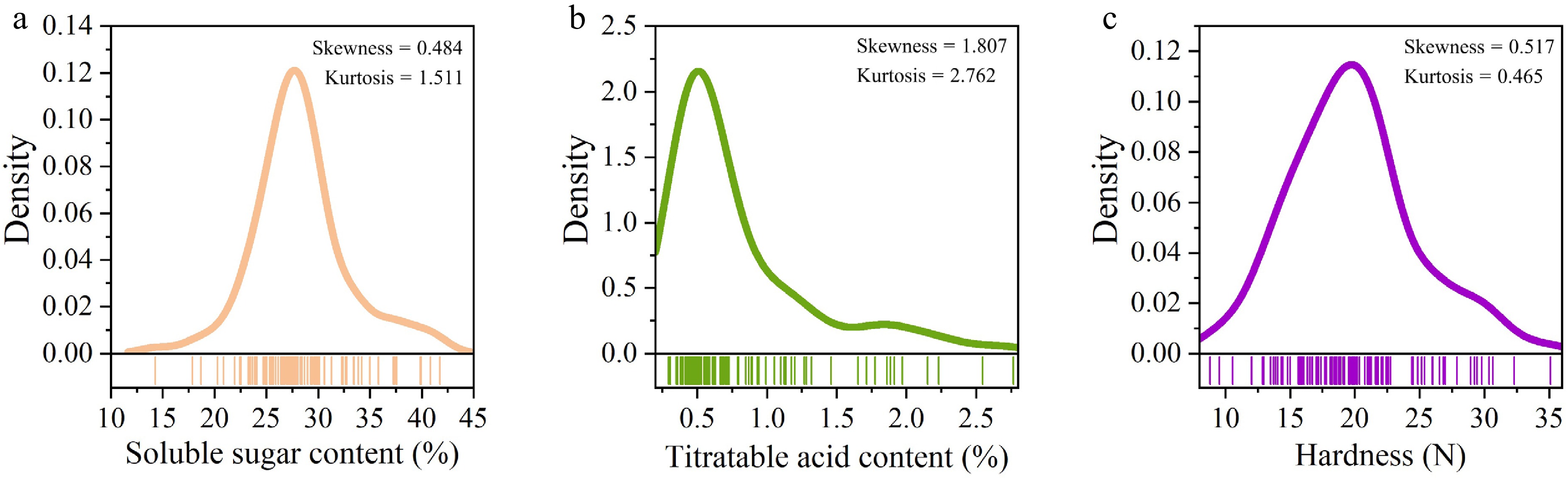
Figure 1.
Distribution map of the soluble sugar content, titratable acid content, and hardness of 109 jujube germplasms. (a) Soluble sugar content; (b) titratable acid content; (c) hardness.
Table 1. Statistical analysis and coefficients of variation for sugar, acid, and hardness in 109 jujube germplasm accessions.
Indicator Maximum Minimum Average
valueRange Standard
deviationCoefficient of
variation (%)Soluble sugar content (%) 41.74 14.27 28.28 27.48 4.59 16.22 Titratable acid content (%) 2.77 0.29 0.79 2.47 0.53 66.53 Hardness (N) 35.12 8.82 19.84 26.30 4.94 24.92 In summary, the jujube germplasm collection evaluated in this study demonstrates extensive phenotypic diversity in soluble sugar content, titratable acid content, and hardness. This diversity provides a strong phenotypic basis for cluster-based classification and association analyses to elucidate relationships among metabolic components and textural traits.
Cluster analysis of jujube germplasm based on sugar, acid, and hardness traits
-
To examine the interrelationships among soluble sugar content, titratable acid content, and hardness in jujube fruits, hierarchical cluster analysis was performed on the Z-score-standardized data on soluble sugar content, titratable acid content, and hardness from 109 jujube germplasm accessions at the full-red developmental stage. Euclidean distance was used as the dissimilarity metric, and clustering was conducted using Ward's minimum variance method (Ward.D2). The analysis resolved the germplasm into three well-defined groups with distinct compositional and textural profiles (Fig. 2).
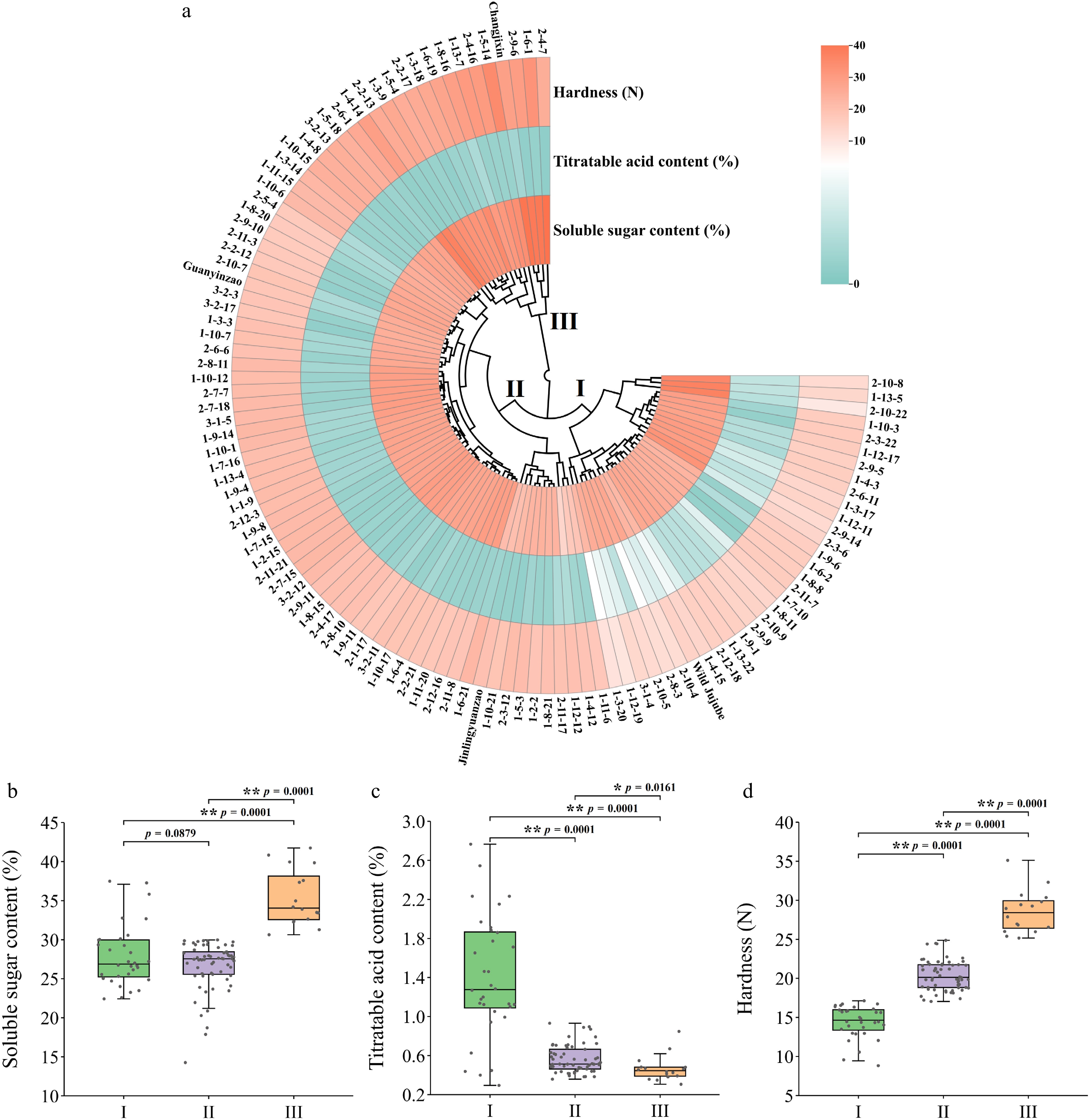
Figure 2.
Analysis of 109 jujube germplasm resources based on soluble sugar content, titratable acid content, and hardness. (a) Cluster analysis. (b) Soluble sugar content; (c) titratable acid content; (d) hardness. Statistical significance is indicated by * (p < 0.05) and ** (p < 0.01). Each point (dot) in the figure corresponds to the mean measurement for a single germplasm accession within its respective group.
Group I (the type with high acidity and low hardness) comprised 32 accessions, representing 29.36% of the total germplasm. This group had the highest titratable acid concentration, averaging 1.40%, corresponding to increases of 150.00% and 197.87% over Group II and Group III, respectively. In comparison, its fruit hardness was the lowest across all groups, with a mean of 14.42 N, representing reductions of 41.47% and 97.99% compared with Groups II and III, respectively.
Group II (intermediate or balanced type) comprised 61 accessions, accounting for 55.96% of the collection, making this the largest group. Fruits in this group showed a moderate titratable acid content (mean 0.56%) and hardness (mean 20.40 N), both within intermediate ranges. The soluble sugar content did not differ significantly from that observed in Group I, reflecting a relatively balanced compositional profile.
Group III (the type with high sugar and high hardness) comprised 16 accessions (14.68% of the total). This group had the highest soluble sugar concentration, with a mean of 35.41%, which was significantly higher than that of Group I and II. Concurrently, fruits in this group exhibited the greatest hardness (mean 28.55 N) and the lowest titratable acid content (mean 0.47%), indicating good overall quality.
The clustering results demonstrate clear phenotypic stratification of jujube germplasm by key quality-related traits. The identification of three distinct compositional-textural types provides a structured framework for comparative analyses of metabolite profiles and texture-related characteristics across germplasm groups.
Textural characteristics of jujube fruits
-
To observe differences in textural performance among the three classification groups, a comparative evaluation was conducted using five quantitative textural parameters for Groups I, II, and III. The results showed clear and statistically significant differences in textural attributes among the groups (Fig. 3). Group III recorded the highest values across all measured texture parameters, with this group's gumminess and chewiness significantly higher than those of Group I by 99.91% and 210.22%, respectively. In comparison, Group I consistently recorded the lowest levels for all evaluated textural indices. Group II showed a distinct advantage in springiness, with significantly higher elasticity than both Group I and Group III.
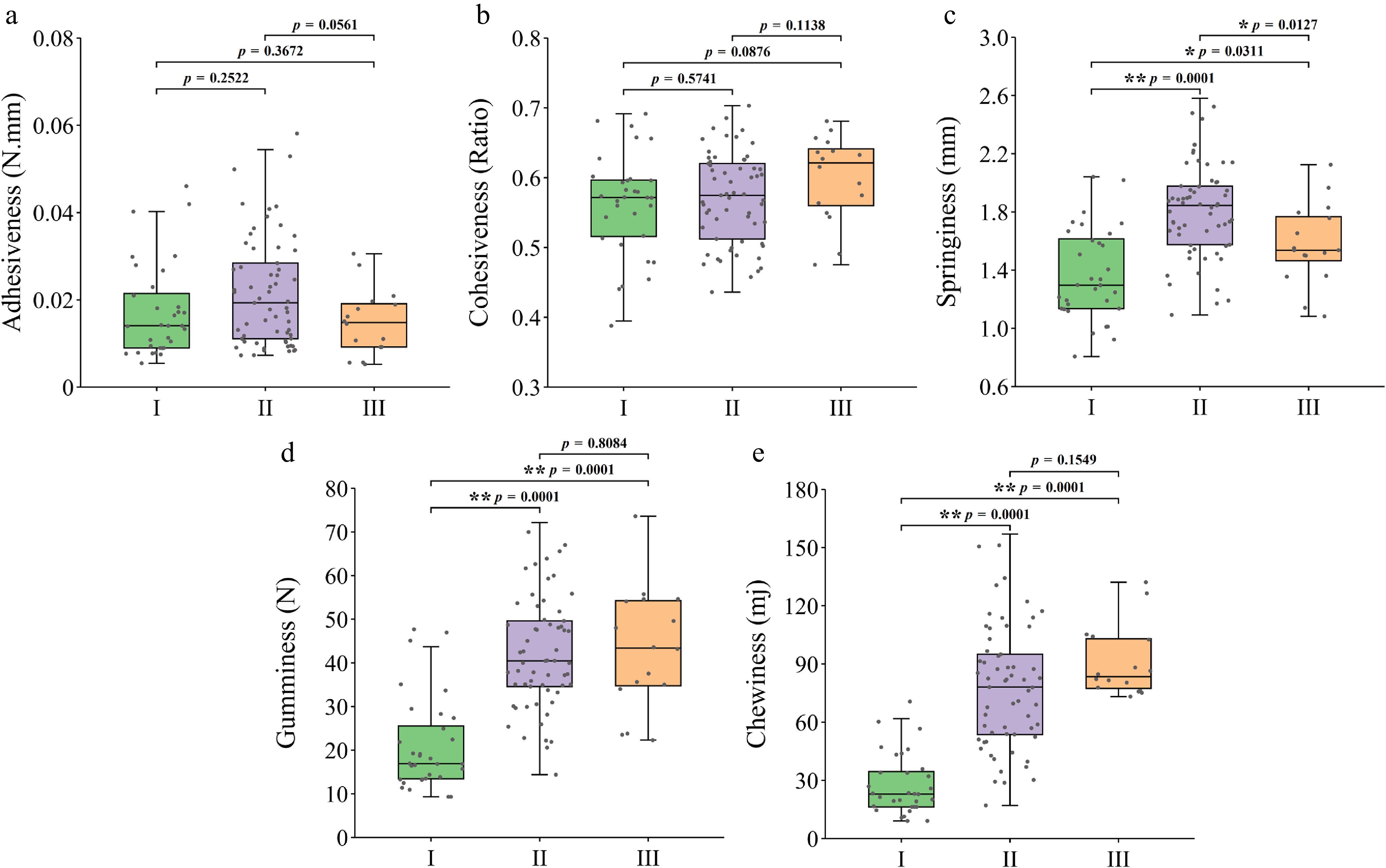
Figure 3.
Textural characteristics of jujube fruits from three groups. (a) Adhesiveness; (b) cohesiveness; (c) springiness; (d) gumminess; (e) chewiness.
Characterization of sugar and organic acid components in jujube fruits
-
To examine the metabolic level of differentiation among the three groups, 10 representative samples from each group (9 germplasm accessions and 1 cultivar) were selected for quantitative analysis of their individual sugar and organic acid components (Fig. 4).
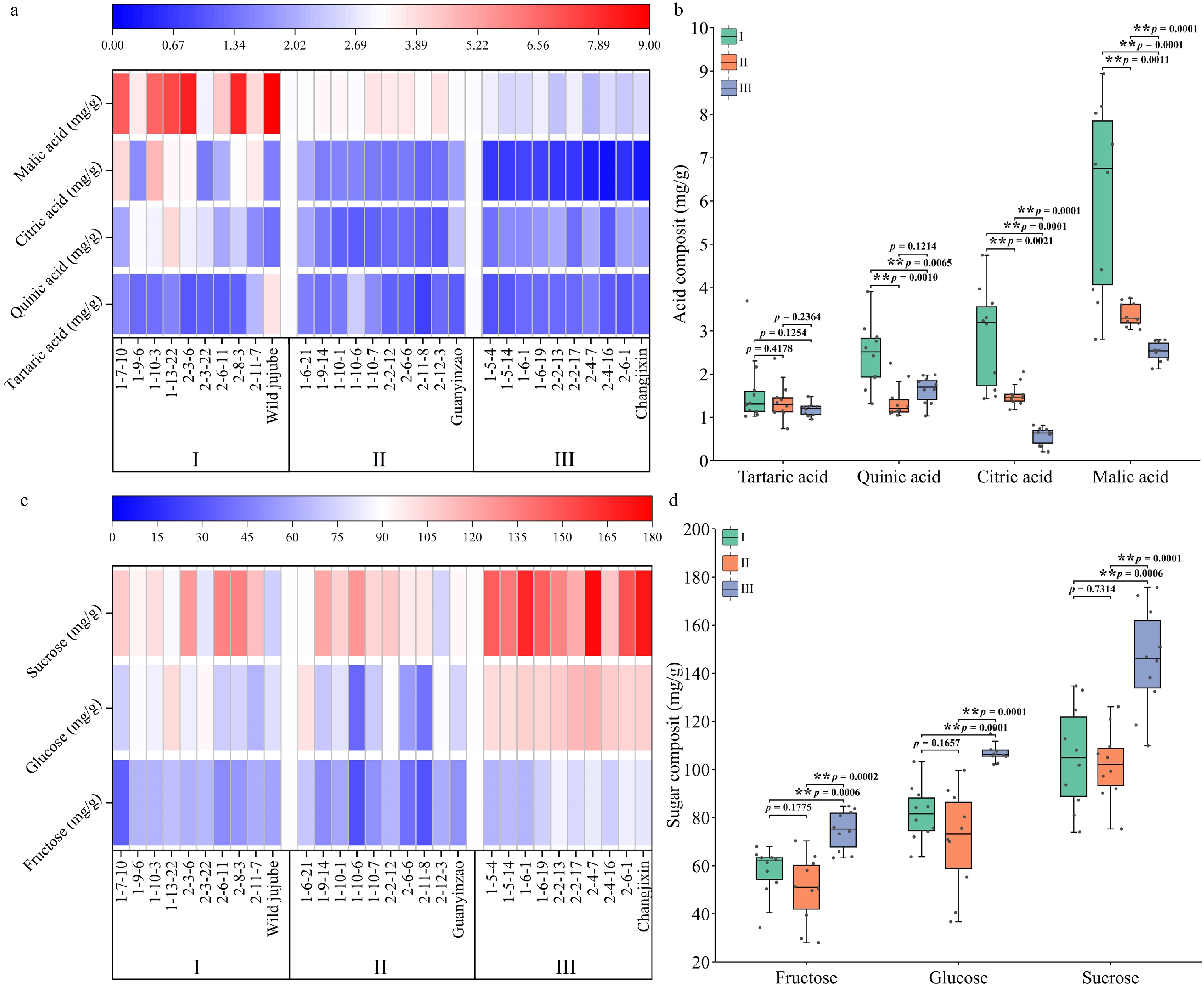
Figure 4.
Analysis of differences in sugar and organic acid components among three groups of jujube germplasm resources. (a) Heat map of organic acid components' content; (b) comparison chart of organic acid components' content; (c) heat map of sugar components' content; (d) comparison chart of sugar components' content.
Among the organic acids, malic acid was the dominant acid component in fruits from all groups (Fig. 4a, b). However, a significant accumulation of total organic acids was observed in Group I, where citric acid and malic acid concentrations were significantly elevated relative to Group III, reaching 401.75% and 141.27% higher levels, respectively. Group III showed the lowest citric acid concentration among all organic acids quantified. The substantial intergroup variation in organic acid profiles, particularly citric acid, provides a biochemical basis for differences in flavor attributes and intracellular physicochemical conditions among the groups.
In terms of sugar composition, sucrose was the predominant soluble sugar across all groups, indicating that sugar accumulation in jujube fruits is primarily sucrose-centred (Fig. 4c,d). Group III showed enhanced capacity for sugar accumulation, with significantly higher concentrations of fructose, glucose, and sucrose than the other two groups. In particular, the sucrose levels in Group III exceeded those in Groups I and II by 38.51% and 42.42%, respectively.
These results indicated the principal metabolic features of each group. Group I is characterized by excessive accumulation of organic acids, particularly citric acid and malic acid, whereas Group III is distinguished by highly efficient sugar deposition, with sucrose as the dominant contributor. Group II shows intermediate metabolite levels, reflecting a relatively balanced sugar–acid metabolic profile.
Correlation among sugar components, organic acid components, and textural characteristics in jujube fruits
-
To observe the metabolic linkages between sugar–acid composition and the development of fruit textural properties, correlation analyses were conducted using data from representative jujube germplasm resources across the three defined groups. The results, summarized in Fig. 5, reveal significant and systematic relationships between the primary metabolites and texture-related parameters. Sugar components showed strong synergistic associations with textural characteristics. Fructose, glucose, and sucrose each showed significant positive correlations with fruit hardness. Among these, sucrose also showed significant positive associations with gumminess and chewiness, highlighting its crucial role in determining texture.
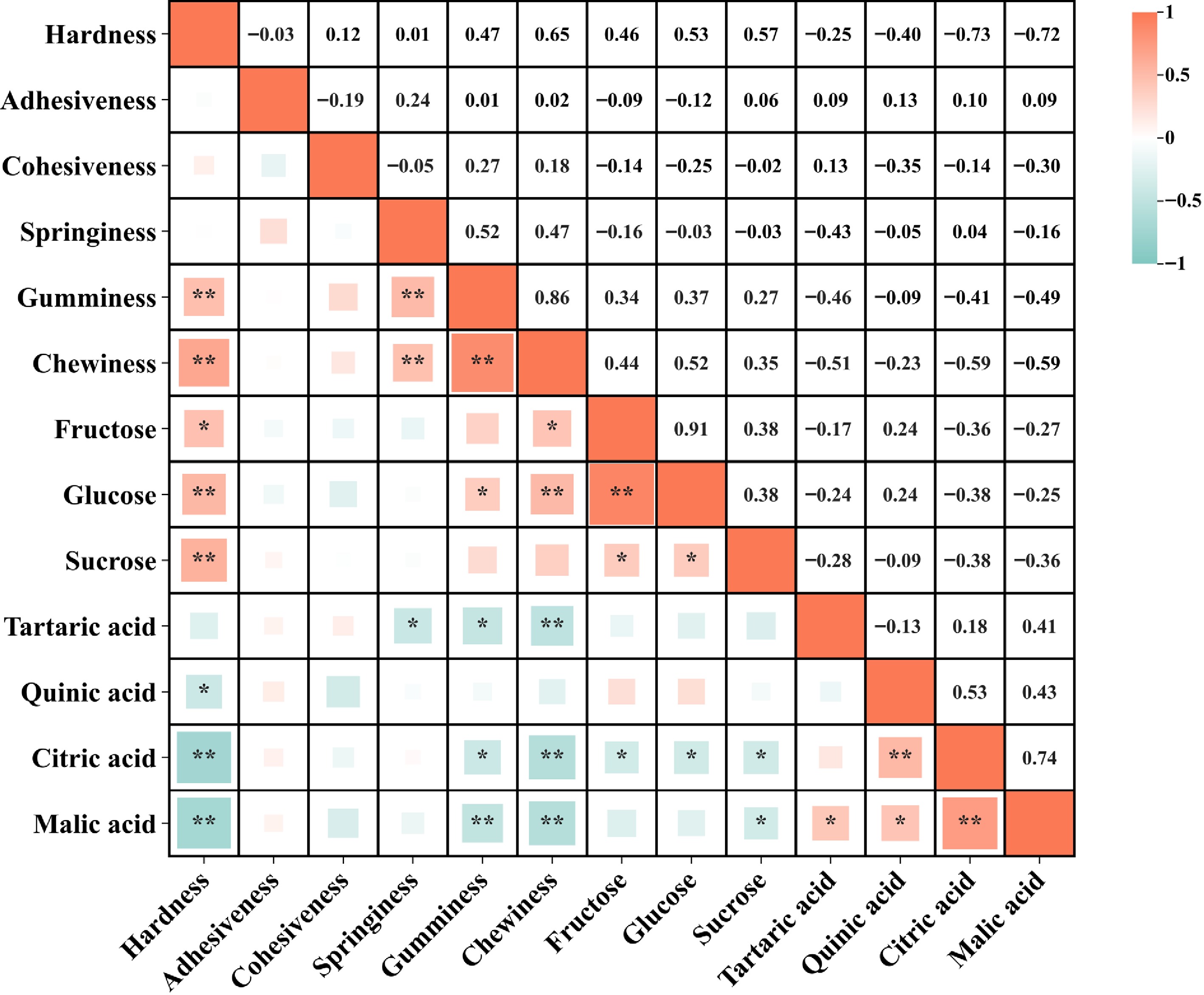
Figure 5.
Correlation analysis of sugar components, organic acid components, and textural characteristics in jujube fruits.
In comparison, organic acids showed antagonistic relationships with textural characteristics. Both citric acid and malic acid were negatively correlated with hardness, gumminess, and chewiness. Moreover, citric acid showed significant negative correlations with all three major sugars (fructose, glucose, and sucrose), whereas malic acid was negatively correlated with glucose. These patterns indicate a clear metabolic opposition between sugar accumulation and organic acid enrichment, which together shape the textural properties of jujube fruits.
Principal component analysis of three groups of jujube fruits
-
To evaluate the relative contributions of sugar composition, organic acid composition, and textural characteristics to overall fruit quality across the defined germplasm groups, principal component analysis (PCA) was used to standardize datasets from the three groups. The PCA ordination clearly demonstrated substantial differences in the internal quality among the groups (Fig. 6).
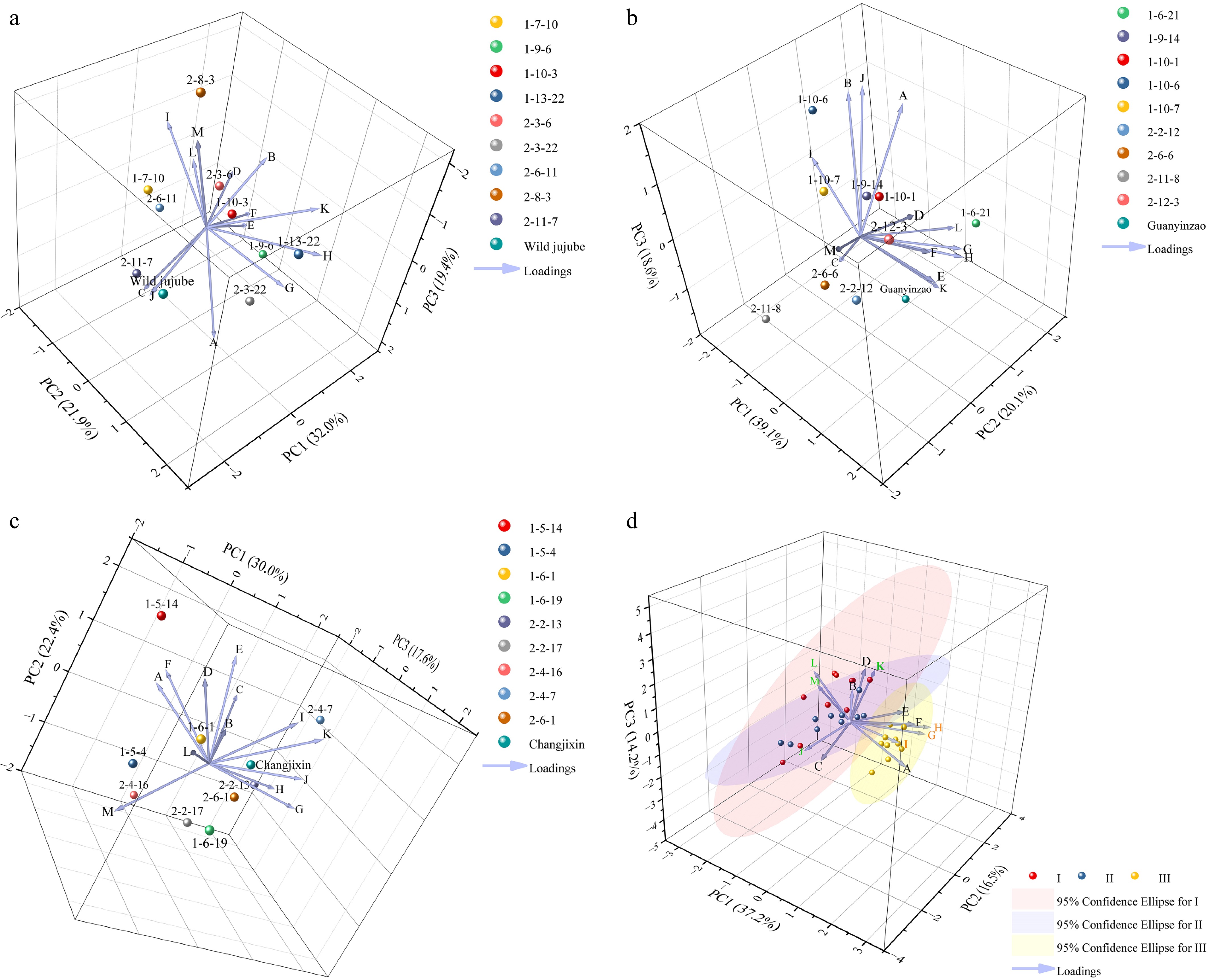
Figure 6.
Principal component analysis of the three groups of jujube fruit. A = hardness; B = adhesiveness; C = cohesiveness; D = springiness; E = gumminess; F = chewiness; G = fructose; H = glucose; I = sucrose; J = tartaric acid; K = quinic acid; L = citric acid; M = malic acid. (a) PCA of Group I; (b) PCA of Group II; (c) PCA of Group III; (d) PCA of all jujube germplasms.
For Group I, the PCA based on sugar components, organic acids components, and textural parameters revealed that the first three principal components (PCs) explained 73.30% of the total variance (Fig. 6a). PC1 accounted for 32.00% of the variance and was primarily associated with springiness, gumminess, and chewiness, all of which have substantial positive loadings. As these parameters collectively describe mechanical texture, PC1 was interpreted as a texture-related factor. PC2 explained 21.90% of the variance and was mainly influenced by fructose, glucose, and sucrose, and was therefore designated as a sugar-related factor. PC3 accounted for 19.40% of the variance. It showed strong associations with organic acids, comprising quinic acid, citric acid, and malic acid, all of which showed negative loadings, supporting its classification as an acid-related factor.
In Group II, the PCA structure appeared to be more compact and integrated (Fig. 6b). PC1 explained 39.10% of the variance and incorporated substantial contributions from both textural attributes (springiness, gumminess, chewiness) and sugar components (fructose, glucose, sucrose), indicating a coupled influence of sugars and texture. PC2 explained 20.10% of the variance and was predominantly driven by organic acid components, comprising tartaric, quinic, citric, and malic acids. PC3 explained 18.60% of the variance and was mainly associated with hardness and adhesiveness, reflecting secondary variation in mechanical properties.
The PCA results for Group III further highlighted its distinctive metabolic structure (Fig. 6c). PC1 was dominated by sugar components (fructose, glucose, and sucrose), all of which showed strongly positive and aligned loadings, indicating substantial synergistic accumulation. This component was therefore defined as a sugar-dominated factor, consistent with the high-sugar phenotype of this group. Textural attributes and organic acid variables were primarily distributed along PC2 and PC3, suggesting that sugar accumulation constitutes the principal axis of variation in Group III.
When PCA was conducted on the complete germplasm dataset (Fig. 6d), the dominant drivers of group differentiation became more evident. Both PC1 and PC2 showed high loadings for sugar-related variables (fructose, glucose, and sucrose) and for organic acid variables (tartaric, quinic, citric, and malic acids). Along PC1, the axis explaining the most significant proportion of variance, all sugar components showed strong positive loadings, whereas all organic acid components showed strong negative loadings. This contrasting pattern defines a clear sugar–acid antagonistic axis, underscoring the central role of opposing sugar and acid accumulation dynamics in shaping quality differentiation among jujube germplasm groups.
-
This study used a cluster analysis of three key traits, i.e., soluble sugar content, titratable acid content, and fruit hardness, to evaluate jujube germplasm and categorize it into three distinct metabolic–textural groups. Group I (high acidity and low hardness) was characterized by higher levels of citric and malic acids than the other groups (Fig. 6a, b). Among the 32 accessions classified within this group, 8 showed tree architecture and fruit characteristics resembling those of wild jujube. These accessions clustered closely with known wild jujube materials and showed a representative wild-type metabolic phenotype. This pattern carries important taxonomic and genetic implications. As a wild relative of cultivated jujube, wild jujube fruit is typically distinguished by high accumulation of organic acid and a soft-fleshed texture, supporting the biological validity of this classification. The greatest deterioration in textural attributes was observed in Group I and is closely associated with excessive acid accumulation, consistent with findings in fruits such as peach and hawthorn (Crataegus spp.), where higher acidity is commonly linked to reduced hardness and more softening[24,25]. In comparison, Group III, characterized by high sugar content and hardness, showed a metabolic profile dominated by efficient sucrose accumulation and relatively low organic acid levels. The better textural performance of this group, such as enhanced hardness, gumminess, and chewiness, is closely associated with its high sugar–low acid phenotype. Group II, representing an intermediate or balanced type, displayed moderate metabolite concentrations and hardness values. This group showed comparatively higher springiness, suggesting that its cell wall matrix may possess enhanced resilience and springiness. Such properties may be related to specific pectin cross-linking patterns or the spatial organization of the hemicellulose network within the cell wall[26]. The metabolic profile observed in Group III reflects a high sugar–low acid state with clear physiological significance (Fig. 4). Fruits within this group showed favorable textural characteristics, notably more hardness and chewiness (Figs 2d and 3d, e), primarily attributable to major sucrose accumulation.
As the primary transport sugar and a major osmotic regulator in plants, sucrose significantly reduces cellular water potential, facilitates water influx, and sustains high turgor pressure. Turgor pressure is the primary mechanical force that confers resistance to external stress and maintains tissue's compactness[11]. The strong positive association between sucrose concentration and fruit hardness observed in this study, together with similar relationships reported in apples[27,28] and Agaricus bisporus[11], highlights the central role of sucrose as a structural contributor to fruit texture. Moreover, the citric acid levels in Group III were the lowest among all organic acid components, suggesting that minimal citric acid accumulation may be a key factor underlying the improved flavor and good textural properties of this group, a phenomenon also reported in wampee fruit (Clausena lansium)[29].
The clear stratification of germplasm on the basis of sugar, acid, and hardness traits prompted us to investigate the potential physiological links between these metabolic and textural phenotypes. Although sugars and acids are primary determinants of flavor, their accumulation levels can profoundly influence the cellular environment, thereby indirectly contributing to the observed differences in texture.
Effect of sugar composition on textural characteristics of jujube fruit
-
Sucrose, as the dominant soluble sugar in jujube fruit, plays a central role in preserving fruit hardness through its accumulation. Significant positive associations were observed between sucrose concentration and key textural parameters, namely hardness, gumminess, and chewiness (Fig. 5). Similar relationships have been widely reported in other fruit and vegetable systems. In tomato and Agaricus bisporus, higher sucrose accumulation has been identified as a critical factor in maintaining postharvest hardness and sustained cellular turgor pressure[11,30]. As an effective osmotic regulator, accumulated sucrose significantly lowers cellular water potential, thus promoting water influx into the vacuole and increasing turgor pressure. Turgor pressure is the primary physiological force that confers resistance to external mechanical stress in plant tissues. This mechanism provides a clear physiological explanation for the substantially higher hardness and chewiness observed in Group III, characterized by high sucrose levels, compared with Group I, which shows lower sucrose accumulation. These observations confirm the role of sucrose as a fundamental structural factor in maintaining fruit texture. These observations confirm the role of sucrose as a fundamental structural factor contributing to fruit texture, primarily through its osmotic function.
Sucrose is the predominant sugar in jujube fruit, and its metabolic precursors also contribute to textural regulation. Among these, galactose has been shown in multiple fruit species to participate directly in the biosynthesis and remodeling of cell wall polysaccharides, including pectin and hemicellulose[31]. Previous studies have identified galactose metabolism as a critical pathway involved in jujube fruit texture development[32]. In apple and strawberry (Fragaria × ananassa), the overexpression of genes associated with galactose metabolism is positively correlated with increased fruit hardness[33,34]. Furthermore, in apple fruit, the intensity of the metabolic flux of galactose is closely related to the synthesis, structural stability, and integrity of pectic polysaccharides, making this pathway a key metabolic node affecting the final textural outcomes[31]. Although galactose intermediates were not directly quantified in this analysis, the exceptionally high sucrose accumulation observed in Group III strongly suggests that carbon flux may be preferentially directed toward sucrose synthesis and associated cell wall synthesis pathways. This metabolic tendency offers an important framework for interpreting the observed variation in jujube fruit texture. In addition to its osmotic function, a large body of evidence suggests that sugars may indirectly modulate fruit texture by influencing the expression of genes involved in synthesis and degradation of cell walls through maturation-related regulatory pathways, including those mediated by FaSUT1 and FaNCED1[35]. Such regulatory mechanisms may represent additional pathways through which sugars shape fruits' textural properties, although their specific roles in jujube fruit remain to be clarified.
Effect of organic acid composition on textural characteristics of jujube fruit
-
In contrast to the role of sugars, citric acid and malic acid showed significant negative associations with key textural parameters, such as hardness, gumminess, and chewiness (Fig. 5). Group I accumulated higher levels of citric acid (5.05-fold) and malic acid (2.41-fold) than those detected in Group III and showed the lowest textural values. Comparable inverse relationships between organic acid accumulation and texture have been documented in other fruit and vegetable systems. In grape (Vitis vinifera) and tomato, higher concentrations of malic acid and citric acid are frequently associated with accelerated tissue softening and structural weakening[14,16].
The effect of organic acids on fruit texture is primarily mediated through their regulation of the cellular microenvironment, particularly pH. Acidic conditions alter the activity and stability of enzymes involved in cell wall metabolism, particularly PME and PG. Reduced pH may stimulate PME activity, leading to demethylation of pectin and the generation of optimal substrates for subsequent PG-mediated hydrolysis. This sequential enzymatic process initiates the pectin network's depolymerization, resulting in loosening of the cell wall structure and progressive tissue softening[14,36]. In this analysis, the substantially higher citric acid and malic acid concentrations observed in Group I coincided with significantly reduced hardness relative to Group III, strongly indicating that an acid-enriched microenvironment accelerates texture degradation through enhanced cell wall enzymatic activity[14,16]. Thus, high acid levels may not only directly contribute to conditions that are favorable for cell wall degradation but also coincide with reduced sugar accumulation, representing a dual metabolic trade-off that is associated with the soft texture phenotype.
Moreover, correlation analysis revealed a significant negative relationship between citric acid and all three major soluble sugars (Fig. 5). This pattern suggests that high organic acid accumulation may reflect a shift in carbon partitioning, favoring flux through the tricarboxylic acid cycle at the expense of sugar biosynthesis and storage[27]. Therefore, high acid levels may not only directly stimulate cell wall degradation but also coincide with reduced sugar accumulation. From a carbon allocation perspective, this dual effect simultaneously weakens osmotic support and limits the availability of the structural carbohydrate substrates required to maintain tissue integrity, ultimately involving a coordinated high acid–low sugar–low hardness metabolic phenotype[27,37]. This metabolic trade-off was particularly evident when comparing Groups I and III, highlighting potential targets for texture-oriented quality improvement.
These findings provide clear guidance for breeding jujube and their postharvest utilization. Germplasm classified within Group III, characterized by elevated hardness, gumminess, and chewiness, shows enhanced drying performance and structural stability, making it very suitable for dried jujube production. In comparison, Group I germplasm, defined by high organic acid content and reduced textural strength, is more appropriate for processed products that benefit from high acidity, such as juices, preserves, and jams.
-
This study used 109 jujube germplasm resources, classified into three distinct groups on the basis of soluble sugar, titratable acid contents, and fruit hardness. Clear metabolic and textural differentiation was observed among these groups. Group I was characterized by an acid-dominant metabolic profile, resulting from significant malic and citric acid accumulation, and was closely associated with reduced hardness and a softer flesh part. Group III showed a sugar-dominant metabolic pattern based on efficient sucrose accumulation and was associated with higher hardness, gumminess, and chewiness than the other groups. These findings delineate the metabolic signatures of textural diversity in jujube fruits, identifying germplasm groups with extreme and contrasting quality traits, specifically the high sugar–high hardness phenotype of Group III and the high acidity–low hardness phenotype of Group I, along with their respective metabolic indicators (sucrose and citric acid). This work advances the understanding of the physiological factors underlying jujube fruits' texture and provides a scientific foundation for evaluating germplasm, quality-oriented breeding, and targeted utilization in both fresh consumption and processing applications.
This research was funded by the Natural Science Foundation of China (Grant No. 32560380), the Key Industry Support Plan Project of Xinjiang Jujube Industrial Technology System (No. XJCYTX-01-01-2025), the Technological Project (2024AB021), and the Research and Innovation Project for Postgraduate Students of Tarim University (TDGRI2024027).
-
The authors confirm contribution to the paper as follows: study conception and design: Zhang X, Yan M, Li X, Lin M, Wu C; data collection, analysis and interpretation of results, and draft manuscript preparation: Zhang X. All authors reviewed the results and approved the final version of the manuscript.
-
The datasets generated during and/or analyzed during the current study are available from the corresponding author on reasonable request.
-
The authors declare that they have no conflict of interest.
- Copyright: © 2026 by the author(s). Published by Maximum Academic Press, Fayetteville, GA. This article is an open access article distributed under Creative Commons Attribution License (CC BY 4.0), visit https://creativecommons.org/licenses/by/4.0/.
-
About this article
Cite this article
Zhang X, Yan M, Li X, Lin M, Wu C. 2026. Sugars and organic acid profiles are associated with textural diversity in jujube fruit. Fruit Research 6: e017 doi: 10.48130/frures-0026-0009 

Sugars and organic acid profiles are associated with textural diversity in jujube fruit
- Received: 21 January 2026
- Revised: 06 March 2026
- Accepted: 17 March 2026
- Published online: 28 April 2026
Abstract: Fruit texture is a critical quality trait affecting the consumer acceptance and processing suitability of jujube (Ziziphus jujuba Mill.). Soluble sugars and organic acids are not only fundamental to flavor but also serve as key metabolic indicators associated with textural diversity. However, how the accumulation of soluble sugars and organic acids relates to textural variation remains largely unexplored. This study systematically evaluated 109 jujube germplasm accessions for soluble sugars, titratable acidity, and fruit hardness at full-red maturity. Hierarchical clustering based on these traits classified the germplasm into three distinct groups: Group I (high acidity and low hardness, 29.36%), Group II (balanced traits, 55.96%), and Group III (high sugar and high hardness, 14.68%). Textural profile analysis revealed that Group III exhibited significantly superior texture, with hardness, gumminess, and chewiness exceeding those of Group I by 97.99%, 99.91%, and 210.22%, respectively. High-performance liquid chromatography (HPLC)-based quantification of the primary metabolites showed that the favourable texture of Group III was associated with a markedly higher accumulation of sucrose, fructose, and glucose. In contrast, Group I possessed significantly high concentrations of citric acid and malic acid, which were higher than those of Group III by 401.75% and 141.27%, respectively, and which correlated with its softer texture. Correlation and principal component analyses further highlighted a strong antagonistic relationship between sugar and organic acid accumulation, with sugars positively and organic acids negatively associated with key textural parameters. This germplasm-based classification, coupled with the identified sugar–organic acid signatures, provides a clear phenotypic and biochemical framework for breeding, and suggests that sugar and organic acid metabolism may indirectly influence fruit texture through osmotic regulation and modulation of the cell wall microenvironment.