











-
Bermudagrasses (Cynodon spp.) are perennial warm-season turfgrass extensively used in commercial and residential landscaping across the southern United States and transition zone[1]. A survey conducted in 2021 found bermudagrass covers 45%−52% of fairways, tees, roughs, and practice areas on golf courses in the transitional climatic zone[2]. Increasing climate variability has led to a range of stress-related challenges in turfgrass management[3]. Drought, in particular, is among the most severe abiotic stressors, especially in regions with extreme climate patterns[4]. Persistent droughts across the United States have increased the need for drought-resistant bermudagrass varieties and the adoption of water-saving management practices. Enhancing water efficiency while maintaining turf quality is now a crucial objective for sustainable landscaping, making the development of resilient cultivars and implementing effective irrigation strategies essential for the future of the turfgrass industry[5].
Drought resistance in bermudagrass is a complex trait that enables these plants to endure such conditions through mechanisms like drought escape, drought avoidance, and drought tolerance[6,7]. Drought tolerance refers to a plant's capacity to maintain essential biochemical and physiological processes despite reduced internal water content. Drought avoidance, on the other hand, focuses on maintaining internal water levels through morphological and structural adaptations, such as deep root systems, reduced leaf area, and minimized water loss[8]. One way to measure this water loss is through evapotranspiration (ET), which includes both plant transpiration and soil evaporation under optimal moisture[9]. A study measuring the actual evapotranspiration (ETa) of various bermudagrass varieties over three summers reported ETa rates ranging from 4.0 to 5.0 mm·d−1, highlighting variation among varieties[10].
One quantitative method to assess drought resistance in turfgrass is to evaluate the minimum water required to maintain quality and performance. Qian & Engelke[11] determined the minimum irrigation needs and relative drought resistance of various turfgrasses by calculating the percentage of Class A pan evaporation (% Ep) necessary to sustain acceptable turf quality. Their findings indicated that 'Tifway' bermudagrass required between 12% and 35% Ep to remain healthy. Similarly, Fu et al.[12] investigated the minimum irrigation levels necessary to maintain acceptable quality in several turfgrasses in Kansas (USA) and found that bermudagrass typically sustained acceptable quality with irrigation at 40% of ETa for most of the study period. Additionally, another study in Kansas assessed the minimum irrigation needed to keep Kentucky bluegrass (Poa pratensis L.) exhibiting no more than 50% wilt symptoms under drought[13]. The findings revealed considerable variation in average irrigation needs, ranging from 2.2 mm·d−1 to 4.2 mm·d−1.
An alternative method for assessing turfgrass drought resistance is to evaluate performance under severe and prolonged water deprivation, commonly referred to as acute drought stress. This occurs when turfgrass is subjected to extended periods without irrigation or rainfall[14]. Several studies evaluated drought resistance of turf-type cultivars and experimental lines in field trials under acute drought stress. Qian & Fry[15] conducted a study in Kansas on four turfgrasses, including 'Midlawn' hybrid bermudagrass (Cynodon dactylon Pers. × C. transvaalensis Burtt-Davy), 'Prairie' buffalograss [Buchloe dactyloides (Nutt.)], 'Meyer' zoysiagrass (Zoysia japonica Steud.), and 'Mustang' tall fescue (Festuca arundinacea Schreb.). Their findings indicated that all warm-season grasses were superior in drought tolerance compared to the cool-season grass, tall fescue. Similarly, Karcher et al.[16] assessed the drought tolerance of tall fescue entries under a rain-controlled facility, using digital image analysis to evaluate green cover. These results demonstrated significant improvement in drought tolerance among the tall fescue entries compared to their parental genotypes. Moreover, Steinke et al.[17] studied eight bermudagrass cultivars and one buffalograss under drought conditions, finding that some cultivars lost 50% green cover within 20 d, while others maintained their green cover for the entire 60-d drought period. In addition, Yu et al.[18] examined the drought response of advanced turf-type bermudagrass genotypes in Oklahoma under a woven polyethylene waterproof tarp to exclude natural precipitation. In this case, most experimental genotypes outperformed the standard 'Tifway'. Understanding the water use and drought resistance of different bermudagrasses can facilitate turfgrass managers and breeders in selecting and maintaining suitable cultivars under drought conditions[19].
Significant efforts have been made to enhance drought resistance in bermudagrass through traditional breeding methods aimed at developing cultivars with superior water-use efficiency, deeper root systems, and improved physiological responses to drought stress[18,20]. Furthermore, the application of molecular techniques has expedited the understanding of genetic mechanisms associated with drought resistance by quantitative trait loci (QTL) mapping in African bermudagrass (Cynodon transvaalensis Burtt-Davy)[21]. In addition to breeding efforts, other research has also worked on irrigation management practices designed to mitigate the effects of drought on bermudagrass. Best practices in this area emphasize deficit irrigation strategies, wherein water is applied at levels below full ETa to optimize water-use efficiency while maintaining acceptable turfgrass quality[22]. Given these advancements, it is critical to evaluate the drought resistance and water requirements of commonly used bermudagrass cultivars, as well as new experimental lines from breeding programs. Such evaluations will enable more targeted recommendations for regions experiencing limited or no irrigation during drought conditions. Consequently, the objective of this study was to quantify the water requirements and assess the drought resistance of bermudagrass cultivars and experimental selections in field conditions in the transition zone.
-
A two-year field study was conducted at the Oklahoma State University Cimarron Valley Research Station in Perkins, OK, USA (−97.034616, 35.994917). The study evaluated eight hybrid bermudagrass genotypes, including four experimental lines—TifB16117 from the University of Georgia (UGA), OSU1682, OSU2082, and OSU2094 from Oklahoma State University (OSU)—alongside four cultivars: 'OKC1131' (Tahoma 31®), 'OKC1119' (Latitude 36®), 'DT1' (TifTuf®), and 'Tifway'. The experimental design was a randomized complete block design with three replications, and each plot measured 0.91 m by 0.91 m, separated by 0.30 m alleys. Plots were established on July 27, 2020, with nine plugs per plot planted in sandy loam soil (57.5% sand, 27.5% silt, and 15% clay), with a pH of 7.3 and 1.15% organic matter. After transplanting, oxadiazon (RonStar G; Bayer CropScience, Cary, NC, USA) was applied at a rate of 3.4 kg a.i. per hectare to control annual weeds, with treatments repeated annually on March 19, 2021, March 20, 2022, and March 18, 2023. Fertilization was conducted monthly from April to June and in September for each year in 2022 and 2023, applying 48.8 kg of nitrogen per hectare using a 21-0-0 fertilizer, totaling 195.2 kg of nitrogen per hectare annually. Plots were mowed regularly with a walk-behind mower (Honda lawn mower, Alpharetta, GA, USA) at 3.8 cm, with clippings returned to the plots before the drought treatments. Irrigation was applied as needed during establishment and before and after drought periods to support rooting, maintain optimal growing conditions, and promote recovery.
Drought evaluation and phenotypic data collection
-
After the plots were fully established, they were irrigated to field capacity on June 23, 2022. Subsequently, drought conditions were initiated by terminating irrigation, and a new clear greenhouse film was installed over the plots on an existing rainout shelter, measuring 10.7 m in width and 29.6 m in length. The trial was monitored three times per week, with visual assessments of the percentage of canopy wilt. When a canopy wilt of 25% or above was observed on any individual plot, resulting in a green cover of 75% or less, 2.54 cm (21.2 L) of water was specifically applied to that plot. Irrigation was applied using a handheld hose, and the water volume was measured with a digital flow meter (Orbit 56854N, Israel). To prevent subsurface lateral water movement between plots, the irrigation amount was split into three sub-irrigation events within a single day. A maximum of 2.54 cm of water was permitted within a five-day period. The greenhouse film was removed on September 9, 2022, after which plots were thoroughly watered for recovery. Mowing frequency was reduced to once per week or less during drought due to slower turf growth, and fertilization was paused during the drought stress period.
Each irrigation event was recorded during the 78-d drought, with the initial irrigation event also reported. The mean total irrigation for each genotype was calculated and expressed as a percentage of warm-season evapotranspiration (ETc) replacement. In addition, percent green coverage was also measured three times per week using a lightbox, with a Canon PowerShot G9 X Mark II camera (Canon, Japan) mounted to ensure consistent lighting provided by fluorescent bulbs at each corner. The data were analyzed using Turf Analyzer software[23], with settings of a hue range of 60/300, saturation of 0/100, and brightness of 10/80. Weather data, including temperature, humidity, precipitation (Fig. 1), and ETc, were collected from an on-site Oklahoma Mesonet weather station (
www.mesonet.org ), located approximately 300 m southwest of the study area.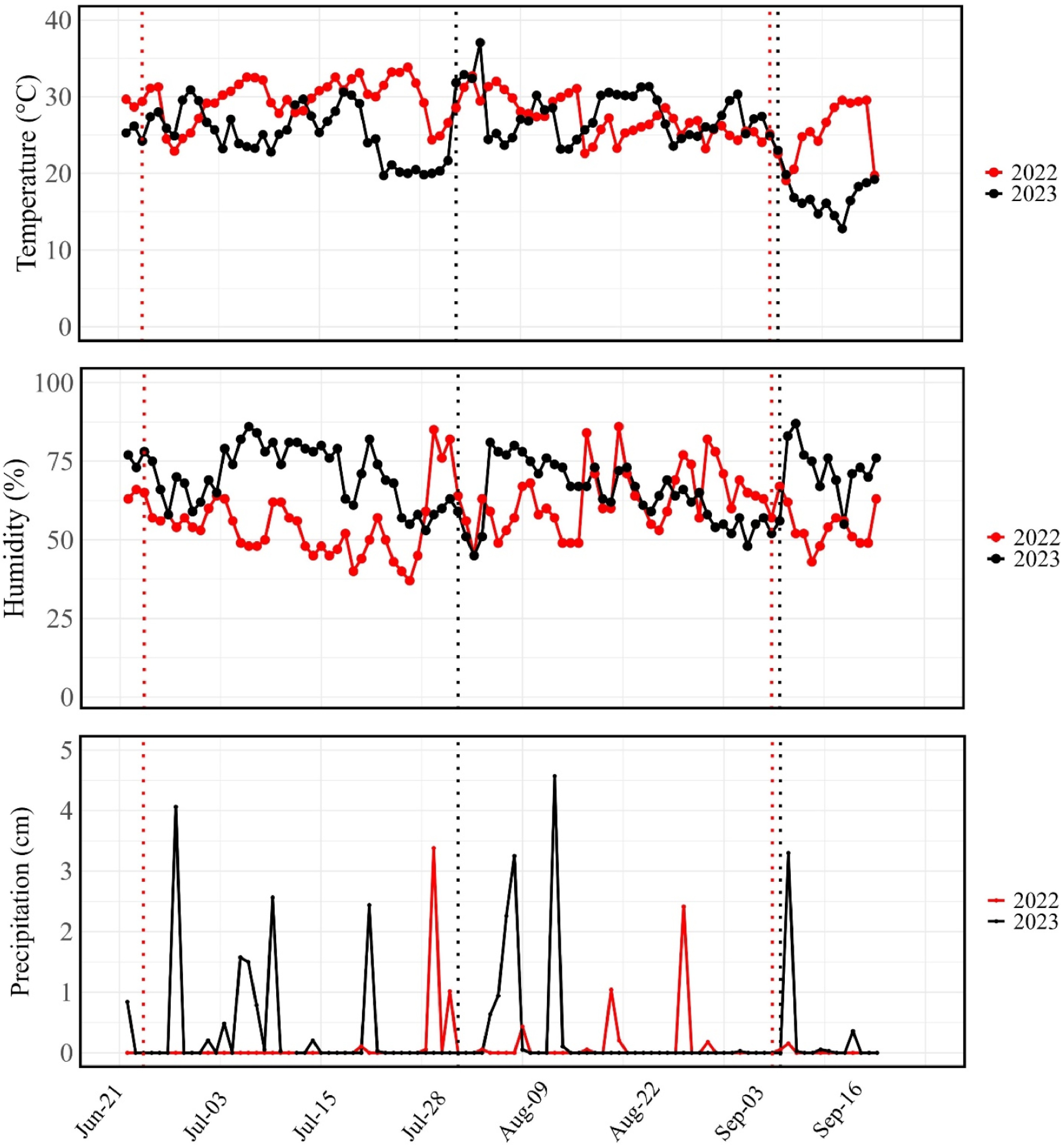
Figure 1.
Daily mean temperature, humidity, and precipitation during summer season (June 20 to September 20) in 2022 and 2023. Vertical lines represent the first and final day of data collection in 2022 (red) and 2023 (black). Data was retrieved from the Oklahoma Mesonet (
www.mesonet.org ).In 2023, the plots were irrigated to field capacity on August 1, after which a new transparent greenhouse film was installed on the rainout shelter, and irrigation was ceased. Unfortunately, a severe thunderstorm on August 13 caused significant damage to the rainout shelter, making it irreparable and exposing the plots to natural conditions. Turfgrass affected by the storm was excluded from the study, while the unaffected plots continued to be monitored and evaluated under a 40-d natural acute drought conditions until September 10, when rainfall occurred. Turf performance was assessed every 6 to 11 d, with turf quality (TQ) rated on a 1−9 scale (1 representing completely brown turf, and 9 indicating dark green, dense turf). Afterward, the plots were thoroughly irrigated to promote recovery.
Statistical analysis
-
Genotype effects were determined by analysis of variance (ANOVA) using the GLIMMIX procedure of SAS 9.4 (SAS Institute Inc.). Due to different types of drought treatments, data was analyzed separately for each year. Differences between genotypes within each year were assessed using Fisher's protected least significant difference (LSD) test at the 0.05 probability level. The correlation analysis between water applied using the wilt-based approach and turf quality under acute drought was conducted using the SAS PROC CORR procedure.
-
In 2022, the amount of water applied during the 78-d study period ranged from 0.8 to 29.6 cm among the tested bermudagrass genotypes (Fig. 2). Latitude 36 and OSU1682 received the highest amounts of water, with 29.6 and 27.9 cm, respectively (p < 0.05). The amount of water applied to 'Tifway' and Tahoma 31 was 15.2 and 10.9 cm, respectively. Genotypes OSU2082 and TifB16117 received the lowest water applications, with 2.5 and 0.8 cm, respectively, which were statistically comparable to the water received by TifTuf. The water applied to each grass, calculated as a percentage of warm-season ETc replacement, is as follows: Latitude 36 (97%), OSU1682 (91.5%), OSU2082 (8.3%), OSU2094 (19.4%), Tahoma 31 (36%), TifB16117 (2.8%), TifTuf (13.9%), and 'Tifway' (49.9%). OSU2082 and TifB16117 demonstrated the lowest ETc percentages, though their values were not significantly different from those of OSU2094 and TifTuf (p < 0.05) (Fig. 2).
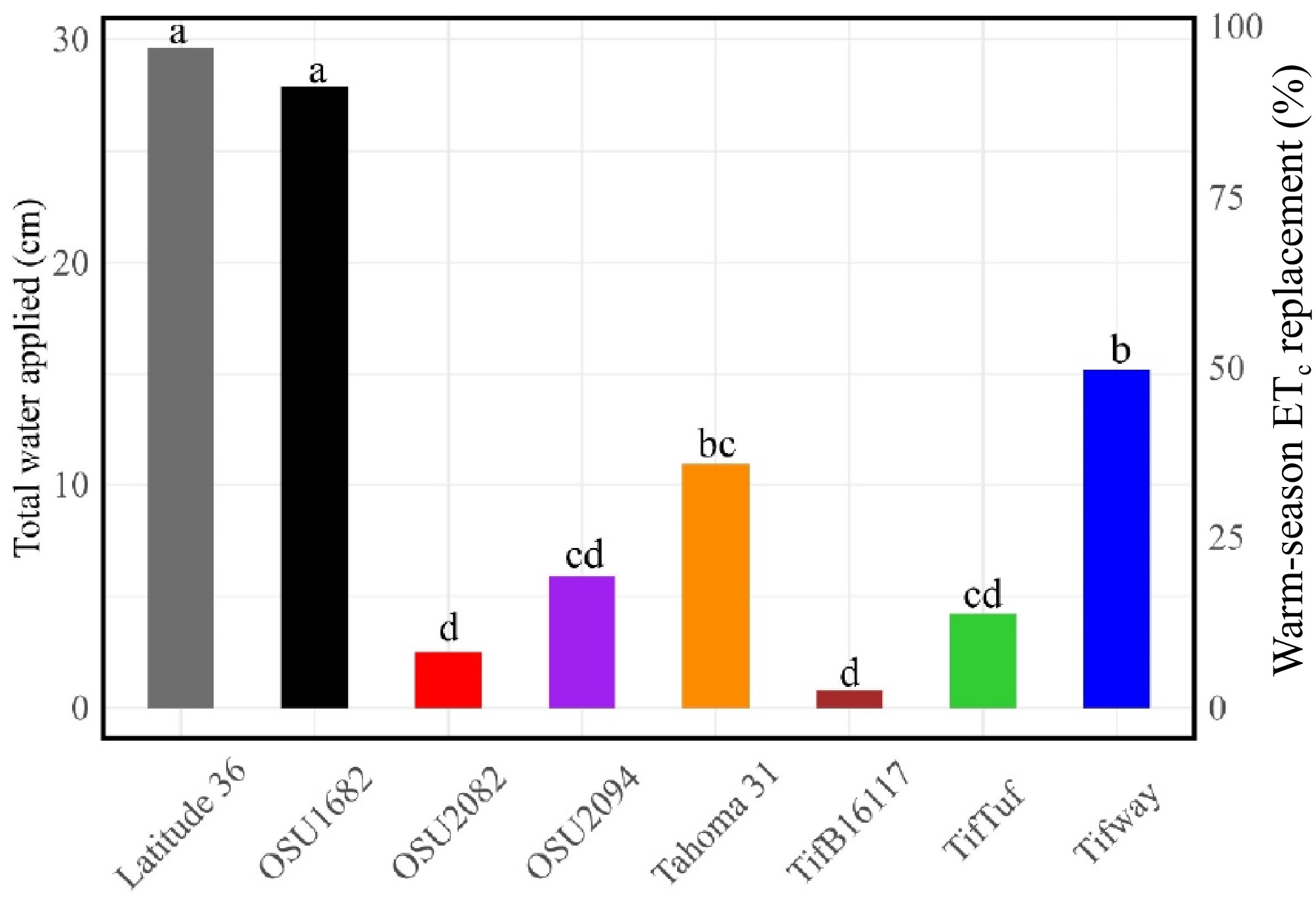
Figure 2.
Total water application amounts and corresponding percentages of warm-season evapotranspiration (ETc) replacement for different bermudagrass genotypes over a 78-d period (June 23 to September 9) in 2022. Vertical bars labeled with the same letter indicate no significant difference, as determined by Fisher's protected LSD test, p = 0.05.
The number of days under drought before the first watering event in 2022 varied among bermudagrass genotypes, ranging from 13.3 to 64.8 d (Fig. 3). TifB16117, TifTuf, and OSU2082 maintained desired performance for the longest period under drought, receiving their first watering after 64.7, 55.3, and 48 d, respectively. OSU2094 withstood drought for 28 d before the initial watering, not statistically different from TifTuf and OSU2082. 'Tifway' and Tahoma 31 withstood drought for 22.0 and 23.7 d before supplying water, respectively. Latitude 36 and OSU1682 received their first watering event 13.3 d after initiating drought, which was not significantly different from OSU2094, Tahoma 31, and 'Tifway'.
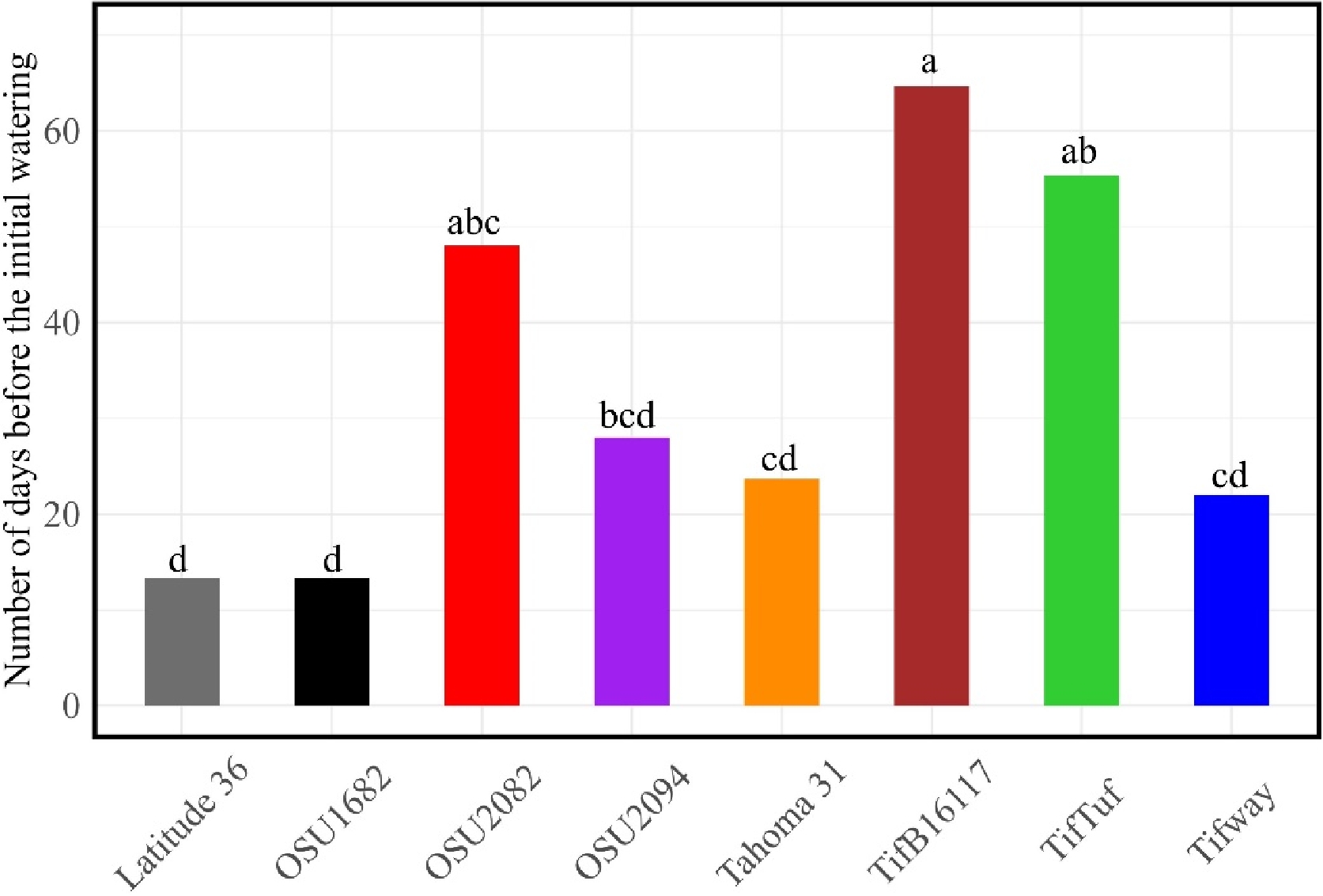
Figure 3.
Number of days under drought before the initial watering event over a 78-d period (June 23 to September 9) in 2022. Vertical bars with same letter are not significantly different, according to Fisher's protected LSD, p = 0.05.
Percent green coverage of the genotypes over the 78 d in 2022 was shown in Fig. 4. With the wilt-based threshold irrigation approach, most genotypes maintained above the threshold of 75% coverage, except for Latitude 36, which dropped to 67% on day 36, though irrigation was applied 2 d prior. TifB16117 maintained greater than 97% green coverage for up to 48 d without any irrigation. Throughout the study, Tahoma 31 maintained a PGC higher than 87%, and 'Tifway' maintained PGC levels above 86%.
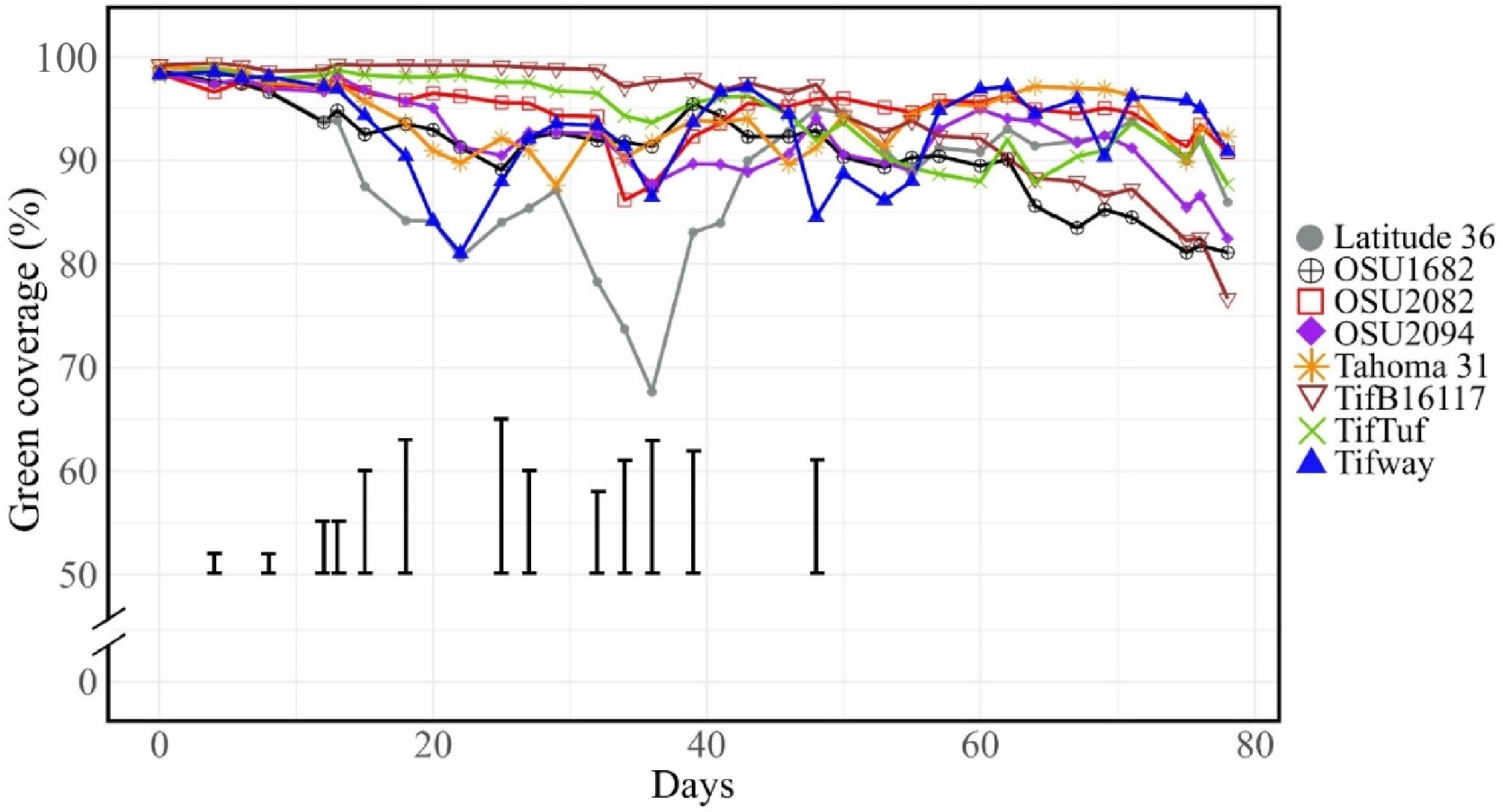
Figure 4.
Percent green cover of bermudagrass genotypes under chronic drought conditions. The experiment was conducted for 78 d between June 23, 2022 to September 9, 2022. The length of the bars represents the least significant difference (LSD) test between genotypes, p = 0.05.
In 2023, Latitude 36 was the first cultivar to experience a noticeable decline in TQ, with a value of 4.3 just 10 d after the onset of acute drought. This decline occurred significantly faster than in the other genotypes (p < 0.05). At day 21, TifTuf, TifB16117, OSU2094, and OSU2082 maintained the highest TQ, followed by 'Tifway' (Fig. 5). At day 27, Tahoma 31, OSU1682, and Latitude 36 exhibited the lowest TQ (below 4, p < 0.05). OSU2082 maintained the highest TQ, comparable to TifTuf, TifB16117, and OSU2094. At day 34, TifTuf, TifB16117, OSU2094, and OSU2082 continued to maintain acceptable TQ (above 6), followed by 'Tifway', while Tahoma 31, OSU1682, and Latitude 36 had the lowest TQ (below 3). At the end of the study, TifTuf, TifB16117, OSU2094, and OSU2082 still maintained an acceptable TQ after 40 d of acute drought. In contrast, 'Tifway', Tahoma 31, OSU1682, and Latitude 36 had TQ drop below 3 (Fig. 5).
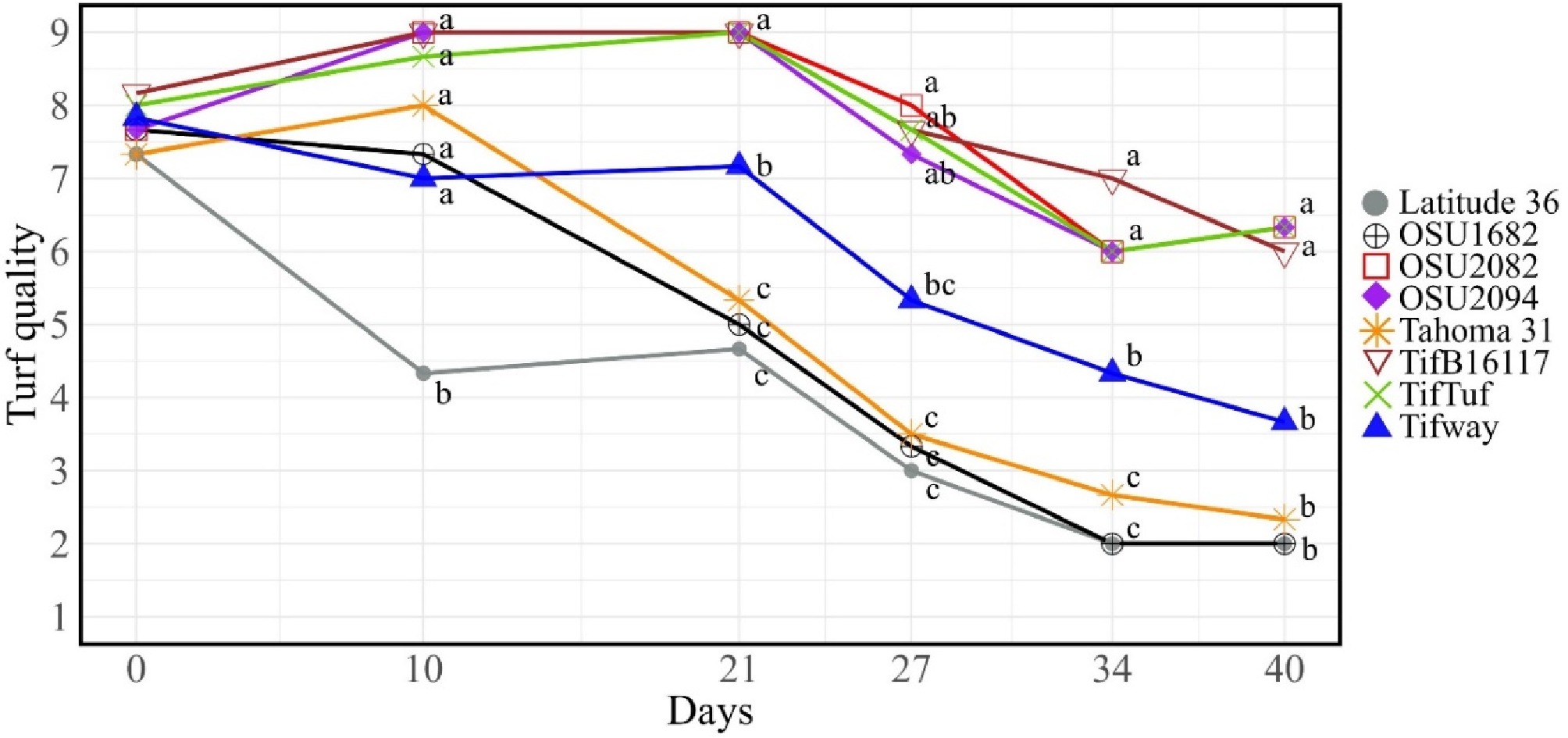
Figure 5.
Visual turf quality of different bermudagrass genotypes during a 40-d acute drought in 2023. Turf quality was rated based on a 1 to 9 scale, where 9 represents the best quality and 1 the worst quality. Points with same letter are not significantly different, according to Fisher's protected LSD, p = 0.05.
Pearson's correlation analysis was performed to examine the relationship between the total amount of water applied in 2022 and TQ on the final day of drought in 2023. The results revealed a significant negative correlation between these variables, with a correlation coefficient of −0.88 and a p-value of 0.004.
-
Water conservation is crucial in turfgrass management to maintain healthy turf while minimizing water usage, especially in regions experiencing prolonged droughts. This study assessed the minimum water requirements needed to maintain turf performance for eight hybrid bermudagrass genotypes in 2022 and evaluated their turf quality under acute drought conditions in 2023. Drought resistance varied significantly among the genotypes tested in this study. TifB16117, OSU2082, and TifTuf consistently demonstrated superior resilience, based on minimal water use under the wilt-based model in 2022, and maintained the highest turf quality during acute drought conditions in 2023. Previous studies have also assessed the minimum water requirements of various turfgrasses. Fu et al.[12] evaluated the minimum water needs of four different turfgrasses and found that 'Midlawn' bermudagrass maintained acceptable quality for 102-d period with 40% of ETa. Similarly, Hejl et al.[24] studied 'Tifway' bermudagrass in Texas under deficit irrigation from April to August, reporting that 30% of ETo was sufficient to maintain acceptable quality. In our study, 'Tifway' required 49.9% of warm-season turfgrass ETc to maintain acceptable quality under chronic drought conditions, a value higher than that reported by Wherley et al.[25] under well-watered, non-stressed conditions. Among the genotypes we studied, the most drought-resistant ones, such as TifB16117, used as little as 2.8% of ETc in Oklahoma summer conditions.
This study demonstrated that TifTuf can maintain over 75% green coverage when initially irrigated and sustain it for more than 55 d without additional irrigation. Additionally, newer experimental lines, such as TifB16117, were able to maintain green coverage for over 64.7 d. These findings indicate that, depending on soil type, certain genotypes like TifB16117 may not need supplemental irrigation, even under semi-arid conditions, provided sufficient rainfall occurs within a reasonable timeframe, allowing the turf to maintain acceptable quality. While TifTuf has set the standard for drought resistance turfgrass[18, 26], newer experimental lines in this study demonstrated comparable or slightly better drought resistance (Fig. 2). These advancements present promising opportunities for more sustainable turfgrass management in the future.
The canopy wilt-based irrigation approach has been recognized as an effective method for reducing water usage while maintaining healthy turfgrass growth[27,28]. Delaying irrigation until visible wilting promotes deeper root development as the turf seeks water in deeper soil layers[29], enhancing drought resistance and overall turf health. While this approach is similar to the deficit irrigation strategy, which calculates water needs based on % ETo, the deficit irrigation method is often too complex for typical homeowners or golf course superintendents to implement. In contrast, wilt-based irrigation is more practical, as it relies on visible drought stress before irrigating the grasses. However, a drawback of wilt-based irrigation is that drought stress can escalate quickly, particularly in high temperatures[27]. This can sometimes result in irrigation being delayed beyond the optimal threshold, complicating precise irrigation timing. In our study, Latitude 36 dropped below the 75% green coverage threshold (Fig. 3) during one instance in 2022, despite frequent assessments of irrigation needs. This suggests that drought-sensitive cultivars may struggle even with close monitoring, potentially requiring extended recovery periods after irrigation to fully recover.
Another common approach for assessing drought resistance in turfgrass is to evaluate performance under acute drought conditions, where irrigation is completely withheld. This method is generally less labor-intensive than the 'wilt-based' approach, making it a more practical alternative for large-scale studies. A study in Oklahoma assessed the performance of 10 bermudagrass cultivars under a 60-d acute drought and found that TifTuf maintained a quality rating of 7.5, outperforming both 'Tifway' (5.5) and Latitude 36 (3.6)[30]. Similarly, a study in Georgia evaluated drought performance and physiological responses of bermudagrasses, including TifTuf and 'Tifway'[26]. TifTuf consistently exhibited superior performance under drought conditions, maintaining a lower canopy temperature, higher relative water content, and greater accumulation of osmolytes compared to 'Tifway'. Both studies support our findings, highlighting the improved drought resistance of cultivars like TifTuf, which continue to grow and thrive even during extended drought conditions.
Tahoma 31 and 'Tifway' exhibited moderate performance in both years, with results inferior to those of TifB16117, OSU2082, and TifTuf. Previous research has shown that Tahoma 31 and 'Tifway' have lower evapotranspiration rates than TifTuf under non-limiting soil moisture conditions in a field trial[10]. These differences in drought performance indicate that genotypes with lower water usage contribute to drought avoidance. However, the ability to efficiently extract water from the root zone may play a more pivotal role in drought resistance. For instance, Gopinath et al.[30] found that TifTuf thrived under drought conditions in field trials but struggled when its root zone was restricted to just 17 cm in greenhouse settings. This observation implies that drought avoidance mechanisms, particularly those related to root depth and plasticity, significantly influence the drought performance of turfgrass. Consequently, understanding and improving these root traits could be essential for developing turfgrass varieties with enhanced drought tolerance.
A strong negative correlation was observed between the total water applied during chronic drought in 2022 (Fig. 2) and TQ assessed under acute drought conditions in 2023 (Fig. 5). This validates the assessment of drought resilience using both approaches, as genotypes with lower turf quality under acute drought conditions needed more frequent irrigation to sustain their performance during chronic drought. For instance, genotypes that required the most water in 2022, such as Latitude 36 and OSU1682, exhibited the lowest turf quality (below 6) from day 21 until the end of 2023. Conversely, genotypes that required the least water in 2022, such as OSU2082 (2.5 cm) and TifB16117 (0.8 cm), maintained the highest turf quality from day 10 to the end of the evaluation in 2023, further validating their exceptional drought resistance. 'Tifway', which required a moderate amount of water (15.2 cm) under a 25% wilt-based irrigation approach, maintained acceptable turf quality from day 0 to day 21, after which its quality began to decline until the end of the evaluation period. Although there may be carryover effects, such as deeper root development enhancing drought resistance, the approach used in this study minimized variation in these effects despite natural disasters, ensuring consistent drought stress levels across the grasses before entering the second-year drought. This strong correlation between the two evaluation methods highlights their reliability in assessing turfgrass performance under challenging drought conditions. These findings provide valuable guidance for the reliable and effective selection of resilient turfgrass varieties that can thrive in drought-prone environments, potentially accelerating the breeding process.
-
In summary, the genotypes evaluated in this study exhibited a wide range of drought performance, demonstrating substantial variability in their ability to maintain turf quality under water-limited conditions. Both methods of assessing turfgrass performance—evaluating acute drought responses and determining water needs based on wilt thresholds—proved effective for screening drought resistant cultivars. Previous research has identified 'Tifway' as a relatively drought-tolerant cultivar and ongoing breeding efforts have further improved drought resistance in newer cultivars, such as TifTuf. This study shows that newer breeding lines, including OSU2082 (released by OSU in 2024) and TifB16117, exhibit significantly enhanced drought resistance, surpassing 'Tifway' and demonstrating comparable or slightly superior performance to TifTuf. These advancements represent significant progress in developing bermudagrass varieties that can better withstand water scarcity while maintaining desirable turf quality. Incorporating these drought-resistant varieties into turfgrass management practices has the potential to deliver substantial water savings without compromising turf quality, promoting more sustainable turfgrass management for the future.
This work was funded primarily by the United States Department of Agriculture Specialty Crop Research Initiative 2019-1455-05/2019-51181-30472 and Oklahoma Agricultural Experiment Station.
-
The authors confirm their contribution to the paper as follows: study conception and design: Moss JQ, Xiang M; data collection and curation: Yu S, Xiang M; analysis and interpretation of results: Xiang M; draft manuscript preparation and editing: Cevallos F, Yu S, Moss JQ, Wu Y, Schwartz BM, Xiang M. All authors reviewed the results and approved the final version of the manuscript.
-
The datasets generated during and/or analyzed during the current study are available from the corresponding author on reasonable request.
-
The authors declare that they have no conflict of interest.
- Copyright: © 2025 by the author(s). Published by Maximum Academic Press, Fayetteville, GA. This article is an open access article distributed under Creative Commons Attribution License (CC BY 4.0), visit https://creativecommons.org/licenses/by/4.0/.
-
About this article
Cite this article
Cevallos F, Yu S, Moss JQ, Wu Y, Schwartz BM, et al. 2025. Assessing drought resistance in bermudagrass using dual methodologies. Grass Research 5: e012 doi: 10.48130/grares-0025-0008 

Assessing drought resistance in bermudagrass using dual methodologies
- Received: 27 November 2024
- Revised: 11 January 2025
- Accepted: 20 February 2025
- Published online: 02 April 2025
Abstract: Water scarcity poses a significant challenge to the turf industry. Developing cultivars that can thrive with less water while maintaining high quality is an effective strategy to reduce irrigation demands. The objective of this study was to evaluate the drought resistance of eight hybrid bermudagrasses (Cynodon dactylon Pers. × C. transvaalensis Burtt-Davy) in field trials. The study was conducted at Perkins, Oklahoma (USA) over two years. In the first year, plots were monitored three times per week based on canopy wilt symptoms. When visible wilt symptoms resulted in 75% or less green cover in a plot, 2.54 cm of water was applied to that specific plot. Irrigation applications ranged from 0.8 cm (TifB16117) to 29.7 cm ['OKC1119' (Latitude 36®)] over 78 d. The number of days under drought before the first irrigation event ranged from 13.3 d (Latitude 36 and OSU1682) to 64.6 d (TifB16117). In the second year, the plots underwent a 40-d acute drought with no irrigation. At the end of the study, turfgrass quality ranged from 2.0 (Latitude 36 and OSU1682) to 6.3 ['DT-1' (TifTuf®), OSU2082, and OSU2094]. While TifTuf has set the standard for drought-resistant bermudagrass, this study identified experimental selections with comparable or superior drought resistance, offering promising alternatives for regions facing water restrictions or prolonged droughts.
-
Key words:
- Evapotranspiration /
- Drought /
- Stress /
- Turfgrass /
- Irrigation