








-
Fire has played an important role in human society since its inception, and its relevance remains significant today. As an energy source, fire has numerous applications in our daily life. However, if not properly managed, fire can be devastating to human communities. A fire hazard is any condition in which the risk of fire causing harm to people or property is greater than normal. It can be defined as a potentially hazardous site where a fire can start, smoke or gases can build, or an explosion might occur, endangering human life. The outcome of two concurrent timelines determines fire danger and fire safety: ASET, which is the time from the start of the fire to the growth of incapacitating conditions, and RSET, which is the time necessary for occupants to reach a place of safety[1]. A fire safety management plan outlines the procedures for implementing, controlling, monitoring, and reviewing fire safety regulations, as well as keeping them up to date. The plan covers the preparations for properly managing fire safety to prevent fires from occurring and, if a fire does occur, to save both property and life[2].
The devastation caused by fires cannot be overstated: over 180,000 people die each year in fires or from burn-related illnesses around the world. Over 95% of these injuries and deaths occur in low- and middle-income countries, where the dangers increase as cities grow in size. In low-income countries, for example, urban fires have surged by 300%[3]. As a result of the country's metropolitan regions continuing to expand without investing in fundamental fire safety infrastructure, the number of fire accidents has quadrupled over the past two decades. There were approximately 285,000 fire hazards in the country between January 1, 1999, and December 31, 2020, according to data provided by the fire service and Civil Defense. According to the 2021 annual report of the fire service and Civil Defense, the total number of fire incidents in Bangladesh was 21,601, and the total economic loss was approximately 22 million USD[4]. But there are very few initiatives to prevent fires or reduce injuries during fire incidents. The issue of fire safety in large urban centers such as Dhaka is not prioritized in Bangladesh's urban planning. In most cases, the topic of urban safety is heavily debated in local newspapers immediately after a large-scale fire, but over time, the issue fades from people's memories[5].
Nonetheless, formal regulation alone will not suffice to remedy this issue. An estimated 25% of the world's urban population lives in informal settlements, which are frequently outside the purview of formal regulatory authorities and are particularly vulnerable due to factors such as high population density, crowding, highly combustible building materials, and a lack of water facilities. According to the data, between January 1, 2016, and December 31, 2020, a total of 71,684 fires, or more than 71% of all fires, were caused by electrical defects, a variety of stoves, and lit cigarettes[6].
Rationale of the study
-
Preventing a fire is always preferable to avoiding a fire hazard. However, if a fire occurs, the goal is to extinguish it while it is still 'local', i.e., it should not have spread to neighboring compartments or machinery and equipment. At the same time, it is critical to remember that firefighters should not be exposed to an intolerable level of risk. As a result, response time is crucial.
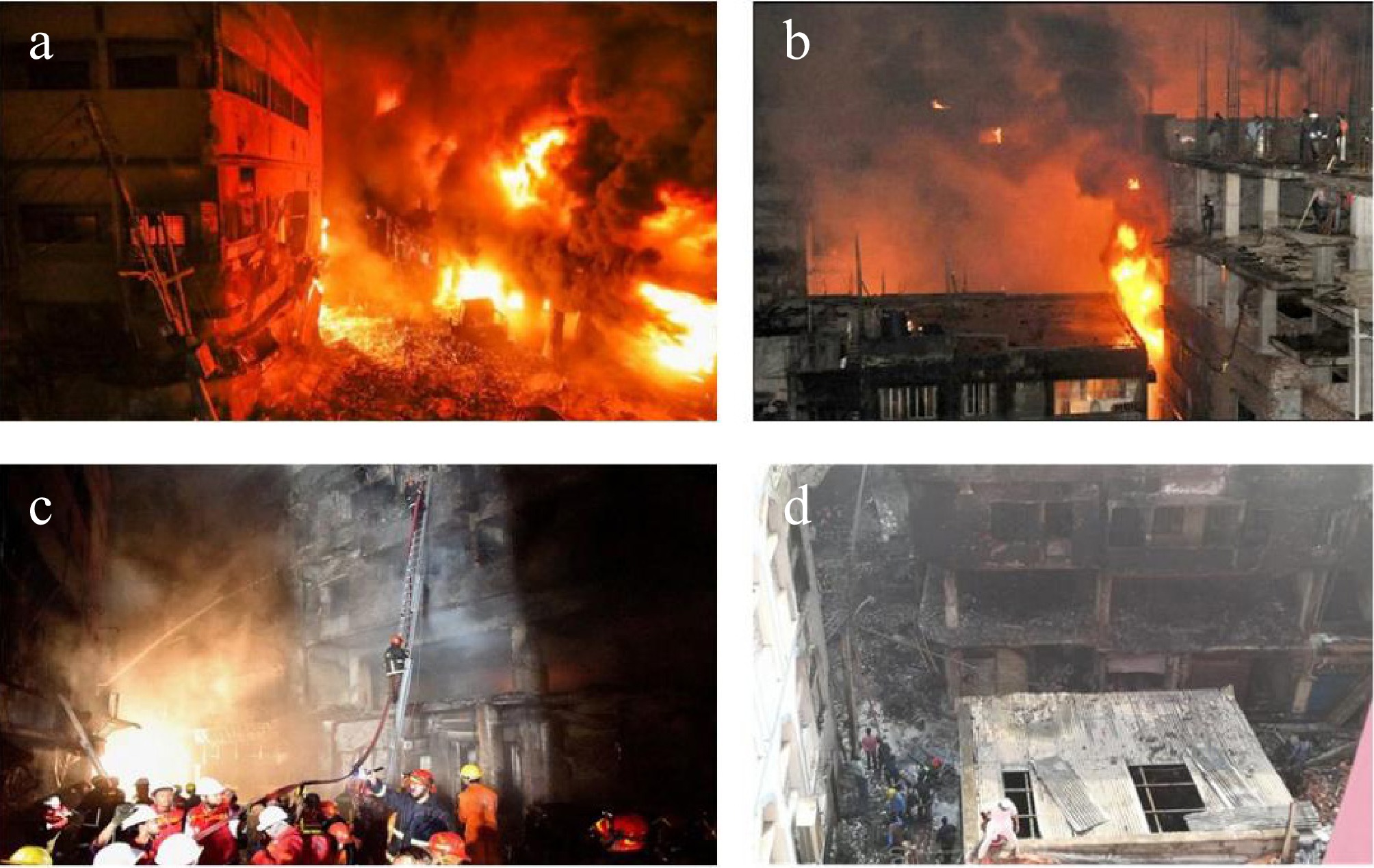
Fire is one of the most common hazards in Dhaka, particularly in Old Dhaka. Because of its hazardous mixed land use, high population density, unplanned and chaotic urban growth, chemical warehouses in residential zones, and people's lack of awareness, Old Dhaka is prone to fires. The disastrous Nimtoli tragedy, which claimed the lives of 124 people on June 3, 2010, was ignited by a makeshift chemical storage facility in a residential structure. A chemical storage facility caught fire on the evening of February 20, 2019, in the Chawkbazar neighborhood of Old Dhaka, killing 67 people (Fig. 1).
Following a major incident, communities' awareness and the efforts of various authorities to prevent fires increased. These actions slow down over time. As a result, a second event occurs. Several fires occur each year, although there has been little research on the subject[9]. Other facts that have received little attention in past studies include that lengthy response times in actual fire accidents can be caused by several factors, including insufficient operational preparedness of firefighting equipment, a centralized chain of command, insufficient training, and a lack of staff expertise[10]. Unfortunately, only a few studies have been conducted in Bangladesh to address urban fire safety. The purpose of this study is to identify and structure the issues of mitigating the impact of fire hazards in Old Dhaka.
Aim and objectives
-
The study aims to mitigate the impact of fire hazards by analyzing the challenges of managing them and exploring preventive measures to reduce fire risk. To achieve this aim, three objectives for the study are identified:
• To identify the impact of fire hazards in Old Dhaka.
• To identify and understand the challenges of fire hazard management in Old Dhaka.
• To develop a hierarchical structure of the challenges of fire hazard management by using ISM.
-
An extensive literature review has been conducted for the research. Theoretical study: the interpretive structural modeling (ISM) approach and MICMAC analyses are the prime topics of the literature review. The current state of fire hazard management was studied thoroughly. The present trend of rapid urbanization and its impact on fire hazards was also analyzed. Response time during fire incidents and its influence on rescue and evacuation were identified.
Interpretive structural modeling (ISM) approach
-
Interpretive Structural Modeling (ISM) is a systematic method for understanding and organizing the complex relationships among factors within a system. It was developed by John N. Warfield to help researchers and managers to identify how one factor affects another in a system[11]. In ISM, factors are arranged into a hierarchical structure, making complex problems easier to understand and solve. It is commonly used in business, education, healthcare, and social science research to improve decision-making and problem analysis. The method typically involves identifying relevant factors, establishing relationships between them, developing matrices, and creating a structured visual model that simplifies the complex system into an organized framework. ISM is often combined with MICMAC analysis to classify factors based on their driving and dependence power.
ISM is an interactive management technique that can help researchers address complex issues. ISM can convert a system's complex, poorly articulated mental processes into well-defined, observable hierarchical models. It is a qualitative, interpretive method that addresses complex problems by structurally mapping attribute relationships, then transforming them into a multi-level structural model. The content analysis results were applied to the ISM approach.
ISM is a well-known method for determining and summarizing connections among the individual pieces that comprise an issue or problem, as well as for imposing order on their complexity. As a consequence, an all-encompassing model of the system is constructed from separate but interconnected components. ISM aims to do this by enabling an individual or group to focus on the interrelationships between two components of an issue without losing sight of the quality of the challenge as a whole[12].
MICMAC analysis
-
The MICMAC, originally developed by Michel Godet and François, is a widely used tool, especially in structural and prospective analysis. MICMAC stands for Matrice d'Impacts Croisés Multiplication Appliquée à un Classement, which means cross-impact matrix multiplication applied to classification[13]. This method is widely used alongside the interpretive structural modeling (ISM) approach. In ISM, it mainly identifies relationships in a simple binary format, either 1 or 0. In MICMAC, it goes one step further: it examines both direct and indirect relationships among the factors, including the grey area that ISM may sometimes overlook.
In MICMAC analysis, factors are often classified by their driving power and dependency power. It makes it easier for researchers to understand which factors exert a strong influence over others and which are more dependent on the system.
Fire hazard and its management in Old Dhaka
-
Remarkably, a significant number of buildings in Old Dhaka lack firefighting equipment. Nearly 60% of the buildings didn't receive approval from RAJUK or fire safety permission, while 92% of the buildings along minor roads lack a fire license. The ground floors of the buildings of Shakahari Bazar, Boxibazar, and Chawak Bazar are used for the storage of various products or for shopping, while the higher levels are used for dwelling. In most situations, combustible goods such as clothing, fiber, and plastic equipment are stored on the bottom floor. The electric wiring and gas connections in Old Dhaka's residential buildings pose a high risk of fire accidents[5]. The findings demonstrate that fire vulnerability in Old Dhaka is associated with multiple physical and land-use conditions. However, the existing literature review only identifies these conditions individually. This lacks an exploration of their interrelation and relative structural influence.
Dhaka's illegal urbanization and fires
-
Unauthorized chemical warehouses and factories are a leading cause of fires in Dhaka's informal settlement areas. A large percentage of respondents (89.3%) believe that the rapid, unplanned urbanization of Dhaka has increased fire risks due to the influx of people into urban slums with poor safety standards for both living and working. The residents of slums are not very aware of fire hazards, and they lack sufficient knowledge or a sense of security about them. In light of this, almost 76.7% of respondents reported a lack of clear knowledge of existing norms and regulations to safeguard Dhaka against informal urbanization. Existing rules and regulations meant to protect Dhaka city from unplanned urbanization are, however, unclear to city residents[14]. Although previous research has established a relationship between unplanned urbanization and increasing fire risk, it remains unclear how urbanization-related factors interact with infrastructural, institutional, and emergency-response factors within the broader fire-hazard management system.
Fire service response time
-
The response time (RT) is likely to vary due to variables such as the distance between the incident and the closest fire station, the street's condition, the volume of traffic, the fire scene's accessibility, the fire department's management system, the size and distribution of the population, and the use of advanced technology systems by the fire services. Multiple variables typically contribute to building fires, including human behavior, urban architecture, fire department performance, building code enforcement, and the quality of home electrical products. Because the community believes the fire is more of an accident than a risk to be prevented, occupant behavior is the primary contributing factor to structure fire loss. This presumption makes society less prepared. In addition, a lack of knowledge of life safety and ignorance of fire behavior contribute to low public awareness of fire safety. Smoking irresponsibly, lack of upkeep of electrical installations, unsupervised domestic garbage burning, and irresponsible cooking are regularly noticed behaviors in the community. This disregards the fundamental notion that fire prevention is always preferable to fire extinguishment. Actually, the fire services face considerable obstacles, including a restricted operational budget, insufficient coordination between government organizations, and inadequate human resource development. These obstacles frequently make it unfeasible for fire departments to supply the community with adequate services.
Research gap, scientific motivation, and novelty
-
The existing literature demonstrates that fire hazards in Old Dhaka are influenced by multiple interconnected factors, including unsafe electrical and gas connections, the storage and handling of combustible materials, inadequate fire-safety measures, unauthorized land uses, unplanned urbanization, poor road accessibility, traffic congestion, limited public awareness, insufficient institutional coordination, etc. Previous studies have successfully identified several of these factors and have highlighted their individual contributions to fire vulnerability and emergency response. However, most of the existing literature only examines these factors independently or describes their occurrence without systematically establishing the structural relationships among all the incidents.
A significant gap, therefore, remains in understanding how the identified fire-hazard factors interact with one another and how their interrelationships influence the overall fire-hazard management system in Old Dhaka.
The scientific motivation of the present study arises from this gap. Rather than treating fire hazards as a single, new, independent problem, this study conceptualizes fire-hazard management in Old Dhaka as an interconnected system. Interpretive structural modeling (ISM) is employed to establish the hierarchical relationships among the identified factors, while MICMAC analysis is used to classify them according to their driving and dependence powers.
The novelty of the present research lies in developing a systematic structural model of fire-hazard management in Old Dhaka by integrating all the identified fire-risk and management factors through ISM and MICMAC analysis. While previous studies have documented only the existence of fire hazards and their contributing conditions, this study focuses on explaining the interrelationships among these conditions and identifying the most influential factor in the system. Thus, the study provides a more structured basis for prioritizing interventions and developing fire-hazard management strategies for the highly dense and complex urban context of Old Dhaka.
Based on the reviewed literature, the study proposes the following research hypothesis: fire-hazard vulnerability and management challenges in Old Dhaka are not primarily determined by isolated factors; rather, they emerge from a hierarchical and interdependent system in which a limited number of underlying driving factors influence multiple dependent fire-management outcomes.
-
This chapter discusses the research methodology employed in this work. The methodology was organized into five sequential stages (Fig. 2): site selection and problem identification, data collection and relationship analysis, variable identification, ISM and MICMAC analysis, and findings.
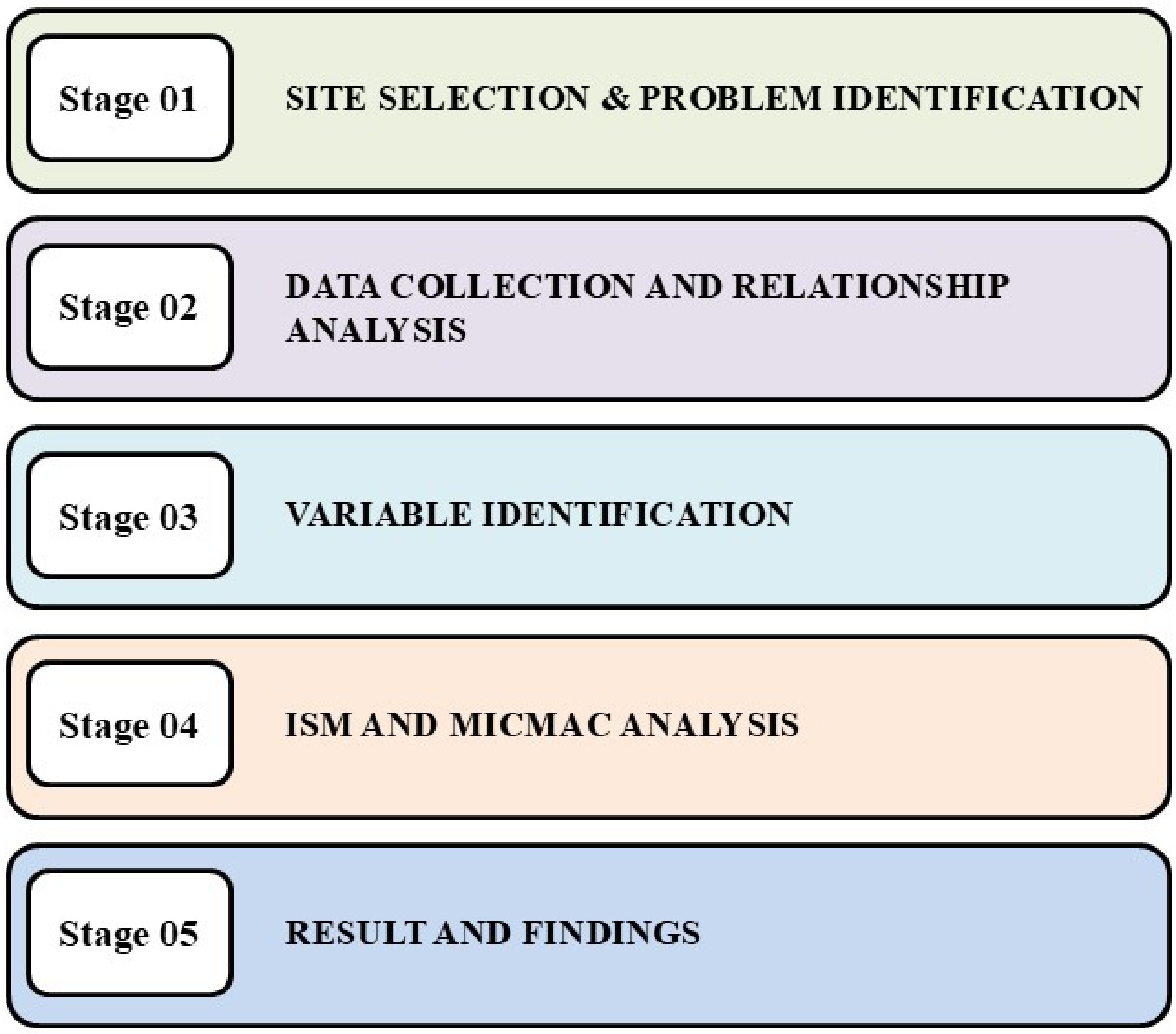
Figure 2.
Research methodology framework.
Selection of the study area
-
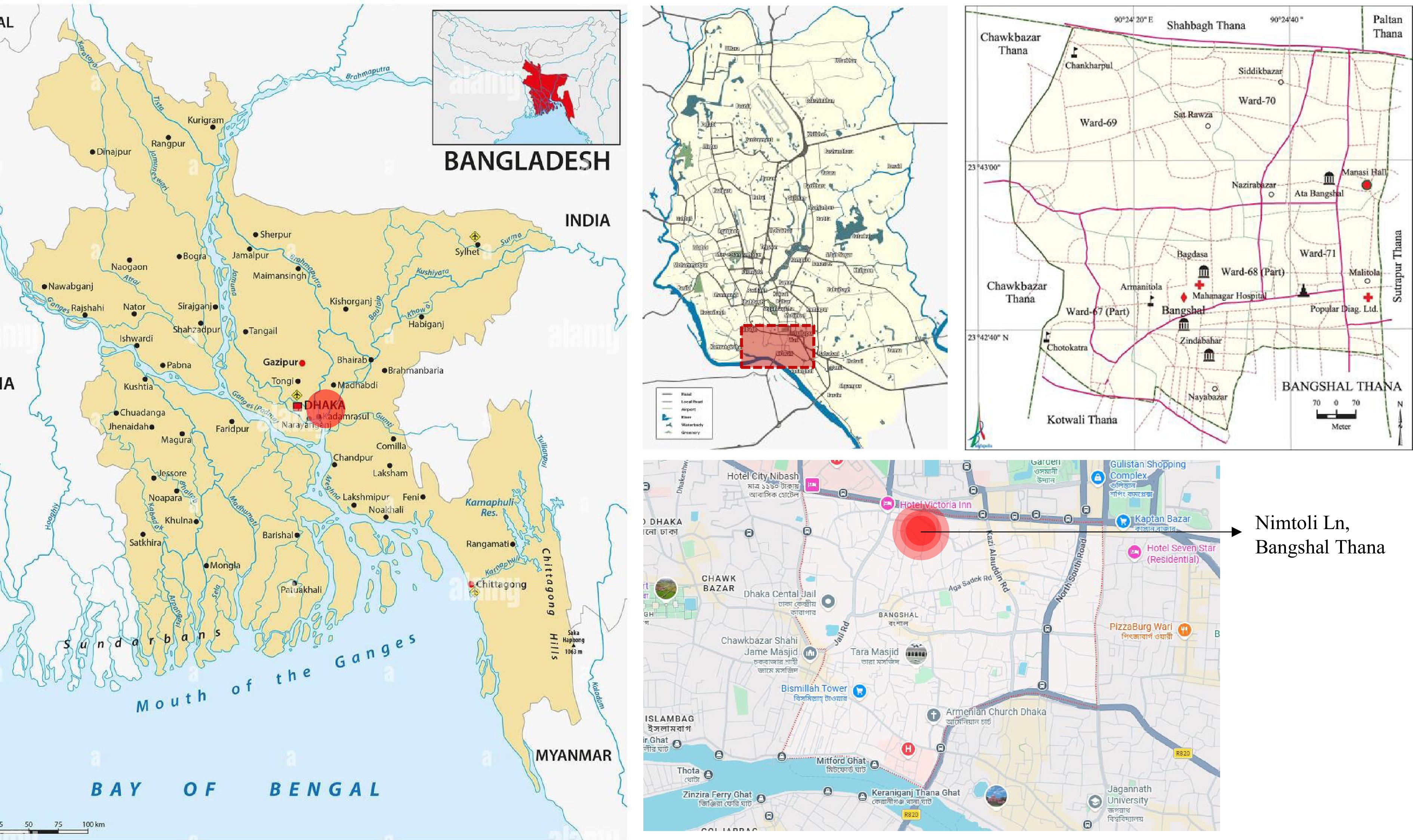
For the study area, Nimtali in Old Dhaka has been selected. It is located in Ward 33 of the Dhaka South City Corporation. The total area is 0.36 km2. The population density in Ward 33 is 181,359/km2 (Fig. 3).
Nimtali is under the Bangshal Thana, which is highly exposed to fire hazards based on land use and previous fire incidents. Some parts of Bangshal are under an 'extremely high fire incidence zone', including 38.45% commercial, 25.67% mixed land use, and 20.55% residential. The remaining parts of Bangshal Thana are included in the 'high fire incidence zone', which comprises the areas with commercial use (20.17%) and mixed use (24.75%)[18].
Data collection
-
For the study, data are collected from both primary and secondary sources to meet the objectives. Field-level questionnaire surveys are used to acquire primary data. For the primary data, focus group discussions and key informant interviews are conducted. To assess the challenges of fire hazard management in Old Dhaka, ISM is used, which is a dynamic tool that can investigate interrelationships among multiple variables. It can formulate a framework using the calculated dependence power and driving power of the analyzed critical success factors. It constructs a framework by calculating the dependency power and driving power of the variables under analysis, drawing on literature and expert opinion. First, the challenges of fire hazard management in Old Dhaka are identified by reviewing the literature, and those variables are then confirmed through expert opinion. Another group of experts further justifies the collected data on the challenges of managing fire hazards, thereby establishing contextual relationships among the identified variables. The expert opinions are collected through Key Informant Interviews (KIIs) and detailed interviews.
Purposive sampling is used to collect data from selected experts. After an extensive literature review, the primary challenges of fire hazard management in Old Dhaka were identified. With the help of experts, it was determined which challenges would be selected for this study. A total of eight experts were interviewed. Five of them were from the fire service and Civil Defense, two were senior urban planners at RAJUK, and one was from DSCC. Structured questionnaires and the KII method were used when consulting with the experts.
Sample size and sampling techniques
-
Purposive or non-probability sampling was used in the study, in which the researcher's subjective judgments were used to select the sample. In purposive sampling, individuals are chosen based on meeting a predetermined set of criteria.
Ethical considerations
-
All participants in the research were told that participation was optional and that the study was about perception and the capacity to see others and oneself. Each participant was made aware of the fact that their responses would remain anonymous. Throughout the investigation, high moral and ethical standards were maintained. The researcher was punctual and considerate of the participants' input and time constraints.
Four basic requirements were considered during the study:
• The requirement for information: The goal of the study had always been made clear to the participants by the researcher.
• The requirement for consensus: Participants in the study could make an informed decision about whether to participate.
• The requirement of usage: Participants' personal information and responses would only be used for research purposes.
• The requirement of confidentiality: The participants' information was maintained securely so that no one else could access it.
-
The study identifies the challenges of fire hazard management in Old Dhaka and systematically compiles them. For data collection, both primary and secondary data have been collected. For primary data, FGDs with community members in Old Dhaka and KIIs with experts from the fire service department and senior urban planners from RAJUK and Dhaka North City Corporation have been conducted. For data analysis, the ISM approach is used in this study.
Interpretive Structural Modeling (ISM)
-
In the study, ISM is used as a modeling technique in which relationships are depicted; it is intended for both group and individual learning and improves communication quality within the problem context. Experts' knowledge and experience are used to analyze a complex system and break it down into its elements to build a clear model. Although ISM has several benefits, the methodology has a few drawbacks, including the following: only a limited number of variables are used in the development of the model, which leads to the issue of ignoring the variables or problems that have the least impact; and the bias of individuals, which may influence the final result[12]. It takes several steps to complete the whole process. The steps that will be followed for the ISM approach are given below:
Step 1: Identifying and forming a list of the challenges of fire hazard management in Old Dhaka by extensive literature review and expert opinion (Table 1).
Table 1. Identified challenges of fire hazard management in Old Dhaka.
Code Challenges Description Ref. C1 Inadequate education and safety knowledge Insufficient knowledge and information could affect community members' actions during fires and cause more injuries. [19] C2 Lack of awareness Insensitivity and ignorance often create fires. Unawareness makes rescue and recovery difficult. Field survey
and FGDC3 Behavioral barrier Human behavior is significant to fire safety. Their survival depends on knowing when to evacuate and how to react to fire cues. [19] C4 Misinformation and a lack of proper information about the hazard and location Sometimes the firefighters get misinformation about the source of the fire, which makes the rescue process more difficult, and a lack of proper information about the incident location can delay the rescue process. [20] C5 Narrow road network and congested settlement Narrow roads and congested settlements cause delays in the rescue process, leading to more injuries. Field survey C6 No emergency lane As there is no emergency lane, the fighters need to travel on the normal road and go through traffic jams, which delays the rescue process. [21] C7 Heavy urban traffic One of the main causes of the delay in the rescue process. [21] C8 Intervention of people at the scene Public participation without fire extinguishers and first aid training could lead to a more difficult situation. [19] C9 Lack of capacity of firefighters Sometimes the equipment and skills of firefighters are not enough to stop the fire and prevent casualties. [19] C10 Lack of implementation and monitoring of legislation The building's fire protection measures as well as response activities are not adequately regulated or supervised. [19] C11 Unplanned and illegal use of land The challenges brought on by urban infrastructure increase response times and interrupt the activities of firefighting and emergency medical care. Field survey
and KIIC12 Weak pattern of services Lack of resources, plans, and community help make the rescue process more difficult. [19] C13 Lack of multi-stakeholder collaboration Lack of collaboration among the community, planners, builders, resource suppliers, and rescuers may lead to a more difficult situation. KII Step 2: Establish a contextual relationship among the challenges identified in Step 1, based on the expert's opinion.
Step 3: Development of a structural self-interaction matrix (SSIM) of the challenges that indicates pairwise relationships among all variables.
Step 4: Formation of a reachability matrix using the SSIM.
Step 5: The reachability matrix is divided into different levels.
Step 6: Develop a hierarchical model of variables.
Step 7: The developed digraph is converted into an ISM model.
Figure 4 shows the overall ISM–MICMAC process followed in this study. From challenge identification and expert validation to relationship assessment, hierarchical modeling, classification, and discussion of findings, it helps to identify the key challenges and driving factors influencing fire incidents and fire hazard management.
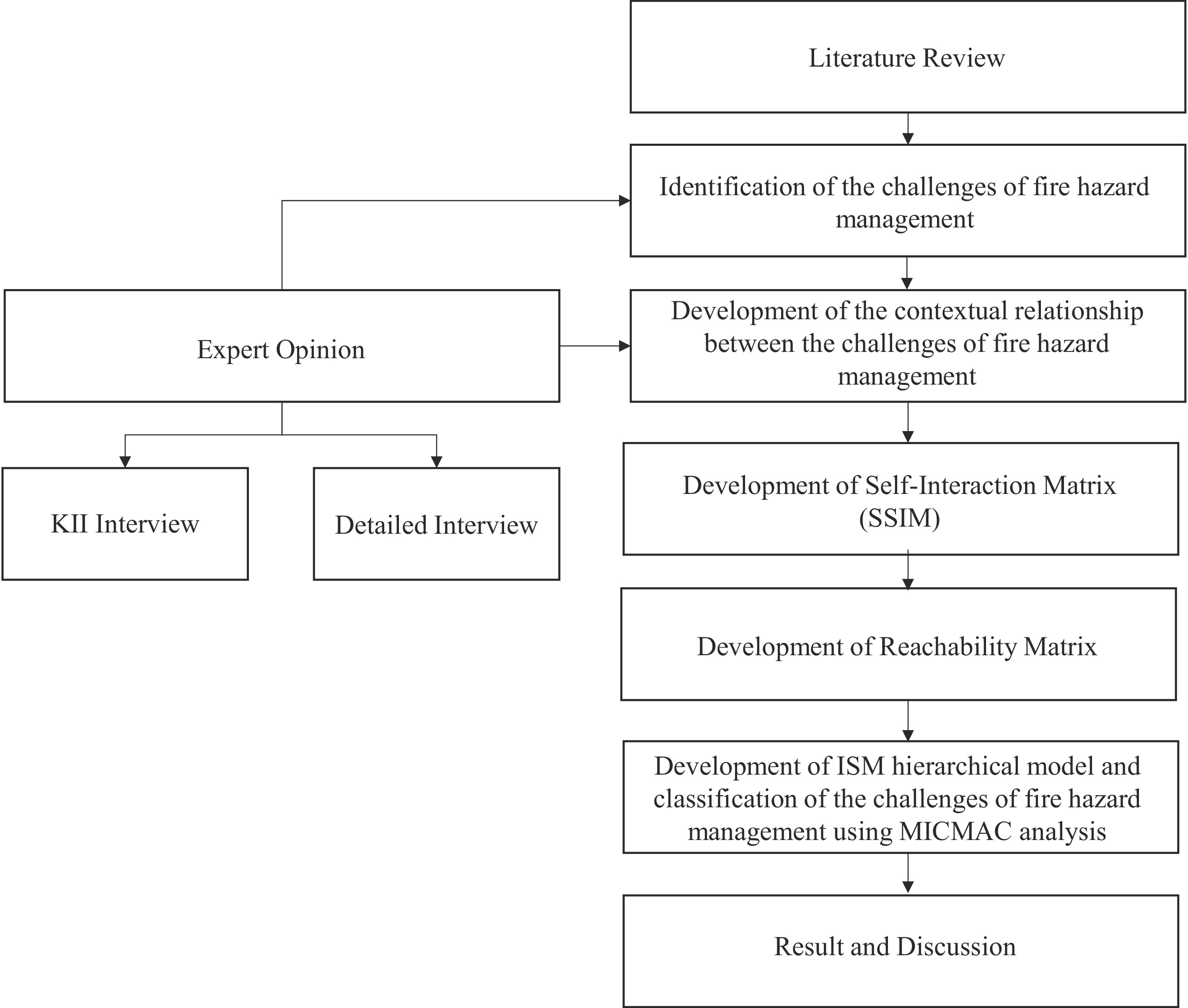
Figure 4.
Steps of ISM[22] .
MICMAC analysis
-
When performing a MICMAC analysis, the factors in question are first classified into one of four clusters based on their respective driving power and dependency power:
• Cluster I consists of the autonomous factors, which are generally separate from the system and have a minimal or nonexistent reliance on the contributions of other factors.
• Cluster II, also known as dependent factors, is comprised of variables that are predominantly dependent on the presence of other factors.
• Cluster III, linkage factors, also known as linking factors, are those that are prone to change and have the greatest impact on the behavior of others.
• Cluster IV, independent elements: these components are only moderately influenced by the other clusters' factors, and due to the dominance of the key factor, they require the utmost focus and consideration[13].
Data analysis
Structural self-interaction matrix (SSIM)
-
Considering the context of each element, a group of experts working on the program questions the existence of a relationship between any two elements i and j and the direction of the relationship R. There are four symbols that show what kind of relationship there is between the two things being looked at[23]. The symbols are
• V, when element i influences element j, not in both directions;
• A, when element influences element i, not in both directions;
• X for when both elements influence each other. Shows relationships in both directions, such as i to j and j to i;
• O, if no relation between element i and element j.
After that, the structural self-interaction matrix (SSIM) for the element currently being considered is constructed by entering the group's responses for each pairwise interaction between the elements, shown in Table 2.
Table 2. Structural self-interaction matrix.
SL No. C13 C12 C11 C10 C9 C8 C7 C6 C5 C4 C3 C2 C1 C1 V V V X V V V V V V X V X C2 V V V X O V V V V V X X C3 V V V X O V V V O V X C4 V V A V V V V O O X C5 O V A A V O V V X C6 O V O A V O A X C7 O V A A V A X C8 V V O O V X C9 A A A A X C10 V V V X C11 A V X C12 A X C13 X The transitivity rule is tested on the reachability matrix as generated from the SSIM[23]. Transitivity states that for each member of X, Y, and Z, and set S, given that X R Y and Y R Z, it necessarily follows that X R Z. If the transitivity rule is determined to be unsatisfied, the SSIM is examined and updated while providing the group's experts with detailed input regarding the transitive relationship. The reachability matrix is once more developed from the updated SSIM and tested against the transitivity rule. This process is repeated until the reachability matrix satisfies the conditions for transitivity. The transitivity property must first be tested on the initial reachability matrix (Table 3)[13] to obtain the final reachability matrix (Table 4). This indicates that, if (i, j) = 1 and (j, k) = 1, then (i, k) = 1.
Table 3. Initial reachability matrix.
SL No. C13 C12 C11 C10 C9 C8 C7 C6 C5 C4 C3 C2 C1 C1 1 1 1 1 1 1 1 1 1 1 1 1 1 C2 1 1 1 1 0 1 1 1 1 1 1 1 0 C3 1 1 1 1 0 1 1 1 0 1 1 1 1 C4 1 1 0 1 1 1 1 0 0 1 0 0 0 C5 0 1 0 0 1 0 1 1 1 0 0 0 0 C6 0 1 0 0 1 0 0 1 0 0 0 0 0 C7 0 1 0 0 1 0 1 1 0 0 0 0 0 C8 1 1 0 0 1 1 1 0 0 0 0 0 0 C9 0 0 0 0 1 0 0 0 0 0 0 0 0 C10 1 1 1 1 1 0 1 1 1 0 1 1 1 C11 0 1 1 0 1 0 1 0 1 1 0 0 0 C12 0 1 0 0 1 0 0 0 0 0 0 0 0 C13 1 1 1 0 1 0 0 0 0 0 0 0 0 Table 4. Final reachability matrix.
SL No. C13 C12 C11 C10 C9 C8 C7 C6 C5 C4 C3 C2 C1 Driving power C1 1 1 1 1 1 1 1 1 1 1 1 1 1 13 C2 1 1 1 1 0 1 1 1 1 1 1 1 1* 12 C3 1 1 1 1 0 1 1 1 1* 1 1 1 1 12 C4 1 1 0 1 1 1 1 0 0 1 0 0 0 7 C5 0 1 0 0 1 0 1 1 1 0 0 0 0 5 C6 0 1 0 0 1 0 0 1 0 0 0 0 0 3 C7 0 1 0 0 1 0 1 1 0 0 0 0 0 4 C8 1 1 0 0 1 1 1 0 0 0 0 0 0 5 C9 0 0 0 0 1 0 0 0 0 0 0 0 0 1 C10 1 1 1 1 1 0 1 1 1 0 1 1 1 11 C11 0 1 1 0 1 0 1 0 1 1 0 0 0 6 C12 0 1 0 0 1 0 0 0 0 0 0 0 0 2 C13 1 1 1 0 1 0 0 0 0 0 0 0 0 4 Dependency 7 12 6 5 11 5 9 7 6 5 4 4 4 Final reachability matrix
-
The transitive relationship between lack of awareness (C2) and inadequate education and safety knowledge (C1) was deduced through behavioral barriers (C3). In the initial reachability matrix (Table 3), C2 was found to influence C3, while C3 was found to influence C1. Therefore, following the transitivity principle of ISM, whereby if factor A influences factor B and factor B influences factor C, factor A is considered to indirectly influence factor C, a transitive relationship between C2 and C1 was established and represented as 1* in the final reachability matrix (Table 4). Conceptually, this relationship indicates that lack of fire-safety awareness may be reflected in unsafe or inappropriate behavioral responses, while such behavioral barriers are structurally associated with deficiencies in fire safety education and knowledge. Thus, C2 and C1 should not be viewed as isolated challenges; rather, they are indirectly interconnected through behavioral factors within the broader fire-hazard-management system. This transitive relationship represents an indirect structural linkage identified by ISM and should not be interpreted as evidence of a direct causal effect of lack of awareness on education and safety knowledge.
The transitive relationship between behavioral barriers (C3) and narrow road networks and congested settlements (C5) was deduced through a lack of awareness (C2). In the initial reachability matrix (Table 3), C3 was found to influence C2, while C2 was found to influence C5. Therefore, following the transitivity principle of ISM, if C3 influences C2 and C2 influences C5, C3 can be considered to have an indirect structural relationship with C5. Accordingly, the C3→C5 relationship was incorporated into the final reachability matrix as a transitive relationship and represented by 1*.
This transitive relationship should not be interpreted as indicating that behavioral barriers directly cause narrow roads or congested urban development. Rather, it demonstrates that behavioral barriers are indirectly connected to the challenges associated with narrow road networks and congested settlements through a lack of awareness within the overall fire-hazard-management system. Behavioral barriers and inadequate awareness may influence how communities perceive and respond to fire-safety risks under existing congested urban conditions, thereby potentially increasing the difficulties associated with emergency access and fire response. Thus, the C3→C5 transitive relationship highlights the interconnected nature of behavioral, awareness-related, and physical challenges in fire-hazard management rather than implying a direct causal relationship between human behavior and the physical structure of Old Dhaka.
Iteration method for level partitioning
-
The reachability set (R) and antecedent set (C) for all identified enablers are investigated using the final reachability matrix, a fundamental step in interpretive structural modeling (ISM) as defined by Warfield (1982) to partition variables into hierarchical levels[24]. The reachability set (R) consists of the enablers and others that it will support, whereas the antecedent set (C) consists of the enablers and others that will aid in its support. The intersection set of these sets, that is, (RC), is then produced using the iterative approach for all enablers, as given in Table 5. The enablers common to the reachability set (R) and the intersection set (RC) are selected from this table to determine the levels for developing the final ISM hierarchy structural model. For each factor, the intersection of these sets is then found. At the first level, the factor for which the reachability and intersection sets coincide is defined. This element is then separated from the other factors for the level-iteration technique that follows. The level-iteration process is continued until all levels of each element are established[13].
Table 5. Iteration method for level partitioning.
Challenges Reachability set Antecedent set Intersection Level Iteration 1 1 1, 2, 3, 4, 5, 6, 7, 8, 9, 10, 11, 12, 13 1, 2, 3, 10 1, 2, 3, 10 2 1, 2, 3, 4, 5, 6, 7, 8, 10, 11, 12, 13 1, 2, 3, 10 1, 2, 3, 10 3 1, 2, 3, 4, 5, 6, 7, 8, 10, 11, 12, 13 1, 2, 3, 10 1, 2, 3, 10 4 4, 7, 8, 9, 10, 12, 13 1, 2, 3, 4, 11 4 5 5, 6, 7, 9, 12 1, 2, 3, 5, 10, 11 5 6 6, 9, 12 1, 2, 3, 5, 6, 7, 10 6 7 6, 7, 9, 12 1, 2, 3, 4, 5, 7, 8, 10, 11 7 8 7, 8, 9, 12, 13 1, 2, 3, 4, 8 8 9 9 1, 4, 5, 6, 7, 8, 9, 10, 11, 12, 13 9 I 10 1, 2, 3, 5, 6, 7, 9, 10, 11, 12, 13 1, 2, 3, 4, 10 1, 2, 3, 10 11 4, 5, 7, 9, 11, 12 1, 2, 3, 10, 11, 13 11 12 9, 12 1, 2, 3, 4, 5, 6, 7, 8, 10, 11, 12, 13 12 13 9, 11, 12, 13 1, 2, 3, 4, 8, 10, 13 13 Iteration 2 1 1, 2, 3, 4, 5, 6, 7, 8, 10, 11, 12, 13 1, 2, 3, 10 1, 2, 3, 10 2 1, 2, 3, 4, 5, 6, 7, 8, 10, 11, 12, 13 1, 2, 3, 10 1, 2, 3, 10 3 1, 2, 3, 4, 5, 6, 7, 8, 10, 11, 12, 13 1, 2, 3, 10 1, 2, 3, 10 4 4, 7, 8, 10, 12, 13 1, 2, 3, 4, 11 4 5 5, 6, 7, 12 1, 2, 3, 5, 10, 11 5 6 6, 12 1, 2, 3, 5, 6, 7, 10 6 7 6, 7, 12 1, 2, 3, 4, 5, 7, 8, 10, 11 7 8 7, 8, 12, 13 1, 2, 3, 4, 8 8 10 1, 2, 3, 5, 6, 7, 10, 11, 12, 13 1, 2, 3, 4, 10 1, 2, 3, 10 11 4, 5, 7, 11, 12 1, 2, 3, 10, 11, 13 11 12 12 1, 2, 3, 4, 5, 6, 7, 8, 10, 11, 12, 13 12 II 13 11, 12, 13 1, 2, 3, 4, 8, 10, 13 13 Iteration 3 1 1, 2, 3, 4, 5, 6, 7, 8, 10, 11, 13 1, 2, 3, 10 1, 2, 3, 10 2 1, 2, 3, 4, 5, 6, 7, 8, 10, 11, 13 1, 2, 3, 10 1, 2, 3, 10 3 1, 2, 3, 4, 6, 7, 8, 10, 11, 13 1, 2, 3, 10 1, 2, 3, 10 4 4, 7, 8, 10, 13 1, 2, 3, 4, 11 4 5 5, 6, 7 1, 2, 3, 5, 10, 11 5 6 6 1, 2, 3, 5, 6, 7, 10 6 III 7 6, 7 1, 2, 3, 4, 5, 7, 8, 10, 11 7 8 7, 8, 13 1, 2, 3, 4, 8 8 10 1, 2, 3, 5, 6, 7, 10, 11, 13 1, 2, 3, 4, 10 1, 2, 3, 10 11 4, 5, 7, 11 1, 2, 3, 10, 11, 13 11 13 11, 13 1, 2, 3, 4, 8, 10, 13 13 Iteration 4 1 1, 2, 3, 4, 5, 7, 8, 10, 11, 13 1, 2, 3, 10 1, 2, 3, 10 2 1, 2, 3, 4, 5, 7, 8, 10, 11, 13 1, 2, 3, 10 1, 2, 3, 10 3 1, 2, 3, 4, 7, 8, 10, 11, 13 1, 2, 3, 10 1, 2, 3, 10 4 4, 7, 8, 10, 13 1, 2, 3, 4, 11 4 5 5, 7 1, 2, 3, 5, 10, 11 5 7 7 1, 2, 3, 4, 5, 7, 8, 10, 11 7 IV 8 7, 8, 13 1, 2, 3, 4, 8 8 10 1, 2, 3, 5, 7, 10, 11, 13 1, 2, 3, 4, 10 1, 2, 3, 10 11 4, 5, 7, 11 1, 2, 3, 10, 11, 13 11 13 11, 13 1, 2, 3, 4, 8, 10, 13 13 Iteration 5 1 1, 2, 3, 4, 5, 8, 10, 11, 13 1, 2, 3, 10 1, 2, 3, 10 2 1, 2, 3, 4, 5, 8, 10, 11, 13 1, 2, 3, 10 1, 2, 3, 10 3 1, 2, 3, 4, 5, 8, 10, 11, 13 1, 2, 3, 10 1, 2, 3, 10 4 4, 8, 10, 13 1, 2, 3, 4, 11 4 5 5 1, 2, 3, 5, 10, 11 5 V 8 8, 13 1, 2, 3, 4, 8 8 10 1, 2, 3, 5, 10, 11, 13 1, 2, 3, 4, 10 1, 2, 3, 10 11 4, 5, 11 1, 2, 3, 10, 11, 13 11 13 11, 13 1, 2, 3, 4, 8, 10, 13 13 Iteration 6 1 1, 2, 3, 4, 8, 10, 11, 13 1, 2, 3, 10 1, 2, 3, 10 2 1, 2, 3, 4, 8, 10, 11, 13 1, 2, 3, 10 1, 2, 3, 10 3 1, 2, 3, 4, 8, 10, 11, 13 1, 2, 3, 10 1, 2, 3, 10 4 4, 8, 10, 13 1, 2, 3, 4, 11 4 8 8, 13 1, 2, 3, 4, 8 8 VI 10 1, 2, 3, 10, 11, 13 1, 2, 3, 4, 10 1, 2, 3, 10 11 4, 11 1, 2, 3, 10, 11, 13 11 VI 13 11, 13 1, 2, 3, 4, 8, 10, 13 13 VI Iteration 7 1 1, 2, 3, 4, 10 1, 2, 3, 10 1, 2, 3, 10 2 1, 2, 3, 4, 10 1, 2, 3, 10 1, 2, 3, 10 3 1, 2, 3, 4, 10 1, 2, 3, 10 1, 2, 3, 10 4 4, 10 1, 2, 3, 4 4 10 1, 2, 3, 10 1, 2, 3, 4, 10 1, 2, 3, 10 VII Iteration 8 1 1, 2, 3, 4 1, 2, 3 1, 2, 3 2 1, 2, 3, 4 1, 2, 3 1, 2, 3 3 1, 2, 3, 4 1, 2, 3 1, 2, 3 4 4 1, 2, 3, 4 4 VIII Iteration 9 1 1, 2, 3 1, 2, 3 1, 2, 3 IX 2 1, 2, 3 1, 2, 3 1, 2, 3 IX 3 1, 2, 3 1, 2, 3 1, 2, 3 IX -
Based on the study and survey, the significant impact of fire hazards on life and property in Old Dhaka, as well as the challenges in managing them, has been identified. The findings regarding the impact of fire hazards and the challenges of management are analyzed using ISM and MICMAC, and these are further compared with comments and suggestions from different community groups in Old Dhaka, and compiled to finalize the major challenges in managing fire hazards.
The impact of fire hazards in Old Dhaka
-
During the survey, FGDs were conducted with different groups. Information obtained from the focus group discussions among various groups of people is described below.
Shopkeepers' community of Old Dhaka
-
An FGD was conducted in the study area of Old Dhaka, with a group of six participants (all male); all of them were shopkeepers and were in the age group of 26 to 35. According to the respondents, the main cause of fire hazards in Old Dhaka is the shoe industry and restaurants, due to electrical short circuits and, sometimes, transformer explosions. The maximum fire hazard was due to the carelessness of the people working there, often caused by cigarettes. Major impacts of fire hazards are seen among people near the incident area and disruption to normal movement in that area. Often, the vehicles that are on the road beside the incident are destroyed. The community people also stated that, regardless of the fire's source, they rely on water as the primary means of extinguishing it. The fire service provides information on fire hazards; however, they lack proper training on fire mitigation measures. The community also added that the lack of policy and its lack of implementation result in more fire casualties. The community also added that they lack basic knowledge of fire response. The community recommends that they would be better off with efficient and effective fire management training.
Day labor community of Old Dhaka (FGD among eight people)
-
Another focus group discussion was held, containing eight participants. All participants were male day laborers; 70% were 35 to 40 years old, and the rest (30%) were 25 years old. According to this group of respondents, the main source of fire threats in Old Dhaka is electric short circuits, followed by restaurants and chemical businesses. The effects of fire hazards are significant. Based on the information from this discussion, it can be said that fire incidents mostly impact the economy. Bigger incidents affect human lives, damage property, and disrupt utility connections, such as water or electricity supply systems, for some time. Besides this, another issue raised during the conversation with the community is that people have inadequate knowledge of fire safety and lack training in using safety equipment.
Random permanent residence of Old Dhaka (FGD among six people)
-
The last FGD was done with a group of six people. Three of them were female, and three were male. The age group was 30–40 years. However, the focus was on information regarding the impact of fire hazards in the residences in Old Dhaka. This group also talked about loss of life, economic loss, and damage to property. They also added the fact of disruptions to electricity, water, and gas supplies.
After these three focus group discussions, the information was already being repeated, indicating the saturation point had been reached. So, based on the findings from the FGDs, the main impacts of fire hazards in Old Dhaka are as follows:
• Injuries and loss of life: Mainly caused by heavy smoke and toxic fumes. Also, in many cases, heat burns the human body.
• Property damage: In Old Dhaka, most of the buildings were mixed-use, both residential and commercial. Due to the mixed use of buildings, property damage is serious, as many buildings store chemicals, gas cylinders, and plastic and rubber for business purposes. These elements trigger the impact.
• Disruption in utility connections: Community members face temporary disruption of the gas, water, and electricity supply systems.
• Overall economic loss: Businesses in the area of the fire incident location are closed temporarily, which impacts the overall financial loss for the community, along with the victim.
The challenges of fire hazard management in Old Dhaka
-
The study identifies several major and minor challenges in managing fire hazards in Old Dhaka. Among them, 13 major challenges are considered in analyzing the fire management scenario. These challenges are also used in the ISM model and the MICMAC analysis. The identified major challenges are discussed here.
Inadequate education and safety knowledge
-
Inadequate knowledge and information among community members may negatively affect their behavior during fires and lead to more injuries. Because of this, the likelihood of casualties will increase if the time it takes to provide relief and rescue is prolonged. Schools typically don't put much emphasis on teaching students how to prevent fires. On the other hand, a lack of this training, combined with an inadequate attitude toward the need for safety, affects safety-related activities and efforts. Together, these factors contribute to a lack of safety within the community[19].
Lack of awareness
-
In many cases, fires are caused by the public's insensitivity and lack of awareness. The use of gas cylinders in vehicles, homes, and restaurants has now become a major concern, and the government should step up its monitoring to address the issue. To raise awareness of fire causes, the government will need to step up disaster management and prevention efforts in urban areas and launch a nationwide grassroots campaign. It was anticipated that a low perception of risk would increase the likelihood of fires and the injuries they inflict. People commonly engage in risky behaviors with a fatalistic mindset because they appear to have limited awareness of the dangers, leading to unfortunate outcomes. If community members lack awareness of the risk of fires, have an insufficient understanding of the dangers and injuries posed by the fires, and believe that such incidents won't occur, the result would be frequent fire hazards with more devastating effects[19].
Behavioral barrier
-
The most vital factor in fire safety is human behavior. The decision to begin an evacuation as soon as a fire is discovered and the knowledge of how to react to fire cues are crucial to their safety. The risky behavior resulting from their lack of concern for safety is one of the biggest threats to their health and a hindrance to preventing fire-related injuries[19].
Misinformation and lack of proper information about the hazard and location
-
During any fire incident, when the fire service is notified, the vehicle carrying firefighters and necessary equipment leaves the nearest station. But in many cases, the fire service does not receive proper information about the fire location. The community people fail to provide the exact location. On the other hand, it is equally important to know the sources of fire so that they can be extinguished. But people do not provide the correct information about the cause of this fire incident. Sometimes people provide misinformation intentionally. Because of these barriers, the whole process of extinguishing the fire at the site on time is further delayed.
Narrow road networks and congested settlements
-
The amount of major damage in the event of a fire clearly correlates positively with the response time of the fire services[25]. Additionally, narrow alleys that are difficult for fire engines to navigate can delay rescue and firefighting efforts, leading to significant loss of life and property. Fire engines frequently encounter obstructions from vehicles parked along alley sides in high-density residential areas, making it harder for firefighters to carry out emergency operations. When they encounter such narrow alleys, the firefighters must exit the vehicle, enter from a distance, and manually lay out the fire hose to carry out firefighting and rescue operations. The rescue effort is delayed, which increases the risk of serious injuries and property damage[19].
No emergency lane
-
An emergency lane, sometimes known as a fire lane, saves a lot of time during a fire incident, allowing firefighters to arrive at the incident location on time and reduce damage and loss. Sometimes an alternative access road or path may act like an emergency lane. However, no such emergency lane exists in Old Dhaka.
Heavy urban traffic
-
According to several studies, the time it takes for emergency vehicles to reach the scene of an emergency and the average financial damage caused by fires are both affected by traffic. Response times can be reduced by increasing the number of fire stations within a specific area, but this will have no influence on managing fire hazards because of the obstruction due to heavy traffic on the road[21].
Intervention of people at the scene
-
During a building fire, the gathering and involvement of members of the public who lack fire-extinguishing and first-aid expertise might lead to greater complications. It may make relief efforts more difficult and affect the schedule and quality of these activities. The issue of people gathering at the site to provide assistance or merely out of curiosity is seen not only in fires but also in other emergencies, and it invariably results in a delayed reaction time[19].
Lack of capacity of firefighters
-
According to fire experts, capacity building is a continuous process. The weak performance of rescuers across a range of agencies influences the level of protection provided. For instance, the window of opportunity to rescue people trapped in fire and smoke is very small. During this brief window of opportunity, medical personnel are unable to enter the scene, and firefighters do not have the ability to assist fire victims, which can result in an increased risk of injury and death.
Lack of implementation and monitoring of legislation
-
In the fire safety sector of Old Dhaka, there is neither proper implementation of rules nor sufficient inspections to meet normal standards. There are fire safety laws in Bangladesh, but negligence in their implementation and monitoring in Old Dhaka makes the area more vulnerable to fire. Not only are there long-term laws and policies lacking, but there is also a lack of implementation and monitoring, even during the rescue process after a fire incident. According to Section 4 of the Fire Prevention and Extinction Act 2003, a license from the Directorate General of Fire Service and Civil Defense is required for anyone who intends to utilize a building as a warehouse or workshop. The Fire Prevention and Extinction Rules 2014, which are a supplement to the Fire Prevention and Extinction Act 2003, provide that the building's owner is required to apply for the building's occupancy certificate upon completion of construction (Rule 22) (The Daily Star, 2019). But the community members do not take this rule seriously. Even before people could move into their new homes, they demanded that building safety certificates be completed. This is because policymakers have not been sufficiently concerned with drafting a law whose purpose is to protect and improve building safety. In many cases, hastening unit construction does not prioritize safety[19].
Unplanned and illegal use of land
-
The challenges posed by urban infrastructure increase response times and hinder the delivery of the best firefighting and emergency medical care. Large vehicles and fire lifts are required in order to put out fires at large residential complexes. Unfortunately, some complexes and high-rise structures have been constructed in areas with congested streets, making it challenging to provide assistance. Additionally, parking cars in the path of emergency vehicles causes serious traffic problems for oncoming vehicles, especially at night, which makes the job of firefighters much harder. This slows rescue and firefighting efforts, likely leading to greater losses. Due to the inadequate public transportation system in the study area, many people are forced to drive privately. This leads to heavy traffic on the streets, which delays the arrival of rescue vehicles. Sometimes, illegal and unauthorized hazardous use of buildings and open land increases fire risk. A significant number of buildings in Old Dhaka are illegally occupied as warehouses for hazardous materials and chemicals that can trigger fires even from small sources. The Nimtoli fire incident is an example of such a fire hazard.
Weak pattern of services
-
One of the difficulties with the rescue and relief efforts after the fire incidents in Old Dhaka is maintaining the service pattern within the area. According to different studies, some of the most significant challenges faced by pre-hospital services include inconsistent scene management and problems with the use of technology by relief organizations. These issues have arisen in relation to firefighting tools and immediate first-aid provision. One explanation for this category is the rescuers' technical and operational deficiencies.
Lack of multi-stakeholder collaboration
-
Collaboration among the related stakeholders can make any response and recovery phase more effective. During any fire incident, the best help for victims comes from neighbors. Sometimes, to extinguish the fire, water can be sourced from the surrounding buildings, but people refuse to let the firefighters use the water tank. Lack of collaboration can disrupt the service pattern, as everyone wants to work their own way; there is a risk of overlap in some rescue activities.
Hierarchical structure
-
This is essential to identify and analyze the challenges in managing any hazard and to establish the relationships among these challenges, because it helps find the correct solutions or strategies to overcome the situation and formulate policies so that limited resources can be used very effectively by the public and authorities. This study found significant issues in the management of fire hazards in Old Dhaka. Table 1 lists the identified challenges in fire hazard management in Old Dhaka.
The diagram shown in Fig. 5 illustrates the hierarchical structure and contextual relationships among the identified challenges in managing fire hazards. This diagram is based on the results of level partitioning using the iteration method (Table 5).
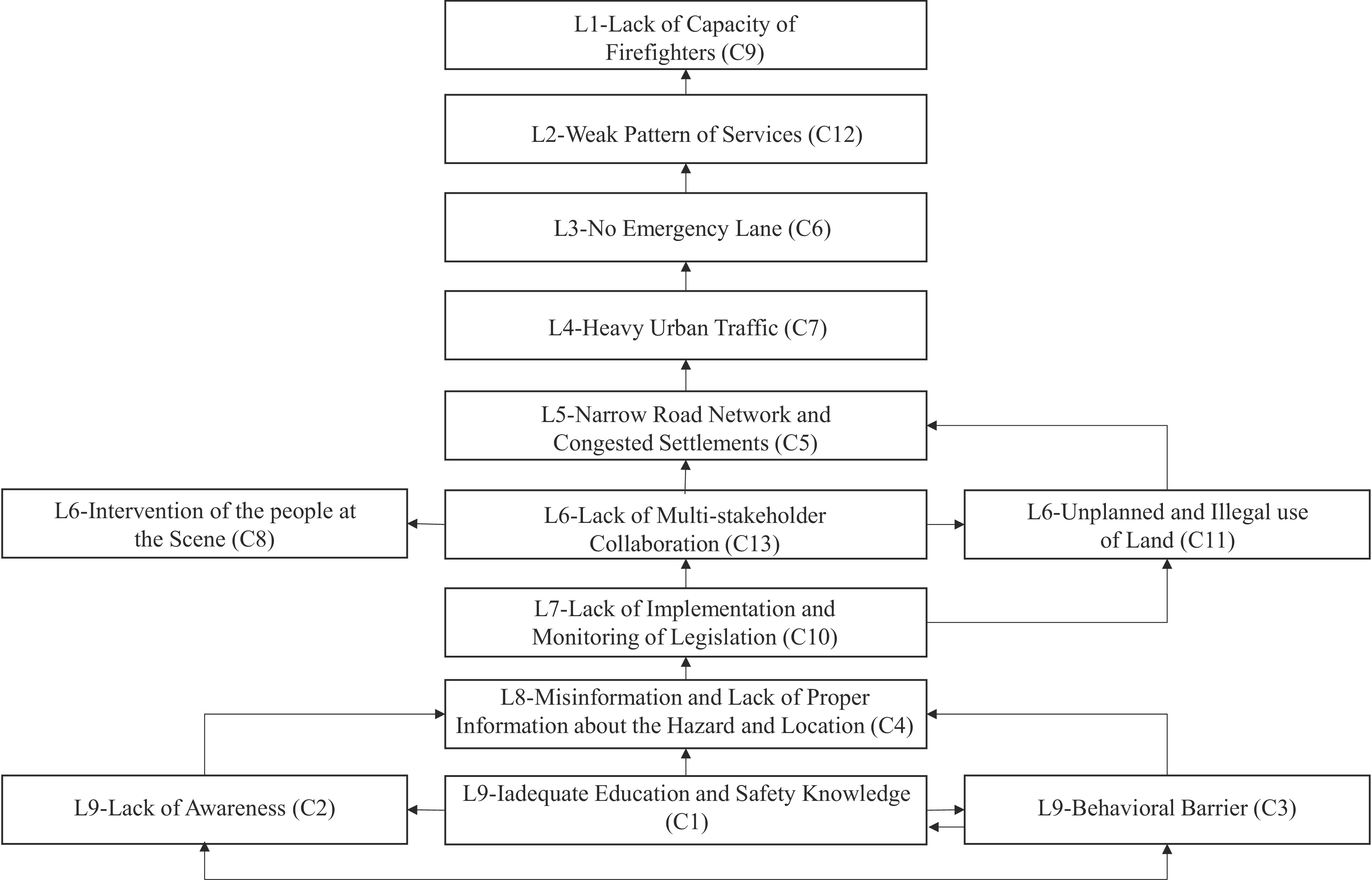
Figure 5.
Hierarchical structure based on levels obtained from level portioning.
Level 1 lacks capacity for firefighters (C9). According to the key informant, the firefighters in Bangladesh have sufficient equipment to control fires at any incident, but because they do not receive proper information about the hazard and location, they sometimes do not carry the appropriate equipment. Also, other factors that degrade firefighters' service include heavy urban traffic, congested settlements, and a lack of emergency lanes, etc. These factors delay the response time. Level 2 is a weak pattern of critical services (C12). This is the result of a lack of multi-stakeholder collaboration, narrow road networks, congested settlements, and heavy urban traffic. No emergency lane (C6) is provided at level 3, resulting in a narrow road network and congested settlements (C5) at level 4, and heavy urban traffic (C7) remains at level 5.
The iteration results place heavy urban traffic (C7) at level 4 and a narrow road network and congested settlements (C5) at level 5. While these are physical realities of Old Dhaka, the model shows they are not the root causes but rather intermediate barriers. Specifically, the placement of traffic at level 4 indicates it is a more immediate barrier to the scene than the underlying road network itself, though both are heavily influenced by unplanned land use and legislative failures. On level 6, there are three challenges. These are: (i) the intervention of people at the scene (C8); (ii) the lack of implementation and monitoring of legislation (C10); and (iii) the unplanned and illegal use of land (C11). In most cases, these challenges are interconnected. Lack of implementation and monitoring of legislation is one of the most influential challenges, which further exacerbates the barriers, and it is ranked at level 7. At level 8, there is misinformation about the hazard and location, which is one of the main reasons firefighters cannot arrive on time, and the fire gets out of control. Positioned near the base of the hierarchy, C4 suggests that informational gaps are a foundational failure occurring even before response attempts are made. Level 9, the last one, has three challenges: (i) poor education and safety knowledge (C1); (ii) lack of awareness (C2); and (iii) behavioral barriers (C3). Poor education and knowledge affect every other sector, acting as a barrier to maintaining fire safety. Table 5 shows that inadequate education and safety knowledge have the most driving power, whereas the lack of firefighting capacity has the lowest driving power. Besides poor education and safety knowledge, the factors with the second-highest driving power are lack of awareness and behavioral barriers, and the identified transitive relationship is (C2→C3→C1).
MICMAC analysis
-
Therefore, the findings of the MICMAC study (Fig. 6) indicate that the ISM model of the identified obstacles is accurate. A driving-power-dependency power graph is a helpful tool for categorizing the different challenges associated with fire risk management into several groupings. As described earlier, challenges from the independent quadrant have the highest driving power and the lowest dependency power.
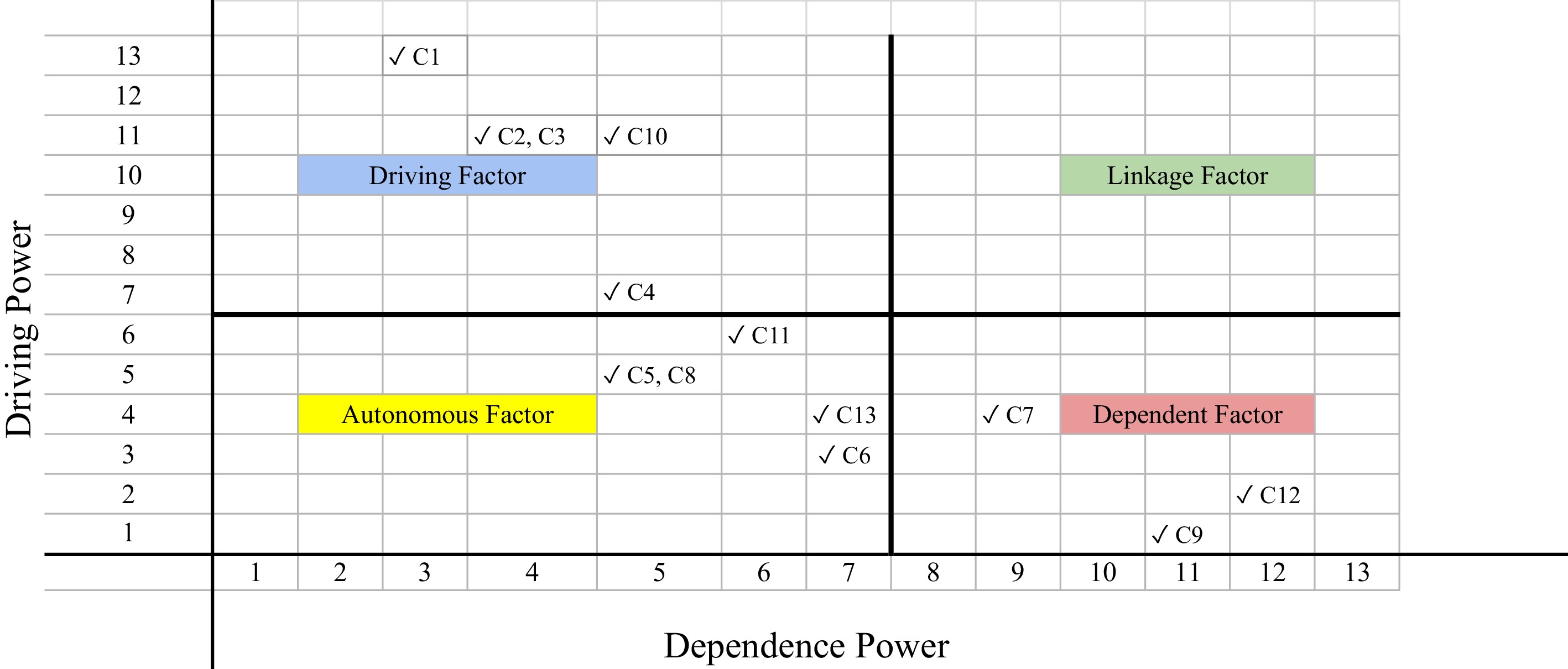
Figure 6.
MICMAC analysis of challenges.
For this study, Fig. 5 shows that poor education and safety knowledge, lack of awareness, and behavioral barriers remain in this independent quadrant, along with other challenges. On the other hand, the dependent quadrant contains the weakest challenges, such as a lack of firefighter capacity and a weak service pattern. The last one, the autonomous quadrant, contains challenges with an average value for both driving and dependency power.
-
The research examined the fire hazard challenges in Old Dhaka and sought to establish connections among them. In this regard, the ISM Model is considered for analysis. Figure 4 shows that the most influential challenges are at level 9, and these challenges have the highest driving power and the lowest dependence power (Fig. 6). At level 9, there are three challenges: poor education and safety knowledge, lack of awareness, and behavioral barriers. These challenges can be resolved at the community level. The integrated analysis of the ISM hierarchy, final reachability matrix, and MICMAC analysis indicates that these three factors are not isolated challenges but influential factors within the broader fire-hazard-management system because of their high driving power and relatively low dependence power. The transitive relationships identified in the final reachability matrix further demonstrate their structural interconnectedness; for example, the pathway C2→C3→C1 establishes an inferred relationship between lack of awareness (C2) and inadequate education and safety knowledge (C1). This suggests that awareness, education, and behavioral preparedness should be addressed through an integrated approach rather than through separate interventions.
The study found that fire education and safety knowledge management should be addressed initially, along with fire awareness development, and that behavioral constraints should be managed to mitigate fire hazards effectively. Some studies have agreed that to increase fire safety in any place, first, safe education and knowledge should be provided[26]. The interplay between education, awareness, and readiness for action is particularly important because community-based fire-prevention interventions can improve fire-safety behavior and household safety practices[27]. Furthermore, participation in fire drills has been found to improve fire-safety knowledge and awareness[28], suggesting that awareness programmes should be combined with practical training and preparedness activities rather than implemented as standalone initiatives. Training programmes and awareness-building activities at the community level increase the capacity of the community's inhabitants to be resilient to fire hazards. Community volunteers play a vital role in this regard, and their numbers should be increased, including improving quality through fire department training. As a result, community volunteers will be able to act as first responders during a fire incident. The activity of the existing Urban Community Volunteer (UCV) programme of the Bangladesh Fire Service and Civil Defense (BFSCD) should be restarted effectively among young people.
The ISM analysis also identified an inferred C3→C5 relationship, linking behavioral barriers (C3) indirectly with narrow road networks and congested areas (C5). This relationship should not be interpreted as evidence that behavioral barriers directly cause narrow roads or dense urban development; rather, it indicates an indirect structural connection through other factors within the ISM framework. This finding is particularly relevant to Old Dhaka, where previous research in Nimtoli identified extremely narrow access roads, dense development, mixed-use buildings, inadequate fire protection, lack of emergency exits and fire hydrants, and insufficient fire drill provisions as major fire-safety challenges[9]. The same study emphasized fire-safety awareness, regular safety inspections, maintenance of utility lines, enforcement of the Bangladesh National Building Code, and regulation of mixed-use buildings as important measures for reducing fire risk[9]. Therefore, community-level interventions related to education, awareness, and behavioral preparedness should complement, rather than replace, physical and regulatory interventions.
In the hierarchy model, the factor at the second-highest position is misinformation and a lack of proper information about the hazard and the location, which is at level 8. By providing accurate information about the fire source and incident location, the response time can be minimized, as can the impact and casualties. Studies say that the first response time during a fire incident is very crucial. Implementation of remote sensing, GIS-based vulnerability mapping, and BIM (Building Information Modeling) can be an effective means of obtaining clear information about the location of a fire incident.
At the next level, the inadequate implementation and monitoring of rules and legislation have created chaos throughout the system. In Bangladesh, laws and building codes exist to ensure fire safety, but they are not properly implemented or monitored, increasing fire risk. A well-coordinated monitoring cell should be established to track the implementation of legislation and eliminate communication gaps among different agencies. From prevention measures for fire safety to the response phase during a fire incident, inadequate monitoring by authorities and the community makes it more difficult to ensure fire safety. According to Shokouhi et al., people even try to manipulate the fire safety certificate before moving into a new house[19]. Unplanned and illegal land use, as well as a lack of multi-stakeholder involvement, further worsens the vulnerability of urban settlements to fire risk. Unplanned and illegal land use leads to a lack of open space and a decline in the number of water bodies across Dhaka city. These factors lead to unsuccessful rescue programs during fire incidents, resulting in more injuries, losses, and damage. The rapid growth of the city is characterized by extensive, uncontrolled development (73% of which is completely unplanned), and inadequate supervision has led to significant issues with land use and transportation. On the other hand, some studies have found illegal urbanization as one of the main reasons for fire incidents in Dhaka city. Some undesirable aspects of urbanization have recently been identified as responsible for fire-related hazards in Dhaka[14]. Thus, the physical and spatial constraints identified in Old Dhaka demonstrate that improving community awareness alone cannot adequately address the overall fire-risk problem.
-
As a rapidly developing country, Bangladesh faces various hazards, including fire, and fire safety is a major concern among city dwellers. In recent times, fire incidents have been among the most frequent hazards in Dhaka city, especially in Old Dhaka. Due to mixed land use, unorganized electrical wiring, and limited knowledge and awareness of fire safety, the area is more vulnerable to fire incidents. However, the impacts of fire hazards in Old Dhaka are devastating, causing injuries and deaths, disrupting the utility supply system (gas, water, electricity), temporarily disrupting business, and damaging property. Other than that, traffic jams are increasing. The impacts of fire hazards increase due to unsuccessful response and recovery processes. All challenges related to managing fire hazards in Old Dhaka should be addressed properly, and necessary actions should be taken to reduce the risk. The main goal of this study is to find out the challenges of fire hazard management in Old Dhaka and assess them using the ISM model. The study identified these challenges and developed a structural model that captures the contextual relationships among the variables. The most influential challenges with the highest driving power are challenges 1, 2, 3, and 10, while challenges 12 and 9 are primarily dependent challenges. The identification of these high-driving factors is significant because interventions directed toward them may influence several other challenges within the system. Quantitatively, challenges 1, 2, 3, and 10 recorded driving-power values of 13, 12, 12, and 11, respectively, compared with the overall mean driving power of 6.54. This relatively higher driving power demonstrates that these factors have a stronger influence than the remaining challenges, and that's why these deserve priority in fire-hazard management strategies. The findings also provide an important extension of previous research. Earlier studies have mainly identified individual contributors to fire vulnerability in Old Dhaka, for example, inadequate fire-safety awareness, unsafe electrical systems, poor accessibility, weak regulatory enforcement, etc. The present study supports these observations by analyzing, in ISM, that these challenges do not operate independently. Instead, they form a hierarchical and interconnected system in which a limited number of driving factors influence several dependent outcomes. This structural interpretation provides an additional basis for prioritizing interventions beyond the identification of individual fire-risk factors. The study also presents a hierarchical model (Fig. 4), which illustrates the position of the challenges and their connectivity. As education is related to every other factor, it, along with the development of awareness regarding fire safety, should be integrated in such a way that it becomes a natural process to develop an effective and sustainable fire safety plan.
The authors sincerely acknowledge the support and cooperation of all individuals and institutions involved in this research. This study didn't receive any financial assistance or external funding.
-
The authors take full responsibility for the following contributions: conceptualization, methodology, writing of the original draft: Islam SM, Akmam A; data collection, investigation, analysis: Akmam A; review and editing of the manuscript and overall manuscript preparation: Islam SM, Santo S. All authors reviewed the results and approved the final version of the manuscript.
-
The authors will make the data that support the findings of this study available upon reasonable request.
-
The authors declare that there is no conflict of interest.
- Copyright: © 2026 by the author(s). Published by Maximum Academic Press on behalf of Nanjing Tech University. This article is an open access article distributed under Creative Commons Attribution License (CC BY 4.0), visit https://creativecommons.org/licenses/by/4.0/.
-
About this article
Cite this article
Islam SM, Akmam A, Santo SA. 2026. Assessing the challenges of fire hazard management in Old Dhaka using the ISM model. Emergency Management Science and Technology 6: e010 doi: 10.48130/emst-0026-0010 

Assessing the challenges of fire hazard management in Old Dhaka using the ISM model
- Received: 24 May 2026
- Revised: 14 August 2026
- Accepted: 10 September 2026
- Published online: 29 September 2026
Abstract: Bangladesh, as a rapidly developing country, faces multiple challenges, with fire safety being a critical concern—particularly in Old Dhaka. Frequent fire incidents in this area are due to hazardous mixed land use, unplanned electrical systems, and limited public awareness. However, the impacts of fire hazards in Old Dhaka include injuries and fatalities, disruptions to utility supplies (gas, water, electricity), temporary business disruptions, and property damage. The impacts of fire hazards increase due to unsuccessful response and recovery processes. The main goal of this study is to find out the challenges of fire hazard management in Old Dhaka and assess them using Interpretive Structural Modeling (ISM). For data collection, both primary and secondary data have been collected. For primary data, FGDs with community members in Old Dhaka and KIIs with experts from the fire service department and senior urban planners from Rajdhani Unnayan Kartripakkha (RAJUK) and Dhaka North City Corporation (DNCC) have been conducted. For data analysis, the ISM approach is used in this study. The study identified the key challenges and developed a structural model that captures the contextual relationships among the variables. Our study also presents a hierarchical model that illustrates the positions and connectivity of the challenges. As education is related to every other factor, it, along with the development of awareness regarding fire safety, should be integrated in such a way that it becomes a natural process, enabling effective and sustainable fire safety planning.
-
Key words:
- Fire hazard /
- Management /
- Challenges /
- ISM /
- MICMAC /
- Old Dhaka