






Search
2025 Volume 1
Article Contents
REVIEW   Open Access    

The impact of N,N-diethyl-m-toluamide in aquatic environments: occurrence, fate, and ecological risk

  • Full list of author information is available at the end of the article.

  • DEET is widely detected in aquatic environments, with detection frequencies increasing.

    Landfill leachate is the most contaminated water matrix.

    Advanced water treatment technologies are more effective in removing DEET.

    A moderate ecological risk level for DEET is indicated by weighted average risk quotients.

    Significant data gaps in global monitoring and ecotoxicity hinder a comprehensive risk assessment.

  • Among the numerous emerging contaminants detected in aquatic environments, the insect repellent N,N-diethyl-m-toluamide (DEET) is one of the most frequently identified worldwide. Its presence stems mainly from the use of consumer products, with subsequent release into the environment via wastewater discharge and other pathways. DEET has been detected in water bodies at concentrations ranging from ng·L−1 to mg·L−1, and has been shown to elicit ecological toxicity in sensitive species. Conventional water treatment often fails to remove DEET effectively, enabling its persistence in aquatic systems and highlighting the need for cost-effective advanced treatment technologies. A preliminary risk assessment based on compiled monitoring data suggests that DEET poses ecological risks, supporting the case for strengthened regulatory oversight and targeted management. However, comprehensive risk characterization remains hindered by significant data gaps, particularly in global monitoring coverage and ecotoxicological studies. This review summarizes recent advances in understanding the applications, environmental occurrence, and ecological effects of DEET, and provides a preliminary risk evaluation, thereby helping to address knowledge gaps and promote regulatory awareness of this emerging contaminant.
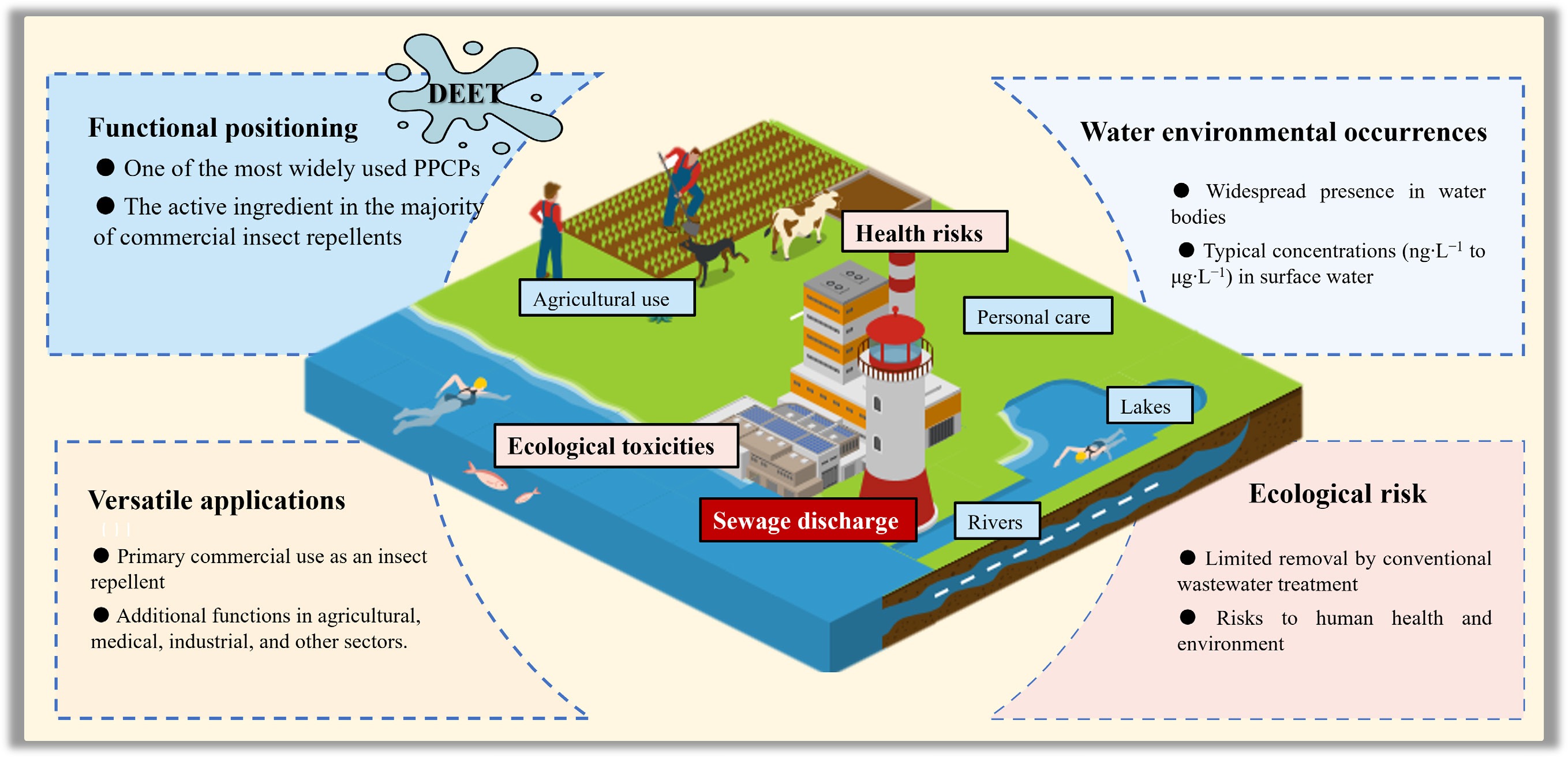
    Graphical Abstract
  • 加载中
  • The supplementary files can be downloaded from here.
  • [1] Bhatt P, Bhandari G, Bilal M. 2022. Occurrence, toxicity impacts and mitigation of emerging micropollutants in the aquatic environments: recent tendencies and perspectives. Journal of Environmental Chemical Engineering 10(3):107598 doi: 10.1016/j.jece.2022.107598

    CrossRef   Google Scholar

    [2] Yuan Y, Jia H, Xu D, Wang J. 2023. Novel method in emerging environmental contaminants detection: fiber optic sensors based on microfluidic chips. Science of The Total Environment 857:159563 doi: 10.1016/j.scitotenv.2022.159563

    CrossRef   Google Scholar

    [3] Zhang Y, Li J, Zhou Y, Zhang X, Liu X. 2024. Artificial intelligence-based microfluidic platform for detecting contaminants in water: a review. Sensors 24(13):4350 doi: 10.3390/s24134350

    CrossRef   Google Scholar

    [4] Zhang Y, Li J, Jiao S, Li Y, Zhou Y, et al. 2024. Microfluidic sensors for the detection of emerging contaminants in water: a review. Science of The Total Environment 929:172734 doi: 10.1016/j.scitotenv.2024.172734

    CrossRef   Google Scholar

    [5] Picinini-Zambelli J, Garcia ALH, Da Silva J. 2025. Emerging pollutants in the aquatic environments: a review of genotoxic impacts. Mutation Research - Reviews in Mutation Research 795:108519 doi: 10.1016/j.mrrev.2024.108519

    CrossRef   Google Scholar

    [6] Pan H, Shi J, Xu D, Wang J, Ma Q. 2026. Environmental occurrence, ecological risks, and microbial interactions of p-chloro-m-xylenol: an emerging ubiquitous antimicrobial agent. International Biodeterioration & Biodegradatio 207:106229 doi: 10.1016/j.ibiod.2025.106229

    CrossRef   Google Scholar

    [7] Zhang X, Liu J, Zhan T, Yu H, Ma Q. 2025. Environmental concentrations of benzalkonium chloride promote the horizontal transfer of extracellular antibiotic resistance genes via natural transformation. Process Safety and Environmental Protection 203:108003 doi: 10.1016/j.psep.2025.108003

    CrossRef   Google Scholar

    [8] Wang J, Zhao P, Wang J, Li S, Ma Q. 2025. Responses of microbial communities in coastal sediments exposed to triclocarban and triclosan. Marine Pollution Bulletin 212:117530 doi: 10.1016/j.marpolbul.2025.117530

    CrossRef   Google Scholar

    [9] Kumar V, Hemavathy S, Huligowda LKD, Umesh M, Chakraborty P, et al. 2025. Environmental pollutants as emerging concerns for cardiac diseases: a review on their impacts on cardiac health. Biomedicines 13(1):241 doi: 10.3390/biomedicines13010241

    CrossRef   Google Scholar

    [10] Biswas S, Gogoi P, Wilkinson M, Deka P, Das V, et al. 2025. Evaluating regulatory approaches to emerging pollutants. In Biotechnological Interventions in the Removal of Emerging Pollutants, eds Dey S, Bhattacharya S. Singapore: Springer. pp. 19–36 doi: 10.1007/978-981-97-9922-0_2
    [11] Zandaryaa S, Fares A, Eckstein G. 2025. Introduction—emerging pollutants in water: threats, challenges, and research needs. In Emerging Pollutants, eds Zandaryaa S, Fares A, Eckstein G. Cham: Springer. pp. 1–7 doi: 10.1007/978-3-031-71758-1_1
    [12] Götz R, Bauer OH, Friesel P, Roch K. 1998. Organic trace compounds in the water of the River Elbe near Hamburg Part II. Chemosphere 36(9):2103−2118 doi: 10.1016/s0045-6535(98)00009-5

    CrossRef   Google Scholar

    [13] Pereira WE, Hostettler FD. 1993. Nonpoint source contamination of the Mississippi River and its tributaries by herbicides. Environmental Science & Technology 27:1542−1552 doi: 10.1021/es00045a008

    CrossRef   Google Scholar

    [14] French VA, King SC, Kumar A, Northcott G, McGuinness K, et al. 2015. Characterisation of microcontaminants in Darwin Harbour, a tropical estuary of northern Australia undergoing rapid development. Science of The Total Environment 536:639−647 doi: 10.1016/j.scitotenv.2015.07.114

    CrossRef   Google Scholar

    [15] Costanzo SD, Watkinson AJ, Murby EJ, Kolpin DW, Sandstrom MW. 2007. Is there a risk associated with the insect repellent DEET (N,N-diethyl-m-toluamide) commonly found in aquatic environments? Science of The Total Environment 384(1−3):214−220 doi: 10.1016/j.scitotenv.2007.05.036

    CrossRef   Google Scholar

    [16] Padhye LP, Yao H, Kung'u FT, Huang CH. 2014. Year-long evaluation on the occurrence and fate of pharmaceuticals, personal care products, and endocrine disrupting chemicals in an urban drinking water treatment plant. Water Research 51:266−276 doi: 10.1016/j.watres.2013.10.070

    CrossRef   Google Scholar

    [17] Westerhoff P, Yoon Y, Snyder S, Wert E. 2005. Fate of endocrine-disruptor, pharmaceutical, and personal care product chemicals during simulated drinking water treatment processes. Environmental Science & Technology 39(17):6649−6663 doi: 10.1021/es0484799

    CrossRef   Google Scholar

    [18] Kosek K, Luczkiewicz A, Fudala-Książek S, Jankowska K, Szopińska M, et al. 2020. Implementation of advanced micropollutants removal technologies in wastewater treatment plants (WWTPs) - examples and challenges based on selected EU countries. Environmental Science & Policy 112:213−226 doi: 10.1016/j.envsci.2020.06.011

    CrossRef   Google Scholar

    [19] Yang Y, Ok YS, Kim KH, Kwon EE, Tsang YF. 2017. Occurrences and removal of pharmaceuticals and personal care products (PPCPs) in drinking water and water/sewage treatment plants: a review. Science of The Total Environment 596−597:303−320 doi: 10.1016/j.scitotenv.2017.04.102

    CrossRef   Google Scholar

    [20] Ghali H, Albers SE. 2024. An updated review on the safety of N, N-diethyl-meta-toluamide insect repellent use in children and the efficacy of natural alternatives. Pediatric Dermatology 41(3):403−409 doi: 10.1111/pde.15531

    CrossRef   Google Scholar

    [21] Martinez E, Vélez SM, Mayo M, Sastre MP. 2016. Acute toxicity assessment of N,N-diethyl-m-toluamide (DEET) on the oxygen flux of the dinoflagellate Gymnodinium instriatum. Ecotoxicology 25(1):248−252 doi: 10.1007/s10646-015-1564-z

    CrossRef   Google Scholar

    [22] Ricky R, Harini S, Shanthakumar S. 2025. Removal of N,N-diethyl-m-toluamide (DEET) using Chlorella vulgaris: a study on its tolerance limits and its effects on biochemical composition. Environmental Sciences Europe 37:36 doi: 10.1186/s12302-025-01075-z

    CrossRef   Google Scholar

    [23] Zhang H, Liu C, Sun Y, Tang S, Lei Y, et al. 2025. Toxicity assessment of N, N-Diethyl-meta-toluamide (DEET) in zebrafish embryos. Comparative Biochemistry and Physiology C: Toxicology & Pharmacology 297:110293 doi: 10.1016/j.cbpc.2025.110293

    CrossRef   Google Scholar

    [24] Lawrence JR, Waiser MJ, Swerhone GDW, Roy JL, Paule A, et al. 2019. N,N-Diethyl-m-toluamide exposure at an environmentally relevant concentration influences river microbial community development. Environmental Toxicology and Chemistry 38(11):2414−2425 doi: 10.1002/etc.4550

    CrossRef   Google Scholar

    [25] Golovko O, de Brito Anton L, Cascone C, Ahrens L, Lavonen E, et al. 2020. Sorption characteristics and removal efficiency of organic micropollutants in drinking water using granular activated carbon (GAC) in pilot-scale and full-scale tests. Water 12(7):2053 doi: 10.3390/w12072053

    CrossRef   Google Scholar

    [26] Choi S, Lee W, Son H, Lee W, Choi Y, et al. 2024. Occurrence, removal, and prioritization of organic micropollutants in four full-scale wastewater treatment plants in Korea. Chemosphere 361:142460 doi: 10.1016/j.chemosphere.2024.142460

    CrossRef   Google Scholar

    [27] United States Environmental Protection Agency (US EPA). 2013. DEET. Insect repellents: use and effectiveness. www.epa.gov/insect-repellents/deet
    [28] Katz TM, Miller JH, Hebert AA. 2008. Insect repellents: historical perspectives and new developments. Journal of the American Academy of Dermatology 58(5):865−871 doi: 10.1016/j.jaad.2007.10.005

    CrossRef   Google Scholar

    [29] Lee Y, Kim SH, Montell C. 2010. Avoiding DEET through insect gustatory receptors. Neuron 67(4):555−561 doi: 10.1016/j.neuron.2010.07.006

    CrossRef   Google Scholar

    [30] Lu W, Hwang JK, Zeng F, Leal WS. 2017. DEET as a feeding deterrent. PLoS One 12(12):e0189243 doi: 10.1371/journal.pone.0189243

    CrossRef   Google Scholar

    [31] Windheuser JJ, Haslam JL, Caldwell L, Shaffer RD. 1982. The use of N,N-diethyl-m-toluamide to enhance dermal and transdermal delivery of drugs. Journal of Pharmaceutical Sciences 71(11):1211−1213 doi: 10.1002/jps.2600711107

    CrossRef   Google Scholar

    [32] Kondo S, Mizuno T, Sugimoto I. 1988. Effects of penetration enhancers on percutaneous absorption of nifedipine. Comparison between Deet and Azone. Journal of Pharmacobio-Dynamics 11(2):88−94 doi: 10.1248/bpb1978.11.88

    CrossRef   Google Scholar

    [33] Di Lorenzo ML, Longo A. 2019. N,N-Diethyl-3-methylbenzamide (DEET): a mosquito repellent as functional plasticizer for poly(L-lactic acid). Thermochimica Acta 677:180−185 doi: 10.1016/j.tca.2019.02.004

    CrossRef   Google Scholar

    [34] Dodson RA, Kalenak AP, Du Bois DR, Gill-Ljunghammer SL, Matzger AJ. 2020. N,N-Diethyl-3-methylbenzamide (DEET) acts as a metal–organic framework synthesis solvent with phase-directing capabilities. Chemical Communications 56(69):9966−9969 doi: 10.1039/d0cc02741c

    CrossRef   Google Scholar

    [35] Rani R, Kumar D. 2024. Recent advances in degradation of N,N-diethyl-3-toluamide (DEET)—an emerging environmental contaminant: a review. Environmental Monitoring and Assessment 196(3):238 doi: 10.1007/s10661-024-12414-7

    CrossRef   Google Scholar

    [36] Global Growth Insights. 2025. Insect repellent market size, share, growth, and industry analysis, by types (vaporizers, spray, cream, others), by applications covered (kid, adult), regional insights and forecast to 2033. www.globalgrowthinsights.com/market-reports/insect-repellent-market-109465
    [37] Harburguer LV, Gonzalez PV. 2025. Mosquito repellents: a guide to the availability and effectiveness of commercial formulations in Argentina. Current Tropical Medicine Reports 12:6 doi: 10.1007/s40475-025-00340-8

    CrossRef   Google Scholar

    [38] Suppes LM, Huang CH, Lee WN, Brockman KJ. 2017. Sources of pharmaceuticals and personal care products in swimming pools. Journal of Water and Health 15(5):829−833 doi: 10.2166/wh.2017.004

    CrossRef   Google Scholar

    [39] Weng S, Sun P, Ben W, Huang CH, Lee LT, et al. 2014. The presence of pharmaceuticals and personal care products in swimming pools. Environmental Science & Technology Letters 1:495−498 doi: 10.1021/ez5003133

    CrossRef   Google Scholar

    [40] Weigel S, Kuhlmann J, Hühnerfuss H. 2002. Drugs and personal care products as ubiquitous pollutants: occurrence and distribution of clofibric acid, caffeine and DEET in the North Sea. Science of The Total Environment 295(1−3):131−141 doi: 10.1016/s0048-9697(02)00064-5

    CrossRef   Google Scholar

    [41] Wieck S, Olsson O, Kümmerer K. 2018. Not only biocidal products: Washing and cleaning agents and personal care products can act as further sources of biocidal active substances in wastewater. Environment International 115:247−256 doi: 10.1016/j.envint.2018.03.040

    CrossRef   Google Scholar

    [42] Hays SM, Kirman CR. 2023. Biomonitoring equivalents for N,N-diethyl-meta-toluamide (DEET). Regulatory Toxicology and Pharmacology 145:105506 doi: 10.1016/j.yrtph.2023.105506

    CrossRef   Google Scholar

    [43] Selim S, Hartnagel RE Jr, Osimitz TG, Gabriel KL, Schoenig GP. 1995. Absorption, metabolism, and excretion of N,N-diethyl-m-toluamide following dermal application to human volunteers. Fundamental and Applied Toxicology 25(1):95−100 doi: 10.1006/faat.1995.1043

    CrossRef   Google Scholar

    [44] Sui Q, Huang J, Deng S, Yu G, Fan Q. 2010. Occurrence and removal of pharmaceuticals, caffeine and DEET in wastewater treatment plants of Beijing, China. Water Research 44(2):417−426 doi: 10.1016/j.watres.2009.07.010

    CrossRef   Google Scholar

    [45] Yang X, Flowers RC, Weinberg HS, Singer PC. 2011. Occurrence and removal of pharmaceuticals and personal care products (PPCPs) in an advanced wastewater reclamation plant. Water Research 45(16):5218−5228 doi: 10.1016/j.watres.2011.07.026

    CrossRef   Google Scholar

    [46] Liu WR, Yang YY, Liu YS, Zhao JL, Zhang QQ, et al. 2018. Biocides in the river system of a highly urbanized region: a systematic investigation involving runoff input. Science of The Total Environment 624:1023−1030 doi: 10.1016/j.scitotenv.2017.12.225

    CrossRef   Google Scholar

    [47] Clarke BO, Anumol T, Barlaz M, Snyder SA. 2015. Investigating landfill leachate as a source of trace organic pollutants. Chemosphere 127:269−275 doi: 10.1016/j.chemosphere.2015.02.030

    CrossRef   Google Scholar

    [48] Chen Y, Li M, Gao W, Guan Y, Hao Z, et al. 2024. Occurrence and risks of pharmaceuticals, personal care products, and endocrine-disrupting compounds in Chinese surface waters. Journal of Environmental Sciences 146:251−263 doi: 10.1016/j.jes.2023.10.011

    CrossRef   Google Scholar

    [49] Yang Y, Zhang X, Jiang J, Han J, Li W, et al. 2022. Which micropollutants in water environments deserve more attention globally? Environmental Science & Technology 56(1):13−29 doi: 10.1021/acs.est.1c04250

    CrossRef   Google Scholar

    [50] Sandstrom MW, Kolpin DW, Thurman EM, Zaugg SD. 2005. Widespread detection of N,N-diethyl-m-toluamide in U. S. Streams: comparison with concentrations of pesticides, personal care products, and other organic wastewater compounds. Environmental Toxicology and Chemistry 24(5):1029−1034 doi: 10.1897/04-297r.1

    CrossRef   Google Scholar

    [51] Gao X, Wang X, Li J, Ai S, Fu X, et al. 2020. Aquatic life criteria derivation and ecological risk assessment of DEET in China. Ecotoxicology and Environmental Safety 188:109881 doi: 10.1016/j.ecoenv.2019.109881

    CrossRef   Google Scholar

    [52] Gandar A, Giraudo M, Perion T, Houël E, Noguer T, et al. 2025. Targeted and untargeted discovery of UV filters and emerging contaminants with environmental risk assessment on the Northwestern Mediterranean coast. Marine Pollution Bulletin 212:117567 doi: 10.1016/j.marpolbul.2025.117567

    CrossRef   Google Scholar

    [53] Brumovský M, Bečanová J, Kohoutek J, Borghini M, Nizzetto L. 2017. Contaminants of emerging concern in the open sea waters of the Western Mediterranean. Environmental Pollution 229:976−983 doi: 10.1016/j.envpol.2017.07.082

    CrossRef   Google Scholar

    [54] Loos R, Tavazzi S, Paracchini B, Canuti E, Weissteiner C. 2013. Analysis of polar organic contaminants in surface water of the northern Adriatic Sea by solid-phase extraction followed by ultrahigh-pressure liquid chromatography–QTRAP® MS using a hybrid triple-quadrupole linear ion trap instrument. Analytical and Bioanalytical Chemistry 405(18):5875−5885 doi: 10.1007/s00216-013-6944-8

    CrossRef   Google Scholar

    [55] Folorunsho O, Bogush A, Kourtchev I. 2025. Occurrence of emerging and persistent organic pollutants in the rivers Cam, Ouse and Thames, UK. Science of The Total Environment 962:178436 doi: 10.1016/j.scitotenv.2025.178436

    CrossRef   Google Scholar

    [56] Tóth G, Háhn J, Szoboszlay S, Harkai P, Farkas M, et al. 2022. Spatiotemporal analysis of multi-pesticide residues in the largest Central European shallow lake, Lake Balaton, and its sub-catchment area. Environmental Sciences Europe 34:50 doi: 10.1186/s12302-022-00630-2

    CrossRef   Google Scholar

    [57] Robinson RFA, Mills GA, Grabic R, Bořík A, Fones GR. 2024. Quantification and risk assessment of polar organic contaminants in two chalk streams in Hampshire, UK using the Chemcatcher passive sampler. Science of The Total Environment 939:173316 doi: 10.1016/j.scitotenv.2024.173316

    CrossRef   Google Scholar

    [58] Sridhar D, Parimalarenganayaki S. 2025. Evaluation of sources, spatial and temporal distribution, ecological and health risk associated with CAF (Caffeine) and DEET (N,N-diethyl-meta-toluamide) contamination in the urban groundwater parts of Vellore city, Tamilnadu, India. Environmental Geochemistry and Health 47(2):44 doi: 10.1007/s10653-024-02351-2

    CrossRef   Google Scholar

    [59] Loos R, Locoro G, Comero S, Contini S, Schwesig D, et al. 2010. Pan-European survey on the occurrence of selected polar organic persistent pollutants in ground water. Water Research 44(14):4115−4126 doi: 10.1016/j.watres.2010.05.032

    CrossRef   Google Scholar

    [60] Qian Y, Hu P, Lang-Yona N, Xu M, Guo C, et al. 2024. Global landfill leachate characteristics: occurrences and abundances of environmental contaminants and the microbiome. Journal of Hazardous Materials 461:132446 doi: 10.1016/j.jhazmat.2023.132446

    CrossRef   Google Scholar

    [61] Andrews WJ, Masoner JR, Cozzarelli IM. 2012. Emerging contaminants at a closed and an operating landfill in Oklahoma. Groundwater Monitoring & Remediation 32:120−130 doi: 10.1111/j.1745-6592.2011.01373.x

    CrossRef   Google Scholar

    [62] Kapelewska J, Kotowska U, Wiśniewska K. 2016. Determination of personal care products and hormones in leachate and groundwater from Polish MSW landfills by ultrasound-assisted emulsification microextraction and GC-MS. Environmental Science and Pollution Research International 23(2):1642−1652 doi: 10.1007/s11356-015-5359-9

    CrossRef   Google Scholar

    [63] Oppeltová P, Vlček V, Geršl M, Chaloupský P, Ulrich O, et al. 2024. Occurrence and path pollution of emerging organic contaminants in mineral water of hranice hypogenic Karst. Frontiers in Environmental Science 12:1339818 doi: 10.3389/fenvs.2024.1339818

    CrossRef   Google Scholar

    [64] Sodré FF, Santana JS, Sampaio TR, Brandão CCS. 2018. Seasonal and spatial distribution of caffeine, atrazine, atenolol and DEET in surface and drinking waters from the Brazilian Federal District. Journal of the Brazilian Chemical Society 29(9):1854−1865 doi: 10.21577/0103-5053.20180061

    CrossRef   Google Scholar

    [65] Pintado-Herrera MG, Combi T, Corada-Fernández C, González-Mazo E, Lara-Martín PA. 2017. Occurrence and spatial distribution of legacy and emerging organic pollutants in marine sediments from the Atlantic coast (Andalusia, SW Spain). Science of The Total Environment 605−606:980−994 doi: 10.1016/j.scitotenv.2017.06.055

    CrossRef   Google Scholar

    [66] Golovko O, Rehrl AL, Köhler S, Ahrens L. 2020. Organic micropollutants in water and sediment from Lake Mälaren, Sweden. Chemosphere 258:127293 doi: 10.1016/j.chemosphere.2020.127293

    CrossRef   Google Scholar

    [67] Teysseire FX, Cabana H, Huot Y, Segura PA. 2025. National scale assessment of the occurrence and risk of trace organic contaminants in Canadian Lake sediments. Science of The Total Environment 964:178569 doi: 10.1016/j.scitotenv.2025.178569

    CrossRef   Google Scholar

    [68] Masoner JR, Kolpin DW, Furlong ET, Cozzarelli IM, Gray JL, et al. 2014. Contaminants of emerging concern in fresh leachate from landfills in the conterminous United States. Environmental Science: Processes & Impacts 16(10):2335−2354 doi: 10.1039/c4em00124a

    CrossRef   Google Scholar

    [69] Wu Y, Zhou S, Ye X, Chen D, Zheng K, et al. 2011. Transformation of pollutants in landfill leachate treated by a combined sequence batch reactor, coagulation, Fenton oxidation and biological aerated filter technology. Process Safety and Environmental Protection 89:112−120 doi: 10.1016/j.psep.2010.10.005

    CrossRef   Google Scholar

    [70] Han Y, Hu LX, Liu T, Liu J, Wang YQ, et al. 2022. Non-target, suspect and target screening of chemicals of emerging concern in landfill leachates and groundwater in Guangzhou, South China. Science of The Total Environment 837:155705 doi: 10.1016/j.scitotenv.2022.155705

    CrossRef   Google Scholar

    [71] Yu X, Sui Q, Lyu S, Zhao W, Wu D, et al. 2021. Rainfall influences occurrence of pharmaceutical and personal care products in landfill leachates: evidence from seasonal variations and extreme rainfall episodes. Environmental Science & Technology 55(8):4822−4830 doi: 10.1021/acs.est.0c07588

    CrossRef   Google Scholar

    [72] Yi X, Tran NH, Yin T, He Y, Gin KY. 2017. Removal of selected PPCPs, EDCs, and antibiotic resistance genes in landfill leachate by a full-scale constructed wetlands system. Water Research 121:46−60 doi: 10.1016/j.watres.2017.05.008

    CrossRef   Google Scholar

    [73] Baderna D, Maggioni S, Boriani E, Gemma S, Molteni M, et al. 2011. A combined approach to investigate the toxicity of an industrial landfill's leachate: chemical analyses, risk assessment and in vitro assays. Environmental Research 111(4):603−613 doi: 10.1016/j.envres.2011.01.015

    CrossRef   Google Scholar

    [74] Nika MC, Ntaiou K, Elytis K, Thomaidi VS, Gatidou G, et al. 2020. Wide-scope target analysis of emerging contaminants in landfill leachates and risk assessment using Risk Quotient methodology. Journal of Hazardous Materials 394:122493 doi: 10.1016/j.jhazmat.2020.122493

    CrossRef   Google Scholar

    [75] Coes AL, Paretti NV, Foreman WT, Iverson JL, Alvarez DA. 2014. Sampling trace organic compounds in water: a comparison of a continuous active sampler to continuous passive and discrete sampling methods. Science of The Total Environment 473–474:731−741 doi: 10.1016/j.scitotenv.2013.12.082

    CrossRef   Google Scholar

    [76] Veach AM, Bernot MJ. 2011. Temporal variation of pharmaceuticals in an urban and agriculturally influenced stream. Science of The Total Environment 409(21):4553−4563 doi: 10.1016/j.scitotenv.2011.07.022

    CrossRef   Google Scholar

    [77] Dong B, Kahl A, Cheng L, Vo H, Ruehl S, et al. 2015. Fate of trace organics in a wastewater effluent dependent stream. Science of The Total Environment 518–519:479−490 doi: 10.1016/j.scitotenv.2015.02.074

    CrossRef   Google Scholar

    [78] Kolpin DW, Blazer VS, Gray JL, Focazio MJ, Young JA, et al. 2013. Chemical contaminants in water and sediment near fish nesting sites in the Potomac River basin: determining potential exposures to smallmouth bass (Micropterus dolomieu). Science of The Total Environment 443:700−716 doi: 10.1016/j.scitotenv.2012.09.063

    CrossRef   Google Scholar

    [79] De Gerónimo E, Aparicio VC, Bárbaro S, Portocarrero R, Jaime S, et al. 2014. Presence of pesticides in surface water from four sub-basins in Argentina. Chemosphere 107:423−431 doi: 10.1016/j.chemosphere.2014.01.039

    CrossRef   Google Scholar

    [80] Alvarez DA, Maruya KA, Dodder NG, Lao W, Furlong ET, et al. 2014. Occurrence of contaminants of emerging concern along the California coast (2009–10) using passive sampling devices. Marine Pollution Bulletin 81(2):347−354 doi: 10.1016/j.marpolbul.2013.04.022

    CrossRef   Google Scholar

    [81] Writer JH, Barber LB, Brown GK, Taylor HE, Kiesling RL, et al. 2010. Anthropogenic tracers, endocrine disrupting chemicals, and endocrine disruption in Minnesota lakes. Science of The Total Environment 409(1):100−111 doi: 10.1016/j.scitotenv.2010.07.018

    CrossRef   Google Scholar

    [82] Zenobio JE, Sanchez BC, Leet JK, Archuleta LC, Sepúlveda MS. 2015. Presence and effects of pharmaceutical and personal care products on the Baca National Wildlife Refuge, Colorado. Chemosphere 120:750−755 doi: 10.1016/j.chemosphere.2014.10.050

    CrossRef   Google Scholar

    [83] Oppenheimer J, Eaton A, Badruzzaman M, Haghani AW, Jacangelo JG. 2011. Occurrence and suitability of sucralose as an indicator compound of wastewater loading to surface waters in urbanized regions. Water Research 45(13):4019−4027 doi: 10.1016/j.watres.2011.05.014

    CrossRef   Google Scholar

    [84] Bernot MJ, Smith L, Frey J. 2013. Human and veterinary pharmaceutical abundance and transport in a rural central Indiana stream influenced by confined animal feeding operations (CAFOs). Science of The Total Environment 445–446:219−230 doi: 10.1016/j.scitotenv.2012.12.039

    CrossRef   Google Scholar

    [85] Klosterhaus SL, Grace R, Hamilton MC, Yee D. 2013. Method validation and reconnaissance of pharmaceuticals, personal care products, and alkylphenols in surface waters, sediments, and mussels in an urban estuary. Environment International 54:92−99 doi: 10.1016/j.envint.2013.01.009

    CrossRef   Google Scholar

    [86] Merel S, Nikiforov AI, Snyder SA. 2015. Potential analytical interferences and seasonal variability in diethyltoluamide environmental monitoring programs. Chemosphere 127:238−245 doi: 10.1016/j.chemosphere.2015.02.025

    CrossRef   Google Scholar

    [87] Anumol T, Snyder SA. 2015. Rapid analysis of trace organic compounds in water by automated online solid-phase extraction coupled to liquid chromatography–tandem mass spectrometry. Talanta 132:77−86 doi: 10.1016/j.talanta.2014.08.011

    CrossRef   Google Scholar

    [88] Bargar TA, Garrison VH, Alvarez DA, Echols KR. 2013. Contaminants assessment in the coral reefs of Virgin Islands National Park and Virgin Islands Coral Reef National Monument. Marine Pollution Bulletin 70(1−2):281−288 doi: 10.1016/j.marpolbul.2013.03.001

    CrossRef   Google Scholar

    [89] Elliott SM, King KA, Krall AL, VanderMeulen DD. 2024. Trace organic contaminants in U. S. National Park surface waters: prevalence and ecological context. Environmental Pollution 362:125006 doi: 10.1016/j.envpol.2024.125006

    CrossRef   Google Scholar

    [90] Dai G, Wang B, Huang J, Dong R, Deng S, et al. 2015. Occurrence and source apportionment of pharmaceuticals and personal care products in the Beiyun River of Beijing, China. Chemosphere 119:1033−1039 doi: 10.1016/j.chemosphere.2014.08.056

    CrossRef   Google Scholar

    [91] Sun J, Luo Q, Wang D, Wang Z. 2015. Occurrences of pharmaceuticals in drinking water sources of major river watersheds, China. Ecotoxicology and Environmental Safety 117:132−140 doi: 10.1016/j.ecoenv.2015.03.032

    CrossRef   Google Scholar

    [92] Zhu S, Chen H, Li J. 2013. Sources, distribution and potential risks of pharmaceuticals and personal care products in Qingshan Lake basin, Eastern China. Ecotoxicology and Environmental Safety 96:154−159 doi: 10.1016/j.ecoenv.2013.06.033

    CrossRef   Google Scholar

    [93] Liu WR, Zhao JL, Liu YS, Chen ZF, Yang YY, et al. 2015. Biocides in the Yangtze River of China: spatiotemporal distribution, mass load and risk assessment. Environmental Pollution 200:53−63 doi: 10.1016/j.envpol.2015.02.013

    CrossRef   Google Scholar

    [94] Qi W, Müller B, Pernet-Coudrier B, Singer H, Liu H, et al. 2014. Organic micropollutants in the Yangtze River: seasonal occurrence and annual loads. Science of The Total Environment 472:789−799 doi: 10.1016/j.scitotenv.2013.11.019

    CrossRef   Google Scholar

    [95] Chen ZF, Ying GG, Liu YS, Zhang QQ, Zhao JL, et al. 2014. Triclosan as a surrogate for household biocides: an investigation into biocides in aquatic environments of a highly urbanized region. Water Research 58:269−279 doi: 10.1016/j.watres.2014.03.072

    CrossRef   Google Scholar

    [96] Wang Z, Zhang XH, Huang Y, Wang H. 2015. Comprehensive evaluation of pharmaceuticals and personal care products (PPCPs) in typical highly urbanized regions across China. Environmental Pollution 204:223−232 doi: 10.1016/j.envpol.2015.04.021

    CrossRef   Google Scholar

    [97] Zhang NS, Liu YS, Van den Brink PJ, Price OR, Ying GG. 2015. Ecological risks of home and personal care products in the riverine environment of a rural region in South China without domestic wastewater treatment facilities. Ecotoxicology and Environmental Safety 122:417−425 doi: 10.1016/j.ecoenv.2015.09.004

    CrossRef   Google Scholar

    [98] Ma R, Wang B, Yin L, Zhang Y, Deng S, et al. 2017. Characterization of pharmaceutically active compounds in Beijing, China: occurrence pattern, spatiotemporal distribution and its environmental implication. Journal of Hazardous Materials 323:147−155 doi: 10.1016/j.jhazmat.2016.05.030

    CrossRef   Google Scholar

    [99] Zhang L, Zhang X, Liu C, Ma D, Wang H, et al. 2024. Distribution and ecological risks of pharmaceuticals and personal care products with different anthropogenic pressures in typical watersheds in China. Science of The Total Environment 957: 1775173 doi: 10.1016/j.scitotenv.2024.177573

    CrossRef   Google Scholar

    [100] Dsikowitzky L, Dwiyitno, Heruwati E, Ariyani F, Irianto HE, et al. 2014. Exceptionally high concentrations of the insect repellent N,N-diethyl-m-toluamide (DEET) in surface waters from Jakarta, Indonesia. Environmental Chemistry Letters 12:407−411 doi: 10.1007/s10311-014-0462-6

    CrossRef   Google Scholar

    [101] Dsikowitzky L, Nordhaus I, Jennerjahn TC, Khrycheva P, Sivatharshan Y, et al. 2011. Anthropogenic organic contaminants in water, sediments and benthic organisms of the mangrove-fringed Segara Anakan Lagoon, Java, Indonesia. Marine Pollution Bulletin 62(4):851−862 doi: 10.1016/j.marpolbul.2011.02.023

    CrossRef   Google Scholar

    [102] Sudaryanto A, Witama RO, Nosaki K, Tanoue R, Suciati F, et al. 2023. Occurrence of emerging contaminants in Jakarta Bay, Indonesia: pharmaceuticals and personal care products. IOP Conference Series: Earth and Environmental Science 1137:012050 doi: 10.1088/1755-1315/1137/1/012050

    CrossRef   Google Scholar

    [103] You L, Nguyen VT, Pal A, Chen H, He Y, et al. 2015. Investigation of pharmaceuticals, personal care products and endocrine disrupting chemicals in a tropical urban catchment and the influence of environmental factors. Science of The Total Environment 536:955−963 doi: 10.1016/j.scitotenv.2015.06.041

    CrossRef   Google Scholar

    [104] Tran NH, Hu J, Ong SL. 2013. Simultaneous determination of PPCPs, EDCs, and artificial sweeteners in environmental water samples using a single-step SPE coupled with HPLC–MS/MS and isotope dilution. Talanta 113:82−92 doi: 10.1016/j.talanta.2013.03.072

    CrossRef   Google Scholar

    [105] Yoon Y, Ryu J, Oh J, Choi BG, Snyder SA. 2010. Occurrence of endocrine disrupting compounds, pharmaceuticals, and personal care products in the Han River (Seoul, South Korea). Science of The Total Environment 408(3):636−643 doi: 10.1016/j.scitotenv.2009.10.049

    CrossRef   Google Scholar

    [106] Rasmussen JJ, Baattrup-Pedersen A, Wiberg-Larsen P, McKnight US, Kronvang, B. 2011. Buffer strip width and agricultural pesticide contamination in Danish lowland streams: implications for stream and riparian management. Ecological Engineering 37:1990−1997 doi: 10.1016/j.ecoleng.2011.08.016

    CrossRef   Google Scholar

    [107] Robles-Molina J, Gilbert-López B, García-Reyes JF, Molina-Díaz A. 2014. Monitoring of selected priority and emerging contaminants in the Guadalquivir River and other related surface waters in the province of Jaén, South East Spain. Science of The Total Environment 479–480:247−257 doi: 10.1016/j.scitotenv.2014.01.121

    CrossRef   Google Scholar

    [108] Pintado-Herrera MG, González-Mazo E, Lara-Martín PA. 2014. Atmospheric pressure gas chromatography–time-of-flight-mass spectrometry (APGC–ToF-MS) for the determination of regulated and emerging contaminants in aqueous samples after stir bar sorptive extraction (SBSE). Analytica Chimica Acta 851:1−13 doi: 10.1016/j.aca.2014.05.030

    CrossRef   Google Scholar

    [109] Dsikowitzky L, Botalova O, Illgut S, Bosowski S, Schwarzbauer J. 2015. Identification of characteristic organic contaminants in wastewaters from modern paper production sites and subsequent tracing in a river. Journal of Hazardous Materials 300:254−262 doi: 10.1016/j.jhazmat.2015.07.001

    CrossRef   Google Scholar

    [110] Ruff M, Mueller MS, Loos M, Singer HP. 2015. Quantitative target and systematic non-target analysis of polar organic micro-pollutants along the river Rhine using high-resolution mass-spectrometry–identification of unknown sources and compounds. Water Research 87:145−154 doi: 10.1016/j.watres.2015.09.017

    CrossRef   Google Scholar

    [111] Calza P, Medana C, Raso E, Giancotti V, Minero C. 2011. N,N-diethyl-m-toluamide transformation in river water. Science of The Total Environment 409(19):3894−3901 doi: 10.1016/j.scitotenv.2011.06.006

    CrossRef   Google Scholar

    [112] Celano R, Piccinelli AL, Campone L, Rastrelli L. 2014. Ultra-preconcentration and determination of selected pharmaceutical and personal care products in different water matrices by solid-phase extraction combined with dispersive liquid–liquid microextraction prior to ultra high pressure liquid chromatography tandem mass spectrometry analysis. Journal of Chromatography A 1355:26−35 doi: 10.1016/j.chroma.2014.06.009

    CrossRef   Google Scholar

    [113] Erdélyi N, Gere D, Engloner A, Vargha M. 2024. Temperature-driven and discharge-driven variability of organic micropollutants in a large urban river and its implications for risk-based monitoring. Chemosphere 363:142803 doi: 10.1016/j.chemosphere.2024.142803

    CrossRef   Google Scholar

    [114] Dawood A, Drage DS, Harrad S, Abdallah MAE. 2024. Concentrations, partitioning and ecological risk of pharmaceuticals and personal care products in UK freshwater sediment. Environmental Pollution and Management 1:87−98 doi: 10.1016/j.epm.2024.08.006

    CrossRef   Google Scholar

    [115] Choi Y, Kim K, Kim D, Moon HB, Jeon J. 2020. Ny-Ålesund-oriented organic pollutants in sewage effluent and receiving seawater in the Arctic region of Kongsfjorden. Environmental Pollution 258:113792 doi: 10.1016/j.envpol.2019.113792

    CrossRef   Google Scholar

    [116] Rehrl AL, Golovko O, Ahrens L, Köhler S. 2020. Spatial and seasonal trends of organic micropollutants in Sweden's most important drinking water reservoir. Chemosphere 249:126168 doi: 10.1016/j.chemosphere.2020.126168

    CrossRef   Google Scholar

    [117] Chebii F, K'oreje K, Okoth M, Lutta S, Masime P, et al. 2024. Occurrence and environmental risks of contaminants of emerging concern across the River Athi Basin, Kenya, in dry and wet seasons. Science of The Total Environment 914:169696 doi: 10.1016/j.scitotenv.2023.169696

    CrossRef   Google Scholar

    [118] Chandrajith R, Zwiener C, Daniel C, Amann K., Nanayakkara N, et al. 2025. Screening of micro-organic compounds in groundwater from areas with chronic kidney disease of unclear aetiology (CKDu) in the dry zone of Sri Lanka. Exposure and Health 17:167−176 doi: 10.1007/s12403-024-00651-7

    CrossRef   Google Scholar

    [119] Stuart ME, Lapworth DJ, Thomas J, Edwards L. 2014. Fingerprinting groundwater pollution in catchments with contrasting contaminant sources using microorganic compounds. Science of The Total Environment 468–469:564−577 doi: 10.1016/j.scitotenv.2013.08.042

    CrossRef   Google Scholar

    [120] Sorensen JPR, Lapworth DJ, Nkhuwa DC, Stuart ME, Gooddy DCW, et al. 2015. Emerging contaminants in urban groundwater sources in Africa. Water Research 72:51−63 doi: 10.1016/j.watres.2014.08.002

    CrossRef   Google Scholar

    [121] Motúzová T, Gavlová A, Smutná K, Řepecká L, Vráblová M. 2025. Environmental impact of DEET: monitoring in aquatic ecosystems and ecotoxicity assessment. American Chemical Society Environmental Science & Technology Water 5:6342−6352 doi: 10.1021/acsestwater.5c00489

    CrossRef   Google Scholar

    [122] Astuti MP, Notodarmojo S, Priadi CR, Padhye LP. 2023. Contaminants of emerging concerns (CECs) in a municipal wastewater treatment plant in Indonesia. Environmental Science and Pollution Research International 30(8):21512−21532 doi: 10.1007/s11356-022-23567-8

    CrossRef   Google Scholar

    [123] Rodil R, Quintana JB, Concha-Graña E, López-Mahía P, Muniategui-Lorenzo S, et al. 2012. Emerging pollutants in sewage, surface and drinking water in Galicia (NW Spain). Chemosphere 86(10):1040−1049 doi: 10.1016/j.chemosphere.2011.11.053

    CrossRef   Google Scholar

    [124] Akinsulie OC, Idris I. 2024. Global re-emergence of dengue fever: the need for a rapid response and surveillance. The Microbe 4:100107 doi: 10.1016/j.microb.2024.100107

    CrossRef   Google Scholar

    [125] WHO. 2019. World Malaria Report 2019. World Health Organization
    [126] Zhang Y, Wang M, Huang M, Zhao J. 2024. Innovative strategies and challenges mosquito-borne disease control amidst climate change. Frontiers in Microbiology 15:1488106 doi: 10.3389/fmicb.2024.1488106

    CrossRef   Google Scholar

    [127] DeGennaro M. 2015. The mysterious multi-modal repellency of DEET. Fly 9(1):45−51 doi: 10.1080/19336934.2015.1079360

    CrossRef   Google Scholar

    [128] Frommer RL, Carestia RR, Vavra RW Jr. 1975. Field evaluation of deet-treated mesh jacket against black flies (Simuliidae). Journal of Medical Entomology 12(5):558−561 doi: 10.1093/jmedent/12.5.558

    CrossRef   Google Scholar

    [129] Leal WS. 2014. The enigmatic reception of DEET - the gold standard of insect repellents. Current Opinion in Insect Science 6:93−98 doi: 10.1016/j.cois.2014.10.007

    CrossRef   Google Scholar

    [130] Koloski CW, LeMoine CMR, Klonowski AR, Smith CM, Cassone BJ. 2019. Molecular evidence for the inhibition of cytochrome p450s and cholinesterases in ticks by the repellent DEET. Ticks and Tick-Borne Diseases 10(3):515−522 doi: 10.1016/j.ttbdis.2018.12.006

    CrossRef   Google Scholar

    [131] EPA. 1998. DEET reregistration eligibility decision factsheet. www3.epa.gov/pesticides/chem_search/reg_actions/reregistration/fs_PC-080301_1-Apr-98.pdf
    [132] Osimitz TG, Murphy JV, Fell LA, Page B. 2010. Adverse events associated with the use of insect repellents containing N, N-diethyl-m-toluamide (DEET). Regulatory Toxicology and Pharmacology 56(1):93−99 doi: 10.1016/j.yrtph.2009.09.004

    CrossRef   Google Scholar

    [133] Abou-Donia MB. 1996. Neurotoxicity resulting from coexposure to pyridostigmine bromide, deet, and permethrin: implications of Gulf War chemical exposures. Journal of Toxicology and Environmental Health 48(1):35−56 doi: 10.1080/009841096161456

    CrossRef   Google Scholar

    [134] Sudakin DL, Trevathan WR. 2003. DEET: a review and update of safety and risk in the general population. Journal of Toxicology: Clinical Toxicology 41(6):831−839 doi: 10.1081/clt-120025348

    CrossRef   Google Scholar

    [135] Zhu X, Liu W, Lin B, Qian H, Xu M, et al. 2025. From repellent to risk: DEET's adverse effects on hormones and bone health in kids. Journal of Advanced Research: In Press, Corrected Proof doi: 10.1016/j.jare.2025.03.037

    CrossRef   Google Scholar

    [136] Liu CF, Chien LW. 2024. Associations between DEET, organophosphorus insecticides, and handgrip strength in diabetes: an NHANES analysis. Biomedicines 12(7):1461 doi: 10.3390/biomedicines12071461

    CrossRef   Google Scholar

    [137] Drakaki E, Stavros S, Konstantinou F, Mavrogianni D, Antonopoulou M, et al. 2024. Genotoxic effects of the insect repellent n, n-diethyl-meta-toluamide (DEET) and detection of retinoblastoma gene expression in human lymphocytes: a pilot study. Hellenic Journal of Obstetrics and Gynecology 23:115−123 doi: 10.33574/hjog.0556

    CrossRef   Google Scholar

    [138] Picinini-Zambelli J, Garcia ALH., Borges MS, Serpa ET, da Silva FR, et al. 2025. Exposure to emerging water contaminants and human health risk: cytotoxic and genotoxic effects of caffeine and diethyltoluamide (DEET) on eukaryotic cells. Chemosphere 381:144430 doi: 10.1016/j.chemosphere.2025.144430

    CrossRef   Google Scholar

    [139] Yang Y, Guo L, Li S, Zhang P. 2024. Association between percutaneous absorption of benzophenone-3 and N, N-diethyl-m-toluamide among the general adult population. Science of The Total Environment 951:175360 doi: 10.1016/j.scitotenv.2024.175360

    CrossRef   Google Scholar

    [140] Lee JT, Basak SK, Yang HH, Sullivan KA, Maxim T, et al. 2025. Synergistic cytotoxicity of permethrin and N,N-Diethyl-meta-toluamide on sinonasal epithelial cells. OTO Open 9(3):e70145 doi: 10.1002/oto2.70145

    CrossRef   Google Scholar

    [141] Tisch M, Schmezer P, Faulde M, Groh A, Maier H. 2002. Genotoxicity studies on permethrin, DEET and diazinon in primary human nasal mucosal cells. European Archives of Oto-Rhino-Laryngology 259(3):150−153 doi: 10.1007/s004050100406

    CrossRef   Google Scholar

    [142] Slaninova A, Modra H, Hostovsky M, Sisperova E, Blahova J, et al. 2014. Effects of subchronic exposure to N,N-diethyl-m-toluamide on selected biomarkers in common carp (Cyprinus carpio L.). BioMed Research International 2014:828515 doi: 10.1155/2014/828515

    CrossRef   Google Scholar

    [143] Edwards MA, Kimbrough K, Fuller N, Davenport E, Rider M, et al. 2024. An assessment and characterization of pharmaceuticals and personal care products (PPCPs) within the Great Lakes Basin: Mussel Watch Program (2013−2018). Environmental Monitoring and Assessment 196(4):345 doi: 10.1007/s10661-023-12119-3

    CrossRef   Google Scholar

    [144] Rodríguez-Aguilar BA, Peregrina-Lucano AA, Ceballos-Magaña SG, Rodríguez-García A, Calderon R, et al. 2024. Spatiotemporal variability of pesticides concentration in honeybees (Apis mellifera) and their honey from western Mexico. Risk assessment for honey consumption. Science of The Total Environment 947:174702 doi: 10.1016/j.scitotenv.2024.174702

    CrossRef   Google Scholar

    [145] Porsbring T, Arrhenius Å, Backhaus T, Kuylenstierna M, Scholze M, et al. 2007. The SWIFT periphyton test for high-capacity assessments of toxicant effects on microalgal community development. Journal of Experimental Marine Biology and Ecology 349(2):299−312 doi: 10.1016/j.jembe.2007.05.020

    CrossRef   Google Scholar

    [146] Sabater S, Guasch H, Ricart M, Romaní A, Vidal G, et al. 2007. Monitoring the effect of chemicals on biological communities. The biofilm as an interface. Analytical and Bioanalytical Chemistry 387(4):1425−1434 doi: 10.1007/s00216-006-1051-8

    CrossRef   Google Scholar

    [147] Lopez C, Nnorom MA, Tsang YF, Knapp CW. 2021. Pharmaceuticals and personal care products' (PPCPs) impact on enriched nitrifying cultures. Environmental Science and Pollution Research International 28(43):60968−60980 doi: 10.1007/s11356-021-14696-7

    CrossRef   Google Scholar

    [148] Kalaycı S, Demirci S, Sahin F. 2014. Determination of antimicrobial properties of picaridin and DEET against a broad range of microorganisms. World Journal of Microbiology and Biotechnology 30(2):407−411 doi: 10.1007/s11274-013-1456-4

    CrossRef   Google Scholar

    [149] ECB. 2003. Technical guidance document on risk assessment: Part II. Technical Report, EUR 20418 EN/2. Office for Official Publications of the European Communities, Luxembourg. (Accessed on 8, 7, 2025) https://hero.epa.gov/hero/index.cfm/reference/details/reference_id/196375
    [150] Sun HQ, Du Y, Zhang ZY, Jiang WJ, Guo YM, et al. 2016. Acute toxicity and ecological risk assessment of benzophenone and N,N-diethyl-3 methylbenzamide in personal care products. International Journal of Environmental Research and Public Health 13(9):925 doi: 10.3390/ijerph13090925

    CrossRef   Google Scholar

    [151] Merel S, Snyder SA. 2016. Critical assessment of the ubiquitous occurrence and fate of the insect repellent N,N-diethyl-m-toluamide in water. Environment International 96:98−117 doi: 10.1016/j.envint.2016.09.004

    CrossRef   Google Scholar

    [152] Liu WR, Yang YY, Liu YS, Zhang LJ, Zhao JL, et al. 2017. Biocides in wastewater treatment plants: mass balance analysis and pollution load estimation. Journal of Hazardous Materials 329:310−320 doi: 10.1016/j.jhazmat.2017.01.057

    CrossRef   Google Scholar

    [153] Peng FJ, Feng XJ, Li S, Yu XL, Chen J, et al. 2025. Removal of emerging organic contaminants in a subsurface wastewater infiltration system: a preliminary study of microbial mechanism. Water Research 284:123960 doi: 10.1016/j.watres.2025.123960

    CrossRef   Google Scholar

    [154] Geiling EL. 2015. Removal of the micropollutants DEET and DEP in biological grey water treatment and the effect of DEP on microbiological processes. Master's thesis. Norwegian University of Science and Technology, Norway. pp. 51−52
    [155] Xu M, Yan S, Sun S, Ni Z, Wu W, et al. 2022. N, N -diethyl-m-toluamide (DEET) degradation by •OH and SO4•−-assisted AOPs in wastewater treatment: Theoretical studies into mechanisms, kinetics and toxicity. Journal of Environmental Chemical Engineering 10(5):108435 doi: 10.1016/j.jece.2022.108435

    CrossRef   Google Scholar

    [156] Son JH, Wang WL, Liu PH, Lee JW, Lee MY, et al. 2025. The combination of ozone and Mn(II) for efficient removal of ozone-resistant N, N-diethyl-3-toluamide. Water Research 283:123883 doi: 10.1016/j.watres.2025.123883

    CrossRef   Google Scholar

    [157] Piekutin J, Bolińska MI, Kotowska U, Koszelnik P, Puchlik M. 2025. Research of the possibility of removing organic pollutants from water by membrane methods and purification of the obtained concentrate by chemical methods. Economics and Environment 92(1):1105 doi: 10.34659/eis.2025.92.1.1105

    CrossRef   Google Scholar

    [158] Cai A, Deng J, Ye C, Zhu T, Ling X, et al. 2022. Highly efficient removal of DEET by UV-LED irradiation in the presence of iron-containing coagulant. Chemosphere 286:131613 doi: 10.1016/j.chemosphere.2021.131613

    CrossRef   Google Scholar

    [159] Wani AK, Akhtar N, Sher F, Navarrete AA, Américo-Pinheiro JHP. 2022. Microbial adaptation to different environmental conditions: molecular perspective of evolved genetic and cellular systems. Archives of Microbiology 204(2):144 doi: 10.1007/s00203-022-02757-5

    CrossRef   Google Scholar

    [160] Seller-Brison C, Brison A, Yu Y, Robinson SL, Fenner K. 2024. Adaptation towards catabolic biodegradation of trace organic contaminants in activated sludge. Water Research 266:122431 doi: 10.1016/j.watres.2024.122431

    CrossRef   Google Scholar

    [161] Li C, Zhu L, Axe L, Li M. 2025. Acclimation of sludge-derived biofilms for effective removal of emerging contaminants: impacts of inoculum source and carbon supplementation. Journal of Hazardous Materials 492:138235 doi: 10.1016/j.jhazmat.2025.138235

    CrossRef   Google Scholar

    [162] Dong W, Sun SP, Yang X, Zhou K, Li Y, et al. 2019. Enhanced emerging pharmaceuticals removal in wastewater after biotreatment by a low-pressure UVA/FeIII-EDDS/H2O2 process under neutral pH conditions. Chemical Engineering Journal 366:539−549 doi: 10.1016/j.cej.2019.02.109

    CrossRef   Google Scholar

    [163] Foolad M, Hu J, Tran NH, Ong SL. 2016. Sorption and biodegradation characteristics of the selected pharmaceuticals and personal care products onto tropical soil. Water Science and Technology 73(1):51−59 doi: 10.2166/wst.2015.461

    CrossRef   Google Scholar

    [164] Harb M, Wei CH, Wang N, Amy G, Hong PY. 2016. Organic micropollutants in aerobic and anaerobic membrane bioreactors: changes in microbial communities and gene expression. Bioresource Technology 218:882−891 doi: 10.1016/j.biortech.2016.07.036

    CrossRef   Google Scholar

    [165] Seo J, Lee YG, Kim SD, Cha CJ, Ahn JH, et al. 2005. Biodegradation of the insecticide N,N-diethyl-m-toluamide by fungi: identification and toxicity of metabolites. Archives of Environmental Contamination and Toxicology 48(3):323−328 doi: 10.1007/s00244-004-0029-9

    CrossRef   Google Scholar

    [166] Rivera-Cancel G, Sanders JM, Hay AG. 2012. Kinetics of hydrolysis and mutational analysis of N,N-diethyl-m-toluamide hydrolase from Pseudomonas putida DTB. The FEBS Journal 279(6):1044−1053 doi: 10.1111/j.1742-4658.2012.08495.x

    CrossRef   Google Scholar

    [167] Rivera-Cancel G, Bocioaga D, Hay AG. 2007. Bacterial degradation of N,N-diethyl-m-toluamide (DEET): cloning and heterologous expression of DEET hydrolase. Applied and Environmental Microbiology 73(9):3105−3108 doi: 10.1128/AEM.02765-06

    CrossRef   Google Scholar

    [168] Steenkamp DJ, Mallinson J. 1976. Trimethylamine dehydrogenase from a methylotrophic bacterium. I. Isolation and steady-state kinetics. Biochimica et Biophysica Acta (BBA) - Enzymology 429(3):705−719 doi: 10.1016/0005-2744(76)90319-3

    CrossRef   Google Scholar

    [169] Helbling DE, Hollender J, Kohler HE, Singer H, Fenner K. 2010. High-throughput identification of microbial transformation products of organic micropollutants. Environmental Science & Technology 44(17):6621−6627 doi: 10.1021/es100970m

    CrossRef   Google Scholar

    [170] Bilal M, Adeel M, Rasheed T, Zhao Y, Iqbal HMN. 2019. Emerging contaminants of high concern and their enzyme-assisted biodegradation–a review. Environment International 124:336−353 doi: 10.1016/j.envint.2019.01.011

    CrossRef   Google Scholar

    [171] Bilal M, Rasheed T, Zhao Y, Iqbal HMN. 2019. Agarose-chitosan hydrogel-immobilized horseradish peroxidase with sustainable bio-catalytic and dye degradation properties. International Journal of Biological Macromolecules 124:742−749 doi: 10.1016/j.ijbiomac.2018.11.220

    CrossRef   Google Scholar

    [172] Bilal M, Rasheed T, Iqbal HMN, Yan Y. 2018. Peroxidases-assisted removal of environmentally-related hazardous pollutants with reference to the reaction mechanisms of industrial dyes. Science of The Total Environment 644:1−13 doi: 10.1016/j.scitotenv.2018.06.274

    CrossRef   Google Scholar

    [173] Tran NH, Hu J, Urase T. 2013. Removal of the insect repellent N,N-diethyl-m-toluamide (DEET) by laccase-mediated systems. Bioresource Technology 147:667−671 doi: 10.1016/j.biortech.2013.08.113

    CrossRef   Google Scholar

    [174] Van Brenk B, Kleijburg FEL, Kemperman AJB, van der Meer WGJ. 2024. Wösten HAB. Enzymatic and non-enzymatic removal of organic micropollutants with spent mushroom substrate of Agaricus bisporus. Applied Microbiology and Biotechnology 108(1):301 doi: 10.1007/s00253-024-13132-3

    CrossRef   Google Scholar

  • Cite this article

    Zhao Y, Wang J, Jia Q, Ma Q, Jia HL, et al. 2025. The impact of N,N-diethyl-m-toluamide in aquatic environments: occurrence, fate, and ecological risk. Agricultural Ecology and Environment 1: e009 doi: 10.48130/aee-0025-0009
    Zhao Y, Wang J, Jia Q, Ma Q, Jia HL, et al. 2025. The impact of N,N-diethyl-m-toluamide in aquatic environments: occurrence, fate, and ecological risk. Agricultural Ecology and Environment 1: e009 doi: 10.48130/aee-0025-0009

Figures(5)  /  Tables(2)

Article Metrics

Article views(232) PDF downloads(101)

Review   Open Access    

The impact of N,N-diethyl-m-toluamide in aquatic environments: occurrence, fate, and ecological risk

Agricultural Ecology and Environment  1 Article number: e009  (2025)  |  Cite this article

Abstract: Among the numerous emerging contaminants detected in aquatic environments, the insect repellent N,N-diethyl-m-toluamide (DEET) is one of the most frequently identified worldwide. Its presence stems mainly from the use of consumer products, with subsequent release into the environment via wastewater discharge and other pathways. DEET has been detected in water bodies at concentrations ranging from ng·L−1 to mg·L−1, and has been shown to elicit ecological toxicity in sensitive species. Conventional water treatment often fails to remove DEET effectively, enabling its persistence in aquatic systems and highlighting the need for cost-effective advanced treatment technologies. A preliminary risk assessment based on compiled monitoring data suggests that DEET poses ecological risks, supporting the case for strengthened regulatory oversight and targeted management. However, comprehensive risk characterization remains hindered by significant data gaps, particularly in global monitoring coverage and ecotoxicological studies. This review summarizes recent advances in understanding the applications, environmental occurrence, and ecological effects of DEET, and provides a preliminary risk evaluation, thereby helping to address knowledge gaps and promote regulatory awareness of this emerging contaminant.

    • The rapid advancement of global industrialization and urbanization has led to the release of diverse chemical pollutants, profoundly impacting the environment. With the progress in sampling and analytical techniques, an increasing number of emerging pollutants, such as pharmaceuticals and personal care products (PPCPs), microplastics, and antibiotic resistance genes, have been detected in aquatic environments[14]. These substances raise environmental and health concerns due to their ecotoxicity, bioaccumulation potential, environmental persistence, and possible risks to human health, which have attracted increasing attention[59]. Recent studies emphasize the need for enhanced monitoring, risk assessment, and regulatory control of emerging pollutants to support sustainable water resource management and ecosystem protection in a changing world[10,11].

      Among the emerging pollutants commonly monitored in aquatic environments, the insect repellent N,N-diethyl-m-toluamide (DEET), a widely used PPCP, has been increasingly detected worldwide. DEET was first reported in freshwater ecosystems in North America and Europe during the 1990s[12,13]. Gradually, the measured concentration range of DEET has increased above the levels reported in previous studies[14,15]. Moreover, DEET has been detected in finished drinking water, albeit at low concentrations as reported by Padhye et al.[16]. Such pervasive occurrence of DEET in water environments, and its detection in drinking water have raised concerns regarding public health and the efficacy of water treatment. Wastewater treatment plants (WWTPs) serve as major convergence points for domestic and industrial wastewater, and play a crucial role in the removal of micropollutants. However, conventional wastewater treatment processes have shown limited and variable removal efficiency for PPCPs such as DEET, ranging from 30% to 90%[17]. As a result, a considerable fraction of these compounds can persist through treatment, entering surface water, groundwater, and marine ecosystems via effluent discharge[18,19].

      Although DEET is typically detected at low concentrations in environmental media, rare but severe health incidents, including fatalities, have been reported, primarily associated with accidental ingestion or dermal misuse resulting from failure to adhere to product label warnings[20]. Toxicological studies have indicated that DEET can induce dermal hypersensitivity and neurological toxicity. In aquatic ecosystems, DEET exposure has been shown to reduce cytochrome concentrations and inflict irreversible damage to algal cells[21,22]. Furthermore, embryonic zebrafish exposed to DEET exhibited multifactorial toxicity affecting cardiac function, immune response, and neural development[23]. Even at environmentally relevant concentrations, DEET can alter the composition and function of riverine microbial communities[24]. In light of its persistence and ecological impacts, DEET has been identified as a priority organic micropollutant in some studies[25,26]. These findings stress the importance of enhanced monitoring and targeted management of DEET within wastewater treatment systems and broader environmental oversight frameworks.

      This review aims to: (1) systematically examine the commercial and other reported applications of DEET; (2) identify the sources of its occurrence in aquatic environments; (3) summarize its detected concentration levels based on a comprehensive review of recent literature; and (4) perform a preliminary environmental risk assessment. This study should enhance the understanding of DEET's occurrence and risks, highlighting the importance of monitoring and regulating this emerging contaminant.

    • Originally developed to protect military personnel in insect-infested regions, DEET has become a globally authorized commercial repellent and is recognized as one of the most effective and widely used products against mosquitoes on the market[27,28]. Beyond its primary application, DEET exhibits a broad spectrum of utility across various fields. In agriculture, it acts as a feeding deterrent for pests such as fruit flies, which are sensitive to DEET via gustatory responses, indicating its potential for crop protection[29,30]. In pharmaceuticals, DEET finds application as a dermal penetration enhancer for transdermal drug delivery systems[31,32]. In materials science, DEET can plasticize poly(L-lactic acid) by significantly reducing the glass transition temperature and altering crystallization kinetics[33], and it can serve as a safer alternative to toxic amide solvents in the synthesis of metal-organic frameworks[34]. Furthermore, DEET has been explored for potential applications, including as a dye aid, flame retardant carrier, and leveling agent[35].

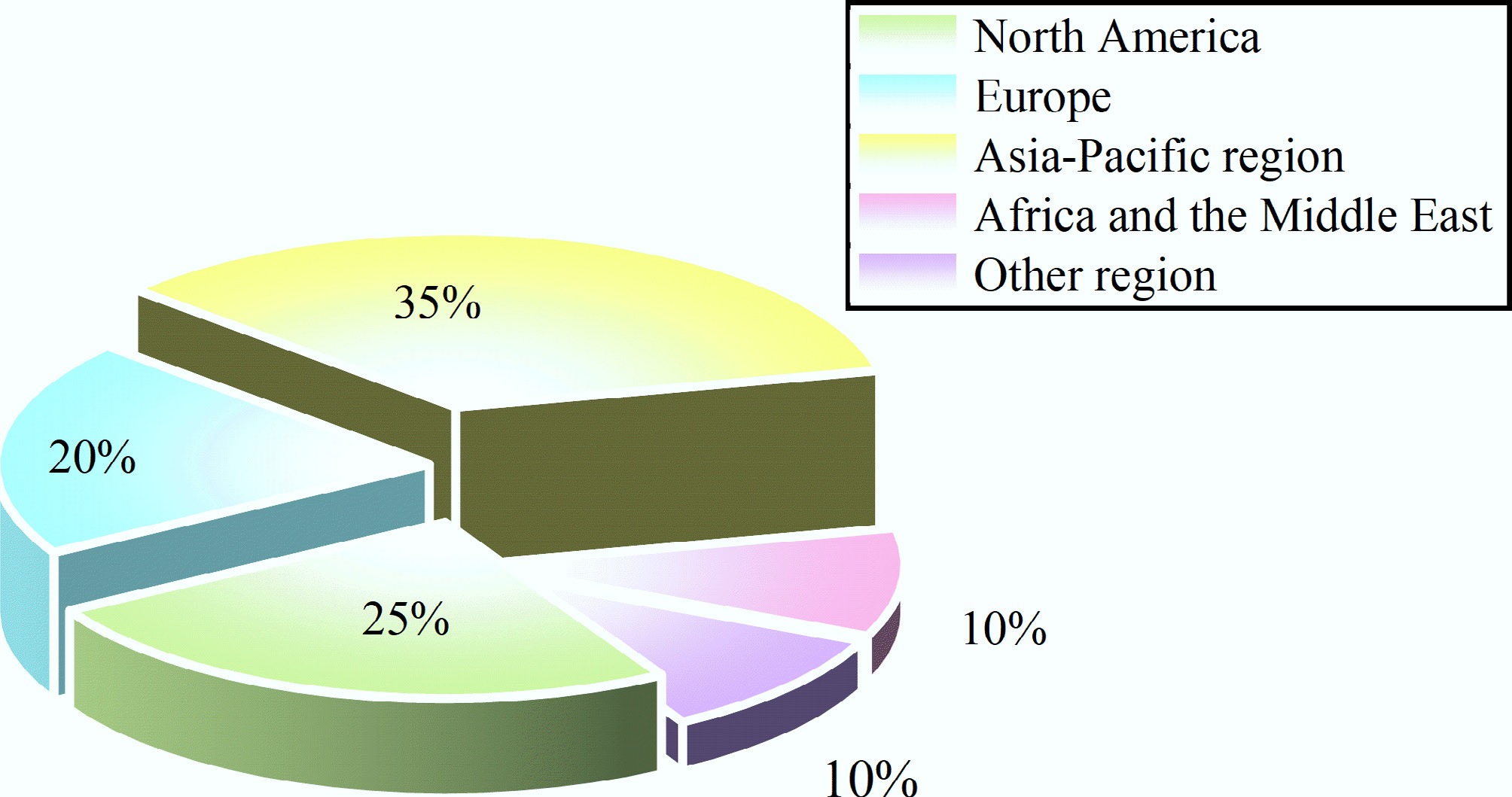
      The global insect repellent market is substantial and expanding, with an estimated value of USD${\$} $ 6,265.4 million in 2024 and a projected growth to USD${\$} $ 11,674.63 million by 2033[36]. The market is led by North America (approximately a 25% share), and the Asia-Pacific region (a 35% share), with Europe and the Middle East & Africa holding 20% and 10%, respectively (Fig. 1). The Asia-Pacific region is the fastest-growing market, driven by rising incomes, increased awareness of vector-borne diseases, and the expansion of the outdoor activity sector. DEET-based repellents ranked among the most effective and widely utilized mosquito repellents on the market[28]. Against this backdrop, DEET has seen continuously growing global adoption. Its prominence is evidenced by its widespread use. Furthermore, as of July 2024, over 75% of commercial repellents registered in Argentina were DEET-based[37], underscoring its dominant market position.

      Figure 1. 

      The regional contributions of the global insect repellent market in 2023.

      DEET enters water environments through multiple pathways, as shown in Fig. 2, with consumer product use being the primary source. The direct application of DEET-containing repellents to skin or clothing, as well as subsequent swimming or other water activities, can lead to direct wash-off into surface waters[38,39], while a smaller fraction may enter the air via evaporation[40]. Subsequent activities, such as laundering treated textiles and bathing, introduce DEET into sewage systems[41]. Furthermore, a portion of the dose absorbed through the skin is excreted and enters domestic wastewater[42,43]. As conventional wastewater treatment often fails to completely degrade DEET, it is subsequently discharged into water bodies[44,45]. Beyond domestic pathways, agricultural use of DEET can lead to its entry into surface water and soil via irrigation and stormwater runoff, which transports pollutants from the land surface[46]. Landfill leachate generated from the decomposition of discarded products and precipitation also serves as a pathway, facilitating the migration of DEET into groundwater and surface water[47]. Consequently, due to its extensive use and persistent discharge, DEET is now frequently detected in aquatic environments worldwide, with its detection frequency on the rise[48,49].
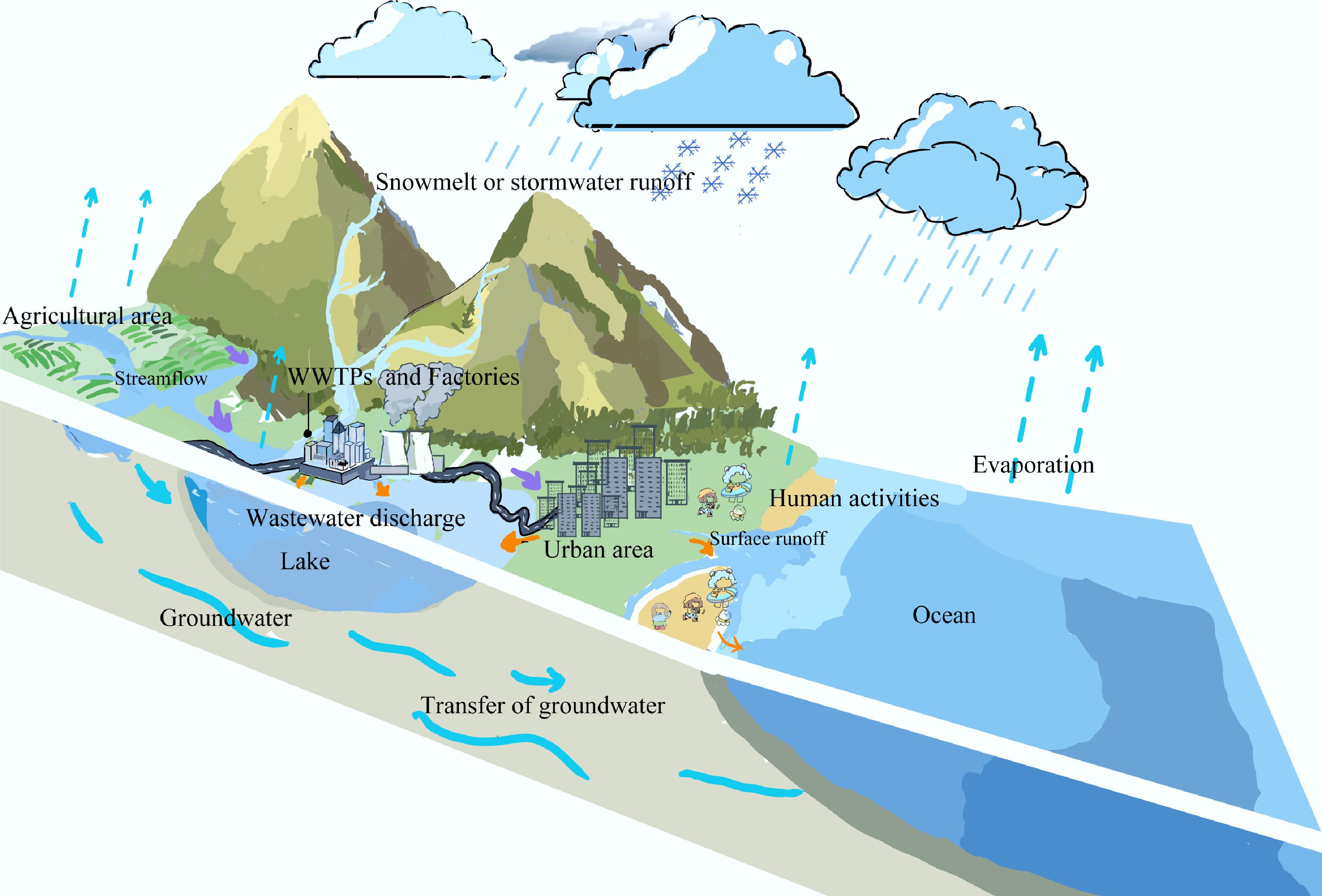
      Figure 2. 

      Sources of DEET in the water environment.

    • Surface water is a critical environmental medium for sustaining the health and stability of aquatic ecosystems. As summarized in Fig. 3a, DEET has been detected in surface waters across multiple global regions with concentrations ranging from nanograms per liter (ng·L−1) to micrograms per liter (μg·L−1), with elevated levels typically occurring in densely populated and tourism-intensive regions. In North America, DEET was found in 73% of US streams surveyed, especially those affected by wastewater effluent, urban runoff, and livestock operations, with concentrations exceeding 0.02 μg·L−1[50]. Similar detection patterns have been reported in Europe. In Asia, rapid industrialization and urbanization in countries such as China and India have led to notable increases in DEET concentrations in surface waters. For instance, an average level of 0.14 μg·L−1 was reported in Chinese surface waters[51].
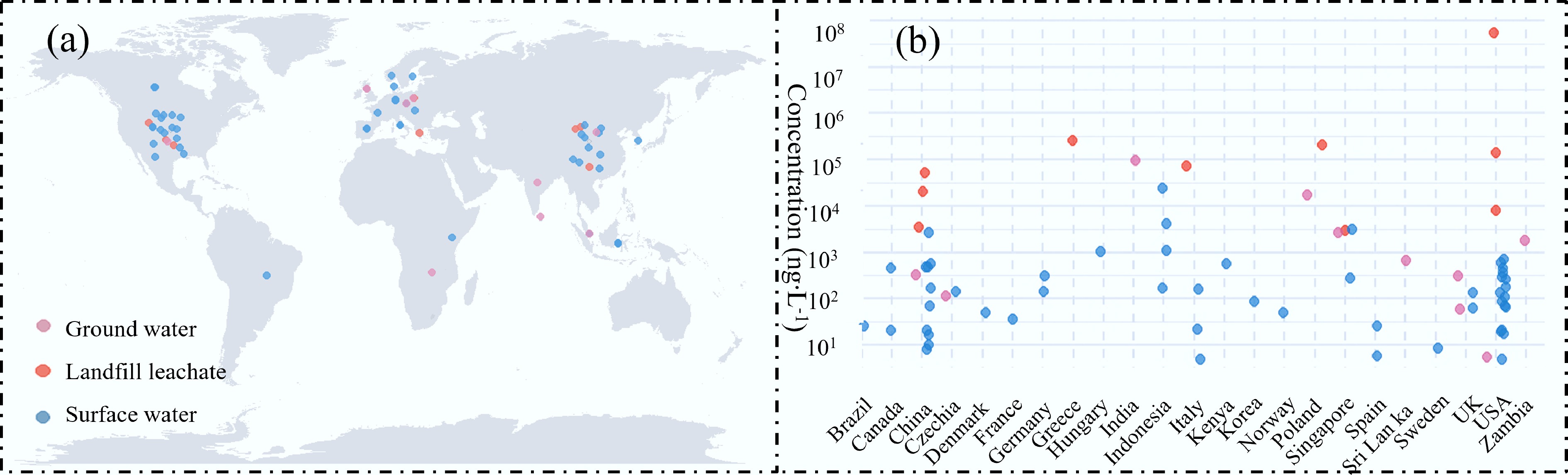
      Figure 3. 

      Overview of DEET (a) reported globally, and (b) maximum concentrations of DEET in different counties.

      Tourist activities contribute to elevated DEET levels in coastal waters. In seawater samples from the Banyuls-sur-Mer and Collioure bathing areas on the Northwestern Mediterranean coast, concentrations reached 0.0354 and 0.0322 μg·L−1[52], exceeding those previously reported in the Western Mediterranean (0.506–1.21 ng·L−1)[53], and the northern Adriatic Sea (5.0 ng·L−1)[54], likely due to widespread use of repellents by beachgoers. Agricultural areas also serve as important sources of DEET in surface waters. In the River Cam (UK), which drains extensive farmland, a maximum concentration of 132.0 ± 4.3 ng·L−1 was recorded[55], comparable to levels in Lake Balaton, Hungary[56] but higher than those in other UK rivers such as the Test and Itchen[57]. These spatial patterns highlight the role of agricultural runoff in introducing DEET into aquatic systems.

      DEET is partially introduced into groundwater through the discharge of wastewater effluent. In Vellore, India, DEET was detected in 96% of groundwater samples, primarily in densely populated southern and central zones, averaging 30 μg·L−1 and reaching a maximum of 92 μg·L−1[58]. This contamination has been attributed to sewage leakage, pesticide application, and inadequate sanitation infrastructure, highlighting the environmental challenges in densely populated regions with insufficient waste management. A pan-European survey on polar organic persistent pollutants in groundwater identified DEET as one of the most frequently detected compounds, with an occurrence rate of 84% and a maximum concentration of 454 ng·L−1[59]. Its recurrent detection stresses its persistent environmental presence and suggests a potential long-term contamination risk.

      As a widely used insect repellent, DEET exhibits seasonal variation in use, peaking in summer, and accumulates in municipal solid waste and landfill leachates. Outdoor application also facilitates its transport to landfill sites via surface runoff. Among emerging contaminants detected in landfill leachate, DEET is one of the most frequently identified, with concentrations ranging from 1.0 to 103 μg·L−1[60]. The presence of DEET in leachate poses a risk of groundwater contamination, particularly given its moderate hydrophobicity and limited water solubility. Andrews et al. found DEET in leachate from Oklahoma's (> 25-year) landfills (up to 52.6 μg·L−1) and in groundwater 90 m from a closed landfill[61], indicating its environmental persistence and migration capacity. Similar findings were reported in Poland, where DEET was found in groundwater samples surrounding landfills (0.019–16.901 μg·L−1)[62].

      Notably, in the Hranice karst region, Oppeltová et al. hypothesized that deep-circulation thermal karst waters would be free from recent anthropogenic contaminants, yet emerging substances, including DEET, were detected in surface water (141 ng·L−1), groundwater (114 ng·L−1), and thermal karst water (132 ng·L−1)[63]. Furthermore, studies have suggested that DEET can be detected in drinking water, albeit generally at low concentrations[16,64]. It might pose health risks to humans via drinking water and biological accumulation. Special attention should be paid to sensitive populations, such as children and pregnant women.

      While existing research primarily focuses on DEET's widespread occurrence in water bodies, emerging evidence indicates that it also accumulates in sediments. It has been detected in both marine sediments[65], and lake sediments[66]. Teysseire et al. analyzed 193 surface sediment samples (0–2 cm) from Canadian lakes, and detected 44 trace organic compounds associated with anthropogenic activities. Among these, DEET emerged as one of the most common pollutants, found in 93% of the samples at a median concentration of 339 ng·g−1. Its concentrations spanned several orders of magnitude (12.6−23,700 ng·g−1)[67]. However, it's low to moderate sorption capacity to sediments (logKoc = 2.9) suggests that only a small fraction of DEET tends to adsorb to sediments, favoring its mobility and distribution in the water column.

      Overall, landfill leachate represents the most heavily contaminated water matrix, with pollutant concentrations often spanning from μg·L−1 levels and even reaching mg·L−1 ranges (Fig. 3; Supplementary Tables S1a, S1b, S1c)[24,47,5255,58,6163,68120]. WWTPs could mitigate this contamination by removing certain pollutants, and the treated effluent underwent further dilution when discharged into surface water or groundwater, resulting in significantly lower concentrations at the ng·L−1 level[121,122]. Drinking water showed the lowest levels of DEET contamination, which could be attributed to both advanced purification processes in water treatment facilities and the generally better quality of source waters[19,123]. It is also noteworthy that current research on DEET distribution reflects a significant geographical bias, with data still lacking for many countries, highlighting an important gap for future monitoring efforts. Current surface water monitoring sites were predominantly located in regions with intensive human activities, whereas groundwater in remote areas might be a primary exposure source due to agricultural or chemical industry leaks. Concurrently, the majority of studies focused on surface water, probably resulting in an insufficient representation of other aquatic environments.

      It is also noteworthy that dengue fever and other mosquito-borne diseases are primarily prevalent in tropical and subtropical regions, including the Americas, Southeast Asia, the Western Pacific, Africa, and the Eastern Mediterranean[124126]. In some developing countries, favorable climatic conditions and limited healthcare resources lead to the widespread transmission of these diseases. As an effective mosquito repellent, DEET is widely used in these areas, but environmental monitoring data on DEET in these regions are often lacking.

    • As a broad-spectrum insect repellent highly effective against various species of mosquitoes, ticks, flies, and other pests[127130], the EPA approved and recommended the use of DEET due to its low risk to human health[131]. However, increasing evidence indicates potential adverse effects on both human and environmental health.

      Figure 4 summarizes the potential risks of DEET to human health, aquatic ecosystems, and microbial communities. In humans, DEET exposure has been associated with adverse effects primarily involving the central nervous and cardiovascular systems, along with dermatological reactions such as urticaria and hemorrhagic vesiculobullous erosions, particularly following the use of products containing ≥ 50% DEET[132]. High-level exposure can lead to more severe outcomes, including seizures and neurological abnormalities[133,134]. Prolonged or improper use may intensify these health risks, especially in susceptible populations.
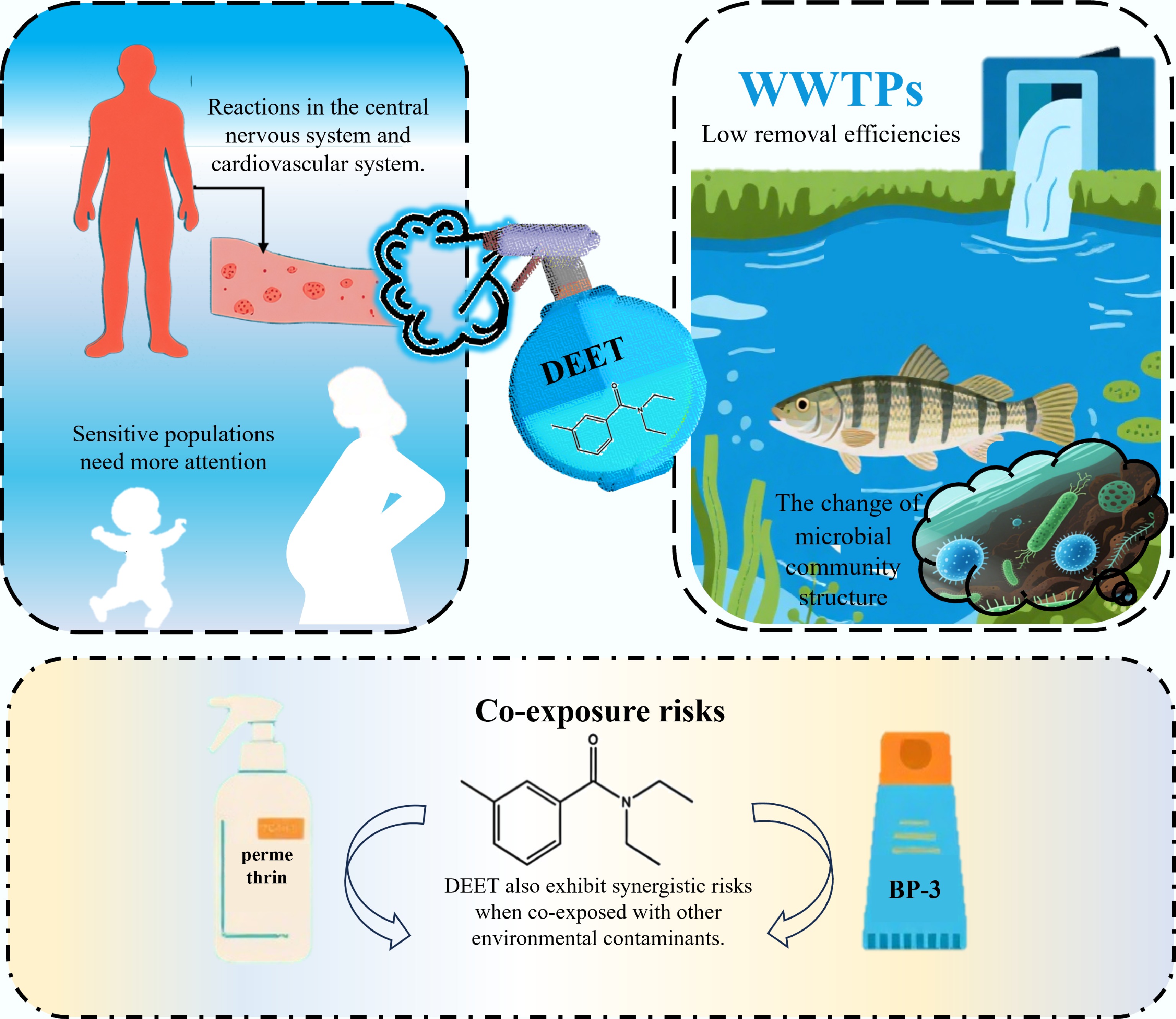
      Figure 4. 

      The risks of DEET on human health and the environment.

      DEET's adverse effects on sensitive populations extend to endocrine disruption and bone development. Zhang et al. demonstrated that DEET induced multifactorial toxicity in zebrafish embryos, impairing cardiac, immune, and nervous system functions during early development[23]. Zhu et al. reported that DEET might interfere with sex hormone levels, posing unfavorable risks to bone health in children and adolescents, particularly those under 12 years old and non-overweight individuals[135]. These findings indicate DEET's developmental toxicity, reinforcing the need for caution in its use by pregnant women and infants. Another study linked certain pesticides/insecticides to decreased muscle strength in people with diabetes[136].

      From a genotoxicity perspective, in vitro experiments have indicated that DEET might increase the micronucleus frequency in human lymphocytes and impact the retinoblastoma gene expression[137]. Moreover, DEET exhibited synergistic risks when co-exposed with other environmental contaminants. Picinini-Zambelli et al. found that even at environmentally relevant concentrations, DEET (3.0 ng·L−1), and caffeine (2.5 ng·L−1) induced DNA damage in eukaryotic cells[138]. When DEET was used concurrently with Benzophenone-3 (BP-3), an ingredient commonly found in sunscreens, a positive correlation in their percutaneous absorption was observed. This might lead to an augmented uptake of both substances, thereby heightening potential health risks[139]. Similarly, co-exposure to DEET and permethrin was shown to exert synergistic cytotoxic effects on sinus epithelial cells, potentially contributing to the pathogenesis of chronic sinusitis[140]. Additional studies suggested that DEET might possess carcinogenic potential and adversely affect human nasal mucosal cells[141].

      The environmental impact of DEET on aquatic ecosystems has received growing scientific attention. At high concentrations, DEET has been shown to significantly reduce cytochrome content and induce irreversible damage in algal cells, thereby inhibiting their growth[21,22]. This impairment subsequently weakens photosynthetic activity and compromises energy transfer efficiency, offering insights into the ecotoxicological implications of DEET at lower trophic levels in aquatic food webs. In addition, studies have indicated that DEET can inhibit growth in certain fish species and disrupt neurotransmitter function[142]. Although DEET is not generally considered highly bioaccumulative, it has been detected in mussel tissues from the US Great Lakes region, as well as in bees and honey from Colima, Mexico[143,144]. These findings suggest that DEET may undergo trophic transfer and accumulate in higher trophic-level organisms, posing potential risks of biomagnification. While the ecological impacts of DEET are generally less severe than those of heavy metals or antibiotics, its extensive use, environmental persistence, and adverse effects even at low concentrations have raised increasing concern regarding its long-term environmental significance.

      Microbial communities play a pivotal role in ecosystem functioning due to their high ecological relevance and sensitivity to environmental changes, making them critical indicators for assessing pollutant impacts[145,146]. Lawrence et al. exposed riverine microbial communities to DEET at environmentally relevant concentrations (0.1–1 mg·L−1), and observed structural shifts in community composition, along with minor alterations in metabolic activity and extracellular polymeric substance profiles[24]. Lopez et al. found that DEET interfered with the nitrogen cycle by disrupting nitrifying bacterial communities, exhibiting moderate nitrification inhibition rates (38.7%) at 10 mg·L−1[147], though such an effect is likely limited under typical environmental conditions where concentrations are far lower. Additionally, DEET exhibited antimicrobial properties, with Kalaycı et al. documenting dose-dependent inhibitory effects, particularly against yeast and fungi[148]. These findings collectively highlight the potential of DEET to alter microbial community structure and function, with possible implications for ecosystem-level processes.

      A significant knowledge gap remains regarding the ecotoxicity of DEET, particularly the health implications for sensitive populations such as children and pregnant women under long-term, low-dose exposure scenarios. In addition, the real-world impact of DEET remains poorly understood, partly due to its generally low detected concentrations and insufficient toxicity data. Studies on microbial responses are also limited, with a particular lack of investigation into complex community-level exposures under environmentally relevant conditions. Such long-term exposure could potentially promote microbial adaptation and resistance development, ultimately disrupting ecological balance. Notably, no direct evidence is currently available on whether DEET influences the proliferation or transmission of antibiotic resistance genes.

    • The Risk Quotient (RQ) is a commonly used method to assess the potential environmental risk by comparing its measured environmental concentration (MEC) to the predicted no-effect concentration (PNEC). The formula for calculating the RQ is:

      $ \mathrm{R}\mathrm{Q}=\dfrac{\mathrm{M}\mathrm{E}\mathrm{C}}{\mathrm{P}\mathrm{N}\mathrm{E}\mathrm{C}} $

      The spatial distribution of micropollutants and their associated risk levels often varies considerably across regions. To better assess environmental risk on a broader spatial scale, and prevent some extreme local cases from being inappropriately generalized to represent global environmental risk, Yang et al. introduced the definition of four rank classes, their corresponding RQ ranges, and assigned weighting indexes (Wx) (Table 1), incorporating both the intensity and frequency of risks to calculate the Weighted Average Risk Quotient (WARQ)[49]. The weighted average of DEET concentration was calculated, and then the WARQ and a preliminary risk assessment was obtained in different water environments. The formula is as follows:

      $ WARQ=\dfrac{\sum_{X=1}^4RQ(x,water\; type)\ \times\mathrm{\ W}x}{f(x,total)} $

      where, RQ(x,water type) is the number calculated by its MEC in different water environments and PNEC, and f(x,total) is the total counting number of RQ in one kind of water environment.

      Table 1.  Definition of the four rank classes, their corresponding RQ ranges, and assigned weighting indexes

      Rank class (x) RQ range Weight index (Wx)
      1 > 1 1
      2 0.1–1 0.5
      3 0.01–0.1 0.25
      4 < 0.01 0

      Different studies reported significant variations in the PNEC of DEET for the aquatic environment. The most conservative PNEC for DEET in aquatic ecosystems was 10.4 mg·L−1, as derived from the chronic no-observed-effect concentration (NOEC) for algae divided by a 50-fold assessment factor, in accordance with the 2003 EU Technical Guidance Document[149]. Sun et al. tested the acute toxic effects of DEET on Chlorella vulgaris, Daphnia magna, and Brachydanio rerio, and evaluated the ecotoxicological risks[150], yielding the PNEC of 0.407 mg·L−1. Ricky et al. employed acute EC50 data (96-h EC50 for Chlorella of 17.4 mg·L−1) with a more stringent 1,000-fold assessment factor, further reducing the PNEC to 0.017 mg·L−1[22].

      The assessment factor, and type of toxicity data significantly influenced the results. Gao et al. identified the sensitivity order of algae > crustaceans > amphibians > fish > worms > insects > annelids using the species sensitivity distribution (SSD) method, which yielded a notably lower PNEC of 0.20 mg·L−1[51]. This discrepancy could be attributed to several factors: (1) Species sensitivity and geographical differences; (2) Data representativeness, as the selected species focused on algae, fish, and water fleas, neglecting other key sensitive groups in freshwater communities; (3) Bias in the selection of toxicity endpoints, since chronic NOEC data, generally more conservative than acute EC50 values, were not prioritized. A single high PNEC value may overlook the ecological risks of DEET to sensitive species such as algae. To establish scientifically sound environmental standards for DEET, it is essential to integrate the following factors: region-specific species sensitivity data, chronic toxicity effects from long-term exposure, and the selection of ecologically representative species based on community structure. Adopting such a comprehensive strategy enables a more balanced and protective approach to environmental risk assessment.

      Merel & Snyder emphasized the challenges in assessing DEET pollution levels due to variations in reported concentration metrics (median, average, or extreme values), with the maximum concentration being the only metric unaffected by the scale of sampling activities (i.e., the number of samples and temporal scope)[151]. Therefore, this study adopted the maximum reported MEC from each investigation to reflect the worst-case pollution scenario or exposure level, and a PNEC of 0.017 mg·L–1 was used to ensure the conservatism and scientific integrity of the assessment. Based on the calculated RQ for DEET in global aquatic environments, the WARQ values were determined as 0.02 for surface water, 0.85 for leachate, and 0.3 for groundwater. These results indicate a moderate ecological risk posed by DEET, with the highest risk observed in landfill leachate. The elevated WARQ in leachate, coupled with its characteristically high DEET concentrations (Fig. 5), highlights the need for targeted management and mitigation strategies in these high-risk settings.
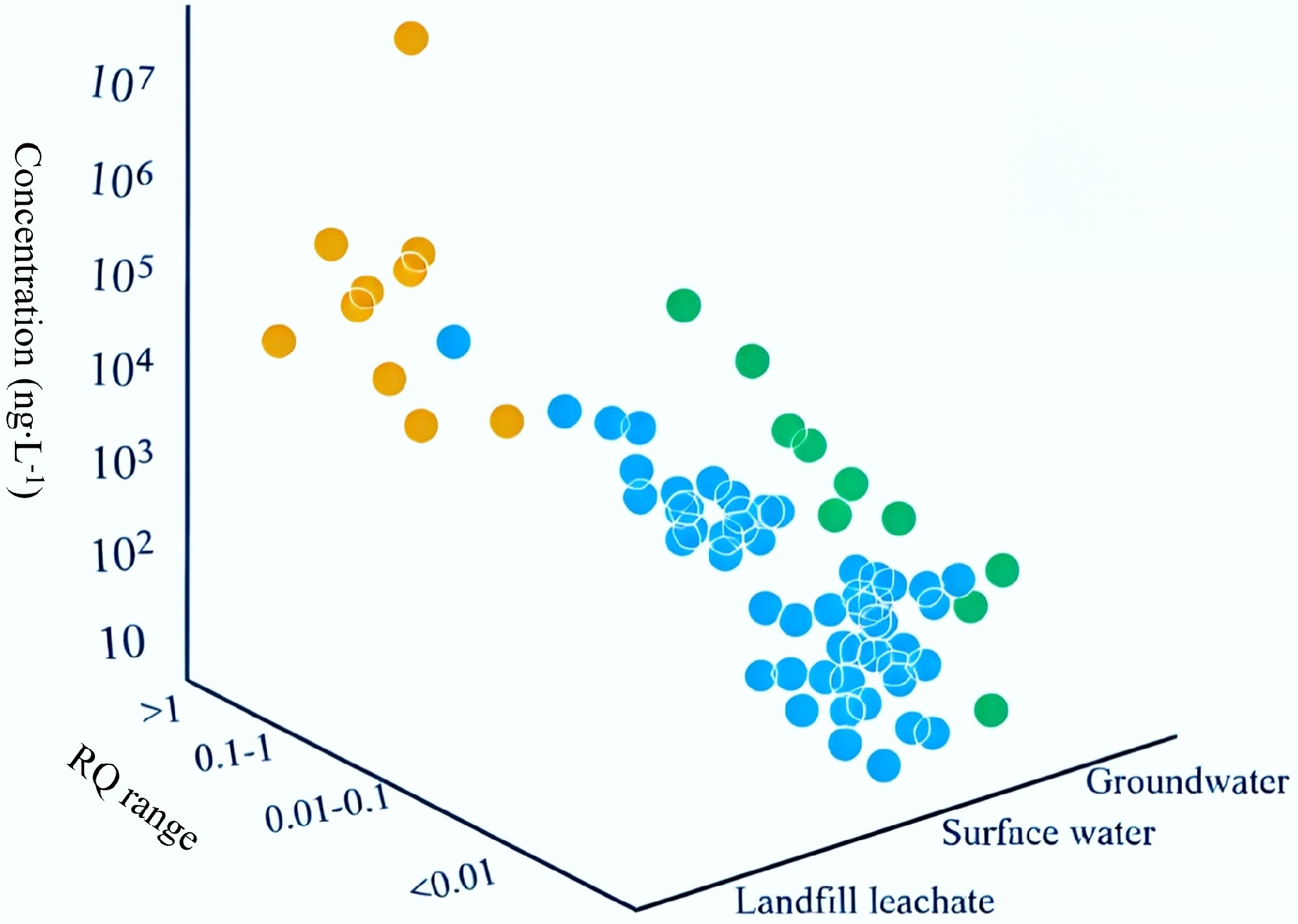
      Figure 5. 

      The concentration and RQ of DEET in water environments.

    • The widespread presence of DEET in the environment was partly linked to wastewater discharge. Conventional wastewater treatment processes exhibit limited and variable removal efficiency for DEET, typically ranging from 10% to 90%, allowing a substantial portion to persist in effluent and enter natural water bodies[151,152]. For example, Peng et al. reported that DEET was one of the emerging organic contaminants with relatively low removal (31.9%) in subsurface wastewater infiltration systems[153]. Similarly, biological greywater treatment processes have been shown to be insufficient for complete DEET elimination, leading to its potential accumulation with water reuse[154].

      Advanced oxidation processes (AOPs) are widely applied for degrading organic pollutants such as DEET by generating highly reactive free radicals (e.g., hydroxyl radicals •OH, sulfate radicals SO4•−). Xu et al. reported that •OH and SO4•− exhibited comparable effectiveness in degrading DEET[155]. The O3/Mn oxidation process was also shown to enhance •OH generation, resulting in a DEET removal efficiency approximately four times greater than that of ozonation alone[156]. Additionally, hybrid systems such as ultraviolet-activated peracetic acid have proven effective in removing residual micropollutants like DEET from reverse osmosis or nanofiltration concentrates[157]. However, some combined processes may introduce unintended consequences. For example, a system coupling UV-LEDs with FeCl3 coagulation was found to promote the formation of disinfection by-products such as trichloromethane and haloacetic acids, highlighting the need for careful environmental risk assessment when implementing such techniques[158].

      Microbial communities can adapt to environmental conditions through natural selection, developing specialized structural and functional traits that facilitate the degradation of trace organic contaminants[159]. Microbial removal of such pollutants often relies on the synergistic action of cometabolic and metabolic pathways[160]. Li et al. investigated seven emerging contaminants and reported that biofilm systems achieved notable removal efficiencies for DEET and sulfamethoxazole (> 50%), with further enhancement under external carbon supplementation. Carbamazepine removal was also significantly improved, highlighting the role of cometabolic processes in biodegradation[161]. During treatment, specific degraders may undergo selective enrichment, strengthening community-level degradation capacity for trace organics. Although several studies have reported DEET biodegradation in aerobic systems[162164], the number of identified DEET-degrading strains remains limited (Table 2).

      Table 2.  Microbial resources for DEET degradation

      Name Type Mechanism Intermediate product Ref.
      Cunninghamella elegans ATCC 9245 Fungus Cytochrome P450 monooxygenase N-deethylation (DEET → N-ethyl-m-toluidine); N-oxidation (DEET and N-ethyl-m-toluidine are oxidized to their respective nitrogen oxides) [165]
      Mucor ramannianus
      R-56
      Cytochrome P450 monooxygenase N-deethylation (DEET → N-ethyl-m-toluidine);
      Partial N-oxidation (only DEET oxidized to N,N-diethyl-m-toluidine-N-oxide)
      Pseudomonas putida
      DTB
      Bacterium DEET hydrolase
      (encoded by the gene dthA)
      Catalyzing the hydrolysis of the amide bond in DEET into
      3-methylbenzoate and diethylamine.
      [166,167]

      Pseudomonas putida DTB, for instance, could use DEET as a sole carbon and energy source under aerobic conditions. The initial and key step was hydrolysis of the amide bond, catalyzed by DEET hydrolase (encoded by dthA), yielding 3-methylbenzoate and diethylamine. The former was further metabolized via 3-methylcatechol through the meta-cleavage pathway, while diethylamine was hydrolyzed to acetaldehyde and assimilated into central metabolism[167,168]. However, Helbling et al. observed that DEET was not fully mineralized in activated sludge systems. It was transformed into more hydrophilic intermediates through N-deethylation and aromatic methyl group oxidation. The N-deethylation product degraded rapidly, whereas the oxidation product was more persistent[169]. Enzymatic degradation has also emerged as a promising approach for removing emerging contaminants[170173]. For example, van Brenk et al. demonstrated that a spent mushroom substrate (Agaricus bisporus), rich in laccase and peroxidase, degraded 90% of DEET within 7 d via enzymatic oxidation[174].

      Future research should prioritize several key directions to advance the mitigation of DEET contamination. Firstly, optimization of AOPs is essential, including refining operational parameters, developing more efficient radical generation systems, and integrating toxicity evaluation tools to achieve complete mineralization and environmentally benign treatment of DEET. Secondly, in-depth investigation into the microbial degradation mechanisms of DEET, particularly the metabolic pathways and key enzyme systems, should be pursued to enhance biodegradation efficiency. Thirdly, hybrid treatment strategies that combine physical, chemical, and biological processes should be optimized to leverage their synergistic effects, improving removal performance while reducing operational costs. Beyond DEET removal, greater attention should be directed toward assessing the long-term ecological impacts of DEET and its transformation products on aquatic ecosystems. Finally, the development and application of novel analytical methods are critical to improving the understanding of the environmental fate and behavior of DEET and its metabolites.

    • This review summarizes the widespread occurrence and contamination status of DEET in global aquatic environments. In addition to its primary use as an insect repellent, DEET has been reported to serve functions in agricultural, medical, industrial, and other sectors. Driven by these diverse applications, DEET has been detected in a variety of aquatic systems, with its distribution influenced by factors such as consumer usage patterns, anthropogenic activities, agricultural practices, and environmental conditions. Globally, DEET is found in surface waters at concentrations in the ng·L−1 range, generally representing low risk levels, whereas landfill leachate is the most contaminated aquatic matrix, with concentrations ranging from μg·L−1 to mg·L−1. Although DEET exhibits low persistence and bioaccumulation potential, it may still pose ecological risks, particularly in sensitive habitats and regions with limited wastewater treatment infrastructure. The regulation of emerging contaminants such as DEET faces several challenges, including insufficient global monitoring data, incomplete ecological risk assessment, and limitations in detection and removal technologies. Addressing these issues will require establishing a dynamic monitoring–assessment–regulation framework, enhancing international data and methodology sharing, and promoting risk-based prioritization and adaptive management strategies.

      • The authors confirm their contributions to the paper as follows: conceptualization: Zhao Y; resources, methodology: Cui S; data curation: Zhao Y, Jia Q; visualization: Jia H; investigation: Wei J; funding acquisition: Wang J, Cui S; formal analysis, writing-original draft: Zhao Y, Wei J; writing-review & editing: Zhao Y, Wang J, Jia Q, Ma Q, Jia Q; supervision: Ma Q, Cui S. All authors reviewed the results and approved the final version of the manuscript.

      • Data sharing not applicable to this article as no datasets were generated or analyzed during the current study.

      • This work was supported by the National Natural Science Foundation of China (Grant No. 42007222), and the Fundamental Research Funds for the Central Universities (Grant No. 3132025170).

      • All authors declare that there are no competing interests.

      • DEET is widely detected in aquatic environments, with detection frequencies increasing.

        Landfill leachate is the most contaminated water matrix.

        Advanced water treatment technologies are more effective in removing DEET.

        A moderate ecological risk level for DEET is indicated by weighted average risk quotients.

        Significant data gaps in global monitoring and ecotoxicity hinder a comprehensive risk assessment.

      • Full list of author information is available at the end of the article.

      • Copyright: © 2025 by the author(s). Published by Maximum Academic Press, Fayetteville, GA. This article is an open access article distributed under Creative Commons Attribution License (CC BY 4.0), visit https://creativecommons.org/licenses/by/4.0/.
    Figure (5)  Table (2) References (174)
  • About this article
    Cite this article
    Zhao Y, Wang J, Jia Q, Ma Q, Jia HL, et al. 2025. The impact of N,N-diethyl-m-toluamide in aquatic environments: occurrence, fate, and ecological risk. Agricultural Ecology and Environment 1: e009 doi: 10.48130/aee-0025-0009
    Zhao Y, Wang J, Jia Q, Ma Q, Jia HL, et al. 2025. The impact of N,N-diethyl-m-toluamide in aquatic environments: occurrence, fate, and ecological risk. Agricultural Ecology and Environment 1: e009 doi: 10.48130/aee-0025-0009

Catalog

    /

    DownLoad:  Full-Size Img  PowerPoint
    Return
    Return