










-
Global mountain regions have great biological, cultural, and spiritual value for diverse people around the world but today, both people and nature in highland areas face an uncertain future. Mountains are certainly important—covering around 20% of the planet's land mass, they harbor over half of all global biodiversity hotspots[1]. Mountain regions provide an array of critical ecosystem services, exemplified by the fact that some 20%–25% of people on Earth depend on fresh water originating from the world's 'water towers'[2]. Globally, approximately half a billion people live in montane ecosystems, yet food insecurity increasingly affects the majority of mountain communities in the developing world, mainly due to land degradation and climate impacts[3].
Mountains have been included in the United Nations (UN) Convention on Biodiversity since the late 1990's, but progress remains minimal in developing and implementing specific action plans. Montane areas are also incorporated into the UN Sustainable Development Goals, but none of these targets are on track to be met by 2030[4].
Despite shortfalls in global-level action, researchers working in the mountains continue to move forward. One consortium, the Mountain Futures Initiative, is a group comprised of the Chinese Academy of Sciences, and the Chinese Academy of Agricultural Sciences, the UN Environment Programme, the UN Food and Agriculture Organization Mountain Partnership, the World Agroforestry Centre, and the International Centre for Integrated Mountain Development. This partnership launched the Mountain Futures Initiative in 2016 with goals to enhance the ecological health of mountain ecosystems while supporting sustainable lifeways for highlands dwellers[5]. Since 2022, the partnership has taken steps to implement a Mountain Futures Action Plan linked to the Sustainable Development Goals, and the Kunming Montreal Global Biodiversity Framework[6].
-
Despite the past decade of international focus on mountains, however, highlands remain under-resourced[3]. To speed the pace of positive change, Mountain Futures partners are proposing to further develop and implement a unified bioeconomy framework specific to global mountains. Various bioeconomy frameworks have been in existence for 15–20 years; in general, these plans nest economic development within the sustainable use and protection of biological resources by building bridges between science, technology, and economics[7]. Bioeconomy framings have evolved from a narrow focus on using bioresources to reduce fossil fuel use, to adding innovative biotechnologies to 'green' industrial production, to more recent additions that include protection and restoration of biodiversity and ecosystem services, mobilizing indigenous knowledge, and poverty alleviation[8]. Many countries are now in the process of creating national bioeconomy plans. But, after two decades of development, there is still no single definition of bioeconomy or standard metrics to monitor progress toward goals.
Two parallel trends are influencing the development of bioeconomy frameworks. The first trend is increasing the application of circular economy planning that focuses on eliminating waste and pollution through reuse and recycling in production, along with regenerating working lands ecosystems. Currently, 76 countries have some form of bioeconomy or circular economy plans, though only 20 nations are attempting to integrate these approaches[9]. The second trend involves efforts to elevate the social aspects fundamental to sustainability—livelihood support, traditional ecological knowledge, land tenure, fair trade, justice, equity—to a level equal to economics in both bioeconomy and circular economy frameworks[10]. In fact, many researchers agree that using narrowly-focused bioeconomy plans that do not give greater attention to social concerns will preclude reaching global sustainability goals[11,12].
Partners in the Mountain Futures Initiative support development of a more inclusive bioeconomy framework that captures all components: biodiversity and cultural protection and restoration; circular economy principles; biotechnology innovation; digital integration; sustainable fair trade; and social equity and justice. A brief look at each of these dimensions shows what a new montane bioeconomy can do to revitalize sustainability practices across upstream and downstream production and consumption:
Biological diversity
-
Montane ecosystems contain many biodiversity hotspots, which host unique flora and fauna. Habitat protection is essential for maintaining the ecological functions and services that underpin montane economic activities.
Cultural diversity
-
Mountain communities often possess rich cultural traditions tied to knowledge of local and regional ecosystems. Traditional ecological knowledge can support co-produced innovations that enrich mainstream science and technology perspectives[13].
Circular economy principles
-
Circular economy practices from lowland agriculture—nutrient recovery from wastewater, use of biomass residuals from crops, livestock and forestry—can be adapted for use in montane regions. These include innovative agricultural waste recovery, substituting natural fibers for synthetic materials to reduce microplastics waste, agroforestry, and more[14].
Biotechnology
-
Advances in biotechnology, such as the cultivation of novel microbial species for ecological restoration and agricultural adaptations in highland ecosystems, can support innovation in montane bioeconomies. For example, engineered microbes can assist with ecological restoration, produce biofuels, medicines, and biodegradable materials[15]; and CRISPR and DNA synthesis can accelerate bio-based product development.
Digital integration
-
Artificial Intelligence, the Internet of Things, and blockchain can optimize bioresource management for complex montane bioeconomy value chains, including precision agriculture, bio-design for smart products, more efficient agri-food fertilizer applications, and more[16].
Sustainable fair trade
-
Mountains are often sites for resource extraction with products exported to lowland populations. But innovations supporting green and fair-trade policies can encourage regional ecosystem protection even while reducing pollutants and increasing efficiencies across entire supply chains. The European Union's Alpine Bioeconomy Initiative provides an example of how transformative changes in product production can create greener supply chains from highlands to valleys[17].
Social equity and justice
-
Equitable social values can be better incorporated into all elements of a mountain bioeconomy framework, given the history of highlands' indigenous peoples, and local communities being undervalued and underrepresented[18]. From greater local participation, and decision making to involvement in eco-certification, fair trade, and benefit sharing, there are a host of practices that can be employed to increase support for indigenous peoples and smallholder communities in mountain regions.
-
Building and implementing a new montane bioeconomy is a huge task given the history of unequal development in highlands and the fact that, so far, no country has yet to focus this type of planning on mountains. But the bioeconomic potential of mountains is also great—with a more integrated ecological, economic, and just conservation, mountains can protect over 50% of Earth's biodiversity hotspots with freshwater provision that supports almost a quarter of humanity, while improving livelihoods for hundreds of millions of smallholders.
Recognizing the multiple levels of cooperation required for planning, funding, action, and assessment, Mountain Futures partners plan to work together to focus initial bioeconomic efforts on five mountain regions in the Global South—the Mountains of Southwest China (MSW), Montane Mainland Southeast Asia (MMSEA), the Hindu Kush Himalaya (HKH), the African highlands (AFH), and South America's Andes (SAA).
A large swath of southwest China completely overlaps with a global biodiversity hotspot—the Mountains of Southwest China (Fig. 1). Rugged ridges and deep valleys shelter many primate species along with some 14,000 plants. The area is home to 26 ethnic minorities whose traditions are tied to the land. Economically, the region mixes tea plantations with ecotourism at many protected natural and cultural areas. This region remains linked with Montane Mainland Southeast Asia, and the Hindu Kush Himalaya along historic trade routes, underscoring cross-border resilience. However, biodiversity here is under intense human pressure due to spreading monoculture plantations of commercial crops, urbanization, and climate change[19].
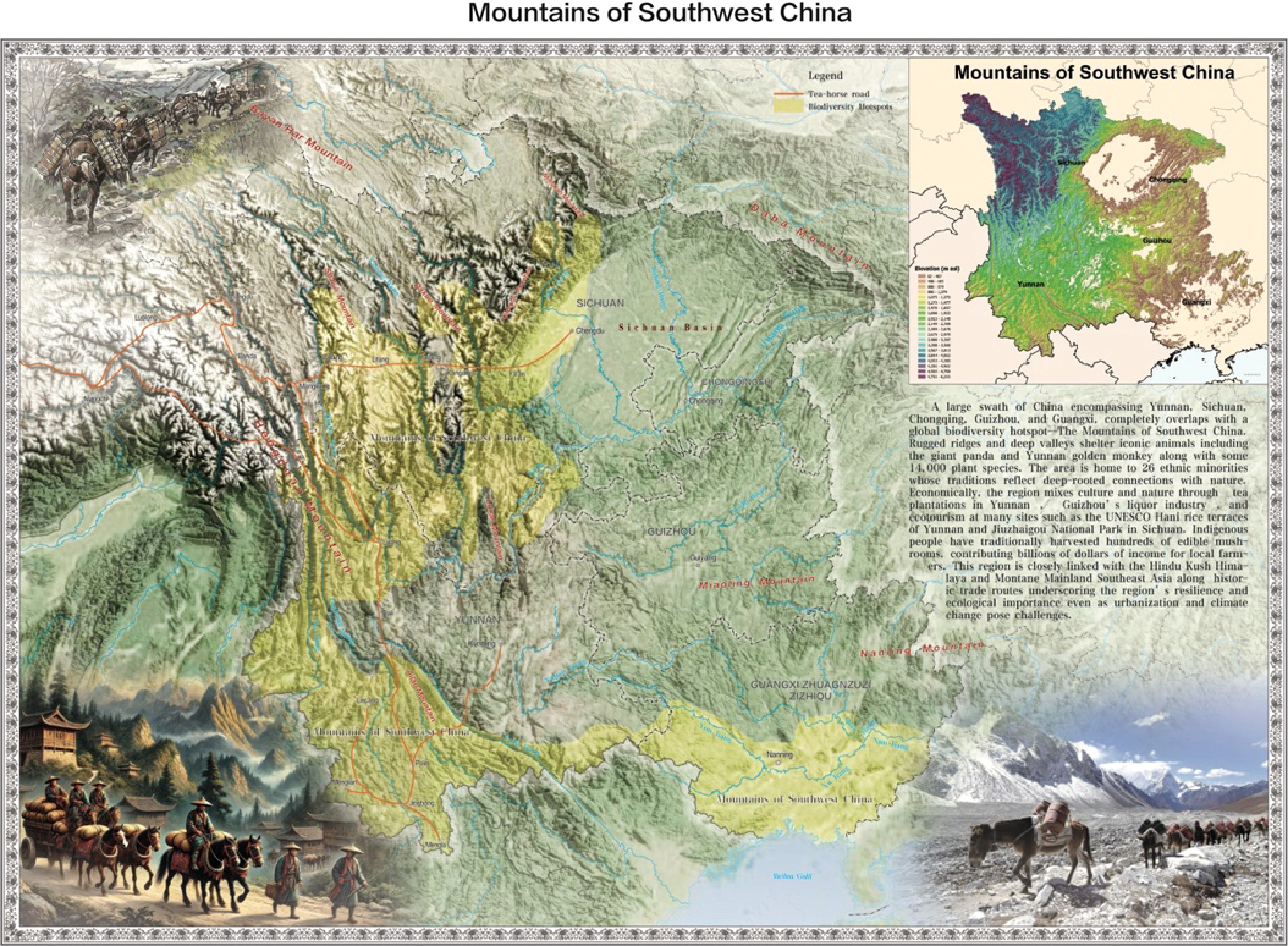
Figure 1.
Mountains of Southwest China.
As part of the Indo-Burma biodiversity hotspot, Montane Mainland Southeast Asia encompasses highlands across China, Myanmar, Thailand, Cambodia, and Vietnam (Fig. 2). This region's biological diversity includes elephants, tigers, and a complex mosaic of vegetation from lowland rainforests to alpine scrub[20]. Cultural diversity here is also striking, with over 100 ethnic groups practicing land-use including sacred forest conservation, shifting cultivation, and monoculture plantations. High-value, bio-based crops are well-established here, including rubber, coffee, and tropical fruits, yet high rates of deforestation and climate change threaten sustainability[21].
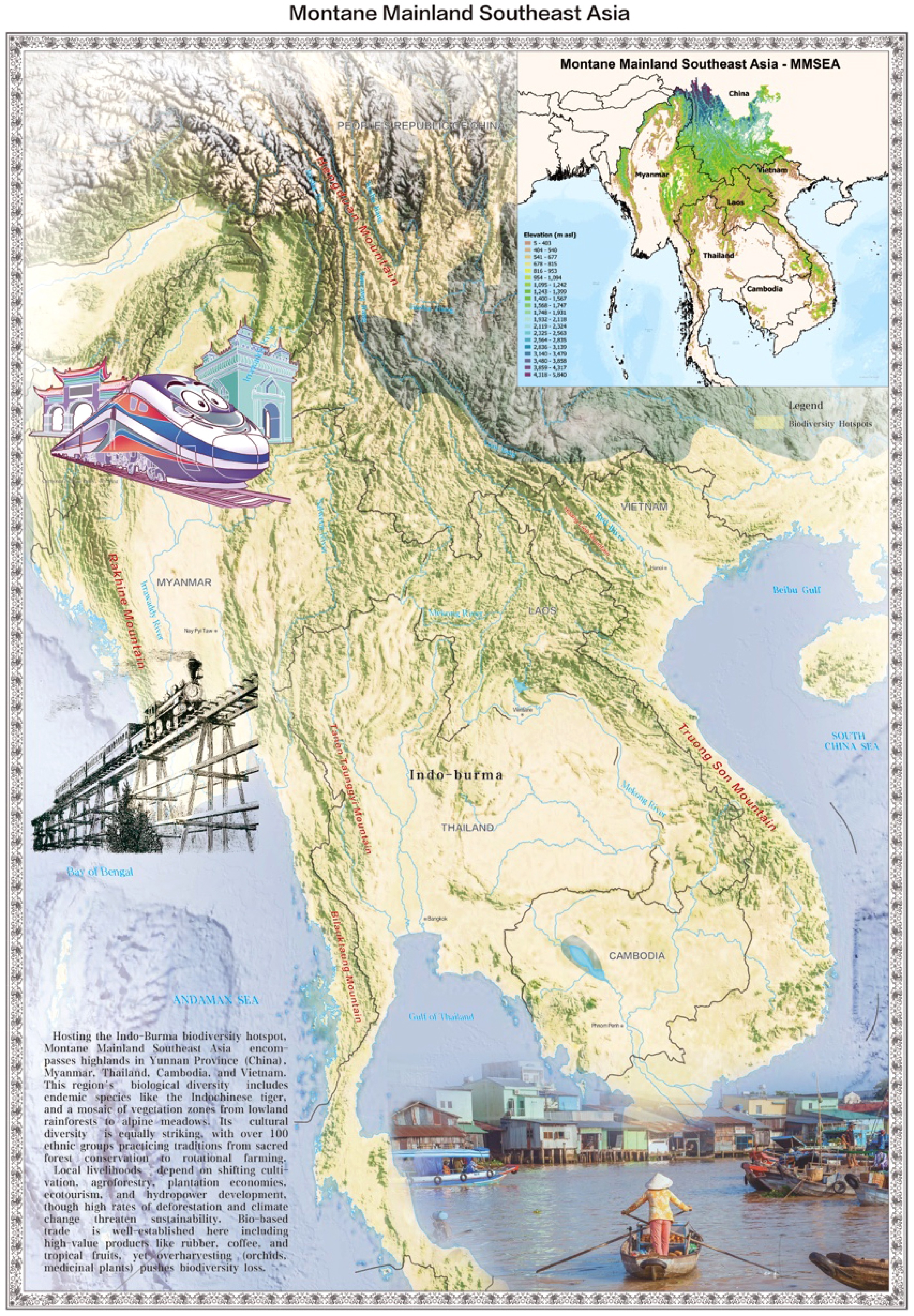
Figure 2.
Montane mainland Southeast Asia.
Across eight countries, the Hindu Kush Himalaya (Fig. 3) is home to the world's highest peaks, diverse flora and fauna, and rich natural resources, including Asia's 'water tower'[22]. Cultural diversity is equally rich here, with local livelihoods pivoting on agro-pastoralism, ecotourism, and a developing bio-based trade in herbs and cash crops. Yet the region is undergoing rapid change driven by extreme events, infrastructure development, land-use change, urbanization, and climate impacts[23].
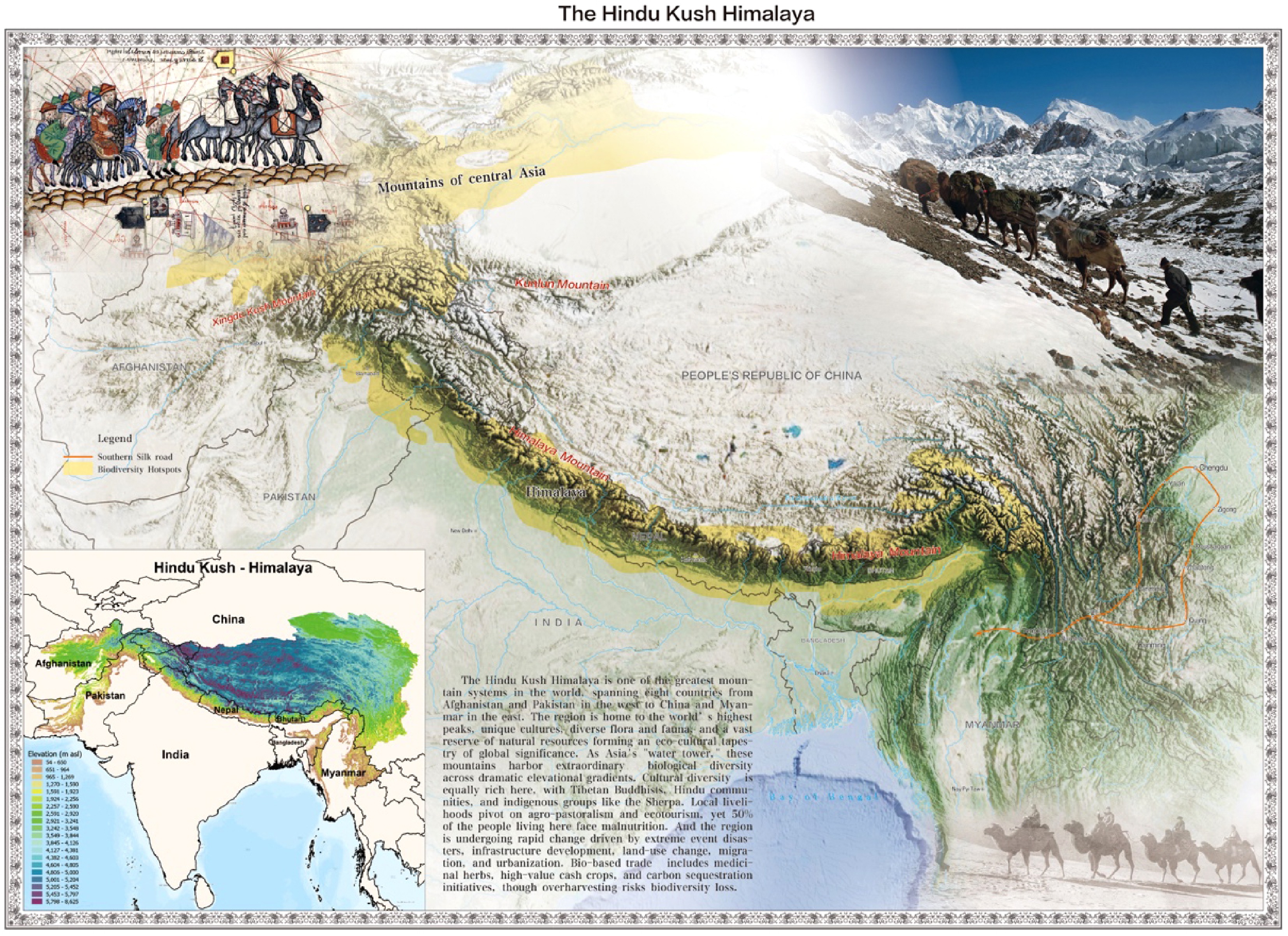
Figure 3.
The Hindu Kush Himalaya.
Africa's mountains and highlands (Fig. 4) are characterized by exceptional biological diversity, supporting numerous endemic species due to varied microclimates and unique ecoregions[24]. Culturally, there are high-altitude hubs of diversity, hosting many ethnic groups with traditional knowledge, languages, and livelihoods often based on agriculture. Montane bio-based export trade is thriving, with many medicinal plants, spices, and cash crops sourced from highlands and sent out through global supply chains. But with growing land-use change and climate impacts, the future of African Highland biodiversity, ecosystems, and livelihoods is uncertain[25].
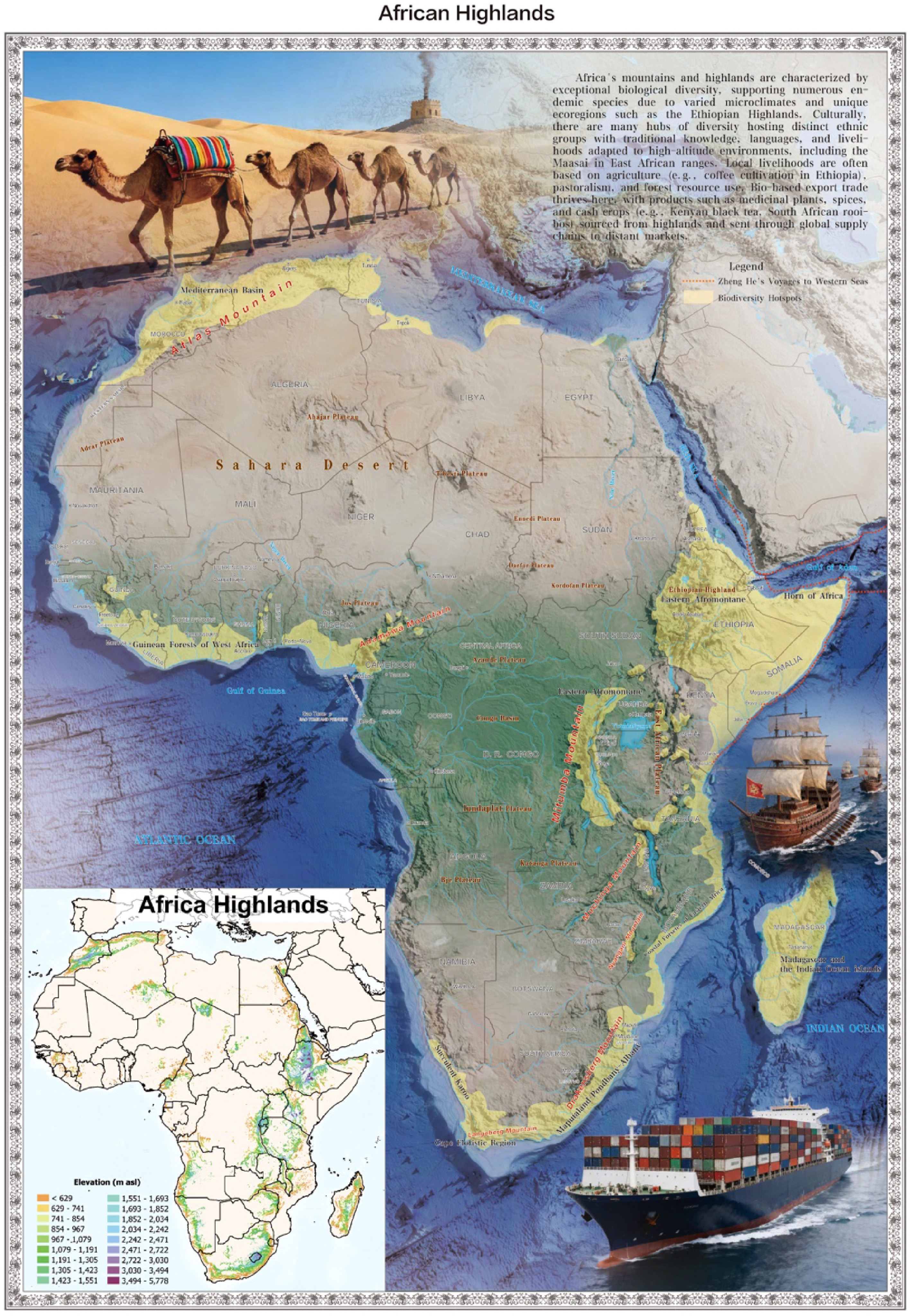
Figure 4.
African highlands.
Stretching over 8,900 km along South America's western edge, the Andes (Fig. 5) form a north-south biological corridor hosting many hundreds of endemic plants and animals along with ecosystems ranging from mid-elevation dry forests to alpine tundra[26]. These highlands cradled ancient civilizations, and terraced agriculture and llama domestication continue today in many indigenous communities. Bio-commerce thrives in alpaca wool and maca root exports, but rapid climate change, wildlife trafficking, and mining threaten both mountain ecosystems and human resilience[27].
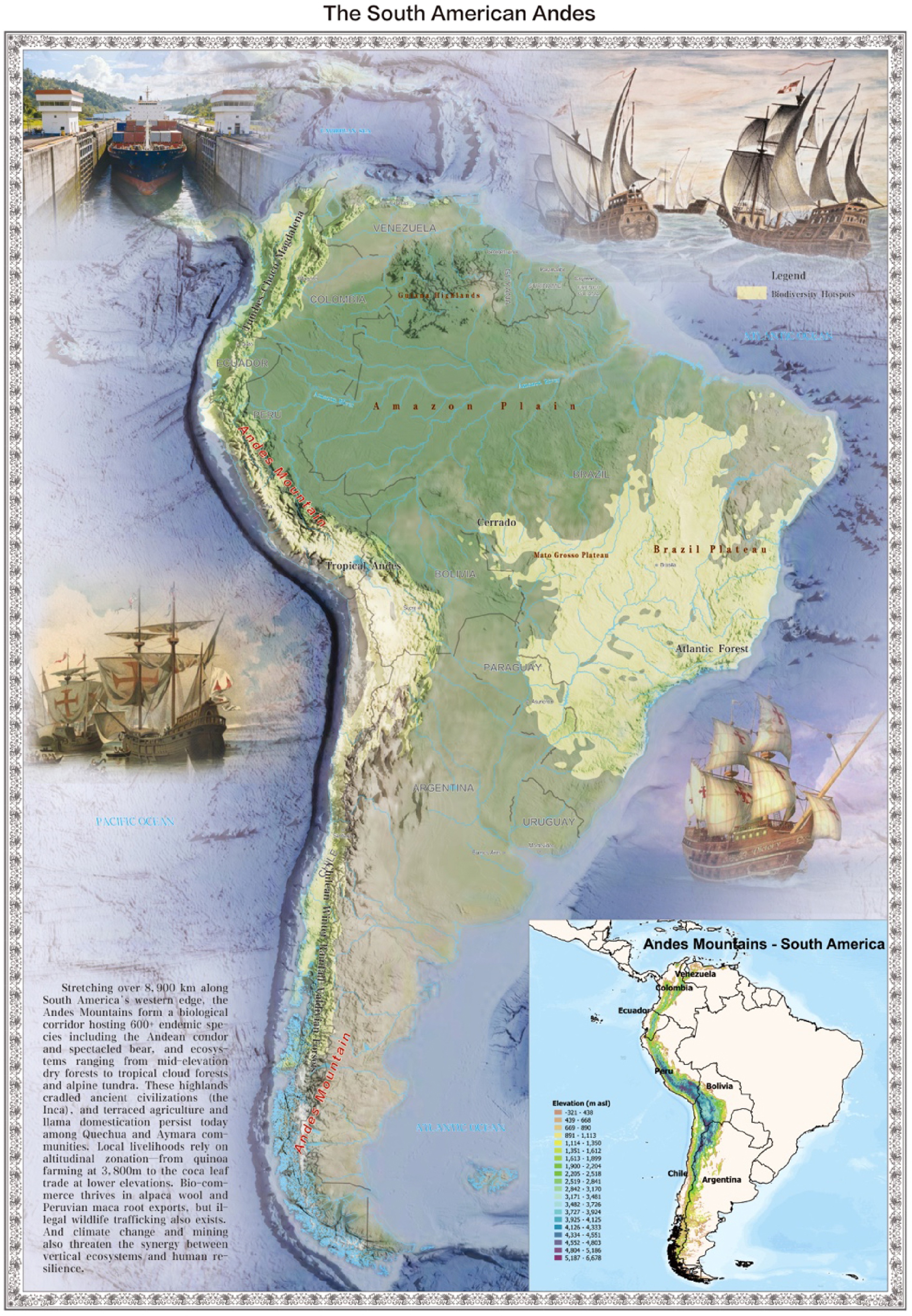
Figure 5.
The South American Andes.
-
In these five Global South mountain areas, biological and cultural diversity are rooted in the land. While mountains serve a multiplicity of ecological and social values, there are both commonalities and distinct differences between montane regions[28]. Given increasing ecological and social stressors throughout global mountain regions, and the still-inchoate specifics of a bioeconomy framework, now is the time to experiment with cooperative field work using social-ecological systems approaches that weave ecological stewardship more fully into biocultural conservation for sustainable economic development.
Actions based on an innovative Montane Bioeconomy Framework can help to achieve this[6]. This framework aligns with UN Sustainable Development Goals 12 and 15, as well as multiple targets of the Kunming-Montreal Global Biodiversity Framework. The suite of pilot projects described below are being initiated at multiple levels in each of the five focal mountain regions by Mountain Futures partnerships comprised of researchers, local communities, businesses, and governments.
Goal: Support scientific exploration and new production forces. Experiment with mixed biodiversity and biotechnology strategies to drive sustainable innovation for montane bioeconomies.
Actions:
(1) Work with researchers and local people to collect data to evaluate impacts of climate change on key species and develop adaptation strategies. Regions: MSW-Yunnan tea; AFH-Ethiopian coffee.
(2) Study neglected and underutilized species that may have bio-based economic value to promote mainstream adoption for climate-resilient food systems. Species with values for food, nutritional security and adaptability to climate change can be screened for potential use as Future Smart Crops[29]. Regions: HKH-medicinal herbs; SAA-Andean quinoa.
(3) Explore the keystone role of fungi[30], and microbial species[31] in ecosystem functions. This can help speed up soil restoration on degraded sites. Regions: MSW-fungi and microbal species for soil development.
(4) Using digital integration, deploy AI and blockchain to improve precision agriculture and bioresource tracking. Region: MSW-Hani rice terraces[32].
(5) Employ biotechnologies including: microbes for carbon sequestration in ecological restoration[33], CRISPR and DNA synthesis to enhance bio-products (fibers, fungi, crops, herbs), and new research on degradation of plastics[34]. Regions: MSW-Atribacterota for carbon sequestration, plastics degradation work, tea genomics; HKH-caterpillar fungi (Othiocordyceps), traditional medicinal herbs bioproducts; AFH-coffee genomics; SAA-alpaca wool bioproducts.
Goal: Advance ecological restoration and climate resilience. Restore degraded ecosystems to increase climate resilience using a variety of bioeconomic strategies.
Actions:
(1) Identify critical restoration zones with indicators for restoration guided by scientific research, Kunming Montreal Global Biodiversity Framework Targets 2 and 3, and local knowledge[35]. Regions: MSW-arid montane uplands; MMSEA-tropical montane forests; HKH-montane wetlands; SAA-Andean páramos.
(2) Implement circular economy experiments. Regions: AFH-solar-driven ammonia recovery from agricultural waste[36]; SAA-Andean totora reeds for natural fiber alternatives to plastics[37].
(3) Link carbon sequestration with biodiversity through developing vertical farming 'bio-banks' for carbon credits[38]. Regions: HKH, SAA-vertical farming.
Goal: Promote indigenous wisdom and ecological pluralism. Integrate traditional knowledge with contemporary bioeconomic practices.
Actions:
(1) Support capacity building with all partners (with a focus on younger farmers and local business partners). New technologies and strategies will often require effective training, impact assessment, and follow-up support[39]. Regions: All five.
(2) Document ethnobotanical knowledge for community-led conservation and potential new plant and animal products. Regions: HKH-Sherpa agro-pastoralism; SAA-Quechua farming.
(3) Protect natural and cultural landscapes by incorporating traditional ecological knowledge into various kinds (local, regional, national) of protected areas management. Experiment with landscape corridors[40], Globally Important Agricultural Heritage Systems[41], and Other Effective Area-based Conservation Measures (OCEM) lands[42]. Regions: MSW-corridors, agricultural heritage sites; all regions-OCEM.
(4) Support the role of women in all facets of a more pluralistic and just bioeconomy[43]. Focus on building ecological restoration that takes gender into account across community projects from design through monitoring and evaluation. Regions: All five.
(5) Support participatory innovation for craft products[44]. Co-design bio-based handicrafts with local communities and business partners. Regions: HKH-textiles, medicinal herbs; AFH-Maasai beadwork.
Goal: Stimulate benefit sharing and green trade. Establish benefit sharing and equitable bio-trade supply chains aligned with sustainability goals.
Actions:
(1) Certify mountain products and explore the use of life cycle analysis for selected goods. Regions: MSW-tea; HKH-medicinal herbs; SAA-maca[45].
(2) Explore biotechnologies: for example bio-bricks construction materials (made from agricultural waste); and developing 'green' clothing using innovative fibers from new plants (e.g. Calotropis spp.)[46]. Regions: MSW and AFH-new sustainable fibers;
(3) Develop mechanisms for greater benefit-sharing[47]. Work with community groups to identify benefits, costs, and more equitable implementation. Regions: All five.
(4) Promote green supply chains. With local partners, identify links in supply chains that can be strengthened. Initiate blockchain traceability for specific products (tea, coffee, textiles). Connect results to customer demands for fair trade (traceability, increased benefits for local farmers) and develop outreach based on product awareness[48]. Regions: All five (fair trade development); MSW-tea, coffee; MMSEA-coffee; HKH-textiles.
(5) Focus on products that combine high values for climate resilience and fair trade benefits, such as connecting Andean quinoa farmers to Asian markets via low-carbon logistical pathways. Expand ecotourism networks while working to minimize 'overtourism' and maximize benefits for local people[49]. Regions: All five. MSW and SAA-quinoa supply chain; MSW and HKH-ecotourism.
-
As Mountain Futures partners implement bioeconomy framework actions on the ground, they will seek to construct monitoring systems to measure progress toward project goals. Project-specific metrics may include species recovery rates, income growth for indigenous communities, carbon sequestration volumes, mapping/implementation of biological corridors, product traceability, reduction in plastics usage, increase in agricultural waste recovery, increase in fair trade certifications, and more. Monitoring measures will attempt to combine scientific expertise and traditional forms of knowledge. However, while there is increasing interest in monitoring that captures varied social aspects of sustainability beyond economic performance, much work remains to be done to incorporate women, younger people, and just transitions into bioeconomic monitoring[50].
-
The vision for a Bioeconomy Framework for global mountains is ambitious as it attempts to weave together the many complex strands of social-ecological behavior into a more sustainable whole. This work is immensely challenging even as current events appear to limit potential for success—climate change goals remain unmet[51], food insecurity is growing in mountains and elsewhere[3], and funding for all aspects of bioeconomic work remains inadequate[52]. But four themes offer guidance.
First, periods of polycrisis provide opportunities to experiment and implement new learning to solve problems. Choices range between continuing to support the status quo or working for change. Recently, the G20, the wealthiest bloc of countries in the world, issued a call for bioeconomic frameworks to embrace the full spectrum of social and biological components[53]; more researchers are also calling for transformative bioeconomic and circular economy frameworks[10]. Issuing calls for innovation, however, is easier than implementing actions for change. The task of Mountain Futures partners is to search for, discover, implement, learn from, and then widely share actions that can accelerate change toward better outcomes for conservation of social and ecological systems in mountains.
Second, the search for sustainable solutions requires an adaptive approach. Since we have little experience in building a sustainable bioeconomy, Mountain Futures projects can be designed as experiments in discovering what works and does not work as we incorporate lessons learned/best practices and move forward. This adaptive approach applies at all scales from working with local communities to international levels. A major challenge in this approach is that adaptive learning takes time, even as ecological and social pressures ramp up due to increasingly rapid climate change[54].
Third, it will also take time to implement ongoing 'success' in the actions, even as we better understand lessons learned through using a montane bioeconomy framework. Systemic change in values and lifeways may take decades to unfold as we gain experience with novel forms of sustainable behavior to negotiate complex tradeoffs between protecting nature and culture[55].
Last, the encouraging news is that the seeds of transformative change are already embedded in a montane bioeconomic framework. As soon as any product moves across any border, one must work with partners to solve problems—cooperative behavior is frontloaded into bioeconomic vision and practice at all scales. From montane agro-pastoralists to global corporations, better connections between people and nature will be fundamental toward shifting us all toward a more habitable world.
This paper is supported by Yunnan Provincial Science and Technology Department Grant No. 202303AP140001.
-
The authors confirm their contributions to the paper as follows: study conception and design: Xu J; data collection: Grumbine RE, Xu J; analysis and interpretation of results: Grumbine RE, Xu J; draft manuscript preparation: Grumbine RE, Xu J. Both authors reviewed the results and approved the final version of the manuscript.
-
Data sharing not applicable to this article as no data sets were generated or analyzed during the current study.
-
The authors declare that they have no conflict of interest.
- Copyright: © 2026 by the author(s). Published by Maximum Academic Press, Fayetteville, GA. This article is an open access article distributed under Creative Commons Attribution License (CC BY 4.0), visit https://creativecommons.org/licenses/by/4.0/.
-
About this article
Cite this article
Xu J, Grumbine RE. 2026. Toward an inclusive bioeconomy framework for global mountains. Circular Agricultural Systems 6: e003 doi: 10.48130/cas-0026-0003 

Toward an inclusive bioeconomy framework for global mountains
- Received: 12 November 2025
- Revised: 04 December 2025
- Accepted: 05 December 2025
- Published online: 09 February 2026
Abstract: Global mountain regions have great biological, cultural, and spiritual value for people around the world, but progress in efforts to conserve montane resources has been slow. International researchers are now acting to construct a bioeconomy framework for global mountains that includes biodiversity, cultural protection, and restoration, circular economy principles, biotechnology innovation, digital integration, sustainable fair trade, and social equity and justice. Plans in five mountain regions are reviewed for initial actions to implement this framework.