













-
Plants have evolved diverse strategies for environmental adaptation, among which trichomes serve as the primary defensive interface on plant surfaces[1]. Trichomes are classified into two categories: glandular trichomes (GTs) and non-glandular trichomes (NGTs). GTs act as major metabolic sites responsible for the biosynthesis, storage, and secretion of bioactive secondary metabolites, mediating chemical defense. NGTs mainly function in physical protection[2].
GTs exhibit multiple biological functions. In chemical defense, the secondary metabolites synthesized and stored in GTs defend the plants against herbivores. For example, the methyl ketones produced by GTs in wild Solanum lycopersicum are toxic to arthropods[3], and the nicotine in the GTs of Nicotiana tabacum repels insects[4]. The antimicrobial compounds secreted by GTs, such as sesquiterpene lactones in Artemisia annua, inhibit pathogenic microorganisms[5]. GTs also enhance abiotic stress tolerance by reducing water loss and reflecting ultraviolet radiation. During reproduction, the volatile compounds released by floral GTs can attract pollinators[6]. In addition, the subcuticular cavity of GTs provides a sequestered storage space for metabolites, preventing autotoxicity[7].
Increasing evidence indicates that GT development and terpenoid biosynthesis are not independent processes but are linked at multiple levels. Spatially and temporally, terpenoid accumulation is associated with GT maturation. Structurally, the subcuticular cavity enables metabolite compartmentalization and storage. At the molecular level, key transcription factors (TFs) such as AaMYC3/AaHD1 in A. annua and the Woolly/SlMYC1 module in S. lycopersicum have been shown to regulate genes involved in both GT formation and terpenoid biosynthesis[8,9]. Such multi-level association suggests that GT development and terpenoid production form an integrated system for metabolite sequestration and defense integration.
The current understanding of the regulatory logic connecting GT development and terpenoid biosynthesis is fragmented across species and experimental systems. A coherent framework is needed to integrate cell differentiation, metabolic pathways, and transcriptional control, in order to understand their potential coordinated mechanisms and support their applications in plant engineering. For the purpose of this review, GTs are defined as epidermal appendages containing secretory cells capable of producing, accumulating, or secreting specialized metabolites, including peltate and capitate GTs[10]. NGTs are not involved in metabolite synthesis or secretion and are therefore only compared morphologically[11].
In this review, we present the recent advances and propose an integrated framework for the coordinated regulation of GT development and terpenoid biosynthesis. First, we describe the developmental stages of GTs and the accumulation dynamics of terpenoids, emphasizing their spatiotemporal and structural coupling. Next, we analyze the transcriptional networks governing both processes, focusing on TFs that simultaneously regulate GT development and terpenoid biosynthesis. Finally, we discuss the implications of this regulatory logic for synthetic biology strategies aimed at crop improvement and plant-based terpenoid production systems. Through this review, we aim to systematically summarize the current knowledge, identify key research gaps, and propose future directions toward the synergy of plant development and specialized metabolism.
-
GTs are specialized epidermal structures characteristic of terrestrial plants. Morphologically and functionally, they are categorized as capitate and peltate types. For comparison, NGTs are also briefly described (Fig. 1).
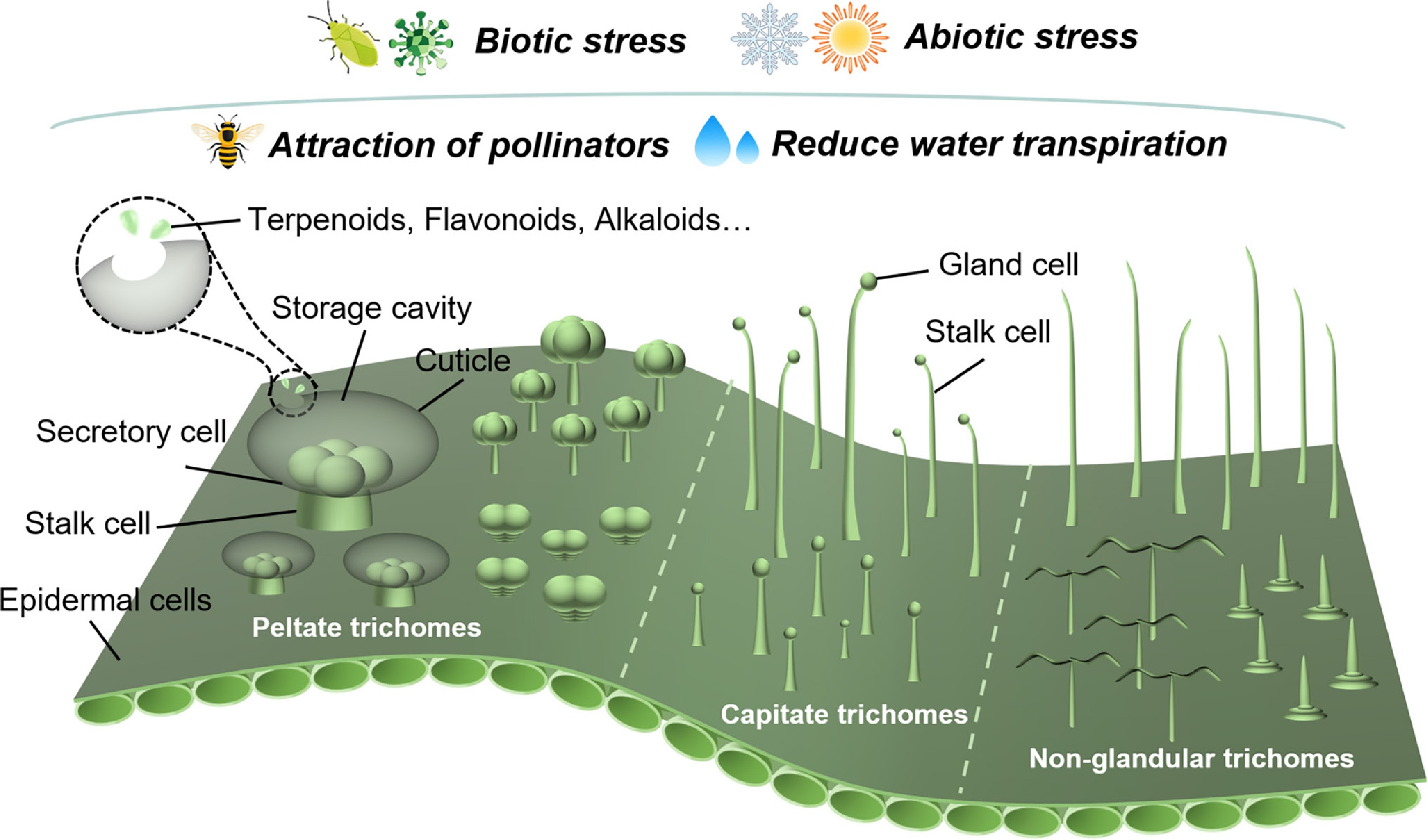
Figure 1.
Schematic comparison of different types of trichomes on the leaf surfaces of various plant species. Trichomes are classified into three categories: peltate GTs, capitate GTs, and NGTs. Examples for these are shown from M. piperita, A. annua, S. lycopersicum, Nicotiana spp., and C. sativus. The major biological functions of trichomes, including defense against biotic and abiotic stress, pollinator attraction, and reduced transpiration, are illustrated at the top of the figure.
Peltate GTs have short stalks and discoid multicellular secretory heads. Separation of the epidermis from the outer cell wall creates a subcuticular storage cavity, in which terpenoids, flavonoids, alkaloids, and other secondary metabolites accumulate. Metabolites are released via cuticle rupture or diffusion[12,13]. In S. lycopersicum, Type VI peltate GTs comprise four secretory cells and a relatively small internal chamber[14]. A. annua peltate GTs possess large subcuticular cavities that store high concentrations of volatile terpenoids such as artemisinin[15]. Mentha×piperita peltate GTs exhibit multicellular secretory heads with two to eight secretory cells, synthesizing and storing essential oils[16].
Capitate GTs possess elongated stalks, topped by one or several glandular cells. Most lack a distinct subcuticular storage cavity, and secretions are released through micropores or thin cuticular regions. For example, S. lycopersicum Type I capitate GTs have long stalks and unicellular heads[17], while Nicotiana spp. produce long-stalked capitate GTs with elongated stalk cells and a swollen unicellular head[18].
NGTs are non-secretory structures devoid of secretory cells and subcuticular cavities. They exhibit diverse morphological forms, including unbranched, branched, filamentous, and hooked types. For example, the T-shaped NGTs of A. annua are composed of branched cells arranged in a biseriate manner[19]. In Cucumis sativus, fruit spines have multicellular, cuticularized structures lacking secretory cavities, which project from the fruit epidermis as broad-based cones[20]. As terpenoid biosynthesis is not associated with development of NGTs, these structures are included here solely for morphological comparison and will not be further addressed in the regulatory framework of this review.
Synthesis and release of terpenoids in GTs
-
Terpenoids are plant secondary metabolites composed of isoprene units. They participate in plant defense, signal transduction, and aroma formation and include monoterpenes (C10) such as camphor[21] and menthol[22]; sesquiterpenes (C15) such as farnesol and caryophyllene[23]; diterpenes (C20) such as ginkgo lactones[24]; and triterpenes (C30) such as ginsenosides[25] and oleanolic acid[26]. Terpenoid precursors are provided by the methylerythritol phosphate (MEP) pathway in plastids and the mevalonate (MVA) pathway in the cytoplasm. Geranyl diphosphate synthase (GPPS), Farnesyl diphosphate synthase (FPPS), geranylgeranyl diphosphate synthase (GGPPS), and downstream terpene synthases constitute the main-chain structure. Cytochrome P450 (CYP450) and other enzymes modify the products. Monoterpenes and most diterpenes are synthesized in plastids[27]. Sesquiterpenes and triterpenes are synthesized in the cytoplasm. Products accumulate in specialized structures such as GTs, resin ducts, and vacuoles[28].
Certain terpenoid biosynthetic pathways are spatially restricted to GT secretory cells, in which key biosynthetic genes show distinct cell-specific expression, and end products are sequestered and enriched in specialized subcuticular cavities. A typical example is menthol, a high-value compound widely used in the food, cosmetic, tobacco, and pharmaceutical industries. In peltate GTs of M. piperita, the menthol biosynthetic pathway operates across plastids and the endoplasmic reticulum. After synthesis, the product is transported and stored in subcuticular cavities, which directly determines the plant's organoleptic and therapeutic properties[29]. Consistent with this spatial specificity, artemisinin localization is strictly dependent on GTs. Comparative analyses show that artemisinin is undetectable in plants lacking GTs and possessing only NGTs[30]. Similarly, GTs on N. tabacum leaf surfaces produce sucrose esters and diterpenoids that vary by cultivar and growth environment. Z-abienol, the predominant labdane-type diterpene and a key aroma precursor in certain aromatic N. tabacum cultivars, is synthesized from GGPP derived from plastids. After oxidative modification by endoplasmic reticulum-associated enzymes, it accumulates in GT secretory layers[31]. GTs in female flowers of Cannabis sativa are responsible for the synthesis and accumulation of resins rich in terpenes. The diversity of monoterpenes and sesquiterpenes therein generates a unique aroma and modulates the pharmacological effects of different cultivars[32]. In female inflorescences of Humulus lupulus, GTs synthesize and accumulate key bitter acids related to brewing, such as humulone. The content of these acids is strongly correlated with GT density and type, traits used to distinguish aromatic and bitter hop varieties[33].
Developmental dynamics and the accumulation patterns of terpenoids in GTs
-
GTs develop through a coordinated multicellular differentiation process from initiation to senescence (Fig. 2). Although most current evidence relies on temporal correlations between the developmental stages of GTs and terpenoid contents rather than direct causal experimental data, GT development can be clearly divided into four stages[34−36].
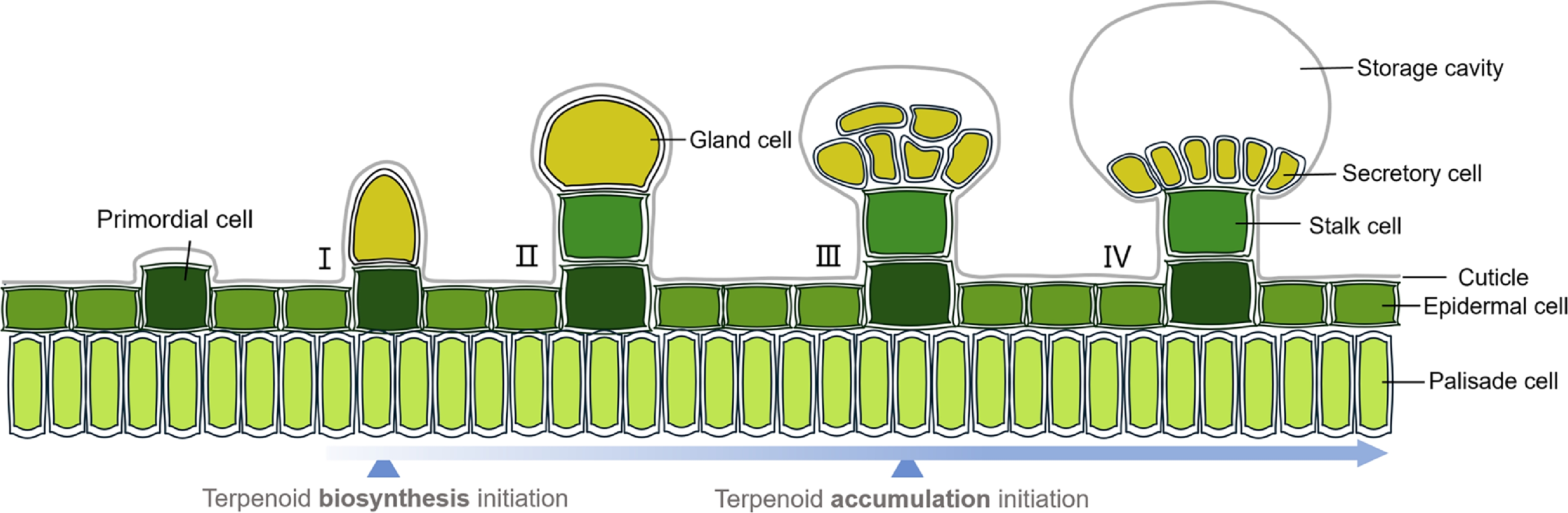
Figure 2.
Schematic diagram of the glandular trichome developmental process. GT primordial cells originate from protodermal cells of leaf primordia or young leaves. I. Epidermal cells first undergo directional differentiation and protrude outward. II. GT primordia form, followed by the differentiation of basal, stalk, and head cells. III. Head cells continue to divide and specialize into secretory cells. IV. Secretions accumulate in the subcuticular cavity, ultimately producing mature GT with swollen heads.
In the initiation stage, most species undergo asymmetric division of protodermal cells followed by periclinal division to form an apical initial cell and a basal cell, establishing the structural foundation of GTs.
During the early secretion stage, apical cells show a meristem-like morphology with only a small number of vacuoles. The endoplasmic reticulum gradually proliferates to supply membrane structures, the Golgi apparatus is active for vesicle transport, mitochondria increase sharply in number, and leucoplasts emerge. These changes prepare the plant for terpenoid biosynthesis and conversion. Biosynthetic activity remains low at this stage. Peltate GTs of Ocimum basilicum display few lipophilic droplets with no essential oil accumulation. Immature GTs of O. basilicum at the cell division stage show no secretory products after lipophilic staining, indicating that terpenoid biosynthesis has not yet started[37]. In Lavandula angustifolia, immature peltate GTs at the early developmental stage lack detectable essential oil accumulation, and terpenoid production commences only after the secretory head is fully formed[38].
In the active secretion stage, the thick cuticle at the GT apex detaches to form a subcuticular cavity. Cells contain abundant mitochondria and microbodies. Mature leucoplasts are diverse in shape, contain numerous oil-like droplets, and large numbers of vesicles release terpenoids into the storage cavity via exocytosis. In Salvia greggii, secretory cells of peltate GTs at the active secretion stage show high leucoplast activity and abundant smooth endoplasmic reticulum, with essential oil content reaching a maximum[39]. In Prostanthera ovalifolia, peltate GTs reach peak secretory capacity during the active stage, with 16-celled heads producing and storing large volumes of terpenoid-rich essential oil in the subcuticular cavity[40].
In the late secretion stage, large vacuoles occupy cellular volume, and vacuolar membrane invagination leads to the formation of vesicular bodies, with the gland filled with essential oil. The terpenoid content in single S. lycopersicum GTs can be over 100-fold higher than that in mesophyll cells of the same leaf[41], and 10-15-fold higher in short N. tabacum GTs compared with controls[42]. Terpenoids may be released through two main mechanisms: either continuous diffusion of volatile components across the cuticle or rapid release when the cuticle ruptures due to mechanical damage[43].
Overall, terpenoid accumulation is low during GT initiation, increases significantly during secretory differentiation, peaks when the subcuticular cavity forms at full maturity, and may decline in some species thereafter. Finally, during strictly regulated programmed cell death, the accumulated terpenoids retain their biological activity and continue to function in plant defense.
-
Systematic studies on TFs regulating GT development show that many TFs drive GT formation and differentiation by regulating GT-specific genes. Although these TFs have no direct evidence of regulating terpenoid synthases, they establish and maintain the differentiated state of GT secretory cells, create specialized sites for terpenoid synthesis and storage, and, thus, indirectly but critically contribute to the yield and accumulation level of volatile terpenoids. This represents an indirect but essential component supporting potential coordination between the two processes. Here, we summarize the TFs related to GT development in model plants for GT research, including A. annua, S. lycopersicum, and Nicotiana spp. Given the extensive information available in this field, we have further compiled these factors into a structured table. Unlike other relevant reviews, we systematically integrate their interacting genes and diverse experimental verification approaches such as gene overexpression and RNAi, yielding a clearer and more comprehensive overview (Supplementary Tables S1, S2 andS3).
In A. annua, AaHD1 and AaHD8, members of the HD-Zip IV TF family, directly bind to the promoters of GT-specific genes such as AaGWS2 and AaPDF2, and their regulatory functions have been confirmed by molecular experiments[44−46]. As a MIXTA family TF, AaMIXTA1 synergistically regulates GT development through interaction with AaHD1[47]. In S. lycopersicum, SlHD8 plays a core regulatory role in various GT types. It interacts with the non-specific lipid transfer protein (nsLTP) SlnsLTP33 and regulates the cell cyclin family SlCycB2, which then jointly participate in the regulation of typical type VI GT development[48,49]. In N. tabacum and N. benthamiana, HD-Zip IV TFs such as NtHD9 drive GT development and form a regulatory cascade through interaction with NtHD12[50,51]. Additional TFs governing GT development in these model plants are not repeated here; relevant information is provided in Supplementary Tables S1, S2 andS3.
Dual-function TFs in Artemisia annua and Solanum lycopersicum
-
Deeper regulatory mechanisms involve TFs with dual functions, which both bind and activate the promoters of GT development-related genes and directly regulate the expression of key terpenoid synthase genes (Table 1).
Table 1. Synergistic regulation of GT development and terpenoid biosynthesis by dual-function transcription factors.
Gene name TF family Key target genes of terpene biosynthesis Terpenoid type Evidence type Key target genes of GT development GT type Evidence type Gene function identification Ref. AaMYC3 (+) bHLH AaCYP71AV1/
AaALDH1Artemisinin Y1H/DLR/EMSA AaHD1 (+) GST Y1H/DLR/EMSA OE/RNAi [8] AaMYC2 (+) bHLH AaCYP71AV1/
AaALDH1Artemisinin Y1H AaHD1(+)/
AaGWS2 (+)GST RT-qPCR OE/RNAi [52] AaWRKY9 (+) WRKY AaDBR2 Artemisinin Y1H/EMSA AaGSW1 (+) GST Y1H/EMSA OE/RNAi [53] AaTLR1 (−) R2R3-MYB AaADS Artemisinin DLR AaMIXTA1 (+) GST DLR OE/RNAi/ectopic expression [54] SlWoolly (+) HD-Zip IV SlTPSs Monoterpenes/sesquiterpenes Y1H/Biotin-
DNA IPSlMYC1 (+) VI Y2H/Pull-down/
BiFC/LCAMutant/CRISPR-Cas9 [9] SlMYC1 (+) bHLH SlTPSs Monoterpenes/sesquiterpenes RT-qPCR SlTOR1 (+) VI Y1H/GUS RNAi/Mutant/
VIGS[55,56] SlMYB75 (−) R2R3-MYB SlTPS12/31/35 Sesquiterpene EMSA/ChIP-qPCR SlCycB2 (−) II/V/VI DLR/EMSA/
ChIP-qPCROE/RNAi [57] *(+): Positive regulation of GT development and terpenoid synthesis. (−): Negative regulation of GT development and terpenoid synthesis. Y1H: yeast one-hybrid; GST: glandular secretory trichome; DLR: dual-luciferase reporter; GUS: β-glucuronidase; EMSA: electrophoretic mobility shift assay; Biotin-DNA IP: biotin-labelled DNA IP assays; Y2H: yeast two-hybrid; pull-down: pull-down assay; LCA: luciferase complementation assay; BiFC: bimolecular fluorescence complementation; OE: overexpression; RNAi: RNA interference; VIGS: virus-induced gene silencing; ChIP-qPCR: chromatin immunoprecipitation qPCR. Artemisia annua
-
The bHLH TFs AaMYC3 and AaMYC2 identified in A. annua have been shown to directly regulate both processes. They bind to the promoters of key artemisinin synthase genes AaCYP71AV1 and AaALDH1 to activate the artemisinin biosynthetic pathway and simultaneously bind to the promoter of the GT development TF AaHD1 to coordinate GT formation[8,52]. AaWRKY9 directly activates the artemisinin biosynthetic pathway by binding to the promoter of AaDBR2 and also regulates GT development by targeting the promoter of AaGSW1[53]. The dual regulation of the R2R3-MYB TF AaTLR1 is more direct. It represses AaADS, the rate-limiting enzyme gene for artemisinin synthesis, and also represses the GT development TF AaMIXTA1[54]. This mechanism has been verified in transgenic plants; overexpression or knockdown of AaMYC3, AaMYC2, AaWRKY9, and AaTLR1 leads to synchronous changes in GT number and artemisinin content, indicating that coordinated regulation by these TFs ensures efficient artemisinin synthesis and full utilization of GT space.
Solanum lycopersicum
-
SlWoolly, an HD-Zip IV TF, has been shown to directly regulate the promoters of monoterpene and sesquiterpene synthase genes in type VI GTs through interaction with SlMYC1[9]. SlMYC1, a member of the bHLH family, binds to and activates the promoters of multiple monoterpene and sesquiterpene synthase genes. It also targets the promoter of SlTOR1 and acts synergistically with this GT-specific TF through DNA–protein interaction[55,56]. The R2R3-MYB transcription factor SlMYB75 inhibits sesquiterpene biosynthesis by directly repressing the expression of key sesquiterpene synthase genes such as SlTPS12, SlTPS31, and SlTPS35. Meanwhile, it negatively regulates the formation of type II, V, and VI GT by activating the GT development-related gene SlCycB2. The significantly increased GT density and sesquiterpene content in SlMYB75 knockdown plants further support the close coupling between GT development and sesquiterpene metabolism[57].
Cross-species conservation of dual-regulatory mechanisms controlling GTs and terpenoid metabolism
-
Cross-species comparative analysis shows that similar regulatory associations are common in many economic plants (Table 2). In Chrysanthemum morifolium, CmMYBML1 binds to the promoters of CmTPS9 and CmTPS12 to promote terpene biosynthesis. It interacts with CmMYC2 to form a regulatory module that coordinately controls trichome development and terpene accumulation, enhancing plant defense against herbivores[58]. In Conyza blinii, CbMYB108 regulates not only the expression of terpenoid synthases CbDXS and CbGGPPS but also the promoter of the GT-specific gene CbTTG1 to control the development of capitate GTs[59]. In M. canadensis, the nsLTP protein McLTPII.9 interacts with the GT development-related genes McMIXTA and McHD-Zip3. Although the direct regulation of terpenoid synthases by McLTPII.9 has not been verified, quantitative polymerase chain reaction (qPCR) shows that it regulates the expression of monoterpene and sesquiterpene synthase genes[60]. Overexpression of StMYC2 in Schizonepeta tenuifolia increases the number of peltate GTs and regulates the expression of terpenoid synthases StL3OH and StPR[61].
Table 2. Cross-species comparison of the dual regulatory modes of transcription factors.
Gene name TF family Species Key target genes of terpene biosynthesis Terpenoid type Evidence type Key target genes of GT development GT type Evidence type Gene function identification Ref. CmMYBML1 (+) R2R3-MYB C. morifolium CmTPS9/12 Monoterpenes/
sesquiterpenesY1H/DLR/EMSA/ChIP-qPCR CmMYC2 (+) GST/TST Y2H/pull-down/BiFC OE [58] CbMYB108 (+) R2R3-MYB C. blinii CbDXS/
CbGGPPSBlinin Y1H/DLR/GUS CbTTG1 (+) Capitate GT Y1H/DLR/
GUSOE/VIGS [59] McLTPII.9 (+) nsLTP M. canadensis StL3OH/
StIPD/StGPPSMonoterpenes/
sesquiterpenesRT-qPCR McMIXTA1 (+)/McHD-Zip3(+) Peltate GT RT-qPCR OE [60] StMYC2 (+) bHLH S. tenuifolia StL3OH/StPR Monoterpenes Y1H/DLR/EMSA − Peltate GT − OE/RNAi [61] *(+): Positive regulation of GT development and terpenoid synthesis. (−): Negative regulation of GT development and terpenoid synthesis. It should be noted that the dual-function TFs reviewed here differ in the strength of evidence supporting their roles. The functions of some TFs are strongly supported by genetic data (obtained through CRISPR-Cas9 or RNAi knockdown) that showed the TFs as having caused coordinated changes in GT development and terpenoid content, by molecular confirmation (via Y1H or ChIP-qPCR) of dual promoter binding, and by phenotypic reversibility studies. The functions of other TFs stated here are based mainly on co-expression patterns and protein interactions without genetic validation. Both types of TFs are discussed here because it informs our understanding of the regulatory framework, though readers should be aware of the differences in the robustness of the evidence supporting the roles of these TFs.
Two strategies for coupling trichome development with terpenoid biosynthesis
-
Comparative studies across diverse plant species reveal a conserved regulatory strategy, despite diversity in the specific TFs involved. Two complementary regulatory mechanisms support potential coordination between GT development and terpenoid biosynthesis. First, a cohort of TFs regulate genes essential for GT development. These factors establish the morphological structure, including the subcuticular cavity, which provides the physical space and cellular compartments necessary for the synthesis and accumulation of terpenoids. These developmental factors indirectly support terpenoid production by establishing specialized secretory cells. Second, dual-function TFs directly couple the two pathways. These factors have two-pronged regulatory activities: on one hand, they bind to and activate the promoters of genes involved in GT development. On the other hand, they simultaneously bind to the promoters of terpenoid synthase genes to activate the terpenoid biosynthetic pathway. Genetic evidence consistently shows that overexpression or knockdown of these dual-function factors results in synchronous changes in both GT density and terpenoid content, indicating a direct regulatory link (Fig. 3).
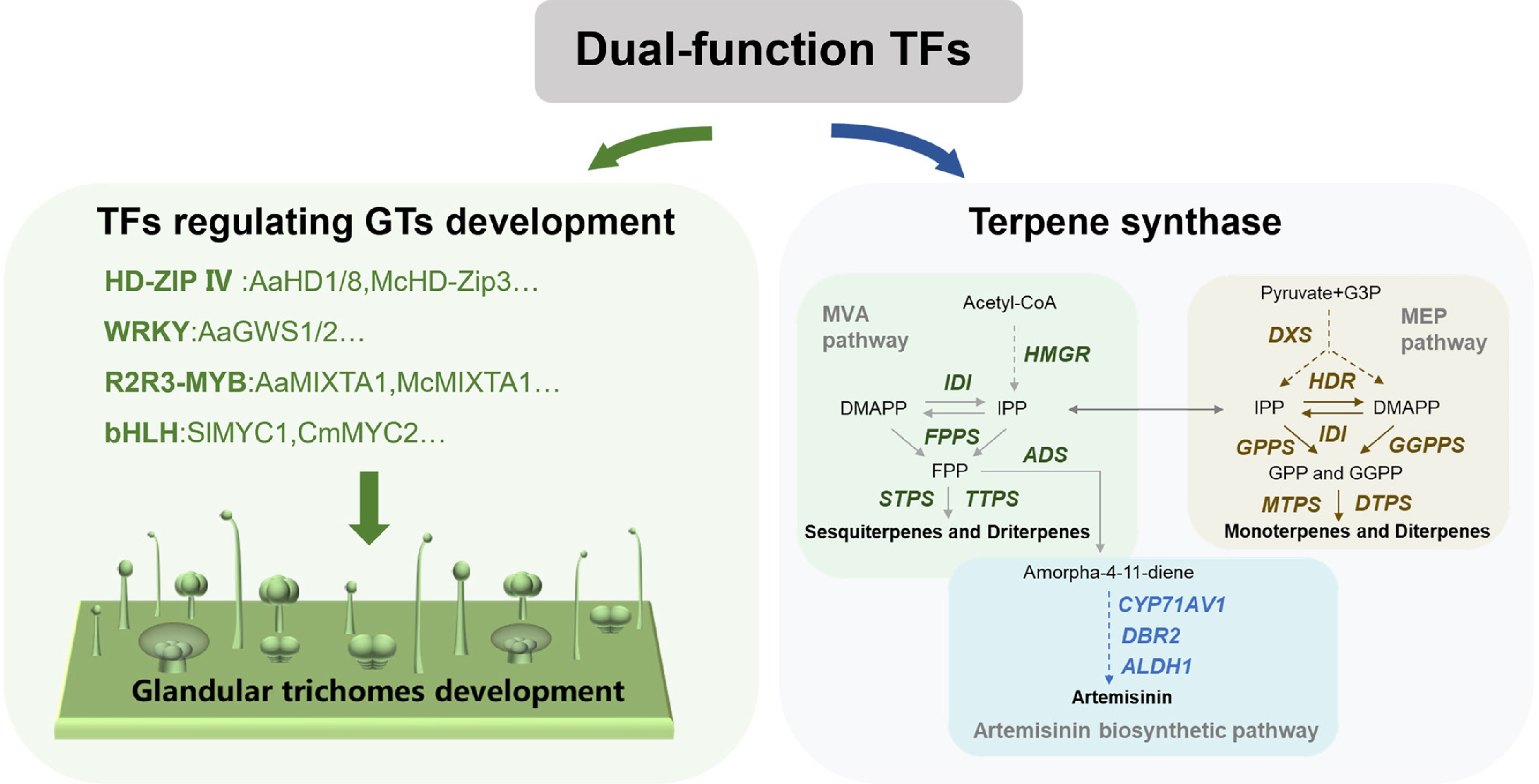
Figure 3.
Synergistic regulation of glandular trichome development and terpenoid biosynthesis by dual-function transcription factors. Dual-function TFs act as central regulators that simultaneously control GT morphogenesis and the terpenoid biosynthetic network, including MVA/MEP pathways, terpene synthases, and the artemisinin pathway, linking cellular differentiation to specialized metabolite production in plants.
This dual-layer regulatory architecture consists of two components. Development-specific factors establish the structural foundation for terpenoid synthesis and storage, while dual-function factors coordinately control both GT morphogenesis and terpenoid metabolism. This coordination prevents wasteful metabolic investment in NGT cells and maximizes the utilization of specialized subcuticular compartments for efficient metabolite accumulation.
-
Elucidation of the multi-level connections between GT development and terpenoid biosynthesis has advanced our current understanding of how specialized metabolism integrates with epidermal differentiation. This regulatory logic, spanning spatial compartmentalization to shared transcriptional networks, provides a framework for translating mechanistic studies into synthetic biology and metabolic engineering applications. Beyond descriptive research, we outline three directions that leverage this coordination and summarize the key challenges requiring further investigation.
Deciphering the causality dilemma and physical bottlenecks via high-resolution omics
-
Although we have established the correlations between GT organogenesis and terpenoid biosynthesis, the fundamental causal hierarchy remains an open question. It is unclear whether a pre-determined GT developmental program activates terpenoid metabolic pathways, or whether accumulation of metabolic precursors acts as a signal to trigger GT development. The rapid advancement of single-cell multi-omics and spatial transcriptomics has allowed researchers to construct pseudotime trajectories of GT development, which helped in determining the precise temporal order of metabolic activation and cell fate commitment[62]. These technologies provide the resolution needed to define GT-specific regulons and interaction networks, and to identify shared regulatory nodes that link development and metabolism. These nodes are typically masked in traditional bulk tissue sequencing. Furthermore, these tools are essential for identifying molecular switches that link subcuticular cavity formation with terpenoid metabolic surges. Clarifying these processes is critical for overcoming the storage space limits and transport barriers of terpenoids, and for providing key breeding targets for increased secondary metabolite accumulation.
Engineering crops with coordinated GT traits and terpenoid outputs
-
Conventional breeding is often limited by trade-offs between GT density, plant vigor, and secondary metabolite production. Genome modification and engineering based on synergistic regulatory networks, rather than single-trait enhancement, offers a strategy to overcome this bottleneck. Future crop engineering can achieve simultaneous improvements in GT development and terpenoid synthesis by reconfiguring endogenous regulatory modules. Using multiplex CRISPR-Cas9 editing and plant transformation, core TFs can be fine-tuned to increase GT initiation and density without reducing the crop biomass. For example, GT morphogenesis can be used to generate higher-capacity peltate types by modulating HD-Zip IV/MIXTA modules. Alternatively, key TFs such as AaMYC3/AaHD1, SlMYC1/SlWoolly, and CmMYBML1/CmMYC2 can be modulated to synergistically activate downstream terpenoid synthase genes, ensuring that the proliferated GTs maintain efficient metabolic activity. Collectively, these strategies can enable the development of crop germplasm that combines high yield and tailored metabolite profiles. Examples for these include S. lycopersicum with elevated volatile terpenes that enhance both flavor and pest resistance, and A. annua lines with increased artemisinin content without yield penalties. Together, these examples achieve the simultaneous genetic improvement of GT development and terpenoid metabolism.
De novo construction of plant cell factories
-
Synthetic biology provides a new approach beyond traditional breeding for terpenoid accumulation in cultivable species, moving away from reliance on metabolic engineering in native plants[63,64]. Using GT or GT-like structures as a chassis to construct de novo plant cell factories with high yield and directed metabolic flux is a promising alternative. A primary strategy involves engineering GT-like structures in tractable heterologous host plants. By introducing minimal GT-inducing regulatory modules, GT-like structures with ectopic high density can be induced in defined tissues of tractable plants such as N. benthamiana. When combined with GT-preferential promoters driving a host-optimized heterologous terpenoid metabolic pathway, and precise subcellular targeting or pathway organization, this integrated design can enable the construction of in planta bioreactors[65]. Such systems provide spatially and metabolically insulated production compartments, ensuring the sustainable production of high-value medicinal terpenoids without reliance on cultivation of medicinal plants.
We sincerely thank Xiang Gao (Northeast Normal University, China) and Xin Li (Northeast Forestry University, China) for critically reading and revising the manuscript. We extend our apologies to colleagues whose valuable work was missed or could not be cited owing to length limitations and considering the specific focus of this review. This work was supported by the National Natural Science Foundation of China under Grant Number 32371932 to Y.Z. and supported by the Postdoctoral Fellowship Program of CPSF under Grant Number GZC20251299 to W.X., and the China Postdoctoral Science Foundation under Grant Number 2025M771921 to W.X.
-
The authors confirm their contributions to this study as follows: collected the data from literature: Zhao J, Xue W, Shi J, Zhao X, Zhang Y; designed the models: Xue W, Zhang Y; writing − draft manuscript preparation: Zhao J, Xue W, Shi J; writing − revise: Zhao J, Zhao X, Zhang Y. All authors reviewed the results and approved the final version of the manuscript.
-
Data sharing does not apply to this article, as no datasets were generated or analyzed during the current study.
-
The authors declare that they have no conflicts of interest regarding the publication of this manuscript.
-
accompanies this paper online at: https://doi.org/10.48130/vegres-0026-0019.
-
# Authors contributed equally: Jinfeng Zhao, Wanjie Xue
- Supplementary Table S1 Glandular trichome development transcription factors in Artemisia annua.
- Supplementary Table S2 Glandular trichome development transcription factors in Solanum lycopersicum.
- Supplementary Table S3 Glandular trichome development transcription factors in Nicotiana spp.
- Copyright: © 2026 by the author(s). Published by Maximum Academic Press, Fayetteville, GA. This article is an open access article distributed under Creative Commons Attribution License (CC BY 4.0), visit https://creativecommons.org/licenses/by/4.0/.
-
About this article
Cite this article
Zhao J, Xue W, Shi J, Zhao X, Zhang Y, et al. 2026. Integrated regulatory networks: coordinating glandular trichome development and terpenoid synthesis in plants. Vegetable Research 6: e026 doi: 10.48130/vegres-0026-0019 

Integrated regulatory networks: coordinating glandular trichome development and terpenoid synthesis in plants
- Received: 20 January 2026
- Revised: 18 April 2026
- Accepted: 19 May 2026
- Published online: 29 July 2026
Abstract: Glandular trichomes (GTs) are specialized epidermal structures in plants, which function as sites for the biosynthesis and storage of secondary metabolites, predominantly terpenoids. Traditionally, GT development and terpenoid biosynthesis were regarded as independent processes. However, accumulating evidence indicates that these two processes are often associated. In this review, we examine this relationship across multiple regulatory levels. At the spatiotemporal level, terpenoid accumulation is temporally associated with GT maturation. At the structural level, the subcuticular cavity formed during GT development provides a compartment for terpenoid storage. At the transcriptional level, key regulators such as MYB and bHLH transcription factors (TFs) have been shown to directly regulate both GT development and terpenoid biosynthetic pathways. We describe the developmental stages of GTs alongside the accumulation patterns of terpenoids and propose an integrated regulatory framework governing both processes in model plants and economically important crop species. We also discuss how this regulatory framework may inform strategies for engineering terpenoid-producing crops and constructing plant cell factories for terpenoid production.