











-
The genus Nitraria L. comprises typical halophytic shrubs widely distributed in arid, semi-arid, and saline habitats across Eurasia and Australia. Nitraria tangutorum (N. tangutorum) and Nitraria sibirica (N. sibirica) are endemic to the Qinghai-Xizang Plateau. They act as key dominant plants to prevent wind erosion, fix sand, and improve saline-alkali land in desert areas[1]. Nitraria fruit is rich in nutrients with a unique taste and has a long history of traditional application. Morpho-physiological traits including succulent leaves and well-developed root systems represent typical evolutionary adaptations enabling survival under extreme habitats characterized by high salinity, drought, and intense ultraviolet radiation[2,3]. Succulent degeneration of leaves, wax or trichome coverage, and highly-developed root systems constitute the hallmark morphological and physiological features underlying its adaptation to high-salt, drought, and nutrient-impoverished environments. Classics such as Bencao Gangmu and Bencao Shiyi record that its fruit can tonify the spleen and stomach, soothe the nerves, and aid sleep. They are also used for relieving exterior syndromes and soothing the nerves in Mongolian and Uyghur medicine. It has also been widely used in folk medicine abroad. Its fruit is processed into jams and drinks in Central Asia, while branches and leaves are used to treat inflammation and joint pain in North Africa and Southern Europe. Modern development is relatively mature, with products such as Nitraria fruit juice, wine, and fermented drinks, as well as health products and cosmetics containing Nitraria polysaccharides and flavonoids. Its medicinal potential and ecological restoration value are attracting increasing international attention.
In recent years, with growing recognition of the value of distinctive plant resources, studies on Nitraria have progressed from basic ecological surveys and preliminary phytochemical analyses to systematic, in-depth mechanistic research. Nitraria contains anthocyanins[4−6], flavonoids[7−9], alkaloids[10−12], polysaccharides[13−15], and phenolic acids[11,12,16,17]. These bioactive constituents underpin its diverse pharmacological activities, such as antioxidant[18,19], anti-inflammatory[13,18,20], antimicrobial[21−23], hypoglycemic[10,24], hypolipidemic[15,25,26], and neuroprotective effects[4]. Notably, the biosynthesis, accumulation, and regulation of these secondary metabolites are closely linked to its adaptation to extreme environments.
Despite recent progress, Nitraria research still has obvious imbalances and bottlenecks. Studies on characteristic bioactive components mostly focus on phytochemistry and preliminary pharmacological validation, with few systematic investigations into biosynthesis mechanisms, regulatory networks, and structure–activity relationships. Four scientific questions need addressing: First, how to identify the complete biosynthetic pathways and key rate-limiting enzyme genes for characteristic bioactive components? Second, which transcription factors and epigenetic modifications form the core regulatory network of the metabolic pathways? Third, how do extreme environmental signals coordinately regulate stress resistance and specific metabolite accumulation in Nitraria? Fourth, what are the structure–activity relationships between bioactive components and their biological activities? Focusing on the chemical structures, pharmacological activities, and molecular mechanisms of Nitraria components, this review summarizes recent advances in relevant fields, analyzes research limitations, and outlines a mechanism-driven blueprint for future studies, aiming to provide a theoretical foundation and technical pathway for sustainable, in-depth exploitation of Nitraria resources.
-
Genomic research on Nitraria has advanced from preliminary exploration to fine-scale mapping. The chloroplast genomes of N. tangutorum and N. roborowskii are 159,383 and 159,397 bp in length[27]. Phylogenomic analyses reveal that N. tangutorum and N. roborowskii form a monophyletic clade positioned at the base of the order Sapindales[27]. Sequencing of the complete plastid genome (159,369 bp) of Nitraria sphaerocarpa (N. sphaerocarpa) has laid the groundwork for phylogenetic and plastid genetic studies of the genus[28]. A breakthrough came with the release of the chromosome-level high-quality reference genome of N. sibirica[29]. Integrating PacBio HiFi and chromosome conformation capture (Hi-C), the genome assembly totalled 456.66 Mb, consisting of 170 contigs with an N50 value of 9.07 Mb[29]. Phylogenomic analyses indicate that Nitraria underwent the shared ancestral γ hexaploidy event during evolution, with no recent lineage-specific whole-genome duplication detected[29]. This may be associated with its relatively stable diploid status and specialized niche-adaptation strategies. In-depth genome mining identified 63 Calmodulin-like (CML) genes; NtSI03G1136 and NtSI01G1645 were verified to enhance salt tolerance in transgenic poplar by alleviating H2O2 accumulation[30]. These high-quality genomic resources offer critical support for genome-wide mining of gene families related to stress resistance and secondary metabolism, as well as comparative genomic and evolutionary biological studies (Fig. 1).
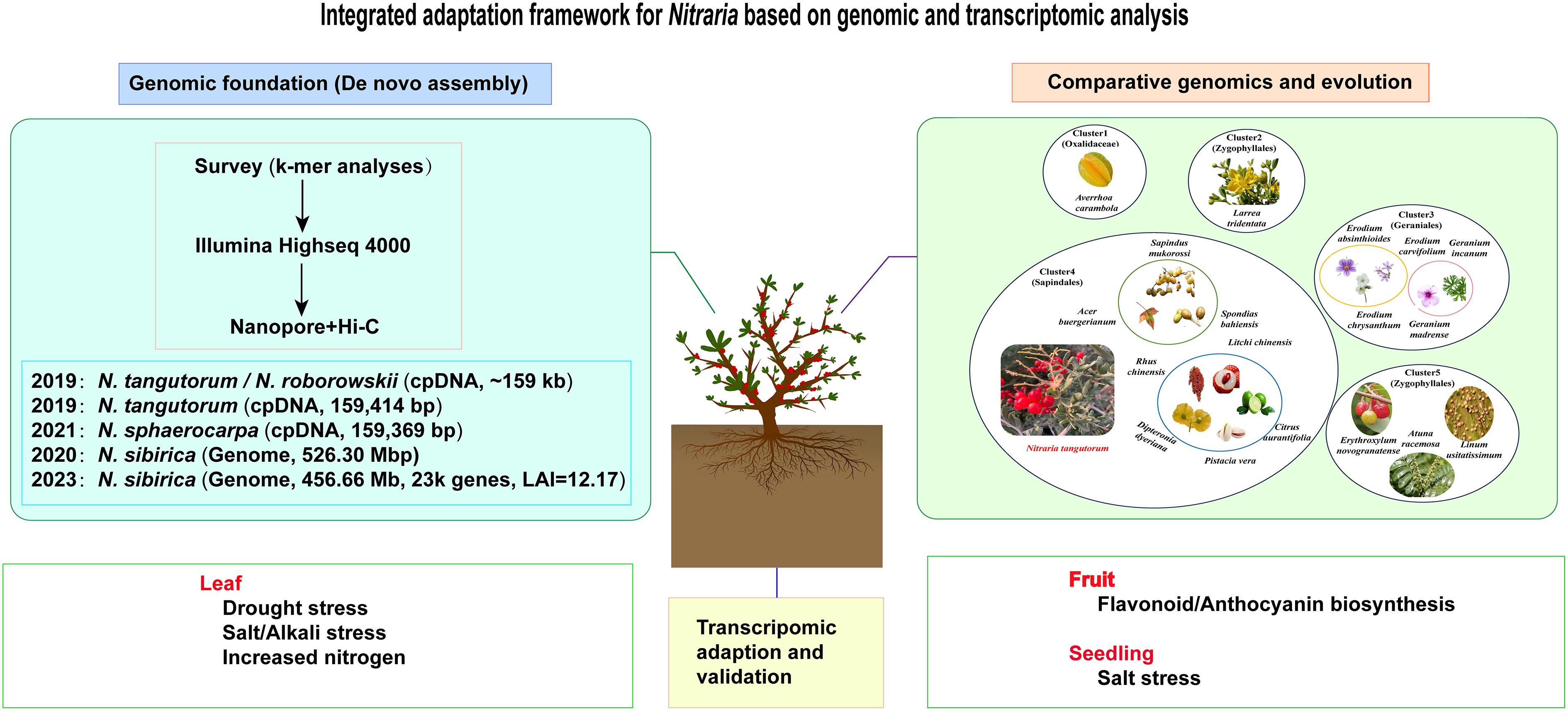
Figure 1.
Genome and transcriptome-based studies on adaptive evolution in Nitraria. This study employed multi-platform sequencing technologies to assemble the complete chloroplast genomes and whole-genome sequences of N. tangutorum and N. sibirica. Combined with transcriptomic profiling, it elucidates the molecular regulatory mechanisms underlying abiotic stress tolerance and the biosynthesis of bioactive compounds in the fruit of these species.
Transcriptomic dissection of development and stress responses
-
Transcriptomics has become a core tool for unraveling the dynamic regulatory mechanisms underlying biological processes in Nitraria (Fig. 1). In the context of developmental and metabolic regulation, RNA-Seq of three key fruit coloring stages (green, yellow, and red) in N. tangutorum established a transcript library containing 69,306 unigenes[31]. Differential expression analysis indicated that the transition from green to red is accompanied by extensive differential gene expression, with the anthocyanin biosynthesis pathway significantly activated. qRT-PCR analysis revealed that core structural genes directly contribute to fruit color phenotypic variations by activating specific metabolic pathways at the transcriptional level[31]. Integrated metabolomic and transcriptomic analyses comparing the fruits of N. tangutorum, N. sibirica, and N. roborowskii revealed that while the three species share the basic framework of flavonoid metabolism, interspecific differences in flavor and color are primarily driven by differential gene expression in the anthocyanin pathways. Key structural genes governing metabolic flux were identified as critical determinants[32].
In the stress response, multiple transcriptomic studies have delineated the complex transcriptional regulatory networks of Nitraria under salt, drought, and alkali stresses, with three synergistic core regulatory modules: (1) Ion homeostasis regulation: Salt stress induces the plasma membrane-localized Na+/H+ antiporter SOS1, vacuolar Na+/H+ antiporter 1/2/6, and vacuolar H+-ATPase that provide proton motive force for secondary transport[33−35], while high-affinity potassium transporter genes are upregulated to maintain optimal intracellular K+/Na+ ratio[36]. (2) Osmoprotectant and reactive ROS scavenging: Stress upregulates the key proline synthesis gene P5CS, soluble sugar metabolism genes, and antioxidant enzymes, including superoxide dismutase (SOD), peroxidase (POD), catalase (CAT), and ascorbate peroxidase (APX), which are broadly upregulated[37,38], synergistically promoting osmolyte accumulation and mitigating oxidative stress. (3) Signal perception and transcriptional cascades: Stress signals are amplified via plant hormone signaling pathways, activating AP2/ERF, WRKY, bHLH, NAC, and MYB transcription factors[39−42]. These factors form an upstream regulatory network that modulates downstream functional genes, orchestrating ion transport, osmolyte synthesis, and antioxidant defense.
For instance, PacBio full-length transcriptome sequencing of N. sibirica under salt stress identified salt-tolerant candidate genes including AMYB2, CML38, and H+-PPase[33]. Under drought stress, downregulation of nitrate reductase (NR) in N. tangutorum inhibits glutamine synthesis, while upregulated protochlorophyllide reductase promotes chlorophyll a synthesis and chlorophyll b-to-a conversion, facilitating adaptation to stressful light environments[43]. Alkali stress induces cell membrane damage, increased electrolyte leakage, and excessive ROS accumulation in N. tangutorum seedlings[42]. Exogenous abscisic acid (ABA) promotes NtFLS, NtF3H, and NtANR transcription, activating flavonoid biosynthetic pathways[42]. From a systems biology perspective, these studies dissect the molecular mechanisms by which Nitraria regulates stress resistance and secondary metabolism via multi-level gene expression modulation, providing a basis for mining bioactive component synthesis regulatory targets.
Despite breakthroughs in genomic and transcriptomic research on Nitraria, significant limitations persist. High-quality genomes are only available for a few species (e.g., N. sibirica), while genomes of Qinghai-Xizang Plateau endemics (N. tangutorum and N. roborowskii) are uncharacterized, restricting interspecific comparative studies on stress resistance and metabolism. Most transcriptomic studies focus on single stresses or single developmental stages, lacking dynamic transcriptional regulatory data under combined stresses and across the full life cycle, which is disconnected from the complexity of natural habitats. Furthermore, functional prediction of key secondary metabolism biosynthetic genes in genome annotations relies on homologous alignment with scarce direct functional validation, leaving gene-metabolite associations speculative.
-
Anthocyanins are water-soluble, characteristic bioactive pigments, widely distributed in the fruit of Nitraria species. To date, more than 20 monomeric anthocyanins have been identified (Table 1), among which cyanidin derivatives are the predominant components, accompanied by minor pelargonidin, delphinidin, peonidin, and malvidin derivatives. All anthocyanins are glycosylated at the C3 position with glucose, diglucose, rutinoside and other sugar moieties (Fig. 2). Among them, cyanidin 3-(2''-[6‴-coumaroyl]-glucosyl)-glucoside (C3G) is the predominant monomer, accounting for 87.06% of the total anthocyanin content[4,5,44], and its isolation and purification have been successfully achieved[44].
Table 1. Anthocyanins isolated from the fruits of Nitraria.
No. Compound MS+
(m/z)MS/MS
(m/z)Molecular
formulaCore structure Key distinguishing structural features Species Ref. 3' 5' 1 Cyanidin-3-O-diglucoside 611.16 287.05 C27H31O16+ Cyanidin Di-Glu OH N. sibirica [1,5,45,46] 2 Cyanidin-3-O-sambubioside 581.15 287.05 C26H29O15+ Cyanidin Samb OH N. sibirica/N. tangutorum [4,5,45] 3 Pelargonidin-3-O-diglucoside 595.17 271.06 C27H31O15+ Pelargonidin Di-Glu OH N. sibirica/N. tangutorum [1,5,46] 4 Peonidin-3-O-diglucoside 625.18 301.07 C28H33O16+ Peonidin Diglucoside OH N. sibirica/N. tangutorum [1,5,46] 5 Cyanidin-3-[2''-(6'''-transcaffeoyl)-glucosyl]-glucoside 773.19 287.05 C36H37O19+ Cyanidin Trans-caffeoyl-Di-Glu OH N. sibirica/N. tangutorum [5,46] 6 Cyanidin-3-[2″-(6‴-transcoumaroyl)-glucosyl]-glucoside 757.20 287.05 C36H37O18+ Cyanidin Trans-coumaroyl-Di-Glu OH N. sibirica/N. tangutorum [1,4,5,44−46] 7 Pelargonidin-3-O-(caffeoyl)-diglucoside 757.20 271.06 C36H37O18+ Pelargonidin Caffeoyl-Di-Glu OH N. sibirica/N. tangutorum [1,4,5,45] 8 Pelargonidin-3-[3-[2''-(6'''-transcoumaroyl)-glucosyl]-glucoside 741.20 271.06 C36H37O17+ Pelargonidin Transcoumaroyl-Di-Glu OH N. sibirica/N. tangutorum [5,45,46] 9 Cyanidin-3-O-[2-O-(β-D-glycopyranosyl)-β-D-glucopyranoside] 611.16 287.05 C27H31O16+ Cyanidin β-D-glycopyranosyl-β-
D-glucopyranosideOH N. tangutorum [1,4] 10 Cyanidin-3-[2″-(6‴-cis-caffeoyl)-glucosyl]-glucoside 773.19 287.05 C36H37O19+ Cyanidin Cis-caffeoyl-Di-Glu OH N. tangutorum [4] 11 Cyanidin-3-[2″-(6‴-ferulyl)-glucosyl]-glucoside 787.21 287.05 C37H39O19+ Cyanidin Ferulyl-Di-Glu OH N. tangutorum [1,4] 12 Pelargonidin-3-[2″-(6‴-ferulyl)-glucosyl]-glucoside 771.21 271.06 C37H39O18+ Pelargonidin Ferulyl-Di-Glu OH N. tangutorum [4] 13 Pelargonidin-3-[2″-(6‴-cis-coumaroyl)-glucosyl]-glucoside 741.20 271.06 C36H37O17+ Pelargonidin Cis-coumaroyl-Di-Glu OH N. tangutorum [1] 14 Cyanidin-3-O-hexose 449.11 287.05 C21H21O11+ Cyanidin Hex OH N. tangutorum [1] 15 Cyanidin-3-O-(cis-p-coumaroyl)-diglucoside 757.20 287.05 C36H37O18+ Cyanidin Cis-p-coumaroyl-Di-Glu OH N. tangutorum [1,46] 16 Delphinidin-3-O-(cis-p-coumaroyl)-glucoside 611.16 303.08 C30H27O14+ Delphinidin Cis-p-coumaroyl-Di-Glu OH N. tangutorum [1] 17 Cyanidin-3-O-(p-coumaroyl)-glucoside 595.17 287.05 C30H27O13+ Cyanidin p-coumaroyl-Glu OH N. tangutorum [1,45] 18 Malvidin-3-O-glucoside 493.13 331.10 C23H25O12+ Malvidin Glu OH N. tangutorum [45] 19 Delphinidin-3-O-(6″-O-coumaroyl)-glucoside,5-O-glucoside 773.19 303.08 C36H37O19+ Delphinidin Coumaroyl-Glu Glu N. tangutorum [4,45] 20 Delphinidin-3-O-(cis-p-coumaroyl)-glucoside-5-O-glucoside 773.19 303.08 C36H37O19+ Delphinidin cis-p-coumaroyl-Glu Glu N. tangutorum [1,45] 21 Delphinidin-3-O-(trans-p-coumaroyl)-glucoside-5-O-glucoside 773.19 303.08 C36H37O19+ Delphinidin Trans-p-coumaroyl-Glu Glu N. tangutorum [1] 22 Delphinidin-3-O-(caffeoyl)-diglucoside 773.19 303.08 C36H37O19+ Delphinidin Caffeoyl-Di-Glu OH N. tangutorum [46] 23 Peonidin-3-O-(6″-O-coumaroyl)-glucoside, 5-O-glucoside 771.21 301.07 C37H39O18+ Peonidin Coumaroyl-Glu Glu N. tangutorum [45] 24 Malvidin-3-O-(6″-O-acetyl)-glucoside 535.15 331.10 C25H27O13+ Malvidin Acetyl-Glu OH N. tangutorum [45] 25 Petunidin-3-O-(6″-O-coumaroyl)-glucoside 625.17 317.07 C31H29O14+ Petunidin Coumaroyl-Glu OH N. tangutorum [45] 26 Peonidin-3-O-(6″-O-coumaroyl)-glucoside 609.16 301.07 C30H27O14+ Peonidin Coumaroyl-Glu OH N. tangutorum [45] 27 Malvidin-3-O-(6"-O-coumaroyl)-glucoside, 5-O-glucoside 801.24 331.10 C38H39O19+ Malvidin Coumaroy-Glu Glu N. tangutorum [45] 28 Malvidin-3-O-(cis-6"-O-coumaroyl)-glucoside 639.20 331.10 C31H31O14+ Malvidin Cis-coumaroy-Glu OH N. tangutorum [45] 29 Malvidin-3-O-(trans-6"-O-coumaroyl)-glucoside 639.20 331.10 C31H31O14+ Malvidin Trans-coumaroy-Glu OH N. tangutorum [45] 30 Delphinidin-3-rutinoside 611.16 303.08 C27H31O16+ Delphinidin Rut OH N. tangutorum [46] Note: Di-Glu, diglucoside; Samb, sambubioside; Glu, glucoside; Hex, hexoside; Rut, rutinoside. 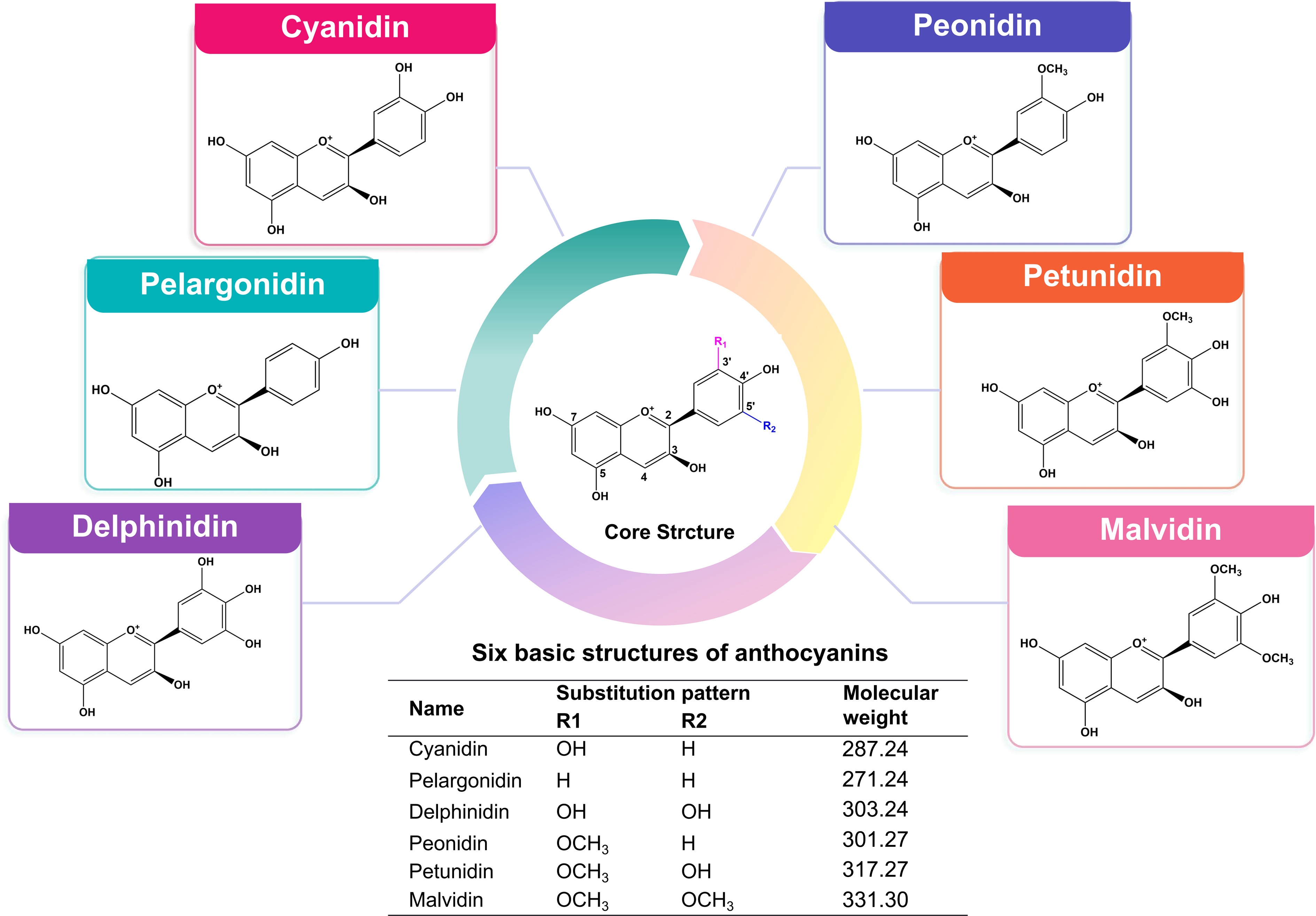
Figure 2.
Core skeleton and six basic structural classes of anthocyanidins. This figure illustrates the positively charged flavylium core skeleton of anthocyanidins, as well as the six fundamental anthocyanidin monomers derived from substitutions on the B-ring. A supplementary table lists their respective substituent groups and molecular weight characteristics.
A signature structural feature of anthocyanins in Nitraria is the high proportion of acylation. In the fruit of N. tangutorum, acylated anthocyanins account for up to 65.7% of the total anthocyanin content[47], with coumaric acid, caffeic acid, and ferulic acid as the main acyl donors. Such acylation modifications not only enrich fruit coloration through bathochromic shifts but also significantly enhance the stability of anthocyanins against light, heat, and pH changes, as well as improve their bioavailability. This is consistent with the adaptive evolutionary characteristics of plant secondary metabolites in the extreme habitats of the Qinghai-Xizang Plateau.
Extraction technologies for anthocyanins have evolved from traditional solvent maceration to green physical-assisted methods. The yields of total anthocyanins by conventional water extraction, 70% ethanol maceration, and acidic ethanol maceration are 1.60 ± 0.13 mg cyanidin-3-glucoside equivalent (CGE)/L dry weight (DW)[48], 704.50 ± 3.28 mg/g (DW)[4], and 45.83 mg/100 g fresh weight (FW)[47], respectively. Ultrasound-assisted extraction, subcritical water extraction, and microwave-ultrasound synergistic enzymatic hydrolysis significantly improve extraction efficiency, with yields reaching 346.27 ± 2.42 mg/g FW[5] and 1.075 mg/g DW[6], while better preserving the native structures and biological activities of anthocyanins.
Other flavonoids
-
Flavonoids in Nitraria are mainly composed of flavonols and their glycosides, with isorhamnetin and its derivatives (e.g., 3-O-rutinoside, 3-O-glucoside) as the characteristic flavonoid constituents of this genus[47]. More than 20 monomeric compounds have been isolated and purified, including isorhamnetin-3-O-4-rhamnosyl-galactosyl robinin, isorhamnetin-3-robinin, and tangutoside[8,49−51].
The composition and content of flavonoids show remarkable species and tissue-specificity. The ethyl acetate extract of N. tangutorum fruit contains 40.61 ± 1.23 mg rutin equivalent (RE)/g DW of total flavonoids[48], which can be increased to 60.00 mg quercetin equivalent (QE)/g DW after further ethyl acetate partitioning of the methanol extract[8]. Seeds of N. tangutorum are flavonoid-enriched tissues, containing three quercetin derivatives, three kaempferol derivatives, and eight isorhamnetin derivatives; rutin is the most abundant flavonoid in the fruit, reaching 1,298.48 ± 82.10 μg/g[47]. For N. schoberi, tissue-specific distribution is distinct: luteolin-7-O-glucoside (252.40 µg/mL) and isorhamnetin-3-O-rhamnoside (278.01 µg/mL) are dominant in 70% ethanol leaf extracts, while isorhamnetin aglycone reaches 1.46 µg/mL in stems[52]. Isorhamnetin-3-O-robinin is the main component in chloroform leaf extracts, whereas quercetin-O-hexoside (9.54%), isorhamnetin-3-O-glucoside (19.27%), and isorhamnetin-3-O-rutinoside (19.71%) are predominant in methanol extracts, with isorhamnetin glucuronide and isorhamnetin aglycone accounting for 17.21% and 13.75%, respectively[53]. Notably, N. tangutorum (NT), N. sibirica (NS), and N. roborowskii (NR) share similar flavonoid profiles but differ significantly in content: kaempferol-3-O-rutinoside and quercetin are most abundant in NS; rutin, dioscin, and vitexin are highest in NT; and all these components are lowest in NR[32].
Phenolic acids
-
Phenolic acids in Nitraria are dominated by phenylpropanoic and benzoic acids. Common constituents including gallic acid, protocatechuic acid, chlorogenic acid, caffeic acid, and ferulic acid have been identified[54,55] (Table 2). Nineteen structurally diverse phenolic acid derivatives have also been isolated from leaves and fruit, such as caffeoylmalic acid, depsides, trans-coumaric acid, tangutoside A, trans-ferulic acid-4-O-β-D-glucoside, and glucosyl syringic acid[56,57].
Table 2. Summary of partial identified main bioactive constituents in Nitraria.
No. Compound [M-H]- Molecular formula Categories Species Ref. 1 Isorhamnetin 315.05 C16H12O7 Flavonoid N. retusa [8] 2 Isorhamnetin 3-O-glucoside 477.10 C22H22O12 Flavonoid N. retusa [8,49] 3 Isorhamnetin 3-O-rutinoside 623.16 C28H32O16 Flavonoid N. sibirica/N. tangutorum [8,12,49] 4 Kaempferol 3-O-neohesperidoside 593.15 C27H30O15 Flavonoid N. tangutorum [12] 5 Kaempferol 7-O-rutinoside 593.15 C27H30O15 Flavonoid N. tangutorum [12] 6 Quercetin 3-O-rutinoside 609.15 C27H30O16 Flavonoid N. sibirica/N. tangutorum [12,56] 7 Quercetin-3-O-(2G-rhamnosyl-rutinoside) 755.20 C33H40O20 Flavonoid N. sibirica/N. tangutorum [12,56] 8 Glucosyl-4-hydroxycinnamic acid 325.06 C15H18O8 Phenolic acid N. sibirica [58] 9 Gallic acid 169.02 C7H6O5 Phenolic acid N. retusa [54,55] 10 Ferulic acid hexoside 355.10 C16H20O9 Phenolic acid N. tangutorum [12] 11 Caffeic acid derivative 259.03 NA Phenolic acid N. tangutorum [12] 12 Ellagic acid 301.00 C14H6O8 Phenolic acid N. retusa [54,55] 13 Flazin 307.07 C17H12N2O4 Alkaloid N. sibirica/N. tangutorum [12,56,58] 14 N-(fructofuranosyl-2-O-glucoside)-tryptophan 526.99 C23H32N2O12 Alkaloid N. sibirica [58] 15 Tangutorid E 301.11 C16H18N2O4 Alkaloid N. sibirica/N. tangutorum [12,58] 16 Tangutorid C 345.07 C17H18N2O6 Alkaloid N. sibirica [58] 17 Tangutorid D 345.07 C17H18N2O6 Alkaloid N. sibirica [58] 18 β-carboline derivative 347.12 C17H20N2O6 Alkaloid N. tangutorum [12] 19 Tryptophan hexoside 365.13 C17H22N2O7 Alkaloid N. tangutorum [12] 20 Asparagine hexoside (I) 293.12 C10H18N2O8 Alkaloid N. tangutorum [12] 21 Tryptophan fructoside 365.13 C17H22N2O7 Alkaloid N. tangutorum [12] Phenolic acid contents also exhibit species-, tissue-, and extraction-dependent specificity. The hydroalcoholic extract of N. sibirica fruit contains 23.60 ± 0.03 mg gallic acid equivalent (GAE)/g dry extract[59]. The total phenolic acid content was higher in leaves than that in fruit, flowers, and stems of N. schoberi. The water extraction-alcohol precipitation obtained the maximum phenolic acid level of 46.97 mg GAE/g DW, which was higher than those extracted by methanol and acetone[16]. After ethyl acetate partitioning, the methanol extract of N. tangutorum contains up to 170.00 mg GAE/g DW[8]. Extraction techniques strongly affect phenolic acid recovery: ultrasound-assisted extraction yields 23.98 ± 0.33 mg GAE/g dry residue[60].
The accumulation of flavonoids and phenolic acids is further modulated by environments and exogenous treatments. Drought stress promotes flavonoid biosynthesis by activating hormone signaling pathways[7]. High-altitude significantly enhances the accumulation of flavonoids such as kaempferol-3-O-rhamnogalactoside-7-O-glucoside and rutin[9]. Combined treatment with NaCl and salicylic acid (SA) increases total phenolic acids to 62.20 mg GAE/g[61]. Fermentation of N. sibirica fruit with probiotics including Lactobacillus acidophilus, Lactiplantibacillus plantarum, and Streptococcus thermophilus reshapes the phenolic acid profile and enriches sinapic acid, caffeic acid, and other phenolic acids[62].
Alkaloids
-
Nitraria species are alkaloid-enriched halophytic shrubs. More than 20 structurally unique monomeric alkaloids have been isolated and identified (Table 2), with β-carboline and quinazoline skeletons as the core structural types. Several novel alkaloids with unprecedented structures have been discovered, including spirocyclic β-carbolines (komavine, acetylkomavine[63], and N-allylisonitrarine[64]) and tangutorid-type alkaloids[10,65], making Nitraria a valuable natural resource for the discovery of drug lead compounds.
A mature technical system has been established for the extraction and purification of alkaloids. Extraction mainly relies on organic solvent maceration combined with acid-base treatment, while direct maceration with chloroform or ethanol gives low alkaloid yields (1.23%[66] and 3.83 mg/g [equivalent to 0.383%][67]). HPD-450 macroporous resin enriches total alkaloids by up to 18.08%[67]. Silica gel column chromatography, macroporous resin adsorption, and HPLC enable efficient isolation of monomeric alkaloids.
Alkaloid composition and distribution show strong species- and tissue-specificity. Leaves of N. sibirica contain 16 alkaloids, while fruits contain 12 alkaloids (including the newly reported N-[fructofuranosyl-2-O-glucoside]-tryptophan)[58]. Eight β-carboline alkaloids and four tryptophan derivatives have been identified in N. tangutorum fruit[12]. Fruits of N. roborowskii possess the most diverse alkaloid profile, including ten β-carbolines, nine cyclopeptides, three indoles, and five pyrroles[11].
Polysaccharides
-
Polysaccharides of Nitraria are homogeneous heteropolysaccharides with molecular weights ranging from 14.40 to 67.45 kDa. Their monosaccharide composition is dominated by glucose, galactose, arabinose, rhamnose, mannose, xylose, and galacturonic acid[11,13,20,68]. The molar ratios of monosaccharides and glycosidic linkage patterns vary significantly across species, tissues, and extraction methods, which are the key factors determining their structural and biological activities. Fruit polysaccharides of N. sibirica are rich in galacturonic acid, displaying typical pectic polysaccharide characteristics, while leaf polysaccharides differ distinctly in monosaccharide composition[15,20]. Polysaccharides of N. tangutorum are dominated by glucose (26.73%) and galactose (38.08%)[13]. Leaf polysaccharides of N. sibirica are rich in rhamnose (33.70%) and galactose (18.10%)[20]. The neutral fraction NSP-1 of N. sibirica is dominated by mannose, whereas acidic fractions NSP-2 and NSP-3 feature rhamnose[14].
Extraction and fractionation technologies for polysaccharides are increasingly mature. Traditional hot water extraction yields 3.59% (DW)[13], while ultrasound-assisted and cellulase-assisted extraction improve extraction efficiency, with yields reaching 14.11% ± 1.23% (DW)[69]. Fractionation is commonly performed using Sephadex column chromatography, DEAE-52, and AB-8, enabling efficient separation, which lays a foundation for structural elucidation and activity studies.
Analytical technology platform for bioactive constituents
-
Characterization of the complex bioactive constituents in Nitraria highly depends on modern hyphenated chromatographic mass spectrometry and spectroscopic techniques, with an integrated system established from high-throughput screening to precise structural identification. UPLC-HRMS is the core technique for rapid profiling and quantification of constituents. Coupling with Q-TOF or Orbitrap enables high-throughput identification, relative quantification, and preliminary structural elucidation of trace components in complex extracts.1H-NMR,13C-NMR, HSQC, and HMBC represent standard methods for identifying planar structures and absolute configurations, and are indispensable for clarifying the fine structures of characteristic bioactive constituents in Nitraria. Synergistic application of modern separation and analytical techniques is crucial for expanding the chemical database of Nitraria and dissecting its bioactive constituent structures.
Notable imbalances exist in Nitraria phytochemical studies: anthocyanins and flavonoids' structural identification is relatively comprehensive, but the complete biosynthetic pathways of alkaloids and the fine structures of polysaccharides remain unclear. Most constituent distribution studies focus on fruit and leaves, while bioactive constituents in other tissues lack systematic exploration. Structure–activity relationship studies are mostly limited to in vitro experiments, lacking systematic validation of structural stability, in vivo metabolic transformation products, and their activities, which restricts their application and translation in functional food and pharmaceutical fields.
-
The antioxidant activity of Nitraria species is predominantly concentrated in polar fractions enriched with polyphenols, flavonoids, and polysaccharides. In in vitro assays, these crude extracts possess strong scavenging effects against DPPH· and ABTS radicals, and can effectively reduce ferric ions and inhibit lipid peroxidation, with clear dose–effect relationships between activity and constituent content. The aqueous extract of N. schoberi fruit shows a total antioxidant capacity of 49.65 ± 2.33 μg ascorbic acid equivalent (AAE)/mg extract[21]. The ethanol extract of N. schoberi yields a total antioxidant status (TAS) value as high as 45.82 mg GAE/g DW[16]. Ethyl acetate extracts of N. retusa leaves display an IC50 as low as 16.40 ± 4.40 μg/mL for DPPH· radical scavenging[55]. The chloroform extract of N. schoberi leaves affords the strongest protection against hydroxyl radical-induced DNA damage and the highest antioxidant potency (0.95 mmol·L−1 Trolox equivalent)[70]. Online HPLC-DPPH· screening confirms that C3G acts as the core antioxidant constituent[4].
The antioxidant action of Nitraria depends on both direct chemical quenching and long-term modulation by activating the endogenous cellular antioxidant defense system (Fig. 3). In animal model experiments, N. tangutorum anthocyanin crude extracts significantly increase total superoxide dismutase (T-SOD) and glutathione (GSH) levels in hyperlipidemic rats[71]. Its chloroform extract activates the intracellular nuclear factor erythroid 2-related factor 2 (Nrf2)/Heme oxygenase-1 (HO-1) signaling axis, a key regulator of antioxidant enzyme expression[48]. The ethyl acetate fraction suppresses oxidative stress injury and protects renal function by scavenging radicals and restoring GSH, melatonin (MT), and other antioxidant molecules[56,72]. Fruit polysaccharide NTP markedly reduces malondialdehyde (MDA) elevation and protects lung tissue from lipopolysaccharide (LPS)-induced oxidative damage[13].
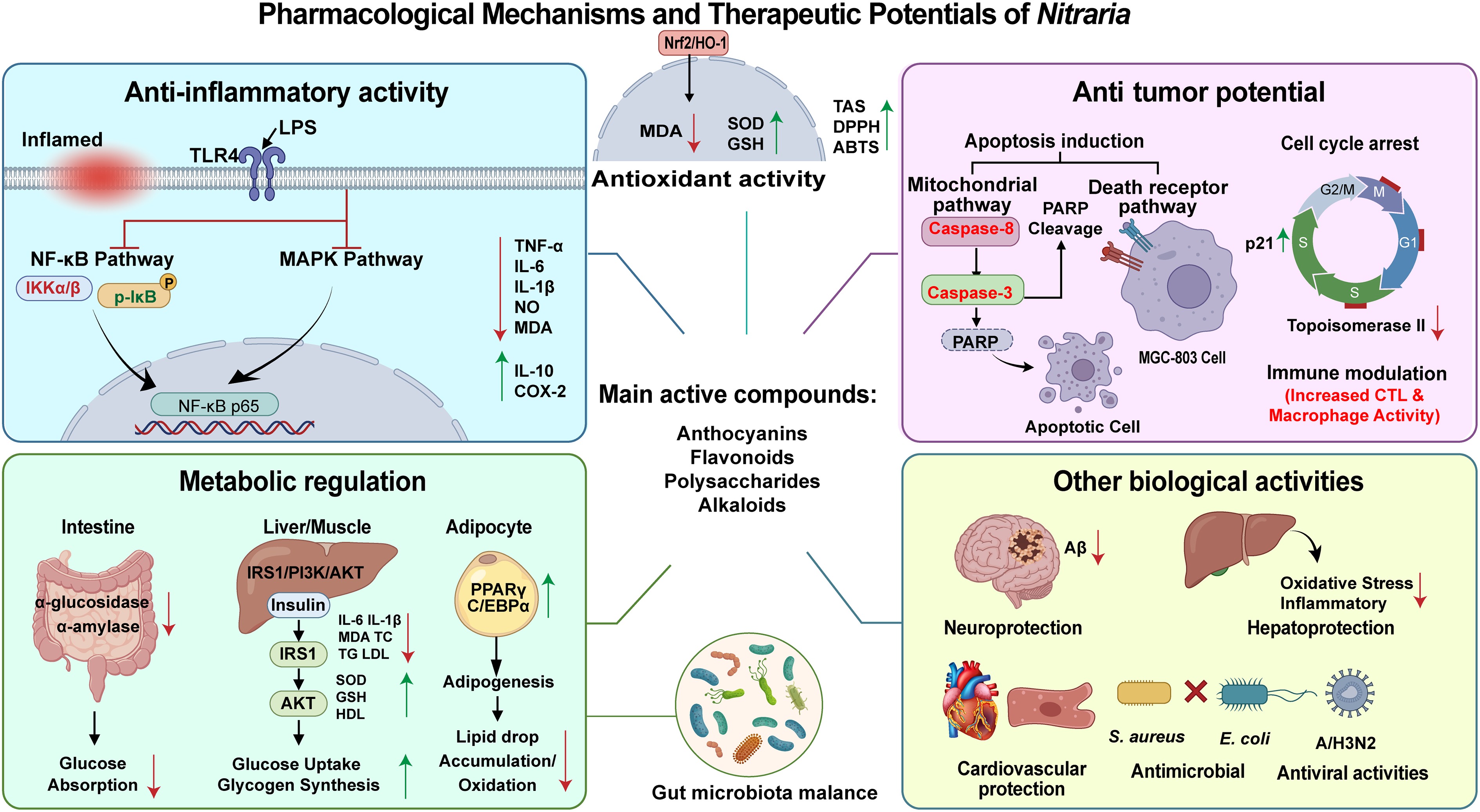
Figure 3.
Multitarget pharmacological regulatory mechanisms of bioactive constituents in Nitraria. This figure depicts the multi-target pharmacological pathways of key bioactive components from Nitraria, including anthocyanins and flavonoids, covering their mechanisms of anti-inflammation, antioxidant activity, anti-tumor effects, regulation of glucose and lipid metabolism, and antimicrobial and antiviral activities.
The anti-inflammatory activity of Nitraria is mediated by multi-targeted inhibition of inflammatory signaling pathways (Fig. 3). Crude extracts (chloroform fraction[48], anthocyanins[1], and polysaccharides[20]) effectively suppress excessive nitric oxide (NO) release in LPS-stimulated RAW 264.7 cells, downregulate pro-inflammatory cytokines including TNF-α, IL-1β, and IL-6, and upregulate the anti-inflammatory cytokine IL-10 (Fig. 3). The central mechanism involves blockade of aberrant activation of nuclear factor-κB (NF-κB) and mitogen-activated protein kinase (MAPK) cascades, thereby alleviating inflammation-mediated tissue injury[1,48]. In animal model experiments, polysaccharide NTP from N. tangutorum fruit reverses LPS-induced upregulation of toll-like receptor 4 (TLR4), phosphorylated inhibitor of nuclear factor kappa-B kinase α/β (IKKα/β) and phosphorylated NF-κB, and restores p-IκBα expression, conferring anti-inflammatory protection in mouse lung tissue via inhibition of the TLR4/IKK/NF-κB pathway[13]. High-dose N. tangutorum fruit extract (NTFE, 20.00 g/kg) promotes biosynthesis of antimicrobial non-ribosomal peptides in Hu sheep and downregulates LPS-associated inflammatory pathways[73]. Polysaccharide NRLP from N. schoberi leaves relieves carrageenan-induced mouse paw edema by inhibiting histamine release, reducing prostaglandin biosynthesis, and attenuating cyclooxygenase-2 (COX-2) upregulation[20]. Aqueous and methanol extracts of N. schoberi fruit also clearly inhibit carrageenan-induced rat paw edema[18].
Studies on antioxidant and anti-inflammatory effects of Nitraria are mainly based on crude extracts, with sufficient evidence from in vitro assays and animal models. Only a few bioactivities have been traced to definite monomers, including C3G, glucosylsorbitol, and isoimperatorin A. Flavonoids and polysaccharides exert anti-inflammatory effects via targeted inhibition of the NF-κB/MAPK signaling pathway. Currently, in vivo verification of the anti-inflammatory activity of single isolated monomers remains absent, and relevant pharmacological evidence is mostly limited to crude extracts. There is an obvious translational gap between identified active constituents and clinical application.
Antitumor potential
-
The antitumor activity of Nitraria is characterized by selective cytotoxicity, anti-proliferation, and multi-pathway induction of tumor cell apoptosis. Its active components exert targeted inhibition on various tumor cell lines (Fig. 3). The ethyl acetate extract from N. retusa leaves exhibits excellent anti-genotoxic potential against K562 cells[51] and shows potent anti-proliferative effects on human colorectal Caco2 cells[55]. Additionally, the ethanol extract of N. sibirica inhibits A549, MCF7, and cervical HeLa cancer cells[67], polysaccharide NSP-3 suppresses MCF7 cells[14], and the n-hexane subfraction of N. schoberi acts strongly against MCF7 and HepG-2 cells[23]. Monomeric compounds isorhamnetin and isorhamnetin-3-O-rutinoside isolated from N. retusa exhibited stronger anti-proliferative activity against Caco2 cells than quercetin. Acylation further potentiated the anti-proliferative effect of isorhamnetin-3-O-glucoside[8].
Apoptosis is a key mechanism restraining tumor cell survival, proliferation, and invasion. Bioactive constituents from Nitraria trigger targeted regulation by activating caspase cascades and PARP cleavage (Fig. 3). N. schoberi leaf crude extract induces apoptosis in K562 cells via the mitochondrial apoptotic pathway, characterized by PARP cleavage and activation of caspase-3 and caspase-8[74]. Flavonoids in its leaf methanol crude extract induce apoptosis in TK6 cells through caspase-3 activation, and the extract (800.00 μg/mL) induces 11% apoptosis in 4T1 cells[75]. The ethyl acetate fraction and its major component, isorhamnetin-3-O-robinobioside, exert significant anti-proliferative effects on human TK6 lymphoblasts via DNA fragmentation, PARP cleavage, and enhanced caspase-3 activity[76]. Nitraria aqueous decoction inhibits MGC-803 cells, inducing nuclear pyknosis and apoptotic body formation[77]. Additionally, the chloroform extract (the major compounds are β-sitosterol and palmitic acid), ethyl acetate, and methanol extracts of N. schoberi leaves sensitize glioblastoma (GBM) to temozolomide-induced apoptosis, enhancing chemotherapy[19, 53].
Certain characteristic constituents of Nitraria block tumor cell proliferation via cell cycle arrest. Monomer Tangutorine from N. tangutorum upregulates p21 expression, inhibits topoisomerase II activity, disrupts DNA replication, and arrests human colon HT-29 cancer cells at specific phases[78]. Regarding tumor invasion and metastasis, chloroform and methanol extracts of N. schoberi leaves at 100 μg/mL reduce invasion of U87 cells by 51.70% and 74.50%, respectively[53].
Nitraria also exerts indirect antitumor effects by regulating host immune function. Co-administration of Nitraria flavone and 5-fluorouracil achieves tumor inhibition rates of 50.73% (Hepatoma) and 47.22% (U14 cervical cancer) via immune regulation, while elevating serum hemolysin levels and phagocytic indices[79]. The methanol extract and chloroform extract inhibit tumor volume in tumor-bearing mice by 95.19% and 84.52%, markedly restore splenic lymphocyte proliferation, enhance CTL activity to 54.64% and 46.98%, and boost host macrophage lysosomal activity by 255.37% and 145.96%[80,81]. In animal model experiments, the methanol extract of N. schoberi leaves inhibits 4T1 tumors in mice by 56.25%, and Nr-MeOH at 100.00 mg/kg increases macrophage lysosomal activity by 223.07% in tumor-bearing mice[75]. Nitraria thus suppresses tumors by remodeling host immune surveillance.
There are significant hierarchical differences in antitumor evidence of Nitraria species. Crude extracts present anti-proliferative and pro-apoptotic effects in various tumor cell lines and animal models. A few monomers, including isorhamnetin-3-O-robinobioside and nitrarine, exert bioactivities via the caspase pathway, cell cycle arrest, and immunomodulation. Nevertheless, all relevant antitumor studies are restricted to in vitro cellular and animal experiments, lacking monomer target verification, structure–activity relationship analysis, and clinical data, leading to a prominent translational gap.
Intervention in metabolic diseases
-
Nitraria exerts multi-target, multi-pathway regulatory effects on glycolipid metabolic disorders, representing promising natural agents for metabolic diseases (Fig. 3). Hypoglycemic activity is achieved mainly through three routes: inhibition of carbohydrate-digesting enzymes, improvement of insulin sensitivity, and protection of pancreatic β-cells. Polysaccharides NTB-Z, NTB-C[11], and NTB-40[11] from N. tangutorum, and NRK-C from N. roborowskii[12] all potently inhibit sucrase and maltase.
For improving insulin sensitivity and preserving β-cells, active constituents from Nitraria maintain glucose homeostasis chiefly via regulation of the insulin receptor substrate 1 (IRS1)/Phosphatidylinositol 3-kinase (PI3K)/Protein kinase B (AKT) pathway. In animal model experiments, NTB-40 markedly ameliorates high-fat diet–streptozotocin (STZ)-induced diabetic mice by stabilizing glycolipid metabolism, mitigating inflammation and oxidative stress mediated by IL-6 and IL-1β, modulating IRS1/PI3K/AKT signaling, reducing hepatic gluconeogenesis, promoting glycogen synthesis, and peripheral glucose uptake, thereby alleviating insulin resistance (IR)[24]. Currently, abundant studies have focused on the lipid-lowering activities of monomers isolated from Nitraria. Multiple in vitro and animal model investigations have explored their lipid-regulating mechanisms and potency. Furthermore, depside compounds and cyclo (tyr-tyr) from N. tangutorum fruit effectively improve insulin resistance[10]. Benzyl-O-β-d-glucopyranoside and (3S,5R,6R,7E,9S)-megastigmane-7-ene-3-hydroxy-5,6-epoxy-9-O-β-d-glucopyranoside from N. sibirica leaves inhibit protein tyrosine phosphatase 1B (PTP1B), a negative regulator of insulin signaling[57]. However, research on lipid-lowering constituents of Nitraria remains confined to in vitro cell experiments and animal model validations, with no successful translation into clinical application so far.
Hypolipidemic and anti-obesity activities are achieved mainly by regulating lipid metabolic pathways, suppressing adipogenesis, promoting fatty acid oxidation, and reshaping gut microbiota to improve dyslipidemia. N. schoberi ethanol extract (NRE)[82], fruit polysaccharide NRFP[15], N. sibirica leaves ethanol extract (NSL-EPE)[83], and N. roborowskii fruit extract[25] significantly reduce TG and LDL-C in model animals. N. tangutorum fruit anthocyanins ameliorate non-alcoholic fatty liver disease by attenuating hepatic oxidative stress (lowering MDA, restoring SOD, and elevating GSH-Px) and regulating lipid metabolism (reducing serum total protein [ST], alanine transaminase [ALT], total cholesterol [TC], triglyceride [TG], and low-density lipoprotein [LDL], and elevating high-density lipoprotein [HDL])[83]. Lipidomic analysis confirms that N. roborowskii fruit extract modulates glycerophospholipid and glycerolipid metabolism to lower lipids[25]. NRE[82] reduces lipid droplet formation and intracellular TG deposition, suppressing differentiation of 3T3-L1 preadipocytes. Monomeric compounds luteolin-7-O-glucoside, isorhamnetin-3-O-rutinoside, and isorhamnetin also possess the same efficacy[52]. Moreover, Nitraria downregulates core adipogenic transcription factors including PPARγ and C/EBPα in 3T3-L1 cells, reducing lipid accumulation, while upregulating lipolytic and fatty acid oxidation genes such as ATGL and HADH to maintain lipid homeostasis[82,84].
Nitraria extracts also remodel gut microbiota to regulate host energy metabolism and physiological homeostasis (Fig. 3). FNT increases the relative abundance of beneficial rumen bacteria, including Lachnospira, Rhodocyclaceae, and candidate Arthrobacter in Hu sheep, improving ruminal microecological balance[85]. NTFE elevates the ruminal acetate/propionate ratio, promotes enrichment of fiber-degrading bacteria, inhibits methanogenic archaea, downregulates LPS biosynthesis, and alleviates inflammation-associated metabolic disorders[73]. Notably, preliminary human clinical trials (RCT, randomized controlled trial) confirm that continuous administration of NRE is safe in overweight/obese subjects, effectively lowering serum TG and improving waist–hip ratio, providing early clinical evidence for its application[26].
Research on glycolipid regulation has established relatively sufficient evidence. Polysaccharide and alkaloid extracts relieve insulin resistance and regulate lipid metabolism in animal models. Cyclic dipeptides and lignan glycosides can regulate IRS1/PI3K/AKT and PTP1B pathways. Only one small-sample RCT has verified the lipid-regulating effect of relevant extracts so far. Studies on monomer lipid-lowering effects remain restricted to in vitro tests and animal experiments. Unclear long-term safety, dose-response patterns, and applicable groups impede further clinical transformation.
Other biological activities
-
Owing to its structurally diverse bioactive constituents, Nitraria exhibits multi-target, multi-functional biological profiles (Fig. 3). Its potential in neuroprotection, cardiovascular protection, hepatoprotection, antimicrobial, and antiviral effects has been increasingly validated. For neuroprotection, constituents reduce Aβ deposition and alleviate cerebral ischemia-reperfusion injury, offering new strategies for neurodegenerative and cerebrovascular diseases[4,86,87]. For cardiovascular protection, extracts counteract doxorubicin-induced cardiomyocyte damage, improve cardiac function, and exert mild hypotensive effects[17,45,66], supporting adjunctive therapy for cardiovascular disorders. Hepatoprotective activity is achieved by suppressing hepatic oxidative stress and inflammation, mitigating chemical and metabolic liver injury[72]. Antimicrobial activity is observed against pathogenic bacteria including Escherichia coli, as well as fungi such as Aspergillus niger[22,23,55]. Antiviral potential has been confirmed against influenza A/H3N2 virus[88].
In conclusion, pharmacological studies on Nitraria present distinct evidence stratification. Antioxidant and anti-inflammatory research is mostly based on crude extracts with few valid monomer data. Antitumor monomers have definite effects without systematic in vitro and in vivo validation. Glycolipid modulation has been verified via extracts, monomers, and preliminary human trials. Most biological effects are derived from integrated functions of crude extracts. Insufficient research on monomer targets, structure–activity rules, synergistic effects, and unified evaluation standards form a persistent barrier between basic research and clinical practice. Further studies shall confirm core active components, explore their action mechanisms, complete pharmacological verification and safety assessment, and accelerate targeted exploitation of the medicinal potentials of Nitraria.
-
The adaptation of Nitraria species to extreme habitats depends on the synergistic effect of three core pathways: ion homeostasis, osmotic adjustment, and oxidative stress defense (Fig. 4). The regulatory mechanisms have been elucidated from physiological phenotypes to functional gene validation, with key gene functions confirmed by heterologous transgenic experiments, providing critical evidence for interpreting halophyte stress-resistant molecular mechanisms.
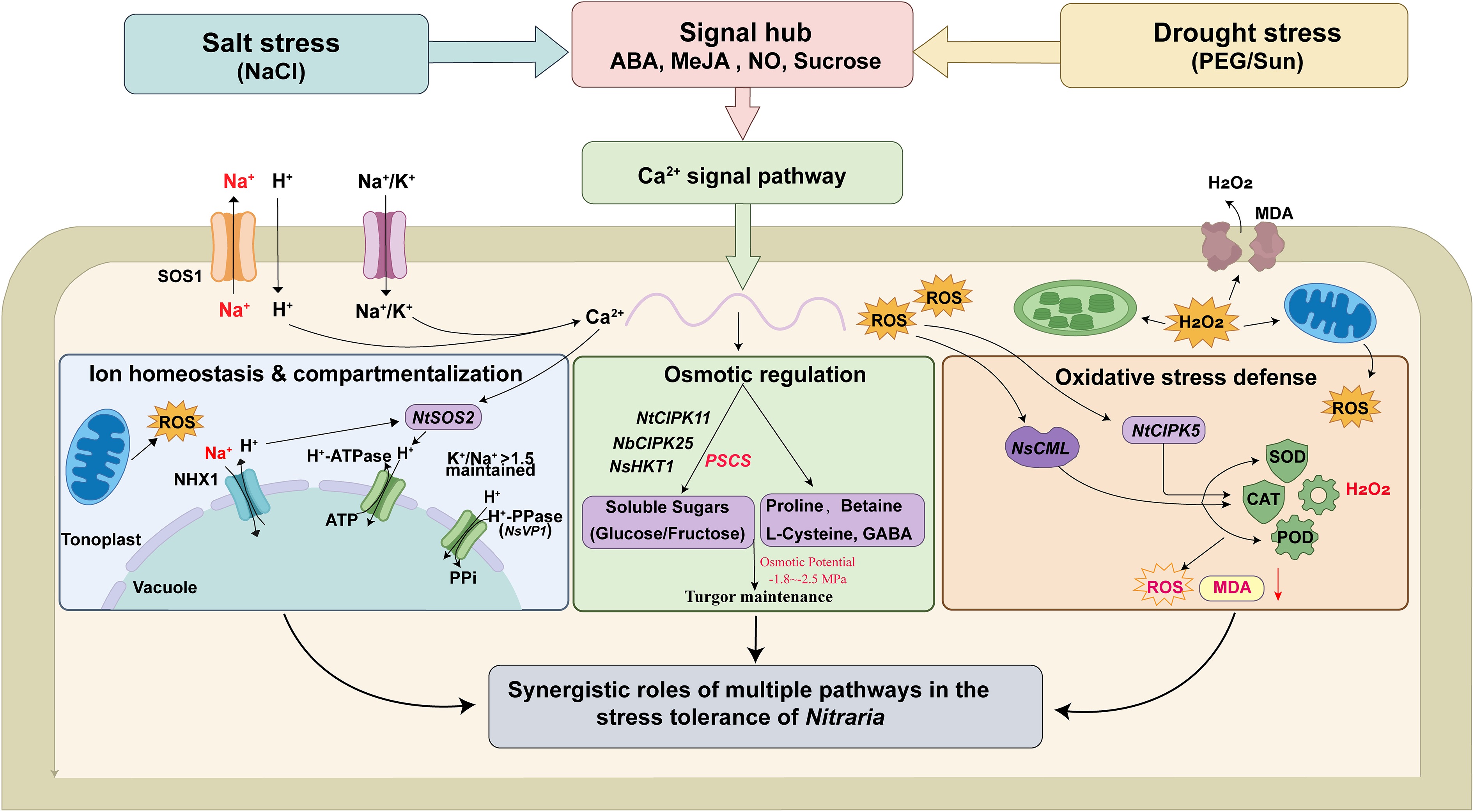
Figure 4.
Synergistic multi-pathway defense mechanisms of Nitraria under salt and drought stress. This figure dissects the molecular mechanisms by which Nitraria copes with salt and drought stresses via synergistic interactions among three major pathways: ion homeostasis, osmotic adjustment, and antioxidative defense.
Ion homeostasis and compartmentalization are the core of Nitraria salt tolerance. The core regulatory mechanism involves the coordinated action of ion transporters on the plasma membrane and tonoplast to extrude and compartmentalize Na+, maintain intracellular K+ homeostasis, and keep the K+/Na+ ratio within a suitable range (the K+/Na+ ratio remains above 1.5 under salt stress)[89]. SOS1 (Na+/H+ antiporter) and NHX1 are the core proteins for Na+ transport: the former mediates Na+ efflux, and the latter enables Na+ sequestration into vacuoles. The energy for this process is directly driven by the transmembrane proton gradient established by tonoplast H+-ATPase and H+-PPase, which upregulated the expression of NsVHA, NsVP1, and NsNHX1 genes[35]. NtSOS2 can restore the salt-sensitive phenotype of the Arabidopsis SOS2-1 mutant, increasing the survival rate to 62.38% under 150 mmol·L−1 NaCl stress, confirming the central role of the SOS signaling pathway[90]. Furthermore, NsSRO1a enhances the drought resistance of plants by regulating ROS metabolism under drought stress[91].
Osmotic adjustment relies on stress-induced accumulation of osmolytes. Under drought and salt stress, Nitraria rapidly accumulates soluble sugars, proline, and glycine betaine, lowering cellular osmotic potential to sustain turgor and the structural stability of biological macromolecules. Under 20% PEG stress, proline and soluble sugars in leaves of N. sibirica increase 4.70- and 2.90-fold. This process is regulated by genes including NtCIPK11[92] and NsHKT1[93], which promote osmolyte synthesis by activating the expression of key enzymes in proline biosynthesis (P5CS) and soluble sugar metabolism[38]. Root metabolites (e.g., L-cysteine, 4-aminobutyric acid) assist osmotic balance by modulating carbon-nitrogen metabolism[93].
Oxidative stress defense eliminates stress-induced ROS via activating the antioxidant enzyme system and non-enzymatic antioxidant synthesis, avoiding membrane lipid peroxidation (Fig. 4). Under 200 mmol·L−1 NaCl stress, N. tangutorum upregulates its antioxidant defense, with SOD and CAT activities significantly elevated, while exogenous H2O2 pretreatment further enhances antioxidant capacity and reduces oxidative stress[37]. NsCML genes are key regulators, enhancing antioxidant enzyme activity through calcium signaling to achieve efficient ROS scavenging[30].
Plant hormones and signaling molecules act as a central hub integrating the above three pathways (Fig. 4). Exogenous application of ABA (15 μM), methyl jasmonate (MeJA) (50 μM), and sodium nitroprusside (SNP) (50 μM) increases the survival rate of Nitraria under salt and alkali stress by 30%−50%[42,47]. Under drought stress, sucrose (40.00 g/L) promotes adventitious root formation in N. tangutorum by coordinately regulating hormone crosstalk and activating the H2O2 signaling pathway[94]. Current molecular studies have limitations: The focus is on single-gene functional validation with insufficient dissection of synergistic regulatory networks and pathway crosstalk. Tissue-specific expression patterns have not been systematically clarified, and molecular regulatory mechanisms under extreme combined stresses are scarce. In addition, fine transcriptional regulatory mechanisms such as promoter regulatory elements and transcription factor characteristics of stress-resistant genes remain to be deeply elucidated.
Molecular regulatory network of secondary metabolite biosynthesis
-
The biosynthesis and regulation of secondary metabolites in Nitraria, including anthocyanins, flavonoids, alkaloids, and polysaccharides, are co-mediated by nuclear gene transcriptional regulation, environmental signal induction, and plant hormone signaling. Among them, the flavonoid and anthocyanin pathways are relatively well-studied, while the alkaloid and polysaccharide biosynthesis pathways remain preliminary, representing the core bottleneck in current molecular regulation research of Nitraria.
Precise transcriptional regulation of flavonoid biosynthesis
-
Anthocyanin and flavonoid biosynthesis in Nitraria fruit follows the classical phenylpropanoid-flavonoid pathway (Fig. 5). Its molecular regulation core relies on the spatiotemporal control of structural genes and upstream activation by transcription factors, which jointly determine the directional accumulation and fruit coloration. Phenylalanine ammonia-lyase (PAL), chalcone synthase (CHS), anthocyanidin synthase (ANS), and UDP-glucose: flavonoid 3-O-glucosyltransferase (UFGT) are core structural genes, with UFGT being the key rate-limiting enzyme for anthocyanin biosynthesis in N. tangutorum fruit[9,95]. UFGT enzyme activity in red fruit of N. tangutorum is 5-fold higher than in yellow mutants, and UFGT downregulation is associated with the loss of anthocyanin glycosylation in yellow fruit[95].
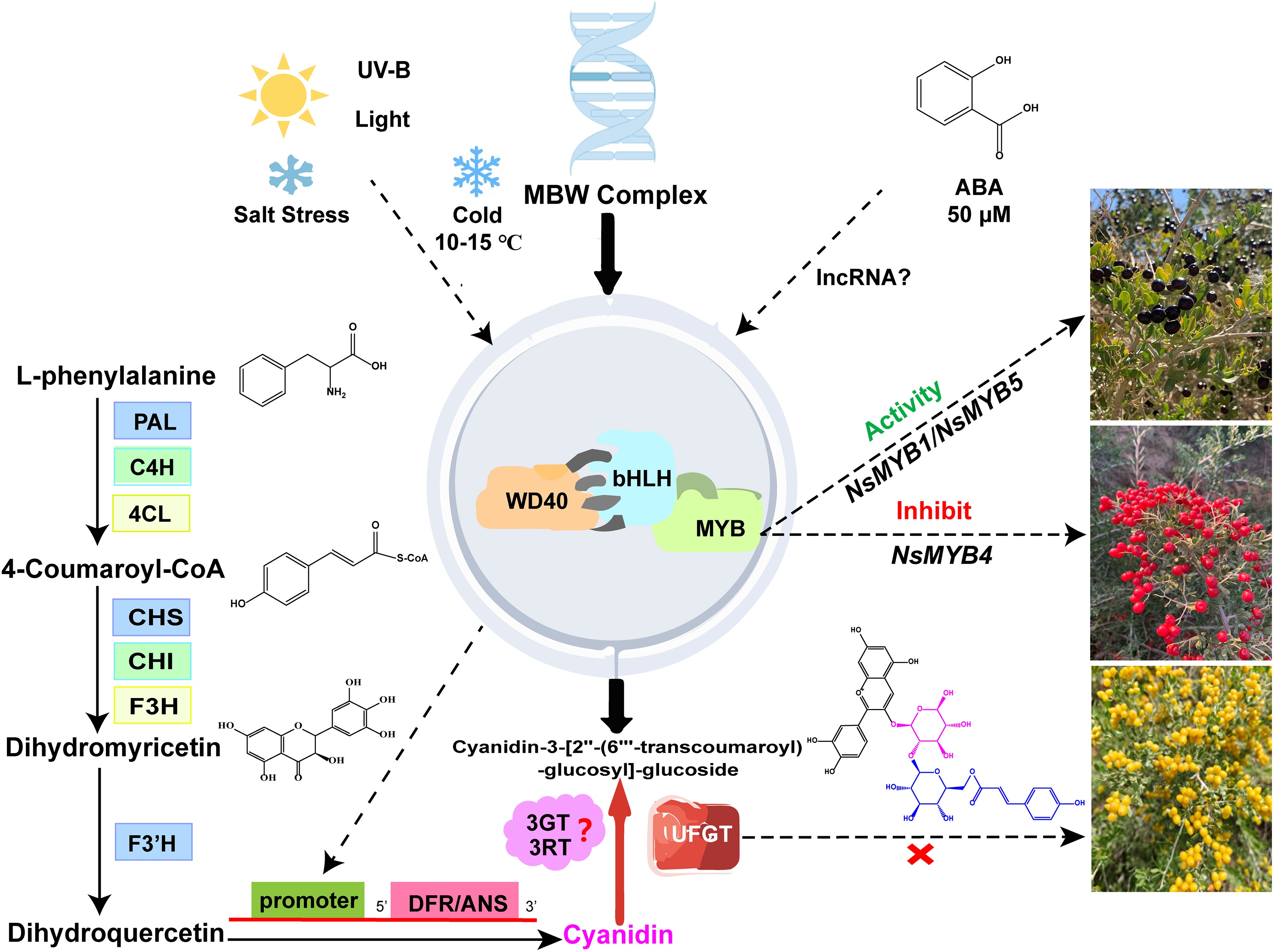
Figure 5.
Anthocyanin biosynthetic pathway and molecular regulatory network in Nitraria fruit. This figure defines the core biosynthetic pathway of anthocyanins in Nitraria fruits starting from L-phenylalanine and reveals the molecular basis underlying the formation of distinct fruit phenotypes modulated by environmental and endogenous signaling cues.
R2R3-MYB transcription factors are core upstream regulators, forming MBW complexes with bHLH and WD40 proteins to bind structural gene promoters and activate transcription (Fig. 5). NsMYB1[5] and NsMYB5[96] of N. sibirica are functional activators: their heterologous expression in tobacco increases petal anthocyanin content by 6.9- and 5.4-fold, respectively, and significantly upregulates structural genes, including PAL, CHS, DFR, and UFGT. In contrast, the MYB repressor NsMYB4 inhibits tobacco anthocyanin accumulation. Furthermore, the regulatory network and hierarchical feedback mechanisms among MYB activators and repressors, their target genes, and bHLH transcription factors remain unclear.
Environmental and hormonal signals regulate transcription factors and structural genes to induce secondary metabolite accumulation, representing an important molecular basis for coupling stress resistance and secondary metabolism in Nitraria (Fig. 5). High altitude, low temperature, and strong UV-B significantly increased N. tangutorum fruit anthocyanin content by inducing MYB and bHLH expression and activating downstream structural genes[9]. Exogenous ABA and SNP promoted the accumulation of flavonoids and anthocyanins in N. tangutorum seedlings under alkali stress[42]. These signals positively regulate flavonoid biosynthesis by inducing MYB expression and promoting MBW, reflecting the synergistic evolutionary strategy of Nitraria for stress defense and bioactive component accumulation in extreme environments.
Research status of alkaloids, polysaccharides, and epigenetics
-
Studies on the molecules of secondary metabolism in Nitraria exhibit a prominent research imbalance. Flavonoid and anthocyanin biosynthetic pathways have been systematically studied, while alkaloid and polysaccharide biosynthesis remain hypothetical. Meanwhile, protein post-translational modifications, non-coding RNA-mediated regulation, and hierarchical feedback networks remain poorly elucidated, and the mechanisms of environmental stress-directed metabolite accumulation and interspecific differences in metabolic regulation need further exploration.
β-carboline and quinazoline alkaloids are characteristic bioactive constituents of Nitraria. The biosynthetic pathways and regulatory mechanisms remain unclear. Preliminary hypotheses have only been proposed via phytochemical analysis and isotopic tracing, indicating their skeletons are potentially formed by enzymatic or non-enzymatic condensation and cyclization of precursor skeletons with tryptamine to generate the β-carboline parent nucleus[97]. Novel alkaloids LI-III[97] have revised traditional biosynthetic theories, while related key enzymes and genes lack functional verification. Nitraria polysaccharides are homogeneous heteropolysaccharides, whose biosynthesis relies on the synergistic action of glycosyltransferases, polysaccharide polymerases, and modifying enzymes. Current studies merely confirm their monosaccharide components and glycosidic linkages, and the core enzymes, transcription factors, and signaling pathways governing polysaccharide synthesis remain uncharacterized.
Epigenetic modifications such as DNA methylation, histone modification, and non-coding RNAs regulate gene expression, plant environmental adaptation, and metabolic plasticity. Epigenetic research on Nitraria remains preliminary without systematic regulatory mechanisms. Salt stress reduces histone H3 lysine 9 dimethylation (H3K9me2) levels by 38% in N. sibirica, which was presumed to regulate salt-responsive genes[98], while its target genes and regulatory pathways are unconfirmed. The stress response patterns and major regulatory patterns of other core epigenetic modifications remain undefined. In terms of non-coding RNA regulation, only a small number of long non-coding RNAs (lncRNAs) and microRNAs (miRNAs) have been screened, lacking functional verification. Their targets, molecular mechanisms, and regulatory networks related to stress signaling and secondary metabolism also remain unclear.
Correlation mechanism between stress response and bioactive substance accumulation
-
Stress adaptation and secondary metabolism in Nitraria are tightly interconnected. Salinity, drought, and intense ultraviolet radiation can activate stress-related genes such as SOS, NHX, and P5CS, which maintain ion homeostasis and osmotic adjustment to improve stress tolerance. These stresses also stimulate signals such as ABA and H2O2 to regulate transcription factors, further activating biosynthetic pathways of secondary metabolites. Harsh environmental conditions serve not only as survival pressure but also as regulatory triggers for secondary metabolism, coordinating stress defense and metabolic processes to promote bioactive compound accumulation. This synergistic mode enables Nitraria to adapt to extreme habitats and endows the plants with strong stress resistance and high medicinal potential. Overall, stress responses are closely coupled with metabolite synthesis, and stress signals function as key inducers driving secondary metabolism.
-
Nitraria is a distinctive medicinal halophyte with great research value in extreme plateau habitats, and its research direction is highly consistent with the scope of medicinal plant biology journals. Nitraria regulates physiological metabolism via endogenous hormones, resists salt and drought stress via stress-tolerance genes, and modulates secondary metabolism via MYB/bHLH transcription factors, accumulating bioactive medicinal components. These compounds are not only the basis for its adaptation to extreme environments but also the core material basis for exerting medicinal effects.
Current research has elucidated anthocyanin biosynthetic pathways and core genes, and verified in vitro pharmacological activities of flavonoids. Nevertheless, notable research gaps remain. The biosynthesis and regulatory genes of alkaloids and polysaccharides lack systematic analysis, while epigenetic regulatory mechanisms are limited. The correlation between stress signals and the targeted accumulation of medicinal components also remains poorly defined. Most pharmacological investigations adopt crude extracts, with scarce studies on compound targets and structure–activity relationships, hindering further exploitation of Nitraria resources. Further exploration of the association between stress adaptation and active ingredient synthesis, complementation of molecular regulatory mechanisms, and excavation of the medicinal potential of characteristic metabolites will enrich metabolic regulation theories of plateau medicinal plants and provide a theoretical basis for germplasm utilization and natural drug development.
-
Given the limitations of existing research and the high resource value of Nitraria, future research should focus on five priority areas: First, relying on high-throughput sequencing technology to complete the chromosome-level genome assembly and pan-genome construction of Nitraria species endemic to the Qinghai-Xizang Plateau, clarifying the genetic basis of stress tolerance and metabolism. Second, clarifying the fine structures of alkaloids and polysaccharides, and elucidating the structure–activity relationship through in vitro synthesis and modification, while tracking their in vivo metabolic rules by combining metabolomics and pharmacokinetics. Third, conducting large-scale and long-term cohort clinical trials to verify the efficacy of Nitraria extracts in the treatment of metabolic disorders and inflammatory diseases, and improving safety evaluation to support the application of functional foods and drugs. Fourth, cloning and verifying the key enzymes involved in the synthesis of alkaloids and polysaccharides, deciphering the synergistic regulatory mechanism between epigenetic modification and transcription factors, and clarifying the molecular connection among stress resistance, epigenetics, transcription, and metabolism. Fifth, optimizing green extraction processes, developing formulation technologies including microcapsules and nanocarriers, and designing gut microbiota-regulating composite functional foods to promote the efficient and sustainable industrial utilization of Nitraria resources.
-
As representative halophytic shrubs dominating the extreme habitats of the Qinghai-Xizang Plateau, Nitraria presents a tight coupling between ecological adaptability and resource value. To address the four core scientific questions proposed in the introduction, this review systematically summarizes the current research progress: Regarding the synthesis of active components, the key rate-limiting enzyme (UFGT) and core pathways in anthocyanin biosynthesis have been elucidated, whereas the complete synthetic pathways of alkaloids and polysaccharides still need further investigation. In terms of regulatory mechanisms, the MYB transcription factor-mediated regulatory network for flavonoids has been initially established, yet the epigenetic regulatory system still needs improvement. Regarding the association between stress and metabolism, it has been confirmed that adverse environmental signals can synchronously regulate the activation of stress response and secondary metabolism through ABA signaling. Currently, research on structure–activity relationships is still based on crude extracts, and the molecular mechanism underlying the correlation between the structure of monomeric compounds and their pharmacological effects remains to be further explored.
The stress-responsive gene pool at the genomic level and the dynamic response network at the transcriptomic level collectively drive the structural specialization of secondary metabolites, among which highly acylated anthocyanins and structurally novel β-carboline alkaloids are typical characteristic components. These metabolites endow Nitraria with diverse pharmacological activities, making it a high-quality resource for functional foods and pharmaceutical intermediates. However, current research still has limitations, including incomplete genome sequencing coverage, insufficient characterization of chemical structures, and simplistic pharmacological evaluation models. Future research should focus on integrating multi-omics technologies, further exploring molecular regulatory mechanisms, and promoting the efficient transformation of basic research into industrial applications, thereby providing theoretical and technical support for the sustainable utilization of plant resources in extreme environments.
-
The authors confirm their contributions to the paper as follows: study conception and design, methodology, visualization: Chen H, Bao X, Zong Y; draft manuscript preparation: Chen H, Chen Y, Bao X, Zong Y; writing − review and editing: Luo Q, Bao X, Zong Y; supervision, project administration: Bao X, Zong Y; funding acquisition: Bao X. All authors reviewed the results and approved the final version of the manuscript.
-
Data sharing is not applicable to this article as no datasets were generated or analyzed during the current study.
-
The authors declare that they have no conflict of interest.
-
# Authors contributed equally: Heyan Chen, Yiming Chen
- Copyright: © 2026 by the author(s). Published by Maximum Academic Press, Fayetteville, GA. This article is an open access article distributed under Creative Commons Attribution License (CC BY 4.0), visit https://creativecommons.org/licenses/by/4.0/.
-
About this article
Cite this article
Chen H, Chen Y, Luo Q, Bao X, Zong Y. 2026. Research advances of Nitraria genus: from extreme environmental adaptation to the exploitation of multifunctional bioactive components. Medicinal Plant Biology 5: e022 doi: 10.48130/mpb-0026-0016 

Research advances of Nitraria genus: from extreme environmental adaptation to the exploitation of multifunctional bioactive components
- Received: 18 April 2026
- Revised: 19 June 2026
- Accepted: 26 June 2026
- Published online: 02 September 2026
Abstract: Nitraria is typical halophytic shrubs that adapt to high salinity, drought, and ultraviolet radiation. It accumulates abundant structurally varied secondary metabolites endowed with notable pharmacological and nutritional properties, rendering it a valuable reservoir of natural bioactive substances. As the secondary metabolites of Nitraria, anthocyanins, alkaloids, and polysaccharides confer strong stress resistance and diverse bioactivities, along with prominent pharmacological and nutritional values, making this genus an ideal reservoir of natural bioactive compounds. This review systematically summarizes recent progress in Nitraria research, including genomic/transcriptomic characteristics, chemical constituents, pharmacological activities, stress-responsive mechanisms, and molecular regulatory mechanisms. Studies have advanced from genome size estimation to organelle genome assembly and phylogenomic analyses, laying a foundation for understanding its environmental adaptation and specialized metabolism. However, current research still lacks sufficient exploration of alkaloid and polysaccharide synthesis, epigenetic regulation, and clinical translation. Future work should integrate multi-omics, functional genomics, structure–activity analysis, and clinical translation to support the utilization of Nitraria. In summary, Nitraria is not only a valuable model for investigating plant adaptation to extreme environments but also a valuable resource for natural product discovery, drug development, and functional food applications.