











-
On a global scale, approximately 30% of the food produced is lost after harvest, with the proportion being exceptionally high in low- and middle-income countries due to a lack of on-farm handling and storage facilities[1]. This waste not only affects food security but also undermines the principles of circular agriculture, which aims to reduce waste, optimize resource use, and promote regenerative practices. In the context of circular agriculture, reducing PHL is crucial for creating more sustainable and efficient food systems. Bancal & Ray[2] reported that 25%−50% of fruits are lost from farm to fork globally. Small-scale farmers account for two-thirds of all food losses, highlighting the severity of the issue among smallholders[1]. The absence of reliable cold storage solutions, primarily due to limited access to electricity grids, exacerbates the problem for fruit crop farmers, whose produce is highly perishable. In sub-Saharan Africa, including South Africa, smallholder farmers face additional challenges related to climate change, which negatively affect their contribution to food security[3]. The region's heavy reliance on rainfed agriculture, with more than 95% of food production dependent on rainfall, makes farmers vulnerable to climate variability[4]. This vulnerability extends to postharvest stages, where inadequate storage and handling practices lead to significant losses[4]. By adopting circular agricultural practices, smallholder farmers can minimize losses, improve their productivity, and contribute to a more resilient food system.
According to NAMC[5], the fruit production industry plays a vital role in the agricultural economy of South Africa, substantially contributing to the country's GDP and offering employment opportunities, particularly in rural areas. Nevertheless, small-scale fruit crop farmers in the country have encountered significant difficulties due to postharvest losses (PHLs), which pose considerable challenges. Kiaya[6] described PHL as the decline in food production from harvest to consumption in terms of both quantity and quality.
Fruits are more susceptible to PHL, which occurs at various stages, including harvesting, handling, transportation, storage, and marketing. A recent review of the literature revealed that fruits such as mango, banana, papaya, avocado, and sweet orange constitute the largest share of total postharvest losses[7−9]. Currently, in the province of Limpopo, half of the papaws, bananas, oranges, and mangoes grown by smallholder farmers and sold by street vendors are lost[10]. The highest estimated postharvest losses range from 18% to 28%, with the highest losses observed during harvesting, followed by storage and transportation, whereas losses at the trader level amount to a total of 18% to 25%, with storage being the stage with the highest handling losses compared with transportation and marketing[7].
Reducing postharvest losses among smallholder fruit crop farmers is crucial for improving food security, enhancing livelihoods, and promoting sustainable agriculture. Postharvest losses, which can reach 30%–40% for fresh produce, significantly impact smallholder farmers' income and contribute to food insecurity[1]. Estimates of mango, banana, orange, and pawpaw crops cultivated by smallholder farmers and distributed by street vendors in Limpopo have been reported to be as high as 50%[10], mainly because of harvesting methods, storage conditions, transportation practices, inadequate packaging, and consumer preferences[11]. These losses are primarily due to inadequate storage facilities, poor handling practices, and a lack of access to proper preservation technologies. Mujuka et al.[12] identified the key factors contributing to the occurrence of PHL, including poor postharvest handling practices, inadequate knowledge and skills in handling perishable commodities, lack of appropriate storage technologies, absence of efficient storage methods, limited availability of processing facilities, insufficient access to processing infrastructure, poor market access, and inadequate transportation and distribution networks.
One of the major challenges faced by smallholder farmers is the lack of access to cold storage facilities. Conventional cold-storage solutions are often unavailable or inaccessible due to unreliable grid electricity in rural areas, as cold storage can play a vital role in preserving produce at production sites, enhancing rural development with a minimal carbon footprint[1]. However, the economic situation of end-users, and lack of financing options for smallholder farmers remain significant operational constraints[1]. Addressing postharvest losses among smallholder fruit crop farmers requires a multifaceted approach. This includes improving access to affordable and efficient storage technologies, enhancing market information systems, and providing training on proper handling practices. The integration of decentralized cold-storage facilities, coupled with better supply chain management and market access, can significantly reduce losses and improve economic outcomes for smallholder farmers[13,14]. Furthermore, the development of mobile apps to provide expert intelligence in postharvest storage and market information could be a powerful tool for remote farmers in developing countries[14].
Reducing PHL can have a transformative impact on the lives of farmers in rural areas, where poverty rates are the highest[14,15]. By minimizing losses, farmers can sell more of their produce, increase revenue, and improve their livelihoods. This, in turn, can improve food security for farmers and their communities as more food becomes available for consumption. As farmers' incomes increase, they can invest more in their farms, families, and communities, further improving their overall livelihoods. Moreover, by meeting market demand for quality produce, farmers can improve their access to markets and increase their competitiveness. The benefits extend further, as reducing PHL can also ensure that more nutritious food is available for consumption, thereby improving the health and well-being of farmers and their communities. Ultimately, by increasing income and improving livelihoods, reducing PHL can contribute to poverty reduction among farming communities while also mitigating the environmental impact of agriculture, such as reducing the carbon footprint associated with food production, transportation, and storage.
-
The study was conducted in the Vhembe district, which consists of four local municipalities: Thulamela, Makhado, Musina, and Collins Chabane. The Vhembe district has a population of nearly 1.1 million people and a land area of 21,407 km2[16]. Approximately 87.1% of the 500 mm annual rainfall that the region receives occurs between October and March[17].
Research strategy, sampling procedure, and sample size
-
The study employed a quantitative research design involving the administration of a structured questionnaire to elicit relevant information from the respondents. A multistage sampling technique was used to select the respondents. First, the four local municipalities in the Vhembe district were selected because of the high prevalence of fruit crop farmers. The Department of Agriculture and Rural Development was informed about the research and granted permission to collect data. Government officials and extension agents at the Makwarela office organized farmers' study groups for each local municipality. A random sample of 224 farmers was selected from each municipality to form a representative sample based on the number of fruit crop farmers in each of the study groups.
The questionnaire was designed to capture information on demographic characteristics, fruit production, and postharvest losses. Data were collected with the aid of structured questionnaires, interviews, and observations to address the research objectives. A total of 224 respondents were selected, and the questionnaire was meticulously designed to ensure its clarity and brevity. It predominantly consisted of closed-ended questions to facilitate straightforward analysis, while a limited number of open-ended questions were included to capture additional valuable insights.
Data analysis
-
The data were analyzed via the Statistical Package for Social Sciences (IBM SPSS Statistics 29). Descriptive statistics were employed as an analytical technique, and the results are presented in tables, frequencies, and percentages.
-
The socioeconomic characteristics of the farmers in the study area provide valuable insights into their backgrounds and potential influences on their farming practices (Table 1). In terms of gender distribution, the survey revealed that 63.9% of the farmers were male and that 36.1% were female. This shows that farming in the study area is still male-dominated, which may have implications for gender-mainstreaming policies and programs. The age distribution of the farmers was relatively even across the different age groups. However, the largest proportion (31.4%) of farmers were above 60 years of age, indicating an aging farming population. This may have implications for farm succession and knowledge transfer, highlighting the need for programs that support aging farmers and promote intergenerational knowledge transfers.
Table 1. Socioeconomic characteristics of the farmers (n = 224).
Socioeconomic variables Frequency Percentage (%) Gender Male 143 63.9 Female 81 36.1 Age 18–30 46 20.4 31–40 45 20.0 41–50 26 11.4 51–60 36 15.9 > 60 71 31.4 Educational level No formal education 5 2.2 Primary 19 8.5 Secondary 109 48.7 Tertiary 89 39.7 Abet 2 0.9 Source of household income Agricultural activities 189 84.4 Salaried employment 28 12.5 Business 32 14.3 Social grant 77 34.4 Pension 23 10.3 Source: Computed from a field survey in 2024. In terms of education level, the survey revealed that farmers in the study area had relatively high levels of education. A significant proportion (48.7%) of the farmers had a secondary education, followed by 39.7% with a tertiary education. Only 2.2% of the participants had no formal education. Finally, the study revealed that agricultural activities were the primary source of household income for 84.4% of the farmers. Other significant sources of income included salaried employment (12.5%), business (14.3%), social grants (34.4%), and pensions (10.3%). This highlights the importance of agriculture as a source of livelihood for farmers in the study area, emphasizing the need for policies and programs that support agricultural development and improve farmers' incomes and well-being.
Land ownership and the type of fruits grown
-
Table 2 shows that the majority of the smallholder farmers in Vhembe District (95.5%) owned the land they farm on. This high percentage of land ownership suggests that the farmers in the study area had a level of security and stability in their farming operations. Land ownership is a critical factor in agricultural production because it enables farmers to make long-term investments in their farms and plan for the future[18]. The study also revealed that smallholder fruit crop farmers in Vhembe district grow a diverse range of fruits, with avocados (60.3%), macadamia (42.0%), and litchis (29.0%) being the most common.
Table 2. Land ownership and type of fruits grown (n = 224).
Land ownership & fruit crop grown Frequency Percentage (%) Land ownership Yes 214 95.5 No 10 4.5 Type of fruits grown Avocados 135 60.3 Macadamia 94 42.0 Litchis 65 29.0 Banana 51 22.7 Mango 47 21.0 Oranges 30 13.4 Lemon 11 4.9 Guava 3 1.3 Watermelon 3 1.3 Pineapple and granadilla 2 0.9 Multiple responses included the types of fruits grown. Source: Computed from a field survey in 2024. The diversity of fruits grown in the area is likely a strategy to spread risk and increase resilience in the face of market fluctuations and climate variability[19]. The findings of this study have implications for agricultural development in Vhembe District. The high percentage of land ownership among farmers suggests that they have a level of security and stability in farming operations. However, this study also highlights the need for farmers to diversify their crops and explore new markets. This could involve providing training and support to farmers to help them adopt new technologies and practices, as well as investing in infrastructure such as roads and storage facilities to improve market access.
Storage of fruits and the preferred storage location
-
Understanding the storage practices of fruit crop farmers is crucial for optimizing postharvest management and ensuring food security. This result delves into the storage preferences and choices of respondents. Table 3 presents a breakdown of preferred storage locations.
Table 3. Storage of fruits and the preferred storage locations (n = 224).
Preferred storage method Frequency Percentage (%) Store fruits after harvest Yes 84 62.5 No 140 37.5 Preferred storage Backroom 20 23.8 Storeroom 18 21.4 Garage 18 21.4 Pack house 9 10.7 Shed 8 9.5 Storage facilities 6 7.1 Gas room 2 2.4 Cold room 2 2.4 Crate 1 1.2 Total 224 100.0 Source: Computed from field survey 2024. The research findings reveal valuable insights into the storage practices of fruit crop farmers. Out of the 224 participants, 140 respondents (62.5%) reported that they do not store their fruits, whereas the remaining 84 respondents (37.5%) engaged in some form of fruit storage. Among the farmers who store, the breakdown of preferred storage locations is as follows: backroom (23.8%), garage (21.4%), store room (21.4%), pack house (10.7%), shed (9.5%), and storage facilities (7.1%). These choices highlight the accessibility, convenience, and structured environments favored by farmers, with backrooms, garages, and storage rooms emerging as the most popular options, possibly owing to their ample space and affordability.
Among the less common options, gas rooms (2.4%) and cold rooms (2.4%) represent specialized but less favored options, possibly because of their specific benefits, such as controlled atmospheres or low temperatures for extended preservation. Crates (1.2%) are the least preferred method, indicating limited use among farmers. This ranking reflects the varying degrees of importance and popularity of different storage methods among fruit crop farmers, with accessibility, convenience, and controlled environments emerging as key factors influencing their preferences.
Experiences PHL and the type of losses experienced
-
Among the 224 respondents surveyed, 50.9% reported experiencing postharvest losses, indicating a significant challenge in fruit preservation (Table 4). Gunny et al.[20] reported that nearly half of the fruits, approximately 45%–50%, are lost during postharvest handling and storage. The most prevalent type of loss was rotting, which affected 33.5% of the respondents and was often attributed to microbial activity exacerbated by factors such as moisture and improper handling. This finding is in line with the findings of Yahaya & Mardiyya[21], who reported that rotting and quality deterioration arising from high humidity are some of the major causes of postharvest losses in fruits and vegetables. However, Kereth et al.[22] mentioned rotting as the major fruit loss during harvesting, followed by physiological and mechanical damage. Physical damage, affecting 9.4%, underscores the need for careful handling during harvesting and transportation. Dehydration, which affects 7.6% of the sample, is linked to insufficient humidity during storage or physical stress. Cracking, reported by 6.7% of the respondents, is influenced by sudden temperature changes and inadequate handling during harvesting and transportation. The overall quality loss was 6.7%, reflecting numerous factors, such as handling practices and transportation issues, that impact the overall market appeal. Deterioration (2.2%) can be caused by aging, exposure to ethylene, or improper storage conditions. Nutritional loss, reported to be 2.2%, is associated with prolonged storage and inappropriate temperatures. Lenticel-related losses, mentioned as 1.3%, can result from fungal or bacterial infections, affecting the appearance of the fruit. Some bacteria and fungi are plant pathogens and can cause spoilage from the field[23], which results in their loss. Finally, bug-related losses were minimal (0.9%), emphasizing the importance of pest control measures.
Table 4. Experiences PHL and type of losses experienced (n = 224).
Frequency Percentage (%) Experienced PHL Yes 114 50.9 No 110 49.1 Type of losses Rooting 75 33.5 Physical damage 21 9.4 Dehydration 17 7.6 Cracking 15 6.7 Quality loss 15 6.7 Deterioration 5 2.2 Nutritional loss 5 2.2 Lenticel 3 1.3 Bug 2 0.9 Source: Computed from field survey 2024. The main causes of PHL
-
The respondents mentioned the main causes of PHL, including the following: (1) Inadequate storage conditions: farmers mention that the storage facilities available to them are often insufficient or outdated, leading to deterioration in fruit quality over time[24]. (2) Transportation: Respondents mentioned that they transported their fruits using bakkies, vans, and trucks. These authors emphasized that mechanical damage during transportation often leads to the loss of fruit quality and that excessive water loss from fruits during storage and transportation contributes to dehydration and spoilage[25]. (3) Improper handling: Farmers mentioned that rough handling during harvesting, packing, and transportation results in physical damage to fruits, accelerating their decay. (4) Birds, insects, and genetic composition: Respondents mentioned that infestation by birds and insects poses a significant threat to fruit crops, causing direct damage and facilitating the spread of diseases. Certain fruit varieties may be more susceptible to spoilage or damage, which affects their shelf life and overall quality. (5) Biodeterioration: Natural processes such as enzymatic activity and microbial growth contribute to the decay of fruits over time, especially if proper preservation measures are not in place. The time of harvest, method of harvest, tools used in harvesting, and transportation affect the wholesomeness or rate of deterioration of harvested fruits[26]. (6) COVID-19: Respondents mentioned that COVID-19 pandemic disruptions have affected transportation logistics, market access, and labor availability, leading to PHL. (7) Rain/temperature/weather/sun: Adverse weather conditions, including heavy rain, extreme temperatures, and prolonged exposure to sunlight, can hasten fruit deterioration and increase PHL. (8) Lack of market information: Farmers mentioned that limited access to timely market information hampers their ability to make knowledgeable decisions on harvesting, storage, and marketing, leading to inefficiencies and losses. (9) Lack of chemical information: Insufficient knowledge about safe and effective chemical treatments for pest control and preservation results in suboptimal postharvest management practices. (10) Lack of fumigation: Farmers emphasize that inadequate fumigation practices leave fruits vulnerable to infestation and microbial contamination during storage and transportation. (11) Fungal and bacterial infections during transportation: The respondents said that they did not have access to better roads to transport their fruits. Poor handling and inadequate sanitation practices during transportation can encourage the development of fungi and bacteria, leading to waste and loss of marketable fruit[27]. These findings are consistent with the International Food Policy Research Institute (IFPRI)[28], which highlights poor water quality, inadequate transportation, rough handling, improper packaging, and lack of cool chain facilities as the key causes of PHL. The respondents mentioned inadequate storage conditions, transportation, and improper handling, aligned with the IFPRI's emphasis on the need for improved infrastructure and practices to reduce losses. However, postharvest causes of losses include diseases, insects, rodents, thefts, mechanical damage, premature harvesting, harvesting of overmature crops, improper harvesting and storage techniques, shortages of appropriate packaging and marketing systems, seasonal fluctuations in products, and gender inequality[8]. Figures 1−4 show the loss of fruits due to different causes.
Figures 1 and 2 depict the loss of bananas arising from improper harvesting and handling. Harvesting immature fruits and exposure to excessive sunlight can cause damage leading to banana loss[8]. Local growers sell bananas to nearby pig farms as feed. This practice reduces on-farm waste, provides an additional revenue stream, and supports sustainable agriculture by supplying locally sourced feed to livestock producers.
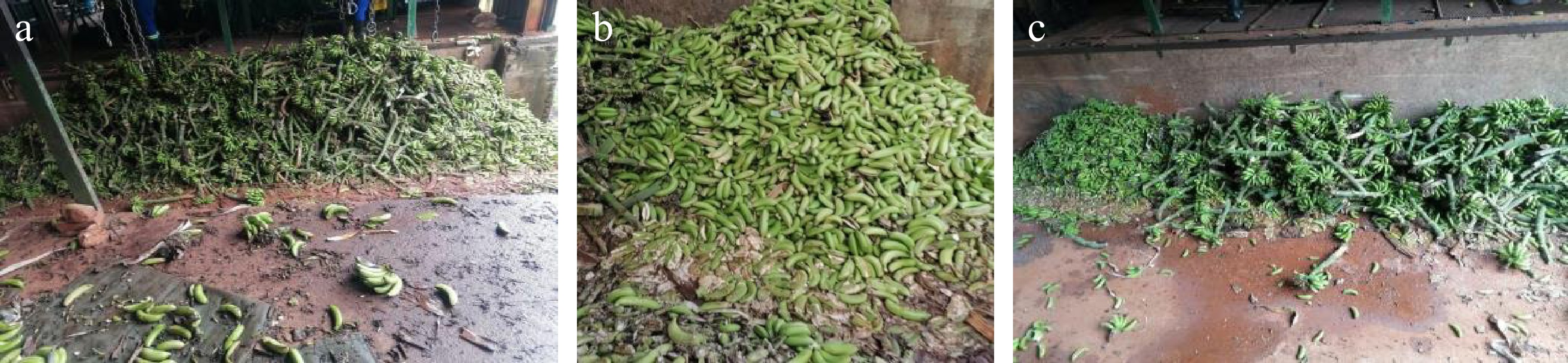
Figure 1.
(a)−(c) Loss of bananas due to improper harvesting and handling. Source: Field survey 2024.
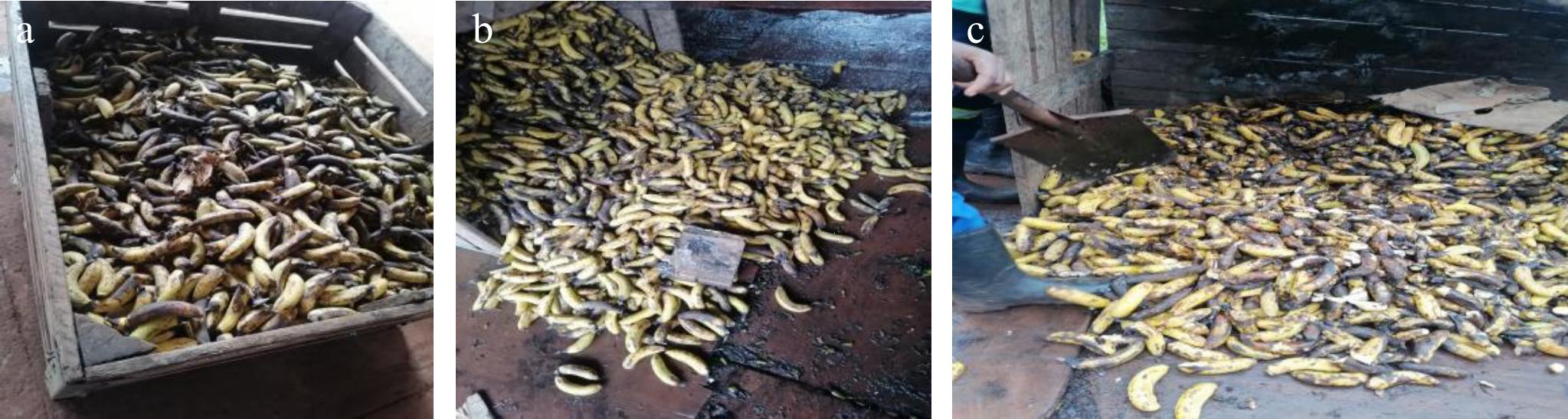
Figure 2.
(a)−(c) Loss of bananas due to improper packaging and lack of market information. Source: Field survey 2024.
Figure 3 shows the loss of macadamia arising from farmers producing more than what the local buyers and processors can accommodate. The farmers also indicate that they were unable to sell macadamia nuts due to limited or no access to markets emanating from various factors, such as remote location of the farm, lack of transportation, or inadequate market information[29]. The farmers sometimes convert the unsold macadamia nuts into granular form (as shown in Fig. 3c), as this is likely to facilitate decomposition. Macadamia nut shells can be applied as organic manure in open fields, which can help improve soil fertility and structure. By doing so, farmers minimize waste by utilizing unsold macadamia nuts and converting potential waste products into valuable organic manure, which can benefit future crops.
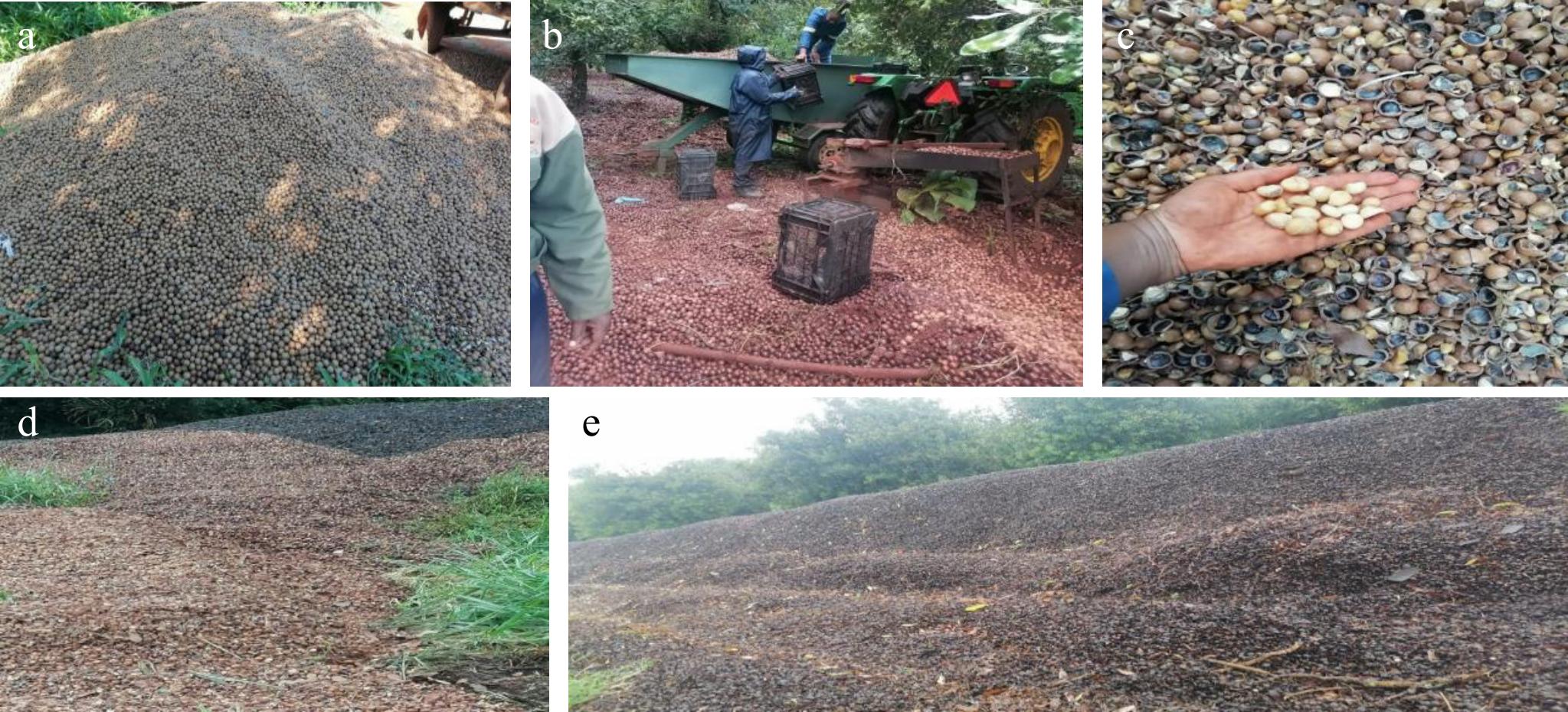
Figure 3.
(a)−(e) Loss of macadamia due to lack of market access and high competition. Source: Field survey 2024.
Figure 4 shows the loss of other fruits (avocados, piches and lemon) due to improper packaging and lack of market information. Proper packaging is required to allow ventilation and heat exchange to maintain proper temperature levels, reduce air infiltration and gas exchange, and also minimize water loss[30]. Proper packaging prevents pathogens from entering packaged products and contaminating it[31]. Improper storage conditions can provide an ideal environment for disease-causing organisms to multiply and thrive[32]. As a result, farmers convert these other fruits into compost materials and create nutrient-rich fertilizers for their farms.
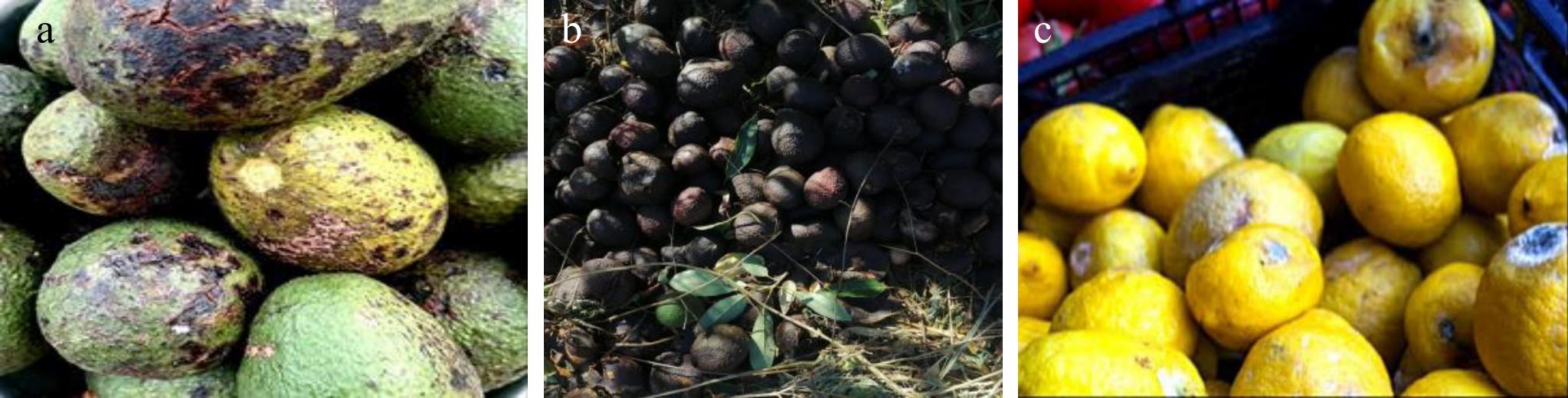
Figure 4.
(a)−(c) Losses from other fruits. Source: Field survey 2024.
Practices and technologies used to minimize postharvest losses
-
The results in Table 5 show that smallholder fruit crop farmers in Limpopo's Vhembe district utilize various practices to minimize postharvest losses. These practices included cleaning and disinfecting methods (17.9%), sorting and grading methods (16.5%), transportation considerations (18.3%), selling at appropriate prices and conditions (19.6%), and manual cleaning (15.6%). These findings align with those of the IFPRI[28], which emphasizes careful handling throughout the supply chain to reduce postharvest losses. The IFPRI highlighted the importance of careful harvesting, shading crops, protecting them from injury, sorting and cleaning crops, proper packaging, and transportation in clean and cool vehicles. This report also underscores the value of storing high-quality crops at optimal temperatures and utilizing processing techniques such as drying, salting, and fermentation to stabilize production and enhance nutrition. Cleaning and packaging ensure that food remains fresh and uncontaminated[31].
Table 5. Practices and technologies used to minimize postharvest losses (n = 224).
Practices Frequency Percentage (%) Cleaning and disinfecting method 40 17.9 Sorting and grading method 37 16.5 Transportation consideration 41 18.3 Storage practices 24 10.7 Packaging techniques 26 11.6 Selling at appropriate price and conditions 44 19.6 Postharvest fungicides 18 8.0 Manual cleaning 35 15.6 Chemical treatment 28 12.5 Source: Computed from field survey 2024. The findings of this study suggest that although farmers employ effective strategies, there is still room for improvement. For example, the use of storage practices (10.7%) and postharvest fungicides (8.0%) was relatively low. Therefore, interventions aimed at improving farmers' access to knowledge, infrastructure, and technologies could help reduce postharvest losses and increase the overall productivity and sustainability of fruit crop farming in the region. By addressing these challenges and adopting effective postharvest management practices, farmers can improve the quality and shelf life of their produce, increase income, and contribute to food security and sustainability in the region.
Factors influencing the use of practices and technologies to minimize PHL
-
The use of practices and technologies among smallholder fruit crop farmers is critical for enhancing the quality, marketability, and overall value chain efficiency of agricultural produce. Table 6 provides insights into the factors influencing the use of practices and technologies among smallholder fruit crop farmers.
Table 6. Factors influencing the usage of practices and technologies (n = 224).
Technology and practices usage drivers Yes No Total Using practices and technologies 78 (34.82%) 146 (65.18%) 224 Availability of infrastructure and equipment 19 (8.48%) 205 (91.52%) 224 Access to information and training 37 (16.52%) 187 (83.48%) 224 Financial resources 16 (7.14%) 208 (92.87) 224 Government policies and support 21 (9.38%) 203 (90.62%) 224 Market demand and consumer preferences 25(11.16%) 199 (88.84%) 224 Pest and disease control 66 (29.46%) 158 (70.54%) 224 Preservation of fruit quality 31 (13.84%) 193 (86.16%) 224 Extension services and advice from agricultural experts 23 (10.27%) 201 (89.73) 224 Cost and affordability 13 (5.80%) 211 (94.20%) 224 Availability and access to technology 11 (4.91%) 213 (95.05%) 224 Technical knowledge and expertise 11 (4.91%) 213 (95.09%) 224 Maintenance and operating cost 13 (5.80%) 211 (94.20%) 224 Source: Computed from field survey 2024. The results revealed that, out of 224 farmers, 78 (34.82%) used practices and technologies to minimize postharvest losses (PHLs), whereas 146 (65.18%) did not. The usage rate of 34.82% shows that a significant portion of smallholder fruit crop farmers have embraced practices and technologies. This is a positive sign, indicating a willingness to implement practices and technologies that can enhance the quality and marketability of their produce. With 65.18% of the respondents not using practices and technologies, a considerable segment may benefit from targeted interventions. Understanding the reasons behind non-usage, whether due to a lack of awareness, resources, or other factors, can guide future initiatives. The usage rate of 34.82% among respondents signifies a noteworthy proportion of smallholder fruit crop farmers who have incorporated practices and technologies into their operations. This positive trend indicates a willingness among farmers to use technologies aimed at preserving the quality and extending the shelf life of their produce. Such practices and technologies are pivotal for maintaining product integrity throughout the supply chain and meeting consumer demands for fresh, high-quality fruits.
The factors influencing the usage of practices and technologies to minimize PHL include the availability of infrastructure and equipment; access to information and training; financial resources; government policies and support; market demand and consumer preferences; pest and disease control; preservation of fruit quality; extension services and advice from agricultural experts; cost and affordability; availability and access to technology; technical knowledge and expertise; and maintenance and operating costs. Only 8.48% of the respondents reported the availability of infrastructure and equipment as a reason for usage, indicating that a majority of the farmers perceived a lack of necessary resources in this regard. Access to information and training was mentioned by 16.52% of the respondents as a factor influencing usage, suggesting that efforts to disseminate knowledge about practices and technologies to minimize PHL could increase usage rates.
Financial resources were cited by 7.14% of the farmers as a reason for using practices and technologies, indicating that cost may be a barrier for some farmers in implementing practices and technologies. Government policies and support were mentioned by 9.38% of the respondents as influencing factors, suggesting that more supportive policies could encourage usage. Market demand and consumer preferences were cited by 11.16% of the farmers as reasons for usage, indicating that economic incentives play a role in usage decisions. Pest and disease control were mentioned by 29.46% of the respondents as reasons for usage, indicating that farmers recognize the importance of practices and technologies in preserving crop quality and quantity.
The preservation of fruit quality was mentioned by 13.84% of the respondents as a reason for using practices and technologies, highlighting the importance of maintaining product quality throughout the supply chain. Extension services and advice from agricultural experts were cited by 10.27% of the respondents as influencing factors, indicating the role of knowledge dissemination and expert guidance in usage decisions. Cost and affordability were mentioned by only 5.80% of the respondents as reasons for usage, suggesting that while cost may be a barrier for some farmers, it is not the primary factor influencing usage. Availability and access to technology, as well as technical knowledge and expertise, were mentioned by 4.91% of the respondents, indicating that technological barriers may exist for some farmers. Maintenance and operating costs were cited by 5.80% of the respondents as reasons for usage, indicating that ongoing expenses associated with implementing practices and technologies may influence usage decisions.
Suggested ways to reduce PHL
-
The respondents were asked what assistance they thought could help reduce PHL, to identify areas that require attention, intervention, and improvement, and Table 7 presents the results.
Table 7. Suggested ways to reduce PHL (n = 224).
PHL reducers/trimmers Yes No Total Access to storeroom/pack house 37 (16.5%) 187 (83.5%) 224 Access to credit 24 (10.7%) 200 (89.3%) 224 Access to training 77 (34.4%) 147 (65.6%) 224 Access to road 42 (18.8%) 182 (81.3%) 224 Export 8 (3.6%) 216 (81.3%) 224 Cold storage 11 (4.9%) 213 (95.1%) 224 Processing facilities 10 (4.5%) 214 (95.5%) 224 Market access 27 (12.1%) 197 (87.9%) 224 Water 8 (3.6%) 216 (96.4%) 224 Chemicals 23 (10.3%) 201 (89.7%) 224 Price regulation 8 (3.6%) 216 (96.4%) 224 Electricity 3 (1.3%) 221 (98.1%) 224 Technologies 1 (0.4%) 223 (99.6%) 224 Funding 9 (4.0%) 215 (96.0%) 224 Source: Computed from field survey 2024. As outlined by the fruit crop farmers interviewed, the following highlights the various aspects that can contribute to reducing postharvest losses.
Access to the storeroom/pack house: Approximately 16.5% of the respondents indicated that having access to the storeroom pack house can help reduce losses. They indicated that if they can have storage facilities or pack houses where they can store/pack their fruits after harvest, they can help reduce losses. Some have suggested that having pack houses accessible to any farmer in the Vhembe district is essential to mitigate losses and ensure the preservation of harvested crops. Improving and expanding such facilities could further enhance storage capabilities, ultimately reducing losses.
Access to credit: Eleven percent (10.7%) of the respondents reported that having access to credit can help reduce losses. They emphasized that limited financial resources could hinder the adoption of efficient postharvest practices and technologies. Initiatives to improve credit access for farmers could contribute significantly to minimizing losses. Improving financial access and credit facilities can empower farmers to invest in technologies and infrastructure that minimize losses.
Access to training: About one-third (34.4%) of the respondents reported that there is a need for widespread educational programs to equip farmers with the knowledge and skills required for effective postharvest management. They indicated that training initiatives could cover storage techniques, handling practices, and market-oriented strategies. Some emphasized that introducing and encouraging the use of technologies can help increase the freshness of fruits. Scaling up training initiatives can significantly impact the overall awareness and implementation of effective postharvest strategies.
Access to the road: Nearly 18.8% of the respondents indicated that a lack of proper road access delays the timely transport of harvested produce. Some have suggested that having proper roads from farms can help reduce losses. Improving transportation infrastructure is crucial for ensuring that crops reach markets without delay, thereby reducing postharvest losses.
Export opportunities: About four percent (3.6%) of the respondents said that having access to export opportunities can help reduce loss. Exploring and expanding export avenues could not only increase income but also reduce domestic market dependence, potentially lowering postharvest losses.
A small percentage of respondents (4.9% and 4.5%) highlighted the importance of cold storage and processing facility access in reducing PHL. Cold storage facilities are critical for maintaining the quality and shelf-life of perishable produce, such as fruits and vegetables. These facilities provide a controlled environment with precise temperature and humidity conditions, slowing the spoilage process and allowing longer storage periods. Processing facilities, on the other hand, enable the transformation of raw produce into value-added products, such as jam, juice, or canned goods. These facilities help reduce waste, increase product shelf life, and create new market opportunities for farmers. While only a small percentage of respondents mentioned cold storage and processing facilities, these investments are critical for reducing PHL, enhancing product quality, and improving market access for farmers.
Market access: Twelve percent (12.1%) of the respondents reported that there is room for expanding market linkages. They emphasized that strengthening connections between farmers and markets can create a more efficient supply chain, reducing losses due to delayed sales. Improving market access through better transportation links and market information dissemination is vital for minimizing losses and maximizing returns for farmers.
Water: Approximately four percent (3.6%) of the respondents suggested that having access to water resources can help reduce PHL. These authors emphasized that an adequate water supply is crucial for various postharvest activities, including washing and cooling, and addressing water scarcity is essential for improving overall postharvest practices.
Chemicals: A total of 10.3% of the respondents mentioned that having access to chemicals presents an opportunity for integrated pest management. Proper and judicious use of chemicals can contribute to minimizing losses caused by pests and diseases.
Price regulation: A small percentage (3.6%) of the farmers acknowledged that price regulation can help to stabilize prices and ensure fair returns for farmers.
Electricity and technologies: Only 1.3% and 0.4% of the respondents emphasized that electricity and technologies can help reduce these losses, respectively. Bridging the technological gap is vital for improving efficiency and reducing losses. Implementing technologies and ensuring reliable electricity can enhance postharvest processes.
Funding: Approximately 4.0% of the farmers mentioned that having access to funding can help in implementing postharvest practices and technologies. Adequate funding is pivotal for implementing effective postharvest management practices, necessitating initiatives to increase financial support for farmers. Facilitating access to funds can enable farmers to invest in critical postharvest infrastructure and technologies.
The most important aspect is access to training, with 34.4% of respondents indicating the need for widespread educational programs to equip farmers with the knowledge and skills required for effective postharvest management. Access to training is the most important aspect because it has the highest percentage of respondents (34.4%); it is crucial for farmers to acquire knowledge and skills for effective postharvest management; it can cover various aspects, such as storage techniques, handling practices, and market-oriented strategies; and it can significantly impact the overall awareness and implementation of effective postharvest strategies. By providing training and education to farmers, they can learn how to handle and store their produce effectively, reducing postharvest losses and improving the overall efficiency of the supply chain.
The three most important aspects are access to training (34.4%), access to roads (18.8%), and access to storerooms/pack rooms (16.5%). These three aspects are crucial for reducing PHL, as they address the need for farmer education, transportation infrastructure, and storage facilities. By addressing these issues, farmers can improve their postharvest management practices, reduce losses, and enhance the overall efficiency of the supply chain.
-
Postharvest fruit losses remain a significant challenge affecting numerous fruit crop farmers in the Vhembe district. The findings highlight the significance of postharvest losses, with 50.9% of the respondents reporting experiences of losses. The primary causes of postharvest losses identified by farmers include inadequate storage conditions, transportation, transpiration, improper handling, and biodeterioration. This study also revealed that farmers employ various practices to minimize postharvest losses, including cleaning and disinfecting methods, sorting and grading methods, and transportation considerations. However, there is a need for improvement, particularly in terms of access to storage facilities, pack houses, credit, and markets. The findings of this study are consistent with the IFPRI[28], which emphasizes the need for improved infrastructure and practices to reduce postharvest losses. Therefore, interventions aimed at improving farmers' access to knowledge, infrastructure, and technologies could reduce postharvest losses and increase the overall productivity and sustainability of fruit crop farming in the region. The study recommends implementing comprehensive training programs focused on best practices in harvesting, handling, and storage. Enhancing access to proper storage facilities and packhouses is crucial for reducing spoilage. Additionally, improving road infrastructure will facilitate the timely transportation of produce to markets. Providing farmers with access to credit can enable investments in better technologies and practices. Finally, fostering stronger market connections and information dissemination will empower farmers to make informed decisions, ultimately improving their livelihoods and food security in their communities. The findings of this study have implications for extension services, policymakers, and other agricultural stakeholders seeking to improve the productivity and sustainability of fruit crop farming in the region.
-
The authors confirm their contributions to the paper as follows: conceptualization, methodology, validation, formal analysis, investigation, and writing − original draft preparation: Belemu V, Oluwatayo IB; writing − review, proofreading & editing: Oluwatayo IB. Both authors reviewed the results and approved the final version of the manuscript.
-
The datasets generated during and/or analyzed in the current study are available from the corresponding author on reasonable request.
-
The authors declare that they have no conflict of interest.
- Copyright: © 2025 by the author(s). Published by Maximum Academic Press, Fayetteville, GA. This article is an open access article distributed under Creative Commons Attribution License (CC BY 4.0), visit https://creativecommons.org/licenses/by/4.0/.
-
About this article
Cite this article
Belemu V, Oluwatayo IB. 2025. Postharvest losses among smallholder fruit crop farmers in South Africa: insights from Vhembe District of Limpopo Province. Circular Agricultural Systems 5: e009 doi: 10.48130/cas-0025-0008 

Postharvest losses among smallholder fruit crop farmers in South Africa: insights from Vhembe District of Limpopo Province
- Received: 01 March 2025
- Revised: 29 May 2025
- Accepted: 03 July 2025
- Published online: 25 July 2025
Abstract: Smallholder fruit crop farmers in South Africa's rural areas face significant economic and food security challenges due to postharvest losses (PHLs). Fruits are more susceptible to PHL, which occurs at various stages, including harvesting, handling, transportation, storage, and marketing. Reducing PHL is crucial for promoting circular agriculture principles, which aim to minimize waste, optimize resource use, and promote regenerative practices. By reducing PHL, smallholder farmers can retain more value from their produce, reduce waste, and contribute to more sustainable and efficient food systems. This study investigated the PHL faced by smallholder fruit crop farmers (FCFs) in the Vhembe District of Limpopo Province, South Africa. Data were collected from a random sample of 224 smallholder FCFs through a structured questionnaire and analyzed via descriptive statistical analytical tools. The results of the data analysis revealed that 63.9% of the participants were male, whereas 36.1% were female. The educational levels attained by the farmers are relatively high, as 48.7% of them have completed secondary education, with agriculture being the primary income source for 84.4% of them. The findings also indicate fruit crop production diversity among farmers, with 95.5% of them owning land, thus providing security and stability for long-term investments. Additionally, more than half of the farmers experienced postharvest losses, and the main causes identified included inadequate storage conditions, mechanical damage during transportation, excessive transpiration, and improper handling practices. Some of the measures employed to minimize postharvest losses include cleaning and disinfecting, sorting and grading, among others. The study concluded that improving access to storage facilities, packhouses, credit, and markets; enhancing information dissemination; and promoting effective postharvest management practices are crucial for reducing postharvest losses, and enhancing the livelihoods of smallholder farmers.
-
Key words:
- Challenges /
- Food security /
- Fruit crop farmers /
- Limpopo Province /
- PHL