










-
The increasing problem of soil salinization has severely hindered the sustainable development of global agriculture. According to incomplete statistics, over 930 million hectares of soil worldwide have experienced varying degrees of salinization[1,2]. Currently, the total area of saline–alkali land in China is approximately 100 million hectares, and the area of soil salinization is still expanding[3]. The so-called 'saline–alkali land' specifically refers to the soil composed of a mixture of salinization and alkalization, which has an adverse impact on plant growth and is one of the main soil types in China[3]. When plants grow in saline–alkali soil, it will cause 'saline–alkali mixed stress' to plant growth, which can be divided into the double-mixed stress of 'soil salinization' and 'soil alkalization'[4]. For most plants, the alkali stress caused by soil alkalization is more harmful to plants than the salt stress caused by soil salinization[5,6]. Among them, soil alkalization is mainly caused by an excess of alkaline salts (Na2CO3, NaHCO3) in the soil, while soil salinization is mainly caused by an excess of neutral salts (NaCl, Na2SO4) in the soil[7,8]. Most crop varieties, such as rice, corn, and barley, are not salt-tolerant[9].
Rapeseed (Brassica napus L.) is one of the major oil crops worldwide and the most important oil crop in China. Rapeseed oil accounts for more than 45% of the country's total domestically produced vegetable oil. In recent years, rapeseed has evolved from being primarily an oil crop into a multifunctional crop that integrates uses in energy, vegetable production, green manure, animal feed, and ornamental applications[10]. As a forage crop, rapeseed offers advantages such as high biomass yield, strong saline–alkali tolerance, and a broad adaptability range, making it an important resource for the development and utilization of saline-alkali lands[11]. For instance, saline–alkali–tolerant rapeseed cultivars such as 'Huayouza 62' and 'Huayouza 158R' have been successfully demonstrated and promoted in regions with saline–alkali soils, including Xinjiang, Gansu, Inner Mongolia, Heilongjiang, Zhejiang, and Jiangsu province, in China. These initiatives have provided new solutions to address local shortages of forage and have yielded significant socio-economic benefits[11].
Pea (Pisum sativum L.) is an important crop worldwide, with a broad global distribution and extensive cultivation area. It is also a significant edible legume in China[12]. Peas have diverse applications and can be categorized into grain peas, vegetable peas for tender pods, and vegetable peas for fresh seeds. Additionally, peas can be used as feed and green manure, making them a multifunctional crop integrating grain, vegetable, fertilizer, and forage uses[13,14]. Since the growth periods of pea and rapeseed overlap, they are often intercropped or mixed sown[15]. As a legume, pea contributes to biological nitrogen fixation and can improve soil nutrient levels. Rapeseed, on the other hand, has a high nitrogen demand. Therefore, intercropping the two can create synergistic complementarity[15]. While rapeseed is a well-documented crop with strong saline–alkali tolerance, the salt–alkali tolerance level of pea remains poorly understood[10]. Thus, comparing the saline–alkali tolerance of rapeseed and pea is of great significance for promoting their intercropping and mixed cropping systems in saline–alkali regions.
In this study, different concentrations of salt stress (NaCl) and alkali stress (Na2CO3) were applied to compare the salt and alkali tolerance of rapeseed and pea at the seedling stage, and to evaluate the effects of these stresses on plant growth and key nutritional quality traits. The results aim to provide technical support for the development and utilization of saline–alkali land through intercropping and mixed sowing systems involving rapeseed and pea.
-
The test materials consisted of the saline-alkali-tolerant Brassica napus L. cultivar 'Huayou Za 158' and the dwarf Pisum sativum L. cultivar 'Zhongwan 11'. The latter is characterized by wide adaptability, strong stress resistance, short growth period, high quality, and high yield potential.
Treatment with different concentrations of salt and alkali solutions
Sowing
-
Use a 32-hole tray with a specification of 540 mm × 280 mm × 110 mm, paved with vermiculite, and sow two seeds each of 'Huayouza 158R' and 'Zhongwan 11' in each hole, of which rapeseed and pea are sown in 16 holes each. After sowing, cover with vermiculite.
Stress treatment
-
Nutrient solution was used to configure different concentrations of salt and alkali solutions, in which NaCl was used to simulate salt stress, and four gradients were set, namely 0.8% (S1), 1.0% (S2), 1.2% (S3), and 1.4% (S4), respectively. Na2CO3 was used to simulate alkali stress, and four gradients were set up as 0.05% (A1), 0.10% (A2), 0.15% (A3), and 0.20% (A4), respectively, and a control (CK) was set. The sown hole trays are immersed in nutrient solutions containing different concentrations of salt and alkali until they are completely wet, and covered with transparent plastic caps for culture.
Sampling measurement indicators
-
After 20 d of sowing, five seedlings exhibiting relatively uniform growth were selected. The roots were carefully washed, and the fresh weights of both the shoot (SFW) and root systems (RFW) were measured. Subsequently, vitamin C content in the leaves was determined using the 2,6-dichloroindophenol indophenol titration method. Soluble sugar content was assessed via the anthrone method, and soluble protein content was quantified using the Coomassie brilliant blue method.
Data analysis
-
All data is analyzed and processed by SPSS22, and images are produced using Origin.
-
Compared to the control, both salt and alkali stress significantly inhibited the growth of rapeseed and pea, with the inhibitory effect intensifying as stress concentrations increased. As shown in Figs. 1 and 2, rapeseed exhibited strong salt tolerance and was able to withstand 1.4% NaCl stress. Under high salt conditions, rapeseed demonstrated uniform emergence. In contrast, pea showed relatively weak salt tolerance; at 0.8% NaCl stress, pea seeds germinated unevenly, and seedling growth was severely suppressed. On the other hand, pea displayed a high level of alkali tolerance. At Na2CO3 concentrations up to 0.2%, the inhibition of pea seedlings remained mild, whereas rapeseed growth was severely inhibited, eventually leading to gradual mortality.
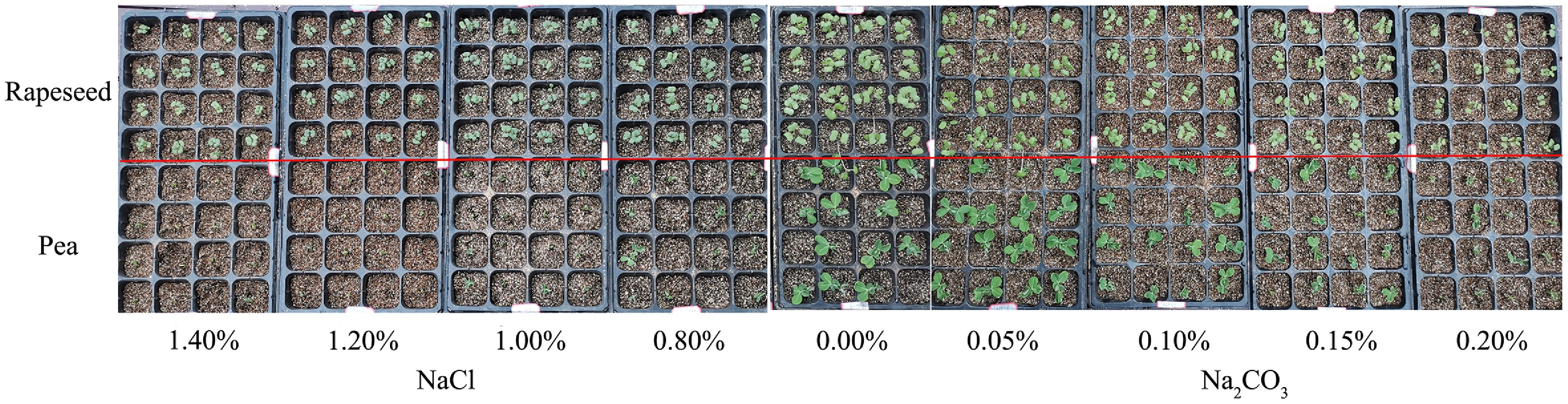
Figure 1.
The emergence of rapeseed and pea under different concentrations of salt and alkali stress (7 d after sowing).
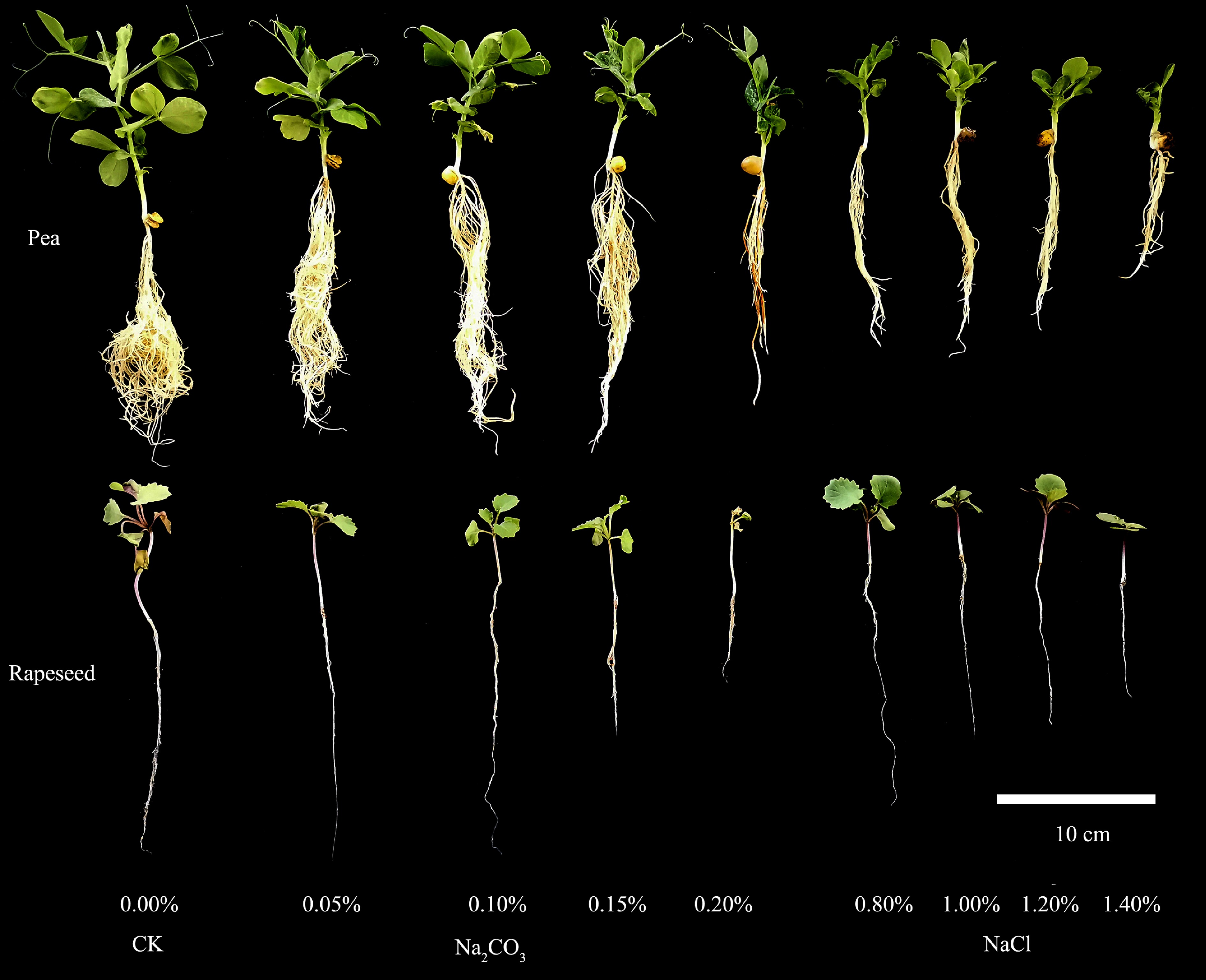
Figure 2.
Growth of pea and rapeseed under different concentrations of salinity and alkali stress.
Effects of different concentrations of saline–alkali stress on the growth traits of rapeseed and pea
-
Salt and alkali stress exerted varying degrees of inhibitory effects on the growth of rapeseed and pea seedlings. The results showed that under alkali stress, the shoot fresh weight (SFW) of both pea and rapeseed decreased significantly with increasing Na2CO3 concentration, with the reduction in pea SFW being significantly less pronounced than that in rapeseed. At a Na2CO3 concentration of 0.05%, no significant difference was observed in pea SFW compared to the control, whereas rapeseed SFW was significantly lower than that of the control. When the Na2CO3 concentration reached 0.20%, pea SFW decreased by 36.00%, while rapeseed SFW declined by 69.86% (Fig. 3). Regarding root growth, 0.05% Na2CO3 significantly promoted the root fresh weight (RFW) of pea. A significant reduction in RFW compared to the control was only observed at 0.20% Na2CO3. In contrast, rapeseed RFW was already significantly lower than the control at 0.05% Na2CO3 (Fig. 3). These results indicate that pea exhibits stronger alkali tolerance than rapeseed.
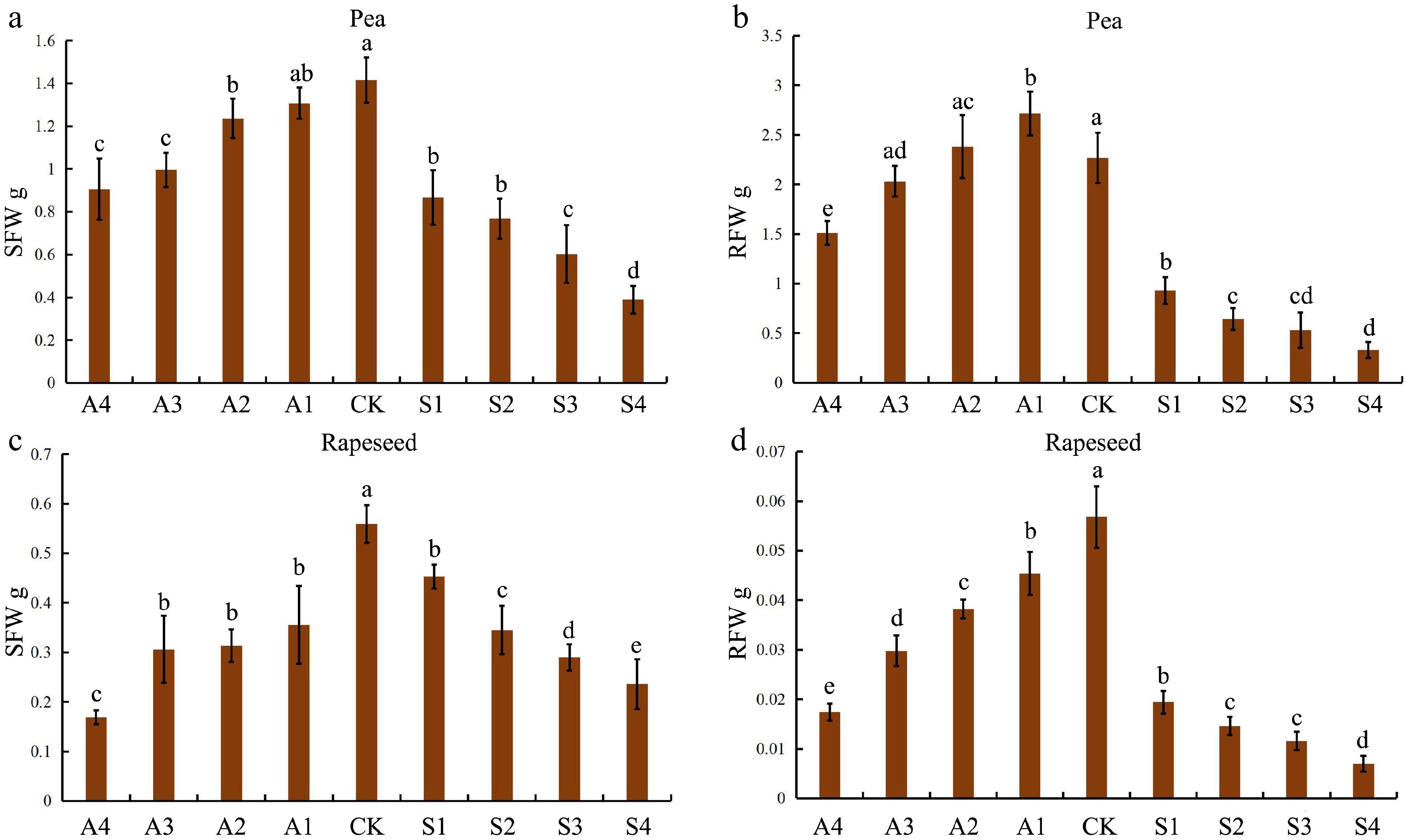
Figure 3.
The aboveground and root biomass of rapeseed and pea under different concentrations of salt and alkali stress. Note: NaCl concentration: 0.80% (S1), 1.00% (S2), 1.20% (S3), 1.4% (S4); Na2CO3 concentration: 0.05% (A1), 0.10% (A2), 0.15% (A3), 0.20% (A4), control (CK). Different lowercase letters indicate significant differences (LSD test, p < 0.05). (a) Pea shoot fresh weight. (b) Pea root fresh weight. (c) Rapeseed shoot fresh weight. (d) Rapeseed root fresh weight.
Under salt stress, the SFW of both pea and rapeseed decreased significantly with increasing NaCl concentration, with the reduction in rapeseed SFW being significantly smaller than that in pea. At 0.8% NaCl, the SFW of both species was significantly lower than that of the control. When the NaCl concentration reached 1.4%, pea SFW decreased by 72%, whereas rapeseed SFW decreased by 57%. As for root growth, both rapeseed and pea root systems were significantly inhibited by NaCl stress (Fig. 3). These results demonstrate that rapeseed possesses greater salt tolerance than pea.
Effects of different concentrations of saline–alkali stress on vitamin C, soluble sugar, and soluble protein content in rapeseed and pea leaves
-
Both salt and alkali stress can reduce the vitamin C content in the leaves of rapeseed and peas. Moreover, as the concentration of salt and alkali increases, the vitamin C content decreases significantly (Fig. 4). When peas were under high alkali stress (0.20 %), the leaves could still maintain a high vitamin C content, while when it was low; When the salt concentration (0.8 %) was reached, the vitamin C content in leaves decreased by more than 37%, and when the salt concentration reached 1.4%, the vitamin C content in pea leaves was only 28% of that of the control, indicating that the inhibitory effect of salt stress on vitamin C content in pea leaves was stronger than that of alkali stress (Fig. 4). When the salt concentration was at a lower salt concentration (0.8%), the vitamin C content in rapeseed leaves decreased by only 15%, and under low alkali stress (0.05%), the vitamin C content in rapeseed leaves decreased by 27%, indicating that the inhibitory effect of alkali stress on vitamin C content in rapeseed leaves was stronger than that of salt stress (Fig. 4).
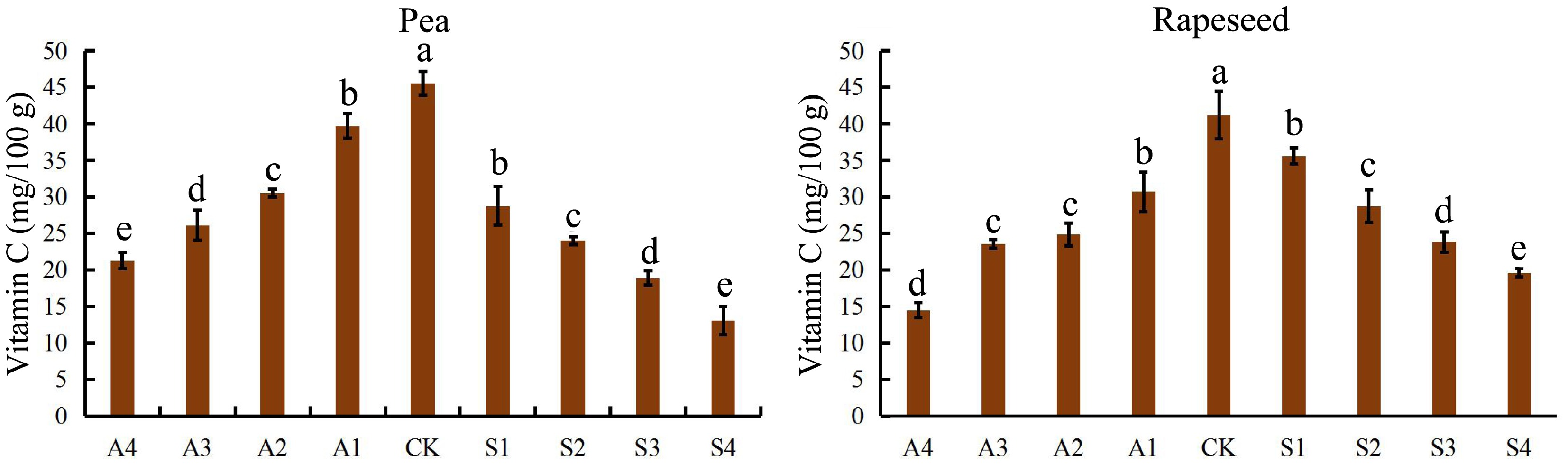
Figure 4.
The content of vitamin C in rapeseed and pea leaves under different concentrations of salt and alkali stress. Note: NaCl concentration: 0.80% (S1), 1.00% (S2), 1.20% (S3), 1.4% (S4); Na2CO3 concentration: 0.05% (A1), 0.10% (A2), 0.15% (A3), 0.20% (A4), control (CK). Different lowercase letters indicate significant differences (LSD test, p < 0.05).
A significant change in soluble protein content was observed in the leaves of rapeseed and pea plants under salt–alkali stress. Specifically, the protein content exhibited a marked decrease as the stress concentration increased (Fig. 5). When peas were under high alkali stress (0.20%), the soluble protein content in leaves (42% of the control level) could be maintained, while at the higher salt concentration (0.8%), the soluble protein content in leaves decreased by more than 39%, and when the salt concentration reached 1.4%, the soluble protein content in pea leaves was only 27% of that of the control, indicating that the inhibitory effect of salt stress on soluble protein in pea leaves was stronger than that of alkali stress (Fig. 5). However, the soluble protein content in rapeseed leaves with salt and alkali stress concentrations was the opposite of that of peas, but the alkali concentration reached 0.15%, and the soluble protein content in rapeseed leaves was only 49% of that of the control, while the soluble protein content in rapeseed leaves was 56% of that of the control at high salt concentration (1.4%), indicating that the inhibitory effect of alkali stress on the soluble protein content of rapeseed leaves was stronger than that of salt stress (Fig. 5).
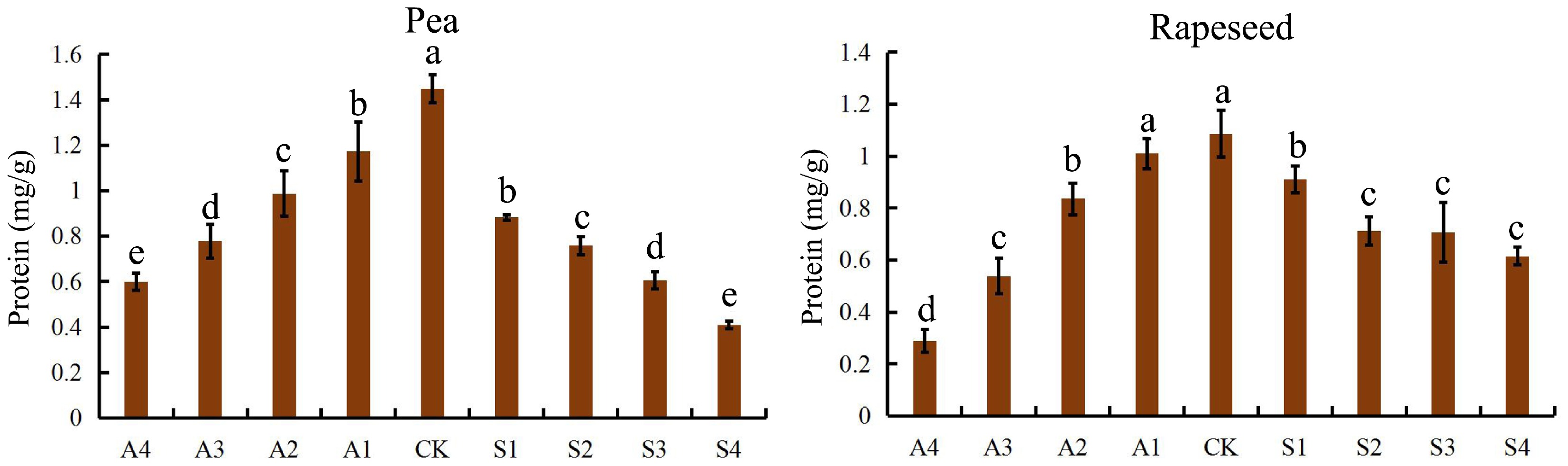
Figure 5.
Soluble protein content of rapeseed and pea leaves under different concentrations of salt and alkali stress. Note: NaCl concentration: 0.80% (S1), 1.00% (S2), 1.20% (S3), 1.4% (S4); Na2CO3 concentration: 0.05% (A1), 0.10% (A2), 0.15% (A3), 0.20% (A4), control (CK). Different lowercase letters indicate significant differences (LSD test, p < 0.05).
Salt–alkali stress adversely affected the accumulation of soluble sugars in rapeseed and pea leaves. This inhibitory effect was positively correlated with the stress concentration, leading to a progressive decline in sugar content (Fig. 6). When peas were under high alkali stress (0.20%), the soluble sugar content in the leaves could be maintained (61% of the control level), while when the salt concentration was lower (0.8%), the soluble sugar in the leaves decreased by more than 39%, and when the salt concentration reached 1.4%, indicating that the inhibitory effect of salt stress on the soluble sugar in pea leaves was stronger than that of alkali stress (Fig. 6). The soluble sugar content of rapeseed leaves with the concentration of salt and alkali stress was different from that of peas, and the soluble sugar content of rapeseed leaves was only 40% and 45% of that of the control when the salt concentration reached 1.2% and 1.4%, respectively. When the alkali concentration reached 0.10%, the soluble sugar content of rapeseed leaves was 84% of that of the control, and when the alkali concentration reached 0.15%, the soluble sugar content decreased sharply, only 45% of that of the control (Fig. 6).
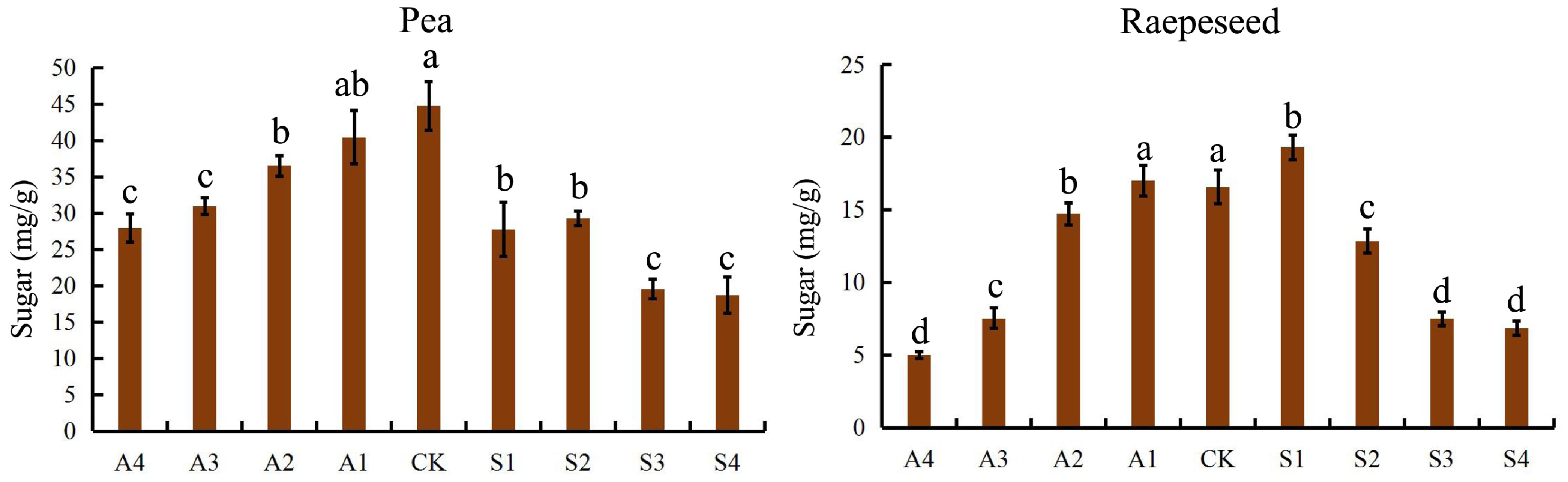
Figure 6.
Soluble sugar content of rapeseed and pea leaves under different concentrations of salt and alkali stress. Note: NaCl concentration: 0.80% (S1), 1.00% (S2), 1.20% (S3), 1.4% (S4); Na2CO3 concentration: 0.05% (A1), 0.10% (A2), 0.15% (A3), 0.20% (A4), control (CK). Different lowercase letters indicate significant differences (LSD test, p < 0.05).
-
As a crop with strong saline-alkali tolerance, rapeseed is considered to be one of the most potential crops for the development and utilization of saline–alkali land. At present, there are many studies on the growth and development of rapeseed due to saline–alkali stress. For example, the mechanism of the effect of saline–alkali stress on the physiological and photosynthetic characteristics of rapeseed at the seedling stage, the effects of different saline–alkali conditions on the growth performance of forage rapeseed, and the yield characteristics of rapeseed planted in saline–alkali land[14,16]. However, there are relatively few studies on the effects of saline–alkali stress on nutrient content in rapeseed leaves. In this study, neutral salt (NaCl) and alkaline salt (Na2CO3) were used to simulate salt and alkali stress, respectively, and the results showed that alkali stress had a stronger inhibitory effect on the growth of rapeseed compared with salt stress (Figs. 1, 2), which was consistent with the previous conclusions[17]. The results showed that both salt and alkali stress could significantly inhibit the accumulation of vitamin C and soluble protein in rapeseed leaves, and the inhibitory effect of alkali stress on the two main nutrients was stronger than that of salt stress (Figs. 4, 5). The results also showed that lower concentration of salt stress could promote the accumulation of soluble sugar in rapeseed leaves, but high concentrations of salt and alkali inhibited the accumulation of soluble sugar in leaves (Fig. 6), and the inhibitory effects of salt and alkali stress were not much different. These results are consistent with those of previous studies on other species[18−20]. Vitamin C, soluble sugar, and soluble protein are the main nutrients of canola, so our findings may provide a theoretical basis for enhancing the feed value of rapeseed under saline–alkali stress conditions.
The effect of salinity–alkali tolerance and saline–alkali stress on pea vegetatives
-
Similar to the multifunctional use of rapeseed, peas can also be used as feed and green manure, and are a multifunctional use that integrates grain, vegetable, fertilizer, and feed[13]. Currently, there is no comprehensive study on pea salt tolerance, and the effects of saline-alkali stress on its growth and development have not been systematically evaluated. Therefore, in this study, different concentrations of salt and alkali stress were simulated to cultivate and plant peas. The results showed that peas had a certain saline–alkali tolerance, and compared with salt-tolerant rapeseed varieties, peas had significantly stronger alkali tolerance than rapeseed, and could tolerate 0.20% Na2CO3 concentration, while salt tolerance is weaker than that of rapeseed (Figs. 1, 2). The results showed that salt and alkali stress also significantly inhibited the content of vitamin C, soluble protein, and soluble sugar in pea leaves, while salt stress had a stronger inhibitory effect on the three main nutrients of pea than alkali stress (Figs. 4−6). These results are consistent with the previous conclusions regarding the accumulation of metabolites in plants in response to saline–alkali stress[18−21]. Therefore, how to improve the salt tolerance of peas is the key to further improving the saline–alkali tolerance of peas. In addition, the pea varieties selected in this study are the 'Zhongwan 11' variety with good adaptability, strong stress resistance and good yield, and the saline–alkali tolerance of more pea resources needs to be identified in the future, and resources with stronger saline–alkali tolerance need to be screened out and laying the foundation of genetic resources for the subsequent breeding of salt-tolerant and alkali-tolerant pea varieties
Feasibility of intercropping rapeseed and peas in saline-alkali land
-
In 2015, the No. 1 document of the Central Committee proposed to accelerate the development of grass and animal husbandry, support the planting of forage such as silage corn and alfalfa, and implement a pilot project of mixing grain to feed and planting and breeding. Under saline–alkali conditions (pH 10.2−11.2, salt concentration 0.4%−0.5%), rapeseed produces about 3,200−4,500 kg of fresh feed per 667 m2, which has become an important feed source[14]. Fresh stems and leaves of peas are rich in sugar, protein, mineral elements, etc., which are liked by a variety of livestock and are a feed crop with high nutritional value[13,22]. In addition, the nitrogen fixation of legume grass can reduce the amount of nitrogen fertilizer, improve soil structure, improve soil fertility, and improve the ecological environment[15].
In this study, the growth and changes of main nutrients (vitamin C, soluble sugar, and soluble protein) of peas and rapeseed under different concentrations of salt and alkali stress were compared (Figs. 4−6). The results showed that the soluble sugar and soluble protein contents in pea leaves were significantly higher than those in rapeseed under saline–alkali stress, and the vitamin C levels were comparable. Studies have shown that mixed sowing of maize and peas has an effect on forage yield and quality[15,23]. There are also studies that mixing rapeseed and oats in saline–alkali land can effectively improve forage yield and quality, and can play a role in improving soil[24]. The rapeseed-pea intercropping system demonstrates high feasibility for saline–alkali land utilization, creating a synergistic model that integrates forage production with soil restoration. This system leverages rapeseed's sugar-rich biomass and pea's high protein content to produce nutritionally balanced silage, while their complementary stress tolerance mechanisms enhance yield stability under varying saline–alkali conditions. Furthermore, pea's nitrogen-fixing capacity combined with rapeseed's deep root system initiates an ecological restoration cycle that is further enhanced through livestock manure recycling, collectively transforming saline–alkali soils while producing quality forage in a sustainable agricultural framework.
Special thanks to the National Key Laboratory of Crop Genetic Improvement Open Fund (Grant No. ZK202403), the National biological breeding major project (Grant No. 2022ZD04010), Provincial Science and Technology Plan Project Regional Innovation Program (Grant No. 2024EBA027), and the National Natural Science Foundation of China (Grant No. U22A20469) for funding this research.
-
The authors confirm their contributions to the paper as follows: study conception and design: Wan H, Zhang H; conducting experiment and data collection: Guo R, Ao L; data analysis and interpretation: Wang X, Dai X, Zhang H; draft manuscript preparation: Wan H, Guo R, Wang X, Zeng C. All authors reviewed the results and approved the final version of the manuscript.
-
All data generated or analyzed during this study are included in this published article.
-
The authors declare that they have no conflict of interest.
-
# Authors contributed equally: Rui Guo, Xiaomei Wang
- Copyright: © 2026 by the author(s). Published by Maximum Academic Press, Fayetteville, GA. This article is an open access article distributed under Creative Commons Attribution License (CC BY 4.0), visit https://creativecommons.org/licenses/by/4.0/.
-
About this article
Cite this article
Guo R, Wang X, Ao L, Dai X, Zeng C, et al. 2026. Effects of salt and alkali stress on seedling growth and main nutritional quality of rapeseed and pea. Technology in Agronomy 6: e002 doi: 10.48130/tia-0025-0015 

Effects of salt and alkali stress on seedling growth and main nutritional quality of rapeseed and pea
- Received: 22 September 2025
- Revised: 31 October 2025
- Accepted: 03 November 2025
- Published online: 21 January 2026
Abstract: Cultivating salt-alkali-tolerant crops is crucial for ensuring food security and utilizing marginal lands. This study aimed to evaluate and compare the physiological and nutritional responses of rapeseed and pea seedlings to saline and alkaline stresses to assess their potential for intercropping in affected areas. Using saline-alkali-tolerant rapeseed 'Huayouza 158R' and dwarf pea 'Zhongwan 11' as materials, the effects of different concentrations of salt (NaCl) and alkali (Na2CO3) stress on the growth and main nutritional quality of rapeseed and pea seedlings were studied. The results showed that both salt and alkali stress could inhibit the growth of rapeseed and pea seedlings, and the content of main nutrients, mainly reflected in the inhibition of the growth of the aerial parts and roots, the reduction of biomass accumulation, and the reduction of the content of vitamin C, soluble sugar, and soluble protein in leaves. By comparing the salt and alkali tolerance of rapeseed and pea, it was found that rapeseed has strong salt tolerance and relatively weak alkali tolerance, while pea has strong alkali tolerance and relatively weak salt tolerance. The results of this study provide theoretical support for the possibility of promoting the intercropping and mixed sowing of rapeseed and pea in saline-alkali land.
-
Key words:
- Rapeseed /
- Pea /
- Salt-stressed /
- Alkaline-stressed /
- Forage