












-
The high-quality development of the tea industry aims for a win-win situation of economic benefits and environmental friendliness. The use of nitrogen fertilizers has significantly increased crop yields, making a substantial contribution to agricultural development. Nitrogen, an essential nutrient for plant growth, is a critical component of nucleic acids, amino acids, proteins, chlorophyll, and certain plant hormones and is also one of the primary factors limiting plant growth. As a typical nitrogen-loving plant, tea plant contains a variety of secondary metabolites closely related to tea quality and health benefits[1]. Tea plant has a significantly higher demand for nitrogen than other crops, and appropriate nitrogen fertilizer application can promote tea plant growth and improve tea quality[2,3]. However, excessive nitrogen fertilizer application reduces nutrient use efficiency, leads to resource wastage, and may induce a variety of adverse effects on the tea plantation ecosystem[4]. Statistics indicate that the average annual nitrogen fertilizer application rate in Chinese tea plantations is 444 kg·ha−1, with over 50% applying more than 450 kg·ha−1[5]. Long-term nitrogen fertilizer application can lead to nitrogen accumulation in the soil, resulting in soil acidification and compaction, along with air and water pollution[6,7]. Studies have shown that moderate nitrogen fertilizer application can significantly increase tea yield and quality, while excessive application can result in stunted growth and reduced quality[8]. In 2020, the Ministry of Agriculture and Rural Affairs of China released key points for green development in agriculture and rural areas, promoting the reduction and efficiency improvement of chemical fertilizers[9]; by November 2022, the 'Action Plan for Reducing Chemical Fertilizer Use by 2025' and the 'Action Plan for Reducing Chemical Pesticide Use by 2025' had been formulated[10]. Therefore, in actual tea plantation management, it is crucial to formulate a scientific nitrogen fertilizer reduction plan. This plan should consider the growth characteristics of tea plant and the nutrient status of the soil to ensure precise nitrogen management.
The tea plant (Camellia sinensis (L.) O. Kuntze) is important economic crop in China, with their processed leaves holding significant economic value. The tea plant exhibits typical characteristics of preferring shaded and humid environments, with light serving as a pivotal environmental factor that significantly impacts its growth. Light regulates the biosynthesis pathways of secondary metabolites such as amino acids, polyphenols, and alkaloids, thereby influencing the formation of aroma compounds and flavor substances in tea[11,12]. The tea plant is highly susceptible to light stress during the summer, which induces physiological adversity and disrupts normal growth and quality formation[13−15]. Therefore, shading is often employed in tea plantation management to mitigate light stress. Shading lowers the temperature in tea plantations and adjusts the light intensity, especially by increasing the proportion of diffuse light. This subsequently influences the carbon and nitrogen metabolism of the tea plant, increasing total nitrogen content and decreasing total carbon content[16]. Studies have shown that shading effectively regulates the synthesis of metabolites related to tea quality, enhances tea flavor characteristics, and makes the fresh leaves more suitable for producing high-quality green tea[17,18]. Exploring the physiological and biochemical response mechanisms of tea plant under shading conditions helps to understand their environmental adaptability and provides a scientific basis for precision management in tea plantations.
Previous studies primarily focused on the impact of single factors, such as shading or fertilization, on tea plant. Therefore, this study innovatively combines different durations and degrees of shading treatments to investigate the impact on the growth of tea plant on the basis of nitrogen fertilizer reduction. The goal is to determine the optimal light conditions and nitrogen fertilizer concentration ratios that promote tea plant growth, improve nitrogen fertilizer utilization efficiency, and achieve both high quality and high yield, ultimately providing theoretical support and technical guidance.
-
This experiment was conducted in 2024 at the Tea Demonstration Experimental Station in Xixiang County, Hanzhong City, Shaanxi Province, China (107°40'29.96" E, 32°57'37.76" N) (Fig. 1). The experimental site is located in the northern subtropical semi-humid monsoon climate zone, with an altitude of 400−500 m, an average annual temperature of 14.4 °C, and annual precipitation ranging from 1,100 to 1,200 mm. The total area of the experimental plots was 350 m², with flat terrain and no surrounding obstructions. The tested material was the 'Shaancha 1' tea plant variety, which was four years old, with uniform growth and a row spacing of 1.5 m. The experiment adopted a two-factor, completely randomized block design, incorporating four nitrogen fertilizer levels (0, 90, 180, and 360 kg N ha−1) and varying shading treatments (duration: 0, 7, 38 d; intensities: 0%, 40%, 70%), totaling 20 treatment combinations. Each treatment plot had an area of 15 m². Nitrogen fertilizer was applied in two furrow applications: base fertilizer in early January 2024 and additional fertilizer in late February 2024, using large granular urea. Shade treatments were implemented from June to July 2024 with black polyethylene shade nets: a 4-pin encrypted net for 40% shade and a 10-pin encrypted net for 70% shade. The specific experimental design is shown in Table 1. Sample collection was conducted on August 1, 2024, with fresh leaf samples randomly collected according to the standard of one bud and two leaves. The collected samples were immediately put into liquid nitrogen for quick freezing and then transferred to −80 °C for subsequent experimental analysis.
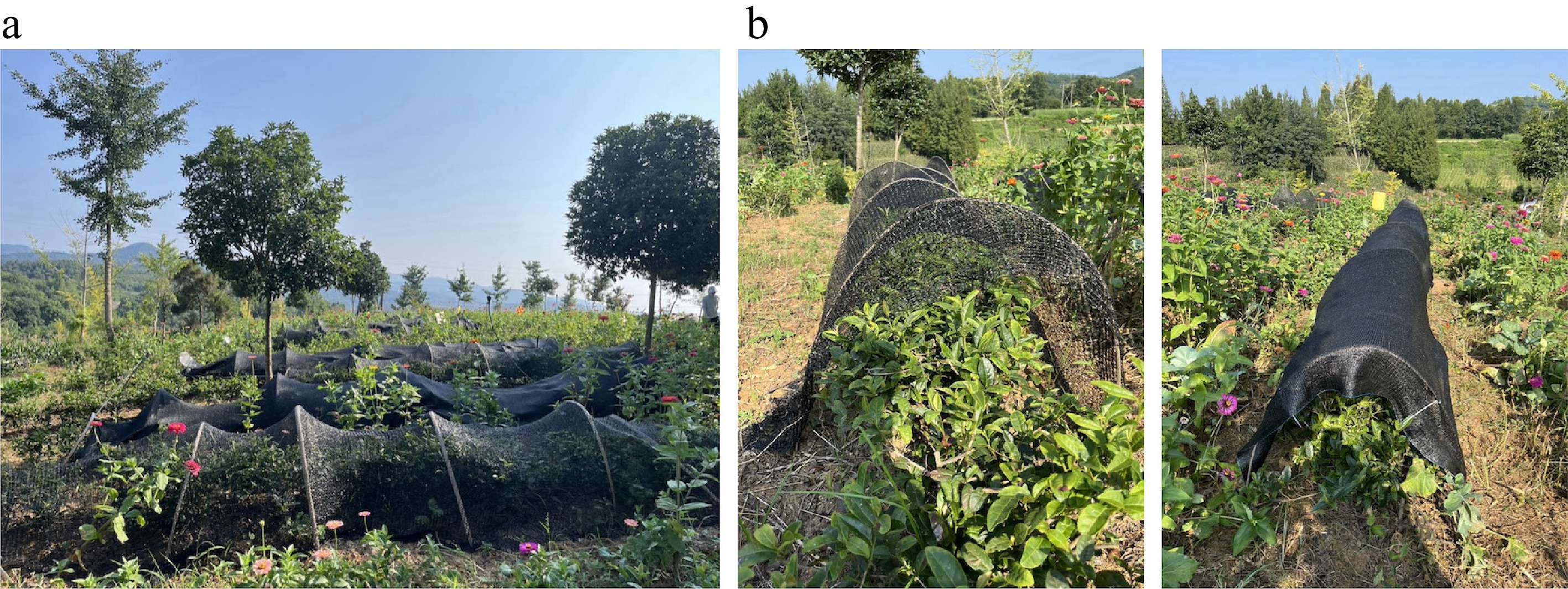
Figure 1.
(a) Panoramic view of the tea plantation, and (b) treatments with 40% and 70% shade levels.
Table 1. Shading system based on nitrogen fertilizer reduction.
Treatment Total N
(kg N ha−1)Base fertilizer
(kg N ha−1)Additional fertilizer
(kg N ha−1)Duration of shading
(d)Shading rates (%) N0 0 0 0 0 0 N0T1S1 7 40 N0T1S2 70 N0T2S1 38 40 N0T2S2 70 N1 90 75 15 0 0 N1T1S1 7 40 N1T1S2 70 N1T2S1 38 40 N1T2S2 70 N2 180 75 105 0 0 N2T1S1 7 40 N2T1S2 70 N2T2S1 38 40 N2T2S2 70 N3 360 75 285 0 0 N3T1S1 7 40 N3T1S2 70 N3T2S1 38 40 N3T2S2 70 Determination of growth indicators and photosynthetic parameters
-
Digital vernier calipers (precision 0.01 mm) were used to measure the morphological characteristics of tea leaves. Leaf area was calculated using the formula: 'leaf length × leaf width × 0.7'. The length of the internode between one bud and three leaves was measured. Each treatment was repeated ten times. The quadrat method was employed to determine the density of new shoots, with a sample area of 25 cm × 25 cm. For each treatment, ten fresh samples of one bud and two leaves were randomly selected, accurately weighed, and then converted to the index of 100-bud weight. Cameras were used to capture images of the new shoots and second leaves. The chlorophyll content of fresh one bud and two leaves was determined using the acetone method[19]. Leaf photosynthetic physiological parameters were measured using the GFS-3000 portable photosynthesis measurement system (Heinz Walz GmbH, Germany).
Determination of antioxidant indicators
-
The activities of the antioxidant enzymes superoxide dismutase (SOD), peroxidase (POD), and catalase (CAT) were determined with reference to the standard method outlined in Experiments in Plant Physiology[20]. Malondialdehyde (MDA) content was measured using the thiobarbituric acid method[21], proline content was assessed by the acid ninhydrin method[22], soluble protein content was quantified by the Coomassie brilliant blue method[20], and soluble sugar content was evaluated using the anthrone-sulfuric acid method[20].
Determination of main quality components
-
Sample pretreatment was performed using a high-temperature water-removal and low-temperature drying method. The fresh leaf samples of one bud and two leaves were placed in an oven at 120 °C for rapid water loss for 1 h and then adjusted to 80 °C for drying until a constant weight was achieved. The determination of quality components was carried out in strict accordance with national standards and methods: dry matter content was determined with reference to GB/T 8303-2013[23], water leachate content was determined with reference to GB/T 8305-2013[24], tea polyphenol content was determined with reference to GB/T 8313-2008[25], free amino acid content was determined with reference to GB/T 8314-2013[26], and caffeine content was determined with reference to GB/T 8312-2013[27]. Additionally, the method of Zheng et al.[28] was used for the determination of anthocyanin content, and the sodium nitrite-aluminum nitrate colorimetric method was used for the determination of total flavonoid content[29].
Statistical analysis
-
Data analysis was performed using Microsoft Excel 16.78 for data organization and preliminary statistics, while IBM SPSS Statistics 26 software was used for one-way ANOVA. Data visualization was carried out using GraphPad Prism 9.5.1 software and ChiPlot (
www.chiplot.online ). -
To systematically assess the effects of combined nitrogen fertilizer and shading treatments on the phenotypic characteristics of tea plant, a comprehensive statistical analysis of tea plant growth indicators was conducted in this study. The results demonstrated that short-term low-intensity shading treatment combined with optimal nitrogen fertilization promoted leaf growth and new shoot elongation in tea plant. Compared with the no-nitrogen treatment, the application of N1, N2, and N3 treatments significantly increased the leaf area of the first and second leaves of new tea shoots, with the N3 treatment having the most significant effect (Fig. 2a, b). Shading treatments exhibited a clear dose-response effect: T1 and S1 promoted leaf growth, whereas S2 under T2 showed inhibitory effects. Regarding the interaction between nitrogen fertilizer and shade, the N2 and N3 treatments significantly promoted tea plant internode elongation, and this effect was further enhanced by the S1 shading treatment (Fig. 2c). However, S2 shade treatment inhibited new shoot emergence, but S1 shading still showed a positive effect on new shoot emergence under N1 and N2 treatments (Fig. 2d). Hundred-bud weight analysis showed that the T1 shading treatment resulted in higher bud weight compared to no-shading treatment, while the combination of low nitrogen levels (N0, N1) and S2 shading treatments suppressed the increase in hundred-bud weight (Fig. 2e). These results indicated a significant interaction between the effects of nitrogen fertilization and shading treatments on tea plant growth traits, suggesting that moderate nitrogen fertilization combined with short-term (T1) and low-intensity (S1) shading treatments could effectively promote the growth and development of tea plant.
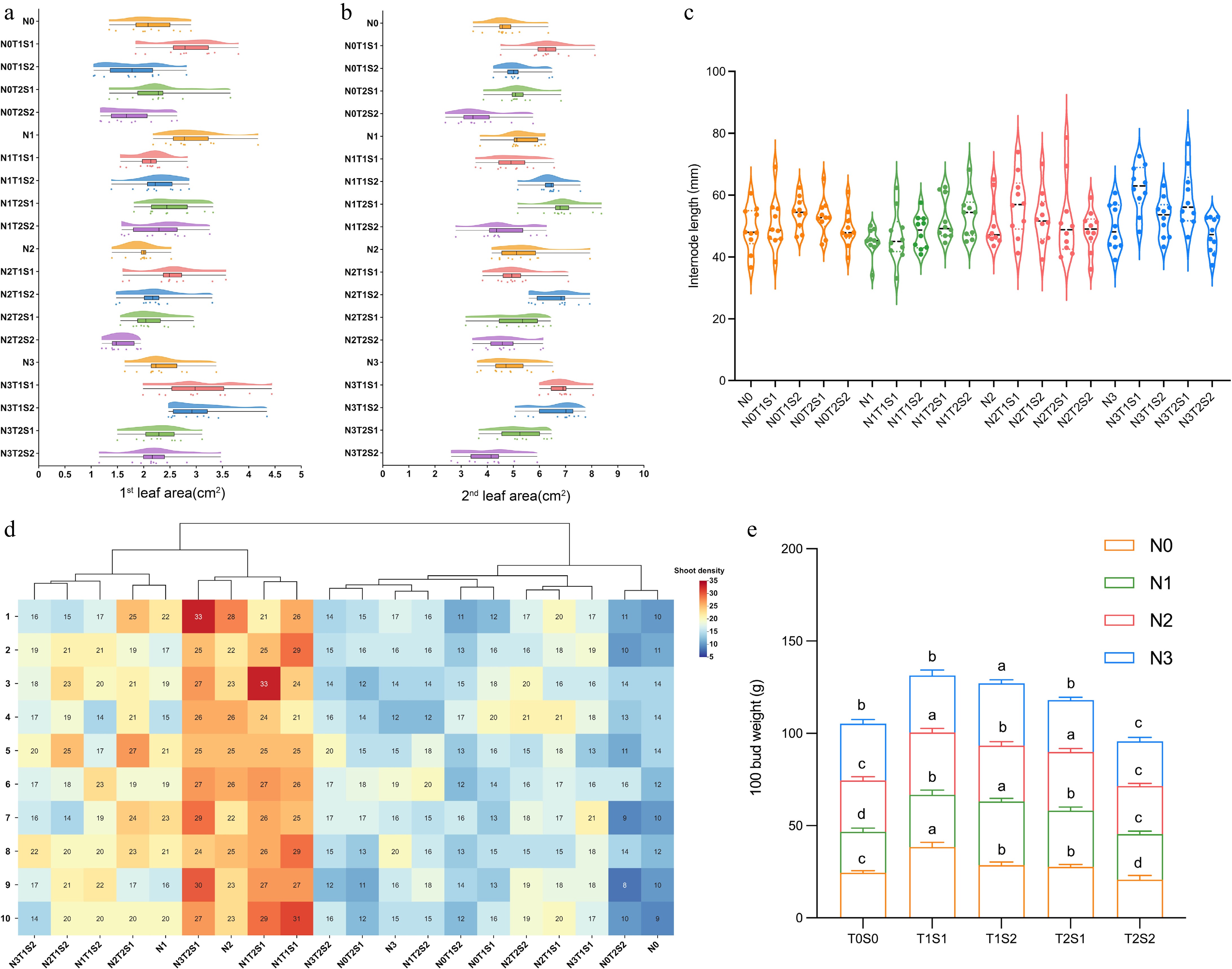
Figure 2.
Effect of different nitrogen fertilizers and shade conditions on the growth of tea plant. (a) 1st leaf area, (b) 2nd leaf area, (c) internode length, (d) shoots density, (e) 100 bud weight. Lowercase letters above the error bars indicate significant differences (p < 0.05).
Shading increases the chlorophyll content of tea plant leaves so that the leaves show tender green coloration
-
During the experiment, it was observed that various shading treatments influenced the morphological characteristics of fresh tea leaves. Systematic observations of new shoots and leaves revealed that the growth of new shoots improved significantly with increasing nitrogen fertilizer concentrations compared to the control treatments. The one bud and two leaves of N2 and N3 combined with T2 shading treatments exhibited a more tender green (Fig. 3a). However, no significant differences in second-leaf color were observed among nitrogen fertilizer levels, but T2 and S2 shading treatments notably deepened the green color of second leaf, with the T2S2 treatment resulting in the darkest green color (Fig. 3b). Chlorophyll content measurements revealed that shading treatments significantly increased both chlorophyll a and chlorophyll b content, while the chlorophyll a/b ratio remained unchanged (Fig. 3c). This suggests that shading treatments influenced leaf color primarily by increasing the total chlorophyll content, rather than altering the ratio of chlorophyll composition. Based on these findings, it was concluded that moderate shading is an effective agronomic practice for maintaining the fresh green color of tea plant leaves in summer tea plantation management.
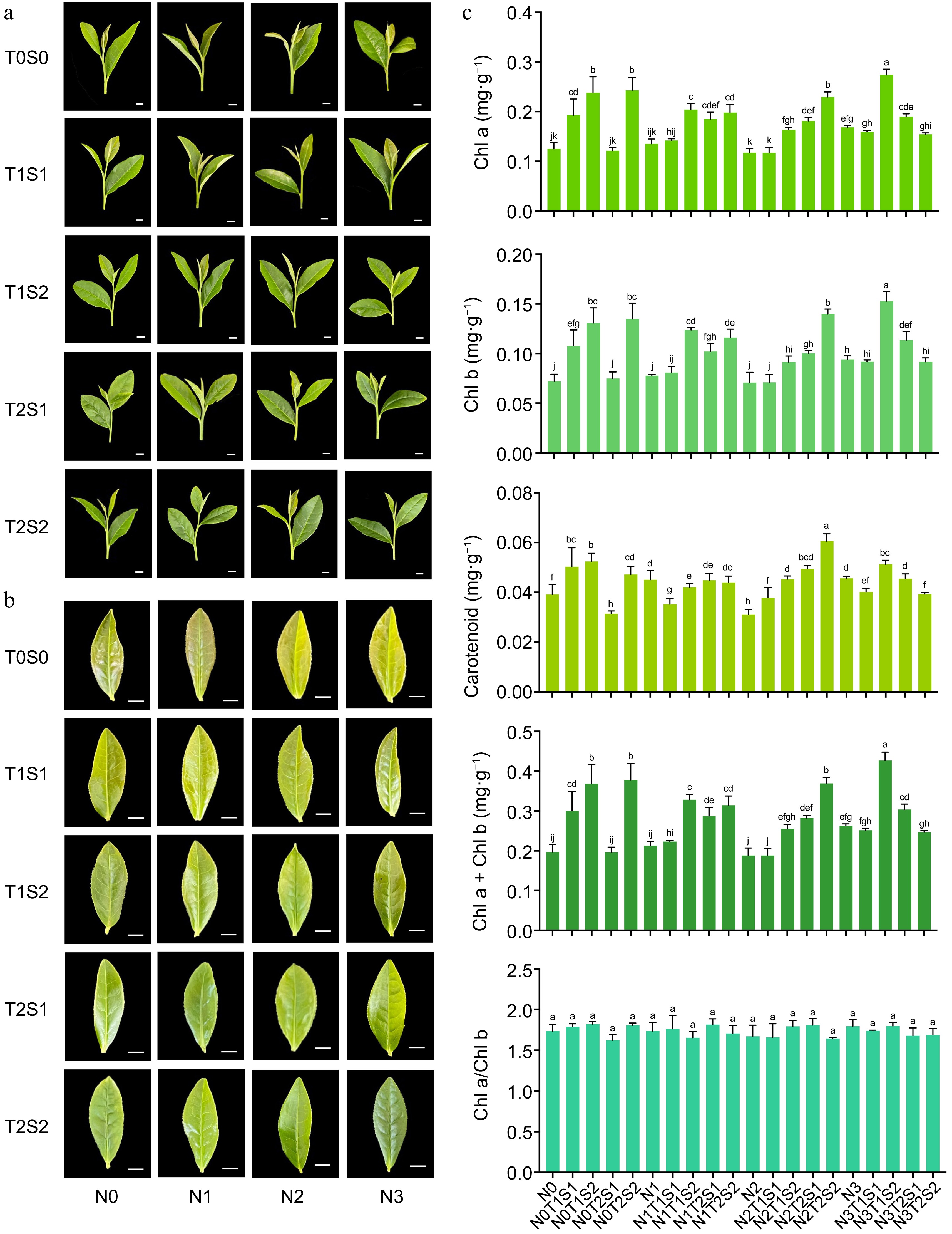
Figure 3.
Effect of different nitrogen fertilizers and shade conditions on the leaf color of the tea plant. (a) Comparison of the growth of one bud and three leaves of tea plant new shoots. (b) Comparison of leaf color of the second leaf of tea plant. (c) Chlorophyll content of the one bud and two leaves of the tea plant. Lowercase letters above the error bars indicate significant differences (p < 0.05).
Nitrogen fertilization combined with short-term low shading to improve the photosynthetic rate of the tea plant
-
To investigate the physiological mechanism of combined nitrogen fertilizer and shading treatments on the phenotypes of tea plant, the GFS-3000 photosynthesis measurement system was employed in this study to measure photosynthetic physiological indices and environmental parameters of tea plant. The results indicated that nitrogen fertilizer application and shading treatments significantly affected the photosynthetic physiological characteristics of tea plant. Analysis of environmental parameters showed that N2 and N3 treatments reduced leaf and ambient temperatures, with a more significant cooling effect observed as the shading intensity increased (Fig. 4a, b). The response of air relative humidity to nitrogen fertilizer and shading treatments varied: the N1 treatment increased ambient air relative humidity, whereas the N2 treatment showed a decreasing trend; shading treatments had a more pronounced effect on air relative humidity (Fig. 4c). Photosynthetically active radiation (PAR) measurements indicated that shade treatments significantly reduced PAR, with the most pronounced reductions observed in high-intensity shading treatments (T1S2 and T2S2) (Fig. 4d). Analysis of photosynthetic physiological indices showed that the net photosynthetic rate (Pn) of the T1S1 shading treatment differed little from that of the no-shading treatment, whereas the shading treatments in the S2 and T2 states significantly reduced Pn (Fig. 4e). The transpiration rate (Tr) reached its highest value under the N1 treatment and decreased with increasing shade intensity (Fig. 4f). Intercellular CO2 concentration (Ci) exhibited an overall increasing trend under shading treatments (Fig. 4g). These results indicated that long-term high-intensity shading treatments suppressed the photosynthetic efficiency of tea plant by significantly reducing photosynthetically active radiation and altering ambient temperature and humidity. In contrast, short-term (T1) low-intensity (S1) shading treatments were more beneficial for maintaining the normal photosynthetic physiological functions of tea plant. This finding provides a crucial physiological basis for optimizing shade management in tea plantations.
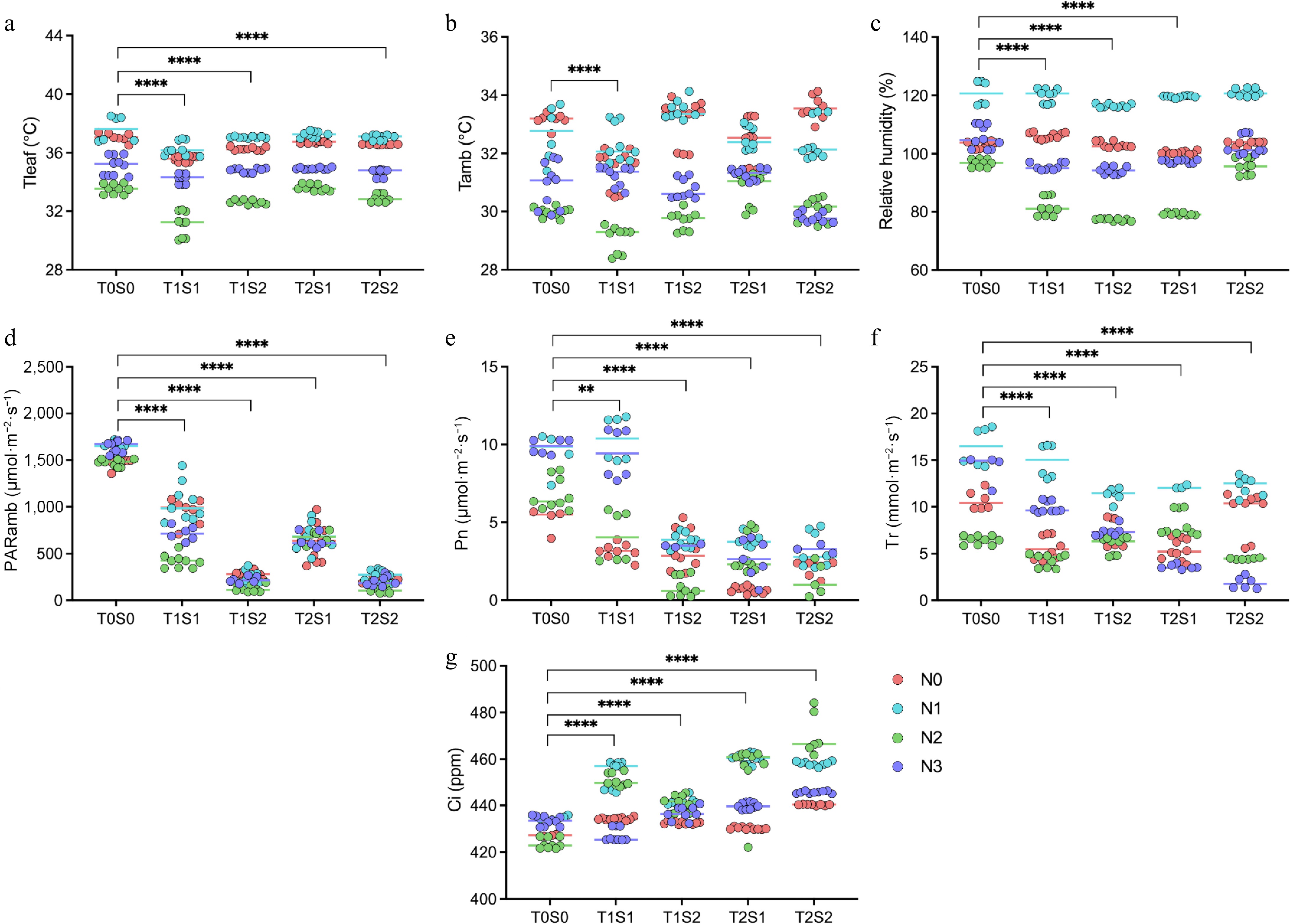
Figure 4.
Effects of different nitrogen fertilizers and shade conditions on tea plantation environment and photosynthetic rate of tea plant. (a) Leaf temperature, (b) ambient temperature, (c) air relative humidity, (d) photosynthetically active radiation, (e) net photosynthetic rate, (f) transpiration rate, (g) intercellular CO2 concentration. ** and **** represent significant at p < 0.01 and p < 0.0001, respectively.
Nitrogen fertilizer combined with shading to enhance the antioxidant capacity of the tea plant
-
Improper fertilization and shading may induce osmotic stress and photoinhibition in tea plant. To assess the antioxidant capacity of tea plant under various fertilization and shading conditions, changes in antioxidant enzyme activities were determined. The results indicated that SOD and POD activities increased under N1, N2, and N3 treatments with N fertilizer compared to the N0 treatment without fertilizer. Additionally, soluble protein and soluble sugar contents were elevated under N1 and N2 treatments (Fig. 5a, b & e, f). Specifically, SOD activity was significantly positively correlated with shade level under N1 and N3 treatments (Fig. 5a), while POD activity was significantly negatively correlated with shade level under N2 and N3 treatments (Fig. 5b). Furthermore, CAT activity showed a significant positive correlation with shade level under N0 and N2 treatments (Fig. 5c), whereas MDA content was significantly negatively correlated with shade level (Fig. 5d). Soluble protein content exhibited a significant positive correlation with shade degree under N0 and N1 treatments (Fig. 5e), while soluble sugar content showed a significant negative correlation with shade level across all nitrogen fertilizer levels (Fig. 5f). Overall, SOD and POD activities, along with soluble proteins and soluble sugars, increased with higher nitrogen fertilizer concentrations. Meanwhile, SOD and CAT activities and soluble proteins increased under shaded conditions, while POD activity, MDA, and soluble sugars decreased. These findings suggest that tea plant effectively mitigate shading-induced stress by regulating antioxidant enzyme activities and reducing MDA content.
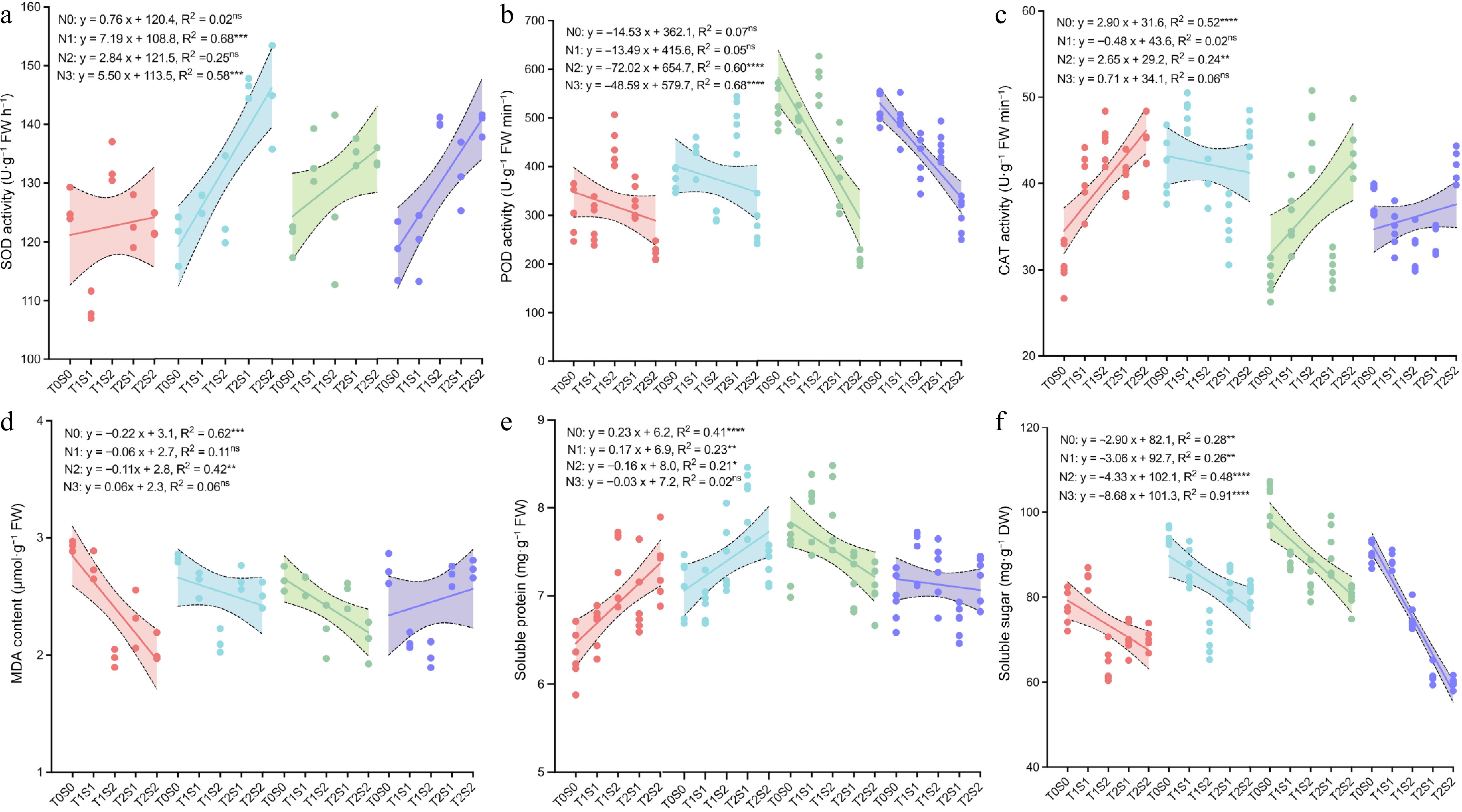
Figure 5.
Effect of different nitrogen fertilizers and shade conditions on tea plant resistance. (a) Superoxide dismutase activity, (b) peroxidase activity, (c) catalase activity, (d) calondialdehyde content, (e) soluble protein content, (f) soluble sugar content. ns means no significance; *, **, ***, and **** represent significance at p < 0.05, p < 0.01, p < 0.001, and p < 0.0001, respectively.
Nitrogen fertilization combined with low shading improves multiple quality components in tea plant
-
Nitrogen is a key nutrient that promotes tea plant growth and enhances the quality of tea leaves, while shading improves tea quality by regulating light intensity and light quality. To assess the combined effects of nitrogen fertilization and shading on tea quality components, the contents of various quality components in tea leaves were measured. The results showed that nitrogen fertilizer application significantly increased the contents of tea quality components while shading adjusted their relative proportions. Tea polyphenol content increased under N2 and N3 treatments; however, S2 shading led to a decrease in tea polyphenol content (Fig. 6a). Additionally, free amino acid content increased under N1 and N2 treatments, with shading further promoting the accumulation of free amino acids (Fig. 6b). Caffeine content was higher under N0 and N3 treatments, with shading contributing to a further increase in caffeine content (Fig. 6c). Increased nitrogen fertilizer concentrations favored the accumulation of dry matter and water extract, but T2S2 shading was detrimental to both (Fig. 6d, e). More anthocyanin accumulation was observed under N0 and N3 treatments (Fig. 6f), while T2S2 shading resulted in a decrease in total flavonoid content (Fig. 6g). The Monte Carlo permutation test showed p < 0.05, indicating that shade degree selectively drove trait differentiation, with high shading S2 concentrating in the direction of free amino acids, anthocyanin, and caffeine, while low shading S1 and no shading S0 were biased in the direction of tea polyphenol, total flavonoid, and water extract (Fig. 6h). Overall, proper nitrogen fertilization effectively increased the contents of tea polyphenols, free amino acids, dry matter, and water extract. On the other hand, shading treatment promoted the synthesis of free amino acids and caffeine but reduced the contents of tea polyphenols, total flavonoids, dry matter, and water extract. In conclusion, T1 shading under N2 treatment had the best overall effect on tea quality.
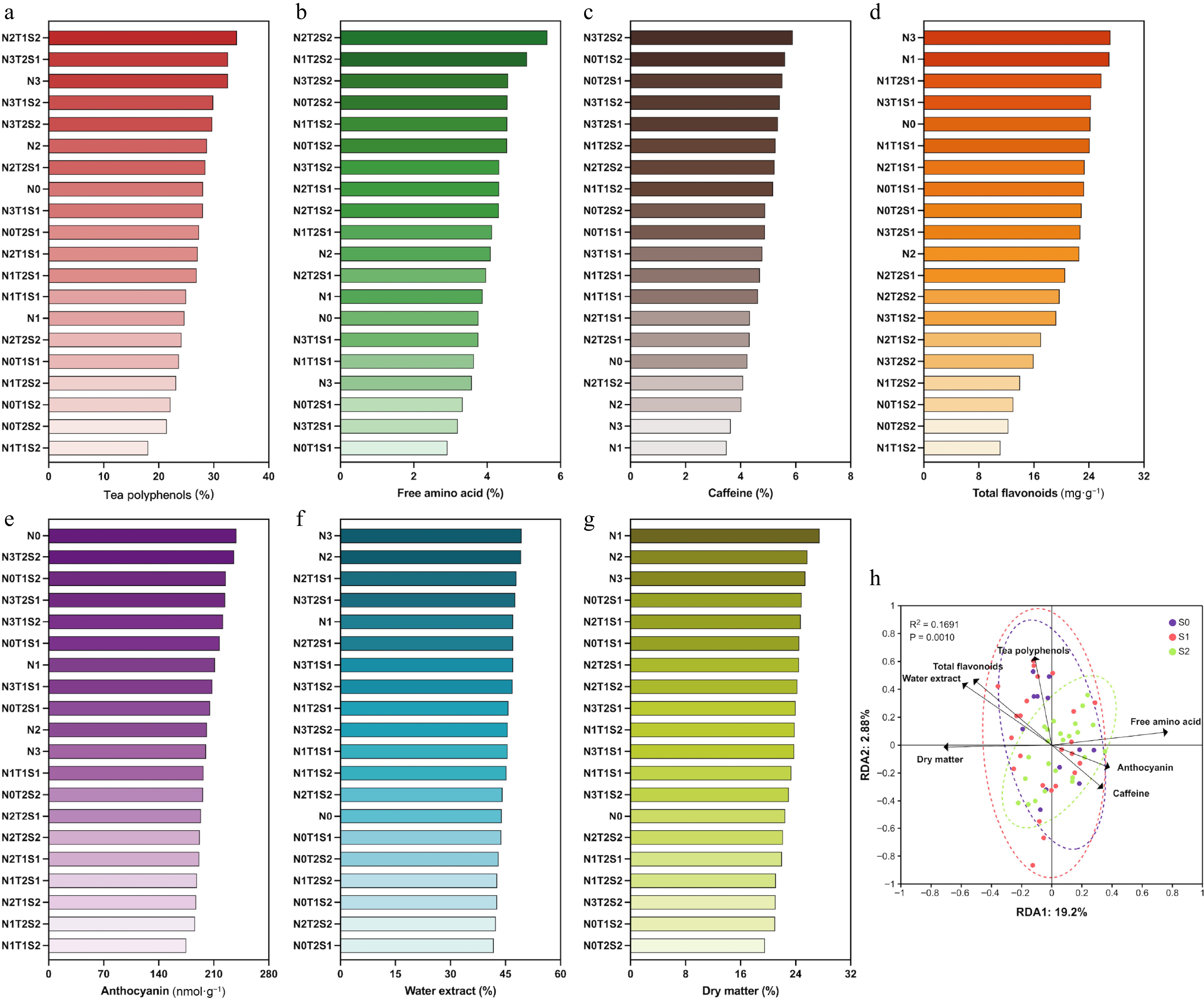
Figure 6.
Effect of different nitrogen fertilizers and shade conditions on the quality of tea plant. (a) Tea polyphenol content, (b) free amino acid content, (c) caffeine content, (d) dry matter content, (e) water extract content, (f) anthocyanin content, (g) total flavonoid content, (h) RDA analysis between each quality component and tea plant growth index.
-
Shading is an effective agronomic practice that synergistically interacts with nitrogen fertilization to regulate tea plant growth. Short-term shading treatment induces a morphological plasticity response in tea plant, which may be a key mechanism for regulating leaf expansion and new shoot growth. It has been shown that shading promotes leaf cell expansion by down-regulating the red/far-red light ratio and activating the PIFs signaling pathway[30]. In combination with the synergistic effects of nitrogen fertilizer treatment, it is hypothesized that nitrogen supply may provide the energy required for cell expansion through enhanced ATP synthesis. With regard to new shoot growth, the concurrent enhancement of new shoot length and sprout number in tea plant revealed a dual regulatory mechanism of light-nitrogen interactions on the activity of apical meristematic tissues[31,32]. Regarding photosynthetic product allocation, the improved quality of new shoots reflects the optimization of photosynthetic product distribution strategies in tea plant[33]. The leaf greening phenomenon can be attributed to increased leaf chlorophyll and carotenoid content, as well as the development of chloroplasts[34]. The present study reveals a significant interaction between nitrogen fertilizer and shading, systematically analyzing the growth response of tea plant under varying nitrogen application rates and shade conditions. Shading improves the nitrogen utilization efficiency of tea plant, while the appropriate application of nitrogen fertilizer allows tea plant to maintain healthy growth under shading conditions. Notably, the optimal combination is 180 kg N ha−1 with 40% shading, which challenges the traditional 'high nitrogen, high yield' model.
Regulation of photosynthesis in tea plant by nitrogen fertilizer combined with shading
-
Shading significantly influences the photosynthetic efficiency and microenvironment of plants through various physiological pathways. The reduced radiative heat load on the leaf surface under shading can result in lower leaf temperatures compared to full light conditions, effectively mitigating damage caused by high light intensity on PSII[35]. This phenomenon highlights the ecological trade-off between light protection and light-harvesting capacity in plants under shading conditions. Nitrogen fertilizer application enhances leaf transpiration, facilitating heat dissipation through increased water evaporation, thus helping to maintain leaves within the optimal temperature range[36]. Studies have shown that the degree of PAR attenuation is significantly correlated with a decrease in plant photosynthetic rate[37]. Furthermore, shading may inhibit transpiration by lowering the ambient temperature around the plant, as plants typically regulate their body temperature by enhancing transpiration in hot environments[38]. This reduction in transpiration, coupled with lower photosynthetic rates, results in decreased CO2 uptake and utilization, ultimately leading to higher intercellular CO2 concentrations. These findings offer new insights into the regulatory mechanisms of plant photosynthesis in shaded environments.
Nitrogen fertilizer combined with shading regulates the antioxidants of the tea plant
-
Shading and fertilization measures significantly altered the physiological status of plants and influenced their resistance mechanisms. In the synergistic treatment group of shading and nitrogen fertilizer, tea plant exhibited higher SOD and CAT activities and lower MDA content. Studies have shown that moderate shading can effectively reduce the ROS generated during photosynthetic reactions under high light conditions, thereby reducing cellular oxidative damage[39]. Under shading, a decrease in POD activity was observed, suggesting that plants may regulate antioxidant enzyme synthesis in response to low-light conditions to adapt to environmental changes[40]. Nitrogen fertilization significantly promoted nutrient uptake, growth, and development, particularly under shading conditions, and increased the accumulation of soluble proteins and sugars in the plant. These findings provide an important theoretical basis for agricultural management practices and highlight the need for integrating environmental regulation and nutrient management strategies to enhance crop resilience.
Nitrogen fertilizer combined with shading improves tea quality
-
Nitrogen can significantly promote the growth of tea plant and improve the nutritional content of the leaves[4]. However, excessive nitrogen application may inhibit the biosynthesis of tea polyphenols, as excess nitrogen interferes with the metabolic pathways of phenolic compounds, resulting in a decrease in polyphenol content[41]. Adequate nitrogen fertilization enhances amino acid synthesis in tea plant, meeting their growth demands[42]. In addition, the application of nitrogen fertilizer also promotes the synthesis of caffeine[4]. Studies have shown that shading leads to a decrease in the photosynthetic capacity of tea plant, which, in turn, inhibits the synthesis of tea polyphenol[43]. Notably, although shading reduced polyphenol accumulation, it significantly increased amino acid content. Furthermore, moderate nitrogen fertilization increased the dry matter and water extract contents of tea, likely due to the promotion of photosynthesis efficiency by nitrogen[44]. However, in contrast to the positive effects of nitrogen fertilizer, shading treatment often leads to a decrease in the dry matter and water extract content of tea plant. Shaded environments limit light energy acquisition, reducing photosynthetic efficiency and inhibiting dry matter accumulation[45]. Shi et al. pointed out that the total flavonoid and anthocyanin contents of tea plant were significantly reduced under strong shade, a phenomenon that may be related to the insufficient supply of photosynthesis products[46]. Therefore, when developing tea plant cultivation and management strategies, it is essential to consider both the optimal allocation of nitrogen fertilizer and shade levels to maximize tea quality and functional component content.
-
This study highlights the significant impact and considerable application potential of shading combined with reduced nitrogen fertilizer application for optimizing nitrogen management in tea plantations. Specifically, maintaining a moderate nitrogen fertilizer level of 180 kg N ha−1, supplemented with a 40% shading treatment lasting 7 d, enhanced the antioxidant capacity of tea plant, ensuring normal growth and meeting yield requirements. Further analysis demonstrated that this treatment combination effectively balanced the quality components within tea leaves while lowering the C/N, thereby improving the quality of summer tea. These findings provide a theoretical foundation for tea plantation management, showing that the careful regulation of light and nitrogen can improve tea quality without compromising yield. Based on these results, the study advocates the adoption of shading with reduced nitrogen fertilizer in tea plantations facing excessive nitrogen and strong summer light radiation. This approach reduces the reliance on chemical fertilizers in tea plantations and decreases the negative environmental impact of tea production. This aligns with the development trends of ecological agriculture and serves as an important combined measure to drive the tea industry towards more environmentally friendly, efficient, and high-quality development.
This research was supported by the National Natural Science Foundation of China (Grant No. 32172635) and the Key Research and Development Project of the Xizang Autonomous Region Department of Science and Technology (XZ202401ZY0019).
-
The authors confirm their contribution to the paper as follows: study conception and design: Gong C, Bai J, Zhou F, Wang H; experiments performing: Zhou F, Wang H, Zhou H, Huo X, Yuan C, Bao R; analysis and interpretation of results: Zhou F, Huang L; draft manuscript preparation: Zhou F; All authors reviewed the results and approved the final version of the manuscript.
-
Due to administrative requirements, the original data of the experiments during the research period of the project are not publicly available, but are available from the corresponding author or the first author upon reasonable request.
-
The authors declare that they have no conflict of interest.
- Copyright: © 2025 by the author(s). Published by Maximum Academic Press, Fayetteville, GA. This article is an open access article distributed under Creative Commons Attribution License (CC BY 4.0), visit https://creativecommons.org/licenses/by/4.0/.
-
About this article
Cite this article
Zhou F, Huang L, Zhou H, Huo X, Yuan C, et al. 2025. Moderate shading can mitigate the negative impacts on the growth of tea plant and quality components caused by nitrogen reduction in northern tea plantations. Beverage Plant Research 5: e029 doi: 10.48130/bpr-0025-0022 

Moderate shading can mitigate the negative impacts on the growth of tea plant and quality components caused by nitrogen reduction in northern tea plantations
- Received: 12 April 2025
- Revised: 24 April 2025
- Accepted: 15 May 2025
- Published online: 30 September 2025
Abstract: Excessive use of chemical fertilizers leads to environmental pollution and a decline in tea quality. To promote sustainable development while maintaining high-quality productivity, reducing nitrogen fertilizer application is an effective strategy for cost savings and emission reduction in tea plantations. However, there is a lack of integration and testing with other efficiency-enhancing measures. This study explores the potential of moderate shading to mitigate the negative effects of reduced nitrogen fertilizer on the growth and quality of clonal tea plant. Focusing on the local variety 'Shaancha 1', this study uses field experiments to evaluate the growth and quality components of tea plant under different combinations of nitrogen fertilizer concentrations (0, 90, 180, 360 kg N ha−1) and shading treatments, which include varying shading durations (0, 7, 38 d) and intensities (0%, 40%, 70%). Results showed that, compared to the traditional high-nitrogen fertilization regime, applying 180 kg N ha−1 combined with a short-term shading duration of 7 d and 40% shading intensity promoted tea plant growth by enhancing antioxidant capacity. This treatment also ensured tea yield and improved the content of several quality components. The combination of low-level shading and reduced nitrogen fertilizer application is an empirical case that enhances tea yield and quality. It provides practical measures for eco-friendly tea cultivation while also helping to lower costs and emissions.
-
Key words:
- Nitrogen fertilizer reduction /
- Shading /
- Antioxidant activity /
- Photosynthetic parameters /
- Tea quality