












-
Coffee is a well-known beverage, second only to tea, and is recognized as among the most traded commodities globally, exerting significant economic impact on its producing countries[1]. The essence of a coffee bean is significantly influenced by geography, and the flavor profile of a coffee is considerably affected by the altitude at which it is produced, as well as its biochemical attributes. Coffee quality is disrupted by several factors, including variety, species, environment, maturity of the fruit, and harvesting procedures[2]. Although all coffee is grown in the tropical regions known as the 'bean belt', the Pu'er region situated within the coffee growing areas contributes 80% of the country's coffee production in proximity to Southeast Asian countries. In recent years, this area has become an important coffee-producing region in China due to its ideal weather and ecological environment. The Pu'er coffee industry has established its position among the main primary industries in Yunnan Province, with a total output of 109,100 tons over the past three decades[3,4].
Arabica coffee is known for its superior taste and aromatic qualities compared to its counterpart, Robusta (Coffea canephora). One of the key factors influencing the quality, flavor profile, and overall characteristics of Arabica coffee is the altitude at which it is grown. The impact of altitude on Arabica coffee. Coffee grown at higher altitudes typically exhibits a more complex flavor profile and a higher acidity level. The slower maturation of coffee cherries in cooler temperatures allows for a more nuanced development of sugars and organic acids, which enhances flavor complexity[5]. The environmental conditions prevalent at higher elevations, including cooler temperatures, increased UV radiation, and varying rainfall patterns, play a significant role in determining the growth and quality of Arabica coffee. Research by Rinaldi et al. indicated that stressors associated with high-altitude growing conditions contribute to the synthesis of secondary metabolites that enhance coffee quality, leading to richer flavors and improved nutritional benefits[6].
Altitudes ranging from 900 m to 1,500 m and higher create optimal conditions for coffee cultivation, characterized by a frost-free climate with average temperatures of 60−70 °F, moderate annual rainfall of approximately 80 inches, and ample sunlight. Lower temperatures in mountainous regions result in an extended growth cycle for coffee trees, thereby prolonging the development of beans. For Instance, Pu'er coffee is cultivated at an elevation of around 1,000 to 1,800 m, leading to a reduced acidity level[1]; the extended maturation process enhances the coffee bean's complex sugars, resulting in richer and more nuanced flavors. Improved drainage at high elevations decreases the water content in the fruit, leading to a greater concentration of flavors. The soil favorable for the cultivation of high-quality Arabica coffees is characterized by notable fertility and often has a volcanic origin. The fertile soils produce robust, dense coffee beans recognized for their superior flavor, like the coffee cultivated in the Amazonian region, which is considered the most premium coffee[7].
Coffees of exceptional quality are cultivated at altitudes ranging from 1,200 to 1,800 m. Fruit is harvested at peak ripeness and meticulously processed postharvest. As altitude increases, the flavor profile of coffee tends to become more pronounced and distinctive. The mild and sweet flavor profile of low-grown Brazilian beans at 1,060 m contrasts with the pronounced floral notes of Ethiopian beans cultivated above 1,800 m. Altitude enhances a coffee's capacity to exhibit greater varietal nuance and complexity with floral flavor[8]. Higher altitudes enhance the desirable taste characteristics of coffee beans. These flavor traits indicate a green (unroasted) bean's capacity to express its inherent flavors, referred to as 'varietal character', which originates from the coffee tree and is transferred to its fruit and then absorbed by the coffee bean[9].
Coffee is mostly made up of carbohydrates, lipids, and polyphenols. it also contains alkaloids in small concentrations, and polyphenols are secondary plant metabolites found in many fruits and vegetables[10]. Polyphenols are powerful antioxidants that work alongside enzymes and vitamins to protect against oxidative stress. As a result, polyphenols play a crucial role in inhibiting the progression of various deteriorating illnesses in humans. In fact, green beans are defined as coffee that has been shed but not heated. Green beans are a cause of natural antioxidants that are beneficial to the human body and can shield individual organs from the harmful effects of free radicals and skin dryness[11]. Phenolic chemicals derived from plants are categorized into flavonoids and non-flavonoids[12]. Flavonoids are compounds consisting of fifteen carbon atoms arranged in a structure where two aromatic rings are connected by a three-carbon bridge[13]. Benzoic and cinnamic acid hydroxylated derivatives, known as phenolic acids, are the principal non-flavonoid phenolic compounds[14]. Gallic acid, the primary derivative of hydroxybenzoic acid, is a component of tannins in crops. Chlorogenic acids, which consist of p-coumaric, caffeic, and ferulic acids that are esters with quinic acid, are the main hydroxycinnamic acid derivatives[15]. These phenolic compounds have various health benefits, such as scavenging free radicals, fighting viruses, and preventing cancer[16].
Until now, no studies have examined how different elevations affect the polyphenol content of green coffee beans. Given that a plant's polyphenol composition is significantly affected by its growing environment, it is essential to know the levels of polyphenols in green coffee beans from different elevations to find beans that can generate higher polyphenol yield. To that end, this research set out to identify the polyphenol content and polyphenolic compounds of green coffee beans cultivated at different altitudes in Pu'er, Yunnan, China.
-
Coffee (Coffee arabica L. Catimor 7963) samples were collected from Pu'er City, Yunnan, China (Latitude: 23°03'60.00" N and Longitude: 101°01'60.00" E). The coffee samples were divided into three groups, each group containing three sample bags based on altitude: 1,600 m (HA1 - high), 1,400 m (MA2 - medium), and 1,200 m (LA3 - low). All green coffee bean samples were sourced from ripe coffee cherries and then laid out on tarps under direct sunlight to dry for 7 d, until the moisture content reached approximately 10%−12%. The dried green coffee beans were subsequently stored in paper bags at room temperature and subsequently transferred for further biochemical and metabolomic profiling.
Biochemical analysis of green coffee beans
Determination of total phenolic content (TPC)
-
For the determination of total phenolic content from bean extracts, the Folin–Ciocalteu method was used, as described by Slinkard & Singleton[17], with slight adjustments. In this attribute, 25 μL of extract was introduced into a 96-well microplate, followed by the addition of 200 μL of Milli-Q® water and 25 μL of 25% (v/v) Folin–Ciocalteu reagent. The mixture was incubated at 25 °C for a duration of 5 min. Following this, 25 μL of 10% (w/w) NaCl was added, and the solution was kept in the dark for 1 h at 25 °C. Absorbance at 756 nm was calculated in triplicate as described by Shi et al.[18].
Determination of total flavonoid content (TFC)
-
Total flavonoid content from beans were measured using a improved AlCl3 colorimetric assay as outlined by Christ & Müller[19]. of 80 μL solution was led into a 96-well microplate, followed by the addition of 80 μL of 2% AlCl3 solution and 120 μL of 50 g/L C2H3NaO2 solution. The mixture was incubated at room temperature for 2.5 h. The absorbance at 440 nm was measured in triplicate as mentioned by Shi et al.[18].
Polyphenol metabolomics analysis of green coffee beans
Sample preparation and extraction
-
Green coffee bean samples were pulverized into powder form using a grinder (MM 400, Retsch) at 30 Hz for 1.5 min. Fifty mg of sample powder was used with a 1,200 μL 70% methanolic aqueous solution at −20 °C, then vortexed for 30 min and centrifuged at 12,000 rpm for 3 min. After filtration, the supernatant was used for UPLC-MS/MS analysis.
UPLC conditions
-
Coffee samples were analyzed using a UPLC-ESI-MS/MS system with an Agilent SB-C18 column (1.8 µm, 2.1 mm × 100 mm, Foster City, CA, USA). In brief, mobile phases A and B were pure water (0.1% formic acid) and acetonitrile (0.1% formic acid) with a column oven temperature of 40 °C, injection volume of 4 μL, and flow rate of 0.35 mL/min according to Deng et al.[20].
ESI-Q TRAP-MS/MS
-
A UPLC-MS/MS system (API 4500 QTRAP) with an ESI turbo ion-spray interface and the Analyst 1.6.3 software (AB Sciex, Framingham, USA) was used to conduct linear ion traps (LIT) and triple quadrupole (QQQ) scans in both positive (+) and negative (−) ion modes. The multiple reaction monitoring (MRM) technique was used to perform QQQ scans. Metabolite elution times dictated the specific sequence of MRM conversions, which were monitored at regular intervals during the whole process. The retention times, fragmentation patterns, and m/z values were compared to standards in the databases (MetWare, MassBank, HMDB, and Metlin) to identify the polyphenolic metabolites.
Metabolites analysis
-
Principal component analysis (PCA) was employed to illustrate metabolomic profiles, distinctions across coffee samples, and variability within each group in both positive and negative modes. Substantial disparities in coffee samples were discovered utilizing orthogonal partial least squares discriminant analysis (OPLS-DA). R software was used for hierarchical cluster analysis on three sample groups, identification of metabolic markers and presenting the results as heatmaps accompanied by dendrograms. The KEGG compound database was utilized to map and identify the differential metabolites within several metabolic pathways (
www.kegg.jp/keggcompound ). TBtools was used to display metabolites discovered in each sample by heatmap analysis as per the study by Chen et al.[21], and annotated metabolites were categorized by their associated pathways.Statistical analysis
-
Comparison between the biochemical contents at three groups of altitudes was selected on the base means, and standard deviation of p-value (student's t-test), and the differential metabolite comparisons were determined by substantial enrichment of p-value, p < 0.05 and the cutoff of fold change filtered by > 1.2 or < 1/1.2, and VIP ≥ 1.0 according to Chen et al.[22].
-
The phenolic content of green coffee beans under three different altitudes, 1,600 m (HA1), 1,400 m (MA2), and 1,200 m (LA3) were assessed using total phenolic content (TPC) and total flavonoid content (TFC). Overall, TPC and TFC values increased in all groups with altitude levels (Fig. 1). Among altitudes, 1,400 m (MA2) exhibited a higher amount of total phenolic contents compared to the other two groups. For the total flavonoid content, 1,400 m (MA2) showed the highest content than 1,600 m (HA1) and 1,200 m (LA3) altitudes (Fig. 1a), respectively. Total phenolic acid content had the peak value of (20.09 mg/g FW) indicating 1,400 m (MA2) altitude promoted the highest phenolic compound among other two altitudes. In contrast, 1,600 m (HA1) and 1,200 m (LA3) had the lowest TPC among all three altitudes (16.20 mg/g FW, 16.39 mg/g FW, respectively), as shown in (Fig. 1b). This phenomenon indicated that the moderate altitude 1,400 m (MA2) is much suitable for healthy coffee beans as a phenolic compound reached a peak between the high 1,600 m (HA1) and low altitude 1,200 m (LA3). Coffee berries cultivated at high altitudes are exposed to lower temperatures, which prolong the fruit maturation period. This extended period can facilitate a greater accumulation of phenolic compounds, including chlorogenic acids[23]. The same observation was noticed in TFC content, where moderate altitude increases the peak of TFC compared to high and low altitudes. Meanwhile, the TPC values of three altitudes were higher than TFC (1.37 mg/g FW, 1.49 mg/g FW, 1.32 mg/g FW) as dispatched in (Fig. 1). Higher altitude promoted increased TPC and TFC content, which can be attributed to the release of polyphenolic metabolites, supporting with Previous studies in which caffeine content in coffee differs based on coffee varieties and cultivation altitudes[6,24]. Another study involving 99 Coffea arabica progenies cultivated across various altitudes and geographical regions of Ethiopia revealed caffeine content variations ranging from 4.6 to 28.00 mg/g[25]. Comparable findings indicate that the content of caffeine in coffee beans is significantly affected by altitude[24−26].
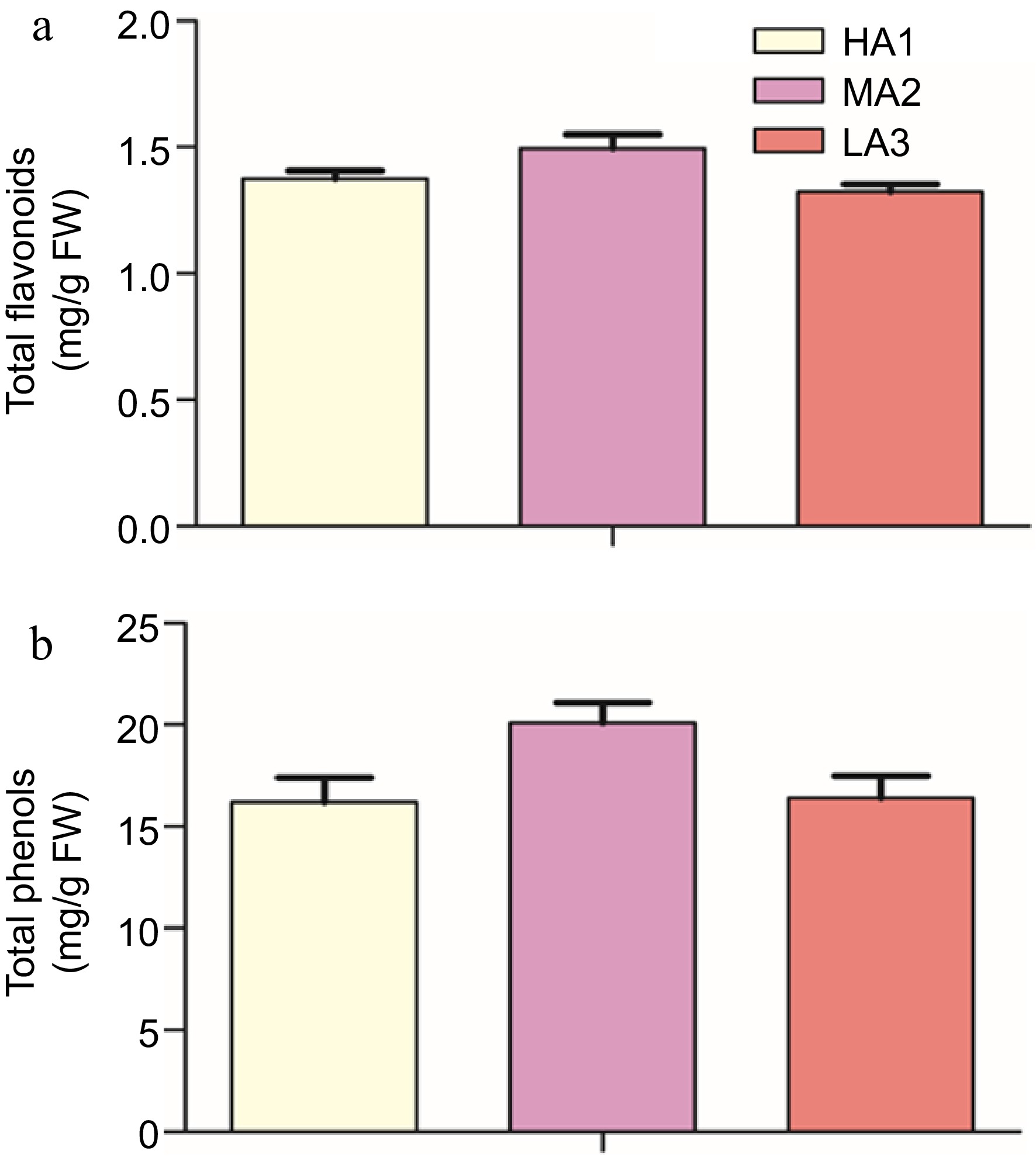
Figure 1.
Biochemical analysis of green coffee beans (a) Total flavonoid contents (TFC) at HA1, MA2, and LA3 altitudes. (b) Total phenol contents (TPC) at HA1, MA2 and LA3 altitudes. HA1 stands for HA1-1600 high altitude, MA2 stands for MA2-1400 medium altitude, LA3 stands for LA3-1200 low altitude.
Polyphenols metabolites composition of coffee beans at different elevations
-
This study conducted a complete and systematic evaluation of coffee bean metabolites at varying elevations using a metabolomics approach. This method provides enhanced resolution, sensitivity, and accuracy, along with superior experimental repeatability relative to conventional biochemical analysis. Researchers increasingly utilized metabolomics techniques to analyze differences among samples and identify specific compounds[27−29]. The UPLC-MS/MS study of three altitude groups from nine unique samples of green coffee beans detected a total of 326 compounds. The metabolites were classified into different classes: Flavonoids, Phenolic acids, Lignans and Coumarins, Tannins, and their derivatives (Fig. 2a). For the relationship between the different metabolites in each group, a Venn diagram was created, and the number of common differential metabolites was shown in (Fig. 2b). Additionally, PCA elucidated the comparisons and disparities across the illustrations which demonstrate excellent repeatability plus trustworthy results. The distribution of green coffee beans from three distinct elevations, HA1, MA2, and LA3, over the two primary components was varied. The first main component (green circle) has the high altitude HA1 on the left and the medium altitude MA2 on the right. The low altitude LA3 is also on the left side (purple circle) and is closer to the HA1 green beans, likely due to the metabolic similarities between the two altitudes resulting from their geographical proximity. Although there was some similarity in the metabolites across the three green bean altitudes, the proportion of the amount that varied among the nine samples was different. Possibly, principal component analysis (PCA) findings also showed that green beans from HA1 are at the top, MA2 is in the center, and LA3 is at the bottom; this clearly indicates that there are variances between the metabolites found in green beans from various altitudes (Fig. 2c). Changes in metabolites have the potential to bring about both similarities and variances in the features of the quality and results similar with Bassiony et al.[27]. Figure 2d shows that the cluster analysis of the samples substantiated the metabolites expression pattern within group comparison. In fact, the composition of polyphenolic metabolites in coffee beans is significantly influenced by the growing elevation. Polyphenols, including phenolic acids and flavonoids, play an essential role in determining coffee's sensory attributes, antioxidant properties, and health benefits. As altitude increases, a variety of environmental factors come into play that can alter polyphenolic composition, leading to differences in coffee quality. Research indicates that coffee beans grown at higher elevations often have a higher concentration of polyphenols compared to those from lower elevations. This elevation-related accumulation may be attributed to cooler temperatures, increased sunlight exposure, and lower atmospheric pressure, which can enhance the biosynthesis of these compounds. Recent studies demonstrated that Arabica coffee beans grown at altitudes of 1,800−2,000 m exhibited significantly higher levels of phenolic compounds from different origins of coffee[30].
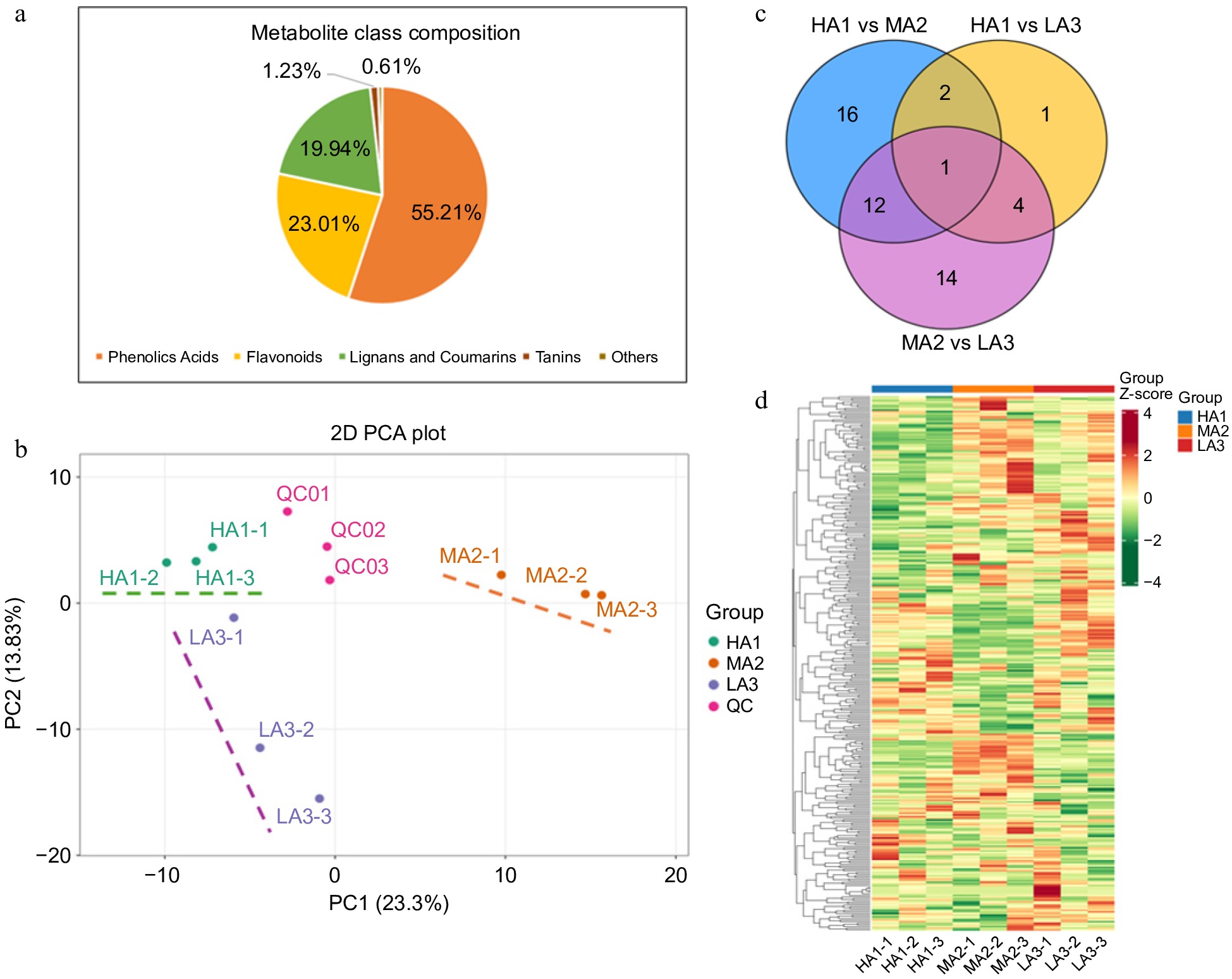
Figure 2.
Polyphenols metabolites of green coffee beans. (a) The classification of metabolites. (b) Venn diagram of detected metabolites. (c) PCA of metabolites. (d) Heat map of differential expression of metabolites. HA1 stands for HA1-1600 high altitude, MA2 stands for MA2-1400 medium altitude, LA3 stands for LA3-1200 low altitude.
The differential metabolites expression pattern in KEGG pathways under three different altitudes was analyzed. Phenylpropanoid biosynthesis, metabolic pathways and biosynthesis of secondary metabolites are top pathways under three different altitudes (Fig. 3a−c). Phenylpropanoid metabolism produces a vast array of secondary metabolites, along with seemingly redundant genes and enzymes, which are essential for the functional integrity and adaptability of the different biosynthetic pathways associated with phenylpropanoids[31]. The metabolic pathways primarily encompass isoflavonoid biosynthesis, flavanol biosynthesis, and flavonoid biosynthesis[32]. Consequently, the variations in polyphenol metabolites among green coffee beans sourced from three distinct altitudes are mainly attributed to the differing contents of flavonoids, phenolic acids, lignans, and coumarins. These compounds are likely the most important metabolites influencing the quality of green beans, which prompted further analysis of their differential compounds. Also, the correlation analysis between samples and within-group samples was highly correlated (Fig. 3d).
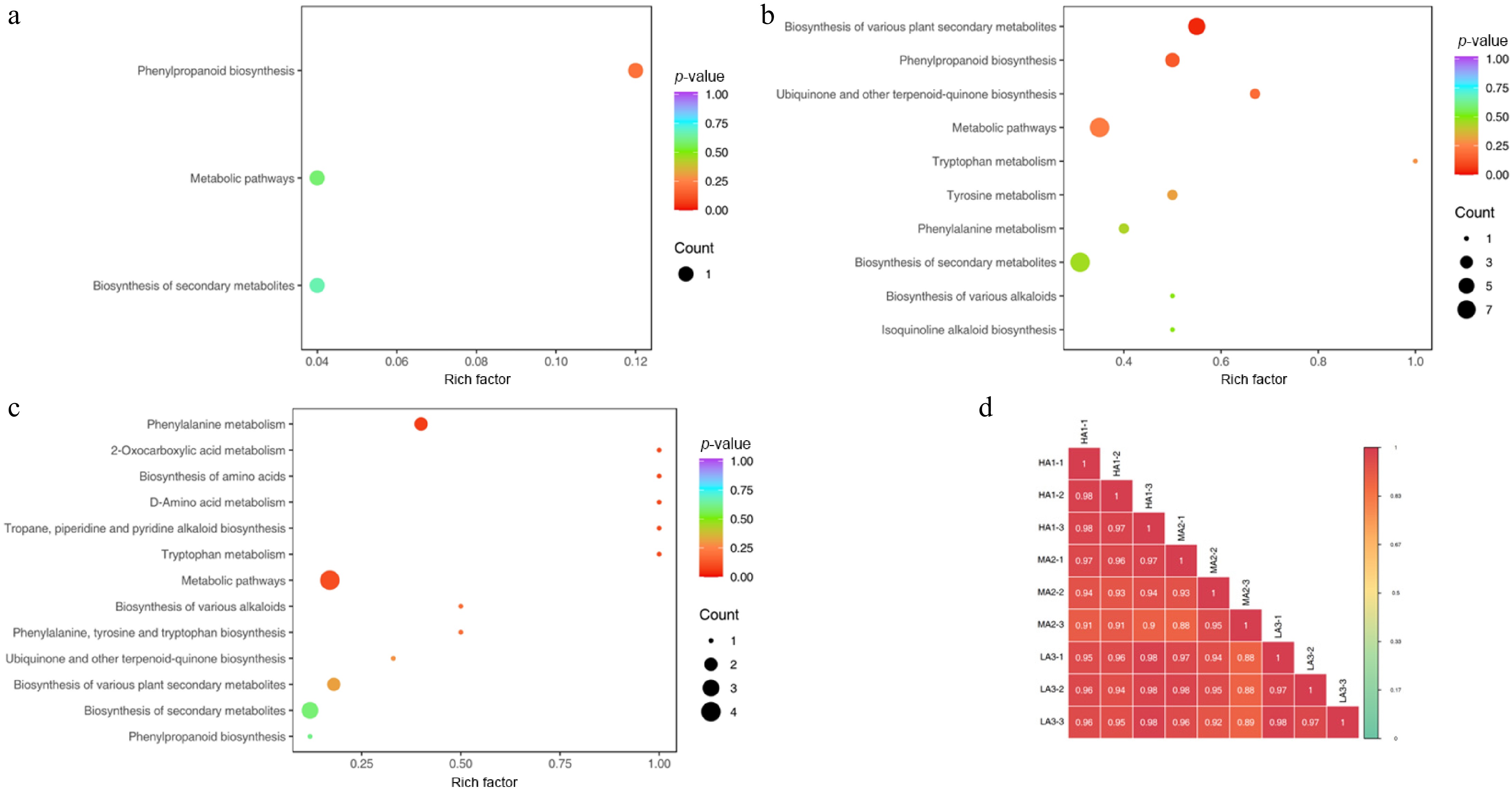
Figure 3.
The top 20 metabolic pathways were enriched. (a) Enrichment of metabolic pathways between HA1 vs LA3. (b) Enrichment of metabolic pathways between HA1 vs MA2. (c) Enrichment of metabolic pathways between MA2 vs LA3. (d) Correlative relationship between samples and within group samples. HA1 stands for HA1-1600 high altitude, MA2 stands for MA2-1400 medium altitude, LA3 stands for LA3-1200 low altitude. A color-coded scale grading from purple to red corresponds to the content of metabolite shifting from high to low.
Comparison of polyphenol metabolites under different altitudes
-
The metabolites were all assessed to determine the differences among the three altitudes of harvested green coffee beans based on polyphenol metabolomics. Polyphenols, flavonoids, coumarins, and lignans are the primary metabolites that exhibit alterations at various altitudes. In a comparison of 1,600 m (HA1) and 1,200 m (LA3) altitudes, only eight of the metabolites exhibited significant enrichment, with four upregulation and four downregulation, respectively (Supplementary Table S1). It can be assumed that samples collected from the low altitude of 1,200 m (LA3) in Pu'er, southwest Yunnan, China, could not be considered an ideal choice regarding quality. However, these compounds may contribute to different tastes[27]. In fact, phenolic acids, alkaloids, phenolic acids and coumarins are allied with acidic and bitter tastes[33]. Additionally, the comparison between 1,600 m (HA1) vs 1,400 m (MA2) (Table 1), and (Supplementary Table S2), 1,400 m (MA2) vs 1,200 m (LA3) (Supplementary Table S3) altitudes reveal significant changes in many metabolites. In total, 31 compounds and 20 metabolites showed upregulation, and 11 showed downregulation across both groups at various elevations. Flavonoids, coumarins, and phenolic acids are the main components of this. Polyphenols, found in plant foods, include flavonoids, phenolic acids, and anthocyanosides, all of which have positive effects on human health[31]. Differential analysis demonstrated that phenolic acids are considerably larger between 1,600 m (HA1) and 1,400 m (MA2) altitude. This result is consistent with the observed total phenolic acid content, which was higher at 1,400 m (MA2) altitude among all three groups. A prolonged growth cycle for coffee trees, which may be the reason for the development of quality beans, may be related to perfect climatic conditions, adequate sunlight, and lower temperatures in mountainous locations at moderate altitudes of 1,400 m (MA2) and lower altitudes at 1,200 m (LA3). Likewise, the coffee that is grown in the hilly area of the Amazon mountainous regions is often regarded as the highest quality coffee[7]; these findings are synchronized with this present study.
Table 1. The number of differential metabolites regulated at different altitudes.
Treatment group Significant Up regulated Down regulated HA1 vs LA3 8 4 4 HA1 vs MA2 31 11 20 MA2 vs LA3 31 11 20 HA1 indicates 1,600 m - High altitude, MA2 indicates 1,400 m - Medium altitude, and LA3 indicates 1,200 m - Low altitude, respectively. Polyphenols of green coffee beans
-
In total, 70 phenolic compounds were identified among all differential altitudes of green coffee beans. After comparative analysis, eight differential phenolic acids were found between 1,600 m (HA1) and 1,200 m (LA3) altitude; four were increased, and four were decreased. Among them, only two phenolic compounds, caffeic acid were significantly up-regulated by 1.01-fold and 2-hydroxy-3-(4-hydroxyphenyl)propanoic acid were down-regulated by −1.74-fold (Fig. 4a), respectively. Theoretically, longer periods of sun drying allow beans to ferment more easily, and the natural sun drying process boosts phenolic acid synthesis. The secretion of different extracellular enzymes by microbes aids in anaerobic fermentation, which in turn promotes the conversion of phenolic acids[29].
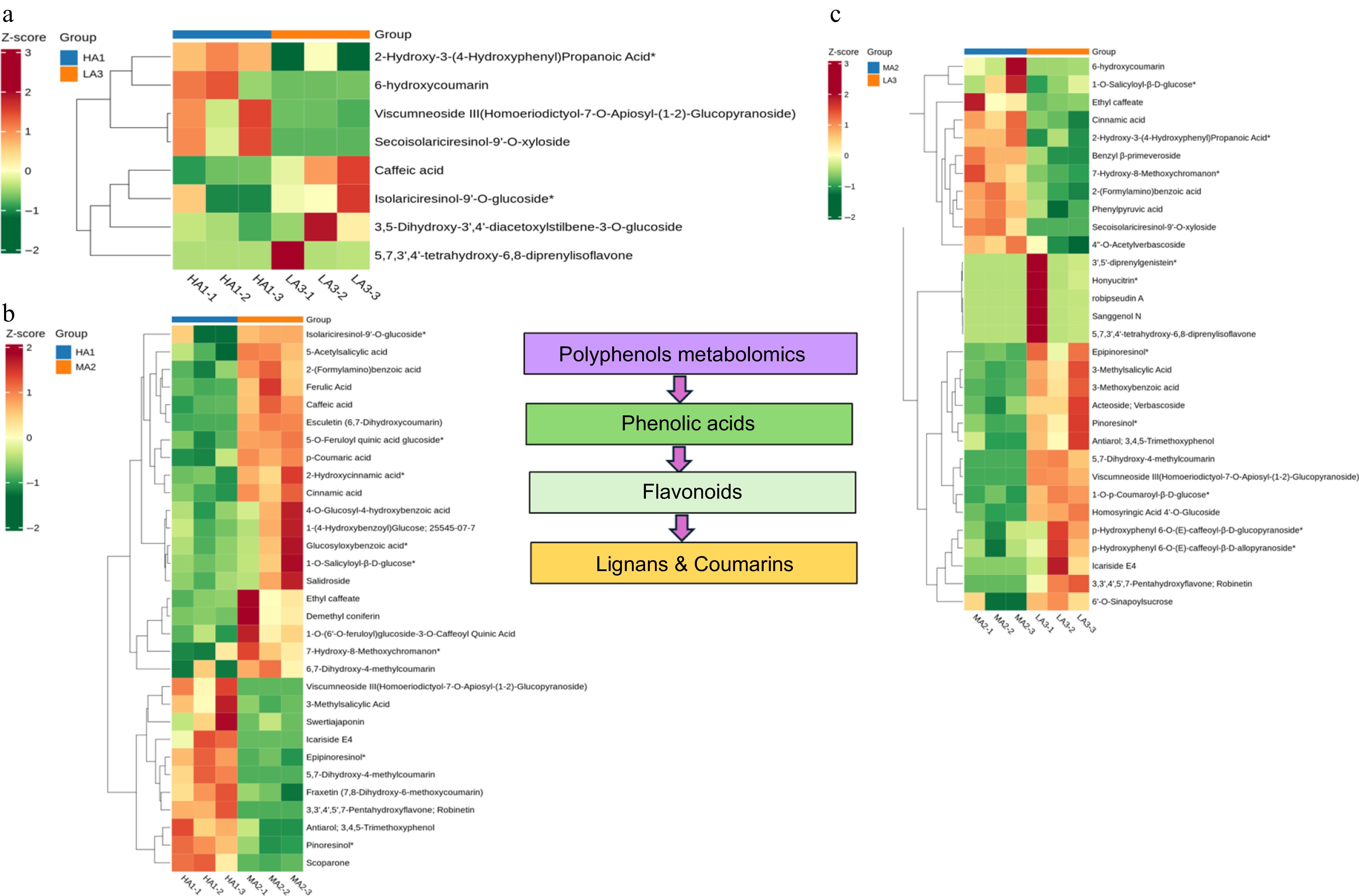
Figure 4.
Polyphenols metabolomics and its classes of green coffee beans. (a) The differential expression classification of metabolites regulated at HAI vs LA3. (b) The differential expression classification of metabolites regulated at HAI vs MA2. (c) The differential expression classification of metabolites regulated at MA2 vs LA3. HA1 stands for HA1-1600 high altitude, MA2 stands for MA2-1400 medium altitude, LA3 stands for LA3-1200 low altitude. A color-coded scale grading from dark maroon to dark green corresponds to the content of metabolite shifting from high to low.
However, 31 phenolic compounds were enriched at 1,600 m (HA1) vs 1,400 m (MA2) altitudes; 20 were up-regulated and 21 were down-regulated. Between them, 16 crucial phenolic compounds were cinnamic acid 1.67-fold, 5-acetylsalicylic acid 1.11-fold, ferulic acid 1.32-fold, p-coumaric acid 1.16-fold, demethyl coniferin 1.15-fold, glucosyloxybenzoic acid 1.11-fold, 2-hydroxycinnamic acid 1.16-fold, salidroside 1.04-fold, 1-(4-hydroxybenzoyl)glucose 1.19-fold, 1-O-(6'-O-feruloyl)glucoside-3-O-caffeoyl quinic acid 1.03-fold, 4-O-glucosyl-4-hydroxybenzoic acid 1.08-fold, 1-O-salicyloyl-β-D-glucose 1.15-fold, ethyl caffeate 1.86-fold, caffeic acid1.38-fold, 5-O-feruloyl quinic acid glucoside 1.35-fold, 2-(formylamino)benzoic acid, isolariciresinol-9'-O-glucoside 1.48-fold were significantly up-regulated, and only two phenolic acids were antiarol; 3,4,5-trimethoxyphenol -2.31-fold and 3-methylsalicylic acid -1.05 fold were down-regulated (Fig. 4b). In coffee, phenolics are predominantly contained in the green beans linked with other plant constituents, such as proteins and carbohydrates[34]. There are six main kinds of polyphenols found in nut plant species: phenols, flavonoids, tannins, stilbenoids, lignans, and coumarins. Several phenolic acids have been clearly discovered in these species[31]. Research in food chemistry has indicated various biological activities of nuts, with a notable emphasis on their antioxidant properties[31,35]. An important function of antioxidants is to neutralize free radicals and reactive oxygen species (ROS), which can cause a host of health problems in humans. These radicals include superoxide, nitric oxide, and hydrogen peroxide[36]. The quantitative analysis revealed that the polyphenol compounds showed a significant increase at 1,600 m (HA1) altitude compared to 1,400 m (MA2) altitude, and the number of metabolites was higher than at 1,600 m (HA1) and 1,200 m (LA3) altitudes. This indicates that the phenolic acids in green coffee beans are more concentrated at 1,600 m (HA1) and 1,200 m (LA3) altitudes.
Similarly, 31 phenolic compounds were enriched at 1,400 m (MA2) vs 1,200 m (LA3) altitudes; 20 were up-regulated and 21 were down-regulated. Among them, only nine key phenolic acids were antiarol; 3,4,5-trimethoxyphenol 2.23-fold, acteoside; verbascoside 1.06-fold, 3-methylsalicylic acid 1.40-fold, 3-methoxybenzoic acid 1.31-fold, homosyringic acid 4'-O-glucoside 1.16-fold, p-hydroxyphenyl 6-O-(E)-caffeoyl-β-D-glucopyranoside 1.12-fold, p-hydroxyphenyl 6-O-(E)-caffeoyl-β-D-allopyranoside 1.02-fold, 1-O-p-coumaroyl-β-D-glucose 1.23-fold, and 6'-O-sinapoylsucrose 1.54-fold were significantly up-regulated. Benzyl β-primeveroside, 4'-O-acetylverbascoside, 1-O-salicyloyl-D-glucose, phenylpyruvic acid, ethyl caffeate, 2-(formylamino) benzoic acid, and 2-hydroxy-3-(4-hydroxyphenyl) propanoic acid were down-regulated by -1.41-fold, -1.09-fold, -1.00-fold, -1.24-fold, -1.72-fold, -1.71-fold, and -2.51-fold (Fig. 4c; Supplementary Table S4). Green coffee beans are the significant source of polyphenols, may serve as an enriching ingredient in standard coffee or food products[37], these compounds, due to their unique composition and capabilities, serve a preventative function against different degenerative illnesses in modern civilization[38]. Interestingly, it was observed that compared to 1,400 m (MA2) vs 1,200 m (LA3) altitudes, the number of phenolic compounds were higher between 1,600m (HA1) vs 1,400 m (MA2) altitude. However, 1,600 m (HA1), and 1,200 m (LA3) altitude showed significant reduction in phenolic acid compounds indicating that coffee grown under 1,400 m MA2) at low altitude is not an ideal choice in Pu'er, which might be associated with climate, rainfall, soil properties and different geographical location. It has been discovered that the geographical origin of green Arabica coffee beans affects their polyphenol concentration, and the polyphenol of Harar coffees grown in various locations of east Ethiopia was noticeably lower than that of coffees grown in other geographical regions[14].
Flavonoids of green coffee beans
-
Flavonoids are a diverse group of phytochemicals found in coffee that contribute to its flavor, color, and health benefits. Research indicates that the composition and concentration of flavonoids in coffee beans are significantly influenced by the elevation at which the coffee is grown. Elevation affects various environmental factors, including temperature, light intensity, and humidity, all of which can impact flavonoid biosynthesis in coffee plants and refers to a broad category encompassing both alcohol flavonoids and flavonoids, predominantly exhibiting bitter and acidic characteristics[33]. In the present study, 12 flavonoids compounds were found between all altitudes. Interestingly, 5,7,3',4'-tetrahydroxy-6,8-diprenylisoflavone were significantly exhibited by 7.46-fold up-regulation and viscumneoside III (homoeriodictyol-7-O-apiosyl-(1-2)-glucopyranoside), were downregulated by 0.39-fold at 1,600 m (HA1) and 1,200 m (LA3) altitude (Fig. 4a). The dramatic results were found between 1,600 m (HA1) vs 1,400 m (MA2) altitude, only three flavonoids were swertiajaponin -1.23-fold, 3,3',4',5',7-pentahydroxyflavone: robinetin -2.99-fold and viscumneoside III (homoeriodictyol-7-O-apiosyl-(1-2)-glucopyranoside), -3.92-fold were down-regulated (Fig. 4b). Furthermore, 3,3',4',5',7-pentahydroxyflavone; robinetin 3.30-fold, robipseudin A 8.96-fold, 3',5'-diprenylgenistein 8.36-fold, honyucitrin 8.36-fold, sanggenol N 7.12-fold, 5,7,3',4'-tetrahydroxy-6,8-diprenylisoflavone 7.46-fold, and viscumneoside III (homoeriodictyol-7-O-apiosyl-(1-2)-glucopyranoside), by 2.57-fold increased significantly between 1400-MA2 vs 1200-LA3 altitude, no down-regulation were found (Fig. 4c; Supplementary Table S5). In fact, green coffee beans contain fewer flavonoids compared with typical coffee beans, and coffee beans retain flavonoids and other polyphenols, with the quantity and kind of flavonoids varying according to the beans' geographical origin[14]. The number of flavonoid compounds belonging to the sub-class group of Isoflavones was highest. Studies revealed that derivatives belonging to flavonols are often positioned in glycosylated at the hydroxyl group. Among the analyzed nut plant species, whole almond seeds demonstrate the highest diversity of flavonols, including quercetin, kaempferol, isorhamnetin, and their O-glycoside derivatives[34], green coffee beans comprise several polyphenols, with chlorogenic acids being the primary component. The concentration of polyphenols in green coffee beans may fluctuate based on their geographical origin[14].
Lignans and coumarins of green coffee beans
-
Lignans and coumarins are two groups of phenolic compounds found in coffee that contribute to its flavor, aroma, and potential health benefits. The composition and concentration of these compounds can vary significantly depending on the altitude at which the coffee beans are cultivated. Environmental factors associated with different elevations, such as temperature, humidity, and sunlight exposure, influence the biosynthesis of these phytochemicals[39]. The oxidative polymerization of phenylpropanoid derivatives, also known as C6–C3 monomers, is the first step in the formation of lignans, which are a distinct group of naturally occurring compounds extensively prevalent in nature and recognized for their varied therapeutic properties, predominantly as dimers, but some occur as trimers or tetramers[40], Coumarins, or 1,2-benzopyranone, are a diverse group of usual constituents defined by a benzo-α-pyranone structure[41]. Coumarin is often found in plants as either a free compound with an aromatic scent or as glycosides, which are fragrance-free when glycosylated[42]. Only three lignans and coumarins were found between 1,600 m (HA1) and 1,200 m (LA3) altitude (Fig. 4a). Isolariciresinol-9'-O-glucoside belongs to sub-class I of lignans and coumarins and sub-class II of lignans were increased significantly by 2.29-fold. Coumarins can be categorized into complex and simple types based on variations of this core structure. Complex coumarins arise from the addition of heterocyclic compounds to the fundamental coumarin core[43]. Further, 10 lignans and coumarins were found at 1600-HA1 vs 1400-MA2 altitude (Fig. 4b). 7-Hydroxy-8-methoxychromanon 1.02-fold, 6,7-dihydroxy-4-methylcoumarin 1.27-fold, esculetin (6,7-dihydroxycoumarin), 1.00-fold, and isolariciresinol-9'-O-glucoside 1.38-fold were significantly enriched, and they belong to sub-class II coumarins, and subclass II lignans respectively. Furthermore, seven lignans and coumarins were found between 1,400 m (MA2) vs 1,200 m (A3) with four upregulation and three downregulations (Fig. 4c), and (Supplementary Table S6). respectively. 5,7-Dihydroxy-4-methylcoumarin 2.53-fold, icariside E4 4.14-fold, epipinoresinol 1.31-fold, pinoresinol, Pinoresinol 2.27-fold increased significantly. Based on the structural substituents and locations that they possess, coumarins may be divided into three primary groups: simple coumarins, furan coumarins, and pyran coumarins[41], which perform several functions in plants organs under biotic and factors[42]. The quantities of lignans and coumarins compounds were greater in the comparison of 1,600 m (HA1) to 1,400 m (MA2) altitude than in the comparison of 1,400 m (MA2) to 1,200 m (LA3), with the lowest number of compounds observed between 1,600 m (HA1) and 1,200 m (LA3). This phenomenon suggests that the altitude between 1,600 m (HA1) and 1,400 m (MA2) is more conducive to the cultivation of quality coffee in this region. In fact, elevated altitudes enhance the desirable flavor characteristics of coffee beans. The flavor compounds and traits signify a green (unroasted) bean's ability to exhibit its intrinsic flavors, termed 'varietal character', which the coffee tree conveys to its fruit. This character is subsequently absorbed by the seed, known as the coffee bean, along with the impact of altitude on the biochemical composition and quality of green arabica[24].
Top polyphenols compounds in coffee at different elevation
-
In the present study, 5,7,3',4'-tetrahydroxy-6,8-diprenylisoflavone were top natural compounds and showed the most significant increase in differential expression pattern at 7.47 folds between HA1 and LA3 (Fig. 5a). Nevertheless, compared to HA1 and MA2, ethyl caffeate and cinnamic acid were 1.68-fold and was the top and highest as shown in (Fig. 5b). Additionally, robipseudin A, honyucitrin, and 3',5'-diprenylgenistein were 8.97, 8.37, and 8.36 folds were the top differential compounds at MA2 vs LA3 (Fig. 5c). The natural compound 6,8-diprenylorobol, a prenylated isoflavone, has antiproliferative effects, induces apoptosis through p53 activation and reactive oxygen species production[44]. Choi et al. also found in Glycyrrhiza uralensis fisch and Maclura tricuspidata, which has been used traditionally as food and medicine in Asia[44]. The current work found that 5,7,3',4'-tetrahydroxy-6,8-diprenylisoflavone has a highly divergent regulation pattern. This suggests that green coffee beans are a good source of natural chemicals and might have functional food applications due to their inherent antioxidant qualities[45].
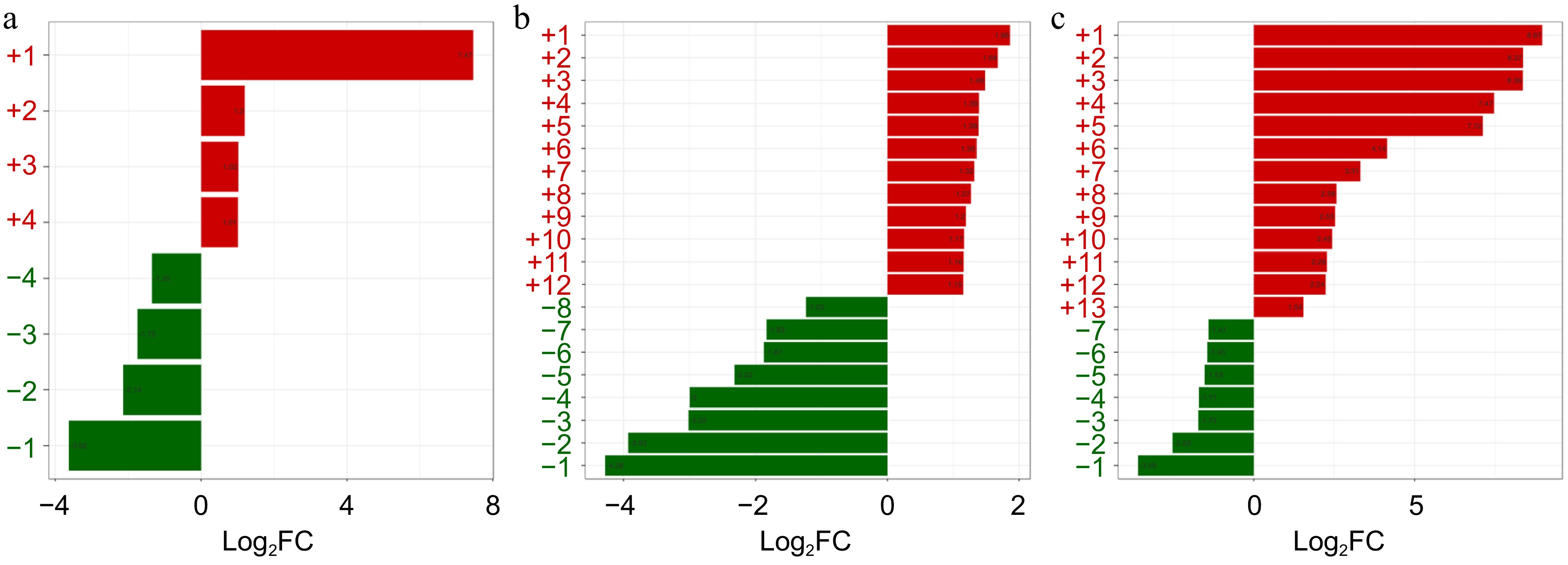
Figure 5.
Differential polyphenol compounds in green coffee beans across three altitude groups (HA1, MA2, LA3). (a) Eight metabolites regulated between HA1 vs. LA3 (from top to bottom: 5,7,3',4'-tetrahydroxy-6,8-diprenylisoflavone, isolariciresinol-9'-O-glucoside, 3,5-dihydroxy-3',4'-diacetoxylstilbene-3-O-glucoside, caffeic acid, viscumneoside III, 2-hydroxy-3-(4-hydroxyphenyl) propanoic acid, 6-hydroxycoumarin, secoisolariciresinol-9'-O-xyloside). (b) Twenty metabolites regulated between HA1 vs. MA2 (from top to bottom: ethyl caffeate, cinnamic acid, 2-(formylamino) benzoic acid, isolariciresinol-9'-O-glucoside, caffeic acid, 5-O-feruloyl quinic acid glucoside, ferulic acid, 6,7-dihydroxy-4-methylcoumarin, 1-(4-hydroxybenzoyl) glucose, p-coumaric acid, 2-hydroxycinnamic acid, 1-O-salicyloyl-β-D-glucose, swertiajaponin, pinoresinol, epipinoresinol, antiarol, robinetin, 5,7-dihydroxy-4-methylcoumarin, viscumneoside III, icariside E4). (c) Twenty metabolites regulated between MA2 vs. LA3 (from top to bottom: robipseudin A, honyucitrin, 3',5'-diprenylgenistein, 5,7,3',4'-tetrahydroxy-6,8-diprenylisoflavone, sanggenol N, icariside E4, robinetin, viscumneoside III, 5,7-dihydroxy-4-methylcoumarin, epipinoresinol, pinoresinol, antiarol, 6'-O-sinapoylsucrose, benzyl β-primeveroside, 6-hydroxycoumarin, 7-hydroxy-8-methoxychromanon, 2-(formylamino)benzoic acid, ethyl caffeate, 2-hydroxy-3-(4-hydroxyphenyl) propanoic acid, secoisolariciresinol-9'-O-xyloside). The score scale grading from red to green corresponds to fold change in the content of metabolite shifting from high to low.
Finally, ethyl caffeate, also known as ethyl (E)-3-(3,4-dihydroxy phenyl) prop-2-enoate or caffeic acid ethyl ester, is an ester belonging to the hydroxycinnamic acid group. It is present in various medicinal plants, including Bidens pilosa, which are utilized for the treatment of inflammatory disorders. EC has demonstrated various anti-inflammatory activities that may contribute to the positive effects observed in certain traditional medicines[46]. Cinnamic acid is an organic acid that plays a crucial role in the formation of more complex phenolic compounds. Cinnamic acids are hardly found in their uncombined states, predominantly existing as esters of quinic acid. They may also be esterified with malic or tartaric acids, or sugars, and can function as chlorogenic acid and could be found in the composition of green coffee beans[47]. In this study, it was also observed that ethyl caffeate and cinnamic acid are highly regulated as top compounds at HA1 and MA2 elevation. Taking all together, this research confirms the effect of elevation on green coffee beans is an important environmental factor. The bean belt is the primary region for coffee plant production globally. Pu'er is in the bean belt of our global atlas. Altitude could be a significant factor in Yunnan, China, for producing high-quality coffee beans (Fig. 6). This study assists in the selection of coffee beans from optimal elevations, enabling growers, retailers, and researchers to identify suitable elevations for high-quality coffee production in response to increased consumer demand.
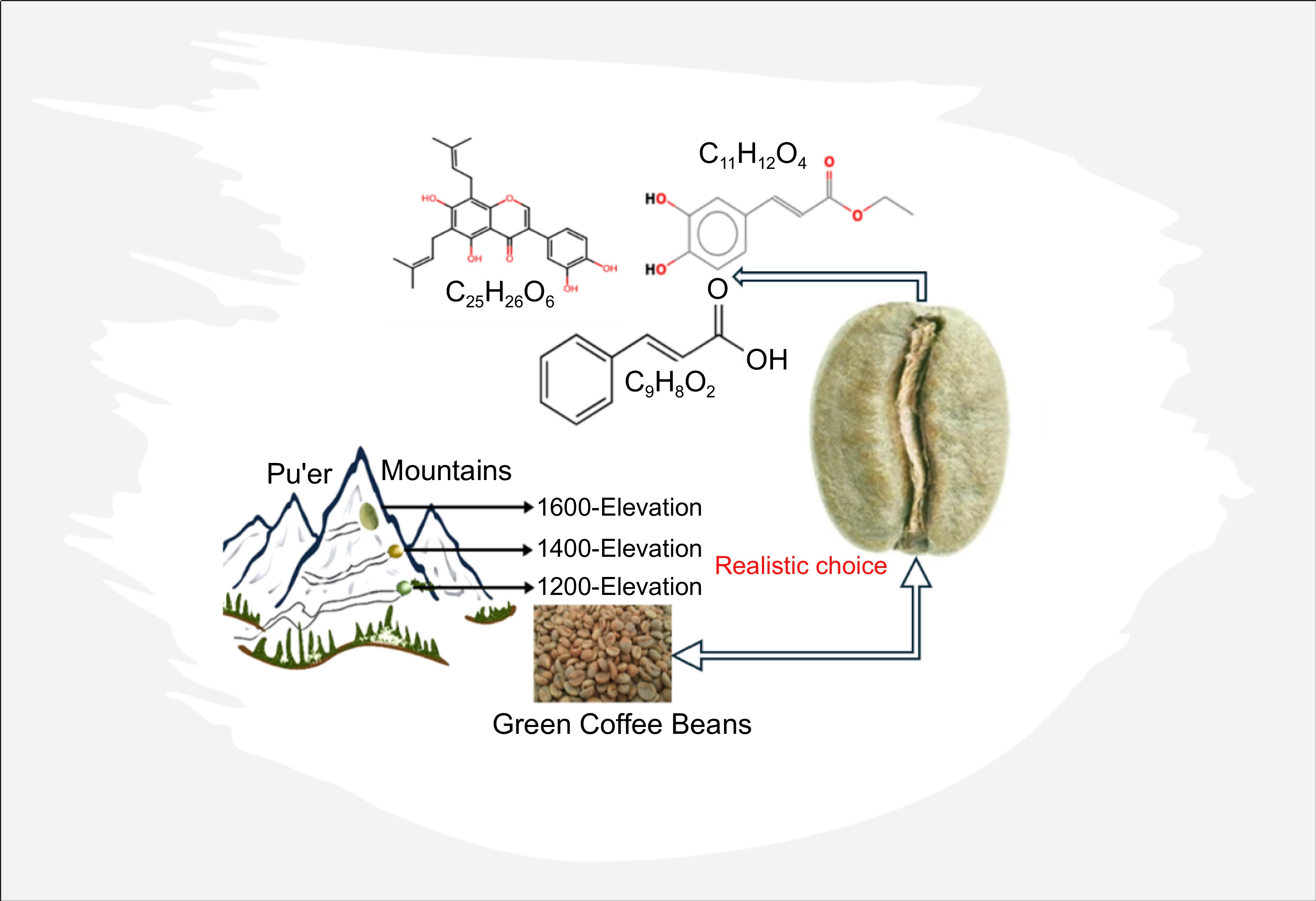
Figure 6.
Demonstration of critical compounds in green coffee bean regulated at: high-1600, medium-1400 and low-1200 elevations, respectively).
-
This work employed UPLC-MS/MS to analyze coffee samples at varying altitudes for biochemical composition and differential patterns of polyphenolic compounds following the natural sun-drying process, aiming to investigate the effects of elevation on the metabolic profiles and quality of coffee grown in the Pu'er region of China. At the 1,400 m (MA2) middle altitude, the release of polyphenolic metabolites was greater, leading to a larger composition of TPC and TFC compared to both high and low elevations. In this study, most of the compounds were categorized as phenolics, flavonoids, lignans, and coumarins that were enriched in metabolic pathways, secondary metabolite biosynthesis, and phenylpropanoid biosynthesis. A total of 70 phenolic compounds were significantly accumulated between 1,600 m (HA1) vs 1,200 m (LA3), 1,600 m (HA1) vs 1,400 m (MA2), and 1,400 m (MA2) vs 1,200 m (LA3) altitudes. The highest numbers of phenolic compounds were significantly regulated between 1,600 m (HA1) and 1,400 m (MA2), indicating that medium altitude is a notably favorable choice for high-quality green beans in the region. Conversely, the lowest levels of flavonoids, lignans, and coumarins were observed between 1,600 m (HA1) vs 1,200 m (LA3). The fading of flavonoid compounds is supposed to enhance the levels of phenolic compounds in green coffee beans. Thus, polyphenol metabolomic analysis in this work demonstrated the effect of altitude on the quality of green coffee beans, enhancing our understanding of selecting suitable elevations for high-quality green beans along with the natural sun drying process. These findings establish an adequate basis for the continued exploration of varying altitudes on green coffee beans and facilitate better comprehension of different metabolomics mechanisms associated with coffee quality.
This research is supported by the Yunnan Provincial Department of Science and Technology under 'Smart Yunnan Plan (Grant No. 202403AM140029) for Young Scientist and Entrepreneurs'.
-
The authors confirm contributions to the paper as follows: study conception and design: Zaman S, Luo G; coffee sample collection: Li Z, Dong Y; experimental conduction: Zaman S, Shan Z; data analysis: Zaman S; original draft preparation: Zaman S, Zhang C. All authors reviewed the results and approved the final version of the manuscript.
-
All data generated or analyzed during this study are included in this published article and its supplementary information files, more information are available from the corresponding author on reasonable request.
-
The authors declare that they have no conflict of interest.
- Supplementary Table S1 Comparison of polyphenol metabolites under 1,600 m (HA1) and 1,200 m (LA3) altitudes.
- Supplementary Table S2 Comparison of polyphenol metabolites under 1600 m (HA1) vs 1400 m (MA2) altitudes.
- Supplementary Table S3 Comparison of polyphenol metabolites under 1,400 m (MA2) vs 1,200 m (LA3) altitudes.
- Supplementary Table S4 Differential Phenolic compounds regulated in Green Coffee Beans at different altitudes.
- Supplementary Table S5 Differential Flavonoids Compounds regulated in Green Coffee Beans at different altitudes.
- Supplementary Table S6 Differential Lignans and Coumarins Compounds regulated in Green Coffee Beans at different altitudes.
- Copyright: © 2025 by the author(s). Published by Maximum Academic Press, Fayetteville, GA. This article is an open access article distributed under Creative Commons Attribution License (CC BY 4.0), visit https://creativecommons.org/licenses/by/4.0/.
-
About this article
Cite this article
Zaman S, Li Z, Dong Y, Luo G, Shan Z, et al. 2025. Different elevation affects the biochemical composition and regulatory patterns of polyphenol compounds in Coffea arabica. Beverage Plant Research 5: e033 doi: 10.48130/bpr-0025-0020 

Different elevation affects the biochemical composition and regulatory patterns of polyphenol compounds in Coffea arabica
- Received: 21 December 2024
- Revised: 20 April 2025
- Accepted: 12 May 2025
- Published online: 29 October 2025
Abstract: Changes in elevation significantly impact the growth and quality of coffee beans. This study provides valuable insights into the biochemical composition and regulatory patterns of polyphenolic compounds at high (1,600 m - HA1), medium (1,400 m - MA2), and low (1,200 m - LA3) altitudes, along with the effects of natural sun drying processes. Findings indicate that total phenolic acid and total flavonoid content were more abundant at medium altitude (1,400 m - MA2) compared to both high altitude (1,600 m - HA1) and low altitude (1,200 m - LA3). Using UPLC-MS/MS, a total of 326 metabolites were detected. The analysis of differential compounds revealed 70 polyphenolic compounds across the three altitudes, including phenolics, flavonoids, lignans, and coumarins. Specifically, eight phenolic acids were identified in comparing the 1,600 m - HA1 and 1,200 m - LA3 altitudes, while 30 compounds were distinguished between 1,600 m - HA1 and 1,400 m - MA2, as well as between 1,400 m - MA2 and 1,200 m - LA3. The compound 5,7,3',4'-tetrahydroxy-6,8-diprenylisoflavone emerged as a critical and prominently regulated compound between HA1 and LA3, as well as between HA1 and MA2 elevations. The decline in other flavonoid compounds, coupled with the significant increase in total phenolic content, highlights medium altitude (1,400 m - MA2) as the optimal choice for selecting high-quality green coffee beans in the Pu'er region. This research underscores the effects of altitude on green coffee bean quality and highlights the distinct patterns of metabolite accumulation associated with different elevations. Future research could focus on exploring the specific environmental and genetic factors that contribute to the observed variations in polyphenolic composition and overall coffee bean quality across different altitudes.
-
Key words:
- Elevation /
- Coffee /
- Compounds /
- Polyphenols /
- Flavonoid